2024-02-27 19:58
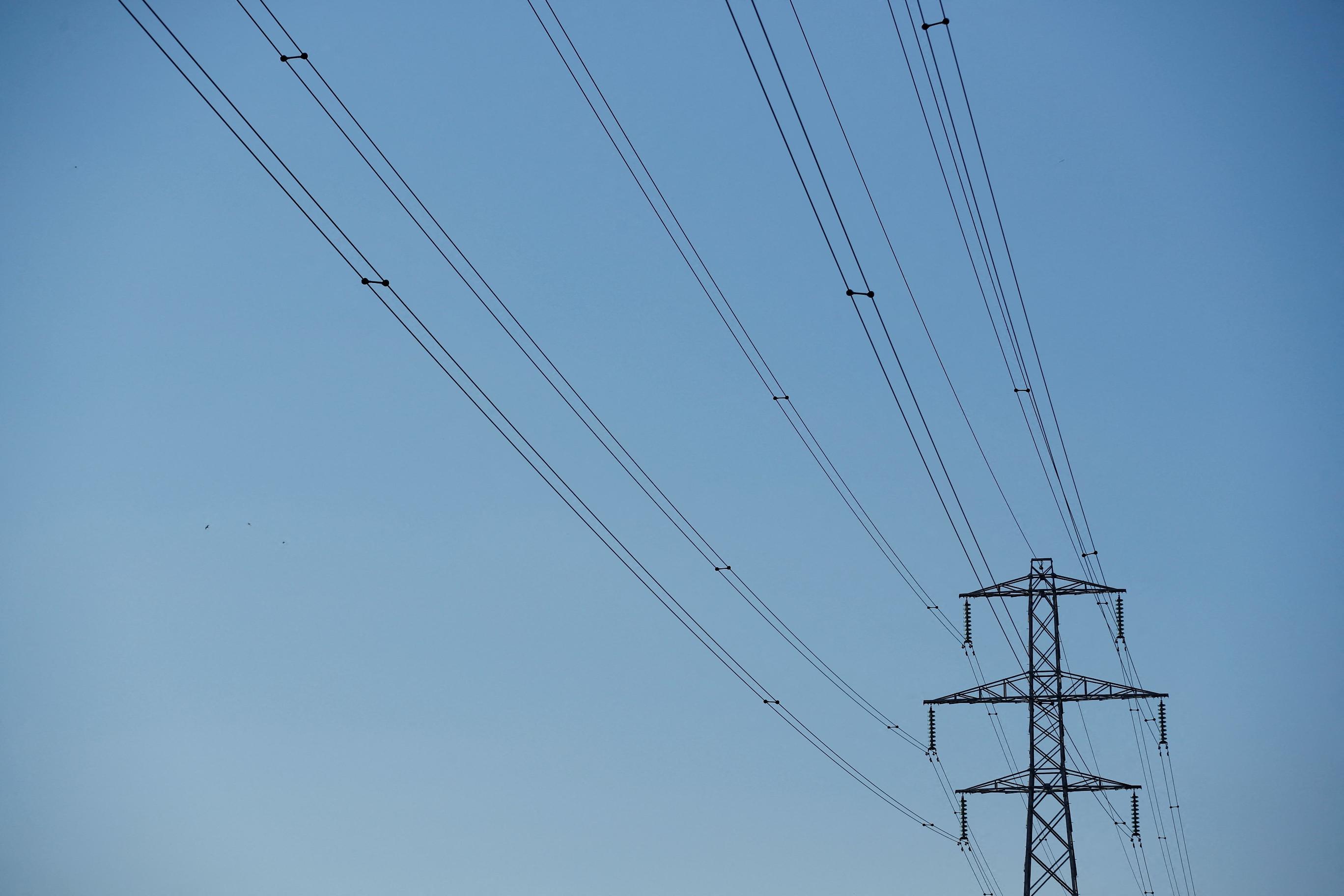
LONDON, Feb 27 (Reuters) - Britain's auction to ensure enough electricity capacity for 2027/28 cleared at a record high of 65 pounds ($82) per kilowatt (kW) per year, National Grid said late on Tuesday. Britain launched its power capacity market in 2014, offering to pay providers for making capacity available to ensure the country has enough power. A total of around 43 gigawatts (GW) of capacity was procured, National Grid's EMR (electricity market reform) delivery body website said in a provisional auction document. The auctions are usually held about four years in advance of the delivery date, with another auction for a smaller amount of capacity held a year before delivery. Tuesday's result was a record high for an auction held four years in advance. "The high clearing price implies tight supply/demand dynamics in the UK power generation market and offers some protection to generators against gas/carbon driven weakness in wholesale power prices," analysts at Jefferies said in a research note. Winners of contracts included utilities such as SSE (SSE.L) , opens new tab, EDF, Uniper, Drax (DRX.L) , opens new tab and RWE (RWEG.DE) , opens new tab. The majority of capacity contracts, 77.5%, were awarded to existing power generation plants with 13% also awarded to existing interconnectors with other countries, the documents showed. Plants to be newly built secured 3.9% of the capacity while new interconnectors secured 2.4%. ($1 = 0.7885 pounds) https://www.reuters.com/business/energy/uks-202728-electricity-capacity-auction-clears-65-70-pounds-per-kwyr-2024-02-27/
2024-02-27 19:30
Feb 27 (Reuters) - U.S. electric utility Sempra (SRE.N) , opens new tab on Tuesday raised its five-year capital expenditures plan by 20% to $48 billion, as power demand growth in Texas and California spurs investments. Transmission and distribution dominates San Diego, California-based Sempra's projected spending, which focused on integrating renewable energy, battery storage and supporting electric vehicles. The electrification of oil and gas production in Texas loomed large in Sempra's growth plans. "West Texas continues to be a very strong story for us with," said Allen Nye, who heads Sempra's Texas utility, Oncor Electric Delivery. Nye cited a recent preliminary study by the Texas grid operator projecting four-fold electricity consumption growth in the western part of the state to 26 gigawatts within 15 years, driven by the electrification of the oil and gas industry. Sempra Infrastructure, the company's unit that develops, invests and operates clean energy infrastructure, reported quarterly earnings of $131 million, compared with a loss of $82 million from the previous year. The segment is expected to benefit from U.S. President Joe Biden's climate strategy, which has pledged to halve greenhouse gas emissions by 2030. Sempra, which provides gas, electricity and other energy to nearly 40 million customers in areas including California, Texas, Mexico, narrowly beat fourth-quarter profit estimates, helped by higher earnings from its clean energy technology segment. The company reported an adjusted profit of $1.13 per share for the quarter ended Dec. 31, compared with analysts' average estimates of $1.12 per share, according to LSEG data. Sempra forecast its 2024 earnings to between $4.60 and $4.90 per share from its previous forecast of between $4.55 and $4.90 per share. The company reported a revenue of $3.49 billion for the quarter ended Dec. 31, a 1% rise from the previous year, missing analysts' average estimate of $3.87 billion, according to LSEG data. https://www.reuters.com/business/energy/utility-firm-sempra-narrowly-beats-q4-profit-estimates-increases-capex-2024-02-27/

2024-02-27 18:00
Durable goods orders fall 6.1% in January Core capital goods orders rise 0.1% Consumer confidence index falls to 106.7 February House price growth slows in December WASHINGTON, Feb 27 (Reuters) - Orders for long-lasting U.S. manufactured goods fell by the most in nearly four years in January, while business investment on equipment appeared to have eased, signs that the economy lost momentum at the start of the year. Concerns about the economy's outlook, especially the labor market, and the upcoming presidential election were uppermost in consumers' minds in February resulting in confidence retreating after three straight monthly increases. The decline in confidence reported by the Conference Board on Tuesday was despite inflation expectations over the next 12 months falling to the lowest level in almost four years. The reports joined a stream of weak data, including retail sales, housing starts and manufacturing production. Some of the softness has been blamed on freezing temperatures last month as well as difficulties adjusting the data for seasonal fluctuations at the start of the year. Nonetheless, economists are not forecasting a recession this year. "Business capex lays the seeds for future economic growth as the expenditures enable companies to invest more to meet the demand for their goods and services down the road," said Christopher Rupkey, chief economist at FWDBONDS in New York. "While economists have taken down their recession warnings, business leaders with boots on the ground are less certain of the economy in the future." Orders for durable goods, items ranging from toasters to aircraft meant to last three years or more, plunged 6.1% last month amid a sharp drop in commercial aircraft bookings, the Commerce Department's Census Bureau said. That was the largest decline since April 2020, when the economy was reeling from the first wave of COVID-19 infections. Data for December was revised lower to show orders falling 0.3% instead of being unchanged as previously reported. Economists polled by Reuters had forecast durable goods orders tumbling 4.5%. Orders fell 0.8% year-on-year in January. Civilian aircraft orders plummeted 58.9% last month after rising 1.0% in December. Boeing (BA.N) , opens new tab reported on its website that it had received only three orders for commercial aircraft in January, sharply down from 371 in December. The planemaker is under pressure after a cabin panel blew out on an Alaska Airlines jet mid-air in early January. The Federal Aviation Administration last month barred Boeing from expanding production of its best-selling 737 MAX narrowbody planes to improve quality control. Overall transportation orders dropped 16.2% last month after slipping 0.6% in December. Orders for motor vehicles and parts fell 0.4%. Excluding transportation, durable goods orders fell 0.3% last month after dipping 0.1% in December. There were decreases in orders of primary and fabricated metals. Machinery orders were unchanged. But orders for computers and electronic products increased 1.4%, while those for electrical equipment, appliances and components rose 0.9%. Though there are signs that manufacturing, which accounts for 10.3% of the U.S. economy, is stabilizing after production eased in 2023 amid 525 basis points worth of interest rate hikes from the Federal Reserve since March 2022, a full recovery is still a long way away. While the U.S. central bank is expected to start cutting interest rates this year, policymakers have indicated that they are in no rush to lower borrowing costs. Stocks on Wall Street were trading lower. The dollar was little changed against a basket of currencies. U.S. Treasury yields rose. CONSUMER CONFIDENCE EBBS Nondefense capital goods orders excluding aircraft, a closely watched proxy for business spending plans, edged up 0.1% in January after a revised 0.6% decline in the prior month. These so-called core capital goods orders were previously reported to have gained 0.2% in December. Core capital goods shipments rose 0.8% after nudging up 0.1% in December. Nondefense capital goods orders plummeted 19.4%, while shipments fell 3.0%, the largest decline since November 2020, after dropping 1.0% in December. Shipments of these goods go into the calculation of the business spending on equipment component in the gross domestic product report. "This points to a much weaker start for business equipment spending in the first quarter following a modest gain in the prior quarter," said Priscilla Thiagamoorthy, a senior economist at BMO Capital Markets in Toronto. Business spending on equipment rebounded modestly in the fourth quarter after contracting in the July-September period. The economy grew at a 3.3% annualized rate last quarter after expanding at a 4.9% pace in the third quarter. Though the labor market has remained resilient in the face of higher borrowing costs, consumers' assessment of the jobs market is becoming less rosy and eroding confidence in the economy. A second report from the Conference Board showed its consumer confidence index slipped to 106.7 this month from a downwardly revised 110.9 in January. Economists had forecast the index little changed at 115.0 from the previously reported 114.8. The Conference Board said write-in responses showed that while consumers remained preoccupied with inflation, "they are now a bit less concerned about food and gas prices," noting "they are more concerned about the labor market situation and the U.S. political environment." The survey's so-called labor market differential, derived from data on respondents' views on whether jobs are plentiful or hard to get, narrowed to 27.8 from 31.7 in January. This measure correlates to the unemployment rate in the Labor Department's closely followed employment report. Consumers' labor market perceptions could have been colored by a recent wave of high-profile layoffs. Overall, the labor market remains fairly tight, with first-time weekly applications for unemployment benefits at historically low levels. Labor market strength and still-elevated inflation have led financial markets to push back their expectations of a rate cut to June from May. Even as consumers' views of the labor market have softened somewhat, many still expect to buy a motor vehicle over the next six months as well as other big-ticket items like clothes dryers and refrigerators. Consumers expected price pressures to ease over the next 12 months, with inflation expectations falling to 5.2%, the lowest level since March 2020, from 5.3% in January. The share planning to buy a house was the smallest since November 2020 as higher prices and mortgage rates squeeze out aspiring homeowners. A third report from the Federal Housing Finance Agency showed house prices rose 0.1% in December after increasing 0.4% in November. They advanced 6.6% year-on-year after climbing 6.7% in November. The moderation in house price growth is welcome, especially from the perspective of rental inflation, the major driver of overall inflation. "The pace of home-price appreciation is consistent with a deceleration in owner's equivalent rent inflation this year," said Michael Pearce, deputy chief U.S. economist at Oxford Economics in New York. https://www.reuters.com/markets/us/us-durable-goods-orders-fall-more-than-expected-january-2024-02-27/

2024-02-27 17:59
ABUJA, Feb 27 (Reuters) - Nigeria's central bank delivered its largest rate hike in absolute terms in around 17 years on Tuesday to tame soaring inflation, amid nationwide trade union protests over price rises that have left people struggling to meet their basic needs. Central Bank of Nigeria Governor Olayemi Cardoso said the 4-percentage-point increase to 22.75% (NGCBIR=ECI) , opens new tab was needed as previous rate hikes had not cooled price pressures enough. Inflation has reached almost 30%, its highest in almost three decades, driven by a steep fall in the naira currency , the removal of a fuel subsidy, fiscal deficits and conflict in food-producing parts of Africa's most populous nation and biggest economy. Labour unions protesting on Tuesday said two of President Bola Tinubu's key reforms - allowing the naira to devalue twice in less than a year and scrapping the fuel subsidy - were making people's lives a misery. "We are suffering in Nigeria. It was not like this before. There is real hunger," said fashion designer Surijadeen Idayat at a protest in the capital Abuja. In a sign of the desperation, a deadly stampede broke out at a food distribution site on Friday, authorities said. "This was not the situation a year ago. I have to cut down the number of meals in the family," said Ibrahim Mamuda, a 56-year-old resident of the northern city of Kano who said he has twelve children and that they are only eating one meal a day. Tinubu has defended his bold but unpopular reforms, which he hopes will help him double Nigeria's growth rate to 6% annually from roughly 3% now. In an effort to ease the pressure on vulnerable households, his government this week approved the resumption of direct cash transfers to those in need. MAMMOTH HIKE Tuesday's mammoth rate hike brings Nigeria closer to Ghana, which defaulted on its debts in 2022 and cut interest rates from 30% to 29% in January, and the insurgency-hit Democratic Republic of Congo, which has an interest rate of 25%. Nigeria's international dollar bonds initially rose as much as 0.5 cents on the dollar as Cardoso spoke, before falling to again trade below their previous closing price. Capital Economics analyst David Omojomolo said that Cardoso had "stepped up to the plate" by showing greater appetite to tackle Nigeria's inflation problem than the central bank had done previously. But he said further inflation surprises or naira weakness could force another hike. https://www.reuters.com/world/africa/nigeria-hikes-interest-rates-unions-protest-economic-hardship-2024-02-27/

2024-02-27 17:58
MOSCOW, Feb 27 (Reuters) - All members of the Bank of Russia's board of directors agreed that inflation pressure was gradually easing as they held rates at 16% this month, the central bank said on Tuesday, but they also considered hiking borrowing costs even higher to 17%. The bank on Feb. 16 opted to leave borrowing costs unchanged after five successive rate hikes since last summer, though it is still grappling with stubborn inflation pressure and said in a report it had discussed risks that may keep inflation high for a prolonged time. Tuesday's report was a detailed summary of the board's discussions when choosing to hold rates, giving extra insight into the Bank of Russia's decision making. The tight labour market and worker shortages remained one of the key discussion points, the bank said. Other subjects of discussion were inflationary risks to the Russian economy of a faster fall in oil prices as countries outside OPEC+ increase production and the impact of high budgetary spending. The bank said it had considered raising rates by another 100 basis points, but added that some board members think the bank may be able to start lowering rates before the second half of the year, a more dovish signal. All members agreed, the bank said, that inflation pressure was gradually easing. https://www.reuters.com/markets/europe/russian-cbank-considered-hike-17-when-holding-rates-this-month-2024-02-27/

2024-02-27 17:47
Feb 27 (Reuters) - Federal Reserve Governor Michelle Bowman on Tuesday signaled she is in no rush to cut U.S. interest rates, particularly given upside risks to inflation that could stall progress or even cause price pressures to resurge. "My baseline outlook continues to be that inflation will decline further with the policy rate held steady," Bowman said in remarks prepared for delivery to a Florida Bankers Association leadership luncheon in Miami. "I will remain cautious in my approach to considering future changes in the stance of policy." Bowman supported the Fed's decision last month to hold its benchmark overnight interest rate in the current 5.25%-5.50% range, and on Tuesday said she feels the U.S. central bank's policy stance is "restrictive and appears to be appropriately calibrated to reduce inflation pressures." She also repeated her view that if data continue to show inflation moving sustainably toward the Fed's 2% goal, it will "eventually" become appropriate to reduce the policy rate to keep it from becoming overly restrictive. But unexpectedly strong readings on inflation in January "suggest slower progress" towards the 2% goal, Bowman said. Consumer spending and economic activity have been strong and the labor market remains tight, she added. Loosening financial conditions and additional fiscal stimulus could add to demand and stall progress on inflation, Bowman said, while geopolitical risks also could add to price pressures. "Reducing our policy rate too soon could result in requiring further future policy rate increases to return inflation to 2 percent in the longer run," Bowman said, adding that she remains willing to increase the policy rate should it be needed. https://www.reuters.com/markets/us/feds-bowman-says-she-will-stay-cautious-monetary-policy-2024-02-27/