2024-02-27 06:36
NEW YORK, Feb 27 (Reuters) - The dollar eased against the Japanese yen on Tuesday after data showed Japan's core consumer inflation exceeded forecasts while U.S. durable goods orders fell more than expected in January. Overnight data out of Japan kept alive some expectations that the Bank of Japan might end negative interest rates by April. In the U.S., the Commerce Department's Census Bureau said orders for durable goods, items ranging from toasters to aircraft meant to last three years or more, tumbled 6.1% last month, exceeding the 4.5% decline forecast by economists polled by Reuters. Markets have recently pulled back expectations on the timing and size of Federal Reserve rate cuts this year as the U.S. economy remains strong and inflation pressures stubborn. Against the yen, the dollar dipped 0.1% to 150.56 , while the U.S. dollar index , which measures the currency against a basket of peers, was last up 0.08% at 103.86. "Inflation numbers have been drifting a bit lower in Japan over the past few months, but today's numbers did suggest inflation is sticky even in Japan," said Shaun Osborne, chief currency strategist at Scotiabank in Toronto. "It probably does mean we'll get a mild series of rate increases in Japan in the next few months." Bitcoin hit a two-year high on signs large players were buying the cryptocurrency. Bitcoin was last up 5.22% at $57,513, while ether rose 2.26% at $3,258. In other U.S. economic news, the consumer confidence index slipped to 106.7 this month - short of forecasts - from a downwardly revised 110.9 in January. The U.S. core personal consumption expenditures (PCE) price index, due on Thursday, is expected to be one of the more important reports of the week for the market. Forecasts are for a rise of 0.4%. "We're waiting for the PCE data to give us a stronger sense of direction perhaps," Osborne said. "I think we're prepped for slightly stronger numbers; it probably at this point would have to be a big upside surprise to really get the dollar strengthening." The euro was last down 0.1% versus the greenback. It has been rising since mid-February, when it hit its lowest since Nov. 14. Analysts said the single currency strengthened as markets scaled back bets on future European Central Bank rate cuts to 90 bps by year-end , amid encouraging signals from the economy, which supports expectations for a pick-up in growth in the second half of 2024. German states, France and Spain will release inflation data on Thursday ahead of the euro area's figures due on Friday. ECB officials have sounded more cautious about a quick easing of monetary policy, with President Christine Lagarde saying wage growth remains robust, while ECB dove Yannis Stournaras ruled out a rate cut before June. The dollar strengthened 0.06% at 7.214 versus the offshore Chinese yuan. The People's Bank of China set the midpoint rate , around which the yuan is allowed to trade in a 2% band, at 7.1057 per dollar. The kiwi weakened 0.06% versus the greenback at $0.617, with traders gearing up for what could turn out to be a significant policy meeting by the Reserve Bank of New Zealand (RBNZ) on Wednesday. Markets are pricing in a one-in-three chance the RBNZ will raise its 5.5% official cash rate to combat stubborn inflation. https://www.reuters.com/markets/currencies/dollar-droops-key-us-data-looms-yen-firms-cpi-beat-2024-02-27/
2024-02-27 06:22
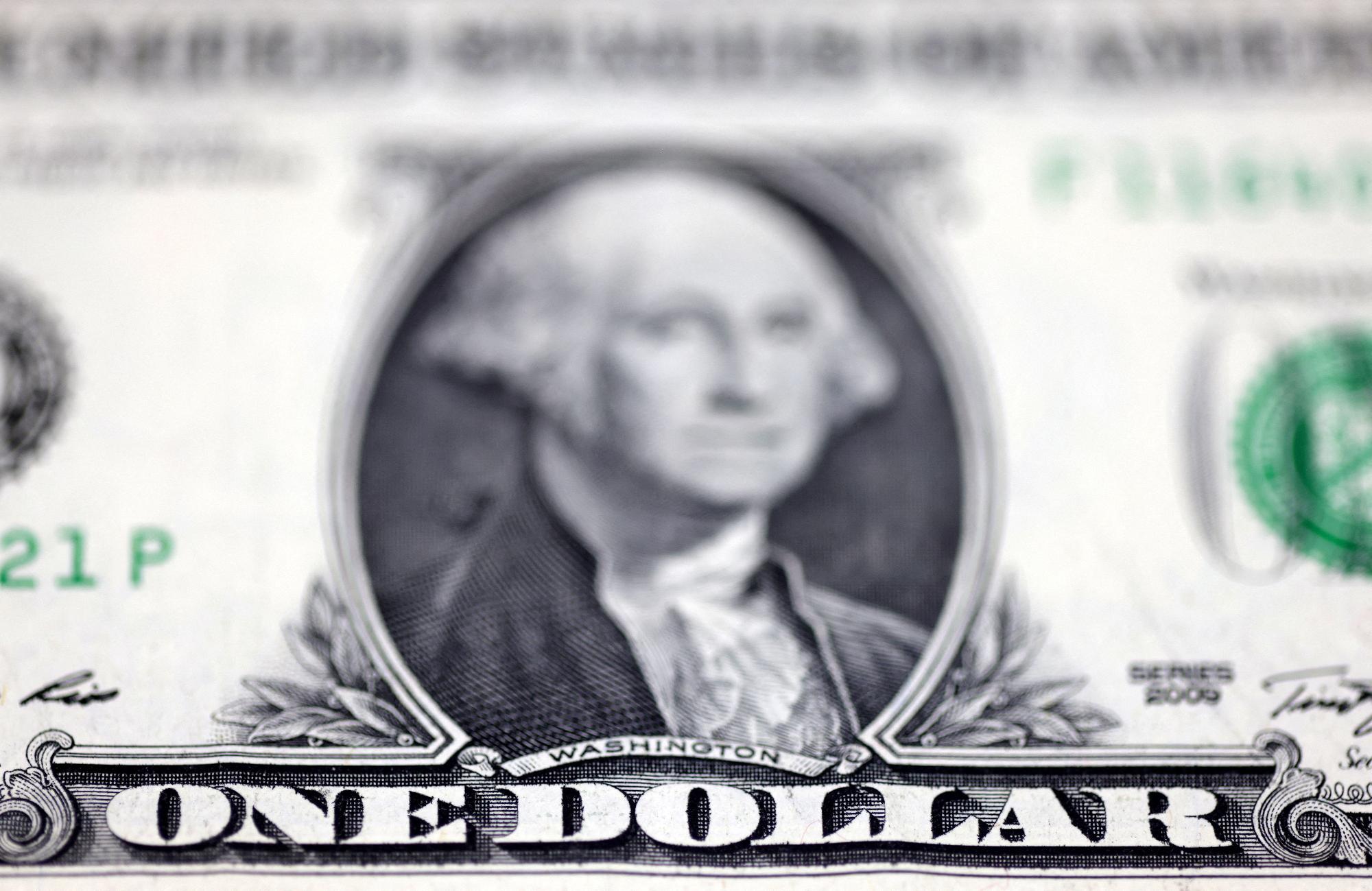
Russia to ban gasoline exports from March 1 PM Mishustin has approved the ban Gasoline prices are sensitive ahead of election MOSCOW, Feb 27 (Reuters) - Russia on Tuesday ordered a six-month ban on gasoline exports from March 1 to keep prices stable amid rising demand from consumers and farmers and to allow for maintenance of refineries in the world's second largest oil exporter. The ban, first reported by Russia's RBC, was confirmed by a spokeswoman for Deputy Prime Minister Alexander Novak, President Vladimir Putin's point man for Russia's vast energy sector. RBC, citing an unidentified source, said Prime Minister Mikhail Mishustin had approved the ban after Novak proposed it in a letter dated Feb. 21. A second source told Reuters that the decision had been made but the decree had not yet been issued. "In order to offset excessive demand for petroleum products, it is necessary to take measures to help stabilize prices in the domestic market," Novak was quoted as saying in his proposal by RBC. Domestic gasoline prices are sensitive for motorists and farmers in the world's biggest wheat exporter ahead of a March 15-17 presidential election, while some Russian refineries have been hit by Ukrainian drone attacks in recent months. Russia and Ukraine have targeted each other's energy infrastructure in a bid to disrupt supply lines and logistics and demoralise their opponents, as they seek the edge in a nearly two-year-old conflict that shows no sign of ending. Exports of oil, oil products and gas are by far Russia's biggest export, a major source of foreign currency revenue for Russia's $1.9 trillion economy, and ensure that Moscow has a place at the top table of global energy politics. The Kremlin has been working with Saudi Arabia, the world's biggest oil exporter, to keep prices high as part of the broader OPEC+ grouping which includes the Organization of the Petroleum Exporting Countries and key allies. Russia is already voluntarily cutting its oil and fuel exports by 500,000 barrels per day in the first quarter as part of OPEC+ efforts to support prices. GASOLINE The top gasoline producers in Russia in 2023 were Gazprom Neft's (SIBN.MM) , opens new tab Omsk refinery, Lukoil's (LKOH.MM) , opens new tab NORSI oil refinery in Nizhny Novgorod and Rosneft's (ROSN.MM) , opens new tab Ryazan refinery. Russia in 2023 produced 43.9 million tons of gasoline and exported about 5.76 million tons, or around 13% of its production. The biggest importers of Russian gasoline are mainly African counties, including Nigeria, Libya, Tunisia and also United Arab Emirates. Russia last month reduced gasoline exports to non-Commonwealth of Independent States countries to compensate for unplanned repairs at refineries amid fires and drone attacks on its energy infrastructure. Outages include the halt of a unit at NORSI, the country's fourth largest refinery, located near the city of Nizhny Novgorod, some 430 km (270 miles) east of Moscow, following what is believed to be a technical incident. Last year, Russia banned gasoline exports between September and November in order to tackle high domestic prices and shortages. This time, the ban will not extend to member states of the Eurasian Economic Union, Mongolia, Uzbekistan and two Russian-backed breakaway regions of Georgia - South Ossetia and Abkhazia. https://www.reuters.com/business/energy/russia-bans-gasoline-exports-6-months-march-1-2024-02-27/
2024-02-27 06:10
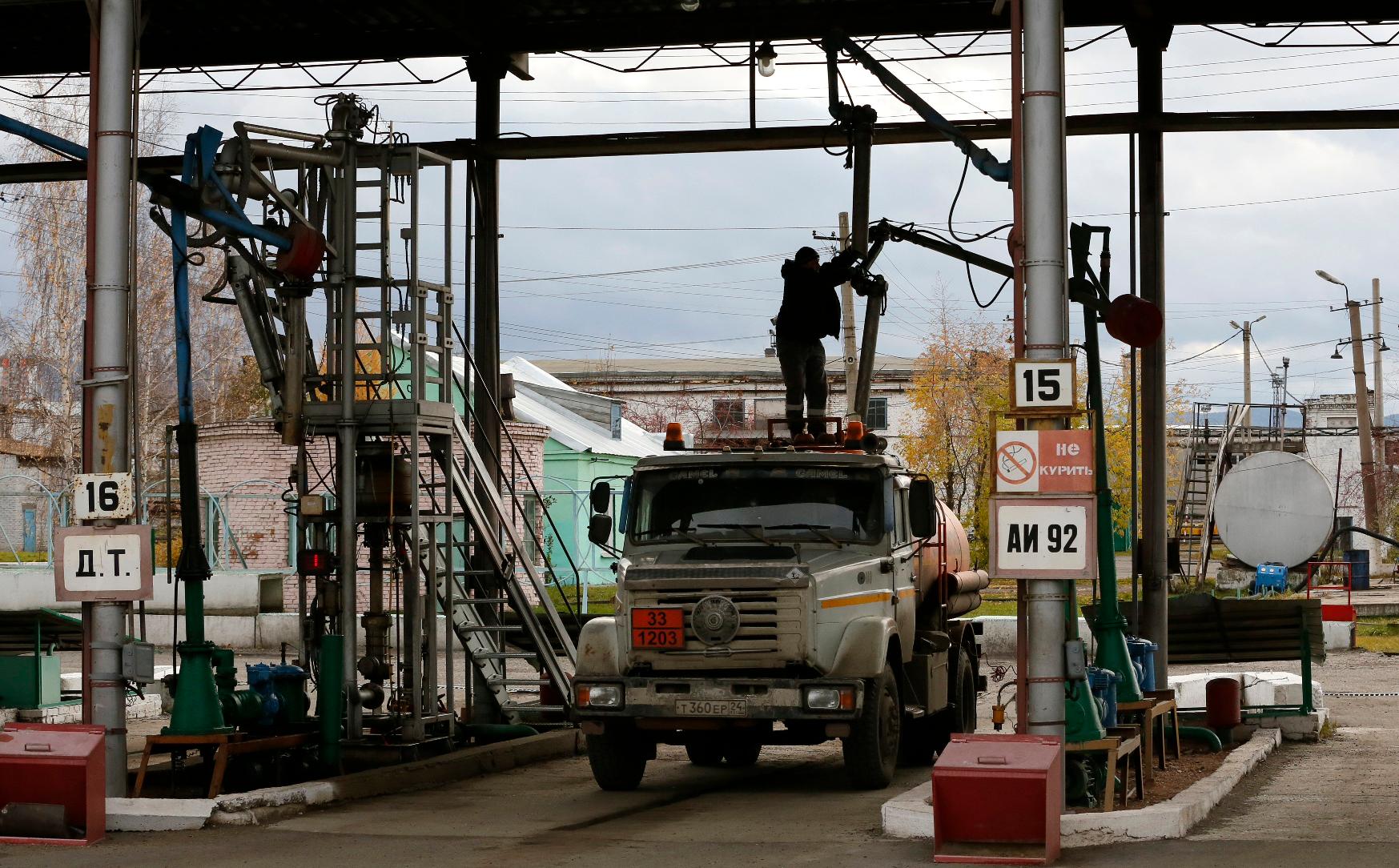
SYDNEY, Feb 27 (Reuters) - A trade dispute with China over tariffs on Australian wine may be resolved "in a few weeks' time", Australian Trade Minister Don Farrell said on Tuesday, removing one of the final obstacles curbing its exports to China. Australian wine exports to China were worth about $800 million in the year to November 2020. However, that month Beijing responded to a call in Canberra for an inquiry into the origins of COVID-19 by blocking imports of Australian commodities such as barley, wine and coal. China has been lifting those trade barriers as relations improve and Australian officials and industry expect a review of the wine tariffs begun by Beijing last year will lead to their removal next month. Farrell said he had spoken with China Commerce Minster Wang Wentao on Monday, and the two sides were close to an agreement. "I'm confident that the discussions I had yesterday with the commerce minister will result in them carrying through on what they undertook, which was to expedite the review of the tariffs and that we will get a result on that in a few weeks' time," he said in an interview with state broadcaster ABC on Tuesday. Australia's government said in December it was confident the tariffs would be lifted in early 2024. https://www.reuters.com/business/china-wine-dispute-may-be-resolved-weeks-australian-trade-minister-says-2024-02-27/
2024-02-27 06:04
Feb 27 (Reuters) - Banks are finally signing up for a U.S. Federal Reserve funding backstop that has been lying nearly dormant for more than two years, putting them in a stronger position to deal with any stress. But it is unclear whether they will want to use it in a crisis. The Standing Repo Facility allows banks to borrow emergency overnight cash from the Fed through a repurchase agreement, or repo, using Treasury and agency mortgage securities as collateral. Firms that act as the New York Fed's trading counterparties, called primary dealers, have access, but other banks have to apply for it. The backstop was set up in July 2021 to support money markets after interest rate spikes there led to worries about financial stability. Banks have been slow on the uptake. Some market participants and researchers said the reluctance stemmed in part from worries that a stigma might be attached to it, as borrowing from the Fed in a crisis could be seen by investors and bank examiners as a sign of liquidity issues or other problems. With investors selling first and asking questions later - as regional U.S. banks were reminded recently after New York Community Bancorp's NYCB.N troubles – any sign of weakness can quickly snowball to a crisis of confidence in the lender. While that apprehension persists in some quarters, interviews with two of the market experts and a recent Fed survey show banks are signing up for the facility. That's because in the wake of the bank runs last March regulators have been pushing lenders to make sure they are prepared to deal with any deposit outflows in the future, said Bill Nelson, chief economist at the think-tank Bank Policy Institute. Other market experts also pointed to growing concerns that liquidity could get scarce in the coming months as the Fed drains hundreds of billions of dollars of excess cash from the financial system as it removes pandemic-era stimulus. In his conversations with banks over the past couple of months, Nelson said he had found that many were signing up. "The latest indications are that it's getting greater acceptance and interest," said Nelson, who flagged bankers' worries about the repo facility two years ago. So far seven U.S. regional banks have signed up – all after the March bank collapses. Overall, 26 banks, many of them affiliates of primary dealers, are currently counterparties. Together, they account for roughly two-thirds of all Treasury and agency securities held by banks, according to Reuters calculations, based on bank disclosures about their securities holdings. First Citizens Bank is the most recent addition. John Moran, a spokesman, said the bank became a counterparty "to expand our monetization channels, including our repo facilities." MORE IN PIPELINE It is important both for their own sake and for the sake of financial stability that more banks become counterparties to the repo backstop -- and, if needed, use it. Funding can become scarce and costs rise quickly in times of stress, and ready-access to such a facility could determine whether a bank survives or fails. Silicon Valley Bank, for example, was not prepared to access an emergency cash backstop, called the Fed's discount window, which contributed to its failure. The discount window suffers from an even bigger negative perception problem, something regulators are trying to solve. "It's one more arrow in the quiver," said Darrell Duffie, a Stanford University finance professor, referring to the repo facility. "And it might be less stigmatized" than the discount window. A Fed poll last September showed 21 of 93 domestic and foreign banks surveyed expressed interest in signing up, while 39 said they didn't want to. Seven have been added since the survey was done, suggesting more are in the pipeline. In the survey, banks cited "a need or preference for an additional contingent overnight liquidity source" as the top reason in favor of signing up for the facility. The strongest argument for them to not want to do it: the fact that the Fed discloses who the counterparties are. GOVERNMENT MONEY The idea of using the repo facility to provide banks emergency funding originated in discussions at the Fed in 2015-16 about how to remove the stigma around the discount window, said Nelson, who worked at the central bank at the time. Primary dealers did not face such an issue in conducting repo trades -- in which the borrower agrees to buy back the collateral -- with the Fed. The idea was to "repackage the discount window to look more and feel more like a repo," Nelson said. The facility was set up as a permanent feature a few years later, following money market problems during the pandemic in March 2020 as well as in September 2019, when the Fed removed too much cash from the system. The backstop has not had to be used in a crisis yet, but the market participants said a pall hangs over it. One of the sources, a top banking executive, said the industry worried about the prospect of being criticized by politicians for taking money from the government. The executive said banks periodically talked about using it as an industry to show there is no stigma, but "at the end of the day, you know, there's a stigma because you are taking money." https://www.reuters.com/markets/us/market-banks-warily-warm-up-fed-repo-backstop-2024-02-27/
2024-02-27 06:01
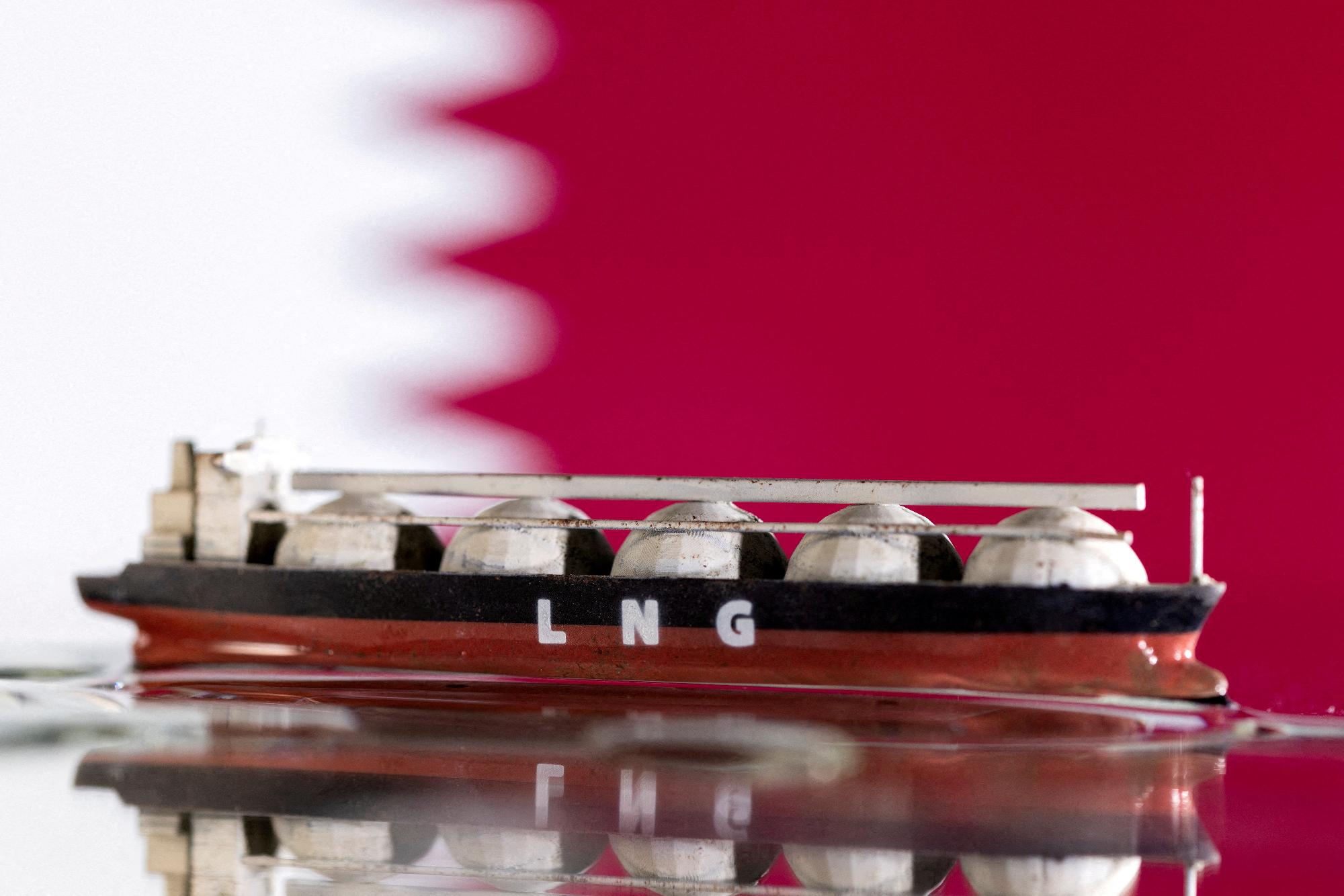
LONDON, Feb 27 (Reuters) - Qatar's planned expansion of liquefied natural gas (LNG) production could see it control nearly 25% share of the global market by 2030 and squeeze out rival projects including in the United States where President Biden paused new export approvals, market experts say. Qatar, one of the world's top LNG exporters, plans an 85% expansion in LNG output from its North Field's current 77 million metric tons per year (mtpa) to 142 mtpa by 2030, from previously expected 126 mtpa. Some market experts said that the move will have an impact on global projects in the United States, East Africa, and elsewhere which requires financing and long-term customers commitment to reach final investment decision (FID), given Qatar's edge as the world's lowest cost producer. "The Qataris realised that they should be able to offer pretty much the most competitive prices. They have the reserves, lower costs for building incremental capacity, the relationship with engineering firms and existing clients, so why stop here?," said Ira Joseph, Senior Research Associate at Columbia University's Center on Global Energy Policy. "This suggests that they are hurtling into use it or lose it mode. If you're the world's low cost producer, why not throw down the hammer & scare away any competition that's requiring long-term customers & financing," he added. Fraser Carson, Senior Research Analyst of Global LNG at Wood Mackenzie said the timing of Qatari announcement is "fortuitous", as other major LNG competitors stall, in light of the Biden administration's pause of U.S. LNG export approvals, Russian LNG is sanctioned and as civil unrest continues in Mozambique. Competition between Qatar and the United States intensified following Europe's decision to wean off dependence on Russia's pipeline gas following its invasion of Ukraine, as U.S. gas suppliers filled the supply vacuum, establishing themselves as the world's biggest LNG exporter in 2023, surpassing Qatar, though Qatari supplies also helped to replace the volumes. The U.S. LNG capacity will almost double over the next four years, but a decision to pause approvals for applications for new LNG export terminals, for environmental reviews, has prompted warnings from gas importers that the move would compromise future energy security worldwide. "The signal the U.S. projects need to take from this: if they don't go ahead, someone will," said Kaushal Ramesh, Rystad Energy's vice president for LNG research. ASIA'S GROWTH HORIZON The new expansion is expected to lead to a period of more stable, lower prices across the rest of the decade and would encourage greater take-up of LNG from Asian buyers, said Alex Froley senior LNG analyst at data intelligence firm ICIS. "Bringing online 16 mtpa of low cost volumes is positive for Asia and is exactly what the LNG market needs to guarantee a long-term future in emerging Asia", Rystad's Ramesh said. Global gas market will grow to 580-600 mtpa by 2030, from current 400 mtpa, mainly driven by Asian demand. Qatar is expected to control 24-25% of that market by then. "Qatar is geographically well placed to meet current high demand in Northeast Asia in China, Japan and Korea and future demand in the only real growth region of South Asia, especially in India," said Henning Gloystein, Practice Head, at Energy and Resources at Eurasia Group. QatarEnergy chief Saad al-Kaabi said on Sunday that he still believes that there is ample opportunity for gas to be part of the energy mix in the future: "We think there will be a shortage of gas, even with our project". While there are concerns over the additional carbon emissions impact from new global LNG production, Others argue that there is still huge scope for gas to reduce emissions by replacing coal and oil, ICIS' Froley said. "Despite being the world's largest LNG importer last year, China's overall energy mix is only around 8% gas against 61% for coal and 18% for oil, for example," he added, citing IEA figures. The world's top energy companies including Exxon Mobil (XOM.N) , opens new tab, Shell (SHEL.L) , opens new tab, TotalEnergies (TTEF.PA) , opens new tab and ConocoPhillips (COP.N) , opens new tab have played a central role in Qatar's LNG industry for decades. They all hold stakes in existing production facilities and in recent years acquired stakes in the new expansion phases, offering cash in exchange for LNG volumes. While the new contracts are not as lucrative as in the past, according to industry sources, they offer the companies an important foothold in the LNG industry, which they expect will continue to grow in the coming decades as economies shift from coal to less polluting natural gas. Industry sources expect Qatar to continue to seek partnerships with global players as it has a lot of LNG volumes to sell, with one source expecting Australia's Woodside (WDS.AX) , opens new tab, whose U.S. Lake Charles project is under threat by Biden's pause, might seek to become a Qatari partner, given they have recently shelved plans for a $52 billion tie-up with smaller rival Santos (STO.AX) , opens new tab. https://www.reuters.com/business/energy/qatars-new-lng-expansion-plans-squeeze-out-us-other-rivals-2024-02-27/
2024-02-27 05:54
LONDON, Feb 27 (Reuters) - Euro zone bonds are trading more in sync with their U.S. peers than ever before, as investors ignore the slowdown in Europe and remain laser-focused on inflation and interest rates, driving correlations between the two markets to a record high in recent weeks. Although the enormous U.S. bond market typically exerts a big influence, the tight correlations have puzzled some bond analysts, given the weakness of the euro zone economy. American bank State Street found the 52-week correlation between moves in German and U.S. two-year bond yields has risen to a record high. Correlations between longer bonds are also highly elevated. "The U.S. has always driven everything, but not to this magnitude," said Jon Jonsson, senior fixed income portfolio manager at Neuberger Berman. "The correlations have gone up quite dramatically, this is really stunning." He added: "As an investor, it's difficult. You try to make country specific-bets, but you're not getting any benefit." The U.S. economy has powered ahead of Europe's, where governments spent less during the pandemic and industries have been hit hard by the energy crisis. Euro zone gross domestic product grew just 0.5% in 2023, while U.S. GDP rose 2.5%. Survey-based data shows the U.S. private sector is growing, while the euro zone's is contracting. But bond investors and strategists say inflation has become almost the sole focus of markets. They also note that the European Central Bank typically follows the Federal Reserve, and the U.S. bond market is a behemoth that dictates conditions around the world. INFLATION OBSESSION Inflation began to surge in the euro zone and the United States in 2021, prompting the Fed to hike rates in March 2022 and the ECB to follow in July. Price growth peaked at 9.1% in the U.S. in June 2022, four months before it topped out at 10.6% in the euro zone, before falling to around 3% in both. The lag in inflation and interest rates in the euro zone has left investors looking to the U.S. economy for hints about what might be coming. "A common factor has been driving inflation in the U.S. and the euro zone...the onset of COVID and the resolution of the adverse supply shock," said Stephen Jen, CEO of investment firm Eurizon SLJ Capital. "Bond yields, therefore, are tracking each other primarily reflecting the high correlation of inflation." ECB Governing Council member Robert Holzmann told Bloomberg on Friday: "Typically, the Fed in the last few years has always gone first by about half a year, so I would assume...we would also follow with delay," noting that the "currency areas are interrelated". KING DOLLAR U.S. bond yields have long been the benchmark for borrowing costs everywhere. But that position has grown as U.S. administrations have issued debt at a faster pace than Europe to tackle the financial crisis and COVID-19 slump. There is $21.9 trillion of U.S. government securities outstanding, excluding that held by the central bank, according to Barclays estimates. That compares to $7.5 trillion for the euro zone and $1.2 trillion for Germany, its biggest economy. As sovereign bonds are imperfect substitutes for each other and that money can flow around the world easily, when the U.S. moves, everything else tends to move in the same direction. Yet many investors think record correlations are unlikely to last. "We expect this correlation to fall back as we begin to see more of a divergence in macro and policy outcomes," said Julian Le Beron, chief investment officer for core fixed income at Allianz Global Investors. Michael Metcalfe, head of macro strategy at State Street, said the correlation in bonds was likely subduing volatility in currency markets, which are driven by cash flowing towards countries with higher relative bond yields. A divergence in bond markets could therefore ignite volatility in FX, which has hit multi-year lows this month, he said. Barclays economists think the ECB is in fact likely to cut interest rates in April ahead of the Fed in June, given the weaker euro zone economy. "Say the ECB makes significant revisions to their forecasts, and takes a dovish turn, then it again bodes well for (German) Bunds to outperform Treasuries," said Barclays' head of euro rates strategy Rohan Khanna. https://www.reuters.com/markets/rates-bonds/euro-zone-bond-markets-mimic-treasuries-pushing-correlations-record-2024-02-27/