2024-02-27 02:45
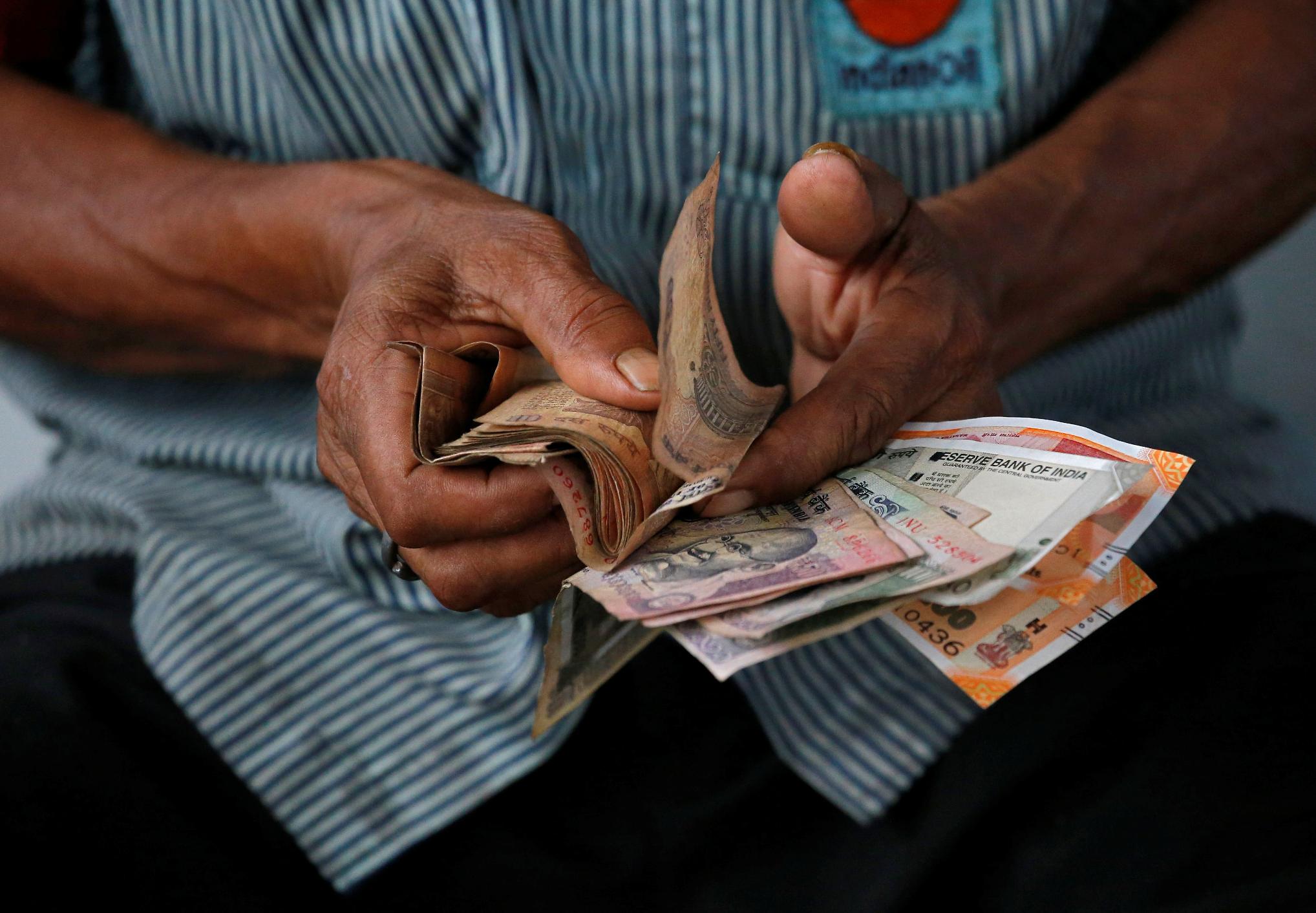
MUMBAI, Feb 27 (Reuters) - The Indian rupee is likely to open little changed on Tuesday and while the currency may tick up during the session aided by debt and equity inflows, traders expect month-end dollar demand from importers to keep a lid on sharp gains. Non-deliverable forwards indicate rupee will open at around 82.87-82.88 to the U.S. dollar, barely changed from its close at 82.89 in the previous session. The dollar index was at 103.74 after slipping nearly 0.2% on Monday while most Asian currencies were rangebound. Continued debt inflows are likely to "lift the mood," for the rupee but given the buoyant dollar demand in the 82.85-82.90 zone, do not expect to "see much movement," during the session, a foreign exchange trader at a state-run bank said. Foreign investors have net bought Indian bonds worth nearly $2.4 billion in February so far. The rupee will also be supported this week by inflows related to the rebalancing of MSCI equity indices which is expected to drive passive inflows of $1.2 billion into Indian equities, according to calculations by Nuvama Alternative & Quantitative Research. The rupee is expected to see some gains but month-end dollar demand could limit them, keeping the currency rangebound between 82.80 and 83.05, said Dilip Parmar, an FX research analyst at HDFC Securities. Meanwhile, another U.S. Federal Reserve official signalled that the central bank was in no rush to cut interest rates, echoing a sentiment from other policymakers who have pushed back against early rate cut expectations. "With inflation running above target, labor markets tight and demand showing considerable momentum, my own view is that there is no need to preemptively adjust the stance of policy," Kansas City Federal Reserve Bank President Jeffrey Schmid said on Monday. KEY INDICATORS: ** One-month non-deliverable rupee forward at 82.92/82.96; onshore one-month forward premium at 7.75 paisa ** Dollar index 103.76 ** Brent crude futures down 0.1% at $82.44 per barrel ** 10-year U.S. note yield at 4.27% ** As per NSDL data, foreign investors sold a net $187.23 million worth of Indian shares on Feb. 23 ** NSDL data shows foreign investors bought a net $148.79 million worth of Indian bonds on Feb. 23 https://www.reuters.com/markets/currencies/rupees-gains-buoyant-inflows-seen-hurdled-by-month-end-dollar-demand-2024-02-27/
2024-02-27 01:53
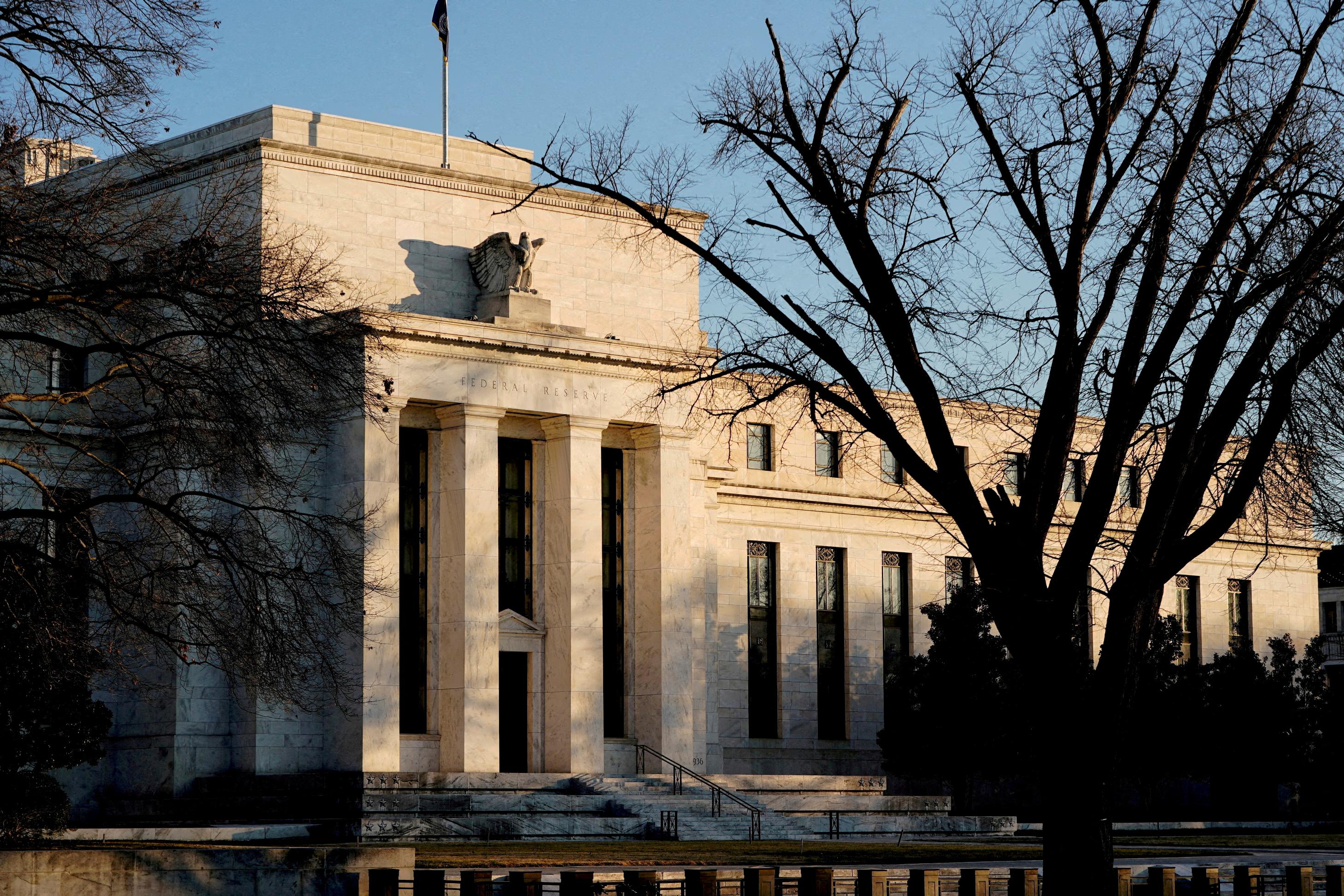
Feb 26 (Reuters) - Kansas City Federal Reserve Bank President Jeffrey Schmid on Monday used a debut speech on policy to signal that he remains focused on the threat of high inflation and is in no rush to cut interest rates. "With inflation running above target, labor markets tight and demand showing considerable momentum, my own view is that there is no need to preemptively adjust the stance of policy," Schmid said in his first extensive public remarks since he began the job last August. "Instead, I believe that the best course of action is to be patient, continue to watch how the economy responds to the policy tightening that has occurred, and wait for convincing evidence that the inflation fight has been won." Schmid's approach suggests a hawkish outlook in sync with recent Kansas City Fed presidents; indeed, he told the Economic Club of Oklahoma that both Esther George and Thomas Hoenig are "dear friends." His approach is also one that resonates at least for now with the message of other Fed policymakers in recent weeks signaling they want to keep the policy rate in its current 5.25%-5.5% range until they have greater confidence that inflation is headed to the Fed's 2% goal. Shipping disruptions in the Red Sea could put renewed upward pressure on goods prices, Schmid said, and hotter-than-expected consumer price inflation in January, especially for services, argues for "caution" on expectations for further disinflation. "A further moderation in demand could be needed to tame price and wage pressures," he said. Schmid also signaled hawkishness with regards to the Fed's balance sheet. He said he is in "no hurry" to halt the ongoing reduction in the size of the balance sheet, and does not favor an "overly cautious approach" on the runoff. Some Fed policymakers have argued that the time may soon come to slow those reductions to give time for the Fed to assess how far it can shrink its portfolio without roiling markets. "Some interest-rate volatility should be tolerated as we continue to shrink our balance sheet," Schmid said. Shrinking the balance sheet and reducing the Fed's footprint in financial markets should be a priority, he added. In addition, Schmid said, banks should treat the Fed's discount window, the U.S. central bank's facility for extending emergency loans, as part of their "strategic stack" for funding rather than just in times of crisis. https://www.reuters.com/markets/us/feds-schmid-no-need-preemptively-cut-rates-2024-02-27/
2024-02-27 01:02
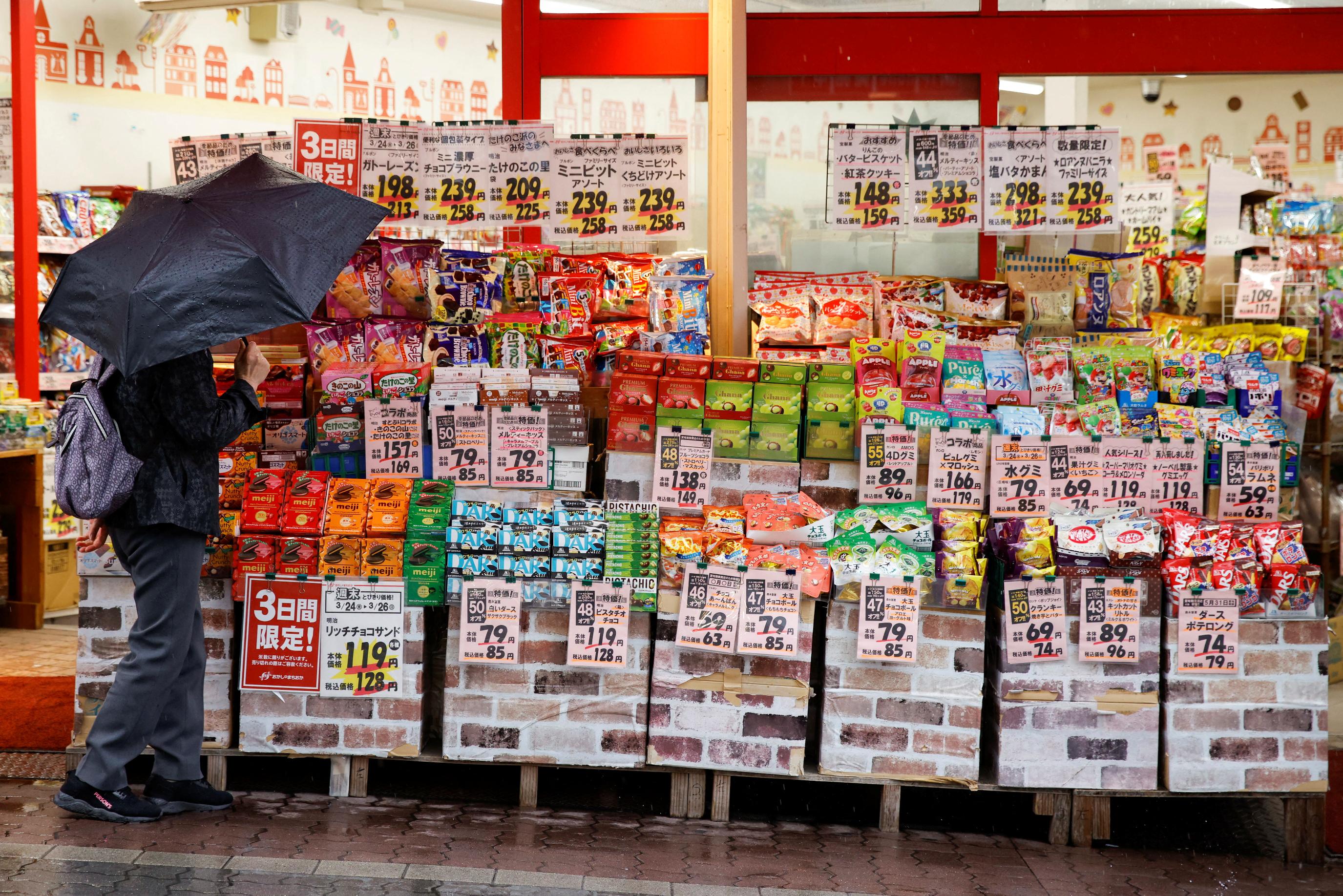
Jan core CPI rises 2.0% yr/yr, vs forecast 1.8%, Dec 2.3% Index excluding fresh food, fuel also slows to 3.5% yr/yr Markets expect BOJ to end negative rates in March or April TOKYO, Feb 27 (Reuters) - Japan's core consumer inflation slowed for a third straight month in January but beat forecasts and held at the central bank's 2% target, keeping alive expectations it will end negative interest rates by April. The 2.0% increase beat median market forecasts for a 1.8% rise, the internal affairs and communications ministry data showed on Tuesday, underscoring views waning cost-push inflation from commodity imports could ease the pain of higher living costs. However, the steady inflation also reaffirms expectations hefty pay hikes will be offered by big firms at labour-management wage talks on March 13, paving the way for an end to negative interest rates as soon as March or April. Japan's core consumer price index, which includes oil products but excludes fresh food prices, compared with economists' median estimate for a 1.8% annual gain. The slowdown was due in part to a big drop in energy costs, reflecting the base effect of last year's sharp rise and government subsidies to curb gasoline and utility bills, in a sign of waning cost-push pressure that had kept core inflation at or above the Bank of Japan's 2% target since April 2022. Going forward, the key is whether wage hikes beat inflation enough to give households purchasing power, so companies can continue to pass on costs and keep inflation durably at the BOJ's 2% target, analysts say. The so-called "core core" index that strips away both fresh food and energy prices, closely watched by the BOJ as a narrow gauge of the broader price trend, rose 3.5% year-on-year in January, following a 3.7% rise in December. https://www.reuters.com/markets/asia/japans-inflation-beats-forecasts-end-negative-rates-still-sight-2024-02-27/
2024-02-27 00:17
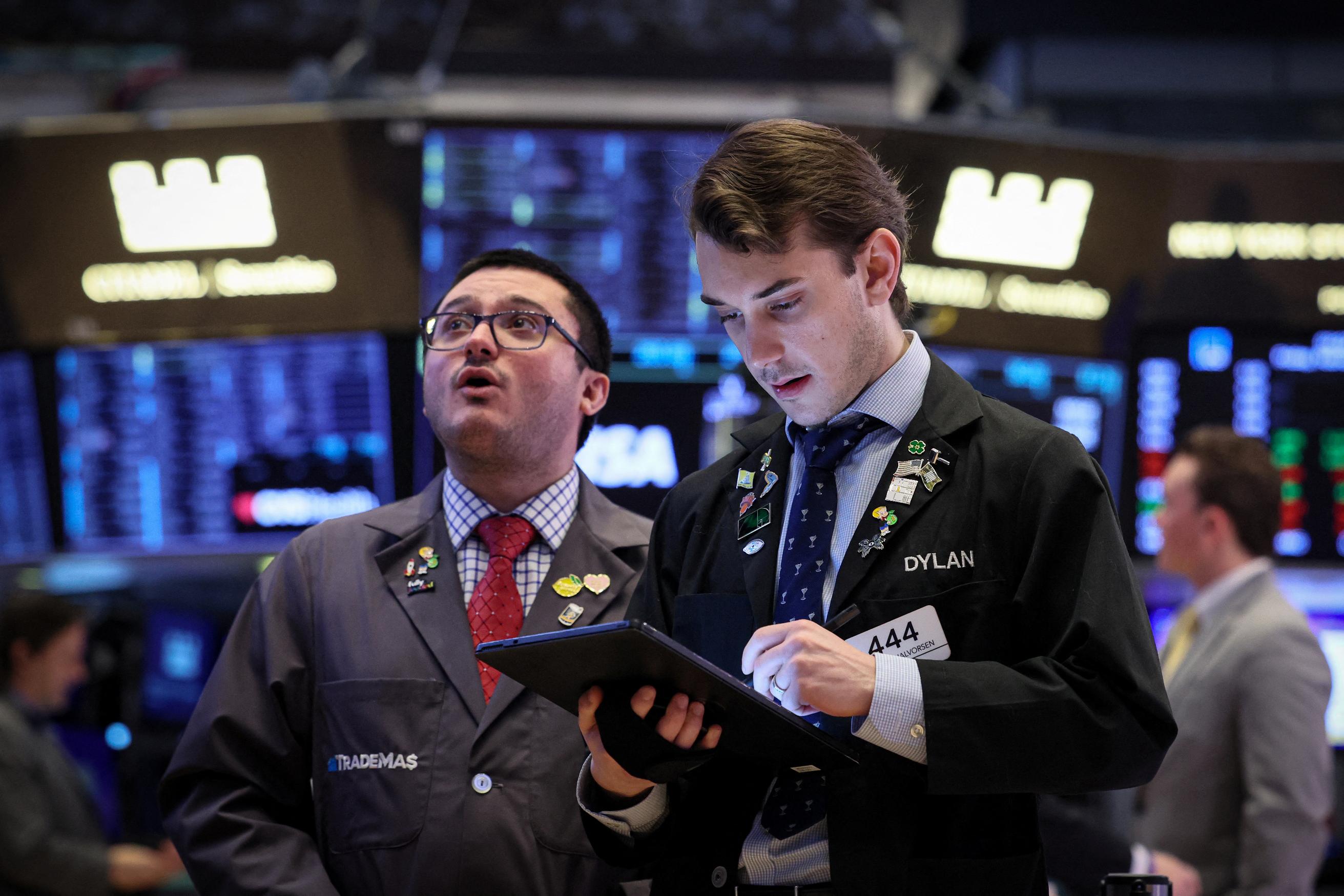
Berkshire erases gains as U.S. threatens to sue unit Intuitive Machines stock plummets after moon lander tips over Domino's Pizza jumped after results Indexes off: Dow 0.16%, S&P 500 0.38%, Nasdaq 0.13% NEW YORK, Feb 26 (Reuters) - U.S. stocks ended with modest losses on Monday, as the focus shifted after last week's AI-fueled rally to upcoming economic data that could affect the timing of the Federal Reserve's expected interest rate cut. The release of January's personal consumption expenditures price index (PCE)- the Fed's preferred inflation gauge - on Thursday could dampen the recent enthusiasm should the data indicate price pressures are not cooling fast enough. Markets have all but ruled out a cut at the Fed's March meeting and have recently pushed back expectations for easing to June from May, CME's FedWatch Tool , opens new tab showed, on the heels of surprisingly strong consumer and producer price data. Reports on durable goods, consumer confidence and manufacturing activity are due later this week. "It's a lot of position squaring ahead of the big data, investors are just trying to make sure they're not underweight or overweight since trends are not moving," said Rob Haworth, senior investment strategist at U.S. Bank Wealth Management in Seattle. "The jobs report is another week away so eyes are kind of turning Thursday to PCE price index rather than anything else. There is a lot more data this week than last week but it's still not the biggest of the data." A strong forecast from chip designer Nvidia last week added to this year's artificial intelligence frenzy, helping to push the Dow and S&P to new highs and the Nasdaq just shy of its November 2021 record, while keeping disappointment over the Fed's delayed rate cut in check. The Dow Jones Industrial Average (.DJI) , opens new tab fell 62.30 points, or 0.16%, to 39,069.23. The S&P 500 (.SPX) , opens new tab lost 19.27 points, or 0.38%, at 5,069.53 and the Nasdaq Composite (.IXIC) , opens new tab lost 20.57 points, or 0.13%, at 15,976.25. The S&P 500 has gained for 15 of the past 17 weeks - something which has only happened only once in the last 50 years, in 1989, according to Deutsche Bank. Helping to curb declines on the Nasdaq was a 4.02% gain in Micron Technology (MU.O) , opens new tab as it started mass production of its high-bandwidth memory semiconductors for use in Nvidia's latest AI chip. The Philadelphia semiconductor index (.SOX) , opens new tab rose 1.05%. Google-parent Alphabet (GOOGL.O) , opens new tab stumbled 4.44% after announcing plans to relaunch its AI tool in the next few weeks. It was paused last week after inaccuracies in some historical depictions. Warren Buffett-led Berkshire Hathaway dipped 1.94%, erasing early gains on investor worries after the U.S. government warned of a lawsuit against its power company, PacifiCorp. Domino's Pizza (DPZ.N) , opens new tab jumped 5.85% after surpassing Wall Street expectations for quarterly same-store sales. Intuitive Machines (LUNR.O) , opens new tab plunged 34.62% after the company said its spacecraft had tipped over shortly after touching down on the lunar surface. Declining issues outnumbered advancers for a 1.6-to-1 ratio on the NYSE. Advancing issues outnumbered decliners by 1.2-to-1 on the Nasdaq. The S&P index recorded 69 new 52-week highs and one new low, while the Nasdaq recorded 230 new highs and 92 new lows. Volume on U.S. exchanges was 10.89 billion shares, compared with the 11.66 billion average for the full session over the last 20 trading days. https://www.reuters.com/markets/us/futures-muted-traders-buckle-up-inflation-test-2024-02-26/
2024-02-27 00:08
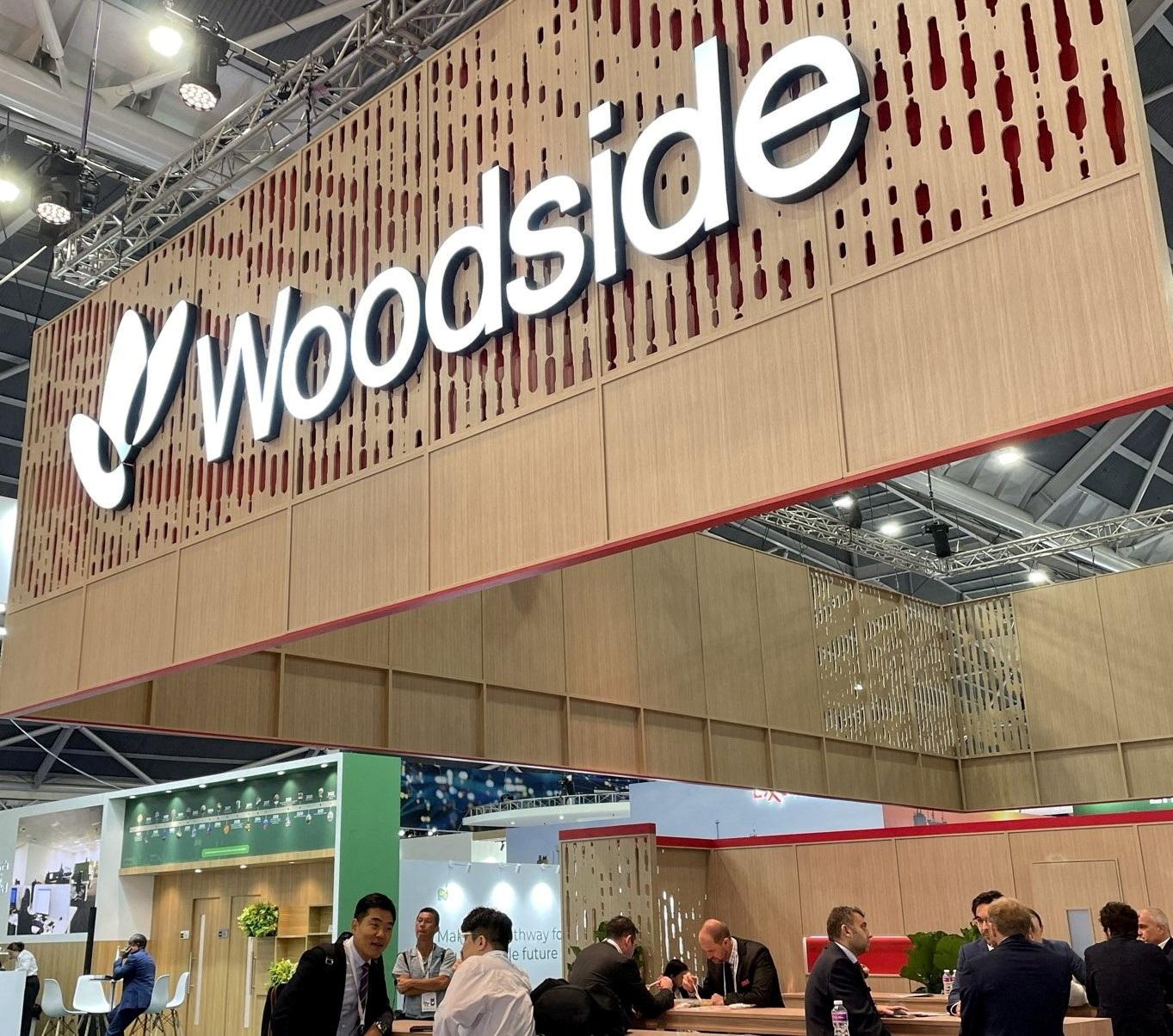
FY underlying profit $3.32 bln, beats LSEG estimate Final dividend 60 cents per share, lower than 2022 Maintains FY24 production and capex guidance Shares up 1.3% in early trade Feb 27 (Reuters) - Australia's top oil and gas explorer Woodside Energy (WDS.AX) , opens new tab posted a 37% drop in annual underlying profit on Tuesday, as lower realised prices for its products offset higher sales and production. Oil and natural gas prices softened in 2023, as slowing global growth and a weaker-than-expected economic recovery in China weighed on demand. "Compared with 2022, 2023 full-year financial statements primarily reflected lower prices across all commodities, partly offset by higher sales volumes," Woodside Energy said in a statement. For the year ended Dec. 31, Woodside received $68.6 per barrel of oil equivalent (boe), compared with $98.4 per boe a year earlier, while annual sales volume rose 19% to 201.5 million barrels of oil equivalent (mmboe). As a result, underlying net profit after tax (NPAT) came in at $3.32 billion for 2023, down from $5.23 billion , opens new tab in 2022. However, that beat an LSEG estimate of $3.03 billion. Shares of the company rose 1.3% to A$30.39 by 2313 GMT, while the benchmark index (.AXJO) , opens new tab was down about 0.3%. "Today's underlying NPAT reflects an 10% ROE (return on equity), well below offshore peers of about 19%," analysts at Citi said in a note. "With no credible new growth projects after Trion in the hopper, the company will likely have to acquire assets to generate shareholder wealth," they said, adding that there was little reason to own Woodside shares on Tuesday. Woodside's Sangomar oil and gas project in Senegal remains on track for first oil production in mid-2024, while the Scarborough gas project off the Pilbara coast in Western Australia continues to target first LNG cargo in 2026. Last week, the company announced the sale of a 15.1% non-operating stake in its Scarborough project to Japan's JERA for about $1.4 billion - its second stake sale to a Japanese LNG buyer in six months. Woodside, which recently scrapped talks on a potential $52 billion merger with smaller rival Santos (STO.AX) , opens new tab, announced a final dividend of 60 cents per share, lower than the 144 cents apiece declared for 2022. It maintained its fiscal 2024 production guidance of between 185 and 195 mmboe and reaffirmed its capital expenditure forecast of between $5.0 billion and $5.5 billion. https://www.reuters.com/business/energy/australias-woodside-energy-posts-37-drop-full-year-profit-2024-02-26/
2024-02-26 23:58
SAO PAULO, Feb 26 (Reuters) - Brazilian poultry and pork processor BRF SA (BRFS3.SA) , opens new tab turned a profit of 823 million reais ($165.26 million) in the final three months of 2023, according to an earnings statement on Monday, ending a seven-quarter losing streak. Including effects of hyperinflation in Turkey, where it also has large operations, net profit was 754 million reais, still much higher than analysts' forecasts of a net income of 339.57 million reais for BRF. The company cited factors including a sharp drop in the price of corn, a key feedstock ingredient, along with operating improvements in a broad turnaround that began several quarters ago. A recovery of export markets and 66 new authorizations for BRF export plants also helped the company "to end the year better than it started," CEO Miguel Gularte said. "There are variables that we do not control, which are demand and price," Gularte said. "But if you have predictive power, product, delivery, logistics.... you can capitalize on the good moments and the peaks of the cycle." Lower grain prices and better demand dynamics should continue throughout 2024, he said. In spite of a strong fourth quarter, BRF lost 1.87 billion in 2023, marking the second consecutive yearly loss for the world's largest chicken exporter. Still, BRF said higher fresh meat prices drove a return of the double-digit EBITDA margins in the final quarter, referring to the international segment. According to BRF, profitability rose "across geographies" in the period. The most impressive gains came from the Gulf region, an important market where it sells "halal" products produced according to Muslim dietary requirements. The Sadia and Banvit brands remain market leaders in its halal segment, BRF said. Gularte described sales in the Middle East as "the most evident example of international markets' comeback." In Brazil, the company posted EBITDA margin of 15.6%, higher than the 9.1% recorded a year earlier thanks to better demand for processed food products. BRF said overall net sales in the fourth quarter were 14.4 billion reais, 2.3% below the fourth quarter of 2023. The final quarter of the year is normally strong because of the holiday season. BRF said it generated 613 million reais cash in the period, the first time in three years it amassed that much, CFO Fabio Mariano said in comments about results. The company also noted EBITDA, a measure of operating income, was 1.9 billion reais in the fourth quarter, above the consensus of analysts expectations of 1.79 billion reais. In the whole of 2023, BRF reported EBTIDA of 4.7 billion reais, 15% higher than 2022 despite a global chicken glut. ($1 = 4.9799 reais) https://www.reuters.com/markets/commodities/brazils-brf-ends-seven-quarter-losing-streak-earns-16526-million-q4-2024-02-26/