2024-02-26 10:34
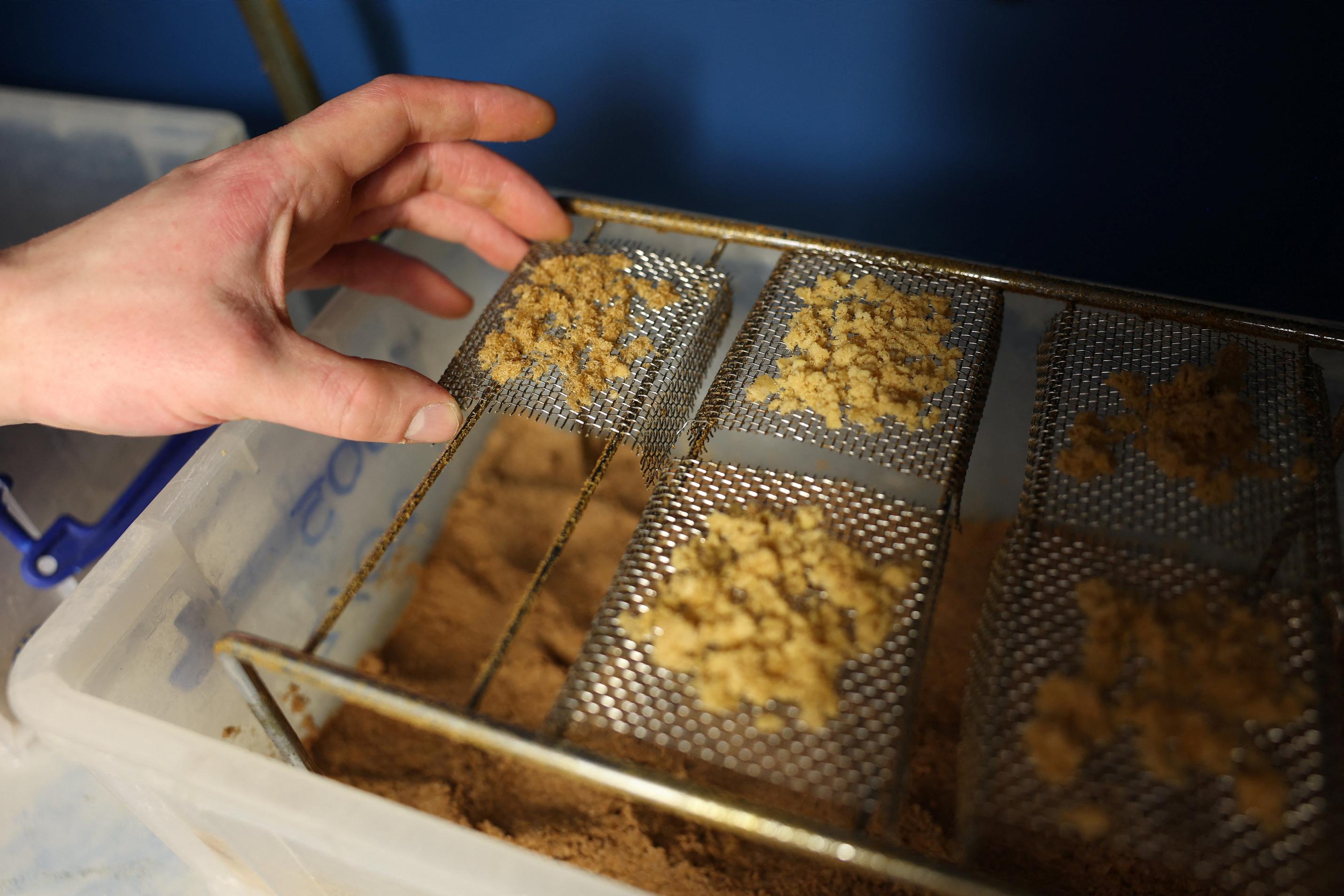
LONDON, Feb 26 (Reuters) - Buzzing underneath a set of railway arches in central London are hundreds of thousands of little flies, showcasing insect-farming technology that could help fight climate change. At its research centre, eight-year-old startup Entocycle is aiming to show how the process of turning protein-rich bugs into food for chickens and pigs could be adopted on a large scale. The flies themselves feed on almost any food waste and are better for the planet than traditional animal foods such as soy, which have a much higher carbon footprint, explains founder and chief executive Keiran Whitaker. "We cut down rainforests to produce soy, we overfish the oceans to catch fishmeal, and then they get turned into protein feed that gets shipped all over the world again to feed the animals," he says. "It's incredibly unsustainable." Insect protein has become a popular alternative in recent years across agriculture and aquaculture as demand for animal feed surges, with companies including U.S. food giant Cargill adopting the use of insect feed. Entocycle, which Whitaker expects will become profitable later this year, aims to bring an industrial-level efficiency to insect farming, designing hardware that includes precise measuring devices, robotic arms and a temperature-controlled setup for breeding insects. With the rumble of trains overhead and the acrid scent of fly faeces hanging heavy around the office, engineers and biologists in white lab coats are preparing for a significant expansion of Entocycle's research centre over the coming weeks. BUG BUSINESS At the heart of the effort is the humble and tiny black soldier fly, widely recognised for its potential to help fight climate change by being a more environmentally friendly protein source. "It is the quickest, cheapest, most sustainable insect to farm and it's a non-disease, non-pest species found all over the world," Whitaker says of the insect, which gets turned into packagable protein during its wriggly, worm-shaped larva phase. Most of the reared black soldier flies at its London centre become insect protein. But a small proportion are bred in a humid insectary, where they will chomp for days on food waste — organic matter derived from out-of-date sandwiches to barley discarded by local breweries — before laying hundreds of eggs, enabling the cycle to continue. British entomologist George McGavin, who calls the black soldier fly the superstar of the edible insect industry, says insect farming can help produce "seriously large amounts of protein" in a small space and in very little time. "Insect farming actually offers a very viable alternative — and one which which is efficient, relatively easy to do, and without any ecological risks that I can see," McGavin says. https://www.reuters.com/business/environment/london-insect-farm-hatches-plan-greener-way-feed-animals-2024-02-26/
2024-02-26 10:33
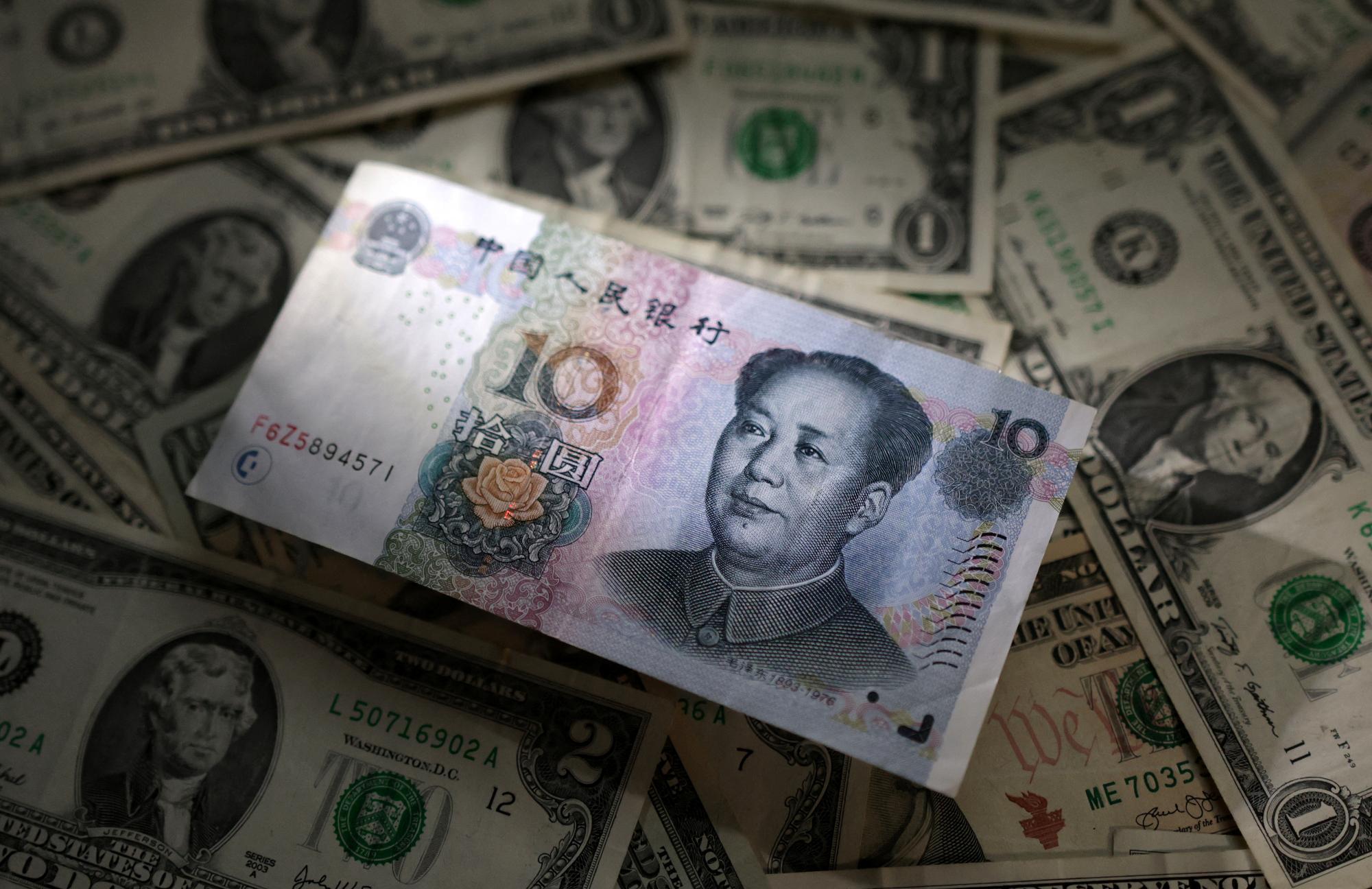
SHANGHAI/SINGAPORE, Feb 26 (Reuters) - Chinese banks purchased the most dollars from their clients via FX swaps in January, official data from the FX regulator showed on Monday, suggesting exporters preferred to only temporarily acquire the local currency while holding on to dollars. Chinese banks' foreign exchange purchases via swaps from their clients hit $50.9 billion in January, the highest level on record, data from the State Administration of Foreign Exchange (SAFE) showed. The data shows exporters are increasingly turning to the swap market to convert their overseas earnings and remittances into yuan, rather than outright dollar selling, as they seek higher returns on dollars and wait for better exchange rates. Such a swap implies exporters give the banks their dollars and receive yuan through a contract that reverses the transaction at maturity. Heightened interest in using the FX swaps to temporarily acquire the yuan comes as yield differentials between the world's two largest economies widened in January, as market participants pushed back on the timing of interest rate cuts in the United States to drive the dollar higher. And such an expectation increased corporates' willingness to hold on to dollars. "As the yuan interest rates are much lower compared to the dollar and euro interest rates, Chinese exporters have the incentives to repatriate just enough FX receipts into the yuan for payments while keeping the rest in FX deposits," said Tommy Wu, senior China economist at Commerzbank. "This trend will likely persist for longer because even after the Federal Reserve and the European Central Bank (ECB) start cutting rates at some point this year, the dollar and euro interest rates will remain much higher than the yuan interest rates." Yield gap between China's benchmark 10-year government bonds and U.S Treasuries for the same tenor stood at 185 basis points on Monday, up from 128 basis points at the end of 2023. https://www.reuters.com/markets/currencies/chinese-banks-dollar-purchases-via-swaps-clients-hit-record-high-jan-2024-02-26/
2024-02-26 09:20
MUMBAI, Feb 26 (Reuters) - India's central bank is easing restrictions on banks' arbitrage trades between the outright foreign exchange over-the-counter (OTC) and the non-deliverable forward (NDF) markets, four people familiar with the matter said. The Reserve Bank of India (RBI) has allowed banks, that have made requests, to resume such trades, a person directly familiar with the central bank’s thinking said. "There have been banks who have called and asked whether they can start doing it," and the central bank has approved, this person said. At least two public-sector banks and a private-sector lender have been allowed to recommence arbitrage trades, according to three bankers. Arbitrage trades allow investors to benefit from the price differences of securities in different markets but can exaggerate price trends. The RBI had imposed an informal ban on dollar/rupee arbitrage trades in August 2023, when it was intervening to prevent the rupee from slipping to a record low, while banks were taking advantage of price differences between the OTC and NDF markets. Banks' arbitrage positions "had ballooned" and were "running into double-digit billions of dollars", which the RBI "was not happy with", the person directly familiar with the central bank’s thinking said. Now, the RBI wants to avoid a repeat and is asking banks to do arbitrage in a way that "shouldn't adversely impact the currency", he said. "We had sought permission from RBI last week and they said you can go ahead," the chief manager at a mid-sized public sector bank said on Monday. The bank had not yet started building its FX arbitrage book. All the persons declined to be named since they are not authorised to speak to the media. The RBI did not immediately respond to an email seeking comment. The lifting of the NDF arbitrage restrictions comes at a time when the Indian rupee is enjoying a period of tranquillity. The currency's 30-day realized volatility has been below 2% since October and volatility expectations are lower than Asian peers. The low volatility has meant that the rupee's OTC and NDF rates diverge rarely and not by much, leading to fewer arbitrage opportunities. The RBI has permitted arbitrage trades, "but in a limited way and slowly," a trader at the second public sector bank said. "Currently, there is little to no arbitrage, so activity on our end has been slow." https://www.reuters.com/world/india/india-cenbank-lifting-curbs-forex-non-deliverable-forward-arbitrage-by-banks-2024-02-26/
2024-02-26 08:58
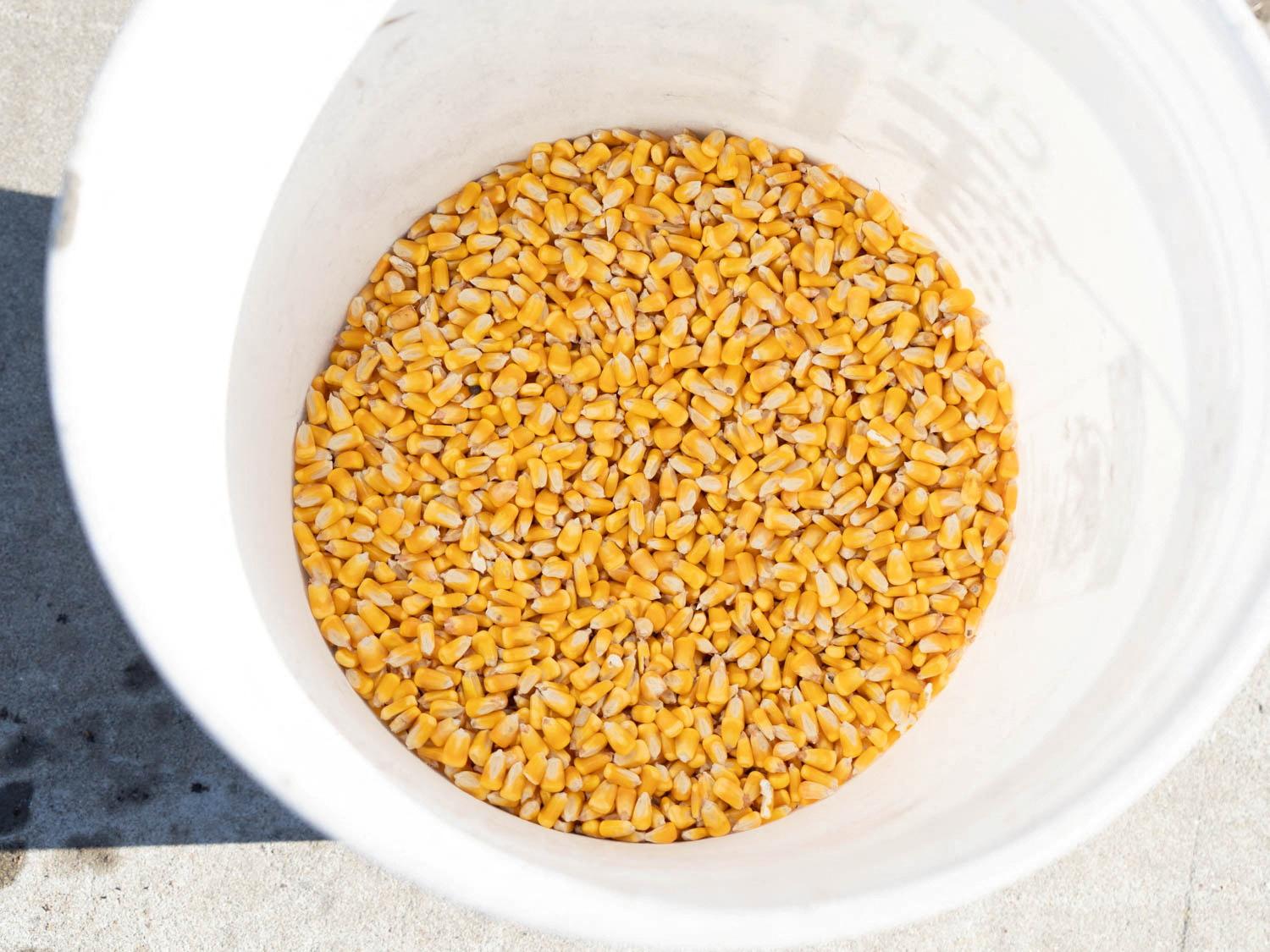
NAPERVILLE, Illinois, Feb 25 (Reuters) - U.S. grain and oilseed markets have posted historic declines so far this year with the recovery of global supplies, and prices continued to fall last week even after speculators established their most bearish ever bets in Chicago corn. In the week ended Feb. 20, money managers increased their net short position in CBOT corn futures and options to a record 340,732 contracts from 314,341 a week earlier. That surpassed the prior all-time net short of 322,215 contracts set in April 2019. On the flip side, producers’, merchants’ and other end users’ net long in CBOT corn futures and options reached a record 58,342 contracts as of Feb. 20. This group of market participants rarely holds a net long and only do so when speculators are extremely bearish. The last time money managers held a net long in CBOT corn was in early August, and most-active corn futures have plunged close to 20% since then. The March and May corn contracts had shed between 2% and 3% in the week ended Feb. 20. Open interest in CBOT corn futures and options as of Feb. 20 was about normal for the date, but the percentage occupied by managed money gross shorts was nearly 25%, tying the April 2019 high. Money managers in the week ended Feb. 20 extended their net short in CBOT soybean futures and options to 136,677 contracts from 134,500 a week earlier, marking their 14th consecutive week as net soybean sellers. Before this, the longest selling streak was 10 weeks. The new managed money net short in soybeans is the most bearish since May 2019, which is also when the record net short of 168,835 contracts occurred. Funds last held a net long stance in soybeans at the turn of this year, and most-active CBOT futures are down about 13% since. Before 2019, the record managed money net short in soybeans was 118,863 futures and options contracts set in June 2017, and the biggest net short in corn was 230,556 contracts from November 2017. Between Wednesday and Friday, March and May corn futures fell another 4.5% and the same months for soybeans eased between 3.5% and 4%. Most-active corn and soybean futures on Friday both hit their lowest levels since late 2020, and front-month corn dropped below $4 per bushel for the first time since November 2020. Lackluster export demand for U.S. soybeans and big corn and soybean crops in South America have been weighing on the market for several weeks now, though the U.S. government’s recent projections for substantial domestic supply growth into 2025 offered another blow to prices. WHEAT AND SOY PRODUCTS Nearby CBOT corn, soybean, soybean meal and soybean oil futures all hit contract lows on Friday, though wheat’s latest lifetime lows were notched last Tuesday. Money managers were net sellers of CBOT wheat futures and options in the week ended Feb. 20, though their resulting net short of 68,524 contracts is well off recent maximums. In the same week, money managers were substantial sellers of CBOT soybean oil futures and options, expanding their net short to 52,841 contracts from 35,440 a week earlier. That is their most bearish oil stance for the date. They also continued selling CBOT soybean meal futures and options, raising their net short to 30,684 contracts from 27,592 a week earlier. Funds have been net meal sellers in 12 of the last 13 weeks, and their stance as of Feb. 20 is the date’s fourth most bearish after 2020, 2019 and 2016. Karen Braun is a market analyst for Reuters. Views expressed above are her own. https://www.reuters.com/markets/europe/funds-post-all-time-cbot-corn-short-extend-record-soy-selling-streak-2024-02-26/
2024-02-26 07:57
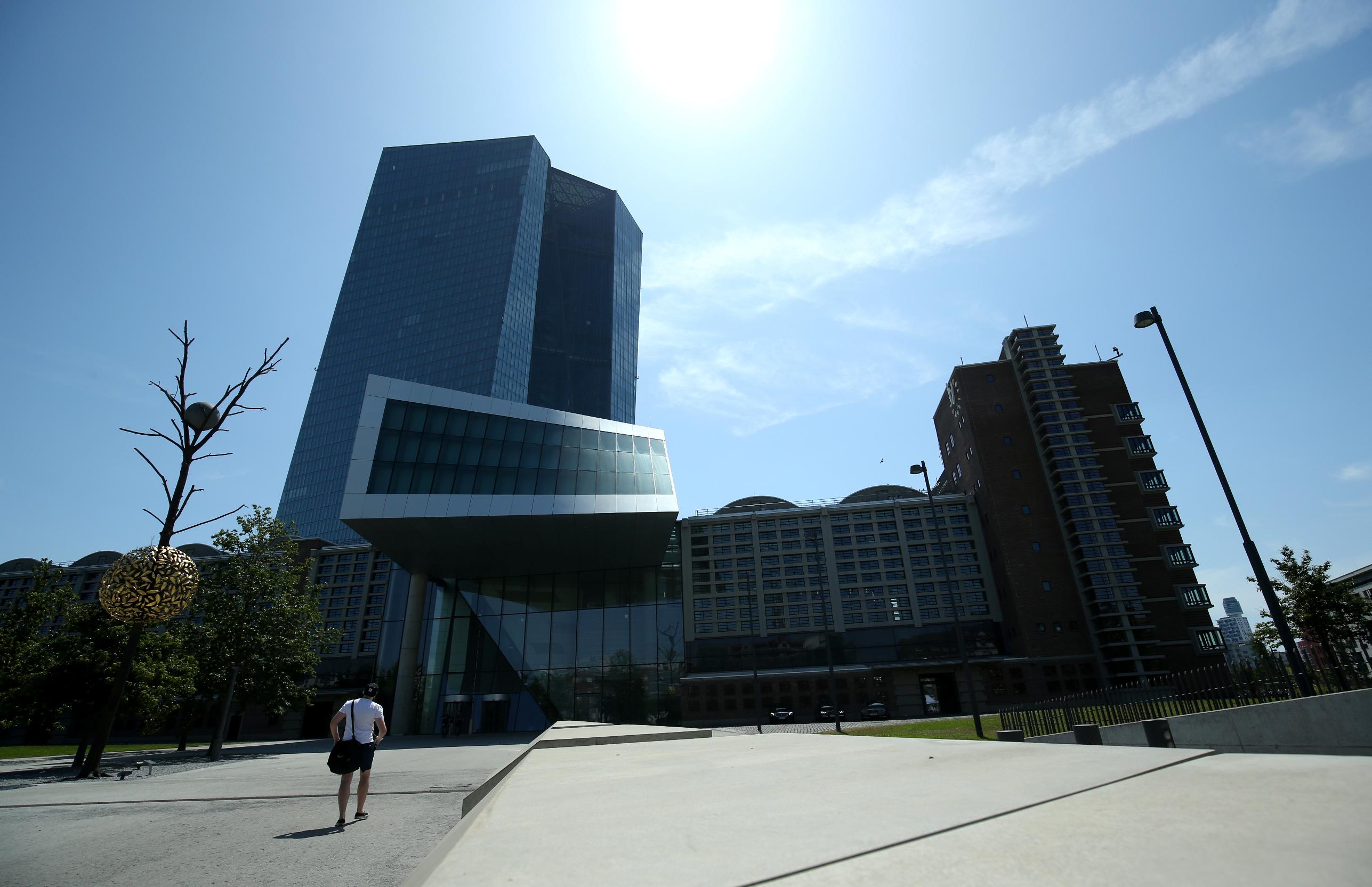
Feb 23 (Reuters) - Inflation data from the United States, Europe and Japan will frame the week with key PMI numbers due in China, and policymakers are gathering to debate how to restart the stuttering economic growth engine that is global trade. Meanwhile Ukraine marks the second anniversary of Russia's invasion. Here's your week ahead in world markets from Rae Wee in Singapore, Lewis Krauskopf in New York, and Dhara Ranasinghe, Mark John and Karin Strohecker in London. 1/OUTSTRIPPING EXPECTATIONS U.S. inflation is back in the spotlight on Thursday, with the personal consumption expenditures (PCE) price index set to give investors another look at an economy that has been stronger than many had expected. Recent data such as consumer prices, producer prices and employment show the world's largest economy continues to hum along despite months of elevated interest rates. One upshot has been an increasingly cautious Fed pushing back on expectations of an imminent rate cut. Bond yields have rebounded and the dollar has edged higher. Economists polled by Reuters expect a 0.3% increase for January after 0.2% in the previous month. A stronger-than-expected PCE number could further whittle away at market rate cut bets. 2/ HAPPY DAYS The European Central Bank must be pleased, surely? Upcoming flash February numbers on March 1 should show euro area inflation, which soared to double-digits in 2022, is moving back towards its 2% target. The reading slipped to 2.8% in January from 2.9% in December and is cooling quickly with growth anaemic and retreating energy prices. The composite reading will follow national data from Germany, France and Spain - all out before the ECB meeting on March 7. ECB vice-president Luis de Guindos says time and more data are needed before policymakers can say comfortably that record-high rates have done their job. Wage growth meanwhile has slowed but remains above levels consistent with 2% inflation. So, it is not quite happy days as rate setters navigate that tricky ground between keeping rates high enough to contain inflation while timing a first rate cut just right. 3/ A TOUGH ACT Policymakers in China and Japan are facing a tough battle to improve the dour growth outlook in their economies. Inflation figures for Japan are due on Tuesday - and expectations that consumer prices have cooled again in January might give the Bank of Japan (BOJ) one less reason to exit negative rates this year. The central bank faces a recessionary backdrop and sluggish consumer spending, but maintaining ultra-easy policy would mean more pain for the yen. Over in China, authorities have grown increasingly desperate to shore up a fragile economic recovery after delivering the biggest ever reduction in the benchmark mortgage rate and ramping up regulatory pressure to revive an ailing stock market. Friday's PMI data will provide more clarity on how effective Beijing's support measures have been. In the meantime, though, investors remain unimpressed. 4/ TRADING NOWHERE Rising protectionism and geopolitical conflict have cast a pall over world commerce, which last year grew just 0.2% - its weakest rate in five decades outside global recessions. What can the World Trade Organization, which starts its minister-level meeting in Abu Dhabi on Monday, do about it? Very little, most observers conclude. The body is hampered by disputes among member countries and above all by domestic politics that have turned sour on the free trade, which the WTO was set up to promote. Ahead of November U.S. elections, there is little chance of Washington removing its roadblock on new appointments to the WTO's top appeals bench - meaning its trade dispute arbitration body will remain idle. Meanwhile, prospects for deals in major sectors, such as farming and fisheries remain dim - meaning trade cannot be counted on to drive the global economy for the foreseeable future. 5/ OUTNUMBERED, OUTGUNNED Saturday marked the second anniversary of Russia's invasion of Ukraine - a conflict that has shaken and shaped not only the country itself but global politics, commodity markets and economies like no other in recent history. Prices for energy and many commodities are back below pre-war levels, though gold - an inflation hedge - is above February 2022 prices. Outgunned, outnumbered and facing growing concerns over the prospect of international aid, Ukraine is coming under increasing pressure. The International Monetary Fund warns that "timely support" for Ukraine from the U.S. and other international donors is needed to ensure the country's fiscal viability. Heads of the Group of Seven major democracies on Saturday pledged to stand by war-weary Ukraine, and Western leaders traveled to Kyiv to show solidarity. Meanwhile Russia, already severed from global financial system following swathes of sanctions, is facing fresh curbs from Washington, Britain and others following the death of opposition leader Alexei Navalny and the war entering its third year. https://www.reuters.com/business/take-five/global-markets-themes-graphic-2024-02-23/
2024-02-26 07:56
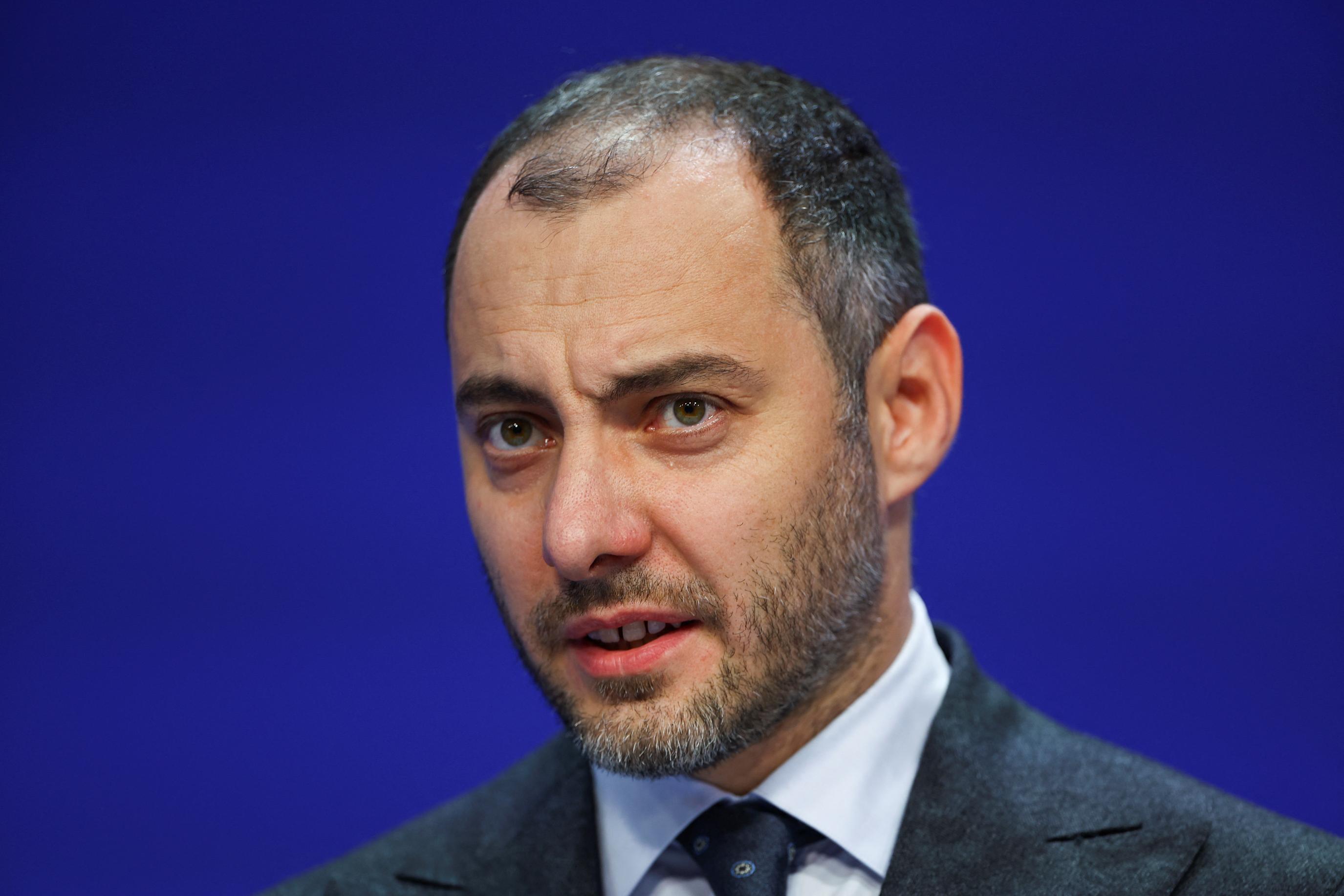
KYIV, Feb 26 (Reuters) - Kyiv has urged Poland to punish those responsible for Ukrainian grain spills at the border over the weekend, Ukraine's Deputy Prime Minister Oleksandr Kubrakov said on Monday. Around 160 tons of Ukrainian grain was destroyed at a Polish railway station amid large-scale protests in what a senior Ukrainian official said on Sunday was an act of "impunity and irresponsibility". "Those who have damaged Ukrainian grain must be found, neutralized, and punished. Two friendly civilized European states are interested in this," Kubrakov said on the social media platform X. Polish farmers protesting this month over what they describe as unfair competition from Ukraine and European Union environment regulations have blocked border crossings with Ukraine as well as motorways, and deliberately spilled Ukrainian produce from train wagons. Previous incidents of grain being spilled from trains took place on the border with Ukraine. Ukrainian President Volodymyr Zelenskiy said on Sunday it was important for Ukraine to maintain close relations with Poland, but that Kyiv was also ready to defend businesses that have been hurt by border blockades by Polish protesters. https://www.reuters.com/world/europe/kyiv-urges-poland-punish-those-behind-ukrainian-grain-spills-2024-02-26/