2024-02-26 00:43
World index dips slightly; oil prices climb Treasury yields rise; dollar index dips Markets await inflation data from US, euro area and Japan Feb 26 (Reuters) - A global equities index fell slightly on Monday after hitting record highs last week, as investors took a breather ahead of the next batch of U.S. economic data, while oil prices rallied on concerns about shipping disruptions. U.S. Treasury yields rose after an auction while the dollar fell slightly against a basket of currencies including the euro although it gained ground slightly against the yen. On Monday sales of new U.S. single-family homes rose less than expected in January amid a sharp decline in the South region, but demand for new construction remained underpinned by a persistent shortage of previously owned homes. In addition, Dallas Federal Reserve manufacturing data was positive. "The resiliency of the economy is shining through here. What that means is maybe that rates stay a little higher for longer," said Matt Stucky, chief portfolio manager for equities at Northwestern Mutual Wealth Management. Investors are waiting for data on U.S. durable goods orders due out on Tuesday and the U.S. Federal Reserve's favored measure of inflation - the core personal consumption expenditures (PCE) price index - is due on Thursday. "The PCE price inflation index (is) expected to show a little bit more inflation, in line with the numbers that we saw with the CPI and PPI, so the markets are bracing for that," said Peter Cardillo, chief market economist at Spartan Capital Securities, referring to readings of the consumer price index and the producer price index. The data will provide the next test for investors, who have had to rethink their bets on central bank rate cuts in recent weeks, surprised by strong U.S. job growth and inflation. Investors were also watching the risk that U.S. government agencies could be shut down if Congress cannot agree on a borrowing extension by Friday. On Monday the Dow Jones Industrial Average (.DJI) , opens new tab fell 62.30 points, or 0.16%, to 39,069.23 while the S&P 500 (.SPX) , opens new tab dropped 19.27 points, or 0.38%, to 5,069.53 and the Nasdaq Composite (.IXIC) , opens new tab lost 20.57 points, or 0.13%, to finish at 15,976.25. The U.S. stock market had risen to record highs last week with help from a bullish financial update from AI pioneer Nvidia (NVDA.O) , opens new tab. MSCI's gauge of stocks across the globe (.MIWD00000PUS) , opens new tab fell 1.97 points, or 0.26%, to 759.21. The STOXX 600 (.STOXX) , opens new tab index had closed down 0.37%. DEBT AUCTION Commodity-linked stocks put pressure on European indexes on Monday after the STOXX 600 hit record highs last week as comments from ECB policymakers had prompted optimism over rate cuts on Friday. Japan's blue-chip Nikkei scaled record highs for the second consecutive trading session, supported by upbeat performances in pharmaceuticals, although profit-taking limited momentum. The Nikkei (.N225) , opens new tab closed up 135.03 points, or 0.35%, to 39,233.71. But MSCI's broadest index of Asia-Pacific shares outside Japan (.MIAPJ0000PUS) , opens new tab closed 0.43% lower 0.43%, at 526.50. U.S. Treasury yields rose on Monday as investors sought a higher premium for taking on a record $127 billion in government coupon debt at two auctions that suggested demand was a bit weak ahead of key inflation data later in the week. The yield on benchmark U.S. 10-year notes rose 1.7 basis points from 4.26% late on Friday while the 30-year bond yield rose 1.4 basis points to 4.3942% from 4.38%. The 2-year note yield, which typically moves in step with interest rate expectations, rose 3.2 basis points to 4.7225%, from 4.69% late on Friday. In currencies, the dollar index edged down ahead of U.S. durable goods orders and the inflation reading. The dollar index fell 0.19% to 103.77, with the euro up 0.29% at 1.085. Against the Japanese yen , the dollar strengthened 0.12% to 150.68 ahead of Japanese inflation data due on Tuesday, forecast to slow to 1.8%. That could add to the case against policy-tightening by the Bank of Japan, the holdout dove among developed market central banks. In commodities, oil prices gained on Monday as European diesel demand, constrained by Russian sanctions and shipping disruptions, pulled prices higher in a market jittery with U.S. refinery output limited by planned overhauls, analysts said. U.S. crude settled up 1.43% at $77.58 a barrel and Brent finished at $82.53 per barrel, up 1.11%. Spot gold lost 0.2% to $2,031.55 an ounce. U.S. gold futures fell 0.68% to $2,024.80 an ounce. Copper lost 1.38% to $8,449.00 a tonne. https://www.reuters.com/markets/global-markets-wrapup-1-2024-02-26/
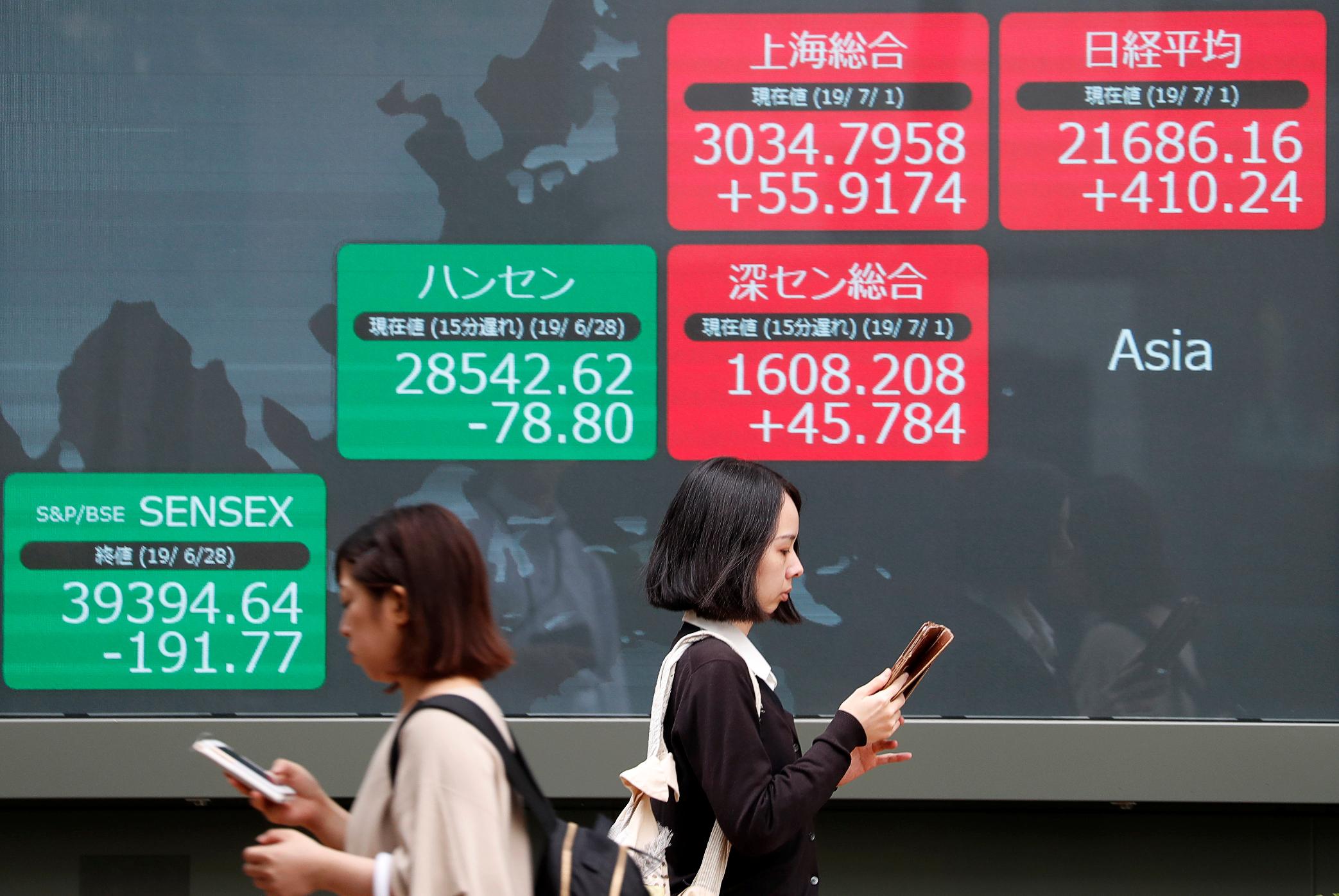
2024-02-26 00:18
SINGAPORE, Feb 26 (Reuters) - A European Union plan to impose tariffs on high-carbon imports could hurt developing countries in Asia but is unlikely to lead to big reductions in greenhouse gas emissions, the Asian Development Bank (ADB) said in a report published on Monday. The Carbon Border Adjustment Mechanism (CBAM) was introduced to address concerns that the outsourcing of manufacturing had put large parts of the EU's supply chain beyond the reach of its emissions trading scheme (ETS), a situation described as "carbon leakage". It was designed to level the playing field and make foreign suppliers pay the same carbon price as domestic ones, even if they are not subject to an ETS or carbon tax at home. ADB said CBAM was expected to cut Asian exports to the EU, particularly from western and southwestern Asia, with steel from India also likely to take a hit. But any small reduction in emissions would quickly be offset by the continuing increase in carbon-intensive production throughout Asia, and mechanisms to share emission reduction technology would be more effective, it said. "It's actually a relatively limited policy at the moment," said Neil Foster-McGregor, ADB's senior economist. "It only imports into the EU (and) only covers six sectors. "The way the scale of production is increasing, even if we do this carbon pricing more broadly across the globe, you're still going to see rising emissions unless we see a fundamental change in production techniques," he added. CBAM could raise around 14 billion euros ($15.2 billion) in revenue by 2030, and the proceeds should be used to provide climate finance for developing countries to decarbonise manufacturing, Foster-McGregor said. One of the aims of CBAM was to incentivise non-EU economies to impose stricter climate policies of their own: if exporting nations can demonstrate that a carbon price has already been paid, the CBAM levy will be reduced. India has already discussed the possibility of imposing export taxes on CBAM-covered products sold to Europe, and China is expanding its ETS to cover exporting sectors like steel. Both countries have been critical of CBAM, with China warning Europe not to use climate as an excuse to engage in trade protectionism. While CBAM serves as a tariff on foreign producers, it will also raise the cost of raw materials such as steel and fertiliser for downstream EU manufacturers, and could even give them an incentive to relocate more production capacity overseas, including Asia, the ADB report warned. "While there is a partial offsetting of the carbon leakage in the upstream, there could be new carbon leakage downstream in the EU ... They are shooting themselves in the foot," said Jong Woo Kang, another senior ADB economist, speaking at a briefing on Monday. ($1 = 0.9244 euros) https://www.reuters.com/sustainability/eu-carbon-border-tax-will-do-little-cut-emissions-says-adb-study-2024-02-26/

2024-02-26 00:05
Top 4 traders have $60 bln in equity after record profits Retained earnings soar even after record dividends Trading houses are borrowing less from banks Investment opportunities remain limited LONDON, Feb 26 (Reuters) - As the world's top global energy trading houses prepare for their biggest annual industry get-together this week in London they face a growing problem, what to do with their cash. Most trading houses, which are privately owned and controlled by their employees, disclose little about their cash position, equity or dividends. But according to more than 10 trading and banking sources and Reuters calculations, Vitol, Trafigura, Mercuria and Gunvor are collectively sitting on billions of dollars, even after paying out record dividends. "We borrow much less from banks and are waiting for good investment opportunities. But those are slim, especially in loss-making green energy," said an executive at one of the top trading houses, who declined to be named. Trading houses, which already control large areas of global oil, gas and power markets, are finding it difficult to grow, while poor returns in recent years on wind, solar and hydrogen assets have irked some investors. The cash conundrum is likely to be one of the topics on the table as traders gather for receptions and parties in London ballrooms and pubs for International Energy Week. Vitol, the world's biggest trader, has increased its total equity to $26 billion even after paying $5 billion in record dividends after earning $15 billion in 2022, its non-public balance sheet, which was seen by Reuters, shows. And its equity will probably rise close to $30 billion based on its 2023 results if Vitol sticks to transferring a significant chunk of retained earnings to equity, two banking sources familiar with the company's performance said. Meanwhile, Mercuria and Gunvor have accumulated around $6 billion each in equity and retained earnings in recent years, sources familiar with their results told Reuters. Equity figures for Vitol, Mercuria and Gunvor have not been previously reported. All three companies declined to comment. Rival Trafigura disclosed in its latest report its equity grew almost 2.5 times to $16.5 billion in the last 4 years. The equity of the big trading houses is still dwarfed by oil majors such as Shell (SHEL.L) , opens new tab with $188 billion or BP (BP.L) , opens new tab with $85 billion, according to their latest reports. MARGIN CALLS Until a decade ago, most traders preferred to have few assets, low equity or cash positions and pay out most of their profits in dividends to their employee shareholders. The exception was Glencore (GLEN.L) , opens new tab, which began trading as Marc Rich in the 1970s and gradually amassed coal and metals assets. It went public in 2011, raising $11 billion. Total equity is calculated as the difference between assets, including retained earnings, and liabilities and is key to determining how much a company is worth. Trading houses have bought assets over the past decade, from oil refineries to wind farms and metals mines, using profits and money borrowed from banks while keeping their cash reserves low. That changed in 2022 when gas prices soared after Russian gas supplies to Europe dropped as a result of Western sanctions that aimed to punish Moscow for its invasion of Ukraine. Traders often hedge their positions with derivatives, usually borrowing 90% of the money to buy them while using their own cash to cover the remainder. If prices soar, exchanges ask traders to contribute more of their own cash in so-called margin calls. "We all faced margin calls and rushed to borrow from banks. This is when we decided it was prudent to put aside more cash," a second trading house executive said. SELF-FINANCED Traders such as Trafigura work with up to 150 banks and have as much as $50 billion of credit lines available. At the peak of the margin call crisis traders used the lines in full and some banks refused to boost lending, while encouraging traders to find alternatives. Most traders decided to retain earnings as equity. "We beefed up our equity and as a result more of our trade became self financed," a third trading executive said. When traders borrow less, banks earn less in interest and cannot increase their lending to other clients if they keep large credit lines open if these are not used. "Banks didn't like going above credit limits in 2022. But they equally disliked it when traders barely used the lines in 2023," said a banker at a top U.S. bank active in the sector. Bank borrowing would rise again once interest rates fall and traders spend more on investments, one of the three trading executives said. But that was not happening yet. "Sometimes traders just borrow money and put it back on a deposit with the same or different bank so it pays interest," a fourth trading executive said. https://www.reuters.com/business/energy/top-global-energy-traders-face-multi-billion-cash-quandary-2024-02-26/

2024-02-25 23:15
Feb 25 (Reuters) - China-based Yintai Gold (000975.SZ) , opens new tab on Sunday said it will acquire Canadian gold exploration firm Osino Resources (OSI.V) , opens new tab in an all cash deal for C$368 million ($272.53 million). Osino will end its C$287 million deal with Canadian gold miner Dundee Precious Metals (DPM.TO) , opens new tab, which was announced in December, and Yintai also will pay a $10 million termination fee for the deal, according to the statement. "Whilst we were appreciative of the previous offer from DPM, the all-cash offer from Yintai represents a significant premium to the DPM offer price, thus is clearly a superior proposal, and is an excellent outcome for Osino's shareholders," Osino CEO Heye Daun said in a statement. The deal also will help Osino fast-track development of the wholly owned Twin Hills Gold Project in central Namibia. The deal offers cash consideration of C$1.90 for each Osino common share and was approved by the Osino board Special Committee, which recommended it to shareholders, the statement added. ($1 = 1.3503 Canadian dollars) https://www.reuters.com/markets/deals/chinas-yintai-gold-buy-canadian-gold-exploration-firm-osino-272-million-2024-02-25/

2024-02-25 21:50
Feb 26 (Reuters) - A look at the day ahead in Asian markets. Stock markets in Asia start the week with clear momentum behind them, especially in Japan and China, but may be vulnerable to a spot of profit-taking as investors pause for breath after last week's tech- and AI-fueled global buying frenzy. The Asian economic calendar on Monday is light, with Japanese producer price inflation for January the main event, followed by industrial production from Singapore. China's CSI 300 index of blue chip shares eked out a slender rise on Friday to seal its ninth straight day of gains and best run since January 2018. Another rise on Monday would mark its longest winning streak since late 2014. Friday's rise was only 0.1% though, suggesting fatigue may be setting in. For Japan, however, there's little sign of fatigue yet, at least not on the surface, with the Nikkei 225 surging more than 2% on Friday to a new all-time high. The 40,000-point mark will surely be traders' near-term target now. The weak yen continues to help make Japanese assets attractive to foreign investors, and the dollar goes into Monday's session comfortably above 150.00 yen. Again, is a bout of profit-taking or even intervention imminent, or does recent momentum persist? Hedge funds' bearish positioning in the yen has grown to historically high levels, the latest U.S. futures market figures show, so perhaps the FX market is ripe for a correction. The dollar has had a good start to the year, up 2.5% against a basket of G10 currencies and even more against some key Asian currencies, most notably the yen. Morgan Stanley analysts recommend trimming dollar exposure against emerging Asia. Japanese services PPI ended last year running at an annual rate of 2.4%, the fastest in almost nine years, indicating that broader inflationary pressures are building. But overall annual wholesale price inflation, when manufacturing sector is taken into account, is virtually zero. Services and manufacturing are giving off very different signals. Monday's services PPI comes a day before consumer inflation figures are released. The consensus is for core inflation to slow to 1.8% from 2.3% in December, which would be the first print below the Bank of Japan's 2% target in almost two years. Japan's inflation rates are under close scrutiny as the BOJ prepares to lift interest rates into positive territory for the first time since 2016. The main economic event in Asia this week could be China's purchasing managers index data on Friday, as they will offer an early glimpse into how manufacturing and service sector activity have fared this month. A tentative rebound may be underway in Chinese stocks, but there's little evidence yet of a similar recovery in the economic numbers. The Chinese economic surprises index is barely in positive territory, even though expectations have been lowered substantially in recent months. Here are key developments that could provide more direction to markets on Monday: - Japan services PPI (January) - Singapore industrial production (January) - U.S. 2-year, five year bond auctions https://www.reuters.com/markets/asia/global-markets-view-asia-graphic-pix-2024-02-25/

2024-02-25 15:29
KYIV, Feb 25 (Reuters) - Around 160 tons of Ukrainian grain was destroyed at a Polish railway station amid large-scale protests in what a senior Ukrainian official said on Sunday was an act of "impunity and irresponsibility". Polish farmers protesting this month against what they say is unfair competition from Ukraine and European Union environment regulations have blocked border crossings with Ukraine and motorways, and spilled Ukrainian produce from train wagons. "These pictures show 160 tons of destroyed Ukrainian grain. The grain was in transit to the port of Gdansk and then to other countries," Deputy Prime Minister Oleksandr Kubrakov posted on X with photographs of mounds of grain spilled from train wagons. "The fourth case of vandalism at Polish railway stations. The fourth case of impunity and irresponsibility." Previous incidents of grain being spilled from trains took place on the border with Ukraine. "We know that protests that take the form of spilling grain are not good," Polish Agriculture Minister Czeslaw Siekierski told a news conference. But he added that he thought that sometimes the reaction to such incidents from the Ukrainian side went too far. Lidia Kowalska, a police spokesperson from the northern Polish city of Bydgoszcz, said the incident took place in the nearby village of Kotomierz and the product spilled was corn. "The details and circumstances are being investigated," she told Reuters. "At 0930 we received a report about grain that had spilled out, it turned out that it was from eight wagons." https://www.reuters.com/world/europe/ukraine-deputy-pm-says-160-tons-ukrainian-grain-destroyed-poland-2024-02-25/