
2024-02-23 10:15
ZURICH, Feb 23 (Reuters) - The Swiss National Bank believes physical cash will never disappear from use in Switzerland despite the rising popularity of payment apps, Vice Chairman Martin Schlegel said on Friday. "We think cash will never disappear, or not in the foreseeable future," Schlegel told an event. "It is important for a large part of the population." Countries like Sweden which have seen big declines in the use of cash in recent years still used physical money after reaching a certain level, he said. Although the use of cash would fall in Switzerland over the long term, it was difficult to say where the base level in the country was, Schlegel added. Still, he warned against a negative spiral with a reduction of banking branches and cash machines leading to less use of cash. The SNB monitored closely the provision of ATMs and bank branches in Switzerland, and would take action if the downward trend accelerated. He declined however to talk about the impact of less bank branches following UBS's (UBSG.S) , opens new tab takeover of Credit Suisse last year, saying it was a business decision for UBS. Schegel was speaking after the SNB published a report on payment methods in Switzerland. "Monetary policy, as we implement with the SNB interest rate, and also with the foreign exchange interventions, is not affected by the decline in cash at the moment," he added. https://www.reuters.com/markets/currencies/cash-will-not-disappear-switzerland-central-banker-says-2024-02-23/

2024-02-23 10:02
BUENOS AIRES, Feb 23 (Reuters) - Whisper it quietly, but Argentina's embattled markets are showing signs of doubling down on the country's no holds barred libertarian leader Javier Milei, betting he can pull the economy out of crisis. Amid a painful economic downturn and with the government strapped for cash, Milei has made tough austerity a key focus since taking office in December, helping the country post its first monthly fiscal surplus for over a decade in January, music to the ears of investors after years of over-spending. That hasn't helped him make many friends with squeezed regional governors or unions - leading to a spike in protests - but has charmed investors, pushing some bonds to four-year highs and cutting Argentina's risk index to a low since 2022. "It seems the market is starting to believe," said financial analyst Mariano Sardans at FDI Argentina, adding if it could be maintained it would strengthen the embattled peso, allowing tough currency controls limiting dollar access to be unwound. Milei, who made the bold pledge of erasing a nearly 3% fiscal deficit from last year, has sought to make good on his word. His government has slashed spending, bought over $5 billion in dollars to build up depleted reserves and rolled over import debts with a successful issuance of 'Bopreal' bonds. For now that's bolstering market belief that Milei will follow through on his pledges to stabilize the economy, no easy task with studies suggesting poverty has risen towards 60% and with increasing protests on the streets. "The market is becoming very optimistic about Javier Milei's conviction," said Javier Casabal, Buenos Aires-based fixed income strategist at Adcap Grupo Financiero. "It's a real shift worth celebrating, given that most investors did not have confidence in his ability to reduce the deficit just a few weeks ago. If anything, perhaps he's going overboard in some ways." Some dollar bonds are at their highest level in four years, others near two-year highs, though they still trade in distressed territory around 35-45 cents on the dollar. The South American country's debt, however, remains risky with Argentina having defaulted nine times, most recently in 2020 before a major restructuring. Milei's economic fixes face serious hurdles and push-back on the streets and in Congress. But sentiment has been helped by improving exports, with a trade surplus in two straight months on stronger grains production after last year's harvest was battered by drought. Meanwhile, moves to mop up pesos in the market, including via short-term Treasury bills, have bolstered the currency and trimmed the gap between the controlled official exchange rate and popular parallel markets where dollars are more expensive. That's seen a strengthening in peso futures - a signal of where investors think the currency is heading - reflecting lower expectations of a sharp devaluation on the horizon following a mega 54% devaluation in December. That said, the June futures contract still sees the peso at around 1,060 per dollar versus the current 838 peso spot rate, though down from predictions previously of over 1,400. Mauro Mazza, analyst at Bull Market Brokers in Buenos Aires, said the positive momentum on the fiscal balance could help Argentine debt get price-boosting ratings upgrades, though would still retain so-called 'junk' status. Milei's government, in ongoing talks with the International Monetary Fund over the country's $44 billion loan program, has said publicly it will push tougher measures than even the IMF is seeking to get the state's finances in order. An Argentina-based source at a ratings agency, who asked not to be named, said it was still too early to discuss upgrades. "It wouldn't be prudent to talk about potential ratings hikes, but it's logical we're monitoring Argentina's situation." https://www.reuters.com/world/americas/argentina-markets-double-down-milei-investors-start-believe-2024-02-23/

2024-02-23 08:05
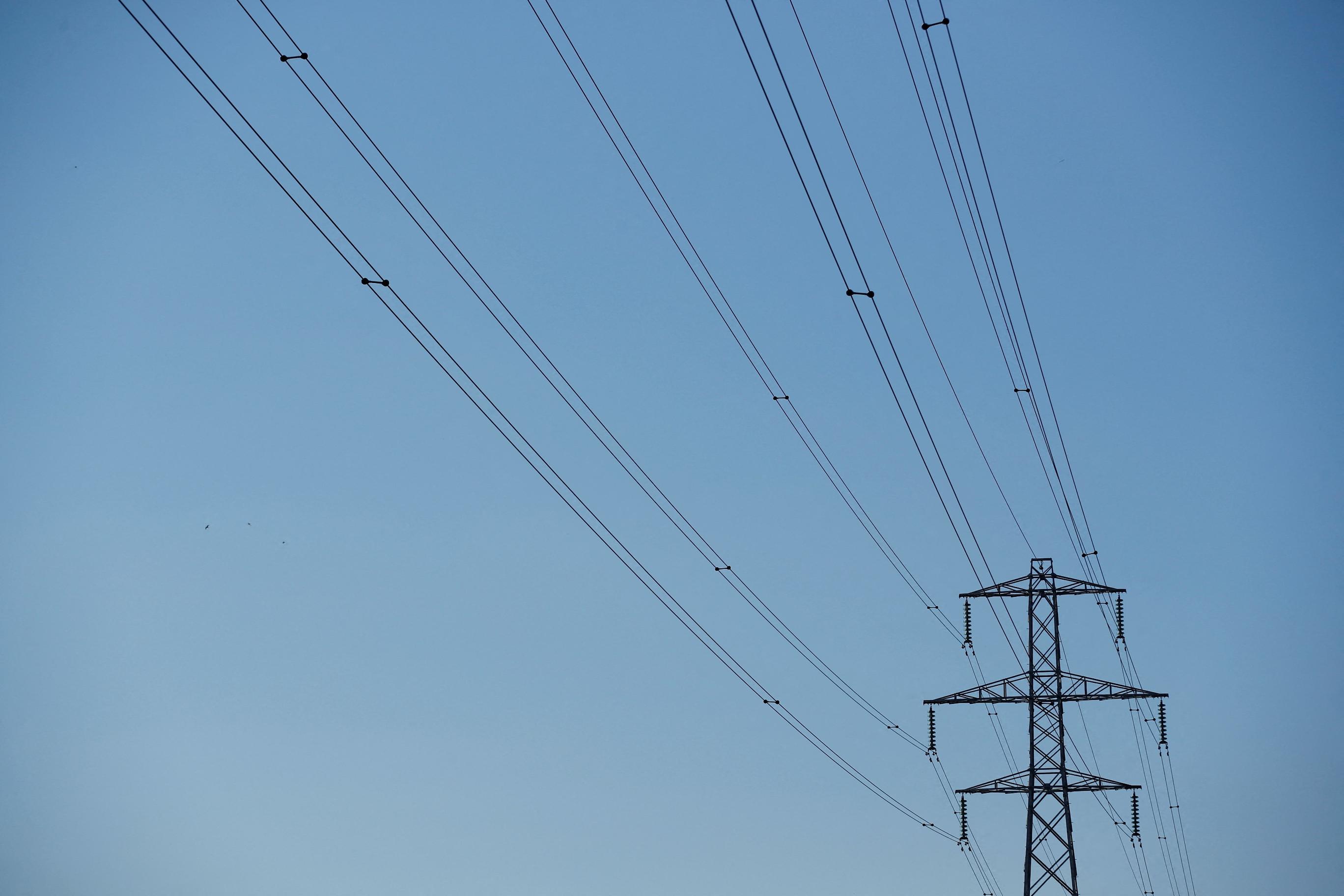
Feb 23 (Reuters) - Most British household energy bills will fall from April after regulator Ofgem cut its domestic price cap by 12.3% to its lowest level in more than two years. The drop, prompted by lower wholesale energy prices, will provide some respite for households struggling to contend with a cost of living crisis while also helping to help curb inflation. Ofgem's new cap of 1,690 pounds ($2,139.37) a year for average use of electricity and gas is down 238 pounds from the previous cap of 1,928 pounds. "This will see energy prices reach their lowest level since Russia’s invasion of Ukraine in February 2022," Ofgem said. Ofgem said that while the drop is good news for consumers there are still challenges in the energy market, with a record 3.1 billion pounds in unpaid bills. The watchdog has allowed suppliers to include within the cap a temporary charge equivalent to 28 pounds a year to help them to cover consumer bad debt. “But longer term, we need to think about what more can be done for those who simply cannot afford to pay their energy bills even as prices fall,” said Ofgem CEO Jonathan Brearley. Campaign group National Energy Action said that 6 million households would remain in fuel poverty despite the reduced price cap. Fuel poverty is defined as being unable to afford to heat homes to temperatures needed to stay warm and healthy. In a separate announcement, the government said it would gather views on how standard energy deals can be made more flexible to enable customers to pay less if using electricity when prices are lower, adding that 10 million pounds is available to help companies test new technologies and tariffs. About 29 million customers are on standard rate tariffs covered by the price cap, which was introduced in 2019 to protect consumers. The cap is set using factors such as network fees and social and environmental costs as well as wholesale energy prices. It is updated every quarter to reflect changes to those costs. ($1 = 0.7896 pounds) https://www.reuters.com/world/uk/british-energy-bills-fall-after-12-cut-price-cap-2024-02-23/
2024-02-23 07:12
LONDON, Feb 23 (Reuters) - Record peaks, pricey valuations, narrow markets, frenzied tech bandwagons and even punchy alternatives in bonds - all surely gnaw at U.S. household savers to lighten up on stocks. Yet, not a bit of it. In a sort of strange long-term momentum play, U.S. households lucky enough to have substantial savings find themselves shacked up with equities like never before. JPMorgan long-term strategists Jan Loeys and Alexander Wise unpick what they dubbed the American "love affair" with equity and show how the share of stocks held by households and non-profit funds, such as university endowments, had quadrupled over 40 years to record levels of more than 40%. While that may seem a modest share of total savings, it's actually grown steadily since a nadir of around 10% in the 1980s, far exceeds equivalent equity holdings in other major countries and seems at odds with an ageing population that might reasonably be minded to "de-risk" investments into retirement. The equivalent stock share among savings of Japanese and German households, for example, is only 13% and 16%, respectively, and it's about 26% in France, the JPMorgan team estimate. And, more pointedly, these have not increased at all in about 30 to 40 years. Despite all the whys and wherefores of that behaviour, one key reason revolves around inertia, some satisfaction and not a little hope about the future. Using data from the Federal Reserve's U.S. financial accounts report, Loeys and Wise posit that the 40-year rise in the share of equity in household savings may simply be down to passive outperformance of stocks over that period. In other words, savers just sat tight rather than actively chasing markets either way. 'GO WITH THE FLOW' Unlike professional fund managers, who tend to 'mean revert' or retain target weightings by selling when outperformance of one asset class inflates the relative share of holdings in portfolios, households have closed their eyes and crossed their fingers. For the past 40 years at least, it's hard to argue with it as a strategy. "One possibility, contrary to how we all like to think of strategic asset allocation, is that end investors may not really have a strong view, or even a vague one, on how much they want to allocate to different asset classes and simply go with the flow," the JPMorgan strategists wrote. Given that U.S. equities earned almost 11% per annum over the past 35 years - more than twice the annual return on bonds - simply compounding those returns over the period without chopping and changing would have led to that steady quadrupling of the stocks share of their investments. That's not to say it's necessarily about indifference - more an extrapolation of past performance and confidence that it can continue. And in a circular feedback loop, that very confidence to hold ever larger shares has seeded at least half the outperformance of U.S. equity versus the rest of the world - with the rest coming in the way of faster earnings growth. There are other reasons of course - low economic volatility and interest rates over those decades encouraged more risk-taking and the rise of cheaper passive investment vehicles and direct equity-buying tools drew many into the equity space. What's more, Loeys and Wise reckon we may have hit a high watermark that leads to some change of behaviour as macro volatility climbs over the coming decade, higher yields make bonds more attractive and demographic ageing eventually demands that at least some risk gets taken off the table. However, don't hold your breath. They conclude: "The move toward lower equity allocations by U.S. households and non-profits is not imminent as return expectations are probably still quite bullish and households do not change allocations that fast." DAMAGING TO YOUR WEALTH That said, fear of a narrowly-led, overvalued stock market at all-time highs surely creates some nervousness. After all, the S&P 500 (.SPX) , opens new tab and Nasdaq Composite (.IXIC) , opens new tab indexes have roughly doubled from pre-pandemic levels and forward price/earnings multiples - while below historic peaks - are 20%-30% above long-term averages. Time to lighten up? Hold your horses, says Duncan Lamont, head of strategic research at Schroders. With a deep dive into 100 years of market returns, Lamont reckoned cashing out of stocks at record highs - where they've been at almost a third of 1,176 months since 1926 - would have been very costly over time. Average inflation-adjusted stock returns in the 12 months after hitting new records are superior to those from any other month - 10.3% versus 8.6%. And that stacks up over the long run. Put another way, $100 invested in U.S. stocks in 1926 would be worth $85,000 in inflation-adjusted terms at the end of last year - annual growth of 7.1%. However, cashing out of stocks in a month when they hit a new record and only returning when they were not would have meant that final figure was just $8,780 - some 90% less, with an annual "real" return of 4.7%. "It is normal to feel nervous about investing when the stock market is at an all-time high, but history suggests that giving in to that feeling would have been very damaging for your wealth," Lamont concluded. "There may be valid reasons for you to dislike stocks, but the market being at an all-time high should not be one of them." The opinions expressed here are those of the author, a columnist for Reuters. https://www.reuters.com/markets/us/everlasting-love-us-savers-seem-wedded-stocks-mike-dolan-2024-02-23/

2024-02-23 07:05
Shell's LNG trading accounted for third of Shell's Q4 profit Trading was boosted by East-West arbitrage, CEO said LONDON, Feb 23 (Reuters) - Nearly a third of Shell's (SHEL.L) , opens new tab profit in the fourth quarter of 2023 came from the $2.4 billion it made in trading liquefied natural gas (LNG) as it captured strong demand ahead of winter, three sources close to the company told Reuters. Shell did not disclose how much it made on LNG trading when it reported fourth quarter net earnings of $7.2 billion on Feb. 1. The British company rarely gives details of the performance of trading beyond general descriptions. The profit turned on LNG underscores the importance of gas in its portfolio. Two of the sources said the quarterly profit from LNG trading was among the highest in Shell's history. A Shell spokesperson declined to comment on the profit figure. Shell, the world's largest oil and gas trader, has LNG operations worldwide that allow it to benefit from regional shifts in demand and pricing. The strong performance was a result of the opening of trading opportunities, known as arbitrages, between eastern and western markets as the northern hemisphere's winter set in, CEO Wael Sawan said on Feb. 1. Arbitrage opportunities have narrowed since the start of the year due to a drop in natural gas prices as a result of ample supplies and mild winter conditions, he added. Shell accounted for nearly 17% of global LNG trading volumes of 404 million metric tons in 2023, according to company data. Shell's gas trading hasn't always paid off. Reuters reported in November 2022 that Shell's trading division recorded a loss of nearly $1 billion in the third quarter of the year after traders were caught out by a sharp rally in European gas prices when Russia halted supplies. Shell has previously said that trading operations are expected to provide a 2% to 4% lift to the company's return on average capital employed, which reached 18.8% in 2023. DOMINANCE Shell expects oil, gas and power trading to play a key role as it negotiates the energy transition. Trading can help boost returns from oil and gas and shield the company from fluctuations in commodity prices. Shell's dominant position in the LNG market will be particularly important in the long term, "Shell has built scale to be able to dominate LNG trading through gas volumes and a large fleet of tankers," said Christyan Malek, global head of energy strategy at J.P. Morgan. "This scale will also allow Shell to dominate trading in LNG even through a downturn in gas prices." Malek said Shell would likely continue to hold a dominant position in the LNG market, allowing it to benefit from market dislocations for decades. https://www.reuters.com/business/energy/shells-lng-trading-makes-24-bln-final-2023-quarter-sources-say-2024-02-23/

2024-02-23 06:54
SHAMBHU, India, Feb 23 (Reuters) - Thousands of protesting Indian farmers facing off with security forces have come under the protection of the Nihang Sikhs, a warrior sect dating back to the 1600s distinguished by their ink-blue robes and ancient weapons such as swords and spears. The farmers, who are also mainly Sikhs and who hail from the northern state of Punjab, are demanding higher prices for their crops, and began marching to the capital Delhi earlier this month to press their demands to the government. Police, however, have stopped the march about 200 km (125 miles) from the capital, using water cannons and tear gas to disrupt the demonstration. On Wednesday, the farmers said they would stop their protest for two days after one of the demonstrators died. Police officers confirmed the man died at a protest site but added the cause of his death would only be determined by an autopsy. As they waited for the march to resume, the Nihang warriors honed their skills by practicing fencing, horseback riding and meditating. Easily distinguishable by their flowing robes and matching turbans, several Nihangs say they joined the march to "protect" the farmers. "Guru Gobind Singh has preached that Sikhs must always be ready to fight injustice and oppression," said Sher Singh, one of the Nihangs referring to the spiritual leader of the Sikhs. "We have to be prepared if these protesters face any trouble even in the middle of the night." India's minority Sikh community makes for more than half of Punjab's 30 million population, and the Nihangs took part in a similar, year-long farmers' protest in 2021. "Farmers are being oppressed...The government must not think that they can scare the farmers away...this is Punjab and we are standing in solidarity with the farmers," said Raja Ram Singh, another Nihang. During the 2021 march, three Nihangs were arrested in connection with the murder of a Sikh man at one of the protest sites who they accused of desecrating Sikh holy texts, according to local media reports. The Nihangs did not deny the allegations, maintaining that the man had committed sacrilege by attacking their holy book, the media reports added. https://www.reuters.com/world/india/with-spears-shields-indias-nihang-sikh-warriors-join-farmers-protest-2024-02-23/


