2024-02-21 21:20
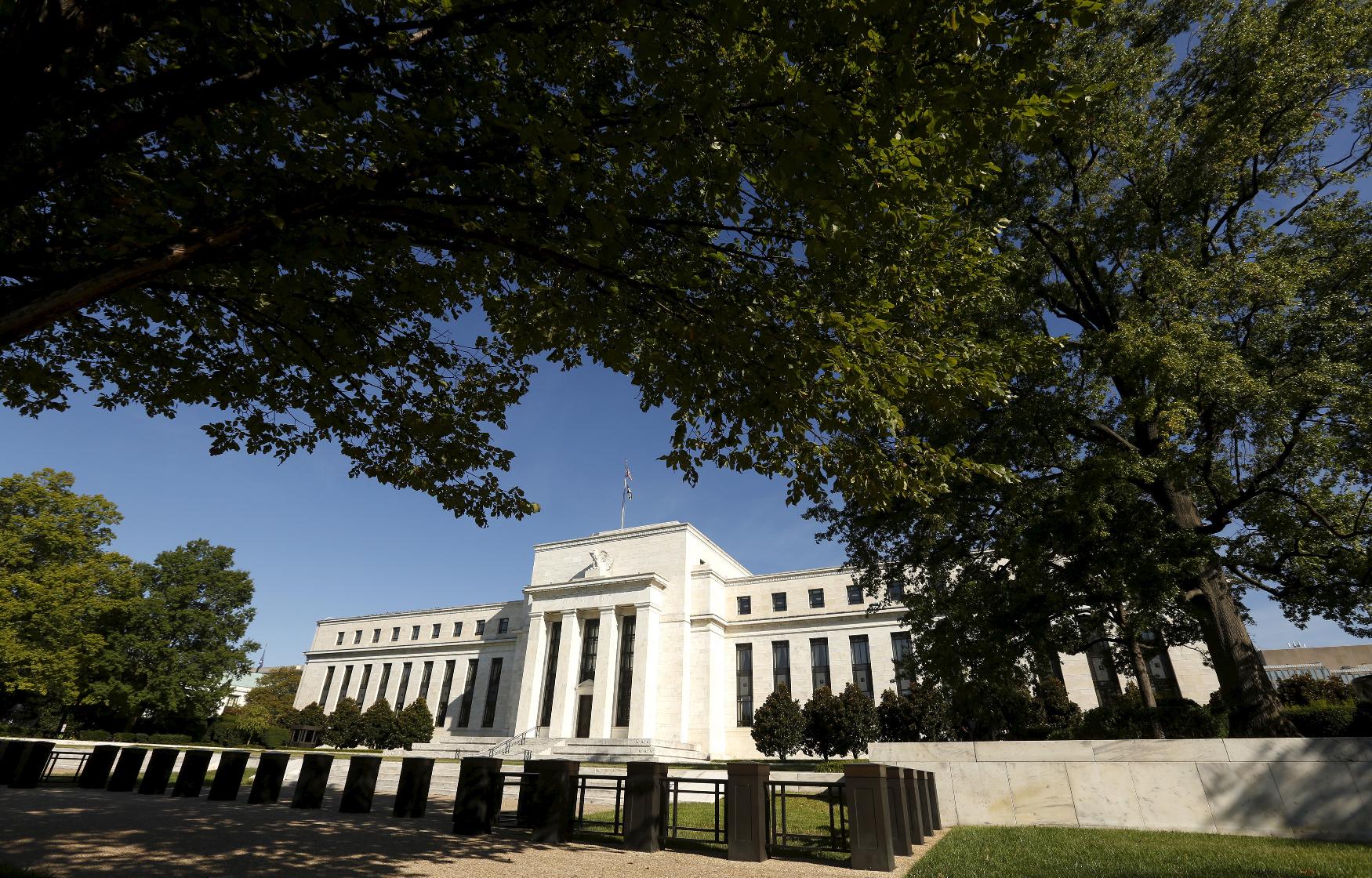
NEW YORK, Feb 21 (Reuters) - The Federal Reserve’s internal debate over the fate of its balance sheet reduction effort is set to quicken at its March policy meeting, with policymakers first setting the stage for how they'll likely slow the drawdown, likely deferring a decision on when to stop the process altogether to a later date. Minutes of the central bank’s Jan. 30-31 Federal Open Market Committee meeting, released on Wednesday, showed "many participants" were eager to kick off "in-depth discussions" at their March 19-20 meeting on how they will conclude what has been a steady reduction in the Fed’s bond holdings. Officials reckoned with cash draining steadily out of a key central bank tool known as the overnight reverse repo facility -it's viewed as a proxy for excess financial sector liquidity -the time is close at hand for managing an endgame that will keep financial markets unruffled. To get there, officials are ready for a full-scope debate over how to eventually slow the process commonly referred to as quantitative tightening, or QT, at their March FOMC meeting , opens new tab. While there's uncertainty whether all the cash will drain out of the reverse repo facility, wherever it stabilizes means bank reserves will start falling quickly. This overall tightening in liquidity means the Fed must be prepared to shift the QT process. Some Fed officials said at the January meeting that amid uncertainty over how much liquidity the financial system needs, slowing the pace of the contraction is a good first step. The minutes also said “a few” policymakers believe QT can proceed “for some time” even after the Fed starts cutting its short-term interest rate target. Fed Chair Jerome Powell flagged the upcoming debate at the press conference following last month's FOMC meeting. The minutes also echo views of policymakers who have started debating how the Fed can complete QT smoothly. ENDGAME IN SIGHT The Fed more the doubled the size of its holdings starting in March 2020 to a peak of nearly $9 trillion by the summer of 2022, using bond purchases to stabilize markets and provide stimulus beyond the near zero federal funds rate then in place. The current size of the Fed's balance sheet is $7.7 trillion. The Fed has been reducing the size of its holdings since 2022. It is allowing up to $95 billion in Treasury and mortgage bonds to expire each month and not be replaced. With a QT slowdown, or taper, officials would likely lower that cap to buy the central bank time on deciding when to stop altogether. The QT process complements Fed rate hikes aimed at cooling high levels of inflation. With price pressures heading back to the 2% target Fed officials are openly weighing when they can lower the federal funds target rate from its current 5.25% to 5.5% level. "March is the first time they'll do a deep dive into how to taper," said Derek Tang, an analyst at forecasting firm LH Meyer. "The end point will take a lot more work to suss out since it hinges on things outside of their control like market sentiment and regulatory reform." Tapering the drawdown is important because both inside and outside the Fed there is great uncertainty over the level of liquidity that's needed to afford the central bank control over its short-term rate target while allowing for acceptable levels of volatility in money markets. When the Fed last engaged in a QT process it unexpectedly withdrew liquidity to such a level in September 2019 that it was forced to start adding it back in large amounts to restore stability to short-term markets. The Fed doesn't expect a replay of that in part due to new tools, but even so, most believe it doesn't want to test the market by withdrawing liquidity too aggressively. "We believe the Fed does not want to repeat its past errors with quantitative tightening, which led to a disruption in the repo market," which makes the case for starting the process with a taper, said Ryan Sweet, U.S. economist with Oxford Economics. "Ending QT does not appear on the horizon and tapering soon would allow the process to last longer." https://www.reuters.com/markets/us/fed-officials-ready-start-full-tilt-balance-sheet-debate-march-fomc-2024-02-21/
2024-02-21 20:56
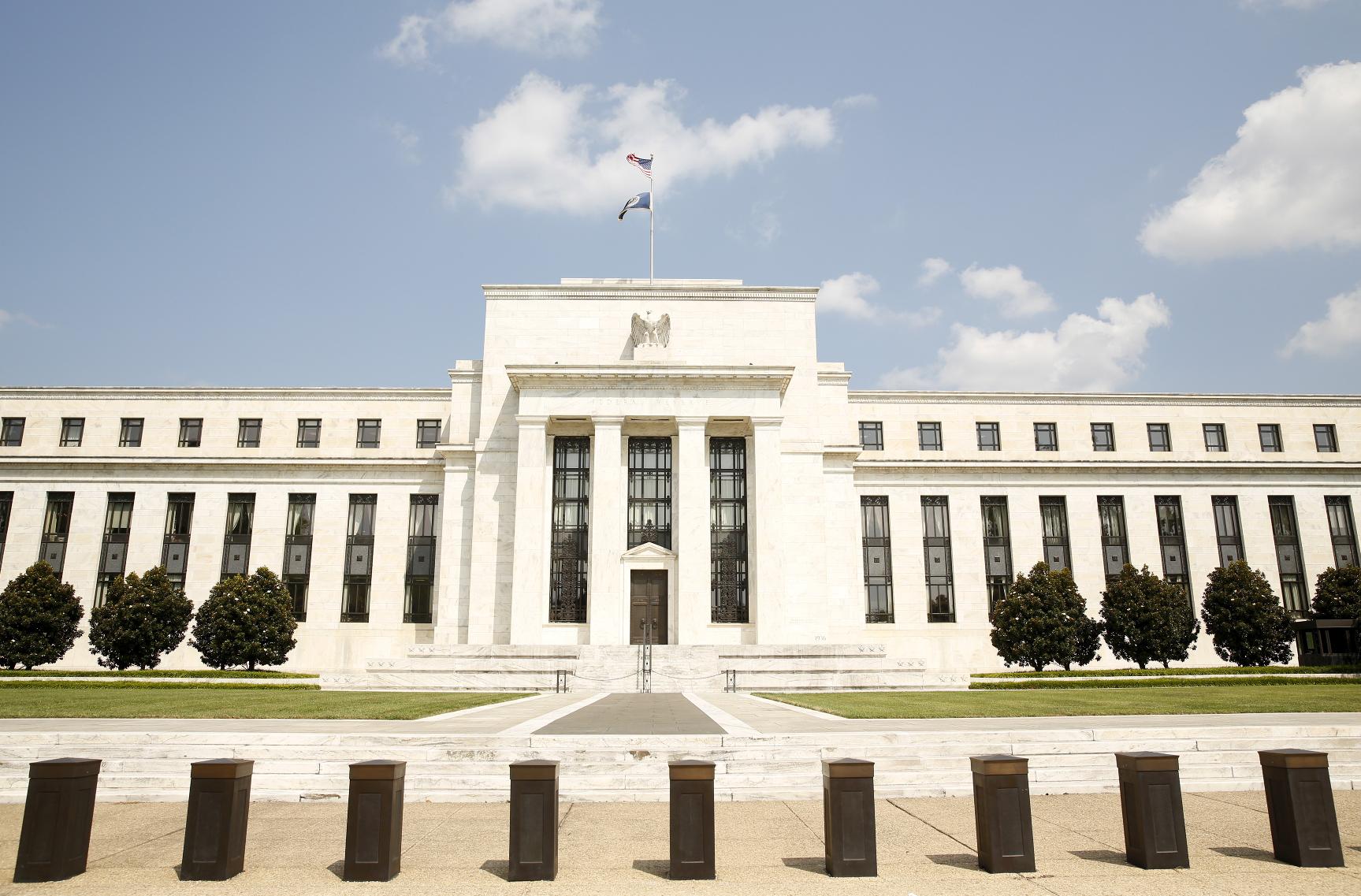
WASHINGTON, Feb 21 (Reuters) - The bulk of policymakers at the Federal Reserve's last meeting were concerned about the risks of cutting interest rates too soon, with broad uncertainty about how long borrowing costs should remain at their current level, according to the minutes of the Jan. 30-31 session. "Participants highlighted the uncertainty associated with how long a restrictive monetary policy stance would need to be maintained" to return inflation to the U.S. central bank's 2% target, said the minutes, which were released on Wednesday. Whereas "most participants noted the risks of moving too quickly to ease the stance of policy," only "a couple ... pointed to downside risks to the economy associated with maintaining an overly restrictive stance for too long." U.S. stocks were trading lower following the release of the minutes before recovering ground later in the session, while the U.S. dollar (.DXY) , opens new tab was little changed against a basket of currencies. U.S. Treasury yields rose. The minutes seemed to reinforce the recent message of Fed policymakers that they would be in no hurry to deliver on rate cuts that officials still expect to begin sometime this year. In comments aired earlier on Wednesday on SiriusXM, Richmond Fed President Thomas Barkin cited concerns about persistent inflation for service industries and housing, and said data released since the central bank's last meeting, showing strong job growth and stronger inflation than anticipated, made any rate-cut call "harder." "It definitely did not make things easier. It made things harder," Barkin said. Top U.S. central bank officials, including Fed Vice Chair Philip Jefferson and Fed Governors Lisa Cook and Christopher Waller, may help further sketch out how the recent data may influence the discussion about possible rate cuts when they speak on Thursday. "It is clear that the message from the minutes, coupled with Fed speakers out in force, is that they are concerned about moving too quickly, before they declare a final victory in quelling inflation. Given the uptick in prices, the Fed's concerns appear valid," said Quincy Krosby, chief global strategist at LPL Financial. Data released last week showed underlying, or "core," consumer inflation remained unchanged at 3.9% annually, led by rising prices for housing. 'NOTABLE' RISKS While Fed officials say they are confident the central bank's policy rate can be lowered later this year from the 5.25%-5.50% range maintained since July, the Jan. 31 policy statement was explicit about the need for "greater confidence" in falling inflation before rate cuts can commence. The minutes cited concerns among "some" Fed officials that progress on inflation could outright stall if the economy continues to perform as strongly as it has, while Fed staff suggested some weak points in an economy policymakers like to characterize as unnaturally resilient - with growth above potential and an historically low 3.7% unemployment rate. In presentations to policymakers, Fed staff took note of a variety of risks, from "notable" vulnerabilities in the U.S. financial system, including falling commercial real estate prices, to the possibility that "reducing inflation could take longer than expected," the minutes said. That, in turn, might "slow the pace of real activity" more than expected. After the publication of the minutes, investors in contracts tied to the Fed's benchmark overnight interest rate continued to see the central bank beginning to reduce borrowing costs in June. The minutes also noted upcoming decisions on when and how to stop reducing the size of the Fed's balance sheet, with "many participants" suggesting a start to "in-depth" discussions on balance sheet policy at the March policy meeting. The rapid easing in financial conditions during the fourth quarter, after the Fed began signaling that its rate hikes were likely over, had largely run its course by the time officials gathered at the end of January. Since then, the picture has been mixed: Treasury yields have increased by more than a quarter of a percentage point, bringing an end for the time being to a decline in consumer and corporate borrowing costs, but stocks have continued to march to record highs. Given what seemed to be falling inflation on the horizon, Ryan Sweet, chief U.S. economist at Oxford Economics, said the concern of Fed policymakers about cutting rates too soon "seems odd," and suggested that risks may be tilting towards overly tight policy beginning to weigh on the economy. "If the central bank waits for clear signs that the labor market, or the broader economy, is deteriorating, they will be behind the curve," Sweet wrote. "This could turn a 'soft landing' into a bumpier one." https://www.reuters.com/markets/us/fed-concerned-about-cutting-rates-too-soon-minutes-january-meeting-show-2024-02-21/
2024-02-21 20:42
Feb 21 (Reuters) - Venezuela President Nicolas Maduro has conveyed his "great respect" to the Guyana President Mohamed Irfaan Ali, Guyana’s Ministry of Foreign Affairs said on Wednesday, signaling a decrease in tensions over an area where Guyana is developing large oil and gas reserves. Diplomatic talks between the two countries started in December. That month, a Venezuelan referendum backed a move to incorporate Essequibo, the area where Guyana is developing large oil and gas reserves. Maduro met Guyana's Ambassador Richard Van West-Charles in Caracas on Tuesday, according to a statement from Guyana. "President Maduro requested ambassador Van West-Charles to convey a message of high regard to President Ali, stating his great respect for the President and the people of Guyana," the statement said. The International Court of Justice (ICJ) is hearing a case on the border dispute. https://www.reuters.com/world/americas/venezuelas-maduro-conveys-great-respect-guyana-president-2024-02-21/

2024-02-21 20:18
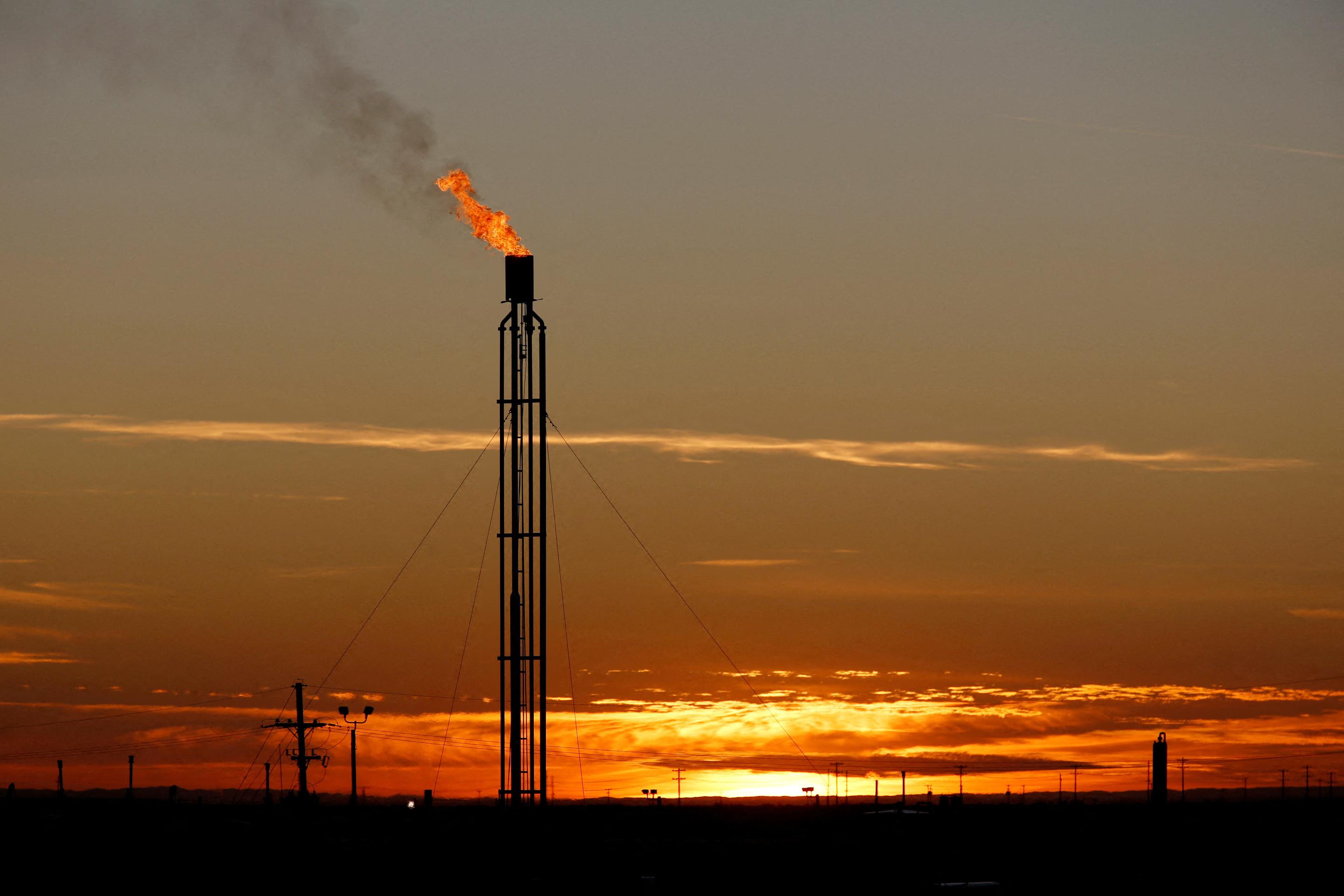
Feb 21 (Reuters) - U.S. natural gas futures soared by about 13% on Wednesday after Chesapeake Energy (CHK.O) , opens new tab - soon to be the biggest U.S. gas producer after its merger with Southwestern Energy (SWN.N) , opens new tab - cut the amount of fuel it plans to produce in 2024 by roughly 30% due to the recent plunge in prices to a 3-1/2-year low. Chesapeake, which said the gas market is "clearly oversupplied," was just the latest U.S. gas producer to slash spending and reduce rigs after prices dropped about 30% so far in 2024 after falling 44% in 2023. Last week, U.S. energy firms Antero Resources (AR.N) , opens new tab and Comstock Resources (CRK.N) , opens new tab said they planned to reduce drilling this year, while EQT (EQT.N) , opens new tab, currently the nation's biggest gas producer, reduced its 2024 production guidance range. Front-month gas futures rose 19.7 cents, or 12.5%, to settle at $1.773 per million British thermal units. That was the biggest one-day percentage gain since July 2022, when prices jumped by 14.3%. On an inflation-adjusted basis, U.S. gas prices have already collapsed to their lowest in over 30 years. On Tuesday, the non-inflation adjusted front-month contract closed at its lowest since June 2020, which was the height of COVID-19 demand destruction. Providing ammunition for Wednesday's price spike, analysts at energy consulting firm EBW Analytics Group said was "an enormous speculator short position near four-year highs." Chesapeake lowered its prior capital expenditure guidance by about 20% through rig count reductions and deferring well completions, which should cut gas production to around 2.7 billion cubic feet per day (bcfd) in 2024, down from around 3.5 bcfd in 2023. One billion cubic feet is enough gas to supply about five million U.S. homes for a day. "We’re fans of the move as (Chesapeake) slashes production well below consensus expectations while preserving volumes for a healthier demand market in 2025+," said Matt Portillo, head of research for Perella Weinberg Partners' TPH&Co. Portillo was referring to a widely held belief in the market that U.S. gas demand will surge higher in 2025 and beyond as several liquefied natural gas (LNG) export plants currently under construction enter service. U.S. LNG export capacity is expected to almost double over the next four years from about 13.8 bcfd now, representing about 15% of U.S. domestic gas demand, to around 24.4 bcfd in 2028. Analysts said projected LNG demand growth was the primary reason many producers have - until now - kept gas output near record levels despite low prices. Gas prices fell so far this year because a mild winter kept heating demand low, leaving stockpiles at well above normal levels, while output remained near record levels despite an Arctic freeze in January that briefly cut output and caused gas demand to soar to a record high. Even with less gas drilling, analysts said gas output could still increase in 2024 because crude prices were high enough to encourage oil producers to drill in shale basins like the Permian in Texas and New Mexico and the Bakken in North Dakota, where oil wells produce a lot of associated gas. https://www.reuters.com/business/energy/us-natgas-prices-soar-10-3-12-year-low-chesapeake-cuts-output-2024-02-21/
2024-02-21 19:58
High interest rates bring need for stronger growth Emerging economies borrowing at risky rates A third of emerging economies have not recovered from pandemic LONDON, Feb 21 (Reuters) - The World Bank warned that high borrowing costs have "changed dramatically" the need for developing nations to boost sluggish economic growth. The multilateral lender's latest warning comes as international bond sales from emerging market governments hit an all-time record of $47 billion in January, led by less risky emerging economies such as Saudi Arabia, Mexico and Romania. However, some riskier issuers have started to tap markets at higher rates. Kenya recently paid more than 10% on a new international bond - the threshold above which experts often consider borrowing unaffordable. "When it comes to borrowing, the story has changed dramatically. You need to grow much faster," Ayhan Kose, deputy chief economist of the World Bank, told Reuters in an interview in London on Tuesday, though he declined to comment on individual countries. "If I had a mortgage with a 10% interest rate, I would be worried," he added. Kose added that faster growth, especially a real growth rate higher than the real cost of borrowing, could prove elusive. Data published by the Institute of International Finance on Wednesday showed global debt levels had touched a new record of $313 trillion in 2023 while the debt-to-GDP ratio - a reading indicating a country's ability to pay back debts - across emerging economies also scaled fresh peaks, indicating more potential strains ahead. The World Bank warned in its Global Economic Prospects report , opens new tab, published in January, that the global economy was set for the weakest half-decade performance in 30 years during 2020-2024, even if recession is avoided. Global growth is expected to slow for a third consecutive year to 2.4%, before ticking up to 2.7% in 2025. Those rates are still well below the 3.1% average of the 2010s, the report showed. The growth slowdown is particularly acute for emerging economies, around a third of which have seen no recovery since the COVID-19 pandemic and have per capita income below their 2019 levels. Kose said this throws many education, health and climate spending goals into question. "I think that it's going to be difficult to meet those objectives, if not impossible, given the type of growth we have seen," Kose said. An escalation of the Middle East conflict is a further downside risk, adding to concerns over tight monetary policy and weak global trade. "Trade has been a critical driver of poverty reduction, and obviously for emerging market economies, a critical source of earnings," Kose said. DEBT RESTRUCTURE If growth remains low, some emerging economies might face having to restructure debt, Kose added, by reprofiling maturities or agreeing haircuts with creditors. "Sooner or later you need to restructure the debt and you need to have a framework. That has not happened in the way the global community was hoping for." G20 nations launched the Common Framework in 2020, when the pandemic upended nations' finances. The programme aimed to speed up and simplify the process of getting overstretched debt-distressed countries back on their feet. But the process has been beset by delays, with Zambia locked in default for more than three years. "If growth remains weak and financing conditions remain tight, you will not see an easy path out of this problem," Kose said. "But if growth magically goes up, it's like a medicine." https://www.reuters.com/markets/emerging/world-bank-warns-emerging-economies-need-grow-much-faster-repay-debt-2024-02-21/

2024-02-21 19:49
OSLO, Feb 21 (Reuters) - Norway's gas processing plant Kaarstoe was partly evacuated due to an ethane leak on Wednesday evening, but the incident will have "minimal" impact on gas transport, its operator, Gassco, said. The plant on Norway's western coast exports natural gas via offshore pipeline to Emden, Germany, and also produces liquefied petroleum gas (LPG), exported by tankers. "The leak was located and stopped. The incident has limited impact on gas transport," a spokesperson for Gassco told Reuters. Kaarstoe's technical service provider Equinor told Reuters earlier on Wednesday one part of the plant was shut down preventively, while the rest continued to operate. Kaarstoe has a technical capacity to export around 98 million cubic meters of natural gas per day (mcm/day). Its capacity was already reduced to 75.7 mcm/day before the incident on Wednesday due to maintenance and technical issues, according to Gassco's website. Norway's pipeline gas exports at 319.6 mcm/day on Wednesday, down from 341 mcm/day the previous day, with output also impacted by an outage at offshore Aasta Hansteen field, according to Gassco. https://www.reuters.com/markets/commodities/norways-kaarstoe-gas-processing-plant-is-being-partly-shut-2024-02-21/