2024-02-21 19:30
WASHINGTON, Feb 21 (Reuters) - The U.S. offered a reward of up to $15 million for information on the leaders of the notorious cybercrime group Lockbit on Wednesday as police in Ukraine announced the arrest of a father-son duo alleged to have been involved with the gang. The developments are the latest in a series of actions by international law enforcement against Lockbit, a leader among the online gangs that encrypt victims' data to extort money. The U.S., the UK and the EU announced this week they had disrupted the group in an unusually aggressive international law enforcement operation that turned the hackers' own site against it. Officials have used the seized web page to taunt the hackers with forthcoming releases of data and a tool for victims of the ransom-seeking gang to decrypt their data for free. The U.S. has also unveiled sanctions and indictments against two of the group's key operatives. In a statement , opens new tab, the State Department said it would offer up to $15 million for information leading to the arrests and convictions of the leaders of the ransomware group. Ukraine's police service didn't identify the father-son pair but said they seized more than 200 cryptocurrency accounts and 34 servers used by the gang in the Netherlands, Germany, Finland, France, Switzerland, Australia, the United States and Britain. The takedown has been one of the most eye-catching in recent memory, in part because of the trolling from police. But with many of the key hackers thought to be beyond the reach of Western law enforcement, experts said it was a matter of time before those behind Lockbit restarted their operations or drifted toward new cybercrime gangs. "While there has been some arrests, a lot of this has been technical disruption," said Rafe Pilling, who directs Secureworks' threat research unit. He noted that a lot of Lockbit's damage was dealt by "affiliates," smaller hacking groups that carried out the initial break-ins. He said those hackers were "still out there and still going to do their thing." "The threat may be temporarily diminished but the affiliates continue to pose a problem," Pilling said. https://www.reuters.com/technology/cybersecurity/us-offers-up-15-mln-information-lockbit-leaders-state-dept-says-2024-02-21/

2024-02-21 18:50
PARIS, Feb 22 (Reuters) - Eramet (ERMT.PA) , opens new tab is in "very advanced talks" with the French government to remove from its balance sheet several hundred million euros of debt related to its loss-making nickel subsidiary SLN in New Caledonia, the mining group said. The company's talks with the French authorities are part of wider negotiations to rescue the struggling nickel industry in New Caledonia. Eramet, which has refused to inject more funds into SLN, aims to reach a deal in the coming weeks with France to remove 320 million euros ($345.82 million) of SLN's debt from its own balance sheet, Chair and CEO Christel Bories told reporters on Wednesday, declining to give further details. The debt included a new 60 million euro loan granted to SLN by the French government this month. The loan should enable SLN to continue operating at least until April, Bories said on a results call. Beyond the debt discussions, Eramet remained open to different longer-term options for SLN, the CEO said. A spokesperson for France's finance ministry on Thursday said that SLN's debt was among issues being discussed with Eramet and that talks were well advanced. Eramet shares rose more than 4% by 1150 GMT, with analysts welcoming the prospect of its debt being reduced. France has also offered loans to help to avert the collapse of New Caledonia's two other nickel processing companies, Koniambo Nickel SAS (KNS) and Prony Resources. KNS co-owner Glencore (GLEN.L) , opens new tab, however, this month halted output at the KNS processing plant while it seeks a buyer for its stake. Eramet reported a sharp drop in annual earnings, reflecting weak metal prices. It recorded a 218 million euro asset impairment related to SLN. SLN's troubles have contrasted with profitable growth for Eramet's nickel business in Indonesia, where it runs the Weda Bay mine with Chinese steel group Tsingshan. Metal prices have remained weak so far this year in the face of low demand, notably in China, but a trend of production capacity being closed could support a recovery, Bories said. In its shift towards battery minerals, Eramet would continue to look at potential investment in a project with German chemical group BASF (BASFn.DE) , opens new tab to process ore from Weda Bay into nickel and cobalt feed for batteries, Bories said, declining to give a timeline. ($1 = 0.9253 euros) https://www.reuters.com/markets/commodities/eramet-talks-with-france-offload-debt-sln-nickel-unit-2024-02-21/

2024-02-21 18:32
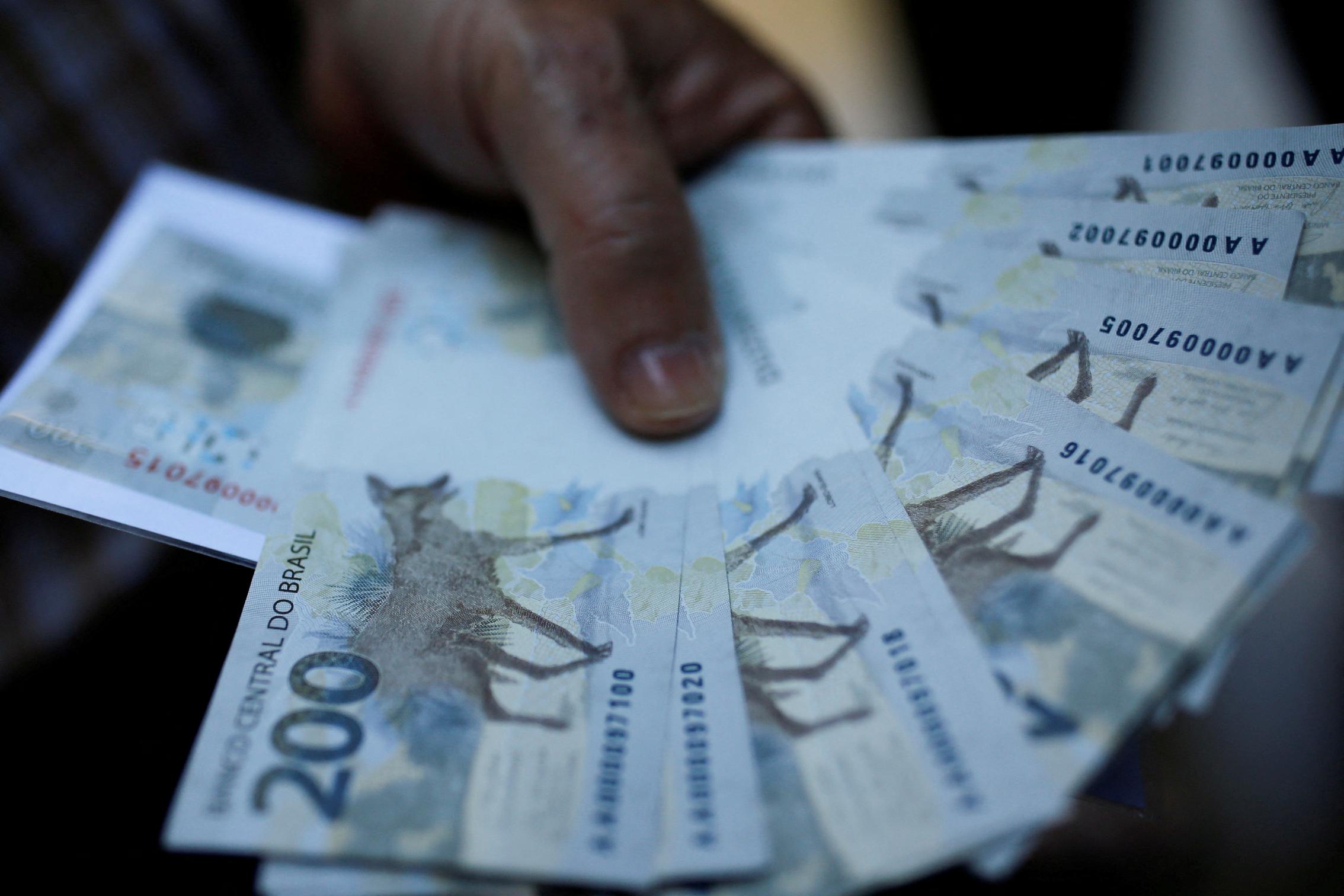
BRASILIA, Feb 21 (Reuters) - Brazil's government will announce on Monday new measures to help foreigners with foreign exchange hedges on their investments in sustainable development, while avoiding currency and fiscal risks for the Treasury, said two people familiar with the plan. The plan includes a new channel for about $2 billion in forex derivatives, contracted by the Inter-American Development Bank (IDB) and distributed in Brazil by the central bank, said the sources, who requested anonymity to discuss confidential plans. The initiative, leveraging the IDB's triple-A credit rating to facilitate longer-term and lower-cost currency derivatives to encourage foreign investment in Brazil's "green" development initiatives, is expected in an executive order. Brazil's Finance Ministry, the central bank and the IDB all declined to comment. Brazil's central bank is expected to sign a comprehensive derivatives contract with the IDB to make the program operational, said the sources. In the same executive order, the government will also authorize the central bank to roll over its $100 billion stock of swaps for longer terms, aiming to enhance liquidity and reduce currency volatility, one of the sources said. The green light for the central bank to roll over swaps for longer terms is deemed "structural" and "very important," as there is limited liquidity in the market for terms exceeding five years, said the source. With these adjustments, Brazil's swaps market could be far more dynamic, with horizons extending up to 15 years, which could have a significant impact on financing infrastructure projects, the source added. Monday's foreign-exchange package will include other measures for currency protection, including a liquidity line for structured project finance for green investments, supported by the IDB, both sources said. The goal is to help projects that need to maintain a debt service coverage ratio in a strong currency, such as a solar power plant with revenue in Brazilian reais, financed in U.S. dollars. The new liquidity line would help such a project meet its financial commitments amid a sudden currency fluctuation. "In this way, you save the project, and you allow more patient capital to take a bigger risk," said the second source. Long-term currency hedging has long been a challenge in Brazil, scaring away some foreign investors from Latin America's largest economy. President Luiz Inacio Lula da Silva's government has tackled the issue in an attempt to bolster foreign investment in areas such as renewable energy and sustainable infrastructure, aiming to position Brazil as a major player in climate change. Brazil raised $2 billion in November with its first "green" sovereign bonds in the international market, using a framework whose construction also received support from the IDB. Finance Minister Fernando Haddad first revealed outlines of the currency hedging efforts in an October interview with Reuters. In 2023, foreign direct investments in the country (FDI) fell by 17%, to $62 billion. https://www.reuters.com/markets/brazil-readies-broad-fx-hedging-program-with-2-billion-derivatives-green-2024-02-21/
2024-02-21 18:03
Feb 21 (Reuters) - Chesapeake Energy (CHK.O) , opens new tab said it would cut spending and natural gas output this year as it sees the market being "oversupplied", causing the company's shares to rise more than 7% on Wednesday. Gas prices fell 30% this year because a mild winter did not dent storage as much as expected amid lowered heating demand. The weakness was despite an Arctic freeze in January that briefly caused gas demand to soar to a record high. On a conference call, Chesapeake said the oversupplied gas market led the company it to cut one well each at the Marcellus and Haynesville basins while also reducing capital expenditure guidance by about 20%. "We would assume that demand would come back in some measured fashion and therefore, we could return production in a measured fashion," Chief Executive Domenic Dell'Osso said on the call. "We feel comfortable pausing turn-in lines and slowing completions activity, slowing drilling activity to match that cadence should be considered as we would also be comfortable accelerating those cycle times in the future when needed." The reduced wells and spending would lead to production falling to 2.7 billion cubic feet per day (bcfd) in 2024, down from around 3.5 bcfd in 2023, Chesapeake said. However, the company expects better supply-demand fundamentals in the long term, and sees a "step change in demand in 2025 as incremental LNG capacity comes online," along with higher natgas supply domestically. Chesapeake in January agreed to buy smaller rival Southwestern Energy (SWN.N) , opens new tab in an all-stock transaction of $7.4 billion, which was pending approval. "We can continue to work on things from an integration standpoint. If it (the deal) takes longer, we won't let that distract us in any way. We're well into the work required for a successful integration," Dell'Osso added. https://www.reuters.com/business/energy/chesapeake-says-natgas-market-oversupplied-plans-cut-output-spending-2024-02-21/

2024-02-21 16:47
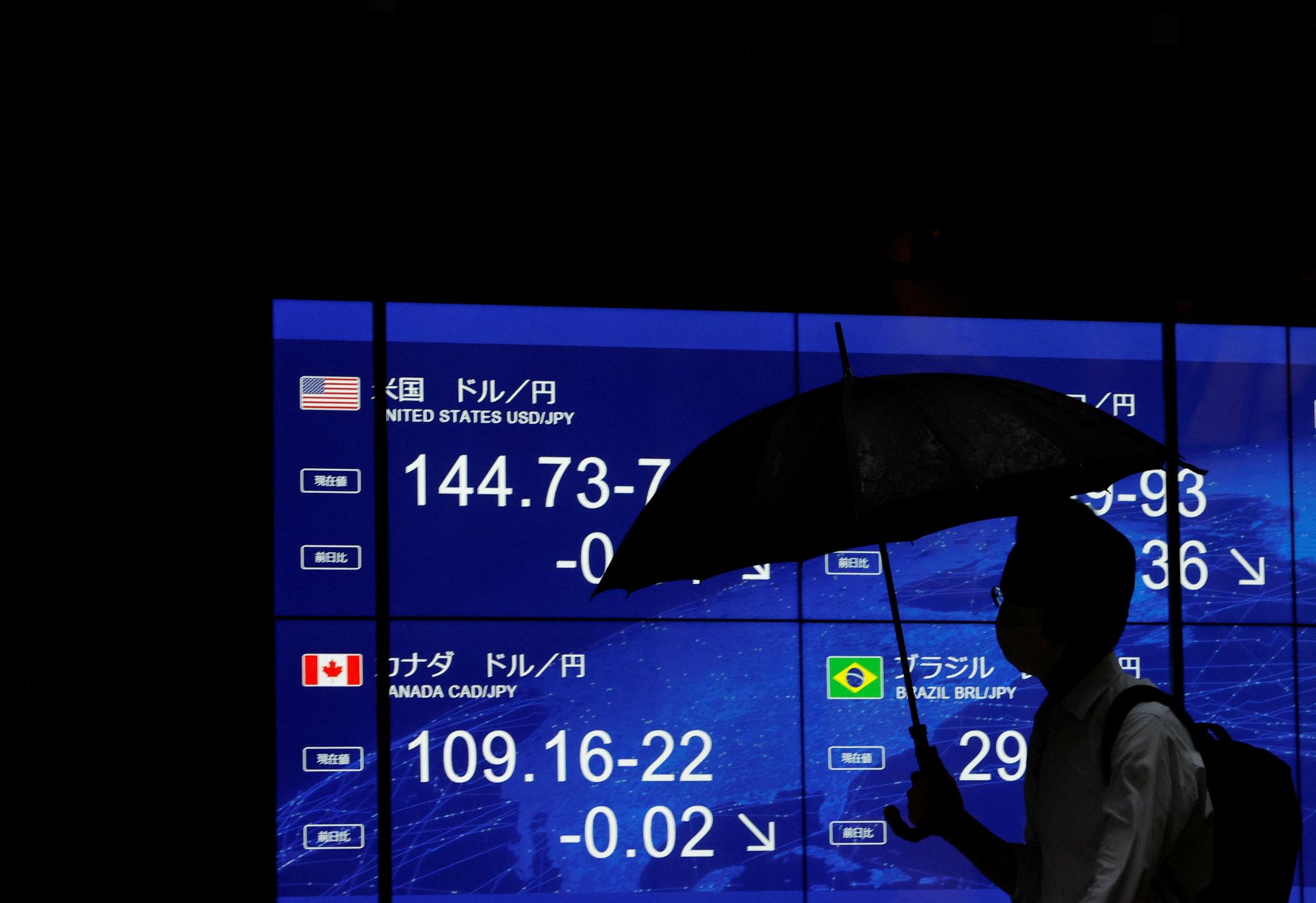
ORLANDO, Florida, Feb 21 (Reuters) - The yen's slide below 150 per dollar has fired up warnings from Japanese officials that the pace of depreciation is "excessive" and "undesirable," but a repeat of the yen-buying intervention frenzy of 2022 seems unlikely. Tokyo may not intervene at all. Its tolerance for a weaker exchange rate may be greater now than it was then, lower yen volatility points to a pretty relaxed FX market, and U.S.-Japanese yield spreads are probably more likely to narrow than widen from here. In Japan, inflation has peaked and is now falling, pipeline price pressures have cooled significantly, the economy is in recession, and the country's terms of trade have improved from 2022. What's more, the Bank of Japan still appears to be on track to end negative interest rates soon, so a "natural" turn in the yen is a distinct possibility. Globally, while there may be increasing uncertainty around the timing and extent of the next interest rate moves by the Federal Reserve, European Central Bank and Bank of England, they will almost certainly be lower. None of that points to as pressing a need for policymakers in Japan to wade into the market spending tens of billions of dollars to prevent the yen from making new historic lows through 152 per dollar. NO HURRY To be sure, they may want to prevent the yen's slide from spiraling into a more damaging selloff that threatens the functioning of Japanese financial markets. It is already down a hefty 6% against the dollar this year. But a re-run of September and October 2022 when Japanese authorities bought yen in the FX market for the first time since 1998, and in record quantities, is a remote prospect. Annual consumer inflation at that time was above 3% and rising, and producer price inflation was a sizzling 10%. While authorities had for years been trying to escape deflation, an exchange rate/import price spiral was never the desired alternative. Inflation is close to the BOJ's 2% target and slowing, and producer price inflation has virtually disappeared. Analysts at Morgan Stanley note that Japan's terms of trade are not as bad as they were 16 months ago and import costs are nowhere near as high. This comes against the surprise news that the economy has slipped into recession, meaning Japan is no longer the third-largest economy in the world. Will policymakers want to drive up an exchange rate that is currently giving the export-heavy economy a path out of recession, boosting corporate profits, and thereby increasing the prospect of higher wage settlements they want to see? "Our suspicion is thus that the Kishida administration ... will be in no particular hurry to curb the yen's slide and thereby risk depressing corporate profits," Morgan Stanley's Koichi Sugisaki wrote on Sunday. ORDERLY FX MARKET If the domestic backdrop suggests less need for Japan to wade in with huge yen-buying intervention, so too does the international picture. In 2022 the Fed was undertaking its most aggressive rate-hiking campaign in 40 years and U.S.-Japanese yield spreads were widening sharply. The dollar's surge above 150.00 yen was in line with exploding rate differentials. Intervention, therefore, maybe flew in the face of these fundamentals, but was understandable from the point of view of wanting to prevent the yen-selling mania from spiraling out of control. Today, the Fed has almost certainly topped out, U.S. yields are more finely balanced, and the BOJ is nearer "liftoff." The yen may benefit from a natural narrowing of the U.S.-Japanese yield gap, without an official push. The risk for the BOJ is if its G4 peers don't cut rates as quickly or as much as predicted. The yen could come under renewed downward pressure, testing the central bank's intervention resolve. But right now, currency markets appear perfectly relaxed. Despite falling every week this year, the kind of one-way market that Japanese officials want to avoid, the yen's decline has been anything but volatile. One-month and three-month implied dollar/yen volatility is at three-month lows around 7% and 8%, respectively, notably lower than in September and October 2022. "The risk of material intervention is still modest," said Marc Chandler, managing director at Bannockburn Global Forex. (The opinions expressed here are those of the author, a columnist for Reuters.) https://www.reuters.com/markets/asia/japans-fx-intervention-bark-will-lack-bite-2024-02-21/
2024-02-21 16:37
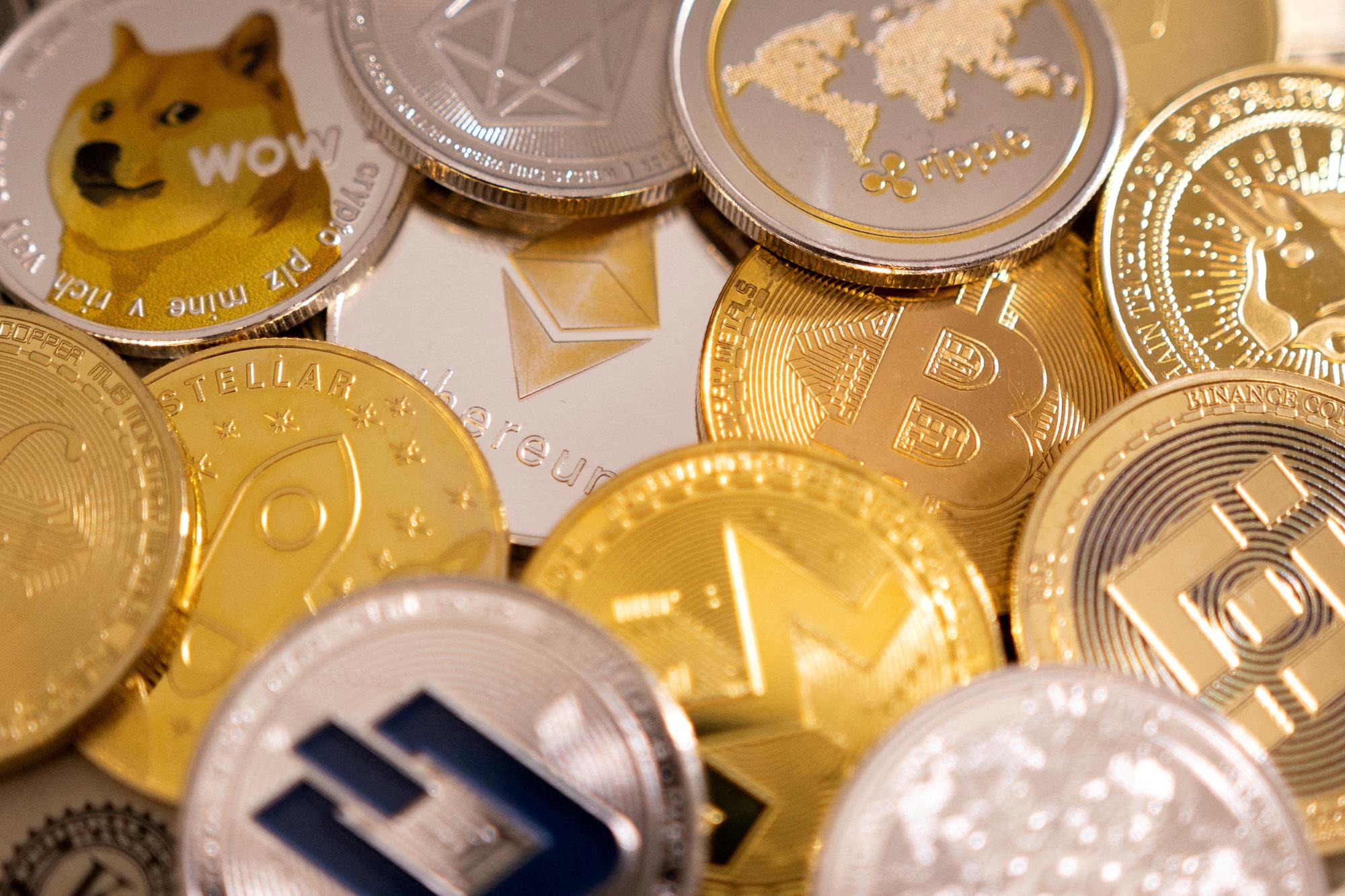
Feb 21 (Reuters) - A Texas cryptocurrency company and an industry group sued the U.S. Securities and Exchange Commission on Wednesday, saying the regulator has overstepped its authority and asking a judge to rule that digital assets traded on exchanges are not securities. Fort Worth-based crypto company Lejilex and lobbying group Crypto Freedom Alliance of Texas (CFAT) claim the SEC has asserted jurisdiction over the industry without a "clear statutory mandate." Lejilex says it seeks to run a cryptocurrency platform called Legit.Exchange. The company formed last year said it plans to list digital assets including those the SEC has deemed securities in lawsuits against Coinbase (COIN.O) , opens new tab, the largest cryptocurrency exchange in the U.S., and Binance, the world's largest crypto exchange. Lejilex wants the court to rule that listing pre-existing tokens will not violate securities laws. "We wish we were launching our business instead of filing a lawsuit, but here we are," Lejilex co-founder Mike Wawszczak said in a statement. A spokesperson for the SEC did not immediately reply to a request for comment. Both Coinbase and Binance have denied the SEC's allegations. CFAT asked the court to block the SEC from suing its members, and said the agency's assertion of jurisdiction over digital assets has made it harder to convince Texas lawmakers to embrace "sensible policies." The group launched last year and counts Coinbase and venture capital firm Andreessen Horowitz's a16z crypto fund as members. CFAT and Lejilex argue the SEC is wrong to classify digital assets as "investment contracts" because they create no ongoing commitment between creator and purchaser. They also asked the court to apply the "major questions" doctrine, which lets judges invalidate executive agency actions of "vast economic and political significance" unless Congress clearly authorized them. The once-rare doctrine has gained traction among regulatory opponents, as the conservative-leaning U.S. Supreme Court has applied it in a couple of recent cases. Crypto companies fighting SEC enforcement actions, including Coinbase and Binance, have made the same arguments in the other cases, so far without success. A judge in July rejected the argument that an ongoing commitment is required to make an asset a security in the SEC's case against Ripple Labs. Another judge overseeing the regulator's lawsuit against Terraform Labs found the "major questions" doctrine does not apply to the cryptocurrency industry. Both of those cases were brought in New York. The new lawsuit filed in federal court in Fort Worth brings the industry's fight with the regulator under the jurisdiction of the 5th U.S. Circuit Court of Appeals. More than two thirds of the judges on the appeals court were appointed by Republican presidents, making it the favored venue for challenges to the SEC under the Biden administration. The case was assigned to Judge Reed O'Connor, an appointee of Republican former President George W. Bush with a track record of ruling in favor of conservative litigants challenging laws and regulations governing guns, LGBTQ rights and healthcare. Paul Clement, former U.S. Solicitor General under President George W. Bush, represents the plaintiffs. https://www.reuters.com/technology/texas-crypto-company-sues-sec-overreach-digital-assets-2024-02-21/