2024-02-21 08:41
MUMBAI, Feb 21 (Reuters) - From hiring analysts to scrutinise customer data to holding frequent meetings with executives, India's financial regulator is bolstering oversight of fintech firms in a signal of an end to years of light-handed regulation of a key business sector. Those steps from the Reserve Bank of India (RBI) come after regular inspections over the past year found a number of fintech firms have been lax in following, for example, customer due diligence, five sources with knowledge of the matter said. Fintech firms and their investors were given a foretaste of that stricter approach last month when the central bank ordered sector giant Paytm to wind down its banking unit due to, what it termed, persistent non-compliance with regulations. That directive, which stirred disquiet in the sector, was followed by a separate order this month to Visa (V.N) , opens new tab asking it to stop business-to-business card payments through third party fintech firms. The RBI's moves come as financial regulators in other major markets, including in China, crack down on rule violations and frame new regulations for the fintech sector after having taken a laissez-faire approach for a long time. Globally, fintech firms provide a range of services - from payments to small credit and deposits -- and as their economic influence increases, regulators are sharpening scrutiny of their linkages with the broader financial system. Like in India, nimble-footed fintech firms' customer due diligence and data handling processes have also raised concerns for the central banks and regulators globally as they try to tamp down on monopoly, data privacy, money laundering and spillover risk. "The RBI is very clear, whether you are "fin(ancial) or tech or fintech", basic rules governing customer identification and a clear footprint of fund flows have to be followed," said one of the sources familiar with the central bank's thinking. All the sources declined to be named as they were not authorised to speak to the media. A spokesperson for the RBI did not respond to an email seeking details of its interactions with fintech firms. CUSTOMER DUE DILIGENCE In particular, the central bank is uneasy with the digital customer identification process used by fintech firms, which relies on a government identity proof, called Aadhaar, and a linked mobile number to verify a person's identity. This method is widely used by fintech firms as a faster and cheaper way to do due diligence, but it is also prone to manipulation, which raises fraud or money laundering concerns, said the second source. While the RBI has not prohibited the use of this method of verification, it has asked that digitally verified accounts be tagged as 'high risk' till the time physical or video-call based identification is completed, according to central bank's regulations on customer due diligence. As part of its sharpened oversight, RBI officials have been picking out random samples of a fintech firm's user base during frequent onsite inspections to check for authenticity, founders at two fintech firms said. Frequency of such meetings has increased from once a quarter last year to once a month now, one of the founders said. Separately, the RBI is also investing in better technology to catch regulatory violations and hiring analysts to study millions of customers' personal data held by the fintech firms, the second source said. India's finance ministry will hold meetings with the home-grown fintech startups, some of them backed by marquee global investors, next week to urge them to comply with regulations and hear their concerns, Reuters reported on Tuesday. Heightened regulatory scrutiny and evolving regulations will drive up the cost of compliance and also capital requirements, which in turn could trigger a consolidation round in the sector, said Ashish Fafadia, partner at Blume Ventures. The scrutiny, however, will "force people to be compliant and do deeper diligence and back companies which have complied, rather than steer them away from it," said Fafadia, whose firm has invested in 20 Indian fintech firms. https://www.reuters.com/world/india/india-regulator-bolsters-scrutiny-fintechs-with-more-inspections-2024-02-21/
2024-02-21 07:45
Feb 21 (Reuters) - British food ingredients maker Tate & Lyle Plc (TATE.L) , opens new tab on Wednesday forecast its annual revenue to come in "slightly" below year-ago levels, as softer demand and persistent de-stocking by customers weighed. "In Food & Beverage Solutions, volume and revenue were lower ... due to a combination of softer consumer demand and customer de-stocking ... and some customers phasing orders into the fourth quarter when new calendar year contracts, which included the pass-through of input cost deflation, came into effect," CEO Nick Hampton said in a statement. Tate & Lyle, the ingredient supplier to Splenda, a non-sugar sweetener that goes into Diet Coke and other sugar-free drinks, retained its annual core profit growth forecast of 7% to 9%. The company, which is one of the world's biggest producers of sweeteners including high fructose corn syrup, expects renewal of customer contracts for 2024 to deliver a sequential improvement in volume growth as the year progresses. After phasing of some customer orders from December, Tate & Lyle witnessed good volume growth last month. The London-listed firm posted a 4% drop year-on-year in its revenue for the third quarter ended Dec. 31. https://www.reuters.com/business/retail-consumer/sweetener-maker-tate-lyle-sees-lower-annual-revenue-softer-demand-2024-02-21/

2024-02-21 07:40
Feb 21 (Reuters) - Sibanye Stillwater's (SSWJ.J) , opens new tab annual profit plunged by as much as 91% last year, the South African mining group said on Wednesday, mainly due to a sharp decline in platinum group metal (PGM) prices. The diversified miner in its first forecast on the year ended Dec. 31 said it expects to post headline earnings per share, the most common profit measure in South Africa, of between 0.6 rand and 0.66 rand ($0.0318-$0.0349), down from 6.52 rand in 2022. Sibanye and peers including Anglo American Platinum (AMSJ.J) , opens new tab and Impala Platinum (IMPJ.J) , opens new tab saw a sharp fall in earnings in 2023 mainly due to a decline in the prices of palladium and rhodium. Sibanye, which has gold operations in South Africa and has diversified into clean energy minerals such as lithium, nickel and zinc, has restructured its PGM operations both in the United States and South Africa to keep a lid on costs in the current low-price environment. The restructuring could result in the loss of 4,095 jobs in Sibanye's South African PGM operations and 300 more in the United States. On Monday, Anglo American Platinum announced plans to cut 3,700 jobs as it fights to contain costs. Sibanye said it plans to further "reposition" its U.S. PGM operations and the Sandouville nickel refinery in France to stem losses. The miner recognised impairments of 47.45 billion rand due to the impact of weakening metal prices and operational challenges at its U.S. PGM and South African gold operations, as well as the Sandouville refinery. Sibanye is scheduled to release its annual results on March 5. ($1 = 18.8950 rand) https://www.reuters.com/markets/commodities/sibanye-stillwater-warns-91-plunge-annual-profit-2024-02-21/
2024-02-21 07:40
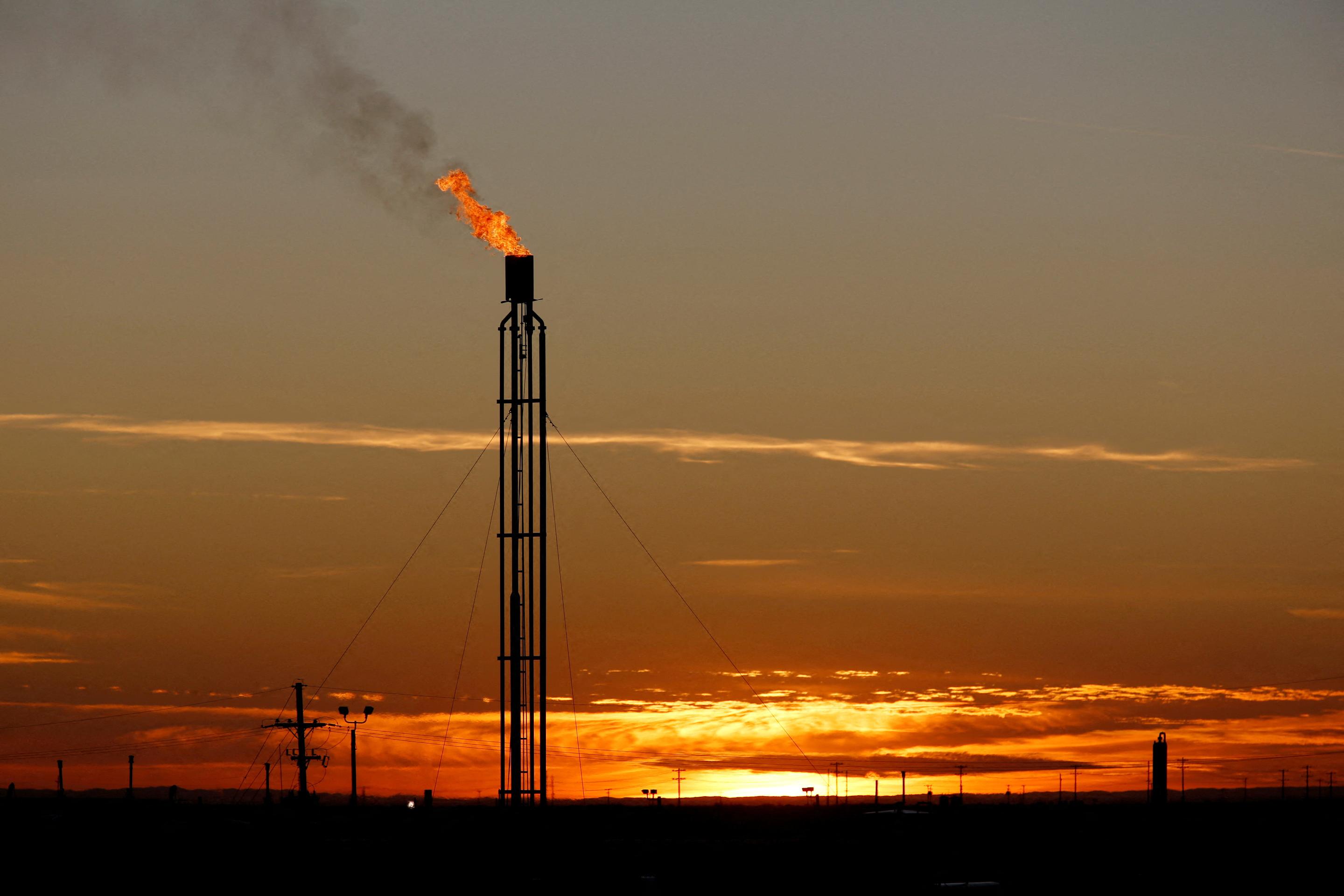
Benchmark timespreads indicate tightening supply Crude stocks decline in ARA, products draw in Fujairah Stocks market jitters curb investors' risk appetite Coming Up: API inventory data at 4:30 p.m./2130 GMT NEW YORK, Feb 21 (Reuters) - Oil prices rose 1% on Wednesday as geopolitical tensions raged on in the Middle East and traders assessed signs of near-term supply tightness. U.S. West Texas Intermediate crude futures (WTI) rose 87 cents, or 1.1%, to settle at $77.91 a barrel, while Brent crude rose 69 cents, or 0.8%, to $83.03 a barrel. Oil contracts tied to near-term deliveries have been trading at their steepest premium to later-dated contracts in multiple months, a market structure known as backwardation and considered a sign of a tightly supplied market. Timespreads are showing markets tightening, UBS analyst Giovanni Staunovo said, adding that crude stocks declined in the Amsterdam-Rotterdam-Antwerp trading hub while product stocks slid in Fujairah last week. Also supporting the market, U.S. refineries are showing signs of returning from maintenance after slumping to their lowest operating rates since December 2022, spurring builds in crude stockpiles. "Recent refinery outages led to some crude oil builds across the globe but these could be coming back online, which will put pressure on crack spreads and could support more crude usage," said Alex Hodes, energy analyst at StoneX. Analysts expect U.S. refinery runs to have risen by 0.9 percentage point last week from 80.6% of total capacity in the previous week, according to a Reuters poll. U.S. crude stocks likely rose last week by nearly 4 million barrels last week, the poll showed. The American Petroleum Institute will post its weekly inventory data after 4:30 p.m. ET, followed by the Energy Information Administration's report at 11 a.m. ET on Thursday, both delayed a day by Monday's U.S. holiday. Houthi attacks on commercial vessels in the Red Sea and Bab al-Mandab strait have continued to stoke concerns over freight flows through the critical waterway. Drone and missile strikes have hit at least four vessels since last Friday. Capping oil's gains, a sharp sell-off in U.S. stock markets dampened investors' risk appetite, Price Futures Group analyst Phil Flynn said in a note. The tech-heavy Nasdaq led declines on Wall Street as investors braced for Nvidia's high-stakes earnings report that could hinder this year's AI euphoria if results are not stellar. The U.S. Federal Reserve is concerned about cutting rates too soon, minutes of its January policy meeting showed. Traders of U.S. short-term interest-rate futures stuck to bets the U.S. Federal Reserve will begin cutting interest rates no earlier than June. Concerns that rate cuts by the Fed could take longer than thought have been weighing on the outlook for oil demand. U.S. inflation data last week pushed back expectations for an imminent start to the Fed's easing cycle. https://www.reuters.com/business/energy/oil-rises-markets-weigh-red-sea-attacks-us-rate-cuts-2024-02-21/
2024-02-21 07:36
SINGAPORE, Feb 21 (Reuters) - Demand for sustainable aviation fuel (SAF) should see a long-sought boost after regional airline hub Singapore said it would require SAF on flights from 2026, but high costs and uncertain raw material supply will mean barriers to wider adoption remain. The city-state will initially require flights to use 1% SAF, possibly rising to 3%-5% by 2030 depending on wider availability and adoption, which will be paid for by a levy on tickets, its transport minister said on Monday ahead of the Singapore Airshow this week. Aviation produces about 2% of the world's emissions and is considered one of the hardest sectors to decarbonise because of the high costs and lack of SAF supply and the long life of aircraft limits the introduction of newer technologies to lower emissions. SAF, which can be made synthetically from hydrogen or from biological materials such as used cooking oil or wood chips, can cost five times as much as conventional fuel and accounts for just 0.2% of the jet fuel market. Based on Singapore's targets, consultants Wood Mackenzie forecast that its SAF demand will rise to about 2,000 barrels per day (bpd) in 2026, increasing up to 10,000 bpd in 2030. "More investments are required to bring down the price of SAF such that it can be more widely adopted, especially outside of Singapore where markets can be more price sensitive," said Sushant Gupta, research director for Asia Pacific, refining and oils market, at Wood Mackenzie. Analysts at FGE also predict that Singapore's SAF demand will be 2,000 bpd in 2026, with total aviation fuel demand to reach 171,000 bpd by then. Finnish refiner Neste (NESTE.HE) , opens new tab has recently expanded its renewable fuels plant in Singapore, which has a total capacity of 2.6 million metric tons per year, or 53,000 bpd, of which up to 1 million tons can be SAF, and that could meet the demand. But securing bio-derived feedstock is expensive, said Ong Shwu Hoon, Asia Pacific fuels vice president at ExxonMobil Asia Pacific. "There's a lot of investment needed in the aggregation, in the cleaning up and in the pre-treatment of this bio-derived feed. They are very difficult to handle," she said at an aviation conference on Monday. SAF competes for the same waste oil feedstocks as renewable biodiesel, which is seeing fast-growing demand for road and sea transport as companies seek to reduce emissions. In response to questions from Reuters on Singapore's new SAF policy, Shell (SHEL.L) , opens new tab said on Tuesday SAF is the only scalable in-sector option to help materially reduce emissions from flights by 2050 but requires greater availability of raw materials, better supply chains, improved production technologies, stronger demand and clearer policies. "The availability of SAF will be a big challenge because the feedstock to manufacture it is finite," Peter Bellew, chief operating officer of Riyadh Air, said on Tuesday at the Airshow. Riyadh Air is a startup carrier based in Saudi Arabia, the world's top oil exporter. "And transporting the feedstock is a challenge because that creates its own sustainability issues." European regulators are also trying to boost the use of SAF by introducing rules that require airlines to meet minimums, such as 2% SAF in France by 2025 and 5% by 2030. "SAF prices are unlikely to decrease due to competition for bio-feedstock," said Mukesh Sahdev, head of oil trading at consultancy Rystad, describing Singapore's up to 5% SAF target as ambitious. https://www.reuters.com/sustainability/singapores-green-jet-fuel-mandate-faces-cost-supply-headwinds-2024-02-21/
2024-02-21 07:27
LONDON, Feb 21 (Reuters) - Glencore's shares tumbled on Wednesday after it posted an earnings slump for last year due to lower commodity prices and slashed its payout to investors to fund a 77% stake in Teck Resources' metallurgical coal business. After two consecutive record earnings years, adjusted earnings before interest, tax, depreciation and amortisation (EBITDA) to $17.1 billion from $34.1 billion a year earlier, in line with analysts' consensus estimates. London-listed Glencore's shares (GLEN.L) , opens new tab were down 2.2% at 1234 GMT having earlier dropped by more than 6%. The Swiss-based commodity giant's payout of $1.6 billion announced on Wednesday does not include a new buyback scheme, after the existing one ends this month, nor a special dividend. To pay for the $6.9 billion acquisition of Canadian miner Teck's unit, Glencore has cut the dividend it will pay to shareholders to 13 cents per share this year compared with 34 cents last year. The deal will add 20 million tons of annual steelmaking coal capacity to Glencore's portfolio and it is expected to close by the third quarter this year, ahead of a planned spin-off of the commodity giant's thermal and metallurgical coal business. "Although there are no "top-up" returns at this point, the business is expected to be highly cash generative ... which augers well for top-up returns to recommence in the future," Glencore Chief Executive Gary Nagle said. Nagle said that the company will continue to consult shareholders for their views on the spin-off once the acquisition is concluded. "We expect the company to be positioned for large capital returns after that deal closes, and we expect Glencore shares to begin to outperform again as a result," Jefferies analysts said. Lower prices for battery materials nickel and cobalt due to a slowdown in the electric vehicle sector and for copper because of weakness in manufacturing globally, weighed on mining companies' earnings last year. As part of its growth plan, Glencore intends to increase copper production, betting on its two brownfield projects in Argentina. "2027-2028 we'll start deploying capital to those brownfield sites," CFO Steven Kalmin said. Copper is used in energy transition applications, including solar panels and electric vehicles. Glencore earlier this month said it would sell its stake in loss-making Koniambo Nickel SAS (KNS) in New Caledonia, halting production at its processing plant for six months while a new investor is sought. Nickel prices fell more than 40% in the past year after production rose in Indonesia, which last year accounted for more than half of global mined supplies, forcing miners to including BHP (BHP.AX) , opens new tab to mothball assets, delay projects, reduce production. "We don't expect significant (nickel) price recoveries in the short to medium term ...(but) we've seen many of our customers interested in buying non-Chinese produced or non-Indonesian nickel," Nagle told reporters. https://www.reuters.com/markets/commodities/glencores-2023-earnings-halve-2024-02-21/