2024-02-21 07:23
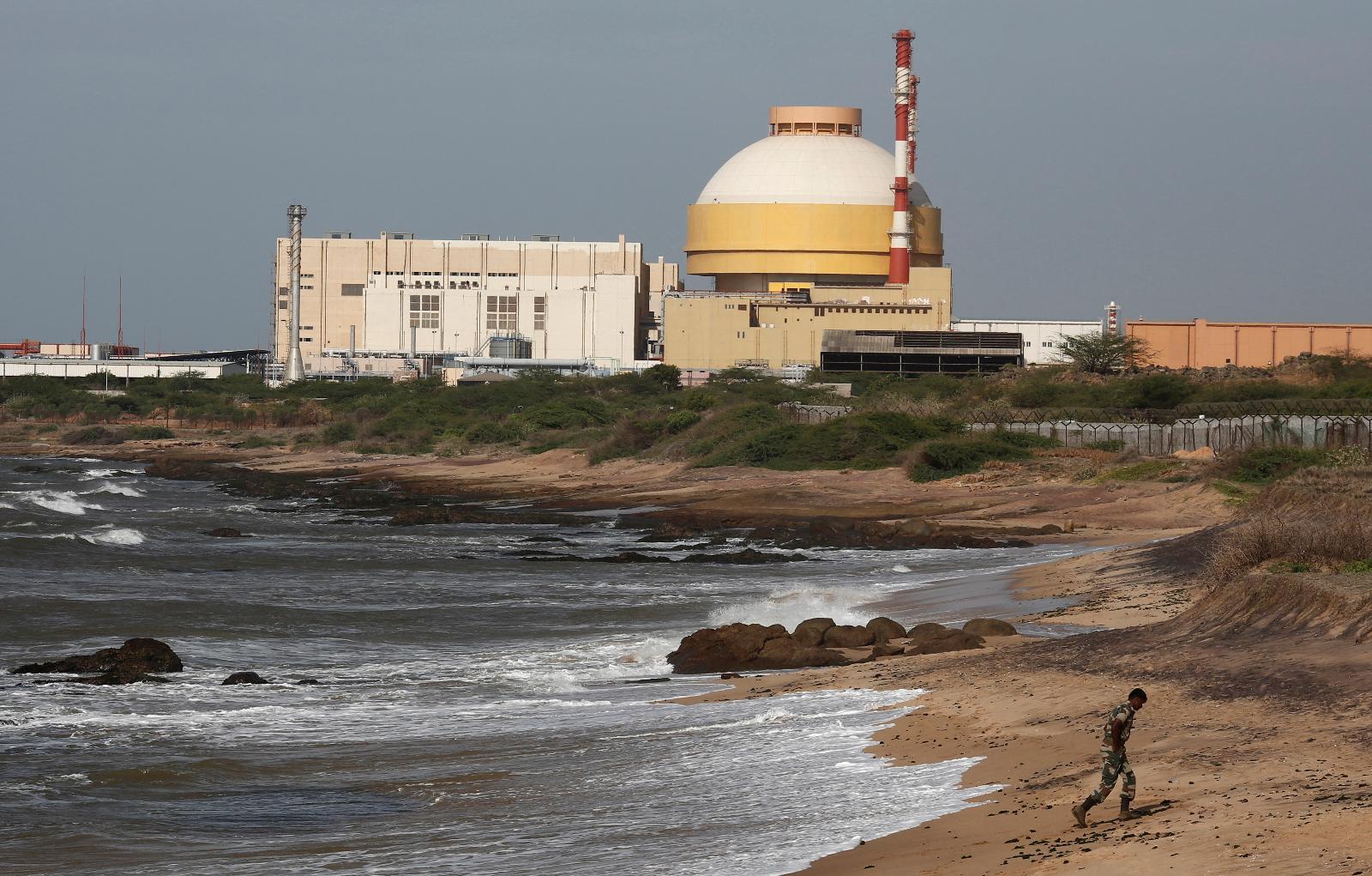
NEW DELHI, Feb 20 (Reuters) - (This Feb. 20 story has been corrected to fix the committed investments from 1,300 MW to 13,000 MW in paragraph 7. It also corrects the capacity from 2,000 MW to 20,000 MW in paragraph 15) India will invite private firms to invest about $26 billion in its nuclear energy sector to increase the amount of electricity from sources that don't produce carbon dioxide emissions, two government sources told Reuters. This is the first time New Delhi is pursuing private investment in nuclear power, a non-carbon-emitting energy source that contributes less than 2% of India's total electricity generation. The funding would help India to achieve its target of having 50% of its installed electric generation capacity use non-fossil fuels by 2030, up from 42% now. The government is in talks with at least five private firms including Reliance Industries (RELI.NS) , opens new tab, Tata Power (TTPW.NS) , opens new tab, Adani Power (ADAN.NS) , opens new tab and Vedanta Ltd (VDAN.NS) , opens new tab to invest around 440 billion rupees ($5.30 billion) each, the two sources, who are directly involved in the matter, said last week. The federal Department of Atomic Energy and state-run Nuclear Power Corp of India Ltd (NPCIL) have held multiple rounds of discussions with the private companies in the past year on the investment plan, the sources said. The Department of Atomic Energy, NPCIL, Tata Power, Reliance Industries, Adani Power and Vedanta did not respond to queries sent by Reuters. With the investment, the government hopes to build 11,000 megawatts (MW) of new nuclear power generation capacity by 2040, said the sources, who did not want to be identified as the plan is still being finalised. NPCIL owns and operates India's current fleet of nuclear power plants, with a capacity of 7,500 MW, and has committed investments for another 13,000 MW. The sources said under the funding plan the private companies will make the investments in the nuclear plants, acquire land, water and undertake construction in areas outside the reactor complex of the plants. But, the rights to build and run the stations and their fuel management will rest with NPCIL, as allowed under the law, they said. The private companies are expected to earn revenue from the power plant's electricity sales and NPCIL would operate the projects for a fee, the sources said. "This hybrid model of nuclear power project development is an innovative solution to accelerate the nuclear capacity," said Charudatta Palekar, an independent power sector consultant who formerly worked for PwC. The plan will not require any amendment to the India's Atomic Energy Act of 1962 but will need a final go-ahead from the Department of Atomic Energy, said one of the two sources. Indian law bars private companies from setting up nuclear power plants but allows them to supply components, equipment and sign construction contracts for work outside of the reactors. New Delhi has not met its nuclear power capacity addition targets for years mainly because it could not procure nuclear fuel supplies. However in 2010, India struck a deal with the United States for supplies of reprocessed nuclear fuel. India's stringent nuclear compensation laws have hampered talks with foreign power plant builders such as General Electric and Westinghouse. The country has deferred a target to add 20,000 MW of nuclear power from 2020 to 2030. ($1 = 82.9640 Indian rupees) https://www.reuters.com/business/energy/india-seeks-26-bln-private-nuclear-power-investments-sources-say-2024-02-20/
2024-02-21 07:11
DUBAI, Feb 21 (Reuters) - Israel was behind last week's attack on Iranian gas pipelines, Iran's Oil Minister Javad Owji said on Wednesday according to semi-official Tasnim news agency. Two explosions hit Iran's main south-north gas pipeline network on Feb. 14 and were initially described by Owji as a "terrorist act of sabotage", without naming any suspects. "The enemy intended to disrupt households' gas supplies ... but within two hours our colleagues worked to counter the Israeli plot which only damaged several pipes," Owji said on Wednesday. In December, a hacking group that Iran accuses of having links to Israel claimed it carried out a cyber-attack which disrupted as much as 70% of Iran's petrol stations. https://www.reuters.com/world/middle-east/iran-says-israel-is-responsible-plot-against-gas-pipelines-tasnim-2024-02-21/

2024-02-21 07:08
LONDON, Feb 21 (Reuters) - Art more than science? Just two months after Federal Reserve policymakers flagged 75 basis points of interest rate cuts for this year, some are already musing about the risks the economy takes off again from here - potentially obviating the need for any cuts at all. Seriously? In fairness, they're just sketching scenarios and remain broadly wedded to December's quarterly projections - even if officials remain vague on exact timing. What seems sure is there's no fixed model or mechanical trigger for what happens next - and clearly no rush to arms. For one, 'forward guidance' - introduced over the past 15 years as a tool to guide long-term interest rates lower when policy rates hit zero and couldn't fall any more - has all but gone for now. The 5%-plus policy rate is the dominant lever. And data updates or business soundings now dictate the nudges, nods and winks from meeting to meeting on how that rate will evolve. In a series of interviews last week, Atlanta Fed boss Raphael Bostic - a voting member of the rate-setting Federal Open Market Committee this year - talked of the 'art' in the timing the first rate cut. To a question on how the Fed will know when to cut? Bostic indicated it would be as much about professional sensibility to the unfolding evidence as any pre-determined plan. "There will be art to this," he told CNBC. "But I do think we will get to a place where the full range of information around inflation will tell us that normalisation is closer." To his credit, Bostic quickly went on to detail what he was watching closely - namely a worrying dispersion of inflation that showed almost a third of the Fed's favoured PCE price basket with annual increases still more than 5% - almost 50% more than seen in more 'normal' times. And he fretted that the welcome fall of so-called 'trimmed mean' core inflation gauges - which remove price outliers - look to be 'plateauing' at rates still above the Fed's 2% target. And so Bostic, who's on the slightly hawkish side of the Fed council and forecast just two 2024 rate cuts in December, felt disinflation was "a little bumpy". "We just have to be patient," he added. "Let time play out, let people get a new equilibrium and we'll be fine." But it was also Bostic who also spoke of the risk that "pent up exuberance" could re-ignite domestic demand and price pressure. Mindful of not letting markets run away with one way bets, all bases seemed covered. San Francisco Fed chief Mary Daly, typically a more dovish Fed leader who predicted three cuts this year and who is also a voter on the FOMC, talked more effusively about the "unequivocally good news" on inflation. But she too was equally hungry for more information before committing to a first cut. "We will need to resist the temptation to act quickly when patience is needed". With no fixed playbook then, new year economic readouts on punchier U.S. inflation , opens new tab and job creation but softer retail and industry activity still leave everyone in 'wait and see' mode. POLICY ARTISTS In some respect the Fed has - artfully perhaps - in fact managed to communicate patience, vigilance, flexibility and determination all at once without moving policy one jot since July. So much so that it has succeeded this year in dragging market pricing back to where it wanted it to be since December - letting the air out of overinflated rate cut bets that emerged quickly after that meeting and which now price less than four quarter-point moves in 2024 compared to six a month ago. And it has managed that without major disturbance - lifting long term rates back to December levels, though still some 75bps below October's peaks while stock market benchmarks surf record highs. On Tuesday, Deutsche Bank flagged what it now sees as a 'shallower' Fed cycle than it originally thought - 100bps of cuts from June - and blamed inflation "persistence" with 3-month annualised core consumer price inflation still above 4%. Nuveen Chief Investment Officer Saira Malik was gloomier and said a first cut may not even arrive until the second half of the year. "The Fed isn't ready to spring forth." Don't fight the Fed, in other words. A similar game is at play on the other side of the Atlantic. The European Central Bank has also dispatched its various hawks and doves to keep the market guessing - only for both sides to deliver a similar message of more patience and no mechanical trigger for a first move. The upshot is that that's reshaped the market rate cut trajectory to ape that of the Fed - even though the euro zone is on the cusp of recession and the United States booming with 3%-plus annualised output growth. Critical of the ECB's doggedness despite a poorer underlying economic condition, Unicredit economic adviser Erik Nielsen pointed out how both sides of the debate on the ECB council were now saying the same thing "with only nuances to divide them". Two recent speeches he highlighted were from hawkish board member Isabel Schnabel and more dovish chief economist Philip Lane - and yet both appeared to converge on the need to hold back demand further to prevent firms raising prices. "Euro zone domestic demand has not grown to any measurable extent for almost two years - incidentally leading to the greatest gap in per capita income growth between Europe and the U.S. in decades," Nielsen opined, puzzling at the ECB stance. It may be that all major central banks are just playing for more time. But it they may soon need to better differentiate their stances to match domestic economic realities rather than just clubbing together to corral excessive market expectations. And that's the point at which currencies rate and broader financial markets could get very frisky indeed. The opinions expressed here are those of the author, a columnist for Reuters. https://www.reuters.com/markets/rates-bonds/art-rate-cut-timing-or-clumsy-indecision-mike-dolan-2024-02-21/
2024-02-21 07:02
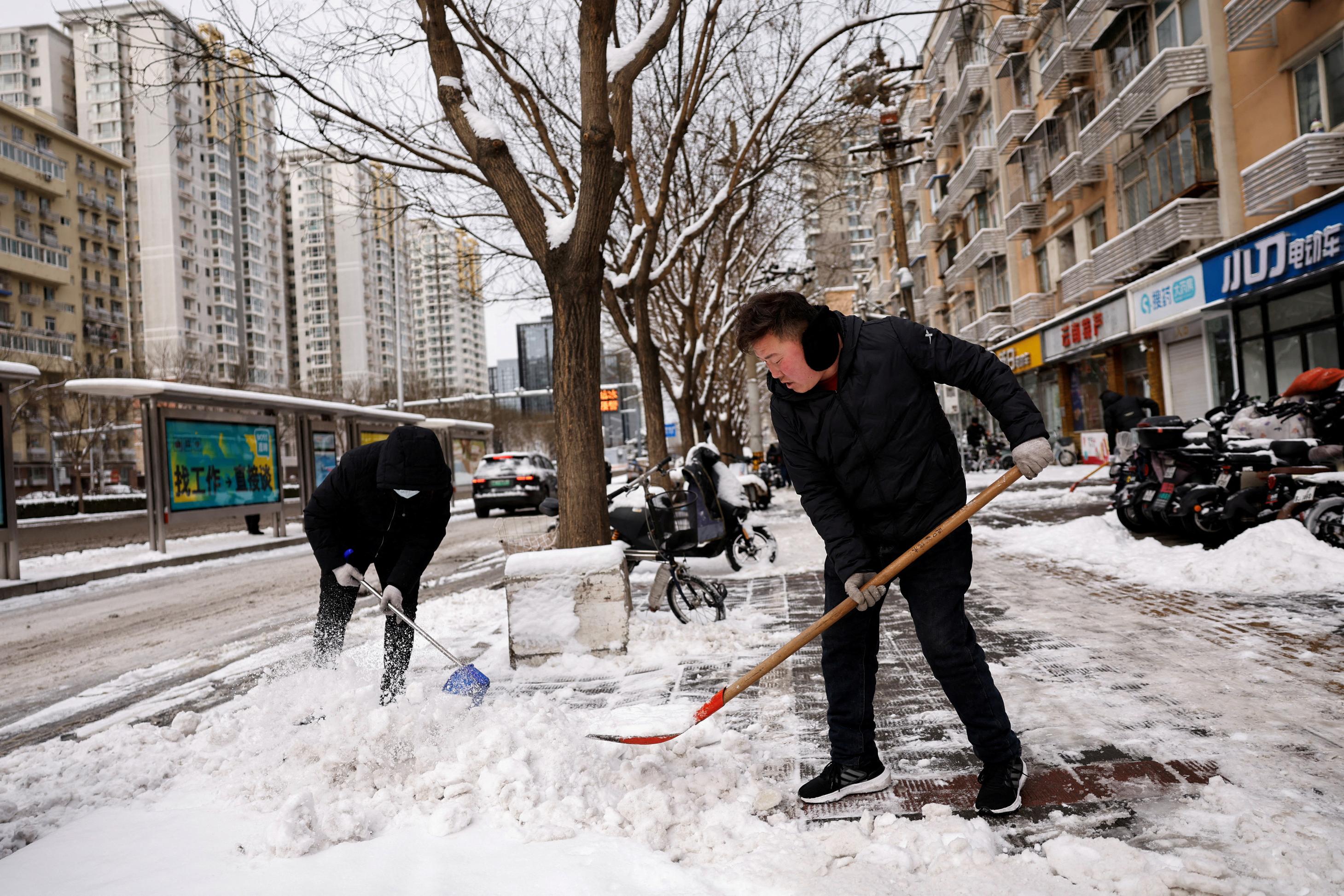
BEIJING, Feb 21 (Reuters) - Authorities in Beijing shut some highways on Wednesday after heavier-than-expected snowfall hit the Chinese capital, part of a cold spell sweeping many parts of the country this week. With freezing rain and snow expected to last until Monday, officials boosted public transport arrangements in the sprawling city of nearly 22 million and shut eight highways, state broadcaster CCTV said. Mountainous areas were still receiving snowfall, though it had stopped in urban areas. "I feel like the few days after the snow are a bit inconvenient because the road is kind of slippery and drivers are not that considerate," said Beijing resident Kylie Chen. Although she liked seeing the snow, it complicated her work commute, as she had to walk on sludgy roads, the 23-year-old added. Tuesday evening's snowfall lasted longer and was heavier than forecast after a confluence of humid air currents from the south and a cold mass of air moving slowly eastward, an observatory official told the Beijing Daily newspaper. With flexible work hours offered by some employers, some people could spend more time taking in the scenery, said another Beijing resident, Li Qiuhao. "(The company) allows us to choose our work time more freely," the 31-year-old added. "It means that we can avoid some commuting problems and traffic problems." The bad weather forced the closure of almost 200 stretches of road nationwide, CCTV said. The National Meteorological Center is predicting subzero temperatures in the coming week for numerous areas. https://www.reuters.com/world/china/beijing-shuts-highways-after-heavy-snowfall-2024-02-21/
2024-02-21 06:46
Police fire tear gas to stop farmers' march on capital Govt makes fresh offer of talks Farmers' leaders discuss offer Farmers equipped with cranes, excavators, gas masks Tight security slows traffic entering Delhi SHAMBHU, India, Feb 21 (Reuters) - Indian police fired tear gas and water cannons on Wednesday to scatter thousands of farmers trying to stage a protest march to Delhi after they rejected a government offer on prices for their produce, prompting an offer of fresh talks. The farmers, mostly from the northern state of Punjab, have been demanding higher prices backed by law for their crops. They form an influential bloc of voters Prime Minister Narendra Modi cannot afford to anger ahead of general elections due by May. Fleeing the tear gas and clouds of smoke, the farmers, some wearing medical masks, ran into fields surrounding their gathering-point on a highway about 200 km (125 miles) north of the capital New Delhi. When they tried to regroup, police fired more tear gas shells at them. At another protest site about 100 km away, video clips on local media showed police using water cannons and farmers aiming a hose pipe of water at them. The police action came as Modi's government made a new offer to resume talks on farmers' demand for guaranteed crop prices. "The government is ready to discuss all the issues," Agriculture Minister Arjun Munda posted on social network X. "I again invite the farmer leaders for discussion. It is important for us to maintain peace." Farmers' leader Sarwan Singh Pandher told reporters they would discuss how to respond. On Monday, the farmers' groups had rejected the government's previous proposal for five-year contracts and guaranteed support prices for produce such as corn, cotton and pulses. HIGHWAYS BLOCKED The farmers, accompanied by cranes and excavators, began marching at 0530 GMT from a spot on a key highway where authorities had erected barricades on the border of Punjab state with Haryana. "It is not right that such massive barricades have been placed to stop us," said one of the farmers' leaders, Jagjit Singh Dallewal. "We want to march to Delhi peacefully. If not, they should accede to our demands." Police in riot gear lined the highway as the farmers waved colourful flags emblazoned with the symbols of their unions. Late on Tuesday, Haryana police's chief ordered the immediate seizure of heavy equipment brought by the farmers, to keep protesters from using it to destroy barricades. About 10,000 people had gathered on Wednesday, along with 1,200 tractors and wagons at Shambhu on the state border, police in Haryana posted on X. Security was stepped up at entry points to New Delhi, slowing traffic entering the city of more than 20 million and causing snarls. Two key entry points north of the city have been shut for days and traffic diverted. An earlier government proposal of minimum support prices to farmers who diversify their crops to grow cotton, pigeon peas, black matpe, red lentils and corn was rejected by the protesters, who wanted additional foodgrains covered. Similar protests two years ago, when farmers camped for months at the border of New Delhi, forced Modi's government to repeal a set of farm laws. https://www.reuters.com/world/india/with-cranes-excavators-indian-farmers-prepare-march-capital-2024-02-21/

2024-02-21 06:36
NEW YORK, Feb 21 (Reuters) - Treasury yields rose on Wednesday after minutes from the Federal Reserve's last meeting showed concerns about cutting interest rates too soon, while global shares closed flat ahead of Nvidia results that could determine the near-term outlook for equities. Nvidia (NVDA.O) , opens new tab jumped more than 7% in after-hours trade after it forecast fiscal first-quarter revenue above estimates compiled by LSEG. The chipmaker banked on towering demand for its industry-leading artificial intelligence chips and improving supply chain dynamics. The minutes kept market sentiment subdued as the bulk of Fed policymakers worried about moving to quickly to cut rates amid broad uncertainty about how long borrowing costs should stay at their current level, minutes of the Jan. 30-31 meeting showed. The two-year Treasury yield, which reflects interest rate expectations, rose 5.8 basis points to 4.670%, and MSCI's gauge of stocks across the globe (.MIWD00000PUS) , opens new tab pared earlier losses to close down 0.04%. "I don't think the minutes really told us anything new. The markets have basically already done the Fed's work for them in terms of pricing out chances of a March rate cut and for a bunch of cuts down the road," said Kim Rupert, managing director of global fixed income at Action Economics in San Francisco. Policymakers are concerned that the economy is going to limit further disinflationary trends, or at least has the potential to see progress on inflation stall out, she said. "There's some very small risk of a hike that's been priced in just because of the hotter-than-expected inflation numbers" last week, Rupert said. A slim majority of economists polled by Reuters now expects the Fed to start cutting rates in June, farther out than market expectations last month of a first cut in March. Markets now expect 86 basis points (bps) of cuts from the Fed this year, closer to the U.S. central bank's own projection of 75 bps of easing - or half the 150 bps of cuts priced in by traders at the start of the year. Stocks fell in Europe as shares in HSBC (HSBA.L) , opens new tab tumbled 8.4% in its biggest single-day decline since April 2020, after a shock $3 billion charge on its stake in a Chinese bank took the shine off record annual profit at the region's largest bank. The pan-European STOXX 600 index (.STOXX) , opens new tab closed down 0.17%. Investors expressed concerns that only marginally meeting or beating expectations would lead Nvidia to suffer dramatically and lead investors to pull back. On Wall Street, the Dow Jones Industrial Average (.DJI) , opens new tab rose 0.13%, the S&P 500 (.SPX) , opens new tab gained 0.13% and the Nasdaq Composite (.IXIC) , opens new tab dropped 0.32%. The change in interest rate expectations outlook boosted the dollar and kept the yen, which is extremely sensitive to U.S. rates, near three-month lows. The dollar has had a nice run and is probably at the top of a range at the moment, said Noel Dixon, a vice president of global macro strategy at State Street Global Markets in Boston. "We just need to see more data before we can break out of that range. That'll take probably until we get to the May or June time frame," he said. The dollar index fell 0.038%, with the euro up 0.12% to $1.0816. The Japanese yen weakened 0.18% to 150.27 per dollar. Steps by Chinese authorities to prop up economic growth in the world's largest raw materials consumer revived doubts about the growth outlook, which weighed on crude oil and iron ore. Chinese blue-chip stocks posted a 1.4% gain on the day (.CSI300) , opens new tab, a day after the biggest reduction yet in the nation's benchmark mortgage rate as authorities stepped up efforts to support the property market. Oil prices rose 1% as geopolitical tensions raged on in the Middle East and traders assessed signs of near-term supply tightness. U.S. West Texas Intermediate crude futures (WTI) rose 87 cents to settle at $77.91 a barrel, while Brent crude finished up 69 cents to $83.03 a barrel. Iron ore futures declined for a third consecutive session to their lowest in nearly four months. https://www.reuters.com/markets/global-markets-wrapup-1-2024-02-21/