2024-02-21 06:29
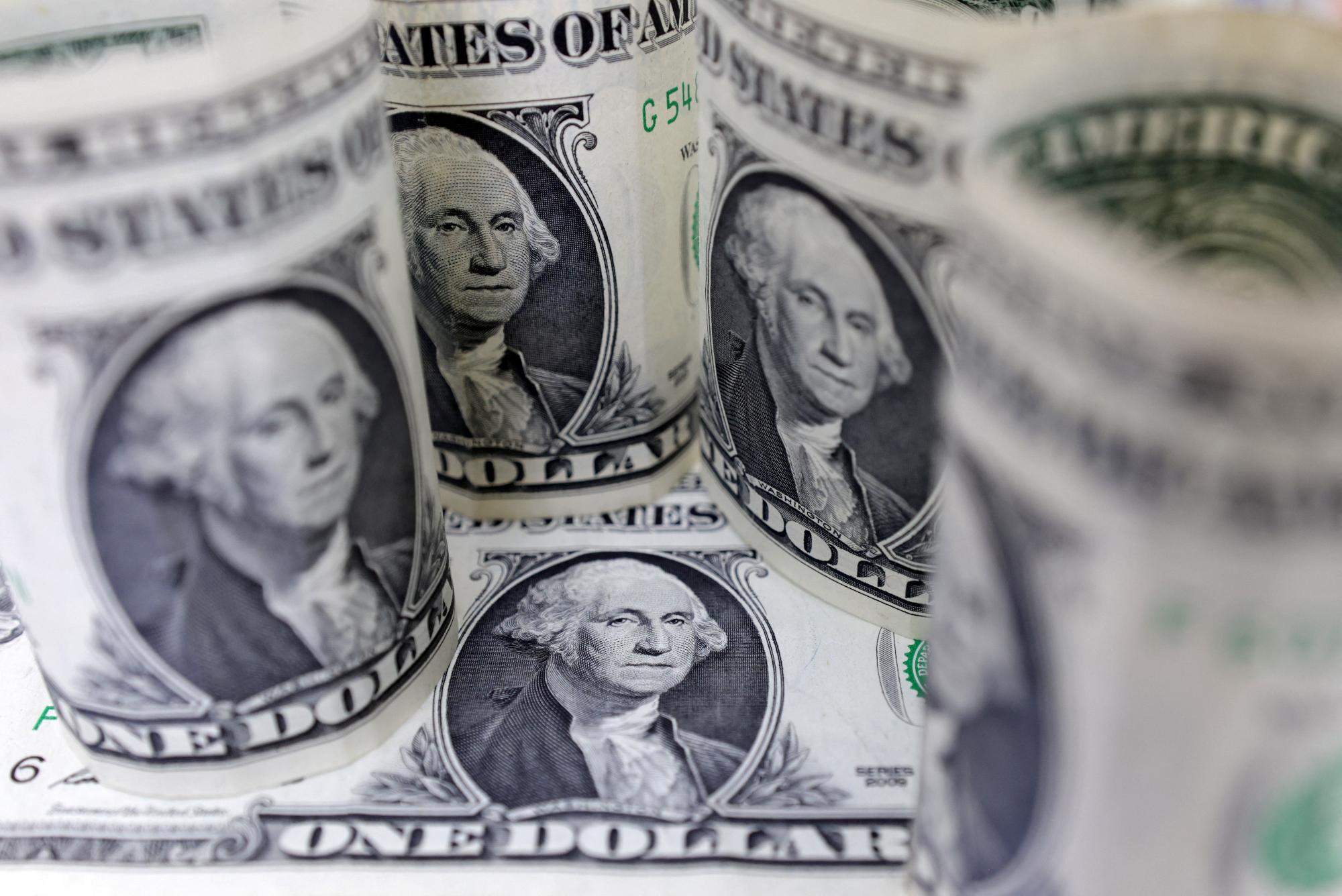
NEW YORK, Feb 21 (Reuters) - The dollar index edged lower on Wednesday after minutes from the Federal Reserve’s January meeting came in largely as expected and showed that the bulk of policymakers were concerned about the risks of cutting interest rates too soon. Traders have pushed back expectations on when the Fed will begin cutting rates to June as officials caution that they want to see more evidence that inflation will continue to decline. "Participants highlighted the uncertainty associated with how long a restrictive monetary policy stance would need to be maintained" to return inflation to the Fed's 2% target, said the meeting minutes. “The overall message is that they’re watching the progress but they’re not quite there,” said Vassili Serebriakov, an FX strategist at UBS in New York. Higher than expected consumer and producer price inflation last week has raised the possibility that the Fed could hold rates higher for longer, or even make further hikes if it continues. However, retail sales numbers and other data have also been showing some signs of weakness, which has sent the greenback lower over the past week. “There is still enough of a question mark with respect to incoming data and as a result we’ve seen the dollar come under a bit of pressure,” said Bipan Rai, North American head of FX strategy at CIBC Capital Markets in Toronto, adding, “This is really a data driven environment.” Richmond Fed President Thomas Barkin said Wednesday that the inflation data will complicate upcoming Fed rate decisions. The dollar index was last down 0.04% on the day at 104.00, after reaching 103.79 on Tuesday, the lowest since Feb. 2. The euro gained 0.1% to $1.0815. The greenback rose 0.13% to 150.19 yen . UBS’ Serebriakov notes that traders are staying in carry trades as the expected timing of rate cuts are pushed back, which has led low-yielding currencies like the yen to underperform. In carry trades investors sell low-yielding currencies and invest in higher-yielding currencies. “As long as equities are stable or moving higher, that means risk sentiment is strong and that favors carry trades in FX,” he said. Sterling was up 0.11% at $1.2632 after figures showed Britain chalked up its highest ever monthly budget surplus in January ahead of finance minister Jeremy Hunt's annual budget in March. "The ‘record’ surplus does not mean that the UK is firing on all cylinders and generating cash significantly faster than before. The surplus was lower than expected," said Kathleen Brooks, research director XTB. "Economic growth is still likely to remain sluggish, so today’s data is unlikely to factor into the BOE’s decision on when to cut rates." In cryptocurrencies, bitcoin fell 1.96% to $51,028. https://www.reuters.com/markets/currencies/dollar-tracks-global-yields-lower-sterling-heavy-2024-02-21/
2024-02-21 06:15
Feb 21 (Reuters) - Copper and gold are expected to see the largest immediate price boost in the commodities sector from potential U.S. Federal Reserve interest rate cuts, analysts at Goldman Sachs said. "The immediate price boost from a Fed driven 100 basis point decline in U.S. 2-year rates is the largest for metals, especially copper (6%), and then gold (3%), followed by oil (3%)," Goldman Sachs said in a note dated Feb. 20. Three-month copper on the London Metal Exchange was trading near a three-week high of $8,548 per metric ton as of 0542 GMT on Wednesday, while spot gold was at a near two-week high at $2,030.30 per ounce. The Wall Street bank, however, said it expects no significant price effects on natural gas or agricultural commodities as micro factors such as seasonal inventory cycles and weather outweigh any impact from rate cuts. "The positive impact of lower interest rates on both commodity demand and supply makes the commodity price impact ambiguous in theory," Goldman said. "In practice, we find that the demand boost to prices from a lower cost of carrying inventory and from higher GDP via easier financial conditions dominates." The U.S. central bank is expected to cut the federal funds rate in June, according to a slim majority of economists polled by Reuters, who also said the greater risk was that the first rate cut would come later than forecast. https://www.reuters.com/markets/commodities/copper-gold-see-largest-price-boost-fed-easing-goldman-says-2024-02-21/

2024-02-21 06:07
Underlying earnings at $11.8 bln from $13.4 bln a year ago Final dividend at 258.0 cps beats 247.0 cps estimate Iron ore production cost may rise as much as 9% in 2024 MELBOURNE, Feb 21 (Reuters) - Rio Tinto (RIO.AX) , opens new tab, (RIO.L) , opens new tab reported a 12% fall in annual underlying earnings on Wednesday, in line with forecasts, but paid a better-than-expected final dividend as it said inflation pressures were starting to recede. Rio said its underlying earnings came in at $11.8 billion for 2023, down from $13.4 billion a year earlier, mostly due to lower prices for aluminium and its minerals division. That was largely in line with the LSEG consensus estimate of $11.7 billion. Rio declared a final dividend of 258.0 cents per share, up from 225.0 cents per share in 2022 and ahead of the LSEG estimate of 247.0 cents per share. The world's largest iron ore producer said it expects Pilbara production costs to rise in 2024 due to persistent labour and parts inflation in Western Australia. However, the worst of the inflation pressure is likely in the past, Chief Financial Officer Peter Cunningham told reporters. "We are starting to see them (costs) moderate now as we go into 2024," he said. "The reality is we remain in a very strong financial position and can afford to undertake our growth agenda and continue to pay out at 60%." At Rio's iron ore division, which accounted for around 80% of its profits, underlying earnings grew by 6%, outpacing a 2% increase in prices of iron ore. However Rio warned that it sees unit production costs rising to between $21.75 and $23.50 per metric ton from $21.50 in 2023. "While inflation has eased, we continued to see lag effects in its impact on our third party costs, such as contractor rates, consumables and some raw materials; we expect this to stabilise in 2024," the company said in a statement. Average prices Rio Tinto received for aluminium sold in 2023 slipped from COVID-era peaks, as supply chains normalised and demand from Western markets weakened. This offset a boost from production growth across major commodities including copper. The miner booked net impairment charges of $0.7 billion, after tax, mainly related to its alumina refineries in Queensland, taken in the first half of 2023, as the assets faced challenging market conditions. INORGANIC GROWTH Rio's net debt remained low at $4.2 billion, which has spurred expectations that it may look to grow via acquisition. CEO Jakob Stausholm said last August that Rio Tinto was open to small, bolt-on acquisitions to shape its portfolio including in Canadium lithium but that valuations were too high. He stuck to that view on Wednesday, even following a slide in lithium prices that has hit company valuations. "I have seen that prices of lithium companies have come down but they still remain at the high end so it’s not something that I get super excited about at this point in time," Stausholm told media on a call after the results were released. For now, Rio Tinto is focusing on developing its Argentine Rincon lithium project and seeking government approval to develop its Jadar mine in Serbia, he said. It was unlikely to move into other battery minerals such as nickel or cobalt given the rising market share of lithium iron phosphate batteries (LFP) which don't use them, he added. Its biggest growth project for now is the massive Simandou iron ore mine in Guinea, on which it expects to spend another $5.7 billion over the next three years. https://www.reuters.com/markets/commodities/rio-tinto-posts-11-drop-annual-profit-2024-02-21/

2024-02-21 06:05
MADRID, Feb 21 (Reuters) - The number of Spaniards installing solar panels on their homes fell last year, the first decline since 2018 as the impact of subsidies faded, while the outlook for this year is steady. Analysts said lower energy prices and the squeeze on household budgets caused by inflation had begun to sap enthusiasm for solar across Europe, but the impact is particularly marked in Spain, a relatively immature market for rooftop solar. Almost 112,000 Spanish households set up solar energy installations in 2023, roughly half the record level of 2022, according to renewable lobby APPA. Although one of Europe's sunniest countries and a leader in renewable energy, Spain lags other countries in this segment, notably Europe's solar leader Germany. It began to catch up after Spain in 2018 scrapped an unpopular levy, known as the sun tax, as part of measures to reduce electricity bills. The charge on solar power affected households and small businesses. Christophe Lits, a market analyst at European industry association SolarPower Europe, said demand had fallen especially sharply in Spain because the market was less mature and would "fluctuate more due to external shocks". Madrid earmarked more than 2 billion euros ($2.16 billion) of European Union post-pandemic recovery funds for solar installations, energy storage and domestic renewable heating systems. In addition, many local authorities offer solar panel tax breaks. "We had in 2022 a market doped with subsidies, the war in Ukraine and market instability," Javier Dominguez, technical director at Spanish renewable energy systems firm Cambio Energetico said. "In 2023 there was a hangover from that." Lucia Varela, director of self-consumption and energy communities at solar industry group UNEF, said a decline in demand from households had been expected when people stopped perceiving energy prices as high as they did during the price shock of 2022 caused by the market disruption linked to Russia's war on Ukraine. For the industry, however, she said the extent of the decline in installations on people's homes was concerning and it may have to look more to new forms of installations, serving groups of households or communities. The industrial sector also installed less solar in 2023, though the decline was smaller. Overall, some 1.9 gigawatts (GW) of capacity was added, 27% less than in 2022 but well above the 2021 performance, APPA figures show. PLAYING CATCH UP Spain's total installed solar rooftop capacity at the end of last year was a fifth of Germany's and roughly half of Italy's, SolarPower Europe data shows. "The sector is 15 years behind due to the sun tax," Christopher Cederskog, chief executive of solar supplier Sunhero, said. He also said delays in subsidy payments had damaged public perception of the sector. The danger is, he said, that the poorest who would benefit most from cheaper energy, feel unable to risk the initial outlay. An average domestic system costs around 7,000 euros, according to APPA. Based on last year's energy prices, such investment would be recovered in seven years' time even without government support. Average waiting times for subsidies are around a year, Varela of UNEF estimated, and in some cases closer to two. The energy ministry transfers funds to the regional governments to implement the scheme, which must comply with rigorous European Commission rules, a spokesperson said, adding about 44% of the allocated funds have been disbursed. Maria Diaz Fernandez, a 43-year-old primary school teacher, spent around 6,400 euros installing 10 solar panels on her home in Toledo, central Spain, in November. She said she is waiting for the subsidies that she hoped would cover 40% of the cost. Her siblings, who installed their systems almost a year earlier, were also still waiting. BRIGHT FUTURE? The energy ministry spokesperson, however, said the government's track record on solar was strong as it not only cancelled the sun tax, but had improved the regulatory framework, adding the market had grown 14-fold since 2018. Jon Macias, president of APPA's prosumer branch, was also upbeat, citing Spain's continued potential for growth as only 7% of single-family homes and 2% of businesses in Spain get their energy from their own solar panels. He predicts installations this year will be steady with last year's and said Spain was on track to reach a 2030 target of 19 gigawatts (GW) of installations on homes and company-owned buildings. The goal would correspond to fitting solar panels to more than 4 million average homes. Some, however, say change is needed to ensure Spain carries on installing solar panels. With roughly two-thirds of Spaniards living in apartment blocks, many in the sector say the future lies in shared projects, in which solar panels would provide energy to group of consumers rather than a single household. Such installations account for 1% of the market and face challenges, not least cultural ones. "Spaniards are used to consuming energy, not producing it, Eugenio Garcia-Calderon, cofounder of solar energy company Comunidad Solar, said. ($1 = 0.9240 euros) https://www.reuters.com/sustainability/climate-energy/rooftop-solar-fever-cools-sunny-spain-2024-02-21/

2024-02-21 06:03
LONDON, Feb 21 (Reuters) - Investors have been pouring cash into Swiss stocks in the hope that this export-focussed market will outshine its peers, in part thanks to a shift in central bank policy that could knock the franc further off 2023's multi-year highs. Analysts say this quarter will probably remain tough for exporters with the franc still trading at elevated levels, but expectations this might change soon are already setting the tone for the market. Swiss-domiciled funds recorded their largest monthly net inflow since July 2022 last month, and positive net flows for the last three months, according Morningstar Direct data. The main Swiss index (SMI) (.SSMI) , opens new tab also caught up with Europe's STOXX 600 index - with both up 2% so far this year - after it rose just 3.8% last year, lagging a 12.7% gain for the European benchmark. Currency strength was part of the problem, as many large Swiss firms make much of their revenues abroad, but report earnings and pay some costs in francs, meaning their overseas revenues shrink after being converted. Currency moves accounted for almost 25% of the SMI's relative performance in the past 10 years, according to analysts at Kepler Cheuvreux. This was particularly acute last year, when the franc hit its strongest since 2015 against the euro and the dollar. , . The franc is the only major currency that outperformed the U.S. dollar through the last two years. Companies including pharmaceuticals giant Roche (ROG.S) , opens new tab and watchmaker Swatch (UHR.S) , opens new tab, cited the currency as one drag on their fourth-quarter earnings. Analysts expect that effect to peak this quarter, but gradual relief later in the year. "The first quarter of 2024 will see the most negative effect (from the strong franc) in our view," said Thomas Jaeger, senior portfolio manager at Mirabaud Asset Management. "Companies reporting in Swiss francs face a huge headwind." Jaeger says Swiss companies had particularly hard time competing with rivals from Japan. The yen was the worst performing major currency in 2023 and fell 15% against the franc , its second-biggest yearly fall in at least 40 years. TURNAROUND But a turnaround could be on the cards. The franc is down a touch against both the euro and dollar in 2024 so far, and the outlook could favour companies that would benefit from a softer currency. "The Swiss franc is almost always driven by two things, global tensions driving safe haven flows, and the Swiss National Bank," said Samy Chaar, chief economist at Lombard Odier in Geneva. "Now, conflicts around the world remain localised, and without significant escalation, so that's not driving the Swiss franc higher, while there has been a big change with the SNB, as it is comfortable with the current level of inflation," he said. The SNB is one of the few major central banks that intervenes in currency markets to fine-tune monetary policy. It bought francs in 2022 and 2023 to boost the currency and reduce imported price pressures. Now, with inflation back within the central bank's target range, its focus may shift again to putting a brake on franc appreciation. SNB Chairman Thomas Jordan acknowledged last month currency strength could have a negative impact, particularly on exporters. The SNB could even have sold francs to weaken the currency, analysts said earlier this month after data showed a big jump in its January foreign currency reserves. Kepler Cheuvreux, which recently upgraded Swiss stocks, given their resilience to economic swings, said a weaker franc would further boost their appeal. Pharmaceutical and food companies whose products see fairly consistent demand regardless of the economic cycle are well represented in the Swiss index. "A depreciation of the franc would be a positive for Swiss equities overall, as most are operationally exposed to markets abroad. The Swiss equity market is among our most preferred geographies in Europe," it said in a note. Nomura currency strategist Yusuke Miyairi said SNB could cut rates sooner than its peers given inflation was coming below the Swiss central bank's forecasts and he favoured selling the franc in particular against the higher-yielding pound . Miyairi also noted Jordan's comments on the franc's strength posing problems for Swiss companies. "These encouraged the market to think 'short Swiss' is the trade for 2024," he said. Another motivating factor for investors are expectations for a slowdown in global growth, which would favour defensive sectors. For this reason, Bank of America European equity strategist Andreas Bruckner said he expects Swiss stocks to outperform European stocks by 8% by the end of 2024 and the bank rates them as "overweight." https://www.reuters.com/markets/europe/investors-warm-swiss-stocks-weakening-franc-breaks-ice-2024-02-21/
2024-02-21 05:50
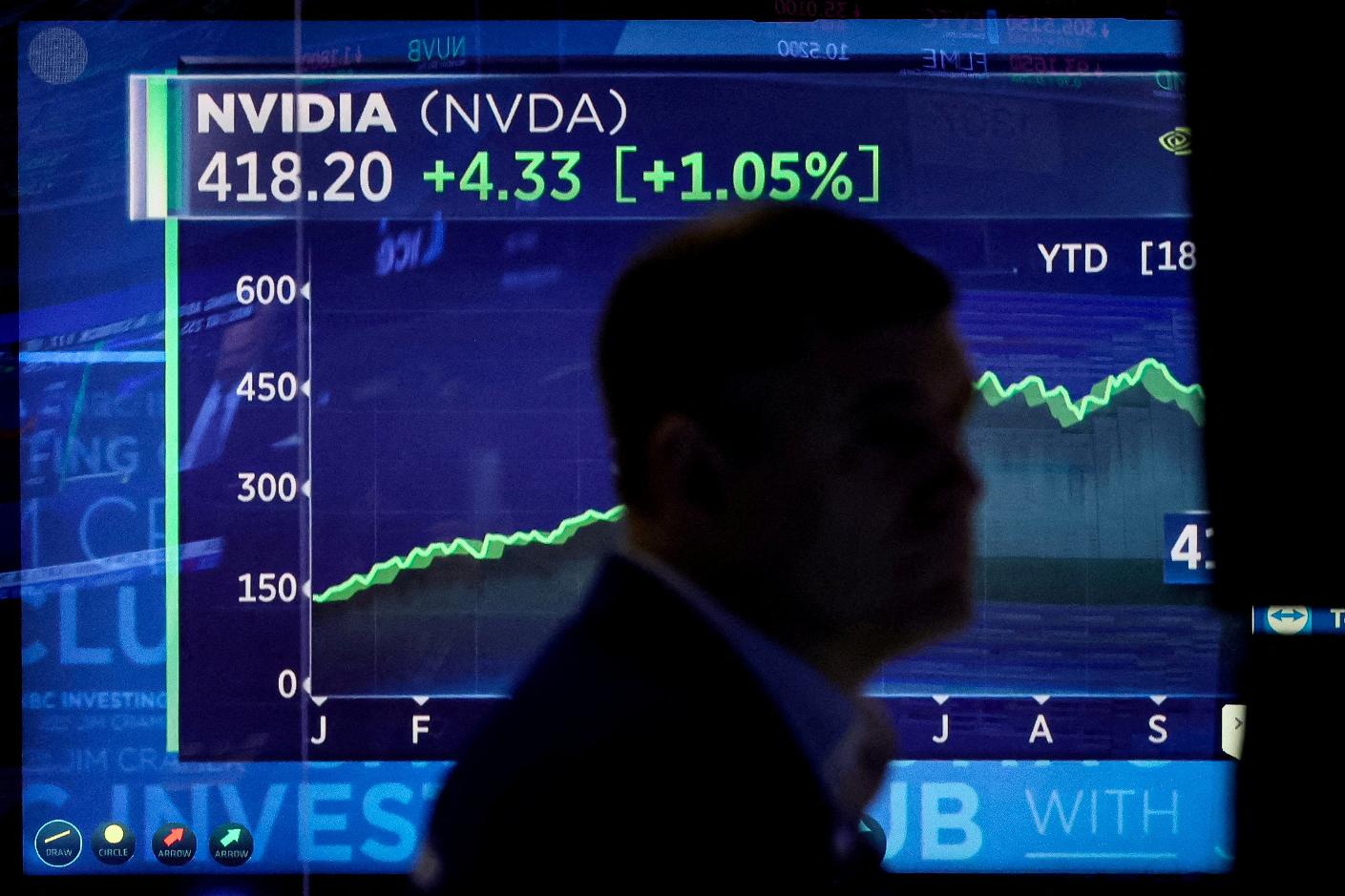
A look at the day ahead in European and global markets from Ankur Banerjee Investors are holding their breath for perhaps the most influential earnings in a long while, with the poster child of the AI boom, Nvidia (NVDA.O) , opens new tab, set to report another blockbuster quarter. And yet investors, who have seen the stock skyrocket in the past 18 months on the back of AI frenzy, may still be disappointed if the chipmaker is unable to maintain its astonishing growth. The spotlight, perhaps not as brightly, will also be on the minutes of the U.S. Federal Reserve's meeting in January as traders try to predict the start of the monetary easing cycle. But with data last week showing inflation refusing to slow significantly, some of the comments from central bankers may already be outdated. Market participants have scaled back expectations for early and steep interest rate cuts and now anticipate June to be the starting point of the easing cycle. The economic calendar in Europe during the day is sparse, with euro zone consumer confidence flash for February the only major report expected, while earnings from Glencore (GELN.L) , opens new tab will be the main corporate event. That's likely to keep investors on tenterhooks as Europe's benchmark stock index (.STOXX) , opens new tab remains on the cusp of a record peak. The continent-wide STOXX 600 is up 3% for the year and is stalking the all-time high it touched in January 2022. Asia market watchers are used to the waiting game as the Nikkei (.N225) , opens new tab continues its stumbling charge towards its record peak set in 1989. Japanese shares fell on Wednesday partly due to nervousness ahead of Nvidia earnings. Nvidia, which is replacing Tesla (TSLA.O) , opens new tab as Wall Street's most-traded stock by value, is widely expected to more than triple quarterly revenue to roughly $20 billion, with the focus on its forecast and what it says about China. Still, there are worries among investors whether its eye-popping rally has run its course. The third most-valuable U.S. company, behind Microsoft (MSFT.O) , opens new tab and Apple (AAPL.O) , opens new tab, has seen its stock soar 40% this year after rising an astonishing 239% in 2023. Nvidia options are pricing a swing of about 11% in either direction following earnings and that could well determine how global markets behave in the near term and whether we see record peaks from Europe and Japan shattered this week or not. Key developments that could influence markets on Wednesday: Events: euro zone consumer confidence flash for February, Glencore earnings https://www.reuters.com/markets/europe/global-markets-view-europe-2024-02-21/