2024-02-16 18:16
Producer price index increases 0.3% in January PPI rises 0.9% year-on-year PPI excluding food, energy and trade jumps 0.6% Single-family housing starts drop 4.7%; permits rise 1.6% WASHINGTON, Feb 16 (Reuters) - U.S. producer prices increased more than expected in January amid strong gains in the costs of services such as hospital outpatient care and portfolio management, stoking financial market fears inflation was picking up after months of cooling. The increase reported by the Labor Department on Friday was the largest in five months. The report followed on the heels of an above-expectations rise in consumer prices in January and prompted financial markets to dial back expectations that the Federal Reserve would start cutting interest rates in June. Data on Thursday also showed prices of imported goods surging in January. But some economists cautioned against concluding that inflation was re-accelerating noting that businesses typically raise prices at the start of the year. These price hikes probably were larger this year as businesses tried to make up for higher labor costs in the past year. Economists also suspected that the model used by the government to strip out seasonal fluctuations from the data could be falling short. Nevertheless, the reports this week raised the risk of higher readings in the personal consumption expenditures (PCE) price indexes, the measures tracked by the U.S. central bank for its 2% inflation target, when the government publishes January's data later this month. "The Fed isn't losing the inflation fight, but they aren't winning either," said Christopher Rupkey, chief economist at FWDBONDS in New York. "The data are consistent, that January is a problem month for inflation. There could be some seasonal adjustment problems as prices move up the most each year in the dead of winter." The producer price index for final demand rose 0.3% last month, the largest increase since August 2023, after declining by a revised 0.1% in December, the Labor Department's Bureau of Labor Statistics said. Economists polled by Reuters had forecast the PPI gaining 0.1% following a previously reported 0.2% drop. In the 12 months through January, the PPI increased 0.9% after climbing 1.0% in December. Services increased 0.6%, the largest rise since July 2023, boosted by a 2.2% jump in hospital outpatient care. The surge in these costs was attributed to strong wage increases over the past year. Portfolio management fees surged 5.5%, likely driven by higher stock market prices. There were also increases in wholesale prices of hotel and motel rooms as well as legal services. But the cost of transporting freight by road decreased 1.0%. Services, at the core of the fight against inflation, dropped 0.1% in December. "We would not dismiss strength in January services prices as a one-off phenomenon," said Veronica Clark, an economist at Citigroup in New York. "This upward pressure can continue, especially for sectors like medical services that still face tight labor markets." Wholesale goods prices fell 0.2%, declining for the fourth straight month. Food prices dropped 0.3%, while the cost of energy plummeted 1.7%. Excluding food and energy, goods prices rose 0.3%. The so-called core goods prices gained 0.1% in December. Portfolio management fees, healthcare, hotel and motel accommodation, and airline fares are among components that go into the calculation of the PCE price indexes. Based on the CPI and PPI data, economists estimated the PCE price index excluding food and energy increased 0.4% in January, with the risk of rounding up to 0.5%. The core PCE price index climbed 0.2% in December. In the 12 months through January, core inflation was forecast increasing 2.9%, matching December's advance. Stocks on Wall Street were trading lower. The dollar was steady versus a basket of currencies. U.S. Treasury prices fell. HOUSING STARTS FALL Financial markets still expect the Fed to deliver its first rate cut this year, though the odds of a move in June are diminishing. Since March 2022, the Fed has raised its policy rate by 525 basis points to the current 5.25%-5.50% range. The narrower measure of PPI, which strips out food, energy and trade services components, jumped 0.6% in January. That was the biggest increase in a year a followed a 0.2% gain in December. The core PPI rose 2.6% on a year-on-year basis, matching December's gain. The spate of disappointing January data extended to the housing market. A separate report from the Commerce Department showed single-family homebuilding fell last month, likely because of harsh weather, but a rise in permits for future construction suggested a rebound in the coming months. Single-family housing starts, which account for the bulk of homebuilding, dropped 4.7% to a seasonally adjusted annual rate of 1.004 million units last month, the Commerce Department's Census Bureau said. Homebuilding remains supported by an acute shortage of previously owned houses on the market. Extremely cold weather across much of the country during the month likely made it difficult to break ground on new projects. The below-normal temperatures helped to depress retail sales and manufacturing production in January. Permits for future construction of single-family homes increased 1.6% to a pace of 1.015 million units, the highest level in nearly two years. They have increased for 12 straight months. Starts for housing projects with five units or more plunged 35.8% to a rate of 314,000 units in January. Multi-family building permits dropped 9.0% to a rate of 405,000 units last month. There remains a huge backlog of multi-family housing under construction. "Clearly, builders are currently far more focused on filling the gap left by the shortage of single-family housing than they are on building apartments," said Daniel Vielhaber, an economist at Nationwide in Columbus, Ohio. https://www.reuters.com/markets/us/us-producer-prices-rise-more-than-expected-january-2024-02-16/
2024-02-16 17:47
Feb 16 (Reuters) - Despite "remarkable" progress on U.S. inflation, Federal Reserve Bank of San Francisco President Mary Daly said on Friday "there is more work to do" to ensure stable prices - a phrase that signals she feels it's not yet time for interest-rate cuts. "We will need to resist the temptation to act quickly when patience is needed and be prepared to respond agilely as the economy evolves," Daly said in remarks prepared for delivery to the National Association for Business Economics. Inflation declined rapidly last year, from 5.5% in January to 2.6% in December by the Fed's targeted measure of the personal consumption expenditures price index. Unemployment, meanwhile, was 3.7% last month, up just three tenths of a percentage point from the start of the year. The combination, Daly said, is "unequivocally good news," but it is unclear whether that will continue. Risks for this year include the potential that inflation's progress slows, or that the labor market falters, she said. And while projections embedded in financial market pricing and reflected in surveys suggest inflation is on track to the Fed's 2% target, she said, "we need more time and data to be sure that they will be realized." Data Friday showing underlying wholesale prices surged last month appeared to reinforce that view, though Daly did not cite it specifically. Financial markets are pricing in about four quarter-point interest-rate cuts this year, starting in June, that will bring the Fed's policy rate to the 4.25%-4.5% range by year end. Fed policymakers in December largely felt three rate cuts would be appropriate, though they will update those forecasts at their meeting next month. https://www.reuters.com/markets/us/fed-needs-time-data-patience-inflation-fight-daly-2024-02-16/

2024-02-16 17:04
NEW YORK, Feb 16 (Reuters) - A subsidiary of Teachers Insurance and Annuity Association of America (TIAA) has agreed to pay over $2.2 million to settle charges it broke U.S. Securities and Exchange Commission rules governing broker-dealers, the regulator said on Friday. TIAA-CREF Individual & Institutional Services LLC violated such rules when it failed to inform Individual Retirement Account customers that they could access comparable, lower-cost products, among other issues, the SEC said. Six thousand of TIAA's retail customers paid more than $900,000 in avoidable expenses because they were investing only through the firm's core menu, the SEC said. The agency noted TIAA's cooperation and prompt remedial efforts in its decision on resolving the matter. TIAA, which did not admit or deny the SEC's findings, agreed to pay a penalty of $1.25 million and give up more than $1 million of proceeds and interest. A TIAA spokesperson said the firm is pleased to have resolved the matter and has "enhanced our processes and procedures to address the SEC’s concerns". https://www.reuters.com/markets/us/tiaa-subsidiary-pay-22-mln-settle-us-civil-charges-sec-2024-02-16/
2024-02-16 17:01
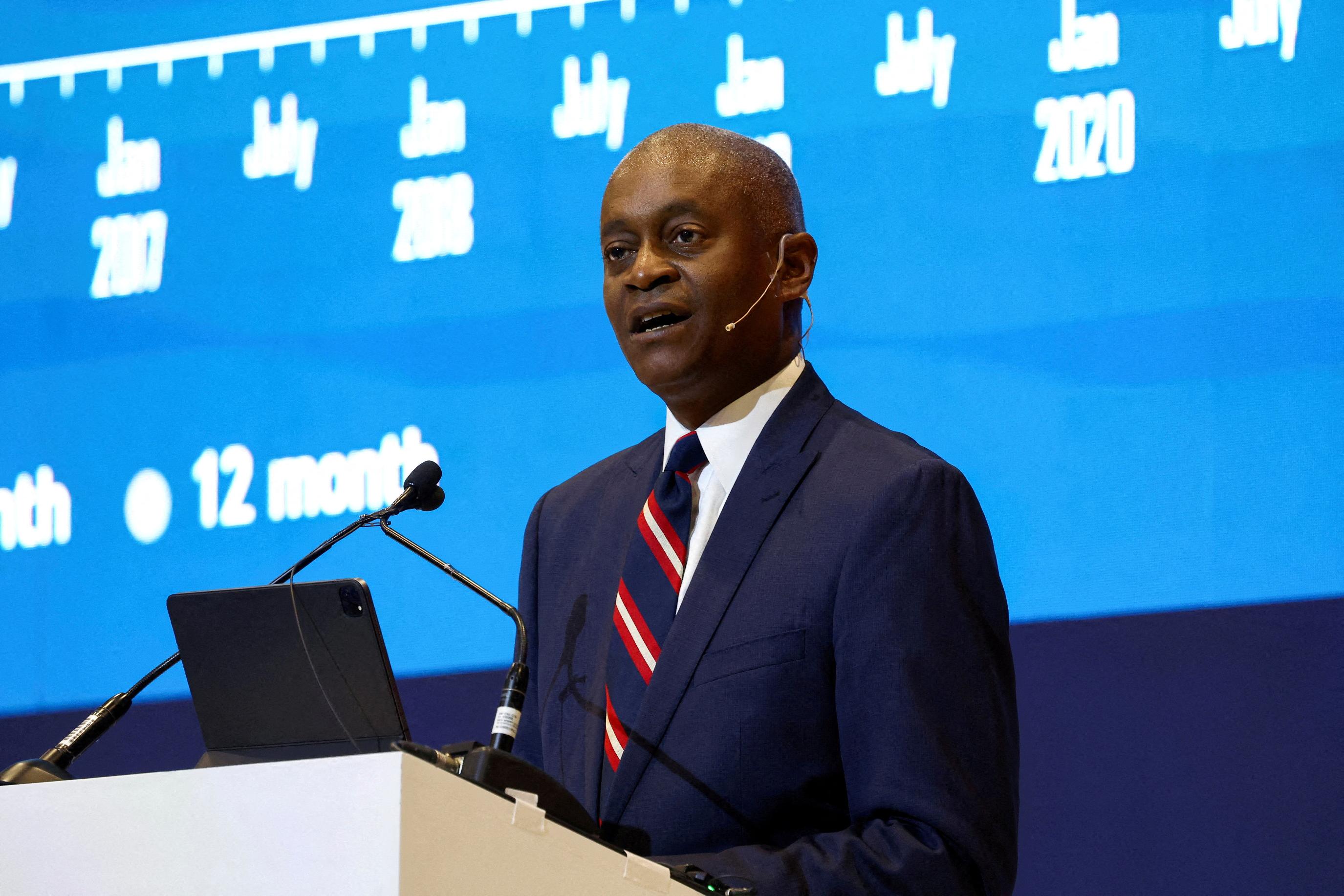
NEW YORK, Feb 16 (Reuters) - Federal Reserve Bank of Atlanta President Raphael Bostic said on Friday that while he needs more data to convince him inflation pressures are truly falling, he's open to lowering rates at some point in the next few months. "My outlook is to start the normalization, start returning our policy stance to a more neutral stance in the summer time," Bostic said in a CNBC interview. "We've seen tremendous progress" in lowering inflation and that's pulled forward the likely timing of a rate cut from where he had been expecting it, Bostic said. The progress on price pressures makes the outlook for policy fluid, Bostic noted. If inflation makes strong progress moving back toward 2% "I'll be willing to pull [rate cut expectations] forward even further, but I want to see it continue before making that judgment." Bostic appeared on the television channel in the wake of recent data showing that consumer and wholesale price rises were bigger than expected during January, which challenged the view that inflation is retreating swiftly back to 2%. Bostic said data like this affirm the need for the central bank to be patient, something it can afford to be given the broader strength of the economy. Bostic noted he was modestly surprised by the data "but not in a big way." He foresees more declines in inflation but reiterated the path back to 2% could be uneven. The recent data means "we just have to be patient and let's not get too far ahead and assume that the job is done, because there's still work to do," he said. Bostic also told CNBC that ample market liquidity means the central bank can continue to press forward with its work to shrink the size of its balance sheet, but he warned he didn't want to push the process too far. https://www.reuters.com/markets/us/feds-bostic-open-summer-time-rate-cut-cnbc-2024-02-16/
2024-02-16 15:38
https://www.reuters.com/markets/coinbase-shares-surge-after-bitcoin-etf-euphoria-helps-return-profitability-2024-02-16/

2024-02-16 14:33
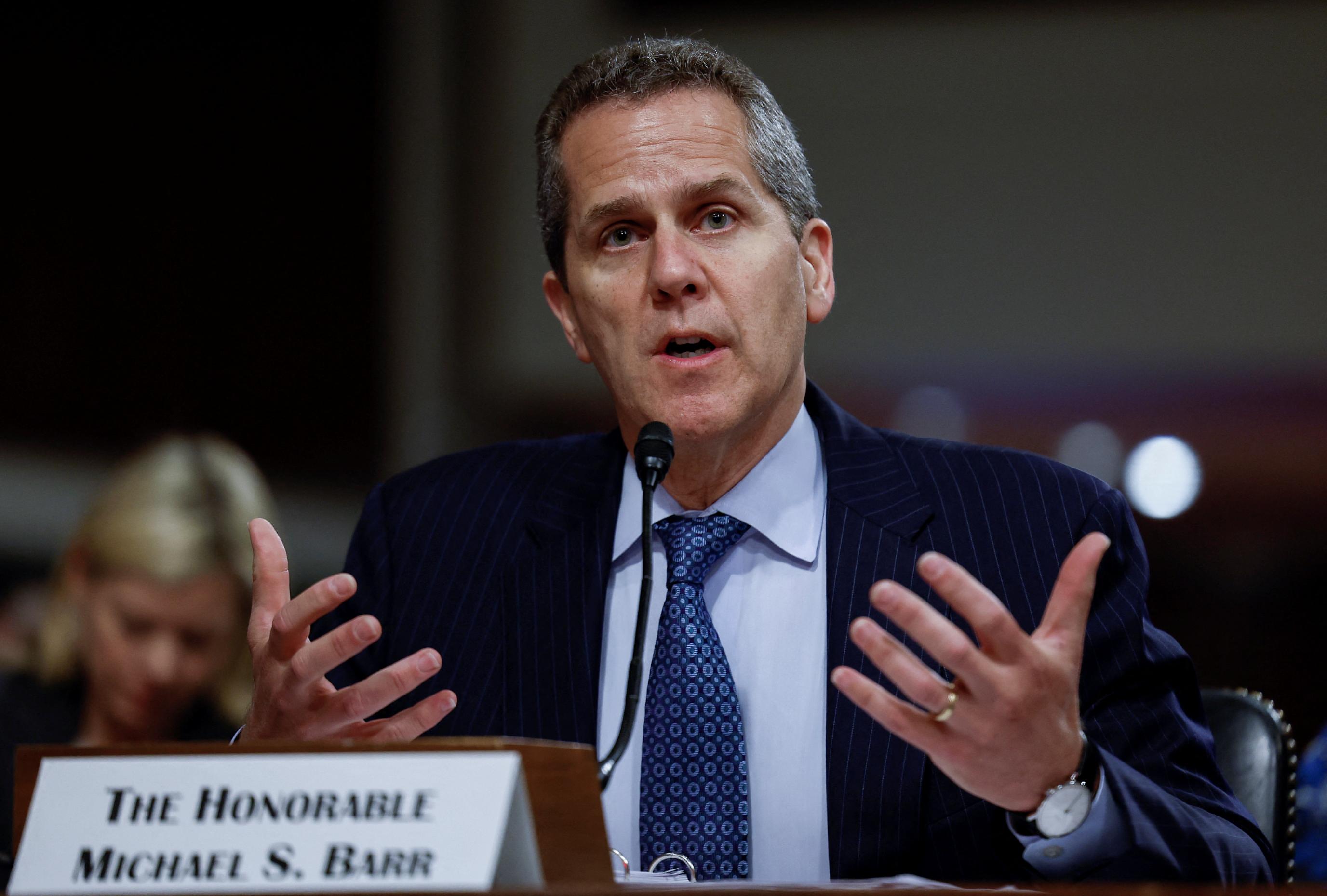
WASHINGTON, Feb 16 (Reuters) - The Federal Reserve's top regulatory official said on Friday that bank supervisors are flagging problems at banks at a higher rate in the past year, and are conducting additional exams at firms facing large unrealized losses. Fed Vice Chair for Supervision Michael Barr also said that bank examiners are "closely focused" on how firms are managing commercial real estate risk as that sector continues to face post-pandemic pressure. Nearly one year after Silicon Valley Bank failed due in large part to hefty unrealized losses, Barr said the Fed has been focused on flagging potential problems at banks more quickly. "The past year has been busy for Federal Reserve supervisors," he said in prepared remarks. Reuters reported in December that federal bank supervisors had been stepping up their oversight of firms after several banks failed in the spring and issuing additional disciplinary actions to firms, including downgrading confidential bank health ratings. Barr said the uptick in activity is not due to a change in policy, but rather reflects the changing economic and interest rate environment and what strains it can put on bank finances. "We want and expect supervisors to help banks focus adequate attention on the areas that matter most for the particular bank," he said. In addition to extra exams for firms grappling with unrealized losses, Barr said examiners are requiring those firms to take steps to address weaknesses and bolster their capital. He added a small number of firms "with a risk profile that could result in funding pressures" are being continuously monitored. He also added that different supervisory teams are heightening their coordination, particularly for regional firms that are nearing the $100 billion threshold, at which point they face stricter oversight. Firms that are growing rapidly are facing more frequent assessments of their health and policies, as part of an effort to ensure they are ready to meet tougher requirements. "The goal is that the transition to heightened supervision for fast-growing banks is more of a gradual slope and not a cliff," he said. Those comments come as New York Community Bancorp saw its stock fall sharply in value after it posted an unexpected quarterly loss in January. Bank executives said at the time part of the strain was heightened requirements they faced after recently exceeding $100 billion in assets. Barr said the Fed is still weighing whether it should impose temporary higher capital and liquidity requirements on firms facing risk management issues. https://www.reuters.com/markets/us/feds-barr-says-supervisors-more-aggressive-past-year-focused-commercial-real-2024-02-16/