2024-01-16 06:14
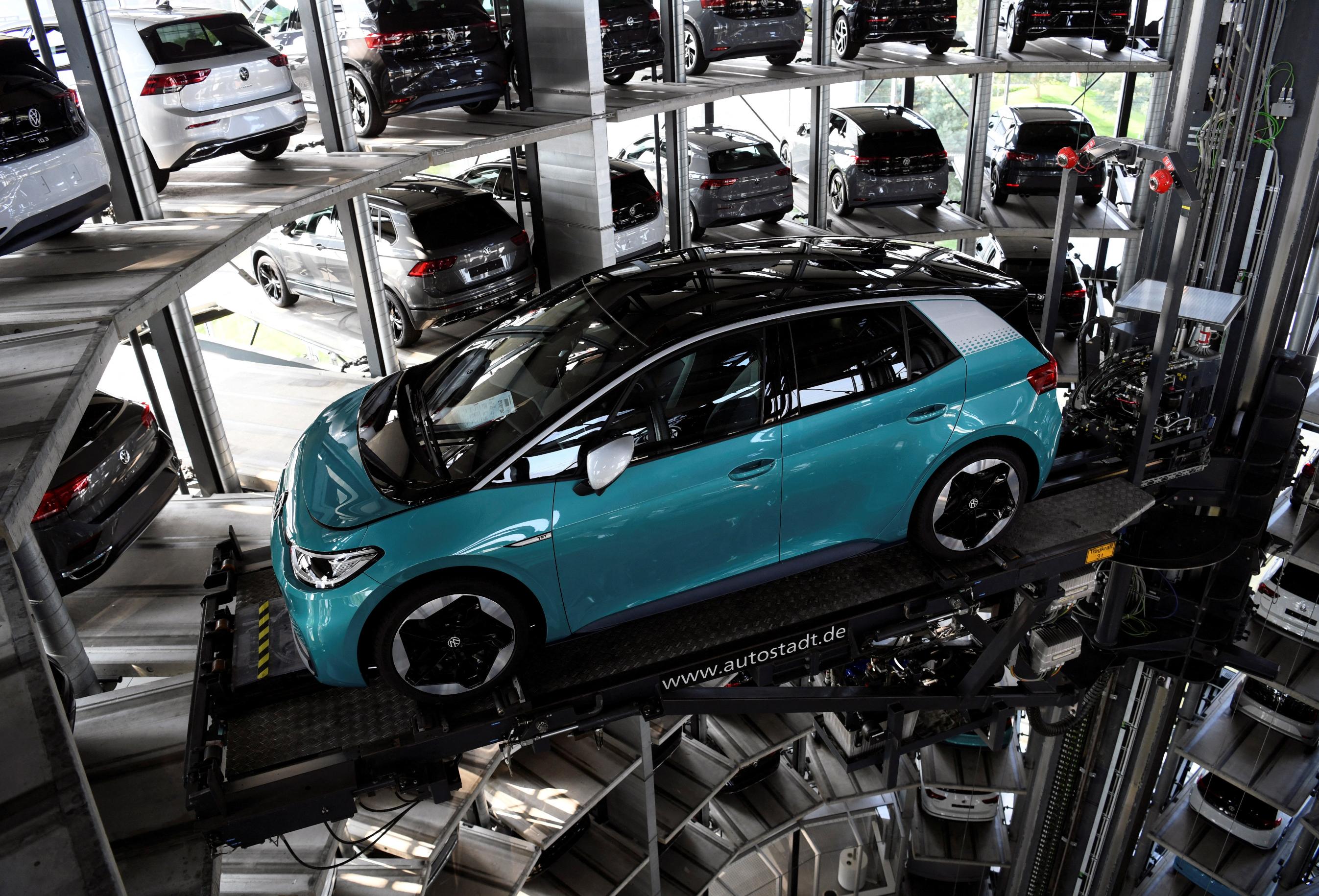
LONDON/DETROIT, Jan 16 (Reuters) - Volkswagen, whose drive to develop a "solid-state" electric car battery with U.S. startup QuantumScape has been dogged by delays, is casting its net wider in pursuit of the potentially game-changing technology. The German auto giant is holding talks with France's Blue Solutions, which already produces solid-state batteries for Daimler electric buses, about adapting the design for cars, a source with direct knowledge of the discussions told Reuters. VW and Blue Solutions aim to reach a joint development agreement in the coming months, according to the source who asked not to be identified as the talks are private. Volkswagen's move to widen its options in the field points to the array of technical hurdles holding back wider development of solid-state technology, seen by its backers as the "holy grail" of EV batteries, promising longer driving ranges and shorter charging times than traditional lithium-ion packs. VW said its venture with QuantumScape (QS.N) was on track and declined to comment when asked about any discussions with Blue Solutions. A spokesperson for Blue Solutions, a unit of French conglomerate Bollore (BOLL.PA), confirmed that it was working on a battery for passenger cars and said it had signed development deals with BMW (BMWG.DE) and another company, and was in talks with a third, but declined to identify the others. VW, Toyota (7203.T), BMW and other global automakers are vying to crack the conundrum of solid-state batteries, which remain technically elusive despite decades of research and billions of dollars of investment. "A lot of promises haven't been delivered and several automakers and investors have been burnt," said Rory McNulty at consultancy Benchmark Mineral Intelligence. "There's loads of really good verified data and technology, but can they (the industry) do it reliably, at scale?" Blue Solutions, for its part, faces stiff challenges to radically bring down the four-hour charging time required by its current batteries, which is feasible for buses parked overnight in depots. The company's spokesperson told Reuters it was working on a passenger car battery with a charging time of 20 minutes, and aimed to construct a "gigafactory" for it by 2029. The sector's lack of commercial success has dampened market enthusiasm; the amount of global venture capital deal activity in solid-state battery companies fell 72% last year to $146 million, according to data from PitchBook. "Investor interest in solid state batteries has waned. They are questioning whether the risk of solid state is worth it," Ibex Investors partner Jeff Peters said. QUANTUMSCAPE: STILL A LOT OF WORK Solid state ideally envisions replacing the liquid electrolyte though which the electrical charge passes in lithium-ion EV batteries with a solid substitute, thus reducing a fire hazard and shrinking the size of battery packs, and using lithium metal for its negative terminal to boost performance. Gauging precisely the right combination of chemicals and materials so they don't react adversely with each other is a minefield, though. QuantumScape's venture with its top shareholder VW, which has invested $300 million in the startup, is an example how solid-state technology has failed to live up to its initial promise. The development deal signed in 2018 envisaged solid-state powering Volkswagen EVs by 2025, enabling the e-Golf to more than double its range to 750 km. When QuantumScape subsequently went public via a reverse merger with a special purpose acquisition company in New York in 2020, it said it was aiming for commercial battery production in 2024. Yet mass commercial production remains a distant prospect, even after QuantumScape shipped its first prototypes to VW and other prospective customers in late 2022, the start of what is typically a multi-year process of testing and certification. Furthermore, the battery isn't pure solid state since it uses a liquid electrolyte though uses ceramic to separate the positive and negative terminals. "We still have a lot of work to do," QuantumScape's CEO Jagdeep Singh told Reuters. "The prototype is meant to show the core functionality is there, not that the cell is fully ironed out in terms of all the different defects that can be introduced during the production process." QuantumScape's shares, which hit a peak of $132.70 in December 2020, have since sunk to $7.37, giving the company a market value of about $3.6 billion. It has not said when it expects high-volume commercial production. Goldman Sachs said this was likely in the latter part of the decade. QuantumScape said in a regulatory filing to the U.S. Securities and Exchange Commission last October that it had missed commercialization timeline milestones envisaged in the 2018 deal with VW, and that the German automaker thus had the right to terminate the joint venture should it choose to. TOYOTA FLAGS BREAKTHROUGH Volkswagen and QuantumScape aren't the only players that have pared their ambitions as they grapple with the technical complexities of solid state. Toyota, the world's biggest automaker ahead of VW, had targeted a 2025 production startup date for its solid-state batteries, but said in June it now does not expect to produce the cells at scale before 2027 or 2028. The Japanese company nonetheless said it had achieved a technical breakthrough, without providing details beyond a projected driving range of 750 miles or more and charging time of 10 minutes. Several other companies have plans to roll out solid-state batteries including Chinese battery leader CATL (300750.SZ), LG Energy Solution, Solid Power (SLDP.O), ProLogium, Honda (7267.T) and Nissan (7201.T). (see accompanying FACTBOX) EV market leader Tesla (TSLA.O) is an industry outlier in not having detailed any solid-state battery development plans. A key issue solid-state scientists have been grappling with is the impact of introducing lithium metal for the anode. Lithium metal can dramatically lift performance, but often sparks reactions with the solid compounds, including creating dendrites, spiky formations that create cracks and imperfections and can ultimately short-circuit a battery. Battery makers, automakers and researchers have tried using a variety of substances for the solid electrolyte in three main categories: polymers, sulfides and oxides. Some companies have already rolled out partial versions of solid-state batteries that offer some benefits of the technology. China's EV firms Nio (9866.HK) and Seres have both launched EV models with "semi-solid-state" batteries which have both solid and gel-like electrolyte components but do not use lithium metal anodes. https://www.reuters.com/technology/volkswagen-rivals-plug-away-solid-state-battery-puzzle-2024-01-16/
2024-01-16 06:12
https://www.reuters.com/markets/us/coming-flood-us-treasury-issuance-unsettles-some-investors-after-blazing-rally-2024-01-16/
2024-01-16 05:52
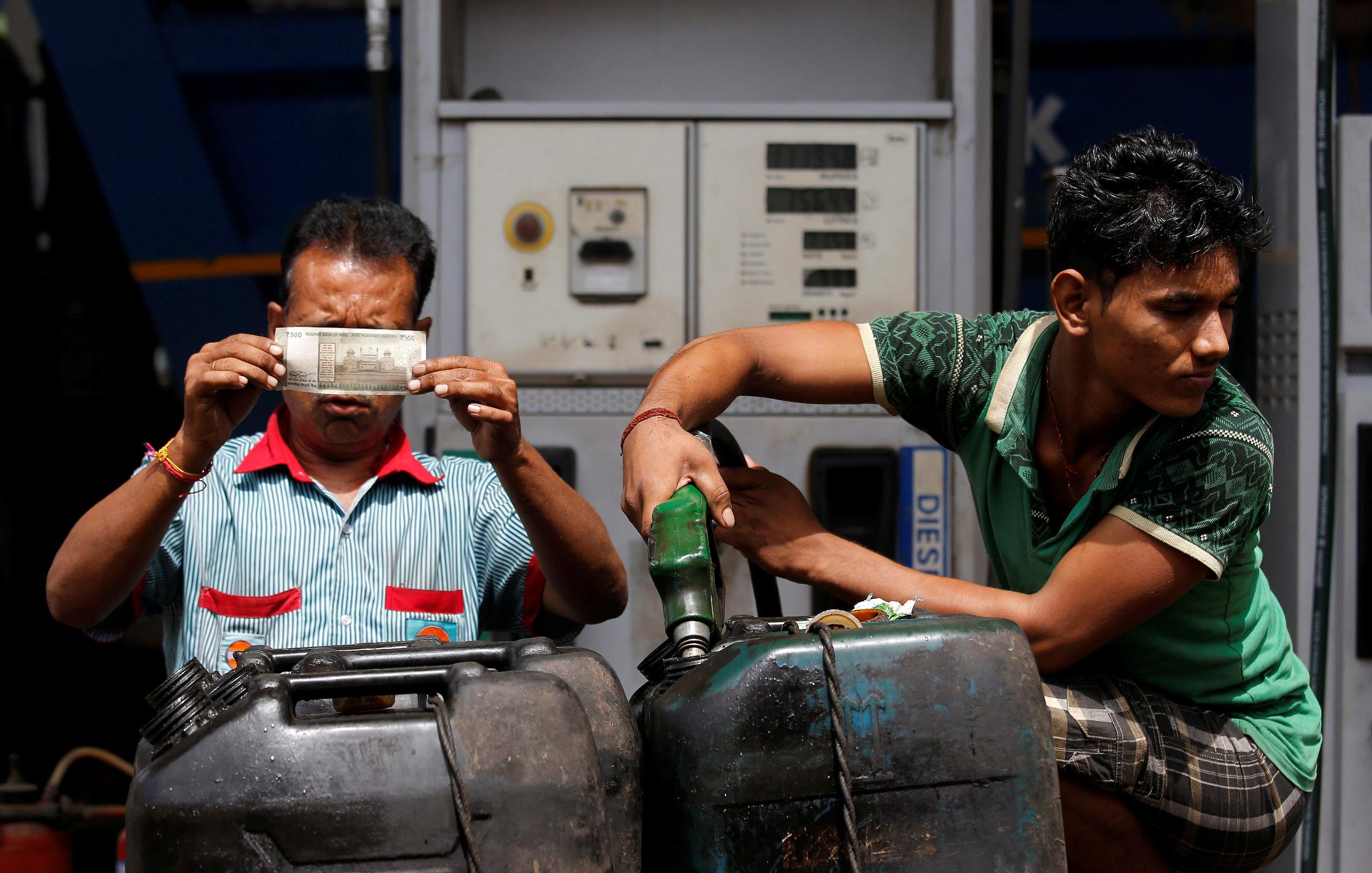
MUMBAI, Jan 16 (Reuters) - The Indian rupee declined on Tuesday, bogged down by the dollar's rally on the back of higher U.S. Treasury yields and tepid risk. The rupee was at 82.9750 to the U.S. dollar at 11:02 a.m. IST, down from 82.88 in the previous session. The domestic currency's decline was smaller than other Asian currencies. The rupee's drop in step with Asia "will lack much follow through", a spot foreign exchange trader at a private bank said. He does not expect the currency to weaken much beyond 83. An fx head at a public sector bank said that while there has been "a decent recovery (on USD/INR)" from Monday's low, it does not "bring into question" the last two week's downtrend. Brokerage Motilal Oswal said the USD/INR is seen trading with a "sideways-to-lower" bias, pegging resistance at around the current level. The offshore Chinese yuan dropped to 7.1950 to the dollar, the lowest in more than a month, while the Korean won fell 0.8% to the lowest since the first week of November. Asian currencies fretted about the pushback by two European Central Bank policymakers on rate cuts, pushing yields in Europe and the United States higher. The two-year U.S. yield rose six basis points in Asia to 4.20%. Federal Reserve Board Governor Christopher Waller's speech later in the day will be scrutinised for cues on when the U.S. central bank is likely to begin cutting rates and how many interest rates cuts will be delivered this year. Waller's comments are seen as very important in the context that he had flagged off the Fed pivot in his late-November speech. That was followed by policymakers at the December meeting projecting three interest rate cuts in 2024. https://www.reuters.com/markets/currencies/rupee-dips-remains-favour-with-most-interbank-traders-2024-01-16/
2024-01-16 05:48
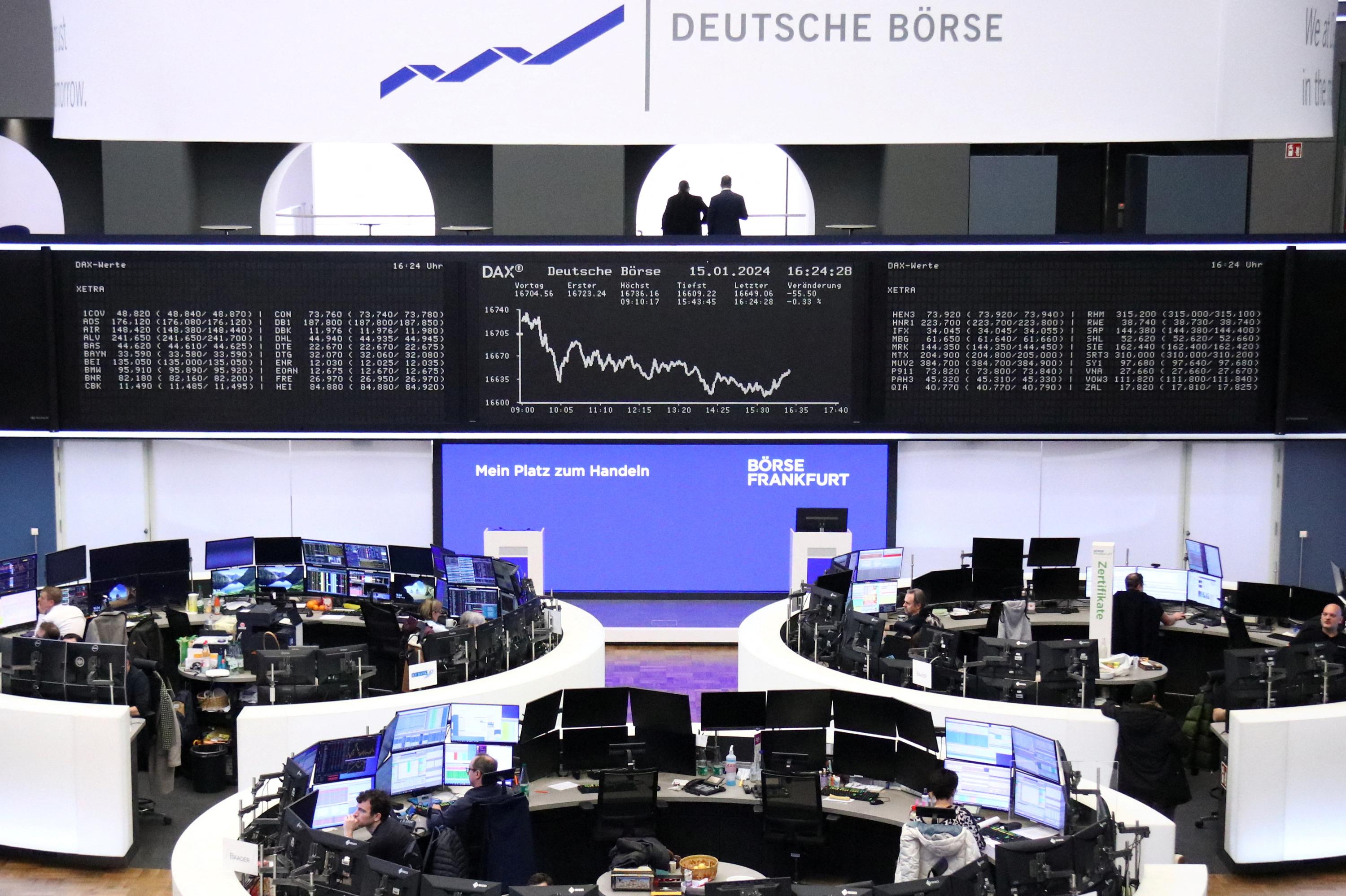
A look at the day ahead in European and global markets from Tom Westbrook In icy Iowa, Donald Trump appeared set to win Republicans' endorsement in the first-in-the-nation presidential nomination contest by an unprecedented margin. His win had been predicted by opinion polls but was nevertheless a strong start to his election bid and suggests that investors ought to brace for a bumpy ride as he injects volatility into the debate over trade and foreign policy and, likely, into financial markets. In snowy Davos on Monday, European policymakers sent a tremor through bond markets with hawkish remarks pushing back on pricing for deep and imminent interest rate cuts. Treasuries were shaky in Asia on Tuesday upon their return from a long weekend break in the U.S., and the dollar was on the rise. MSCI's Asia ex-Japan share index (.MIAPJ0000PUS) slumped to a one-month low, dragged down by the Hang Seng's (.HIS) 2% drop to a 14-month trough. British labour market data, Hugo Boss (BOSSn.DE) earnings and a German sentiment survey will highlight the European day, ahead of the U.S. Empire manufacturing survey and pre-market results from Goldman Sachs (GS.N) and Morgan Stanley (MS.N). A speech by Federal Reserve Governor Christopher Waller is also highly anticipated, given he will be addressing the economic outlook and is assumed to be close in thinking to Chair Powell. What he says about the clear downward trajectory of the core PCE measure of inflation should make for interesting reading, as will whether or not he pushes back on markets' expectations for rate cuts. Fed funds futures fell sharply in Asia trade on Tuesday, although they have already priced in some 160 bps of rate cuts this year. One risk to the good news story on inflation is the disruption to shipping in the Red Sea, with a missile striking a U.S.-owned dry bulker on Monday and Yemen's Houthi movement vowing to expand its targets in the region. Shipping rates have climbed as freighters divert to an alternate route around the Cape of Good Hope. Key developments that could influence markets on Tuesday: Economics: Final German CPI, German ZEW survey, UK unemployment, Empire manufacturing survey Earnings: Hugo Boss, Goldman Sachs, Morgan Stanley Speeches: Fed's Waller, BoE's Bailey and Germany's Halbeck https://www.reuters.com/markets/europe/global-markets-view-europe-2024-01-16/
2024-01-16 05:42
STOCKHOLM, Jan 16 (Reuters) - Swedish lithium-ion battery producer Northvolt said on Tuesday it has raised $5 billion in the form of the largest green loan raised in Europe as it seeks to expand its battery factory in northern Sweden. The company has now secured more than $13 billion in equity and debt to expand its operations across Sweden, Poland, Germany, the United States and Canada. The new debt, which includes refinancing of the $1.6 billion debt package raised in 2020, is provided by a group of 23 commercial banks, as well as the European Investment Bank and the Nordic Investment Bank. It had earlier raised billions from investors such as BlackRock (BLK.N), Canadian pension plans, Goldman Sachs (GS.N), Volkswagen (VOWG_p.DE), Baillie Gifford, Swedbank Robur (SWEDa.ST) and Singapore's GIC. The Swedish company has got orders of over $55 billion from a range of carmakers, including BMW, Scania, Volvo Cars and Volkswagen Group. Reuters has previously reported, citing sources, that Northvolt was preparing for an initial public offering that could value the company at more than $20 billion. https://www.reuters.com/sustainability/sustainable-finance-reporting/swedens-northvolt-raises-5-bln-green-loan-expand-battery-factories-2024-01-16/
2024-01-16 04:28
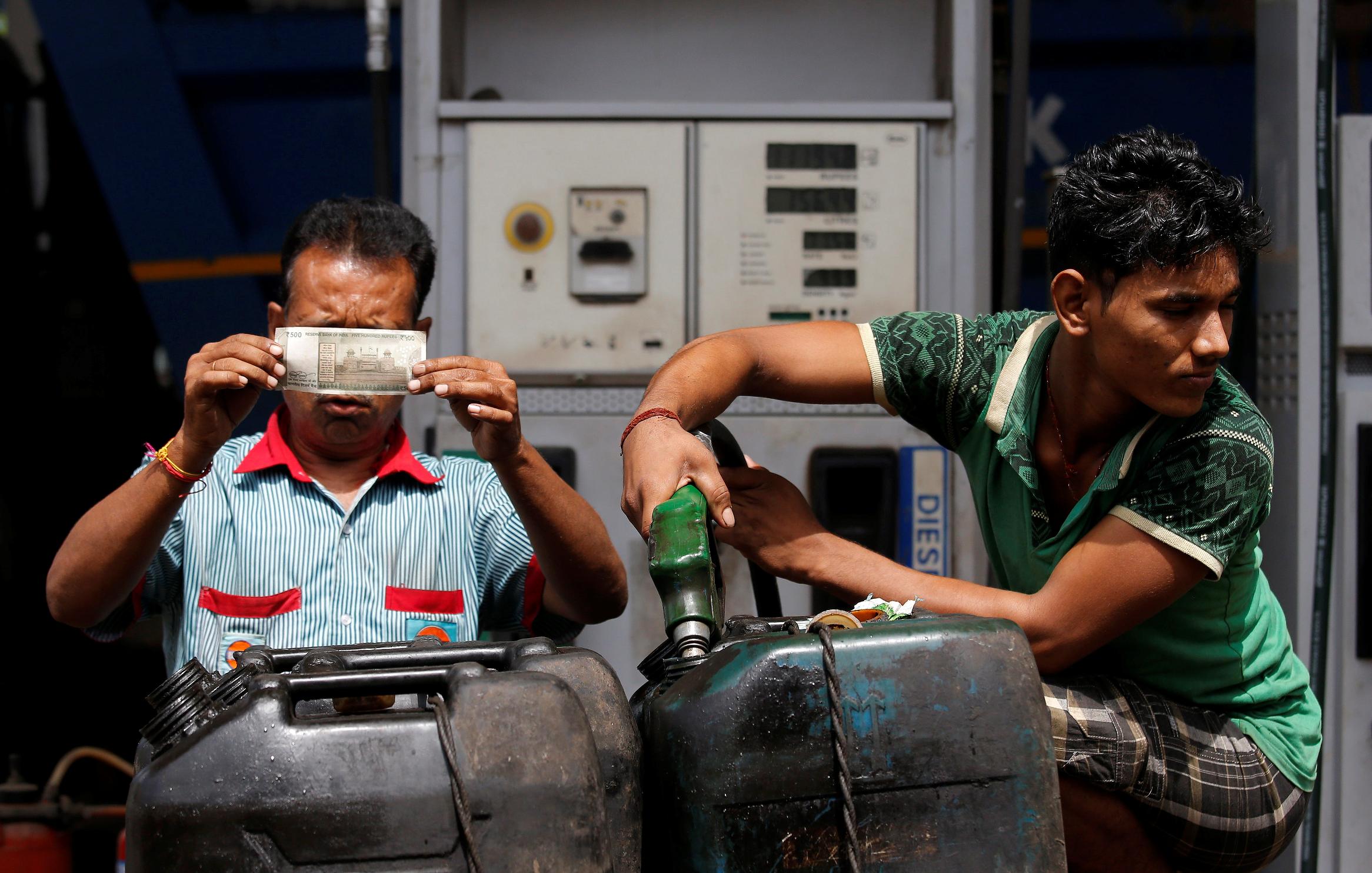
MUMBAI, Jan 16 (Reuters) - The Indian rupee is expected to open slightly lower on Tuesday, pressured by the U.S. dollar's advance on weak risk appetite and heading into Federal Reserve official Christopher Waller's speech. Non-deliverable forwards indicate rupee will open at around 82.92-82.94 to the U.S. dollar compared with 82.88 in the previous session. The local currency ended higher for the ninth straight session on Monday, reaching a more than four-month high. USD/INR "may very well be better bid at open", but unlikely that the 83 handle "will be visited", an FX trader at a bank said. The USD/INR "remains in a downtrend for now", and "a sell on rallies" and the opening uptick does not change that," the trader added. Asian currencies were down 0.2% to 0.6% and the dollar index rose to 102.84 in wake of the losses on Asian shares and U.S. equity futures. A pushback from central bank officials on rate cuts soured risk appetite and pushed yields higher. "Market expectations of large ECB (European Central Bank) rate cuts this year are generating pushback from officials," DBS Research said in a note. European shares dropped on Monday and the 2-year U.S. Treasury yield rose to 4.20% in Asian hours. Federal Reserve Board Governor Waller's speech, due later on Tuesday, will be in focus. His comments in late November had investors more convinced that the Fed will pivot toward rate cuts, stoking a rally in equities and bonds. "In the context of what ECB officials said yesterday and the extent of Fed cuts that have been prized, Waller's comments will be extremely critical," the FX trader said. Investors have priced in a near 80% chance of Fed rate cut in March and expect the central bank to cut the rate in nearly each of the successive meetings this year. Meanwhile, higher exports helped India's merchandise trade deficit come in lower than expected at $19.8 billion in December. KEY INDICATORS: ** One-month non-deliverable rupee forward at 83.02; onshore one-month forward premium at 10 paise ** Dollar index up at 102.82 ** Brent crude futures at $78.1 per barrel ** Ten-year U.S. note yield rises to 4% ** As per NSDL data, foreign investors sold a net $51.9mln worth of Indian shares on Jan. 12 ** NSDL data shows foreign investors bought a net $314.8mln worth of Indian bonds on Jan. 12 https://www.reuters.com/markets/currencies/rupee-winning-run-may-pause-dollar-strength-before-key-fed-members-speech-2024-01-16/