2024-01-15 18:53
Jan 15 (Reuters) - U.S. natural gas supplies have fallen by the most in over a year as extreme cold froze wells, while demand for heating was on track to hit a record on Tuesday and lift both power and gas prices to multi-year highs. The Arctic blast caused temperatures to plummet across a vast swath of the U.S., leading to power outages in the Pacific Northwest and elsewhere, and snarling everything from political campaigning to football games and travel. Analysts boosted earlier forecasts for record gas demand on Tuesday but reduced their outlook for gas use on Monday, in part because many businesses and government offices will remain shut for the long U.S. Martin Luther King Jr. Day holiday weekend. The Electric Reliability Council of Texas (ERCOT), which operates much of the state's power grid, urged homes and businesses to conserve electricity on Monday and Tuesday mornings before solar power facilities start producing energy, due to tight grid conditions from freezing weather, high demand and unseasonably low amounts of wind power. While it said the grid "avoided emergency operations due to the conservation efforts by Texas residents and businesses," ERCOT expected electricity demand on Tuesday morning to top last summer's all-time high and forecast tight power reserves. In February 2021, Winter Storm Uri left millions in Texas and other states without power, water and heat for days and resulted in over 200 deaths as ERCOT used rotating outages to prevent a grid collapse after an unusually large amount of generation shut. US GAS SUPPLY AND DEMAND U.S. gas production was on track to drop by around 10.6 billion cubic feet per day (bcfd) over the past week to a preliminary 11-month low of 97.1 bcfd on Monday due primarily to freeze-offs, when low temperatures freeze wells and other equipment. That decline, however, was small compared with gas supply losses of around 19.6 bcfd during Winter Storm Elliot in December 2022 and 20.4 bcfd during the February 2021 freeze. Kinder Morgan's (KMI.N) El Paso Natural Gas pipeline warned of "strained operating conditions" as spot production at the Permian Basin performed at 93% of scheduled volumes. In North Dakota's Bakken shale field, oil production was off by up to 4250,000 barrels per day and gas output had fallen by as much as 1.1 bcfd on freezing weather and operational issues, the North Dakota Pipeline Authority estimated on Monday. One billion cubic feet of gas is enough to fuel about 5 million U.S. homes for a day. At the same time supplies were declining, U.S. gas demand was forecast to jump from 162.2 bcfd on Monday to 174.3 bcfd on Tuesday, according to LSEG data. That would top the current all-time high of 162.5 bcfd set in December 2022 during Winter Storm Elliott, federal energy data from S&P Global Commodities Insights showed. In Texas, ERCOT projected power demand would exceed supplies by over 3,700 megawatts (MW) and peak at 86,496 MW on Tuesday at around 8 a.m. local time as "Texans return to work and schools reopen," which would top the current all-time high of 85,508 MW set in August 2023. Those estimates, however, are subject to change and do not account for steps the grid operator may take to boost supplies and reduce demand, like its conservation call for Tuesday. Power prices in ERCOT soared to $1,073 per megawatt-hour (MWh) during the peak 8 a.m. hour on Monday in the grid's day-ahead market. For the same hour on Tuesday, prices settled at $1,893 per MWh. That compares with an average day-ahead price of $250 per MWh for all of Monday and an average spot price at the ERCOT North hub , which includes Dallas, of $23 so far in 2024 and $80 in 2023. Elsewhere, spot power and gas prices soared to multi-year highs across the U.S. and Canada. Prices at the Mid-Columbia hub at the Washington-Oregon border soared to a record high of around $1,075 per MWh, according to LSEG data going back to 2010. https://www.reuters.com/markets/commodities/us-natural-gas-supplies-drop-record-demand-forecast-due-extreme-cold-2024-01-15/

2024-01-15 18:48
https://www.reuters.com/legal/us-sec-willing-delay-terraform-labs-trial-do-kwons-extradition-2024-01-15/

2024-01-15 18:06
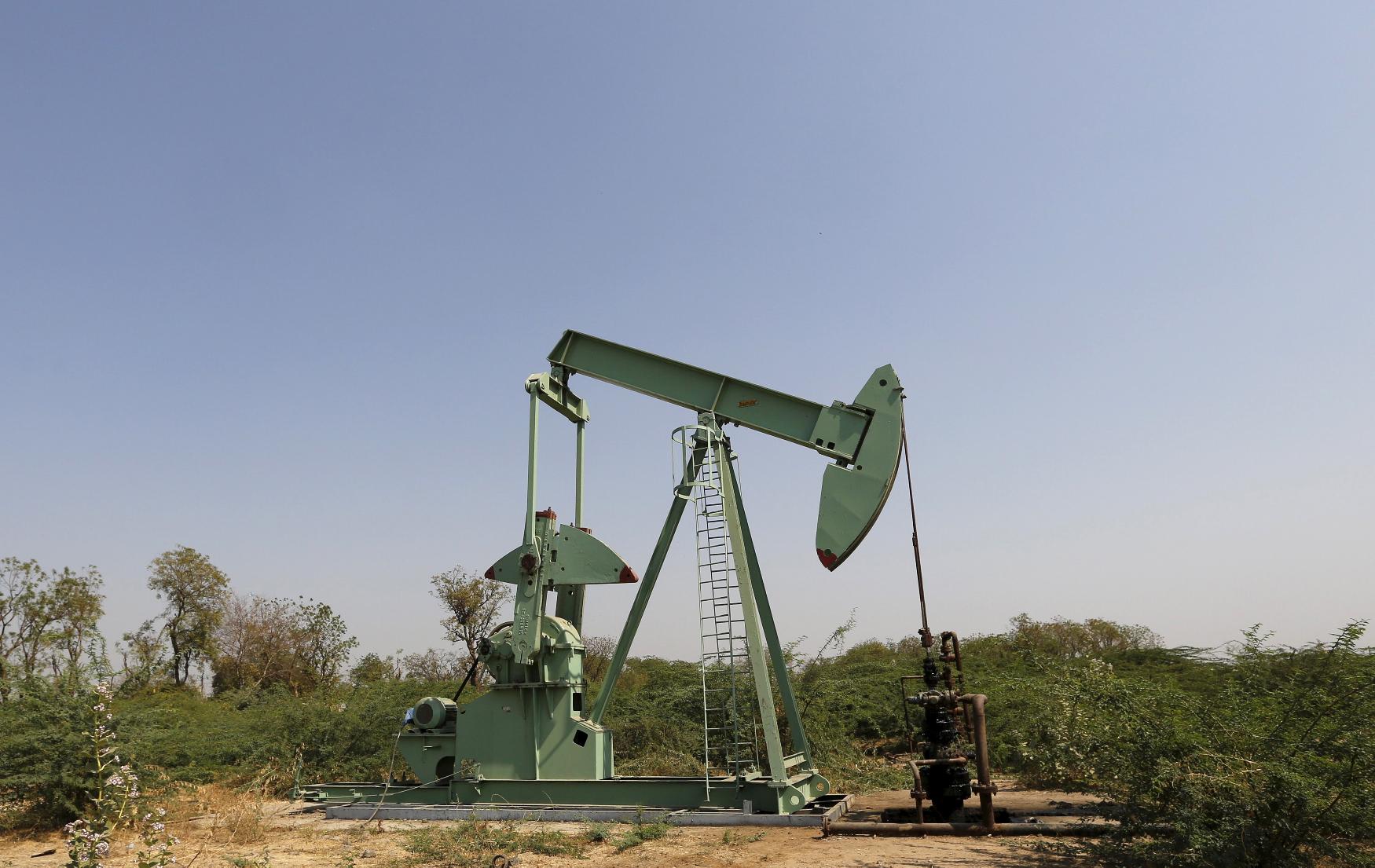
Jan 15 (Reuters) - India cut its windfall tax on petroleum crude to 1,700 rupees ($20.53) a tonne from 2,300 rupees a tonne, according to a government notification on Monday. The cut will be effective from Jan. 16, the order said. On Jan. 2, the government had lifted the windfall tax on petroleum crude oil to 2,300 rupees a tonne from 1,300 rupees a tonne. From July 2022, India imposed a windfall tax on crude oil producers, and extended the levy on exports of gasoline, diesel and aviation fuel as private refiners wanted to sell fuel overseas to make gains from robust refining margins instead of selling locally. It revises the tax fortnightly. ($1 = 82.8030 Indian rupees) https://www.reuters.com/markets/commodities/india-cuts-windfall-tax-petroleum-crude-2024-01-15/
2024-01-15 17:59
MOSCOW, Jan 15 (Reuters) - Lukoil's (LKOH.MM) NORSI oil refinery in Nizhny Novgorod may halve high-octane gasoline output after an emergency stoppage at one of two plant's catalytic cracking unit, industry sources said on Monday. Russian news agencies later issued contradictory reports on Russian authorities' response to the incident at Lukoil's plant. Interfax said that Moscow was considering a ban on gasoline exports, but TASS agency denied such plans were being discussed. Russia's energy ministry said it was working with oil producers to ensure an uninterrupted supply of fuel to the domestic market while maintenance was taking place at the plant. Later the ministry declined to comment beyond what it had already said about the incident. The NORSI oil refinery, one of the largest in Russia, halted a unit after an unspecified incident, Lukoil said on Friday. Interfax quoted unnamed sources familiar with the situation as saying a gasoline export ban was an option that could be introduced if necessary. Another source told the agency that tools to prevent shortages on the domestic market were still being discussed. Interfax said Lukoil had halted its own gasoline exports and asked other oil companies to help with supplies of up to 200,000 tones of AI-95-grade gasoline in January and February. State-run TASS agency later cited a government source saying the ban "is not being discussed and is not being considered". Last September, Russia introduced a ban on fuel exports - except to Belarus, Kazakhstan, Armenia and Kyrgyzstan - in order to tackle high domestic prices and shortages. Almost all the restrictions were subsequently removed by November. Industry sources told Reuters on Monday there had been two incidents earlier this month at gasoline-producing units at the NORSI plant, which can process around 17 million metric tons of oil per year (340,000 barrels per day). They said a catalytic cracking unit with a capacity of 6,300 tons per day was halted on Jan. 4, and there was also an outage at a reformer with a daily capacity of 3,000 tons per day on Jan. 7. Two sources said the plant will halve production of high-octane gasoline. One of the sources said Lukoil will be forced to buy gasoline on the market for its own petrol stations. "The breakdown is serious... There will be a reduction in production of AI-95, AI-98 (gasoline grades) this month," another source said. NORSI produced 4.51 million tons of gasoline in January - November 2023. According to industry data, Russia has stockpiles of 1.982 million tons of gasoline to help prevent fuel shortages on the domestic market. https://www.reuters.com/business/energy/russia-considers-gasoline-export-ban-after-incident-big-norsi-refinery-interfax-2024-01-15/

2024-01-15 17:55
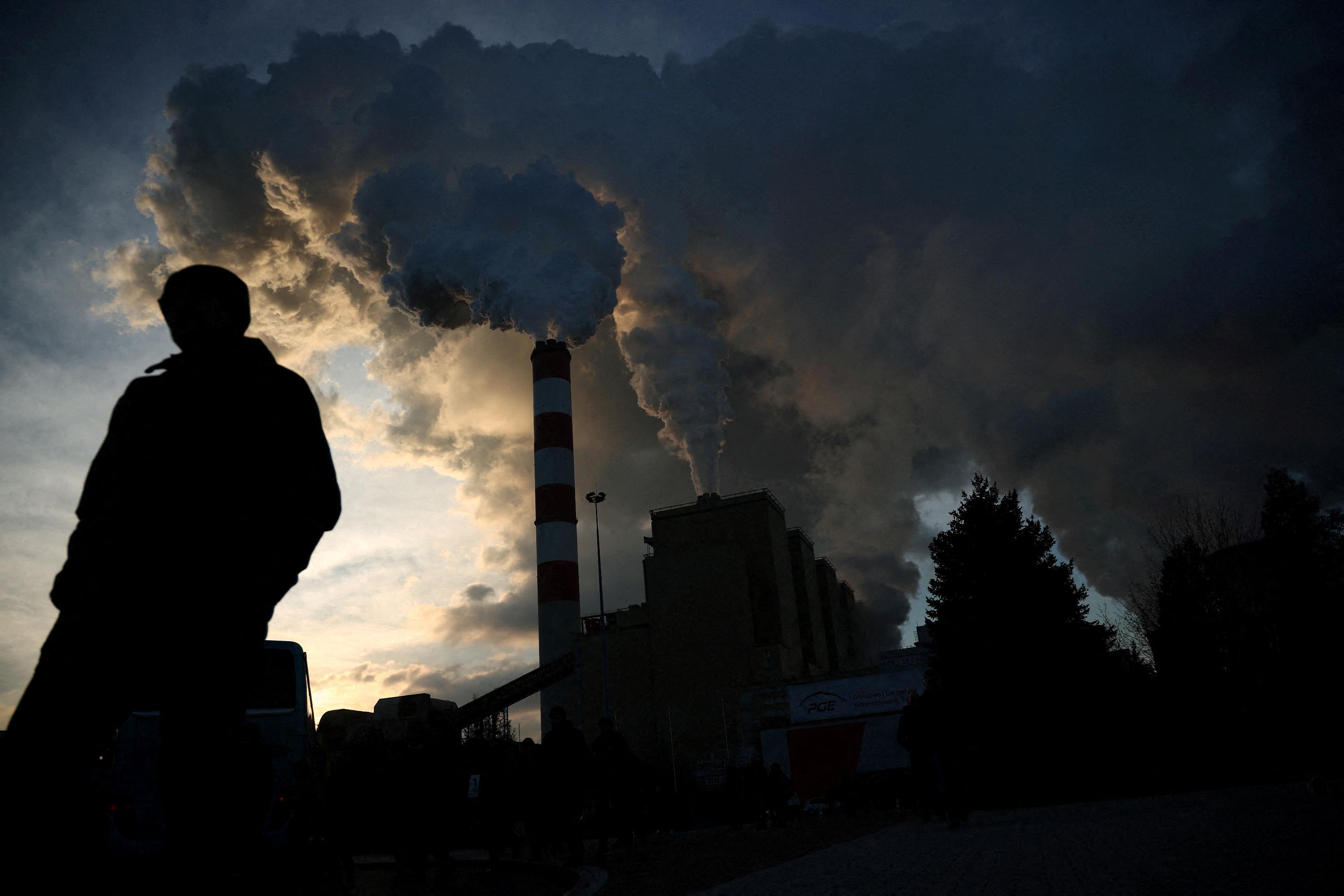
BRUSSELS, Jan 15 (Reuters) - Poland plans to set an end date for coal-fuelled power, the country's Secretary of State for Climate Urszula Zielinska said on Monday, marking a shift from the previous government's stance on climate change. Poland's October 2023 election ended eight years of Law and Justice (PiS) party rule, and led to a new government that Zielinska said was increasing environmental efforts - including a phase-out date for coal power. "Only with an end date we can plan and only with an end date industry can plan, people can plan. So yes, absolutely, we will be looking to set an end date," she told reporters in Brussels. Poland gets around 70% of its power from coal, the most CO2-emitting fossil fuel, although it has increased wind and solar generation in recent years. The previous government agreed a pact with trade unions to keep mining coal until 2049. But scientists say deep cuts to emissions from burning coal are needed this decade to avoid severe climate change. U.N. Secretary General António Guterres has urged all countries within the Organisation for Economic Co-operation and Development (OECD) to phase out coal by 2030. Zielinska, who was appointed in December, said the new government was reviewing Poland's climate and energy plans, and that any changes would support affected workers and industries. "It's all under revision and with a view to step up the efforts, but also to secure the people who may be most impacted, the industries as well, to make sure that the industries are really smoothly transitioned into new green branches," she said. Her comments a change in tone from Poland, which has opposed certain environmental measures within the European Union. Warsaw took Brussels to court last year in an attempt to cancel EU climate policies, including a 2035 ban on new CO2-emitting cars. Zielinska said Warsaw was also ready to embrace a target for the EU to cut emissions by 90% by 2040, and would be pushing to ensure the impact on society was addressed. However, in comments published later on Monday on social media platform X, she seemed to be softening her tone. "However, this does not mean that we already have a clear declaration on the emission reduction target for 2040 at such an early stage," she wrote. "Today, we declare openness to negotiations and an announcement of Poland's constructive approach to climate policy ... The government's position on the 2040 climate target will be developed after the Commission's detailed proposal is announced." https://www.reuters.com/sustainability/poland-plans-set-end-date-coal-power-2024-01-15/
2024-01-15 17:48
CEOs see more pressure from tech, climate Firms making less than $100 million at greater risk 70% CEOs say generative AI to change strategies Companies more positive on global growth DAVOS, Switzerland, Jan 15 (Reuters) - Global executives are increasingly worried about the long term viability of their businesses, a PricewaterhouseCoopers pre-Davos survey showed, with pressures mounting from generative artificial intelligence (AI) and climate disruption. Some 45% of more than 4,700 global CEOs surveyed do not believe their businesses will survive, barring significant changes, in the next ten years, the "Big Four" auditor said. "There's the 55% who think they don't have to change radically, and I would argue that's a little naive because the world is changing so fast around them," PwC Global Chairman Bob Moritz told the Reuters Global Markets Forum (GMF) ahead of the World Economic Forum's annual meeting in Davos. Advancements in generative AI were top of the concerns for most survey respondents, with almost 75% predicting it would significantly change their business in the next three years. The majority expect AI to require training in new skills for employees, while many expressed concerns about cybersecurity risks, misinformation, and bias towards specific groups of customers or employees. "If you just look at the same skills, I think yes, there will be impact," said Juergen Mueller, SAP's chief technology officer, referring to job losses and hiring freezes on junior positions in the tech sector. "Therefore, what you do need is even better skilled people," Mueller told GMF at Davos. The PwC survey also showed a stronger focus on environmental concerns pressuring margins, with four in ten executives saying they accepted lower returns for climate-friendly investments. Less than 50% reported progress, including on climate risks in financial planning, with 31% saying they had no plans to do so. Overall, companies were more confident in the global growth picture, with 38% optimistic on growth, which was more than double those surveyed in 2023. However, they were also less optimistic on revenue growth over the next year, with 37% confident of their ability to increase revenue, versus 42% in 2023. "The ability to raise rates and raise prices is not as easy as ever before ... that's going to be a trend that we're likely to see over the next two to three years," Moritz said. BRITAIN CALLING PwC's survey found that Britain was the top country to invest in, with nearly a third of U.S. CEOs selecting the traditionally popular country as their top target. Britain's standing among China's CEOs rose dramatically, to joint sixth, up from sixteenth last year. However, the former European Union member has become slightly less strategically important for global CEOs, falling one place to fourth behind Germany, with the U.S. and China keeping their first and second places respectively. (Join GMF, a chat room hosted on LSEG Messenger: https://tinyurl.com/yyr3x6pu) https://www.reuters.com/business/ceos-fear-their-firms-pre-davos-survey-ai-climate-risks-rise-2024-01-15/