
2024-01-15 05:09
Jan 15 (Reuters) - Flight and train services were disrupted in India's capital New Delhi for the second day running on Monday, as dense fog and cold enveloped large swathes of the northern part of the country. More than 100 flights were delayed in Delhi on Sunday, but intermittent flight operations had resumed on Monday morning, said an airport official who declined to be named. According to aviation website Flightradar24, at least 168 flights leaving Delhi were delayed and 56 flights were cancelled on Monday morning. At least 18 trains to Delhi from different parts of the country were running late because of dense fog, news agency ANI, in which Reuters has a minority stake, said on X, citing a railway document. The country's weather office has predicted dense fog and a cold wave in New Delhi for Monday and 'very dense fog' on Tuesday, with a minimum temperature of 4 degrees Celsius (39.2 Fahrenheit). The city's Indira Gandhi International Airport was not operational from 4 a.m. to 10 a.m. on Sunday (2230 GMT Saturday to 0530 GMT on Sunday) because of dense fog, the official said, leading to massive delays at airports across the country, causing delays and leading to frayed tempers. Social media and news channels showed visuals of angry passengers arguing with airport staff at New Delhi and other airports and one video showed a man punching a pilot announcing a delayed flight on the aircraft. "Stuck in a plane at Delhi Airport since the past two hours (literally on the runway), X user Harteerath Singh Ahluwalia wrote on the social media platform, earlier known as Twitter early on Monday. https://www.reuters.com/world/india/dense-fog-disrupts-flights-trains-indias-capital-2024-01-15/

2024-01-15 04:47
LAUNCESTON, Australia, Jan 15 (Reuters) - China's imports of crude oil, coal and iron ore all soared to record highs in 2023, but this seemingly strong performance by the world's top commodity buyer comes with a few caveats. Crude oil imports rose 11% in 2023 from the prior year to 11.28 million barrels per day (bpd), according to customs data released on Jan. 12. This eclipsed the prior record of 10.81 million bpd from 2020, and came as China re-opened its economy after ending its strict zero-COVID policy at the end of 2022. But is the gain in crude oil imports as impressive as it first appears? In volume terms, 2023's arrivals were 1.11 million bpd higher than those in 2022. However, this is well below the forecast for a 1.8 million bpd increase in China's oil demand from the International Energy Agency (IEA). Of course, imports and total demand aren't the same thing, but looking at the other factors at work in China's crude oil market doesn't offer much support to the bullish view. China's domestic oil production was only slightly higher, rising 1.8% in the first 11 months of 2023 compared to the same period a year earlier. China is also continuing to add crude to either commercial or strategic inventories, with an estimated 670,000 bpd flowing to storage tanks in the first 11 months of the year. China doesn't disclose the volumes of crude flowing into or out of strategic and commercial stockpiles, but an estimate can be made by deducting the amount of crude processed from the total of crude available from imports and domestic output. In the first 11 months, the total available crude was 15.45 million bpd, while refinery throughput was 14.78 million bpd. The volume being stored is slightly down on the 740,000 bpd added to inventories in 2022, but it still shows that China's refineries were building stockpiles, especially in the first half of 2023, rather than buying crude because domestic consumption was strong. The last factor is China's exports of refined products, which jumped 16.7% in 2023 from the prior year to 62.69 million metric tons, which works out to about 1.37 million bpd, using the BP Plc standard conversion of 8 barrels of products per ton of crude. This was the highest refined product exports since 2019, and was also about 190,000 bpd higher than the level recorded in 2022. Putting all the factors together shows that while China imported record crude oil volumes, it also boosted fuel exports, kept crude flowing into inventories and fell well short of the optimistic forecasts for a surge in demand in 2023. COAL DEMAND China's imports of coal surged in 2023, jumping 61.8% from the prior year to reach 474.42 million tons. While China's electricity demand did increase, the strong gain in coal imports was more related to factors that may prove to be temporary in nature. Thermal power generation rose as hydropower struggled, with output dropping 7.1% in the first 10 months of the year. The price of seaborne thermal coal also retreated sharply in 2023, making it more competitive against domestic production, which also struggled to rise fast enough to meet the increased electricity demand. For 2024, it is likely that hydropower generation will increase, as will other renewables such as wind and solar, which may limit the increase in demand for thermal coal. Iron ore was the surprise packet of China's commodity imports in 2023, with arrivals rising 6.6% from 2022 to reach an all-time high of 1.18 billion tons. The increase was in spite of the well-publicised struggles of the key residential property sector, which in turn contributed to the modest - by China's standards - economic growth of around 5.4%. But steel output is likely to hit a record high in 2023, as other sectors performed well, including vehicle manufacturing, infrastructure and exports of steel products. The question for 2024 is whether China will continue to produce high volumes of steel, and the answer is that the economy is likely to grow sufficiently to use more steel, but not by enough to spark a surge in production. This means that iron ore is likely to see modest increases in imports, but even that will result in another record year. The opinions expressed here are those of the author, a columnist for Reuters. https://www.reuters.com/markets/commodities/chinas-record-crude-coal-iron-ore-imports-dont-tell-whole-story-russell-2024-01-15/

2024-01-15 04:37
A look at the day ahead in European and global markets from Wayne Cole So far there's been limited reaction to the victory over the weekend of the ruling Democratic Progressive Party in Taiwan, which left the cross-strait status quo largely intact and Beijing predictably irritated. Taiwan's markets didn't seem particularly perturbed as stocks (.TWII) edged up 0.4%, although the Taiwan dollar did ease slightly to a three-week low. There was also a muted response to the surprise decision by China's central bank to skip a rate cut on its medium-term lending facility loans and instead just pump more liquidity into the banking system. Investors seem to have become used to being disappointed by Beijing's drip-drip of stimulus, just as there are few expectations around the Q4 GDP report and monthly data due on Wednesday. The suspicion is the PBOC wanted to avoid putting more downward pressure on the yuan, although the currency still touched a four-week low in the wake of the decision. Indeed, there is an argument investors would actually reward a truly aggressive easing from Beijing if they thought it had a chance of reviving growth. In any case, interest rate differentials should not be a hindrance for the yuan much longer if market pricing on Federal Reserve and ECB rate cuts is right. Futures now imply a 73% chance of a first Fed cut in March, as a soft producer price report last Friday helped to offset disappointment over the previous day's consumer price data. That led analysts to nudge down forecasts for the core personal consumption expenditure (PCE) inflation measure to a benign 0.2% for December. That would see the annual pace slow to under 3% for the first time since March 20221 and leave the six-month annualised rate at the Fed's target of 2.0%. Markets are more than fully priced for the ECB to cut in April, even though its chief economist over the weekend flagged June as a more likely window. There's a chorus line of ECB speakers at the Davos meeting this week, including President Lagarde on Wednesday, who will likely push back against pricing of an April move, and just as likely be ignored by markets. Fed speakers this week include the always-influential New York Fed boss Williams, but perhaps more telling will be governor Waller on Tuesday, given he will be addressing the economic outlook and is assumed to be close to Chair Powell in thinking. What he says about the clear downward trajectory of the core PCE measure should make for interesting reading. One risk to the good news story on inflation is the disruption to shipping in the Red Sea, with the U.S. military reporting on Sunday it had downed a Houthi cruise missile attack on its ships. Analysts estimate 12% of world trade and 30% of container traffic typically goes through the Red Sea, but transits have dropped 35-45% in the past month and it takes an extra 15 days for ships to take the alternate route around the Cape of Good Hope. S&P reports shipping rates have increased to more than $4,500 per forty-foot container on Asia-to-Europe lanes, from one-third of that level in October. Key developments that could influence markets on Monday: - EU trade balance, industrial output for Nov - Participation by ECB board members Christine Lagarde and Piero Cipollone in Eurogroup meeting in Brussels - Start of World Economic Forum (WEF) annual meeting https://www.reuters.com/markets/global-markets-view-europe-2024-01-15/

2024-01-15 04:34
SINGAPORE, Jan 15 (Reuters) - Equatorial Marine Fuel Management Services maintained its top spot among marine bunker suppliers in Singapore, the world's largest bunker hub, while Sinopec Fuel Oil Singapore propelled into No.3 in 2023, latest data from the port authority showed. Equatorial maintained its top position for a second consecutive year, while Trafigura's TFG Marine rose one spot to become the second largest supplier, data from Singapore's Maritime and Port Authority showed. Sinopec Fuel Oil Singapore jumped 16 spots to become the third largest supplier, the data showed. The company ramped up bunker sales volumes significantly in 2023 following its bunker supplier licence award in 2022, said industry sources. Sinopec has bumped up its market share particularly for the high-sulphur market, rivalling PetroChina to become a dominant player in that category. The company has also expanded its storage capacity regionally. PetroChina International Singapore dipped two spots to the fourth position in 2023, while Vitol Bunkers dipped one spot to rank fifth. Meanwhile, Maersk Oil Trading, Chevron Singapore and BP Singapore were the top three marine biofuel suppliers in 2023. Singapore marine fuel sales hit an all-time high of 51.82 million metric tons last year, driven by record container throughput and increased demand by shippers to trial alternative bunker fuels. (Data from Maritime and Port Authority of Singapore) https://www.reuters.com/markets/commodities/equatorial-tfg-sinopec-are-singapores-top-three-marine-bunker-suppliers-2023-2024-01-15/
2024-01-15 04:22
Jan 15 (Reuters) - Oil prices weakened slightly on Monday as the Middle East conflict's limited impact on crude output prompted profit taking after oil benchmarks gained 2% last week. Brent crude futures settled down 14 cents, or about 0.2%, at $78.15 a barrel. There was no settlement for U.S. West Texas Intermediate crude due to the U.S. Martin Luther King Jr. Day holiday, but the benchmark was down 18 cents, or about 0.3%, at $72.50 at 1513 EST. Both benchmarks fell more than $1 per barrel earlier in the session. Several tanker owners avoided the Red Sea and multiple tankers changed course on Friday after U.S. and Britain launched strikes against Houthi targets in Yemen after the Iran-aligned group's attacks on shipping in response to Israel's war against Hamas in Gaza. The conflict has also held up at least four liquefied natural gas tankers travelling in the area. "The realisation that oil supply has not been adversely impacted is leading last week's bulls to take profit, with the move down somewhat exacerbated by a slightly stronger dollar," said Tamas Varga of oil broker PVM. The chief negotiator for Yemen's Houthis on Monday warned that attacks on ships headed toward Israel will continue. An anti-ship ballistic missile fired by Houthi militants struck a Marshall Islands-flagged, U.S.-owned and operated container ship on Monday, the U.S. military said in a post on social media platform X, formerly known as Twitter. There have been no oil supply losses so far, but the shipping disruption is indirectly tightening the market by keeping 35 million barrels at sea owing to longer journeys shippers must take to avoid the Red Sea, Citi analysts wrote. In Libya, people protesting against perceived corruption threatened to shut down two more oil and gas facilities after shutting the 300,000 barrel-per-day Sharara field on Jan. 7. The U.S. and Canada are dealing with frigid weather that is shutting in some oil production. North Dakota oil output has fallen by 400,000-425,000 bpd on extreme cold and related operational issues, the North Dakota Pipeline Authority estimated on Monday. "Cold weather is impacting production, but (prices) seem to be down on the perception that this cold snap is going to break soon," said Phil Flynn, an analyst at Price Futures Group in Chicago. The economic situation also remains somewhat gloomy, with the European Central Bank warning it is too early to discuss cutting interest rates. https://www.reuters.com/markets/commodities/oil-slips-investors-eye-mideast-developments-2024-01-15/
2024-01-15 03:13
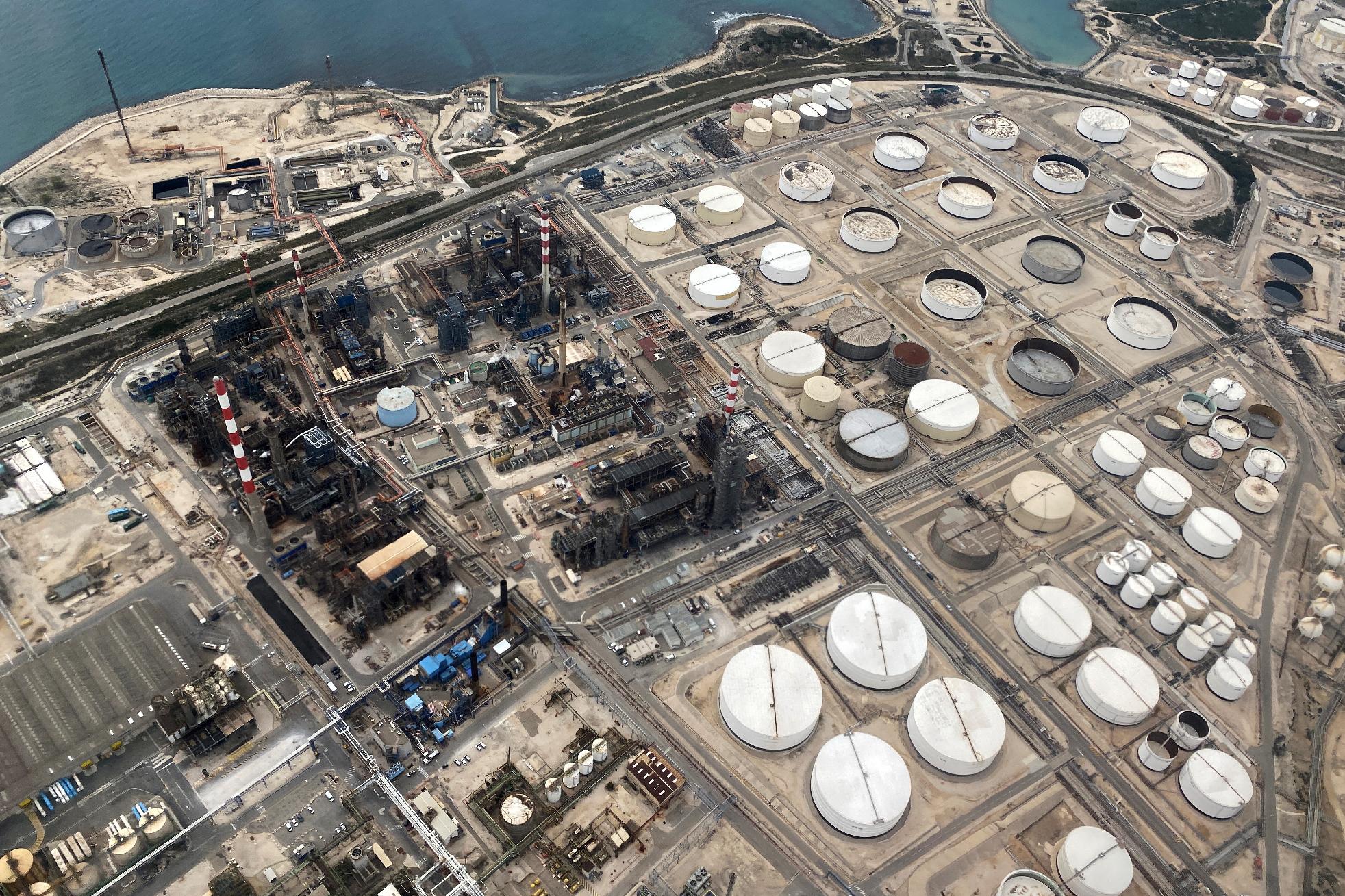
SYDNEY, Jan 15 (Reuters) - Australia's Santos (STO.AX) can proceed with construction of an undersea pipeline vital to its $4.3 billion Barossa gas project after a court on Monday ruled in favour of the oil and gas firm in a dispute with an Indigenous man looking to pause the work. Work on the pipeline, which will connect the Barossa gas field to a processing plant in the northern Australian city of Darwin, was paused by court order in November after a suit by a member of an Indigenous group regarded as traditional land owners from the nearby Tiwi Islands. Simon Munkara sought to halt work and force Santos to do a fresh assessment of the pipeline's impact on underwater cultural heritage. The applicants argued, among other things, that the pipeline would disturb the travels of, and anger, two "ancestral beings" - a rainbow serpent known as Ampiji and Jirakupai, or the Crocodile man. However, Justice Natalie Charlesworth on Monday dismissed Munkara's application and lifted the November court injunction, opening the door for Santos to commence work on the pipeline. Charlesworth said there was "significant division" among Tiwi Islanders over traditional accounts of Ampiji and Jirakupai and only a "negligible chance that there may be objects of archaeological value in the area of the pipeline route." Santos shares traded up as much as 3.7% following the decision and then slipped to A$7.72, or 2.3% higher at 14:08 (0308 GMT). Santos welcomed the decision in a statement and said it would continue pipelaying activity for the project. The Environmental Defenders Office, which represented Munkara, did not immediately respond to Reuters when asked if it would appeal the decision. The decision clears a major hurdle blocking the long-stalled project and boosts the company's fortunes at a time when shareholders are calling for a meaty premium in a potential merger with larger rival Woodside Energy. Citi analysts had said a ruling against Santos could delay the vital growth project, where the company aims to start producing gas in the first half of 2025, by more than a year. Woodside and Santos announced preliminary talks in December on an A$80 billion ($53.53 billion) tie-up, although the holiday break means a deal is unlikely before February. The Barossa project, which is co-owned by South Korean energy company SK E&S (SKENS.UL) and Japan's JERA, still needs several environmental plans approved to proceed. A revised drilling plan was approved by the petroleum regulator in December. ($1 = 1.4945 Australian dollars) https://www.reuters.com/markets/commodities/australian-court-backs-santos-dispute-over-43-bln-barossa-project-pipeline-2024-01-15/


