2024-01-12 22:16
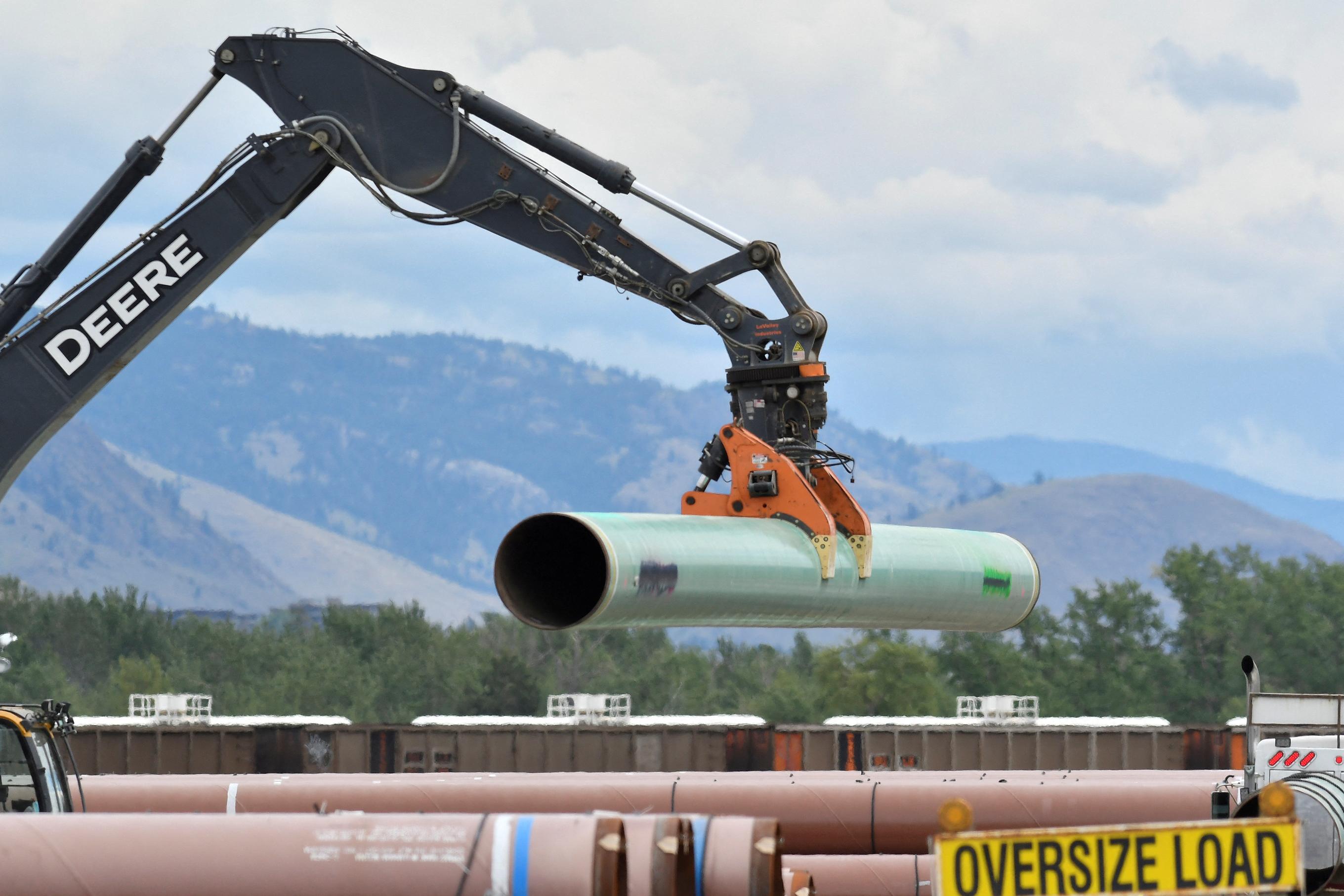
Jan 12 (Reuters) - The Canada Energy Regulator (CER) on Friday approved a request for a change in construction for the final stretch of the Trans Mountain oil pipeline expansion project, clearing the path for its completion early this year. The C$30.9-billion ($23.05 billion) expansion will nearly triple the flow of crude on Trans Mountain from Alberta to Canada's Pacific Coast but has been plagued by years of delays and cost overruns. Worries about further delays have weighed on Canadian heavy crude prices in recent months. Trans Mountain, a Canadian-government owned corporation, had asked to be allowed to install smaller-diameter pipe in a 1.4-mile (2.3-km) section of the pipeline's route after encountering challenging drilling conditions due to the hardness of the rock in a mountainous area between Hope and Chilliwack in the province of British Columbia. Following a hearing in Calgary, Alberta on Friday, the CER said it approved Trans Mountain's request and would issue its reasons at a later time. The CER had denied Trans Mountain's request on Dec. 5, prompting Trans Mountain to then ask the regulator to reverse the decision on the grounds it could cause a "catastrophic" two-year delay and billions of dollars in losses. The project is scheduled to start operating by the end of March. Prime Minister Justin Trudeau's Liberal government bought the pipeline in 2018 to ensure the expansion proceeded despite opposition. The expanded pipeline will increase access for Canadian oil to refineries on the U.S. West Coast and in Asia. ($1 = 1.3408 Canadian dollars) https://www.reuters.com/world/americas/canada-regulator-wraps-up-trans-mountain-pipeline-variance-hearing-2024-01-12/
2024-01-12 22:04
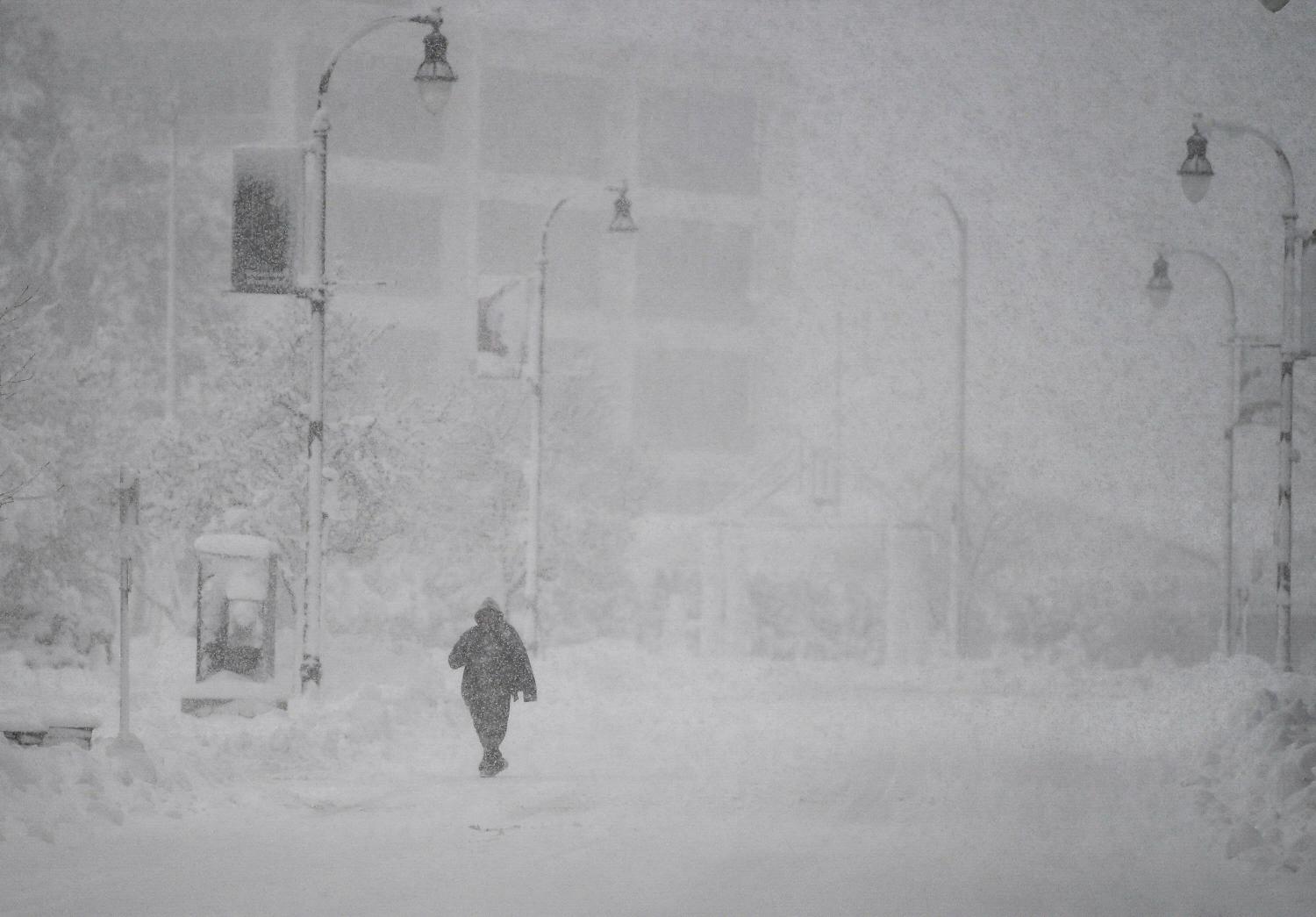
Jan 12 (Reuters) - U.S. natural gas and power prices hit multi-year highs on Friday ahead of extreme cold that was expected to bring record gas demand while also cutting supplies by freezing wells. Lower gas supplies at a period of surging demand could test power systems in hard-hit areas. Winter storms in 2021 and 2022 caused widespread damage and power outages in part because many power plants lacked sufficient fuel to operate. U.S. gas output was on track to drop by 3.7 billion cubic feet per day (bcfd), or 3.4%, over the past five days to a preliminary 10-week low of 104.5 bcfd on Friday, according to financial firm LSEG. That decline so far was small compared with gas supply losses of around 19.6 bcfd during a winter storm in December 2022, and 20.4 bcfd during another winter storm in February 2021, according to LSEG data. Still, U.S. gas demand, including exports, was on track to reach 165.9 bcfd on Jan. 15, 174.3 bcfd on Jan. 16 and 172.9 bcfd on Jan. 17, according to LSEG. Those daily demand forecasts would top the current all-time high of 162.5 bcfd set on Dec. 23, 2022, according to federal energy data from S&P Global Commodities Insights. "TAKE EXTRA CARE" The freeze is expected to move from the U.S. Pacific Northwest to the central and eastern parts of the country over the next few days. Power grid operators in its path have already told generator owner members to prepare their units to run before electric demand starts to increase. In a sign of what may be coming, next-day power prices at the Mid Columbia hub in the Pacific Northwest soared to a record high of around $1,075 per megawatt hour, according to LSEG data going back to 2010. That compares with averages of $81 in 2023 and $52 from 2018 to 2022. "Generator owners must take extra care to maintain equipment so that it doesn’t freeze in the cold ... particularly as natural gas pipelines may become constrained as the cold spell progresses," PJM Interconnection said in a release. PJM is the nation's largest grid operator covering parts of 13 states from Illinois to New Jersey. Grid operator Southwest Power Pool (SPP) and the Electric Reliability Council of Texas (ERCOT) have also issued weather advisories. Projected overnight temperatures in Midland, Texas, in the Permian shale, the nation's biggest oil and second biggest gas producing basin, will drop below freezing every night from Jan. 13-16, falling to a low of 6 degrees Fahrenheit (minus 14 degrees Celsius) on Jan. 15, according to meteorologists at AccuWeather. Freezing weather can lead to so-called freeze-offs, which can reduce oil and gas production. GAS PRICES JUMP Spot gas prices at the Eastern Gas South hub jumped from around $2.45 per million British thermal units (mmBtu) on Thursday to $10.40 on Friday, their highest since July 2008, according LSEG data. That compares with averages of $1.68 per mmBtu in 2023 and $2.96 from 2018 to 2022. Other next-day gas prices soared to their highest since the February freeze in 2021, including the U.S. Henry Hub benchmark in Louisiana at $13.20 per mmBtu, Waha in West Texas at $17.23 and Chicago at $23.35. In Canada, meanwhile, next-day gas prices at the AECO hub in Alberta soared to around $9.71 per mmBtu, their highest since February 2014. The Alberta grid operator on Friday asked electricity users to conserve power, following record demand Thursday. https://www.reuters.com/business/energy/us-energy-firms-prepare-extreme-freeze-could-hit-natgas-supplies-2024-01-12/
2024-01-12 21:30
Bank of America profit shrinks on $2.1 billion of charges UnitedHealth falls on higher-than-expected medical costs Tesla falls after flagging output hit from Red Sea disruption Dow down 0.31%, S&P 500 up 0.08%, Nasdaq up 0.02% NEW YORK, Jan 12 (Reuters) - U.S. stocks closed barely changed on Friday, after wavering between modest gains and losses, as mixed bank earnings offset cooler-than-expected inflation news that buoyed hopes for interest-rate cuts from the Federal Reserve. On Friday, data showed U.S. producer prices unexpectedly fell in December as the cost of goods such as food and diesel fuel declined, while prices for services were unchanged for a third consecutive month, in contrast to Thursday's hotter-than-expected consumer inflation reading. Expectations for a rate cut of at least 25 basis points by the Fed in March moved up to 79.5%, according to CME's FedWatch Tool, from 73.2% in the prior session. Friday's data also sent Treasury yields lower, although recent comments by some central bank officials have pushed back on any potential rate cuts. "The PPI tells us something that is a little bit different than the CPI," said Michael Green, chief strategist at Simplify Asset Management in New York. "It raises the probability that the Fed has the free and clear to decide to cut interest rates and the equity market really doesn't care all that much as long as rates are not pushing significantly higher." The Dow Jones Industrial Average (.DJI) fell 118.04 points, or 0.31%, to 37,592.98. The S&P 500 (.SPX) gained 3.59 points, or 0.08 %, at 4,783.83 and the Nasdaq Composite (.IXIC) rose 2.58 points, or 0.02%, to 14,972.76. For the week, the Dow gained 0.34%, the S&P 500 rose 1.84% and the Nasdaq climbed 3.09%. The gains for the S&P were the biggest weekly percentage rise since mid-December and for the Nasdaq, the largest since early November. Bank of America (BAC.N) fell 1.06% after its fourth-quarter profit shrank as the lender took $3.7 billion in one-off charges, while Wells Fargo's (WFC.N) warning of a 7% to 9% drop in net interest income in 2024 sent the bank's shares down 3.34%. But Citigroup (C.N) rose 1.04% after reporting a $1.8 billion fourth-quarter loss and saying it expected further job cuts. JPMorgan Chase (JPM.N) edged 0.73% lower after reporting its best ever annual profit and forecasting higher-than-expected interest income for 2024. The S&P 500 Banks index (.SPXBK) ended down 1.26% after falling as much as 1.7%. The Dow fell, largely due to a 3.37% decline in UnitedHealth (UNH.N) after the company reported higher-than-expected medical costs, accounting for about 120 points of downside pressure to the index. Delta Air Lines (DAL.N) tumbled 8.97% after the carrier scaled down its annual profit outlook. Tesla (TSLA.O) lost 3.67% after trimming prices of some new China models and plans to suspend most car production at its factory near Berlin. Advancing issues outnumbered decliners by a 1.4-to-1 ratio on the NYSE while on Nasdaq, decliners outpaced advancers by a 1.1-to-1 ratio on the Nasdaq. The S&P index recorded 37 new 52-week highs and no new lows, while the Nasdaq recorded 134 new highs and 86 new lows. Volume on U.S. exchanges was 10.57 billion shares, compared with the 12.06 billion average for the full session over the last 20 trading days. https://www.reuters.com/markets/us/futures-subdued-all-eyes-big-bank-earnings-2024-01-12/

2024-01-12 21:11
NEW YORK, Jan 12 (Reuters) - Traders on Friday piled into U.S. stock options contracts that would pay out if volatility jumped from the current four-year lows, even as the S&P 500 remained within striking distance of new highs. Volume in options on the Cboe Volatility Index (.VIX), which are typically used to guard against stock market gyrations, stood at 1.2 million contracts at 2:20 p.m. Friday, on pace for the highest level in about three weeks. The index, known as "Wall Street’s fear gauge," stood at 12.51 on Friday, just above the four-year low of 11.81 hit in late December after a searing late-year rally that helped boost the S&P 500 (.SPX) to a 24% gain in 2023. With the S&P 500 less than 1% away from its January 2022 record closing high, some traders appeared to be taking advantage of relatively cheap pricing on defensive options contracts to pick up portfolio hedges. The largest VIX trade on Friday was a $16.8 million purchase of 250,000 call options that would benefit from the volatility index rising above 17 by mid-February. "I think it is one of the bigger VIX call purchases that we have seen in a while," Chris Murphy, co-head of derivative strategy at Susquehanna Financial Group, said. The trade was more likely to be a defensive play taking advantage of comparatively attractive volatility levels to add portfolio protection rather than an outright wager on a drop in the stock market, Murphy said. "It's probably a big fund that might even be leaning very long, saying this is the most attractive hedge for us right now," he said. The strength of hedging activity on Friday was in contrast to a generally anemic level of defensive trading in recent weeks. Other February VIX call contracts, with strike prices ranging from 15 through 19 also saw heavy trading. https://www.reuters.com/markets/us/us-stock-investors-splurge-cheap-options-hedges-with-vix-near-four-year-lows-2024-01-12/

2024-01-12 20:59
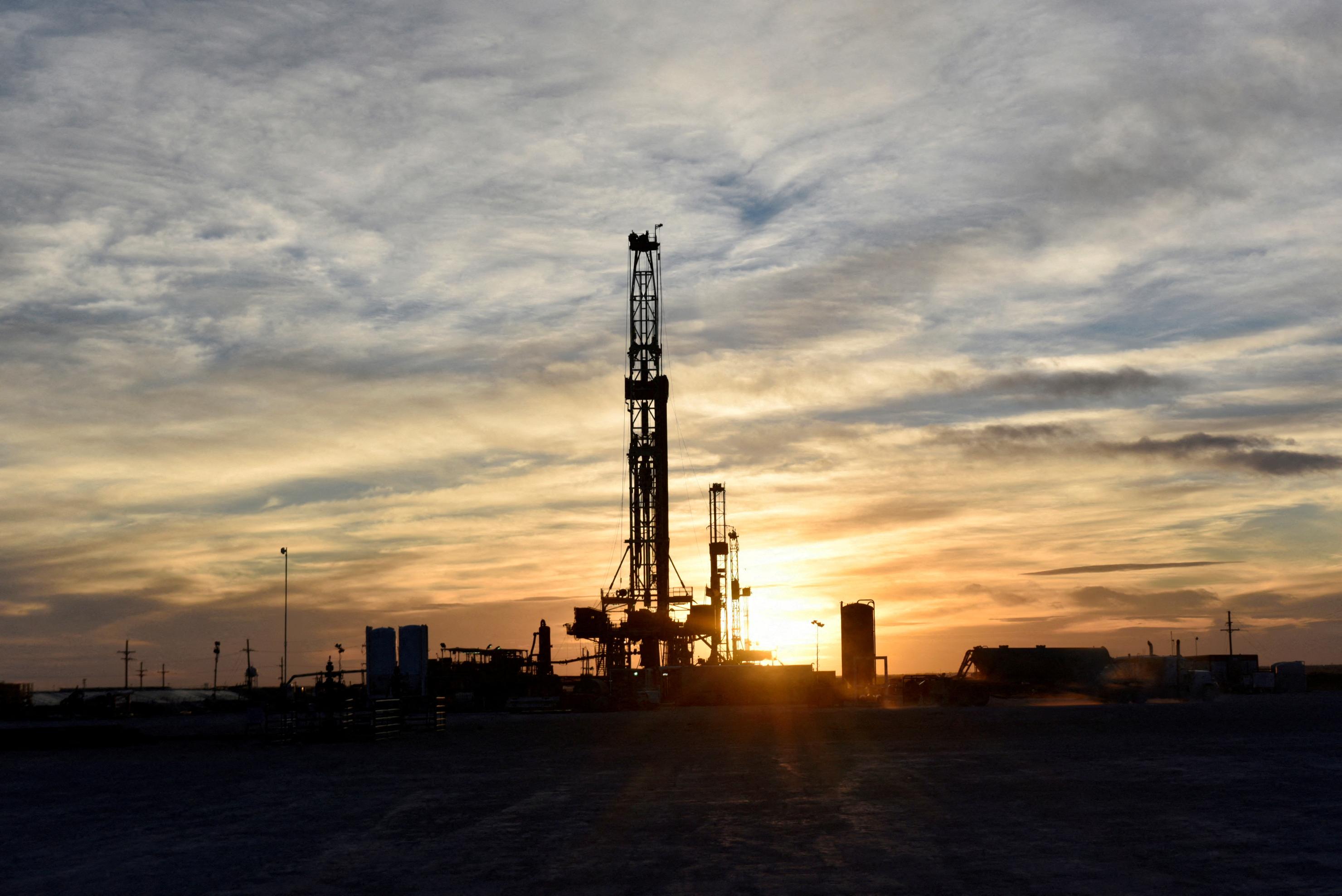
WASHINGTON, Jan 12 (Reuters) - The U.S. on Friday proposed a fee on emissions of methane from big oil and gas producers as required under the 2022 climate law and as a backstop to wider regulations on the greenhouse gas from energy operations. The fee, proposed by the Environmental Protection Agency, applies to large oil and gas facilities that report methane emissions of more than 25,000 metric tons of carbon dioxide equivalent per year. As directed by the Inflation Reduction Act (IRA), the fee starts at $900 per ton in 2024, increases to $1,200 for 2025 and $1,500 for 2026 and beyond, the EPA said. It only applies to the emissions that exceed the specified levels. Over time, fewer facilities will face the charge as they reduce their emissions and become eligible for compliance exemptions, the EPA said. "Today's proposal, when finalized, will support a complementary set of technology standards and historic resources from the Inflation Reduction Act, to incentivize industry innovation and prompt action," EPA Administrator Michael Regan said in a release. Methane tends to leak into the atmosphere undetected from drill sites, gas pipelines and other oil and gas equipment. It has more warming potential than carbon dioxide and breaks down in the atmosphere faster, so curbing methane emissions can have a more immediate impact on limiting climate change. In December, the EPA finalized a wider rule on methane from oil and gas operations at the COP28 climate talks in Dubai. It bans routine flaring of natural gas produced by newly drilled oil wells, requires oil companies to monitor for leaks from well sites and compressor stations and establishes a program to use third party remote sensing to detect large methane releases from so-called "super emitters." The methane fee was watered down in the IRA, which was passed in 2022, to cover less than half of the sector's release of methane, as a result of concessions made to win over Senator Joe Manchin, a conservative Democrat from gas producing West Virginia. https://www.reuters.com/sustainability/climate-energy/us-proposes-fee-methane-big-oil-gas-producers-2024-01-12/
2024-01-12 20:50
HOUSTON, Jan 12 (Reuters) - TotalEnergies (TTEF.PA) on Friday restarted the large crude distillation unit (CDU) and large vacuum distillation unit (VDU) at its 238,000 barrel-per-day (bpd) Port Arthur, Texas, refinery, said people familiar with plant operations. The refinery's two CDUs and two VDUs were shut on Thursday following a malfunction on the gasoline-producing fluidic catalytic cracker (FCC), the sources said. The CDUs and VDUs convert oil into feedstocks for all other units at the refinery. A TotalEnergies spokesperson was not immediately available to discuss operations at the refinery. The 76,000-bpd FCC-2 was operating on Friday, the sources said. During a malfunction on the catalytic cracker on Wednesday and Thursday, production and steam use was reduced on several units, TotalEnergies told the Texas Commission on Environmental Quality in a regulatory filing. There is only FCC at the TotalEnergies refinery. The 150,000-bpd ACU-1 CDU and 60,000-bpd VDU-2 restarted on Friday, the sources said. ACU-1 is one of two units operating at atmospheric pressure that begins the refining process by converting crude oil into feedstocks for all other units. VDU-2 receives gunky residual crude oil from ACU-1 and, operating at vacuum pressure, breaks it down into feedstocks for other units. The 40,000-bpd ACU-2, as well as the 51,000-bpd VDU-1 remained idled on Friday, the sources said. FCC-2 has struggled to reach full production since completing a three-month overhaul on Nov. 20, sources have told Reuters. ACU-2 and VDU-1 remained shut until mid-December as FCC-2 was raising its production level. The FCC-2 overhaul included replacement of the 1.3-million-pound (590 metric ton) reactor on the unit. https://www.reuters.com/markets/commodities/totalenergies-restarts-port-arthur-texas-crude-units-sources-2024-01-12/