2024-01-12 19:40
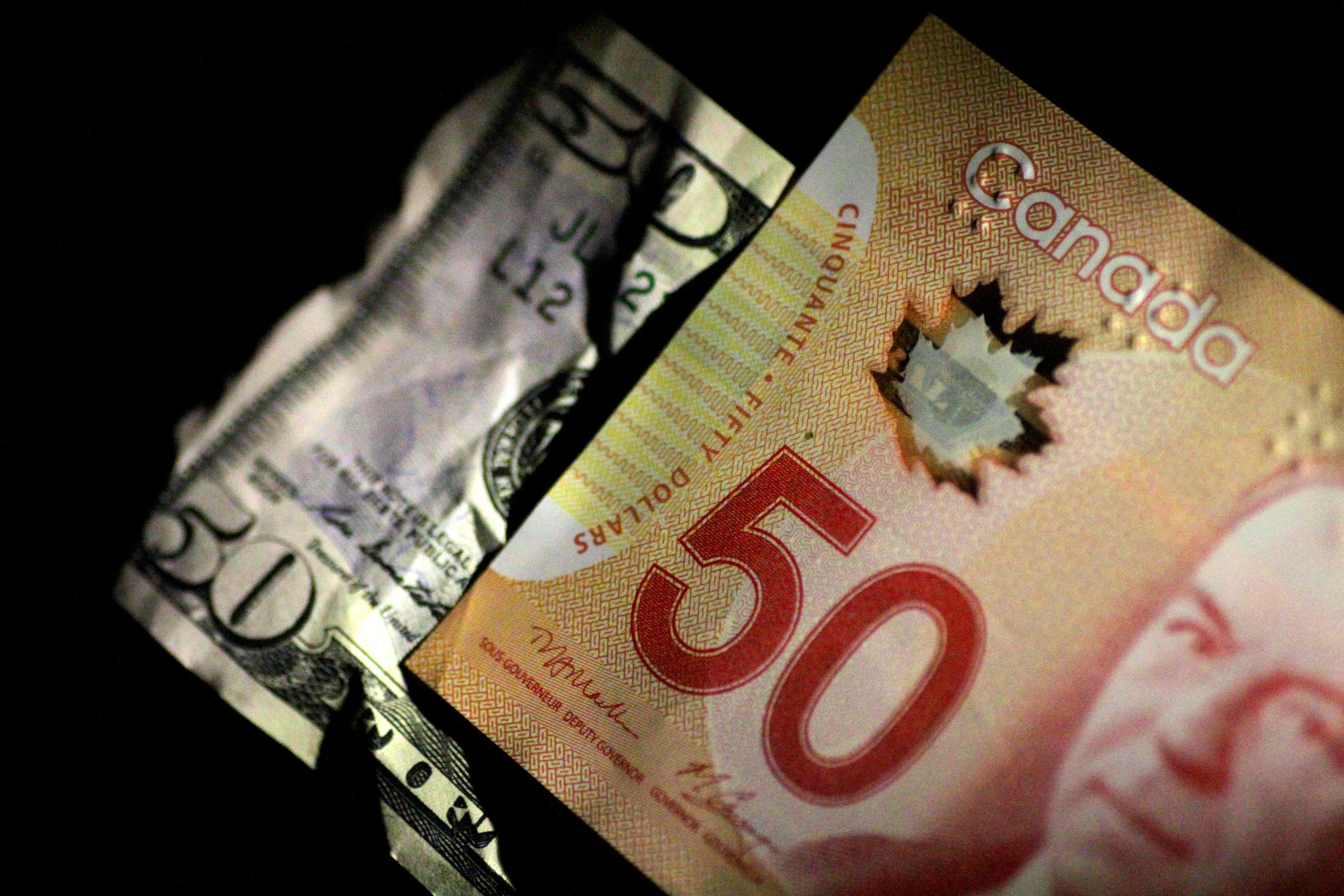
Loonie posts a weekly decline of 0.2% Price of U.S. oil rises 1.1% Canadian bond yields ease across steeper curve 2-year yield hits an 8-month low TORONTO, Jan 12 (Reuters) - The Canadian dollar was little changed against its U.S. counterpart on Friday as oil gave back much of its earlier gains and ahead of domestic inflation data next week that could offer clues on the Bank of Canada policy outlook. The loonie was trading nearly unchanged at 1.3395 to the greenback, or 74.65 U.S. cents, after moving in a range of 1.3344 to 1.3410. "CAD has weakened during the North American session as WTI crude oil prices were unable to hold on to an outsized 4.4% gain from the overnight session," said George Davis, chief technical strategist at RBC Capital Markets. The price of oil, one of Canada's major exports, pulled back from an earlier two-week high, which was made after air and sea strikes by the U.S. and Britain on Houthi targets in Yemen, but was still up 0.9% at the time of settlement at $72.68 a barrel. For the week, the Canadian dollar was down 0.2%, its second straight weekly decline. It touched a four-week low on Thursday at 1.3442 after hotter-than-expected U.S. inflation data briefly checked expectations for the Federal Reserve to shift to interest rate cuts as soon as March. Canada's inflation report for December is due on Tuesday. Economists expect inflation to climb to 3.3% from 3.1% in November. Canadian government bond yields fell across a steeper curve, with the market tracking moves in U.S. Treasuries after U.S. producer prices data for December fell unexpectedly. The 2-year was down 4.7 basis points at 3.791%, after earlier touching its lowest level since May 12 at 3.705%. https://www.reuters.com/markets/currencies/c-declines-second-week-oil-rally-wavers-2024-01-12/
2024-01-12 19:34
PANAMA CITY, Jan 12 (Reuters) - The Panama Canal said on Friday it "understands" clients' decisions to turn to alternative shipping methods as the canal, one of the world's busiest trade routes, faces restrictions due to an ongoing drought, and that it was working on solutions to avoid setbacks caused by future climate crises. On Thursday, Danish shipping giant Moller-Maersk (MAERSKb.CO) said it would turn to rail to move some cargo, as reduced crossings at the Panama Canal due to low water levels have caused bottlenecks. "We will continue to support Maersk's operations, as the announced changes affect just one of Maersk's services - OC1 Oceania - while other services will continue to transit the canal," the Panama Canal Authority told Reuters. The authority added it was developing short- and long-term solutions to limit climate anomalies' impact on the trade route, which moves about 5% of the world's commerce. "We understand that our customers, like us, need to adapt their operations due to the impacts of climate variations around the world and the current water shortage in the Panama Canal," the authority said. Maersk's OC1 service, connecting Australia and New Zealand with the U.S. East Coast cities of Philadelphia and Charleston, South Carolina, via the Panama Canal, will now create two separate loops, one Atlantic and one Pacific. The workaround comes as vessel owners also are rerouting ships to avoid militant attacks that are disrupting the Suez Canal, its longtime rival trade shortcut, in what has become the largest disruption to ocean shipping since the COVID-19 pandemic. The Panama Canal typically allowed around 36 crossings a day, but due to the low levels of water required to push boats through the passage, the canal authority has gradually lowered that number. It now allows 24 crossings a day. https://www.reuters.com/business/panama-canal-understands-maersk-move-rail-amid-drought-2024-01-12/

2024-01-12 18:52
NEW YORK, Jan 12 (Reuters) - Morgan Stanley (MS.N) agreed to pay $249.4 million to end years-long criminal and civil investigations into its handling of large stock trades for customers, U.S. authorities said on Friday. The settlements with the Department of Justice and Securities and Exchange Commission resolve charges of deception, fraud and compliance failures over so-called block trades. They also end a longstanding legal worry for the Wall Street bank, which entered a three-year nonprosecution agreement and will not face criminal charges. Block trades can move stock prices because of their size. Hedge funds and other investors that know such trades are coming can make money by placing their own trades in anticipation. Despite promising to keep the information confidential, two traders passed on information about impending block trades to various investors. Authorities said this let Morgan Stanley reduce its risks when purchasing the trades, win business, and generate more than $100 million of illegal profit. Morgan Stanley admitted to making false statements in connection with block trades from 2018 through August 2021. Its $249.4 million payment includes fines, restitution and the forfeiture of ill-gotten gains. "The integrity of our financial markets requires a level playing field," said James Smith, assistant director in charge of the FBI's New York office, which helped investigate the matter. "When individuals and institutions intentionally tip the scales there must be consequences." The Justice Department agreed to hold off prosecuting Pawan Passi, 40, former head of Morgan Stanley's U.S. equity syndicate desk, who entered a deferred prosecution agreement and admitted wrongdoing. U.S. Magistrate Judge Robyn Tarnofsky approved Passi's agreement at a hearing on Friday. Morgan Stanley said it was pleased to settle, and confident in upgrades it has made to its policies, training and surveillance. "The core of this matter is the misconduct of two employees who violated the firm's policies, procedures and our core values," the bank said. The bank disclosed last May it had been in talks with authorities to resolve the probe. Authorities said a second employee, who was not identified and not charged, worked on the equity syndicate desk. George Canellos, a lawyer for Passi, said he was pleased the U.S. attorney's office in Manhattan did not pursue criminal charges against his client. He said the resolution lets Passi "move past two very difficult years of intense government scrutiny of the block trading practices on Wall Street." Passi was charged with one count of securities fraud, which would be dropped after six months if he complies with his deferred prosecution agreement. He pleaded not guilty in federal court in New York on Friday. "You have been given a real opportunity here to avoid a criminal conviction," Tarnofsky told Passi at the hearing, adding she hoped the charges would be dismissed in the future. He admitted to promising sellers of large blocks of stock that he would keep details about the sales confidential, despite knowing he would disclose the information to others. Authorities did not fine Passi, noting that he had already forfeited $7.4 million in compensation. He was discharged from Morgan Stanley in November 2022 amid scrutiny of his communications about impending block trades, brokerage industry records show. It is unusual for prosecutors to give deferred prosecution agreements to individuals, but Passi's conduct fell into a legal "gray area," said New York lawyer Bob Frenchman. "Traders are allowed to do anticipatory hedging, and there have not been clear standards on what you can and cannot do," Frenchman said. "Prosecutors really would have been pushing the boundaries and taking significant risk to go to trial." https://www.reuters.com/business/finance/sec-charges-morgan-stanley-former-exec-passi-with-fraud-block-trading-business-2024-01-12/
2024-01-12 18:40
Jan 12 (Reuters) - Wells Fargo (WFC.N), Bank of America (BAC.N) and Citigroup (C.N) reduced their workforces by a combined 17,700 last year, the banking giants reported in their fourth-quarter earnings on Friday. As dealmaking dried up and demand from borrowers softened last year, banks laid off employees or stopped replacing those who left. JPMorgan Chase (JPM.N), the nation's largest lender, bucked the trend by bolstering its ranks for a third straight year. Challenging times for the industry could persist this year as weakness in commercial real estate and tougher proposed capital rules could prompt banks to pull back on lending. Wall Street businesses suffered last year as economic uncertainty weighed on dealmaking. While the S&P 500 banks index (.SPXBK) rose 7% in 2023, it underperformed indexes tracking industrial (.SPLRCI) or consumer discretionary (.SPLRCD) companies. CITI OVERHAULS, GOLDMAN STEADIES SHIP Citigroup's headcount fell by 1,000 to 239,000 employees in 2023, and the lender outlined plans to cut 20,000 jobs over the next two years including layoffs from a sweeping reorganization and other business changes. At Bank of America and Wells Fargo the workforce contracted by about 2% and 5%, respectively, last year. JPMorgan added more than 16,200 employees. The bank bought failed lender First Republic Bank in a rescue deal in May. It has added jobs every year since 2021. Goldman Sachs (GS.N) and Morgan Stanley (MS.N) are set to disclose their latest headcount next week. As of September end, they had cut over 4,300 jobs versus last year. Earlier in 2023, Goldman Sachs undertook its biggest round of layoffs since the global financial crisis of 2008. In October, the bank's CFO Denis Coleman said they were in a position to do "selective investments" in headcount. https://www.reuters.com/business/finance/us-banking-giants-shed-over-17000-employees-turbulent-year-2024-01-12/
2024-01-12 18:06
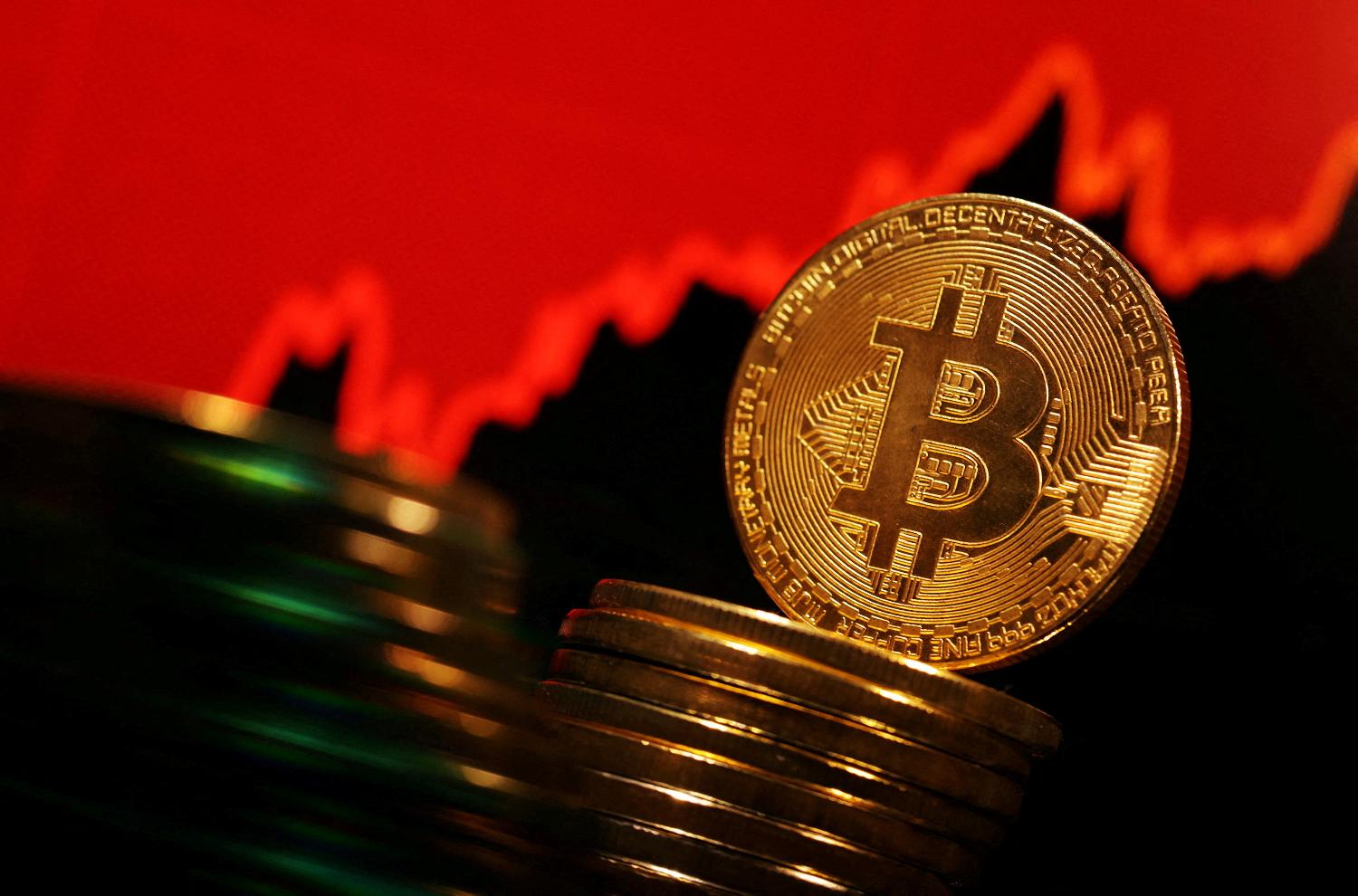
Jan 12 (Reuters) - Crypto asset manager Bitwise said on Friday that $240 million flowed into its spot bitcoin exchange-traded fund (ETF), the most of the 10 such products that began trading on Thursday. The U.S. Securities and Exchange Commission approved 11 spot bitcoin ETFs this week, including BlackRock's iShares Bitcoin Trust (IBIT.O), Grayscale Bitcoin Trust (GBTC.P), and ARK 21Shares Bitcoin ETF (ARKB.Z), among others, after a decade-long tussle with the digital asset industry. On the first day of trading, $4.6 billion worth of shares changed hands across all the products, according to LSEG data from Thursday which tracks total trading activity, including inflows and outflows. Reuters could not immediately verify Bitwise's data. Grayscale, BlackRock and Fidelity dominated total trading on Thursday, the LSEG data showed. The products mark a watershed moment for the cryptocurrency industry that is set to test whether digital assets - still viewed by many professionals as risky - can gain broader acceptance as an investment. The market is closely watching inflows during their first few days of trading. "We think that this will become a market measured in the tens of billions of dollars," said Matt Hougan, chief investment officer at Bitwise. The ProShares Bitcoin Strategy ETF (BITO.P), the first bitcoin futures ETF approved by the SEC in 2021, accumulated $1 billion in assets within its first days of trading. "Matching BITO's first-week performance would indeed signify a significant success, especially given the current state of the market cycle," said Anthony Rousseau, head of brokerage solutions at TradeStation. Grayscale was approved to convert its existing bitcoin trust into an ETF on Thursday, overnight creating the world's largest bitcoin ETF, with more than $28.6 billion in assets under management. Its product had outflows of $95 million on Thursday, according to a source familiar with the matter. The SEC had previously rejected all spot bitcoin ETFs on investor protection concerns. SEC Chair Gary Gensler said in a statement on Wednesday that the approvals were not an endorsement of bitcoin, calling it a "speculative, volatile asset." Still, the regulatory nod sparked intense competition for market share among the issuers. Franklin Templeton on Friday slashed the fee for its bitcoin ETF to 0.19% - the lowest yet - and waived fees entirely on the product's first $10 billion in assets under management until August. After its ETF started trading on Thursday, Valkyrie cut its fees a second time to 0.25%. Its Valkyrie Bitcoin ETF (BRRR.O) saw $29.44 million flow in during its first day of trading, the company said. Reuters could not immediately verify that number. Valkyrie CEO Leah Wald, speaking to Reuters after the market close on Thursday, called it "a good successful trading day." The price of bitcoin, the world's largest cryptocurrency, was last down 5.32% at $43,696. https://www.reuters.com/technology/bitwise-bitcoin-etf-draws-most-inflows-first-trading-day-company-says-2024-01-12/
2024-01-12 17:41
Producer price index falls 0.1% in December PPI increases 1.0% year-on-year Core PPI increases 0.2%; rises 2.5% year-on-year WASHINGTON, Jan 12 (Reuters) - U.S. producer prices unexpectedly fell in December amid declining costs for goods such as diesel fuel and food, suggesting inflation would continue to subside and allow the Federal Reserve to start cutting interest rates this year. The report from the Labor Department on Friday, which also showed prices for services were unchanged for the third straight month, implied that a pick-up in consumer prices last month was likely a blip. It led economists to anticipate that the key price measures tracked by the U.S. central bank for its 2% inflation target rose moderately in December from the prior month. "The inflation pipeline is clearing and consumer prices will gradually get to the Fed's 2% target," said Jeffrey Roach, chief economist at LPL Financial in Charlotte, North Carolina. The producer price index for final demand dipped 0.1% last month, the Labor Department's Bureau of Labor Statistics said. Data for November was revised to show the PPI falling 0.1% instead of being unchanged as previously reported. The PPI has now declined for three consecutive months. Economists polled by Reuters had forecast the PPI rebounding 0.1%. Goods prices dropped 0.4%, with a 12.4% decline in the cost of diesel fuel accounting for half of the decrease. Goods prices fell 0.3% in November. They have dropped for three straight months. Excluding food and energy, goods prices were unchanged after edging up 0.1% in November. The weakness also suggested that goods deflation remained in force despite an uptick in consumer goods prices in December following two straight monthly decreases. Food prices slipped 0.9% last month, with the cost of eggs tumbling 20.5%, but reversing only a fraction of the 71.2% surge in November. An outbreak of avian flu at some commercial farms was behind the spike in prices in November. Wholesale passenger car prices fell 3.0%. But gasoline prices increased 2.1%. In the 12 months through December, the PPI increased 1.0% after advancing 0.8% in November. Data on Thursday showed consumer prices increased more than expected in December, driven by solid gains in shelter and healthcare costs. The dollar fell against a basket of currencies. U.S. Treasury prices were mostly higher, while stocks were mixed. SERVICES PRICES UNCHANGED Financial markets remain hopeful that the Fed will start cutting interest rates in March, though most economists are leaning towards May or June, given the labor market's resilience. The central bank has hiked its policy rate by 525 basis points to the current 5.25%-5.50% range since March 2022. Services prices were curbed by declines in margins for machinery and motor vehicle wholesaling. Prices for hotel and motel rooms rose 2.1%. There were also decreases in the costs of transporting freight by road, automobiles and parts retailing, and apparel wholesaling. But portfolio management fees rebounded 1.5%, reflecting recent stock market gains. Airline fares increased 2.1%. Health and medical insurance costs edged up 0.1%. With supply chains mostly normalized after severe disruptions during the COVID-19 pandemic, services are at the core of the inflation battle. Services inflation, partly driven by a tight labor market, is less responsive to rate hikes. Portfolio management fees, healthcare, hotel and motel accommodation, and airline fares are among components in the calculation of the personal consumption expenditures price indexes, the inflation measures monitored by the Fed for monetary policy. Based on the CPI and PPI data, economists estimated the PCE price index excluding food and energy rose 0.2% in December after gaining 0.1% in November and October. In the 12 months through December, the so-called core PCE price was forecast increasing 3.0%. That would be the smallest year-on-year gain since March 2021 and follow a 3.2% rise in November. The overall PCE price index is also seen climbing 0.2% in December, with the annual increase forecast to come in at about 2.6%, unchanged from November's advance. Some economists worried that war in the Middle East and attacks on container ships by Iran-aligned Houthi militants in the Red Sea, which have forced companies to reroute vessels, driving up costs sharply along with insurance premiums, could push up prices of oil and other goods. But others expected increased oil production in the United States to blunt the impact on consumers. The narrower measure of PPI, which strips out food, energy and trade services components, rose 0.2% in December after gaining 0.1% in the prior month. The so-called core PPI rose 2.5% on a year-on-year basis after increasing 2.4% in November. "The key upside risk to inflation is from the war in the Middle East and potential disruptions to trade flows and global energy supplies," said Bill Adams, chief economist at Comerica Bank in Dallas. "But petroleum and renewables output are growing faster than GDP in the U.S., which so far has offset the impact of geopolitical risk and kept energy prices well behaved." https://www.reuters.com/markets/us/us-producer-prices-unexpectedly-fall-december-2024-01-12/