2024-01-12 13:49
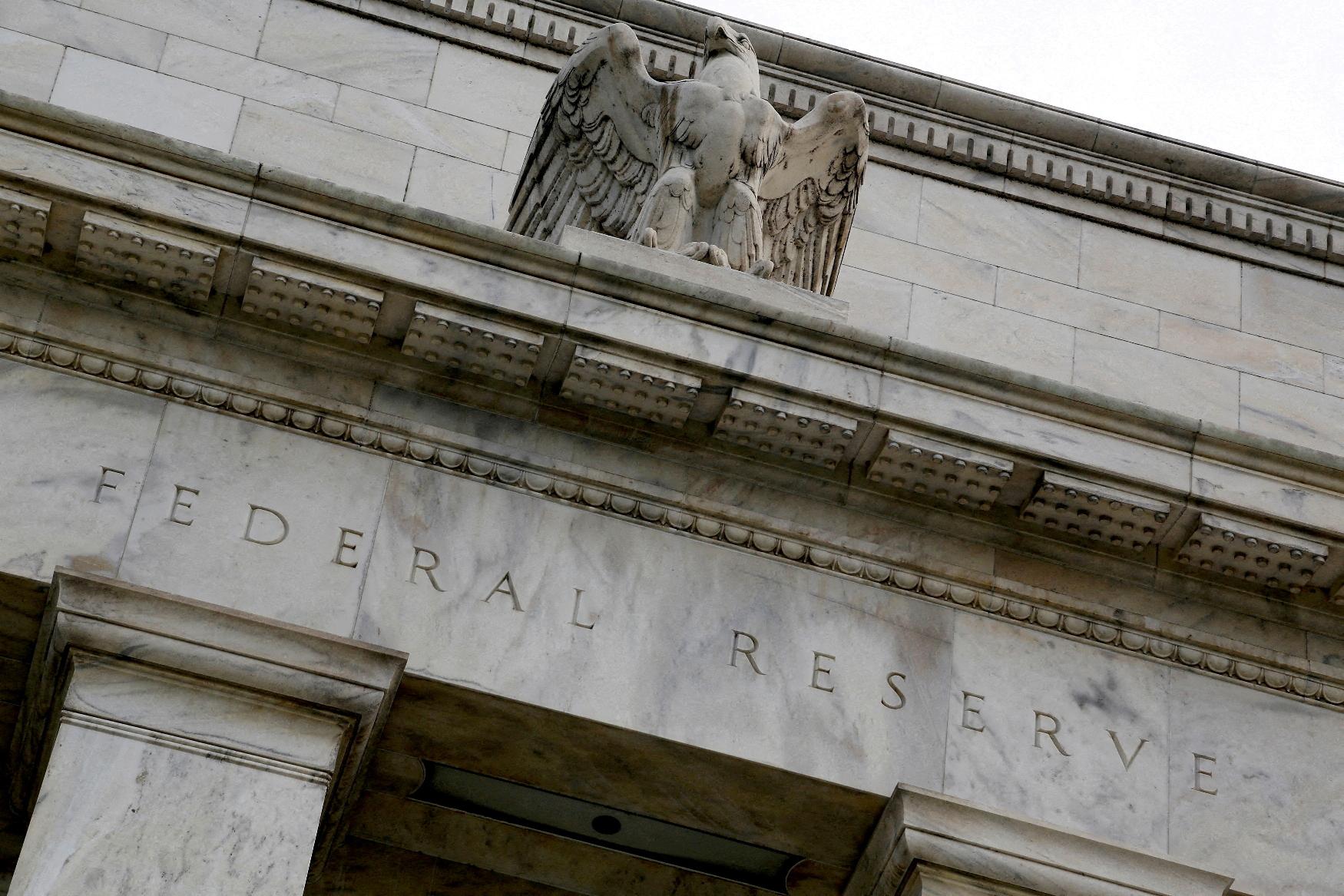
Jan 12 (Reuters) - Traders on Friday priced in a bigger chance that the Federal Reserve will deliver more monetary policy easing this year after a U.S. government report pointed to less inflation in the wholesale pipeline than economists had anticipated. Futures contracts that settle to the Fed's target for the overnight lending rate between banks rose after the data, which showed the producer price index fell 0.1% in December from the prior month. Economists had expected a 0.1% rise. Futures contract prices now point to expectations for rates to fall below 3.75% by year end, versus to a 3.75%-4% range before the data, with a first rate cut likely in March. https://www.reuters.com/markets/us/traders-boost-bets-fed-rate-cuts-after-producer-prices-slide-2024-01-12/
2024-01-12 11:57
LONDON, Jan 12 (Reuters) - At least four oil tankers have diverted course from the Red Sea since overnight strikes by the U.S. and Britain on Houthi targets in Yemen, shipping data from LSEG and Kpler showed. The attacks were carried out from the air and sea in response to the Iranian-backed Houthi militia's attacks on ships in the Red Sea, in what is becoming a regional escalation of the Israel-Hamas war in Gaza. The tankers Toya, Diyyinah-I, Stolt Zulu and Navig8 Pride LHJ were all seen turning around mid-voyage in order to avoid the Red Sea between 0300 and 0730 GMT on Friday, according to ship tracking from the two companies. One of the tankers, Toya, a very large crude carrier capable of carrying up to 2 million barrels of oil, was unladen, the data showed. The other three vessels are fuel tankers. Oil prices were up over $3 a barrel, or more than 4%, by 1144 GMT, with Brent trading above $80, amid heightened geopolitical risks. Meanwhile, Danish oil tanker group Torm (TRMDa.CO) said on Friday it decided to pause all transits through the southern Red Sea. Major container shipping companies Maersk (MAERSKb.CO) and Hapag Lloyd (HLAG.DE) welcomed measures to secure the region. But they stopped short of saying whether the U.S. and British strikes would be enough for them to return to the Suez Canal, the fastest route between Asia and Europe which accounts for about 12% of global container traffic. https://www.reuters.com/world/middle-east/oil-tankers-divert-red-sea-after-us-uk-strikes-yemen-2024-01-12/

2024-01-12 11:50
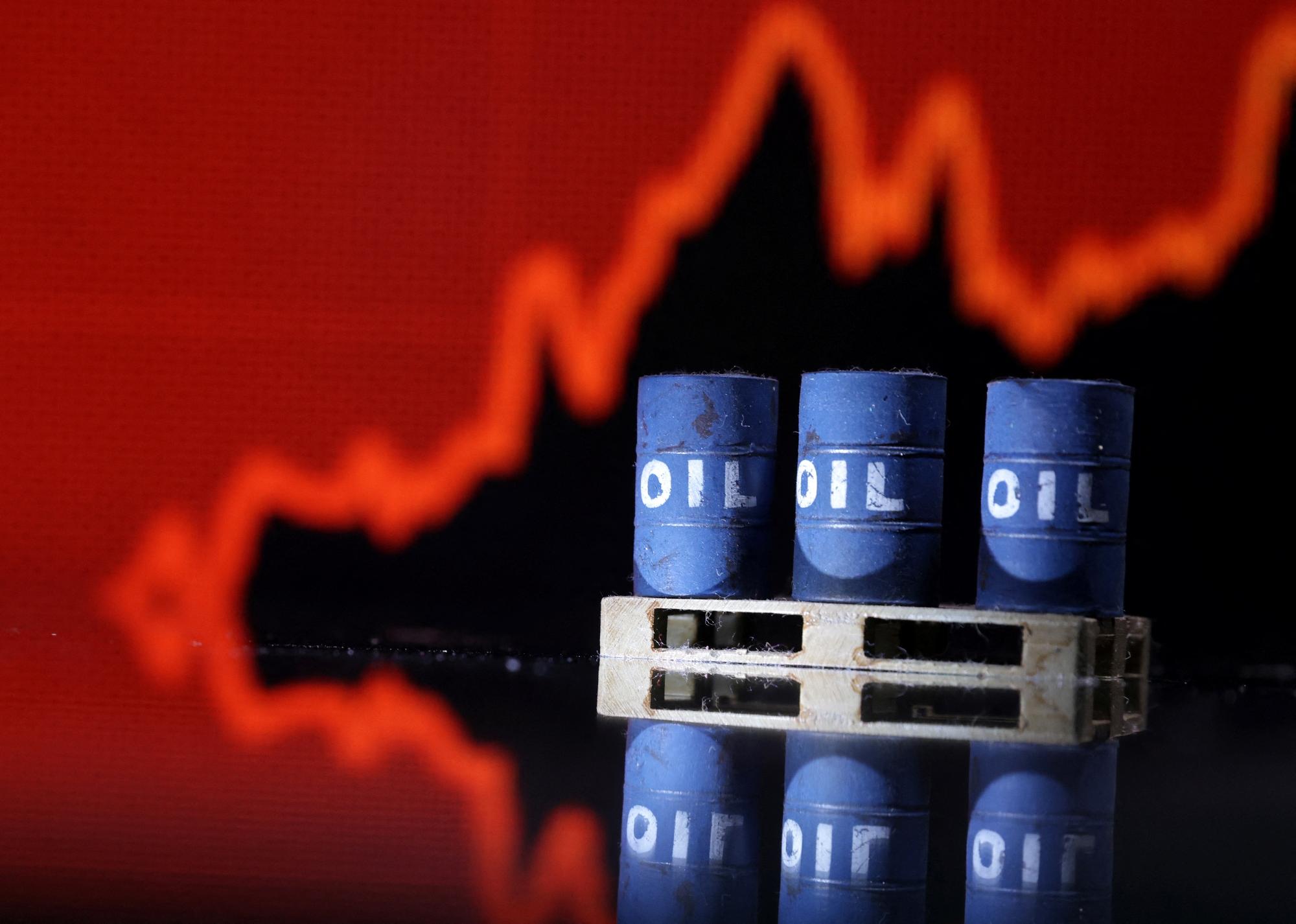
Some tanker companies halt ships heading to Red Sea China buys record levels of crude oil in 2023 U.S. oil rigs fall by two this week - Baker Hughes Benchmarks close lower for the week HOUSTON, Jan 12 (Reuters) - Oil rose 1% on Friday as an increasing number of oil tankers diverted course from the Red Sea following overnight air and sea strikes by the U.S. and Britain on Houthi targets in Yemen after attacks on shipping by the Iran-backed group. Brent crude futures settled 88 cents, or 1.1%, higher at $78.29 a barrel. The session high was up over $3 to more than $80, its highest this year. U.S. West Texas Intermediate crude futures climbed 66 cents, or 0.9%, to $72.68, paring gains after touching a 2024 high of $75.25. While the diversions were expected to push up the cost and time it take to transport oil, supplies have not yet been impacted, analysts and industry experts noted, easing some of the earlier gains in prices. For the week, Brent was down 0.5% and WTI 1.1% lower. Earlier in the week, sharp price cuts by top exporter Saudi Arabia and a surprise build in U.S. crude stockpiles spurred supply worries. "Although the lack of shipping through the Red Sea... does create transportation issues for some crude supplies, the impact on the physical oil markets is, thus far, minimal," said Matt Stephani, president at investment advisory firm Cavanal Hill Investment Management. "If the conflict were to spread to the other side of the Arabian peninsula... oil markets may react much more significantly," Stephani added. Tanker companies Stena Bulk, Hafnia (HAFNI.OL) and Torm (TRMDa.CO) all said they had decided to halt all ships heading towards the Red Sea. However, Suez Canal Authority head Osama Rabie said traffic is regular in both directions and there is no truth to reports navigation has been suspended due to developments in the Red Sea. The U.S. and UK strikes come in retaliation for Houthi attacks since October on commercial vessels in the Red Sea in a show of support for Palestinian militant group Hamas in its fight against Israel. The escalation has fed worries the Israel-Hamas war could widen into a broader conflict in the Middle East, disrupting oil supplies. Iran seized a tanker on Thursday carrying Iraqi crude south of the strait destined for Turkey. Houthi militants also mistakenly targeted a tanker carrying Russian oil in a missile attack on Friday off Yemen, British maritime security firm Ambrey said. Diversion of tankers around South Africa will also push up freight rates as ships take longer routes. The Red Sea, a key route between Europe and Asia, accounts for about 15% of the world's shipping traffic. The U.S. expects Houthis to attempt some sort of retaliation as U.S. and Britain struck just under 30 different locations in Yemen, a senior U.S. military official said. A Houthi spokesperson said the group would continue to target shipping heading toward Israel. Iran warned that the attack on Houthis will fuel "insecurity and instability" in the region, according to Iranian state media. Saudi Arabia called for restraint and "avoiding escalation" and said it was monitoring the situation with great concern. Also supporting oil prices, China bought record levels of crude oil in 2023 as demand recovered form a pandemic-induced slump despite economic headwinds in the world's biggest energy consumer. The premium of the first-month Brent contract to the six-month contract rose to as much as $2.09 a barrel on Friday, the highest since early November, in a sign that markets perceive tighter supply for prompt delivery. On the supply side, Baker Hughes said the U.S. oil rig count, an indicator future production, fell by two to 499 this week. In Libya, the spokesperson for protesters who have threatened to shut down two oil and gas facilities in Tripoli said they have decided to extend Friday's deadline for closing the facilities by 24 hours as there are negotiations with mediators. https://www.reuters.com/markets/commodities/oil-prices-rise-more-than-2-after-us-britain-strikes-yemen-2024-01-12/
2024-01-12 11:47
Jan 12 (Reuters) - Citi Research on Friday cut its Brent price forecasts for 2024 and 2025 due to oversupply concerns but highlighted that tension in the Middle East could result in near-term upside to the risk premium. Citi lowered its 2024 Brent price prediction by $1 to $74 per barrel and slashed the 2025 forecast by $10 to $60 per barrel. Oil prices surged 4% on Friday as the United States and Britain carried out air and sea strikes on Houthi military targets in Yemen in response to attacks by the Iran-backed group on shipping in the Red Sea. Brent crude futures were trading around $80 a barrel, while U.S. West Texas Intermediate crude futures were at $75 as of 1124 GMT. Prices are likely to stay near $80 a barrel in 2024, a Reuters poll showed, as analysts predicted weak global growth would cap demand, while geopolitical tensions could provide support. In November, the Organization of the Petroleum Exporting Countries and allies, together called OPEC+, agreed to voluntary output cuts totalling about 2.2 million barrels per day (bpd) for early this year led by Saudi Arabia rolling over its current voluntary cut. "We model a significant 2025 surplus even if OPEC+ holds cuts to end-2025," Citi added in the note. On Thursday, Barclays lowered its Brent crude prices forecast for this year by $8 to $85 per barrel, but noted that oil looks undervalued. The following is a list of the latest brokerage forecasts for 2024 and 2025 average prices per barrel for Brent and WTI (in $ per barrel): * indicates end-of-period forecast # current as of given date, may not indicate date of revision For a table of crude price forecasts as per Reuters latest monthly poll, see https://www.reuters.com/markets/commodities/citi-lowers-2024-brent-price-forecast-74-per-barrel-2024-01-12/

2024-01-12 11:31
LONDON, Jan 12 (Reuters) - Britain's Office for National Statistics said on Friday that it was delaying interim changes to improve the accuracy of its main data on unemployment for another month. Low response rates to the ONS's main Labour Force Survey (LFS) mean that since July it has been extrapolating from previous unemployment data using separate government tax records and data on unemployment benefit claims. The ONS has been working on some temporary improvements to better account for population growth and low response rates, but said it was not ready to implement them for data due for publication on Tuesday. "While this work is progressing well, we need further time to complete quality assurance before we can publish an LFS-based dataset using these new adjusted data," the ONS said in a statement. "As such, this month's labour market publication will continue to use the adjusted series produced using administrative data that we have published in recent months." The ONS added that it aimed to have the changes ready for February's release. More comprehensive plans to revamp its surveying methods were still on track to be implemented towards the end of the first half of 2024, the ONS added. https://www.reuters.com/world/uk/uk-statistics-agency-delays-interim-changes-unemployment-data-2024-01-12/

2024-01-12 11:26
Dec new loans less than forecast but 2023 lending at new record Dec M2 money supply +9.7% y/y, vs forecast of +10.1% Dec TSF 1.94 trln yuan, vs forecast 2.20 trln yuan C.bank keeps policy accommodative to support shaky recovery More support steps expected soon BEIJING, Jan 12 (Reuters) - New bank lending in China rose less than expected in December, but 2023 lending hit a new record as the central bank kept policy accommodative to support an unexpectedly shaky economic recovery. Chinese banks extended 1.17 trillion yuan ($163.31 billion) in new yuan loans in December, up from November but falling short of analysts' expectations, according to data released by the People's Bank of China on Friday. Analysts polled by Reuters had predicted new yuan loans would rise to 1.40 trillion yuan in December from 1.09 trillion yuan the previous month, and comparable with 1.4 trillion yuan a year earlier. For the year, new bank lending hit a record 22.75 trillion yuan -- roughly equivalent to the gross domestic product of the UK and up 6.8% from 21.31 trillion yuan in 2022 -- the previous record. Still, the world's second-largest economy has struggled to regain traction, with a disappointing and short-lived post-COVID pandemic bounce. Consumer and business confidence remain weak, local governments are struggling under huge debts, and a protracted property crisis is weighing heavily on construction and investment. With demand weak, the economy is also facing persistent deflationary pressures heading into 2024, keeping alive expectations for more policy easing measures to shore up growth. "Monetary policy will be loosened as we face deflationary pressures," said Zong Liang, chief of research at state-owned Bank of China. "Interest rates should be appropriately lowered given that real interest rates are relatively high." Other data released by China on Friday reinforced views of a highly uneven economic recovery, with exports edging up but deflationary pressures persisting amid weak domestic demand. Next week, China will release data for December industrial output, investment and retail sales, along with fourth-quarter gross domestic product, which will give investors clues on whether the economy was able to regain some momentum heading into 2024 or will need further support. China's economic growth is seen hitting the official target of around 5% in 2023, and the government is expected to stick with that target this year. Analysts expect the People's Bank of China (PBOC) to unveil fresh easing steps soon to support the economy, amid concerns over deflationary pressures and questions over how long it will take the housing slump to bottom out. The central bank is expected to ramp up liquidity injections and cut a key interest rate when it rolls over maturing medium-term policy loans on Monday, as authorities try to get the shaky economy back on more solid footing. But the central bank faces a dilemma as more credit is flowing to productive forces than into consumption, which could add to deflationary pressures and reduce the effectiveness of its monetary policy tools. In 2023, household loans totalled 4.33 trillion yuan, or nearly 20% of the total new loans, while corporate loans amounted to 17.91 trillion yuan. Broad M2 money supply grew 9.7% from a year earlier - the lowest since March 2022, central bank data showed, well below estimates of 10.1% forecast in the Reuters poll. M2 grew 10.0% in November from a year earlier. Outstanding yuan loans grew 10.6% in December from a year earlier - hitting the lowest in over two decades, compared with 10.8% in November. Analysts had expected 10.8% growth. Growth of outstanding total social financing (TSF), a broad measure of credit and liquidity in the economy, quickened to 9.5% in December from a year earlier and from 9.4% in November. TSF includes off-balance sheet forms of financing that exist outside the conventional bank lending system, such as initial public offerings, loans from trust companies and bond sales. In December, TSF fell to 1.94 trillion yuan from 2.45 trillion yuan in November. Analysts polled by Reuters had expected December TSF of 2.20 trillion yuan. https://www.reuters.com/markets/asia/chinas-2023-bank-lending-record-high-economy-still-struggling-2024-01-12/