2024-01-11 23:25
BRASILIA, Jan 11 (Reuters) - Striking workers at Brazil's environmental protection agencies said on Wednesday they will pull out of the Yanomami territory, the country's largest Indigenous reservation which is facing a humanitarian crisis due to invasion by illegal gold mining. Agents of the environmental agency Ibama have been the main enforcement presence on the Amazon reservation fighting wildcat miners who resist expulsion in inaccessible jungle areas. Staff at Ibama, at park service ICMBio and at the national forest service have been on strike over pay since last week. They are demanding better working conditions from President Luiz Inacio Lula da Silva's administration to continue advancing one of his priorities: ending illegal deforestation and criminal mining on Indigenous lands that his government vows to protect. The estimated 30,000 Yanomami people are Brazil's largest tribe still living in their traditional habitat, which was declared a federally protected reservation in 1992 and is the size of Portugal. On Wednesday, the workers voted to focus their work "exclusively on internal and bureaucratic office activities until the government ... acts swiftly to conclude negotiations," their association said in a statement after authorities proposed a February date for a meeting to discuss the dispute. "This decision also includes the suspension of field actions in the Yanomami Indigenous territory, given the ongoing deficiencies in working conditions and the results already achieved in environmental protection since 2023," it said. The announcement comes shortly after President Lula said the government will spend 1.2 billion reais ($245 million) on security and assistance efforts for the Yanomami territory. The area, which borders Venezuela, has been invaded by gold miners for decades, but the destructive incursions multiplied in recent years when former far-right President Jair Bolsonaro dismantled environmental protections. An emergency operation launched by Lula a year ago expelled 80% of the estimated 20,000 of wildcat gold miners there. Yanomami leaders say the illegal miners are starting to return after the army withdrew from an advanced base on the reservation, and the humanitarian crisis has continued, with disease and malnutrition on the rise among their people. Ibama agents told Reuters they have been left alone to face the returning miners, and require greater support from Brazil's armed forces if they are to prevail in the battle against armed and well-equipped gold prospectors. https://www.reuters.com/world/americas/striking-environmental-workers-threaten-quit-yanomami-territory-amazon-2024-01-11/

2024-01-11 23:07
BEIJING/SINGAPORE, Jan 12 (Reuters) - China's imports of Mongolian coking coal may rise to a record in 2024, after more than doubling in 2023, on improving transport links and its lower price versus domestic and international supplies, traders and miners said. China is the world's biggest steel producer and coal importer and a shift to abundant Mongolian supplies could come at the expense of Australian imports of the steelmaking ingredient. Australia, the world's second-biggest coking coal miner, was China's largest supplier until a 2020 diplomatic dispute. This year's coking coal imports from landlocked Mongolia may rise more than 10% as newly expanded road links enable more truck traffic, a Beijing-based coal trading executive estimated. China imports Mongolian coal mostly by truck through seven ports along a border that stretches more than 4,600 km (2,858 miles). Beijing and Ulaanbaatar have simplified customs clearances to bolster coal imports, which have been hindered by transport bottlenecks, said several Chinese coal traders. More truck lanes have been added at land ports and customs staff have been asked to expedite document checks, while automated vehicles are being deployed to move coal across the border to warehouses on the Chinese side, said the Beijing-based executive. "The expanding trade is very much driven by the two governments," said a Singapore-based senior Chinese coal dealer. "During the Australian coal ban, the Chinese government looked to Mongolia as a prospective replacement and has since worked on improving the transport links," said the trader. Australian coking coal imports plunged when Beijing slapped an unofficial ban on several commodities after Canberra called for an investigation into the origins of the COVID-19 pandemic, although trade resumed last year as relations warmed. To bolster Mongolian imports, authorities in the Chinese border town of Ganqimaodu, the entry point for nearly 60% of China's Mongolian coking coal, invested 40 million yuan ($5.58 million) in 2023 to improve infrastructure, according to Chinese state media. As a result, in the first week of December, an average of 1,136 trucks crossed each day at Ganqimaodu, data from Haitong Securities showed, up 39% from a year earlier. CHEAPER MONGOLIAN COAL Thinning margins at Chinese steelmakers caused by the downturn in China's property sector have boosted the demand for cheaper Mongolian coal, analysts said. "Both Chinese domestic and other major international coking coals are unaffordable to Chinese steel mills, who have been struggling to make ends meet," said Simon Wu, a consultant at Wood Mackenzie. Mongolian coking coal was imported at an average of 974 yuan ($135.98) per ton last year, some 20% below Russian coal and half the cost of Australian coal, a Reuters analysis of Chinese customs data shows. China's imports last year of Mongolian coking coal likely topped 50 million metric tons, traders estimated, doubling 2022 levels and dwarfing the 2.3 million tons imported from Australia recorded by Chinese customs in the first 11 months of the year. The import boom has boosted shares of top Mongolian producer Tavan Tolgoi JSC (TTL.MNE) by more than double since the start of 2023, and shares of Hong Kong-listed Mongolian Mining Corp (MMC) (0975.HK) have more than tripled over the same period. MMC, with two mines in the southern Gobi, expects to operate near full capacity this year, matching the 1.6 million to 1.7 million tons of coking coal it shipped to China each quarter in 2023, CEO Battsengel Gotov told Reuters. In 2022, Mongolia completed a 30 million to 50 million ton per year rail line from Tavan Tolgoi to the town of Gashuun Sukhait, across the border from Ganqimaodu, but it has not been linked to China's rail network. "The next important task will be to complete the cross-border railway interconnections," said MMC's Gotov. New railway lines are expected to increase Mongolia's railway export cargo volume of all types of goods from 8.2 million tons in 2023 to 80 million tons by 2030, according to data cited by China's People's Daily in December. ($1 = 7.1626 Chinese yuan renminbi) https://www.reuters.com/markets/commodities/chinas-imports-mongolian-coal-set-rise-transport-improves-2024-01-11/

2024-01-11 23:04
HOUSTON, Jan 11 (Reuters) - U.S. liquefied natural gas (LNG) developer Commonwealth LNG on Thursday called on President Joe Biden to support its long-pending LNG export application. Commonwealth LNG in a letter said it has been waiting 14 months for non-free trade approval, and has had no sign of a decision. "With 14 months now elapsed since our FERC authorization we find ourselves with limited feedback or visibility into the DOE's NFTA deliberation process," wrote the company's Chairman Paul Varello. U.S. Department of Energy (DOE) reviews for LNG export permits have lengthened under Biden to 11 months or more, from seven weeks under former President Donald Trump, a Republican who worked to maximize U.S. energy output. Officials from the DOE and White House have been meeting to determine whether federal regulators should factor in climate change when deciding whether a proposed gas export project meets the national interest, Politico reported on Tuesday, citing sources familiar with the discussions. https://www.reuters.com/business/energy/commonwealth-lng-urges-biden-support-pending-lng-export-application-2024-01-11/
2024-01-11 23:02
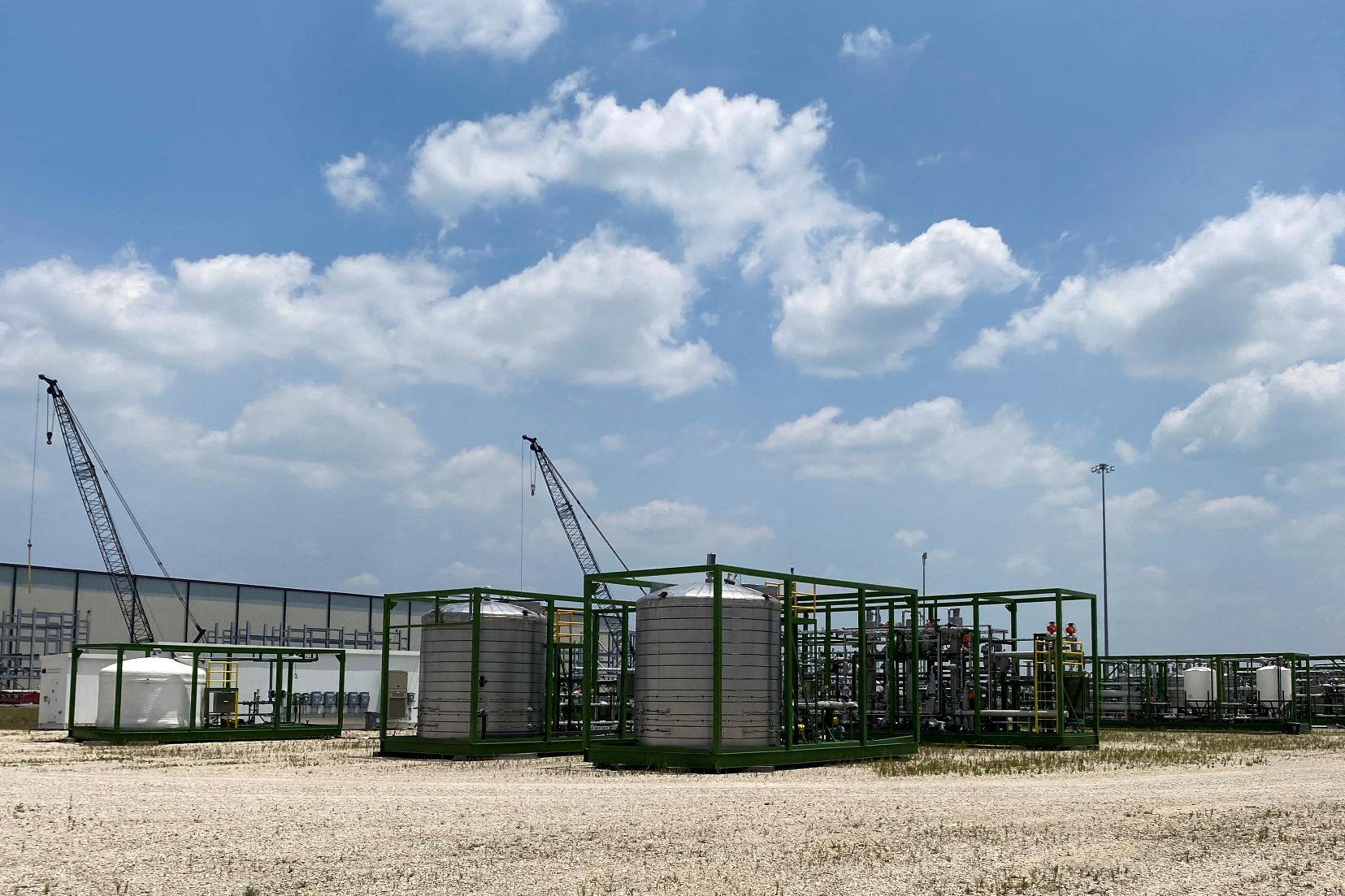
Jan 11 (Reuters) - International Battery Metals (IBAT.CD) on Thursday said it leased its portable direct lithium extraction (DLE) plant to a customer that aims to begin producing the metal needed for electric vehicle batteries inside the United States within six months. The move would make IBAT the first company to commercially produce lithium with a DLE technology, a major step forward amid ongoing efforts to revolutionize the way the ultralight metal is processed for the clean energy transition. Lithium is typically produced using large, water-intensive evaporation ponds or open-pit mines. While DLE technologies vary, they are comparable to common household water softeners and aim to extract about 90% or more of the lithium from brines, compared to about 50% using ponds. No DLE technology has yet reached commercial production without the use of those ponds, sparking competition to be first. The once-niche DLE sector gained global attention last year, when Chilean President Gabriel Boric outlined a radical plan to phase out evaporation ponds and deploy DLE across his country's vast lithium reserves. Albemarle (ALB.N), Exxon Mobil (XOM.N), General Motors (GM.N), Rio Tinto (RIO.AX) and others have made their own DLE bets, though none have yet launched. Founded by John Burba, who helped invent an early version of DLE in the 1970s, IBAT's DLE facility is designed to be portable after it filters lithium using an adsorption material from a brine formation, thus saving construction costs. The IBAT plant is less than three acres (1.2 hectares) in size, compared to hundreds of acres needed for evaporation ponds or open-pit mines. IBAT declined to disclose who leased its DLE plant, but said its customer is a "significant producer of metals and minerals," including lithium, in the western United States. The company plans to ship its DLE plant in the near future and start commissioning at its customer's site. The plant is expected to produce 4,000 metric tons of lithium initially when online within six months and eventually grow to 8,000 metric tons, more than any existing U.S. lithium project, IBAT said. IBAT said it will receive royalties on the lithium produced by its DLE facility and that its customer has the right to eventually purchase it, but that it will retain all technology rights. The facility will be able to recycle more than 98% of the water it uses, the company said. Burba has repeatedly flagged the lithium industry's high water use as a structural impediment to full commercialization. "We are very excited for this opportunity to reach full commercialization," he said in a statement. https://www.reuters.com/markets/commodities/international-battery-metals-leases-lithium-filtration-plant-us-production-2024-01-11/
2024-01-11 22:34
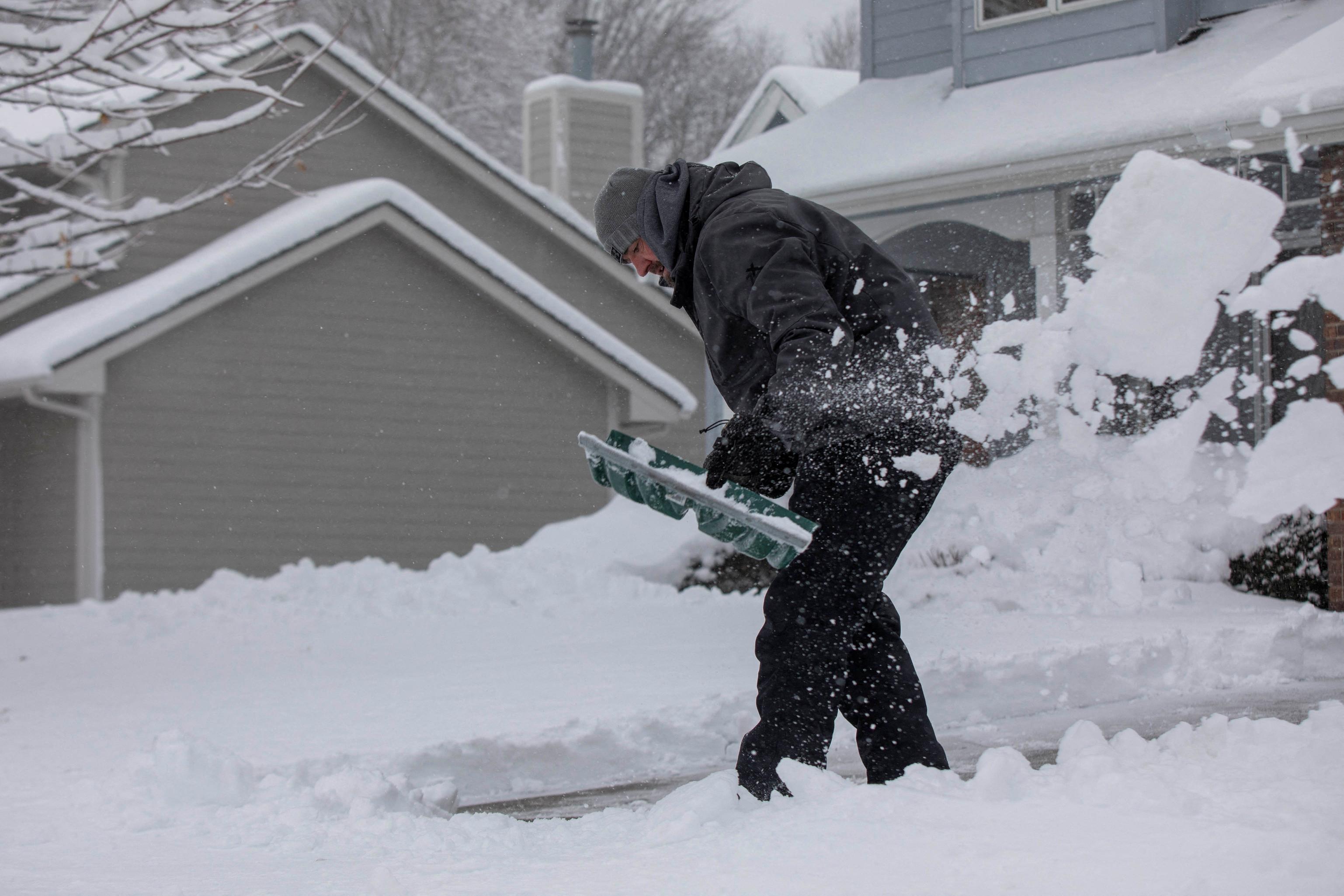
NEW YORK, Jan 11 (Reuters) - Grid operator Southwest Power Pool on Thursday issued a cold weather advisory for its 14-state region in the central U.S., warning of extreme arctic temperatures throughout the weekend and into early next week. The transmission system operator said it expects to have sufficient capacity to meet an anticipated surge in energy demand, but warned that cold temperatures could be similar to those notched during Winter Storm Elliot in December 2022. That storm knocked out power for more than 1.5 million homes and businesses. "The details, timing and full impact of the predicted storm systems are still highly uncertain," the operator said in its advisory. SPP expects electricity load to reach up to 45,000 megawatts (MW) on Monday and peak around 46,000 MW on Tuesday during the cold weather event. The all-time winter peak load record is 47,157 MW, which occurred during the 2022 storm, according to the grid operator. The transmission operator also warned that a sharp decline in wind power generation could occur during the cold weather event, putting the system at higher-than-normal risk of outages as energy demand surges. On Wednesday, grid operators ERCOT and PJM Interconnection issued cold weather advisories. https://www.reuters.com/world/us/us-grid-operator-issues-cold-weather-advisory-central-us-2024-01-11/
2024-01-11 21:47
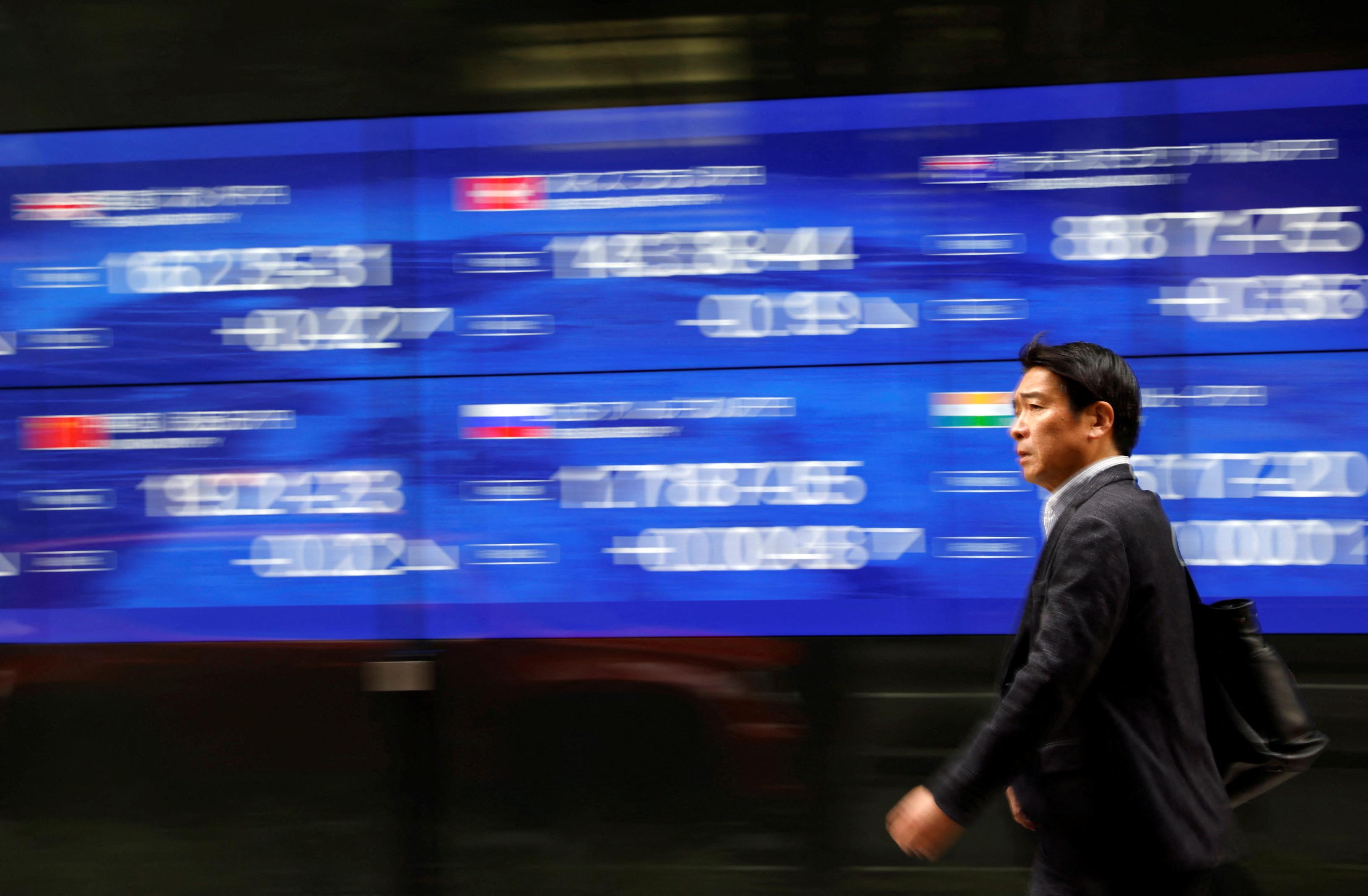
Jan 12 (Reuters) - A look at the day ahead in Asian markets. Japan continues to set itself apart from the rest of Asia - and the world - with the Nikkei breaking through 35,000 points to a fresh 34-year high, while market sentiment across the region on Friday could be set by the latest Chinese inflation data. Chinese producer price inflation and trade figures, as well as bank lending, trade and current account data from Japan, and industrial production and consumer inflation from India, will also set the tone for the final day of the first full trading week of 2024. Asian shares on Thursday snapped a seven-day losing streak - the longest since August - but the MSCI Asia Pacific ex-Japan index will have to rise almost 1% on Friday to avoid a third consecutive weekly loss. No such worries for Japan's Nikkei. It is up 5% this week, on track for its best week since March 2022, and trading above 35,000 points for the first time since February 1990. You could say that's a lost 34 years, an indication of just how deep the damage from the late 1980s bubble has run. On the other hand, it hasn't done too badly since hitting a low of 7,000 points in March 2009. Meanwhile, key Asian economic indicators are due for release on Friday, not least producer and consumer price index figures from China, where attention will also be turning towards the presidential elections in Taiwan on Saturday. Chinese PPI has been running negative on a year-over-year basis every month since October 2022. That is expected to have continued into December, with annual PPI inflation seen slowing to -2.60% from -3.0% in November. Consumer prices have been drifting in and out of deflationary territory for several months too. November's annual rate of -0.5% was the lowest in three years, and figures on Friday are expected to show that the pace of price declines slowed marginally to -0.4% in December. Deflation remains a bigger risk in China than inflation. With economic activity struggling to properly recover from the pandemic-related shutdowns, pressure on Beijing to inject substantial fiscal and monetary stimulus will persist. Trade activity is expected to have picked up in December year-on-year from November, especially exports. But recent data from Taiwan and Japan - two of China's largest trading partners - suggest caution is required here. In India, industrial production and inflation will be released. This week, HSBC's fixed income team said India is their top pick for emerging market local sovereign debt in 2024. They reckon the fair value for the Indian government 10-year bond yield is 6.50-7.00% - it is currently 7.17% - and expect foreign demand for the paper will rise this year. Here are key developments that could provide more direction to markets on Friday: - China CPI, PPI, trade (December) - India CPI (December) - Japan trade, current account (November) https://www.reuters.com/markets/asia/global-markets-view-asia-graphic-2024-01-11/