2024-01-11 19:20
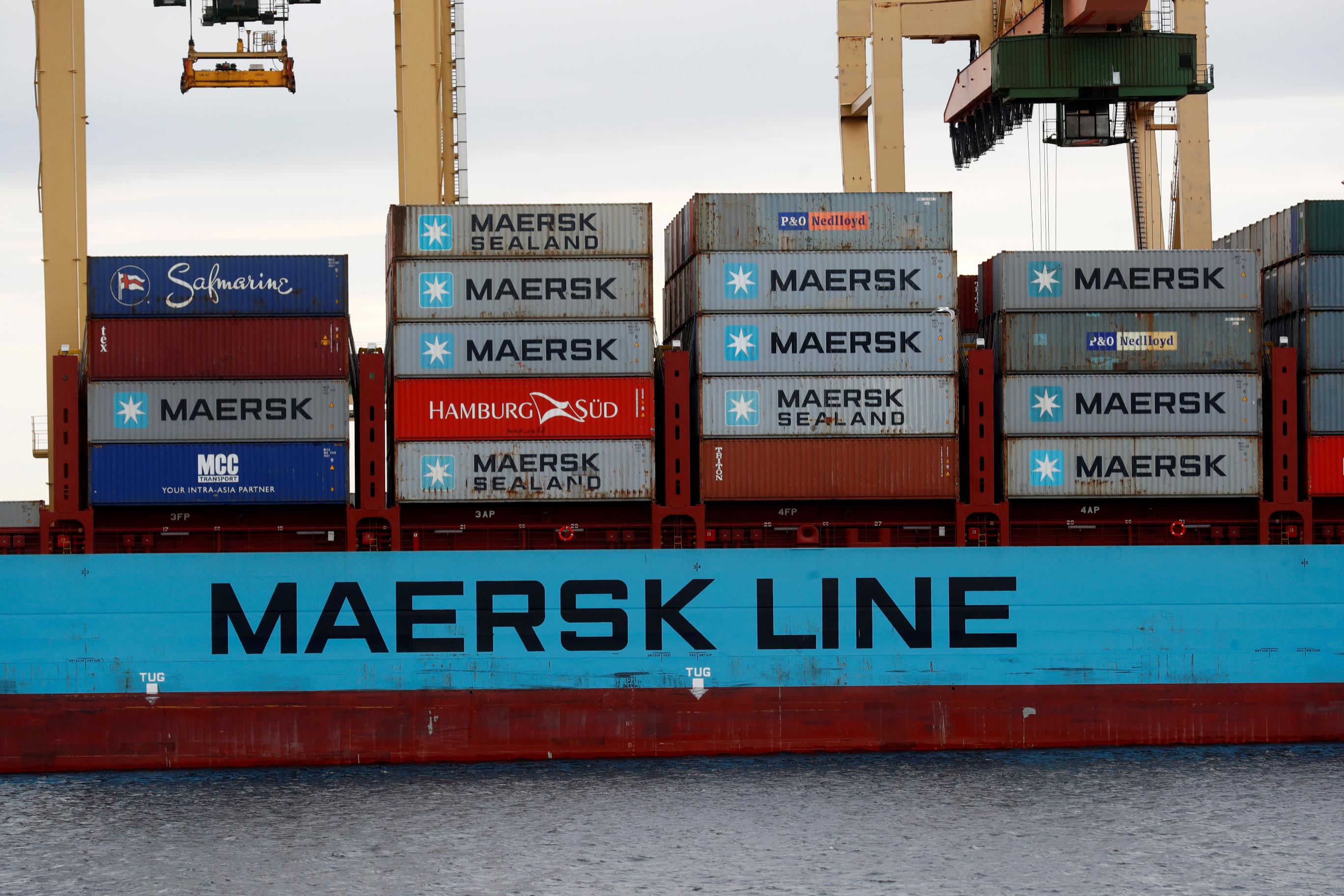
Maersk avoids Panama Canal for some of its vessels due to low water levels Company's OC1 service will utilise rail to transport cargo across Panama Some delays expected for southbound vessels Hapag says it will not follow Maersk Jan 11 (Reuters) - A.P. Moller-Maersk (MAERSKb.CO) will use trains to avoid the drought-hit Panama Canal for some of its vessels, the Danish shipping giant said as low water levels have caused one of the world's main maritime trade routes to reduce crossings. The workaround comes as vessel owners also are rerouting ships to avoid militant attacks that are disrupting the Suez Canal, its longtime rival trade shortcut, in what has become the largest disruption to ocean shipping since the COVID-19 pandemic. The Panama Canal Authority has reduced the amount and weight of vessels passing through based on current and projected water levels in Gatun Lake, the rainfall-fed principal reservoir that floats ships through the canal's lock system, said Maersk, one of the world's largest container shipping companies. The Panama Canal Railway is a 47-mile (76-km) railroad running adjacent to the canal that connects the Atlantic and Pacific oceans. It was already being used by Maersk and other shipowners to temporarily offload container weight from large ships before passing through the waterway to adhere to drought-related draft restrictions. "The vessels that utilised the Panama Canal before will now omit the Panama Canal and use a 'land bridge' that utilises rail to transport cargo across," the firm said in an advisory to its customers. The company's OC1 service, connecting Australia and New Zealand with the U.S. East Coast cities of Philadelphia and Charleston, South Carolina, via the Panama Canal, will now create two separate loops, one Atlantic and one Pacific. "The OC1 service omitting the Panama Canal would be two transits per week," a Maersk spokesperson said, adding that all other Maersk services continue as planned through the Canal. Panama's drought, worsened by the El Nino weather phenomenon, has decreased transit slots at the canal, already forcing fuel tankers and grain shippers to take longer routes to avoid congestion. Maersk added that the rerouting could lead to some delays for southbound vessels, while it saw no delays to cargo stopping in Philadelphia and Charleston. Cargo en route to Cartagena, Colombia, would be served by "alternate vessels", it said in its statement. The drought adds further disruption to the global shipping network as companies like Maersk and Hapag Lloyd (HLAG.DE) are switching away from the Red Sea after Iranian-backed Houthi militants in Yemen stepped up attacks on vessels in the Gulf region. Global trade declined by 1.3% from November to December 2023 as the Red Sea attacks led to a drop in the volumes of cargo transported in that key region, a German economic institute said on Thursday. French shipping rival CMA CGM said in November that reduced transit slots at the Panama Canal, together with an increase in the canal tariff earlier in the year, were "taking a severe toll" on its operations. CMA CGM at the time added that it would start applying a $150 "Panama Adjustment Factor" per twenty-foot equivalent unit (TEU) from Jan. 1 this year. The French company not immediately respond to a request for comment on Thursday. Hapag Lloyd said it will not follow Maersk using rail to get goods through the Panama canal, saying it used larger ships of up to 13,000 TEU, for which there isn't enough rail capacity. The group said the only planned change was to let its EC2 service, which links Asia with North America, run via the Panama Canal again after it was rerouted via the Cape of Good Hope. The Panama Canal Railway Co is jointly owned by Canadian Pacific Kansas City (CP.TO) railway and Mi-Jack Products and leased to Panama. https://www.reuters.com/business/maersk-bypass-panama-canal-amid-drought-2024-01-11/
2024-01-11 19:16
HOUSTON, Jan 11 (Reuters) - Venture Global LNG has told a U.S. regulator that it cannot meet contracts to provide liquefied natural gas (LNG) cargoes to several major customers because its export plant is not yet ready to meet three criteria in the contracts, according to a letter to the Federal Energy Regulatory Commission (FERC). Shell PLC (SHEL.L), BP PLC (BP.L), Galp (GALP.LS) and others have complained that they have lost billions of dollars in sales because Venture Global's Calcasieu Pass export facility has been producing and selling LNG for more than 20 months while saying it cannot provide them with term-contract cargoes while the plant is undergoing a commissioning phase. Venture Global in response to a letter from Shell said that under the contract, the criteria to move to commercial operations include all of the facilities being completed, commissioned and capable of delivering LNG in sufficient and quality quantities to allow Venture Global to perform all of its obligations to its customers. "None of these three contractual requirements for commencing LNG sales under the SPA has been satisfied," Venture Global said in response to Shell's letter. Shell earlier this month filed a letter to FERC in support of BP. The letter called on the regulator to force Venture Global to release plant commissioning data to determine why commercial operations are stalled. The two energy giants are among a group that includes Edison SpA (EDNn.MI), Polish state energy firm Orlen and Spain's Repsol (REP.MC) that have filed contract arbitration claims on the lack of LNG cargoes provided under their contracts. Shell wants an order for blanket disclosure of privileged documents, or an acceptable level of unilateral redaction of documents, the FERC filing shows. Venture Global told the FERC that Shell’s utilization of the complaint process is simply a pretext for airing false and disparaging claims against Calcasieu Pass in another public forum. "The commercial terms of Calcasieu Pass’ contracts with its customers are outside the scope of the Commission’s jurisdiction," Venture Global asserted in its response. Venture Global has become a major U.S. exporter of the superchilled gas since it started processing at its Calcasieu Pass, Louisiana, plant early in 2022. It has sold more than 200 cargoes of the gas under its own accounts without supplying BP and other long-term contract customers. JP Morgan analysts in a note last week to clients said it is difficult to see Venture Global losing its arbitration cases against the majors because the contracts do not seek to protect buyers from the risk of a commercial operating date being delayed. With the contracts likely having liability caps to limit Venture Global's exposure, the analysts say it is unlikely any loss will significantly hurt the LNG startup since it would likely be less than its second-quarter 2023 quarterly free cash flow. For Venture Global the real risk is fewer companies being interested in doing business with it, the analysts said. "Our interpretation of the LNG buyers’ very public and very loud approach to the dispute is perhaps a tacit acknowledgement that their actual contractual argument is likely poor," JP Morgan analysts wrote. https://www.reuters.com/business/energy/venture-global-lng-explains-us-regulator-its-failure-sell-commercial-cargoes-2024-01-11/
2024-01-11 19:02
WASHINGTON, Jan 11 (Reuters) - The U.S. federal government posted a December deficit of $129 billion, up $44 billion or 52% from a year earlier as outlays rose while receipts fell from December 2022 levels that were swelled by pandemic-deferred tax payments, the U.S. Treasury Department said on Thursday. The Treasury said that outlays for December rose 3% to $559 billion, a December record, partly as a result of higher Social Security outlays and interest on the public debt. Receipts for the month fell 6% to $429 billion. For the first three months of the 2024 fiscal year that started Oct. 1, the federal deficit reached $510 billion, up $89 billion, or 21% from the year ago period. A Treasury official said that both year-to-date outlays and receipts were records. Outlays rose 12% to $1.618 trillion, while receipts rose 8% to $1.108 trillion. Public debt interest costs for December rose to $119 billion, up 11% or $12 billion from December 2022, due to higher debt levels and a higher weighted average interest rate of 3.11%. This rate was three quarters of a point higher than a year earlier. https://www.reuters.com/markets/us/us-budget-deficit-december-up-52-129-billion-2024-01-11/
2024-01-11 18:47
Canadian dollar weakens 0.3% against the greenback Touches its weakest since Dec. 14 at 1.3442 Price of U.S. oil increases 0.9% Canadian bond yields rise across the curve TORONTO, Jan 11 (Reuters) - The Canadian dollar fell to a four-week low against its broadly stronger U.S. counterpart on Thursday as hotter-than-expected U.S. inflation data cast doubt on prospects of an early start to Federal Reserve interest rate cuts. The loonie was trading 0.3% lower at 1.3415 to the greenback, or 74.54 U.S. cents, after touching its weakest intraday level since Dec. 14 at 1.3442. "With not much in the way of domestic economic news the CAD was left to trade off the U.S. inflation report," said Tony Valente, senior FX dealer at AscendantFX. "That report came is a little higher than expected and may have reset the market's view on the timing of the first rate cut by the Fed." U.S. consumer prices increased more than expected in December as Americans paid more for shelter and healthcare, suggesting that it was probably too early for the Fed to start cutting interest rates. "The CAD had moved too much, too fast during December, so this news caught the market leaning the wrong way," Valente said. The U.S. dollar (.DXY) rallied on Thursday against a basket of major currencies, extending its gains since the beginning of the year. The price of oil , one of Canada's major exports, was up 0.9% at $72.00 a barrel after Iran seized an oil tanker off the coast of Oman, raising the prospect of escalating conflict in the Middle East. Canadian government bond yields rose across the curve. The 10-year was up 2.5 basis points at 3.300%, trading at nearly its highest level since mid-December. https://www.reuters.com/markets/currencies/canadian-dollar-hits-four-week-low-us-inflation-data-2024-01-11/
2024-01-11 18:39
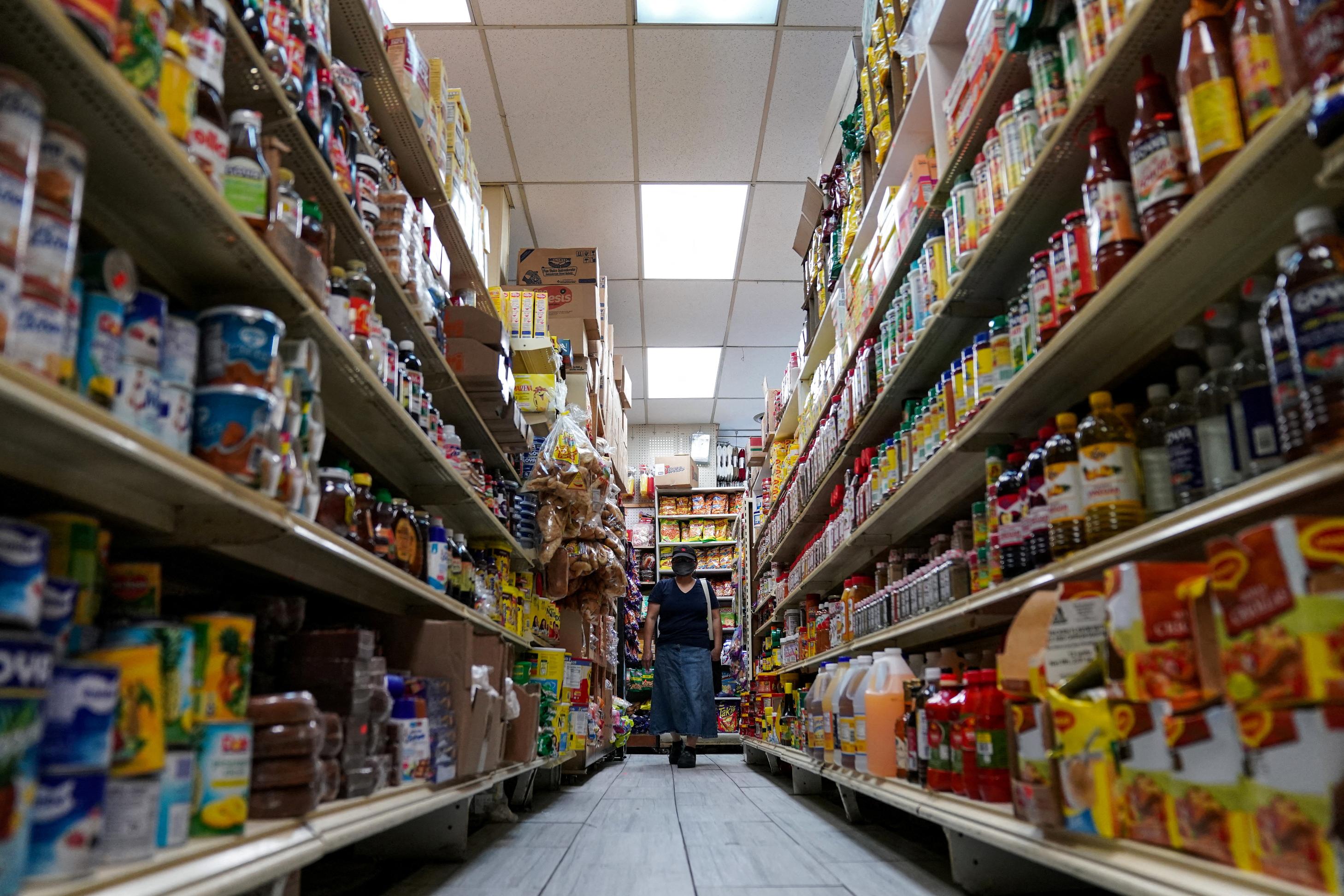
Consumer price index rises 0.3% in December Shelter accounts for more than half of rise in CPI CPI increases 3.4% on year-on-year basis Core CPI gains 0.3%; up 3.9% on year-on-year basis Weekly jobless claims fall 1,000 to 202,000 WASHINGTON, Jan 11 (Reuters) - U.S. consumer prices increased more than expected in December, with Americans paying more for shelter and healthcare, suggesting it was probably too early for the Federal Reserve to start cutting interest rates. Expectations for a rate cut in March were also tempered by other data on Thursday showing the labor market remained fairly tight at the start of this year, with the number of people filing new claims for unemployment benefits unexpectedly falling last week. The data followed news last Friday that the economy added 216,000 jobs in November and annual wage growth picked up. "The final stretch of the path back to the 2% inflation target could be harder than the market is anticipating," said Ryan Brandham, head of global capital markets, North America, at Validus Risk Management. The consumer price index (CPI) rose 0.3% last month after nudging up 0.1% in November, the Labor Department's Bureau of Labor Statistics said. The cost of shelter, which includes rents, hotel and motel stays as well as school housing, accounted for more than half of the increase in the CPI. Persistently high inflation poses a threat to President Joe Biden's prospects for reelection later this year. Frustration over the rising cost of living has weighed on Biden's popularity, even as other aspects of the economy, including the labor market, have remained favorable. Gasoline prices rebounded 0.2% after dropping 6.0% in November. Food prices rose 0.2% for a second straight month. Grocery food inflation nudged up 0.1%, matching the prior month's gain. Egg prices surged 8.9% as the spread of avian flu disrupted egg-laying operations at some commercial farms. Meat and dairy products also cost more. But breakfast cereals dropped 2.4%, the largest decrease since January 2007. Vegetables were also a bit cheaper. In the 12 months through December, the CPI rose 3.4% after increasing 3.1% in November. Economists polled by Reuters had forecast the CPI would gain 0.2% on the month and climb 3.2% on a year-on-year basis. Since slowing to an annual increase of 3.0% last June, further progress towards lower consumer inflation has been limited by persistently high rents. The annual increase in consumer prices has cooled from a peak of 9.1% in June 2022. Inflation averaged 4.1% in 2023, down from 8.0% in 2022. Financial markets still see more than a 60% chance of a rate cut at the Fed's March 19-20 policy meeting, according to CME Group's FedWatch Tool. The Fed has hiked its policy rate by 525 basis points to the current 5.25%-5.50% range since March 2022. Stocks on Wall Street were trading lower. The dollar rose against a basket of currencies. Longer-dated U.S. Treasury prices fell. GOODS DEFLATION STALLS Excluding the volatile food and energy components, the CPI rose 0.3% last month after climbing by the same margin in November. The so-called core CPI was driven by higher shelter costs, which increased 0.5% after climbing by 0.4% in November. Owners' equivalent rent, a measure of the amount homeowners would pay to rent or would earn from renting their property, also rose 0.5% after a similar gain in the prior month. Rental inflation has remained elevated despite anecdotal evidence suggesting that rent asking prices were going down. Rent measures in the CPI tend to lag the independent gauges by several months. There is also a large stock of apartment buildings in the pipeline, adding to economists' expectations that rents will lead inflation lower this year. Services inflation remained sticky, gaining a solid 0.5%, which also reflected a 0.6% increase in healthcare costs. Airline fares rebounded 1.0%. Excluding rents, services increased 0.6%, matching November's rise. Goods price deflation stalled amid the second straight monthly increase in the cost of used cars and trucks, which more than offset declines in household furnishing and apparel. Goods prices rose 0.1% after dropping 0.7% in November. Core goods prices were unchanged after falling 0.3% in the prior month. "Until we see further progress on services inflation, the Fed will likely be worried about upside risks to inflation," said Stephen Juneau, a U.S. economist at Bank of America Securities in New York. The overall core CPI advanced 3.9% on a year-on-year basis in December, the smallest gain since May 2021, after rising 4.0% in November. Though consumer prices remain elevated, measures tracked by the U.S. central bank for its 2% inflation target have improved significantly. Based on the CPI data, economists estimated that the core personal consumption expenditures (PCE) price index rose 0.2% in December after gaining 0.1% in November. Rents, which account for a larger share of the CPI basket, have a smaller weighting in the PCE price index. In the 12 months through December, the core PCE price index is forecast to increase 3.0% after advancing 3.2% in November. The release of producer price data on Friday will offer more clues on the December PCE price index data, which is due to be released later this month. With the resilient labor market keeping wage growth elevated, some economists expect a rate cut in May or June. The labor market is gradually easing as layoffs remain low by historical norms. In a separate report on Thursday, the Labor Department said initial claims for state unemployment benefits fell 1,000 to a seasonally adjusted 202,000 for the week ended Jan. 6. Economists had forecast 210,000 claims for the latest week. Claims data tend to be volatile at the start of the year. Filings remain in the lower end of the 194,000-265,000 range that prevailed in 2023. Employers are hoarding workers following difficulties finding labor in the aftermath of the COVID-19 pandemic, keeping a recession at bay. The number of people receiving benefits after an initial week of aid, a proxy for hiring, dropped 34,000 to 1.834 million during the week ending Dec. 30, the claims report showed. "It does appear that conditions in the labor market are remaining pretty favorable," said Daniel Silver, an economist at JPMorgan in New York. https://www.reuters.com/markets/us/us-consumer-prices-rise-more-than-expected-december-weekly-jobless-claims-fall-2024-01-11/
2024-01-11 18:22
KARACHI, Jan 11 (Reuters) - The International Monetary Fund's board has approved a roughly $700 million loan for Pakistan under a $3 billion bailout, the fund and the finance ministry said on Thursday. The IMF's completion of its first review of the programme and the board's decision brings the total disbursements under the Standby Arrangement (SBA) to about $1.9 billion, the fund said. "There are now tentative signs of activity picking-up and external pressures easing," said in a statement Antoinette Sayeh, a deputy managing director at the fund. "Continued strong ownership (of the program) remains critical to ensure the current momentum continues and stabilization of Pakistan’s economy becomes entrenched." The South Asian country is operating under a caretaker government and the IMF loan programme, approved in July, helped avert a sovereign debt default. Ahead of the bailout, Pakistan had to undertake a slew of measures demanded by the IMF, including revising its budget, a hike in its benchmark interest rate, and increases in electricity and natural gas prices. "Continuing with regularly-scheduled adjustments and pushing cost-side power sector reforms are vital to improving the sector’s viability and protecting fiscal sustainability," Sayeh said. An IMF mission led by Pakistan mission chief Nathan Porter concluded its visit in November. It reviewed whether Pakistan was on track to meet benchmarks set under the SBA agreed in July and signed a staff level agreement. Under the bailout deal, the IMF also got Pakistan to raise $1.34 billion in new taxation to meet fiscal adjustments. The measures fuelled all-time high inflation of 38% year-on-year in May, which is still hovering above 30%. The fund said that despite elevated inflation, "with appropriately tight policy" it could fall to 18.5% by end-June. It added the exchange rate has been "broadly stable." "IMF funding along with recent inflows from multilateral lenders will further help the Pakistani rupee, that is fairly stable (over the) last few months," said Mohammad Sohail, CEO of Topline Securities. He added that this new tranche would help Pakistan in getting rollovers from friendly countries like the United Arab Emirates, China and Saudi Arabia and ease external debt repayment pressure. Pakistan's international bonds, which had already clocked healthy gains earlier on Thursday, soared after the announcement. The 2036 issue enjoyed the biggest gains, jumping 3.5 cents to trade at 62.59 cents in the dollar, Tradeweb data showed. Pakistan's caretaker government, under interim Prime Minister Anwaar ul Haq Kakar, is meant to oversee a general election. Caretaker governments are usually limited to overseeing elections, but Kakar's set-up is the most empowered in Pakistan's history thanks to recent legislation that allows it to make policy decisions on economic matters. The legislation is aimed at keeping on track the conditions for the bailout secured in June. "At a time where there are uncertainties on Pakistan's upcoming elections, this IMF board decision will provide some confidence to other lenders and markets," said Sohail. Elections in the politically and economically troubled country have been scheduled for Feb. 8 after several delays. Last week the senate passed a non-binding resolution to further delay the elections, citing security concerns and a harsh winter in northern areas. https://www.reuters.com/markets/asia/imf-board-approves-700-mln-loan-part-pakistan-bailout-2024-01-11/