2024-01-11 11:22
BERLIN, Jan 11 (Reuters) - Global trade declined by 1.3% from November to December 2023 as militant attacks on merchant vessels in the Red Sea led to a plunge in the volumes of cargo transported in that key region, a German economic institute said on Thursday. Currently around 200,000 containers are being transported via the Red Sea daily, down from some 500,000 per day in November, the IfW Kiel institute said. Diversions in response to the attacks have led to journeys between Asian production centres and European consumers taking up to 20 days longer, said Julian Hinz, director of the IfW Kiel's trade policy research centre. "This is also reflected in the declining trade figures for Germany and the EU, as transported goods are now still at sea and have not already been unloaded in the harbours as planned," Hinz said in a statement. Shipping giants such as Maersk (MAERSKb.CO) and Hapag-Lloyd (HLAG.DE) have been sending their vessels on longer, more expensive journeys around South Africa's Cape of Good Hope. Iranian-backed Houthi militants in Yemen have stepped up attacks on vessels in the Gulf region in recent months to show their support for Palestinian Islamist group Hamas fighting Israel in Gaza. By region, the IfW Kiel's trade indicator for December showed exports from and imports to the European union down by 2% and 3.1%, respectively. The United States saw a 1.5% drop in exports and a 1% drop in imports, although the Red Sea trade route is less crucial for that country. China's trade bucked the trend, with exports up 1.3% and imports up 3.1%. The institute said this was likely down to the upcoming Chinese New Year. https://www.reuters.com/business/global-trade-drops-13-red-sea-attacks-ifw-kiel-institute-2024-01-11/

2024-01-11 11:09
BUENOS AIRES, Jan 11 (Reuters) - Argentina's annual inflation rate sped past 211% in December, official data showed on Thursday, hitting the highest level since the early 1990s as new libertarian President Javier Milei seeks to head off hyperinflation with tough austerity measures. Argentina's monthly inflation rate also hit 25.5% in the month, slightly below forecasts, after a sharp devaluation of the peso currency last month after Milei's government took office on Dec. 10, pledging to get inflation under control. The inflation reading took Argentina past regional peer Venezuela, long Latin American's inflation outlier, where inflation cooled to an estimated 193% in 2023, following years of painful, out-of-control price rises. "We've had to eliminate things that made life a little brighter," said retiree Susana Barrio, 79, adding she no could longer afford to invite her friends for asado barbecues, long a key part of Argentine social life. "That joy it gave me to invite my friends for a barbecue, which is typical here, now that's impossible." While high inflation has dogged Argentina for years, the rate of price increases is now at the highest level since the start of the 1990s, when the country was emerging from a period of hyperinflation, with food prices climbing particularly fast. President Javier Milei, a political outsider who rode to power on the back of voter anger at the worsening economic situation, is looking to employ tough austerity measures to bring down inflation, reduce a deep fiscal deficit and rebuild government coffers. But Milei, who has been in office a month, has warned it will take time and that things could get worse before they get better. Many Argentines are further tightening their belts, with two-fifths already in poverty. "Nothing is cheap," said Graciela Bravo, a 65-year-old retiree, who said she now carefully counted how many potatoes she bought. "Before you would purchase by the kilo, now I get three potatoes or four potatoes so they don't spoil." Alejandro Grossi, 49, a lawyer, said he was wearily used to rising prices after years of inflation. "I buy fewer things for myself than I would like, you adapt," he said. "It's like we're used to it, it's already something so natural here: inflation and changing prices." ($1 = 814.9000 Argentine pesos) https://www.reuters.com/world/americas/barbecue-off-menu-argentina-inflation-nears-200-2024-01-11/

2024-01-11 11:07
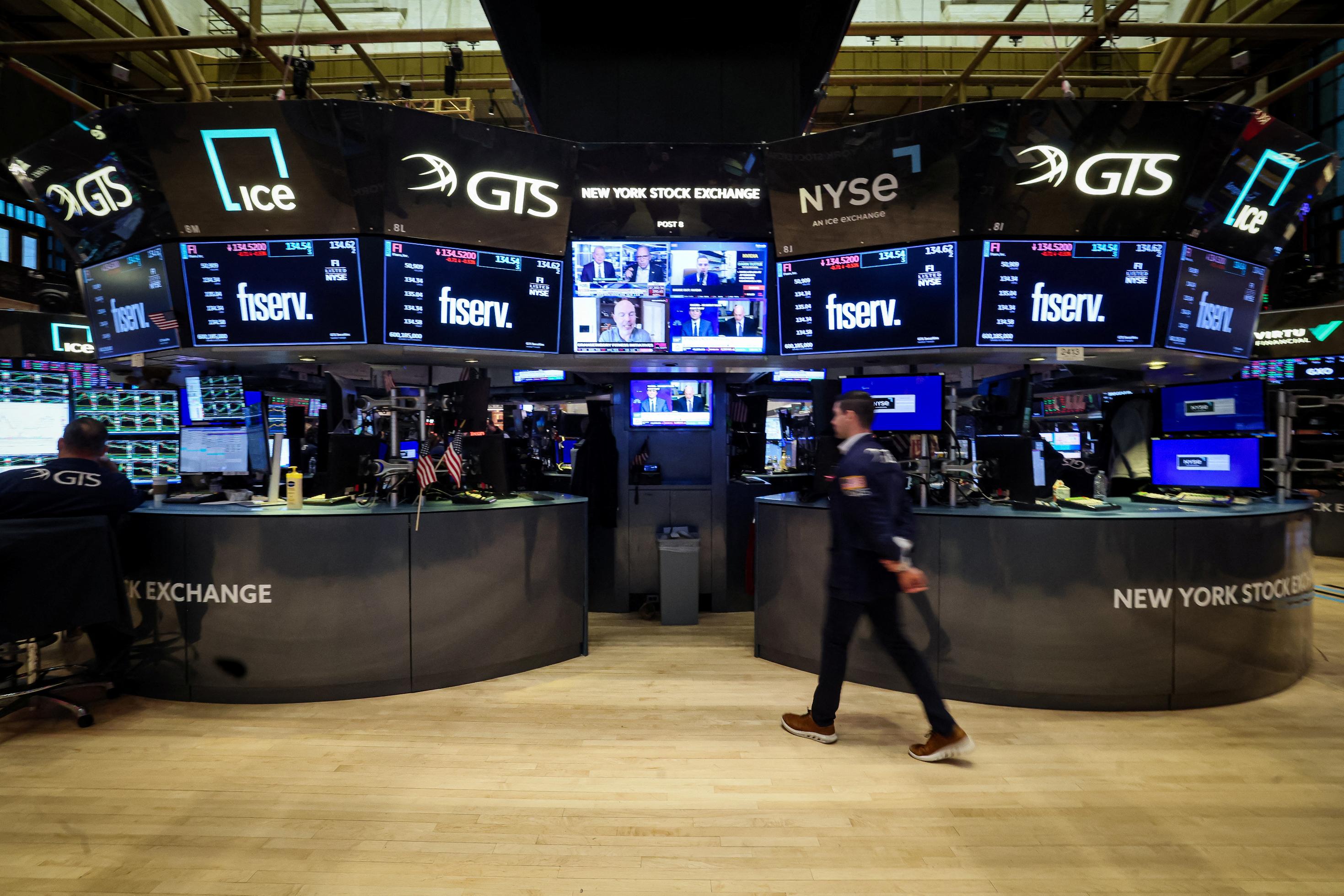
A look at the day ahead in U.S. and global markets from Mike Dolan If the aggressive interest rate easing markets have priced for 2024 is to ring true - against what Federal Reserve officials are currently signaling - then days like today will have to come good. Despite excitement around 34-year highs for outperforming Japanese stocks (.N225) and U.S. regulators finally approving exchange traded funds to track bitcoin , the release of the critical U.S. consumer price inflation report for last month dominates the rest of Thursday. In advance of the report, Wall St (.SPX) has recovered its zest after a ropey start to the new year and is back in the black for the year to date. Bonds too have found their feet, with the 10-year Treasury yield falling below 4% after a relatively smooth auction of new notes late Wednesday. If consensus prevails, the CPI report should keep all happy and 'core' inflation is expected to have fallen below 4% for the first time since May 2021 - clocking 3.8% for December - even if annual base effects lift the headline a tick to 3.2%. And Fed futures traders remain confident in penciling in more than 140 basis points of policy easing for the year - with more than two-quarter point cuts seen by mid-year. The dollar (.DXY) was on the back foot again. Too much, too soon? New York Fed chief John Williams certainly seemed to think so, saying late Wednesday that "our work is not done". Without specifying exactly what a 'restrictive' policy stance amounts to - something of a slippery concept for many in markets - Williams said the Fed needed to hang tough "for some time." U.S. stock futures and Treasuries were buoyed early Thursday going into the data release. While everyone was waiting, the buzz was in Japan and bitcoin. Having climbed 20% in six weeks in anticipation of the Securities and Exchange Commission's green light for bitcoin ETFs - gyrating wildly around the false announcement hack late Tuesday - the reaction of the biggest crypto token to the real statement overnight was rather muted. Bitcoin was up 0.6% on the day to about $46,250 - well off Tuesday's 22-month high of $47,915. The SEC said on Wednesday it approved 11 ETF applications, including from BlackRock (BLK.N), Ark Investments/21Shares (ABTC.S), Fidelity, Invesco (IVZ.N) and VanEck. Three, including BlackRock's (IBIT.O), were trading early Thursday, with more expected to begin later in the day. Industry focus now turns to the second largest cryptocurrency ether , which underpins the ethereum blockchain network. Ether was up more than 4% on Thursday. BlackRock filed for a spot ethereum ETF in November 2023. Back in stock markets, Japan's Nikkei marched on - topping 35,000 points for the first time since 1990. Buoyed by renewed yen weakness this year, amid hopes that soft inflation and wage data and the recent earthquake in the country would stay the Bank of Japan's hand in tightening policy early, the Nikkei has outperformed the MSCI all-country index (.MIWD00000PUS) by 2% so far in 2024 and by 15% over 12 months. It's now less than 10% from record highs hit at the height of the Japanese property bubble in 1990. Elsewhere, markets were braced for the tense weekend elections in Taiwan and the start of the U.S. earnings season with many of the big banks reporting on Friday. In Europe, bond yields fell back after Wednesday's pop higher on relatively hawkish comments from European Central Bank board member Isabel Schnabel - who said it was too early to talk about rate cuts. British retailer Marks & Spencer (MKS.L) was the biggest loser on the STOXX 600 (.STOXX), dropping 4.9% after its uncertain outlook sparked profit-taking. Job cuts at U.S. Big Tech companies caught the attention. Alphabet's (GOOGL.O) Google said it was laying off hundreds of employees across multiple teams, with Fitbit co-founders James Park and Eric Friedman also leaving the company, as the tech giant continues to cut costs. Amazon.com (AMZN.O), meantime, said it would lay off several hundred employees in its streaming and studio operations. Key diary items that may provide direction to U.S. markets later on Thursday: * U.S. Dec consumer price inflation report, weekly jobless claims, Dec Federal budget * Richmond Federal Reserve President Thomas Barkin speaks * U.S. Treasury auctions $21 billion of 30-year bonds, 4-week bills * U.S. secretary of state Antony Blinken visits Egypt to meet Egyptian President Abdel Fattah al-Sisi https://www.reuters.com/markets/us/global-markets-view-usa-2024-01-11/
2024-01-11 11:05
WINNIPEG, Canada, Jan 11 (Reuters) - Canadian pipeline company Enbridge (ENB.TO) is keen on further offshore wind investments in France, but will avoid the United States, where cost and supply chain problems have contributed to offshore projects collapsing, a senior executive said. Rising costs have led to canceled projects in the U.S. and Britain while putting others at risk. The setbacks for offshore wind may undermine countries' targets to cut emissions from power generation. Enbridge, whose main business is transporting North American oil and natural gas, has a small renewable power business that makes up 3% of its earnings before interest, taxes, depreciation and amortization (EBITDA). Renewables' share of Enbridge's earnings will expand as the company invests C$1 billion in capital annually, said Matthew Akman, Enbridge's president of power. "There will be big (offshore wind) opportunities for us of the billions of dollars in the future still in Europe," Akman said in an interview. "But the timing is uncertain. It could be soon because we might see the current issues settle up quickly and it could take years." France is the focus of Enbridge's interest because the company already has a strong partner, state-owned EDF Group, and because wind properties come with 20-year agreements to sell power to the government at prices that escalate with inflation, Akman said. European projects that Enbridge partly owns have capacity to produce 1.5 gigawatts (GW), while three projects under construction will add another gigawatt. Three other projects in development could add 2.6 GW, more than doubling capacity. Enbridge plans to participate in the next three French offshore wind tenders this year and is "very optimistic" about further investments, Akman said, given the French government's plans to increase offshore wind and corporate emissions targets. Enbridge is not, however, considering investing in U.S. offshore wind projects where supply chain constraints are acute and power transmission bottlenecks pose problems, Akman said. "I do believe that offshore wind will be a significant contributor to the U.S. northeast energy mix over time, but it's going to take longer than everyone thought," Akman said. Progress on developing U.S. offshore wind farms slowed in 2023 after offshore developers canceled contracts to sell power in Massachusetts, Connecticut and New Jersey, and threatened to cancel agreements in other states. European energy companies Orsted (ORSTED.CO), Equinor (EQNR.OL) and BP (BP.L) took a combined $5 billion in writedowns on U.S. projects. Enbridge will continue investing in onshore wind and solar in the United States to sell energy to the oil and gas industry, Akman said. The first phase of its solar project with EDF in Ohio has begun operation, Enbridge said on Wednesday. https://www.reuters.com/business/energy/enbridge-eyes-france-offshore-wind-investments-will-avoid-us-2024-01-11/

2024-01-11 11:03
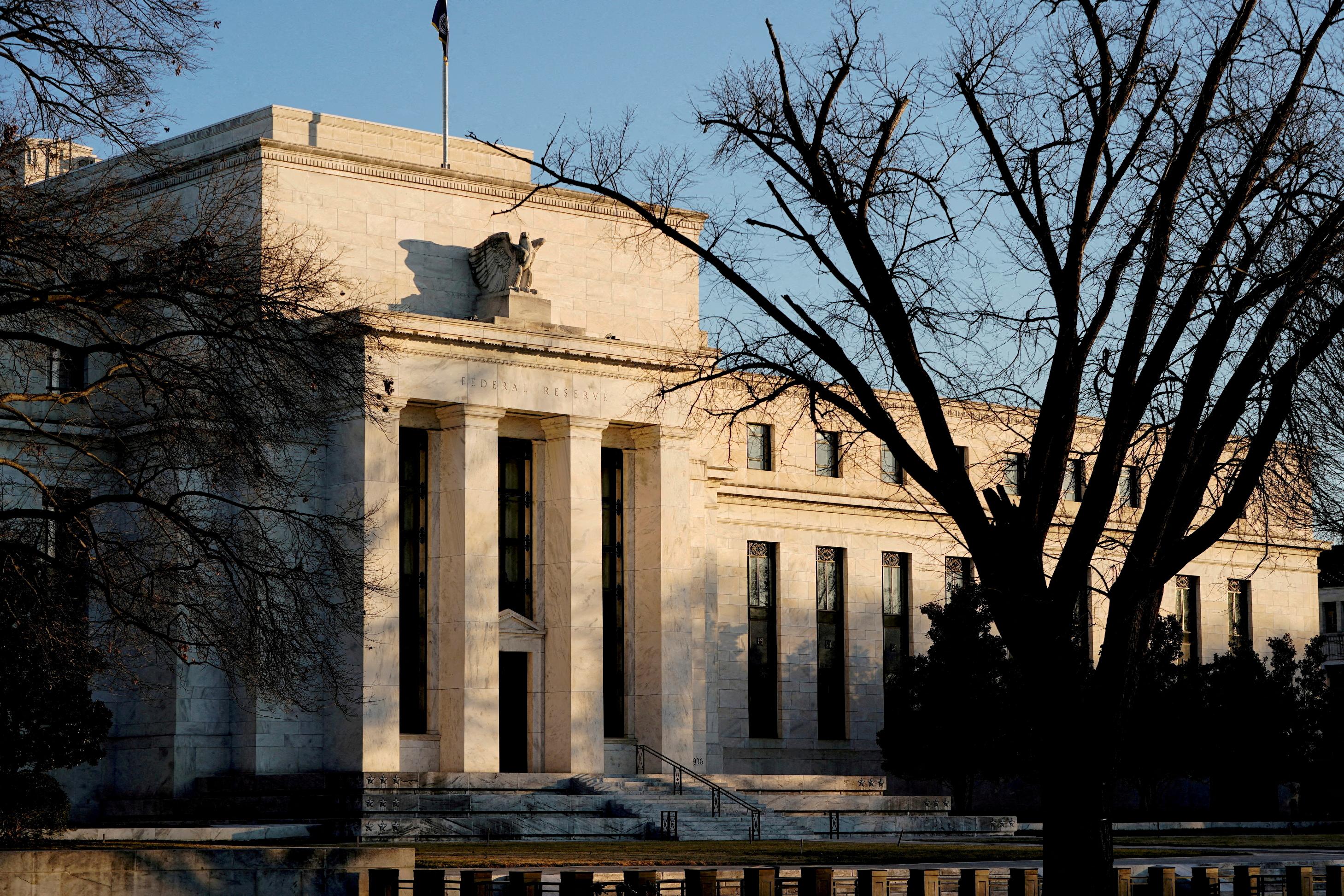
WASHINGTON, Jan 11 (Reuters) - The slide in inflation that gathered pace at the end of 2023 has begun shifting attention at the U.S. Federal Reserve to the health of the job market, with officials increasingly attuned to the risks of keeping monetary policy too tight for too long and watching for evidence of stress in business hiring plans. The monitoring ranges from focused talks with local executives about whether layoffs are anticipated for the year, to a closer look at what industry employment patterns say about the health of the job market overall, and an ongoing debate over whether still-elevated wage growth risks rekindling inflation. The shift in focus comes as the Fed must decide in coming months the point at which the risks of slowing the economy more than needed to curb inflation outweigh the likelihood that inflation will resurge. It's a judgment in effect of whether officials have done enough to control the pace of price increases and now need to protect the employment side of their two congressionally mandated goals. It's a consequential decision for November's U.S. presidential election, given the stakes for both parties if voting takes place with inflation controlled, interest rates falling and unemployment still low - the "soft landing" trifecta the Fed appears to be approaching - or, alternately, with still-tight monetary policy, expensive credit, and potentially rising joblessness. While policymakers generally still focus on the fact that inflation is above the Fed's 2% target, the commentary has become more two-sided. "I've got a natural bias to be tighter" to ensure inflation is controlled, Atlanta Fed President Raphael Bostic said this week. But the concentration of recent hiring in a handful of industries like health and education "means that the slowdown is actually happening" through much of the economy, Bostic said. "The question is does that continue...on a smooth path? Or do we get to a place where it slows down so much that we are near a cliff?...We need to be getting touch points on a regular basis so we can see the change as it's happening and not find out like two months later." 'CRACKS' EMERGING The central bank next meets on Jan. 30-31, and policymakers are expected to leave their benchmark interest rate steady at the current 5.25% to 5.5% range. Still, their policy statement and Fed Chair Jerome Powell's comments at a post-meeting press conference should shed light on how confident officials are that inflation is contained and how close they are to cutting rates. A majority of officials feel rates will need to fall this year to between 4.50% and 4.75%, a decision to be shaped by inflation data but also by whether and how quickly job growth slows. Minutes of the Fed's December decision showed emerging concern about the risks ahead, with a few officials pointing to a difficult "tradeoff" possibly approaching between further inflation control and marked job losses, and "several" Fed officials worried the economy "could transition quickly...to a more abrupt downshift." There's no evidence of that yet, with the latest data showing solid monthly job gains and the unemployment rate below 4% for nearly two years, the best such stretch since the late 1960s. But it may be just below the surface. Sarah House, senior economist with Wells Fargo Corporate and Investment Banking, last week pointed to "cracks" in the job market including a steady decline in temporary workers, something that has signaled previous business cycle turns, and a drop in average hours worked. She expects employment gains this year to fall below the roughly 100,000-per-month pace needed to keep the unemployment rate steady. Such data "doesn't bode well for momentum as we head into 2024," she said. 'HARDER FROM HERE' For now, though, the underlying sense among policymakers including Powell is the labor market remains in a healthy transition from the outsized job and wage gains of the pandemic to something more sustainable while the inflation fight remains incomplete. At his December press conference Powell noted the comfortable space the Fed has operated in of late, with "the labor market coming into better balance without a significant increase in unemployment, inflation coming down without a significant increase in unemployment, and growth moderating without a significant increase in unemployment." Yet it was largely due, he said, to improvements in the supply side of the economy, including an unexpected surge of workers into the job market and a jump in productivity. None of that is guaranteed to continue. "At some point you will run out of supply-side help," Powell said. "We kind of assume that it will get harder from here." "Harder," in the current context, means completing the inflation fight would still require the sort of old-school blow to demand that could cause rising joblessness. Past U.S. experience navigating that process has not been pleasant. Increases in the jobless rate of half a percentage point over the course of a year, for example, are historically associated with recession, and are typically followed by further increases in joblessness - a "hard landing" rather than the gentle descent from high inflation the Fed hopes to oversee. Monetary policy can be slow to impact the economy, with a hard-to-estimate time lag between Fed decisions to change interest rates and the borrowing, spending, and employment decisions of businesses and households that influence inflation. Those lags concerned the Fed when it came to controlling inflation that erupted in 2022 to a 40-year high. They remain in play as inflation slows and central bankers anticipate how much further they need to restrain economic activity without going too far. "We should normalize rates as the economy gets back to normal," Richmond Fed President Thomas Barkin told reporters last week, but added he was still building "confidence and conviction" that the easing of price pressures would spread broadly through the economy. "I don't have any objection conceptually to toggling rates back towards normal levels as you build increasing conviction and confidence that inflation is on a convincing path back to your target," he said. https://www.reuters.com/markets/us/inflation-slows-job-market-gains-fed-mindshare-2024-01-11/
2024-01-11 10:51
Low fees by issuers spark race for market share Bitcoin hits two-year high Traders closely eyeing bid-ask spreads Jan 11 (Reuters) - U.S.-listed bitcoin exchange-traded funds (ETFs) saw $4.6 billion worth of shares trade hands as of Thursday afternoon, according to LSEG data, as investors jumped into the landmark products approved by the U.S. securities regulator on Wednesday. The products mark a watershed moment for the cryptocurrency industry that will test whether digital assets - still viewed by many professionals as risky - can gain broader acceptance as an investment. Eleven spot bitcoin ETFs - including BlackRock's iShares Bitcoin Trust (IBIT.O), Grayscale Bitcoin Trust (GBTC.P), and ARK 21Shares Bitcoin ETF (ARKB.Z), among others - began trading Thursday morning, kicking off a fierce competition for market share. Grayscale, BlackRock and Fidelity dominated trading volumes, the LSEG data showed. "Trading volumes have been relatively strong for new ETF products," said Todd Rosenbluth, strategist at VettaFi. "But this is a longer race than just a single day's trading. The green light from the U.S. Securities and Exchange Commission for the products finally came late on Wednesday, following a decade-long tussle with the crypto industry. Some executives called out bitcoin as a high-risk investment, and Vanguard - the largest provider of mutual funds - said it had no plans to make the new batch of spot bitcoin ETFs available on its platform to its brokerage clients. The SEC had earlier rejected all spot bitcoin ETFs on investor protection concerns. SEC Chair Gary Gensler said in a statement on Wednesday that the approvals were not an endorsement of bitcoin, calling it a "speculative, volatile asset." The ETF launches lifted the price of bitcoin up to its highest level since December 2021. It was last up 0.77% at $46,303, while the price of ether , the second-largest cryptocurrency, was up 2.79% at $2597.95. RACE FOR MARKET SHARE The regulatory nod sparked intense competition for market share among the issuers, some of whom slashed the fees for their products well below the U.S. ETF industry's standard even before Thursday's launch. Fees on the new bitcoin ETFs range from 0.2% to 1.5%, with many firms also offering to waive fees entirely for a certain period or for a certain dollar volume of assets. After its ETF started trading, Valkyrie cut its fees a second time to 0.25% and waived them for the first three months. Grayscale was approved to convert its existing bitcoin trust into an ETF on Thursday, overnight creating the world's largest bitcoin ETF with more than $28 billion in assets under management. Estimates for how much spot bitcoin ETFs could reel in vary widely. Analysts at Bernstein estimated that flows will build up gradually to cross $10 billion in 2024, while Standard Chartered analysts this week said the ETFs could draw $50 billion to $100 billion this year alone. Other analysts have said inflows could be $55 billion over five years. As the ETFs began trading on Thursday, market participants were closely watching bid-ask spreads: the difference between the price for a trader to buy into an ETF and the price it can be sold. ETFs with narrower spreads are typically viewed as more desirable. Trading volume, internal plumbing and the number of participants involved "are critically important to driving the spreads to a good spot," said Jason Stoneberg, director of product strategy at Invesco, whose ETF with Galaxy Digital debuted on Thursday. Some analysts cautioned that the euphoria around the approval might be premature. The broader investment community still views cryptocurrencies as risky, with scandals such as the implosion of crypto exchange FTX in 2022 adding to investors’ wariness. A Vanguard spokeswoman said the firm had no plans to launch its own crypto investment products, and that its focus remains on core asset classes such as stocks, bonds and cash, which it views "as the blocks of a well-balanced, long-term investment portfolio." Speaking at a webinar on Thursday, Sharmin Mossavar-Rahmani, head of the Investment Strategy Group and chief investment officer of Wealth Management at Goldman Sachs, said cryptocurrencies had no place in an investment portfolio. "When you think about it, where is there any value to something like bitcoin?," she said. "We don’t think it is an asset class to invest in." CRYPTO STOCKS GAIN Still, some expect the products to pave the way for even more innovative crypto ETFs, including spot ether products. Grayscale CEO Michael Sonnenshein said in an interview Thursday that the firm plans to file for a covered call ETF in an effort to allow investors to generate income from options on its spot bitcoin product. Cryptocurrency-related stocks initially climbed higher on Thursday, but ended the day lower, with bitcoin miners Riot Platforms (RIOT.O) and Marathon Digital (MARA.O) dropping 15.8% and 12.6% respectively. Bitcoin investor Microstrategy (MSTR.O) fell 5.2% and crypto exchange Coinbase (COIN.O) 6.7%. The ProShares Bitcoin Strategy ETF , which tracks bitcoin futures, gained 0.44%. Also on Thursday, Circle Internet Financial, the company behind stablecoin USDC, said it had confidentially filed for a U.S. initial public offering. Circle controls the issuance and governance of USDC, a cryptocurrency pegged to the U.S. dollar. https://www.reuters.com/technology/spot-bitcoin-etfs-start-trading-big-boost-crypto-industry-2024-01-11/