2024-01-11 06:06
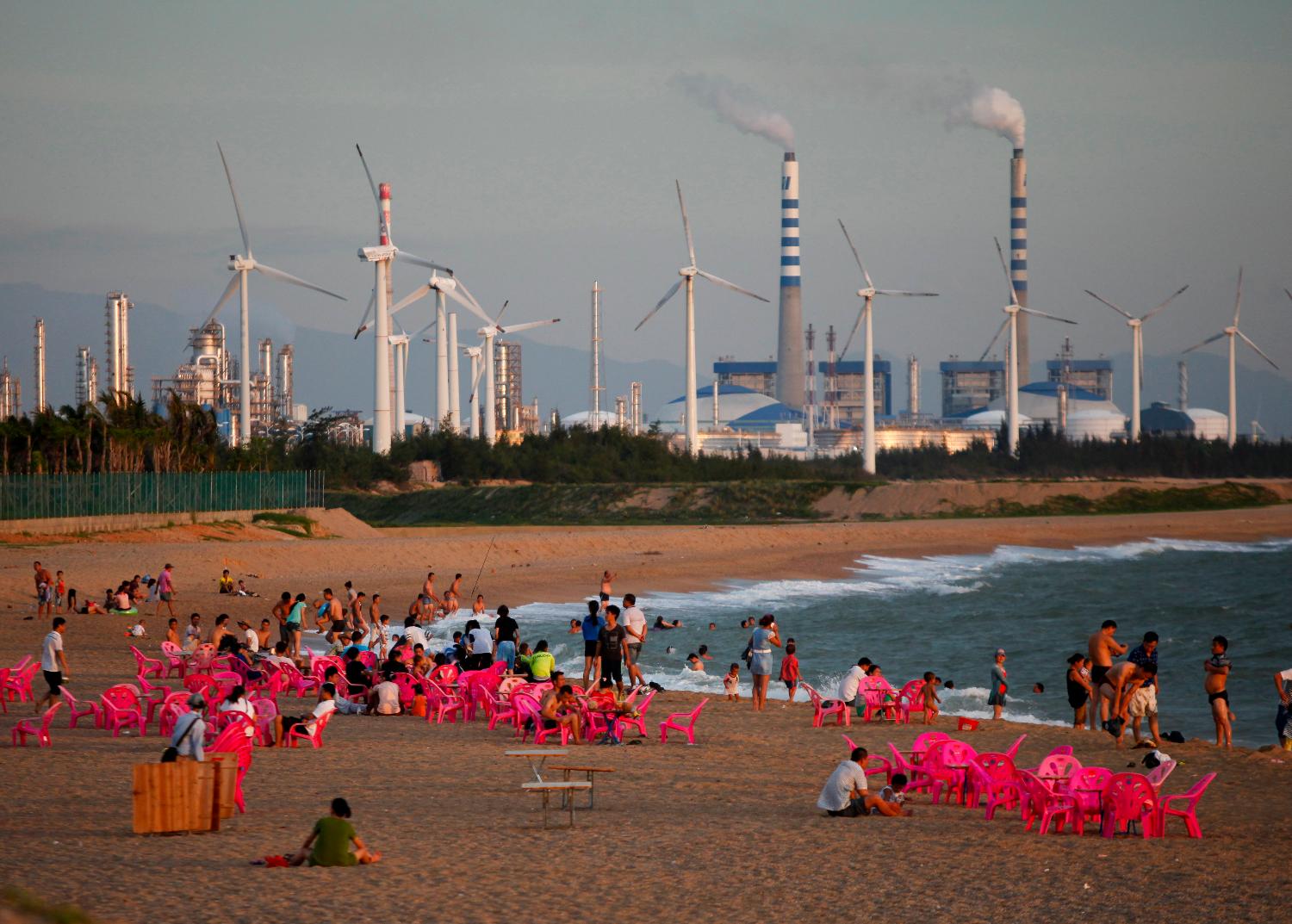
LAUNCESTON, Australia, Jan 11 (Reuters) - China's status as the colossus of renewable energy is set to be cemented in the next five years, with the world's second-biggest economy adding more capacity than the rest of globe combined. The International Energy Agency said in its Renewables 2023 report, released on Thursday, that China will account for 56% of renewable energy capacity additions in the 2023-28 period. China is expected to increase renewable capacity by 2,060 gigawatts (GW) in the forecast period, while the rest of the world will add 1,574 GW, the IEA data showed. The European Union and the United States are the next biggest builders of renewable energy, at 429 GW and 337 GW respectively. It's worth noting, though, that India is forecast to add 203 GW of renewable capacity, while the 11 countries that make up the Association of Southeast Asian Nations are expected to boost capacity by a combined 63 GW. This shows that Asia is the dominant force in renewable energy deployment, largely because of supportive policies and the availability of capital and offtake agreements for the electricity produced. The IEA report also sheds light on just how China is coming to be the leading force in renewable energy, with supportive policies driving a huge increase in the expected capacity additions from the previous report in December 2022. "China accounts for almost 90% of the global upward forecast revision, consisting mainly of solar photovoltaic (PV). In fact, its solar PV manufacturing capabilities have almost doubled since last year, creating a global supply glut," the IEA said. "This has reduced local module prices by nearly 50% from January to December 2023, increasing the economic attractiveness of both utility-scale and distributed solar PV projects," the report said. The IEA said the lower costs are making utility-scale solar more attractive in China than coal- and gas-fired generation. China has also clarified the rules around its green certificates, which will provide additional revenues for solar and wind developers. China is also expected to increase its gap over the rest of the world in deploying renewables, even as the United States and countries in Europe boost policy and financial support. ADVANTAGE CHINA China has several advantages that sometimes aren't available in other countries. These include being able to approve and build transmission grids and renewable energy projects more quickly than in countries where democratic processes and the objection of local communities can constrain infrastructure development. China can also finance projects more easily than in countries where money is lent or raised on the basis of expected returns rather than on policy priorities. The country's manufacturing base also allows for economies of scale in producing PV panels and wind turbines, and this is further supported by China's efforts over the previous decades to build a leading position in the supply and processing of minerals such as copper, nickel and lithium. There is also a caveat to China's rapid build-out of renewable capacity because at the same time it is still adding substantial coal-fired generation. China is the world's biggest coal producer and importer and has more coal-fired capacity under construction than the rest of the world combined. China is building 136.24 GW of coal-fired generation, and has another 255.5 GW at the announced, pre-permit or permitted stage, according to data compiled by the Global Energy Monitor. This is 67% of the global coal-fired capacity currently under construction and 72% of the potential new capacity. China already accounts for 53% of the world's 2,095 GW of operating coal-fired generating capacity, a share likely to increase in coming years as more coal plants are retired in the developed world. When taking China's renewable deployment together with its ongoing coal-fired construction, a more nuanced view emerges of the country's energy profile. It's clear that renewables are increasing their share of China's power generation, but it's equally clear coal-fired power is going to be around for decades to come, and that if China does meet its goal of net-zero emissions by 2060, it will largely be achieved in the final years prior to the deadline. The opinions expressed here are those of the author, a columnist for Reuters. https://www.reuters.com/business/energy/china-dominates-renewable-energy-coal-power-forecasts-russell-2024-01-11/
2024-01-11 06:02
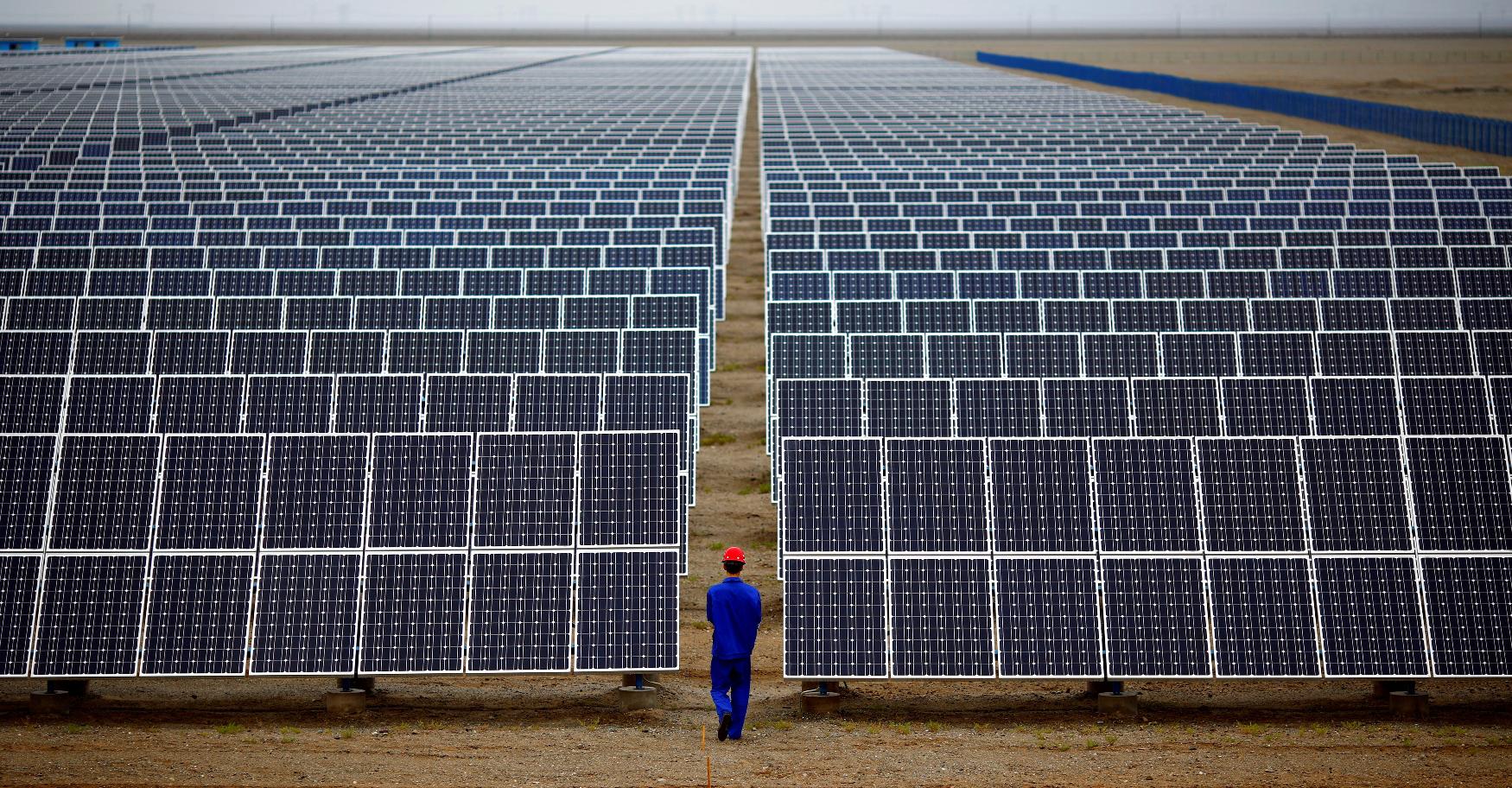
LONDON, Jan 11 (Reuters) - Global renewable energy capacity is expected to grow by two and a half times by 2030 but governments need to go further to achieve a goal of tripling it by then agreed at United Nations' climate talks, the International Energy Agency (IEA) said. In its annual renewable energy outlook report, the IEA said new capacity added last year increased by 50% from the previous year to 510 gigawatts (GW). That takes installed capacity to 3,700 GW. Under current policies and market conditions, global renewables capacity is forecast to grow to a total of 7,300 GW by 2028. To reach the 2030 goal agreed last year, it will require reaching at least 11,000 GW. World governments agreed to triple renewable energy generation capacity by 2030 and move away from fossil fuels at the COP28 U.N. climate conference in Dubai last December. But no mechanism was agreed to finance the shift to clean energy in developing countries. The report said the biggest challenge to meeting the goal will be scaling up financing and deployment of renewables in most emerging and developing economies. "In the absence of any help for African and low-income countries in Asia and Latin America, they will not be able to reach their clean energy targets. That will be a fault line in reaching the 2030 goal," Fatih Birol, executive director of the IEA, told Reuters. Over the past year, higher inflation and interest rates have also increased equipment and financing costs of renewables projects and policies have been slow to adjust to the new macro-economic environment. Insufficient investment in grids is also hampering faster deployment of renewables, as well as slow and bureaucratic permitting procedures and administrative barriers. Last year, China had the largest growth in renewables and is expected to account for nearly 60% of new renewable capacity by 2028. China’s role is crucial in reaching the 2030 goal because it is expected to install more than half of the new capacity required globally by the end of the decade, the IEA said. Solar photovoltaic and onshore wind additions to 2028 are also expected to more than double in the United States, the European Union, India and Brazil compared with the last five years. Despite many announcements of green hydrogen projects - where hydrogen is produced by using renewable energy to split water and heralded as a cleaner fuel for energy intensive industry and transport - progress is slow, with only 7% of current projects expected to come online by 2030, the IEA added. https://www.reuters.com/sustainability/climate-energy/renewable-energy-growth-must-accelerate-reach-2030-goal-iea-2024-01-11/
2024-01-11 05:57
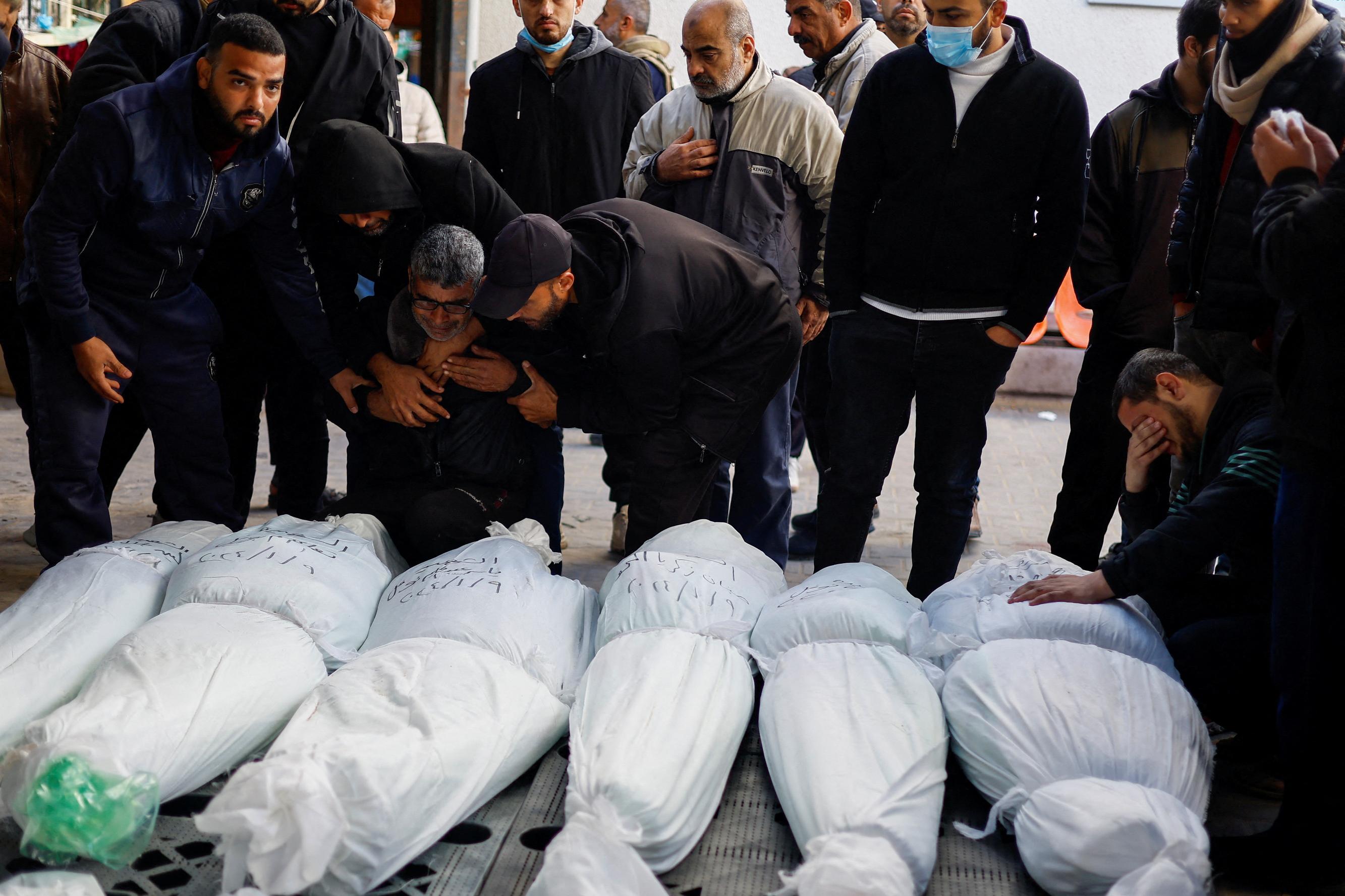
GAZA/THE HAGUE, Jan 11 (Reuters) - Benjamin Netanyahu on Thursday condemned South Africa's genocide case against Israel in Gaza as "hypocrisy and lies", as some Gazans returned to scenes of total devastation in the north of the enclave where Israeli forces have begun withdrawing. Three months of Israeli bombardment have laid much of the coastal enclave to waste, killing more than 23,000 people and driving nearly the entire population of 2.3 million Palestinians from their homes. An Israeli blockade has sharply restricted supplies of food, fuel and medicine, creating what the United Nations describes as a humanitarian catastrophe. Israel says its only means to defend itself is by eradicating Hamas, the Islamist group that rules Gaza, whose fighters stormed through Israeli communities on Oct. 7, killing 1,200 people and capturing 240 hostages. Israel blames Hamas for all subsequent harm to Palestinian civilians for operating among them, which the fighters deny. The case, brought by South Africa at the International Court of Justice (ICJ) in the Hague, accuses Israel of violating the 1948 genocide convention, enacted in the wake of the mass murder of Jews in the Holocaust, which mandates all countries to ensure such crimes are never repeated. "Israel has a genocidal intent against the Palestinians in Gaza," Tembeka Ngcukaitobi, advocate of the High Court of South Africa, told the court in the Hague. "The intent to destroy Gaza has been nurtured at the highest level of state." South Africa asked the court for a preliminary order to demand Israel stop fighting now, while the court hears the full merits of the case in coming months. In a strongly worded response, Israeli Prime Minister Benjamin Netanyahu said "the hypocrisy of South Africa screams to the heavens." "We are fighting terrorists, we are fighting lies... Today we saw an upside-down world. Israel is accused of genocide while it is fighting against genocide," he said. Israel's foreign ministry accused South Africa of "functioning as the legal arm of the Hamas terrorist organisation" in a case built on "false and baseless claims". The White House also said the genocide allegations were unfounded. Palestinians said they hoped the court would stop the war. In Rafah, in southern Gaza where the bodies of members of the al-Arjany family killed overnight were laid out outside a morgue, neighbour Khamis Kelab picked up the smallest of three children bundled in shrouds and cradled the dead infant. "To the ICJ: what is the fault of this baby? What did this girl do? What crime did she commit? Was she a terrorist? Did this baby fire rockets?" he said. "She was inside a tent, in the freezing cold, she was hit by a strike, this baby is just a few days old, you people." The Palestinian Red Crescent reported late on Thursday that nine people had been killed in an Israeli bombardment targeting a house in Rafah. SCORCHED RUINS Since the New Year, Israel has announced a new phase in the war, to begin drawing down forces in the northern half of the Gaza Strip where its offensive began. Even so, fighting has only intensified in southern areas. The relative quiet in the north has let residents begin trickling back into obliterated cities, finding a moonscape often with scant trace of where homes once stood. Yousef Fares, a freelance journalist, filmed himself walking through a wasteland surrounded by scorched ruins that was once a part of Gaza City, home to nearly a million people. A few civilians passed by, some wobbling on bicycles over a track across the mud. "All the houses you see are destroyed, completely or partially," he said. "We are now at the Tuffah old cemetery, which is over 100 years old. All those graves were exhumed, they were run over by the Israeli bulldozers and tanks. People are coming from various areas of Gaza City to search for the bodies of their sons." While Washington has backed Israel's military campaign as justified by its right to self-defence, it has also called on its ally to scale the war back, do more to protect civilians, and maintain the hope of a future independent Palestinian state. This week, Secretary of State Antony Blinken visited the region, meeting Israeli and Palestinian officials and leaders of neighbouring Arab States, defending Israel's campaign to eradicate Hamas but pushing for it to work with the Palestinian Authority (PA), which recognises Israel. Offering a pathway to a Palestinian state is the best way to stabilize the wider region and isolate Iran and its proxies, he said while on a visit to Egypt. He was also briefed on progress as Egypt along with Qatar tries to mediate between Hamas and Israel to broker a ceasefire and secure the release of more than 130 Israeli hostages still being held in Gaza, according to Israeli tallies. Relatives of the hostages stood by the Gaza fence on Thursday, taking turns to shout messages of love and support into a microphone in the hope that the captives would hear them. "Omer, can you hear us? " shouted Orna Neutra, mother of 22-year-old hostage Omer Neutra. "We're here. We're really close to you. We're fighting for you every single day," she shouted, her voice breaking with emotion. She was holding a placard with a picture of her son. https://www.reuters.com/world/middle-east/israel-face-gaza-genocide-charges-world-court-2024-01-11/
2024-01-11 05:32
A look at the day ahead in European and global markets from Ankur Banerjee After the fake post comes the real thing. The long-mooted and eagerly anticipated exchange traded funds (ETFs) to track bitcoin got the official go-ahead at last, sending the crypto world into a celebratory mood at what it sees as a game-changer. The 11 applications, including from BlackRock (BLK.N), Ark Investments/21Shares (ABTC.S), Fidelity and Invesco (IVZ.N), were approved by the U.S. Securities and Exchange Commission, with most of the products expected to start trading on Thursday. Estimates of first-year inflows vary widely, from $5 billion to $100 billion. These ETFs grant wider access but whether the famously volatile cryptocurrency is accepted by a bigger investor base remains to be seen. Bitcoin was little changed in Asian hours and was last at $46,337, after the approval. That's because the world's biggest cryptocurrency has soared 70% since mid-October in anticipation of the U.S. regulatory decision. In the broader market, investors are bracing for the U.S. inflation report later in the day that could influence the Federal Reserve's thinking on rate cuts this year. While traders have reassessed how much the Fed will likely ease this year they are still pricing in 140 basis points of rate cuts in 2024, compared with the Fed's projection of 75 bps of cuts. Thursday's report will shed light on whether inflation is dipping towards the Fed's target of 2%. With traders hesitant to make major bets, currency markets drifted with the Japanese yen clawing back some of its overnight losses against the dollar to stand at 145.36. In equities, the Nikkei (.N225) continues to party like its 1990. On Thursday, it blew past 35,000 for the first time in nearly 34 years, a strong start to the year for the best performing Asian bourse in 2023. Futures indicated that the exuberant mood will move to Europe, with very little economic data on the deck for the region. Key developments that could influence markets on Thursday: Economic events: CPI data for Portugal, Netherlands and the U.S. https://www.reuters.com/markets/europe/global-markets-view-europe-2024-01-11/
2024-01-11 05:15
Iran seizes tanker off Omani coast U.S., Britain hint they may take action against Houthis in Yemen U.S. inflation rises more than expected in December NEW YORK, Jan 11 (Reuters) - Oil prices gained about 1% on Thursday after Iran seized an oil tanker off the coast of Oman, raising the prospect of escalating conflict in the Middle East. Brent futures rose 61 cents, or 0.8%, to settle at $77.41 a barrel, while U.S. West Texas Intermediate (WTI) crude rose 65 cents, or 0.9%, to settle at $72.02. Earlier in the session, both benchmarks were up over $2 a barrel but have pulled back on an unexpected increase in U.S. inflation and reports China was seeking fewer Saudi imports. U.S. diesel and gasoline futures led energy markets higher with diesel, which is also used as a heating fuel, gaining about 3% to a three-week high on forecasts for extreme cold across much of the U.S. next week. "The best kind of rally in the crude oil space is one that is led by the products ... as long as the refiner needs to make more product, he is going to need to buy more crude oil," said Bob Yawger, director of energy futures at Mizuho Bank. In the Middle East, Iran seized a tanker with Iraqi crude destined for Turkey in retaliation for the confiscation last year of the same vessel and its oil by the U.S. The seizure of the Marshall Islands-flagged St. Nikolas coincides with weeks of attacks by Yemen's Iran-backed Houthi militias targeting Red Sea shipping routes. Yemen-based Houthis this week mounted their largest attack yet on commercial shipping lanes in the Red Sea. The U.S. and Britain hinted they would take further measures if the attacks continued. The U.N. Security Council passed a resolution demanding an immediate end to the Houthi strikes. The group's leader, Abdel-Malek al-Houthi, said any attack on the Houthis would not go without a response, noting any such response would be bigger than the recent strike in which its drones and missiles targeted a U.S. ship in the Red Sea. Israel, meanwhile, faced down accusations at the World Court of genocide in its war in Gaza, as the first residents returned to scenes of total devastation in the north of the enclave where Israeli forces began withdrawing this week. Global trade declined by 1.3% from November to December 2023 as militant attacks on merchant vessels in the Red Sea led to a plunge in the volumes of cargo transported in the region. "Slowing demand, unrest in Middle East and muted price reaction have producers, consumers and market participants alike feeling paranoid about oil prices," Barclays said as the bank lowered its 2024 Brent forecast by $8 to $85 a barrel. BEARISH FACTORS WEIGHING ON CRUDE Oil prices were up even though U.S. data showed consumer inflation rose 3.4% in December on a yearly basis versus a 3.2% increase expected by economists polled by Reuters. The higher-than-expected rise in inflation could delay a much anticipated interest rate cut in March from the U.S. Federal Reserve. "Given that markets have continued to price in rate cuts in March, a delay of the currently anticipated timeline would dampen investor sentiment, likely bringing (crude) price declines with it," analysts at energy consulting firm Gelber and Associates said. Lower interest rates would reduce consumer borrowing costs, which could boost economic growth and demand for oil. Refiners in China, the world's top oil importer, asked for less Saudi crude oil in February even though Saudi Arabia, the world's top oil exporter, announced its biggest price cut in 13 months. Looking ahead, China's customs administration will release December trade data on Friday, giving a full-year picture of overall demand. In other news, China and Taiwan's largest opposition party, the Kuomintang, said Taiwan's ruling party presidential candidate Lai Ching-te could pose a risk to peace if he wins this weekend's election. https://www.reuters.com/markets/commodities/oil-prices-tick-up-middle-east-tensions-rise-2024-01-11/
2024-01-11 04:26
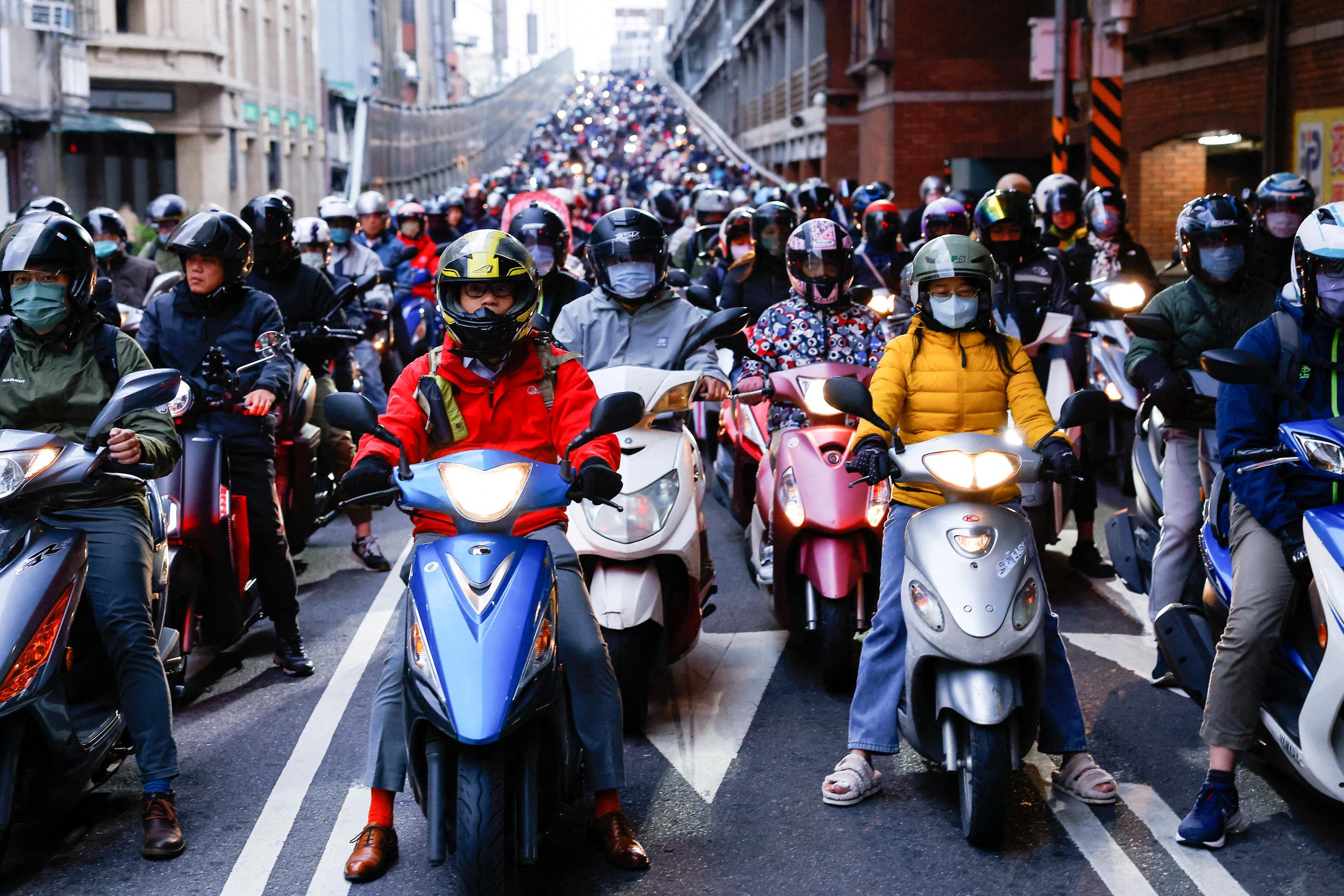
SINGAPORE, Jan 11 (Reuters) - Investors are bracing for a volatile reception to Taiwan's election on Jan. 13, with added focus on the island's chip sector, after China said the poll was a choice between "peace and war". In an election-packed 2024, Taiwan will be the first major economy to vote as it holds presidential and parliamentary elections on Saturday, pitting the three main parties, the ruling Democratic Progressive Party (DPP), the Kuomintang (KMT) and the Taiwan People's Party (TPP), against each other. Both the TPP and KMT have pledged to re-start dialogue with China if they win the presidency. China claims Taiwan as its own territory despite strident objections from Taipei and has never renounced the use of force to bring it under Beijing's control. The election comes under the dark clouds of escalating tensions with China, keeping investors jittery, with Taiwan also the main flashpoint in U.S.-China tensions. Despite these jitters, Taiwan's stock market (.TWII) soared last year, gaining 27% last year, its strongest yearly performance since 2009, and foreign investors pouring in $3.45 billions in Taiwan equities. Here are some scenarios and how markets are likely to react: RULING DPP WINS PRESIDENCY, LOSES PARLIAMENT MAJORITY A DPP victory is likely to lead to what some investors say will be a short-term sell-off in Taiwan stocks and Taiwan dollar , with a risk-off environment weighing on chip and tech stocks. Taiwan is a major manufacturer of chips used in everything from cars to smartphones and fighter jets and is home to the world's largest contract chipmaker Taiwan Semiconductor Manufacturing Co Ltd (2330.TW). Shares of TSMC, Asia's most valuable publicly listed company, surged 32% in 2023. The focus after the election will be on MSCI's broadest gauge of Asian tech stocks outside Japan (.MIAPJIT00NUS) along with U.S. chipmakers Intel (INTC.O), Nvidia (NVDA.O), Micron (MU.O) as well as the broader PHLX semiconductor index (.SOX). Some investors might buy the dip. A manager of a Taiwan-based fund house, which oversees T$18 billion ($578.61 million) of client assets in Taiwan stocks, sees any selloff as a buying opportunity for TSMC and other chip-related and AI shares. The fund manager declined to be identified due to the sensitivity of the matter and regulatory restrictions. The spotlight though will be squarely on how China reacts to a DPP victory, after China warned voters on Thursday that the DPP candidate was dangerous and risked triggering cross-Strait confrontation and conflict. China could conduct military demonstrations around Taiwan, including large-scale air and naval manoeuvres, according to a desk note from Lazard's geopolitical advisory team. "The core message of any military display would be that Beijing is willing to use force in the future if necessary to accomplish unification." Investors point out that the new president will be inaugurated in May, providing time for investors to assess the fallout of the election. For China markets, the immediate reaction might be limited, according to investors. They highlight the growing need of an economic stimulus for the stuttering China economy to be the likely trigger for improvement in sentiment and drastic movements in the market. "We do not think the outcome of the Taiwan elections will have a meaningful impact on the China markets or the yuan," said Gary Tan, senior portfolio manager, Allspring Global Investments. "We see domestic issues such as government increasing focus to contain financial risk amidst a challenging economy as more important drivers." KMT WINS PRESIDENCY A victory the KMT, which is closer to China than the DPP, would likely result in Taiwan dollar spiking higher and shares rallying over expectations that the ties between China and Taiwan would improve. Aninda Mitra, head of Asia macro and investment strategy at BNY Mellon Investment Management said there could be volatility one way or another. "But will the underlying picture changed dramatically on the day after election? I doubt very much that it will," he said. "It will take several more weeks, if not months, for people to figure out the new modus operandi." Analysts though said an opposition victory may raise the risks of China ramping up integration plans for Taiwan and cast a shadow on the semiconductor supply chain. "Nobody knows exactly what will happen after the election this Saturday... The outcome shouldn't be so extreme as a war launched by China," said the Taiwan-based fund manager. ($1 = 31.1090 Taiwan dollars) (This story has been corrected to clarify that the Taiwan election will take place on Jan. 13, not Feb. 3, in paragraph 1) https://www.reuters.com/markets/asia/markets-gird-volatility-taiwan-heads-vote-2024-01-11/