2024-01-09 00:44
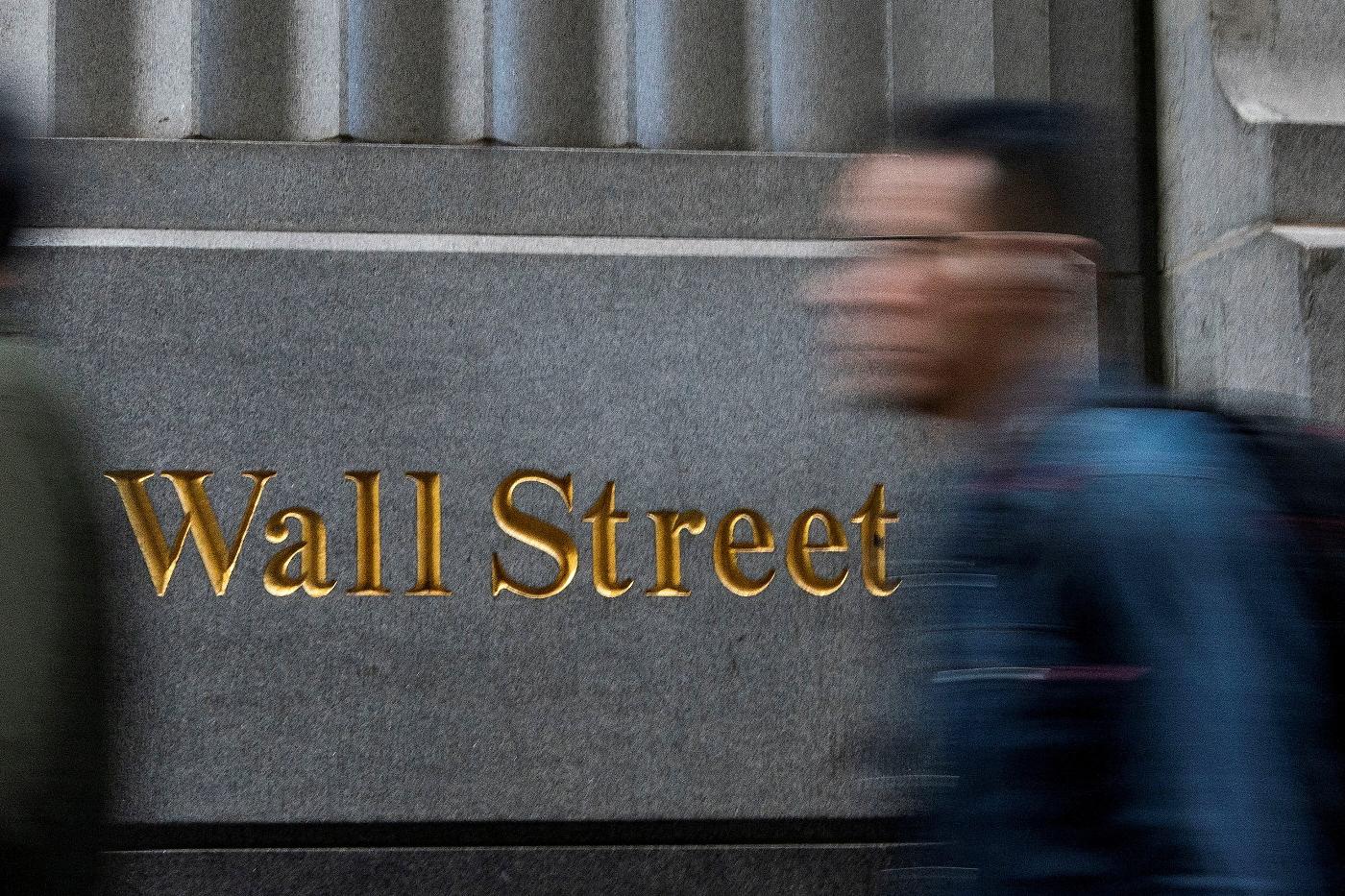
Boeing tumbles after MAX 9 groundings Oil stocks fall on Saudi price cuts, rise in OPEC output Apple climbs as Vision Pro AR headset to go on sale in Feb Indexes up: Dow up 0.58%, S&P 500 up 1.41%, Nasdaq 2.20% NEW YORK, Jan 8 (Reuters) - The Nasdaq scored its first gain of at least 1% in 2024 on Monday, as a fall in Treasury yields helped lift megacap stocks, while a sharp drop in Boeing shares kept gains on the Dow Industrials in check. Megacaps advanced, lifting stocks such as Amazon.com (AMZN.O) which closed up 2.66% and Alphabet (GOOGL.O), which rose 2.29%, as Treasury yields fell ahead of readings on inflation and a new supply of government debt this week, with the benchmark 10-year U.S. Treasury yield hitting a low of 3.966% on the session. In addition, Apple (AAPL.O) climbed 2.42% after the iPhone maker said its Vision Pro mixed-reality device will be available for sale from Feb. 2 in the United States. Nvidia (NVDA.O) surged 6.3% and fellow chipmaker Advanced Micro Devices (AMD.O) jumped 5.48%, helping to push the Philadelphia SE Semiconductor Index (.SOX) up 3.28% as it bounced from a 5.8% drop last week, its biggest weekly percentage fall since October 2022. "This is definitely a yield-driven market for now and investors are trying to discount when and how many rate cuts we will see, the timing and the magnitude of rate cuts," said Bill Merz, head of capital markets research at U.S. Bank Wealth Management in Minneapolis. "Now we're probably in a more rational place in terms of yields and it's a question of, is the market getting that right and are yields falling for the right reasons or the wrong reasons? And investors have so far taken the view that yields are falling for all the right reasons, that the Fed is navigating what thus far has been a soft landing." The Dow Jones Industrial Average (.DJI) rose 216.90 points, or 0.58%, to 37,683.01, the S&P 500 (.SPX) gained 66.30 points, or 1.41 %, to 4,763.54 and the Nasdaq Composite (.IXIC) gained 319.70 points, or 2.20%, to 14,843.77. The gains on the Nasdaq and S&P 500 marked their first daily percentage climbs of more than 1% since Dec. 21 and biggest one-day percentage advances since Nov. 14. Meanwhile, Boeing (BA.N) shares plunged 8.03% after the plane maker and U.S. regulators gave the go-ahead on Monday for airlines to inspect jets that were grounded after a panel blew off an Alaska Airlines-operated (ALK.N) 737 MAX 9 in mid-flight which forced a dramatic landing of the airliner over the weekend. The S&P 500 energy index (.SPNY) was the sole decliner among the 11 S&P 500 sectors, falling 1.16% after hitting its lowest level in a month as crude prices sank about 4% after sharp price cuts by top exporter Saudi Arabia and a rise in OPEC output. On Friday, the benchmark S&P 500 (.SPX) snapped a nine-week streak of gains, as investors dialed back expectations on the possible aggressiveness of the Federal Reserve in cutting interest rates this year following a mixed bag of economic data on the labor market and services sector. Atlanta Fed President Raphael Bostic said on Monday that the central bank's dual goals of lowering inflation and maintaining low unemployment are not yet in conflict. Money markets now see a 63.8% chance of at least a 25 basis-point (bps) rate cut as soon as March, according to CME's FedWatch Tool, down from 88.5% a week ago. Investors will eye inflation data this week in the form of the consumer price index (CPI) and producer price index (PPI) to shape expectations for the path of interest rates by the Fed. Advancing issues outnumbered decliners by a 3-to-1 ratio on the NYSE while on the Nasdaq, advancing issues outnumbered decliners by a 2.3-to-1 ratio. The S&P 500 posted 13 new 52-week highs and no new lows while the Nasdaq recorded 101 new highs and 92 new lows. https://www.reuters.com/markets/us/futures-under-pressure-boeing-groundings-drag-airline-stocks-2024-01-08/
2024-01-08 22:58
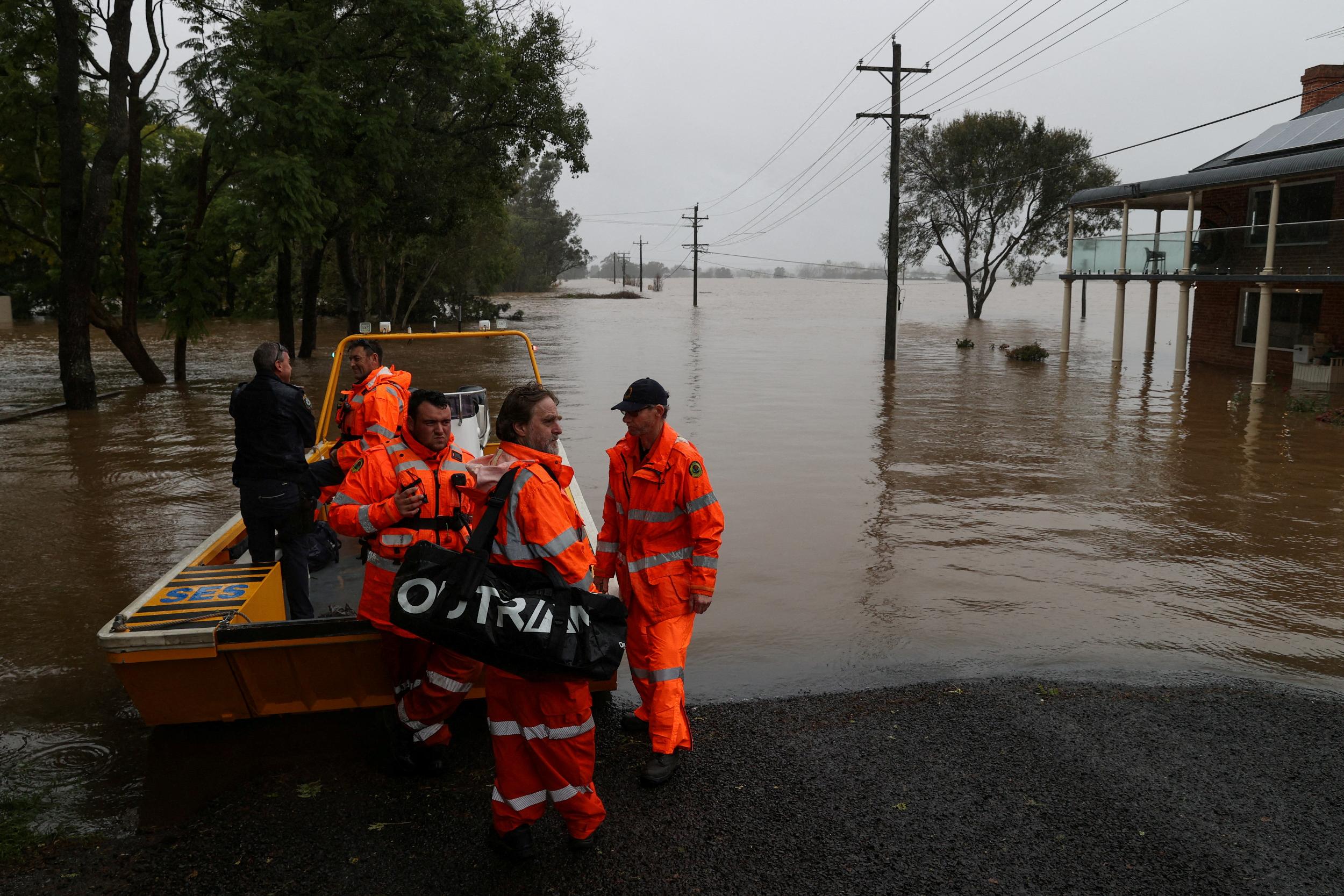
SYDNEY, Jan 9 (Reuters) - Australia is considering setting up a disaster relief force to help relieve a military overstretched by regular natural disasters, the prime minister said on Tuesday, as towns in the country's southeast were evacuated due to flooding. The floods come after Australia endured some of its worst bushfires over the "Black Summer" of 2019 and 2020, followed by a devastating bout of flooding on the east coast in 2022. Roughly half the Australian Defence Force's (ADF) 62,000 troops were involved in disaster relief over that period, a commitment which undermined its ability to defend the country, the Department of Defence said last year. Prime Minister Anthony Albanese said the government was considering creating a standing reserve body, although the country needed to be flexible and use whatever assets it had on hand during disasters. "Tragically in this beautiful country of ours natural disasters are becoming more frequent and more intense," he told ABC Radio, ahead of a visit to Queensland state, which was hit by a cyclone just before Christmas. "We were told that would be an impact of climate change, and unfortunately we are seeing that play out." Further south in Victoria, the state emergency service on Tuesday warned residents of Rochester, roughly 150 km (90 miles) north of Melbourne, it was too late to evacuate from rising floodwater as heavy storms caused flooding in 13 rivers in the state. A 74-year-old woman trapped in floodwater nearby was rescued on Monday after a man swum out and helped her hold on for more than an hour until emergency services arrived. Residents in the low-lying parts of the nearby towns of Seymour and Yea were also told to evacuate on Monday. While the rain has stopped, rivers are expected to rise for several days. https://www.reuters.com/world/asia-pacific/australia-weighs-creating-disaster-relief-force-floods-hit-southeast-2024-01-08/
2024-01-08 21:55
Jan 8 (Reuters) - Federal Reserve Governor Michelle Bowman on Monday retreated from her persistently hawkish view, saying she now sees U.S. monetary policy as "sufficiently restrictive" and signaled her willingness to support eventual interest-rate cuts as inflation eases. "My view has evolved to consider the possibility that the rate of inflation could decline further with the policy rate held at the current level for some time," Bowman said in remarks prepared for delivery to the South Carolina Bankers Association 2024 Community Bankers Conference. Bowman had previously indicated she felt another rate hike would likely be needed to beat inflation, which by the Fed's preferred measure has fallen from 40-year highs in 2022 to around 2.6% as of November. "Should inflation continue to fall closer to our 2 percent goal over time, it will eventually become appropriate to begin the process of lowering our policy rate to prevent policy from becoming overly restrictive," Bowman said. The Fed last month held its policy rate steady in the 5.25% to 5.5% range, where it has been since last July, and signaled that its next move could be a reduction in the policy rate sometime in 2024. Bowman's comments Monday suggest she is on board with that view, though she said she remained vigilant about risks that could push inflation back upward - including geopolitics, a recent easing in financial conditions and labor market tightness that could keep services inflation too high. "While the current stance of monetary policy appears to be sufficiently restrictive to bring inflation down to 2 percent over time, I remain willing to raise the federal funds rate further at a future meeting should the incoming data indicate that progress on inflation has stalled or reversed," Bowman said. https://www.reuters.com/markets/us/feds-bowman-says-policy-rate-appears-sufficiently-restrictive-2024-01-08/

2024-01-08 21:49
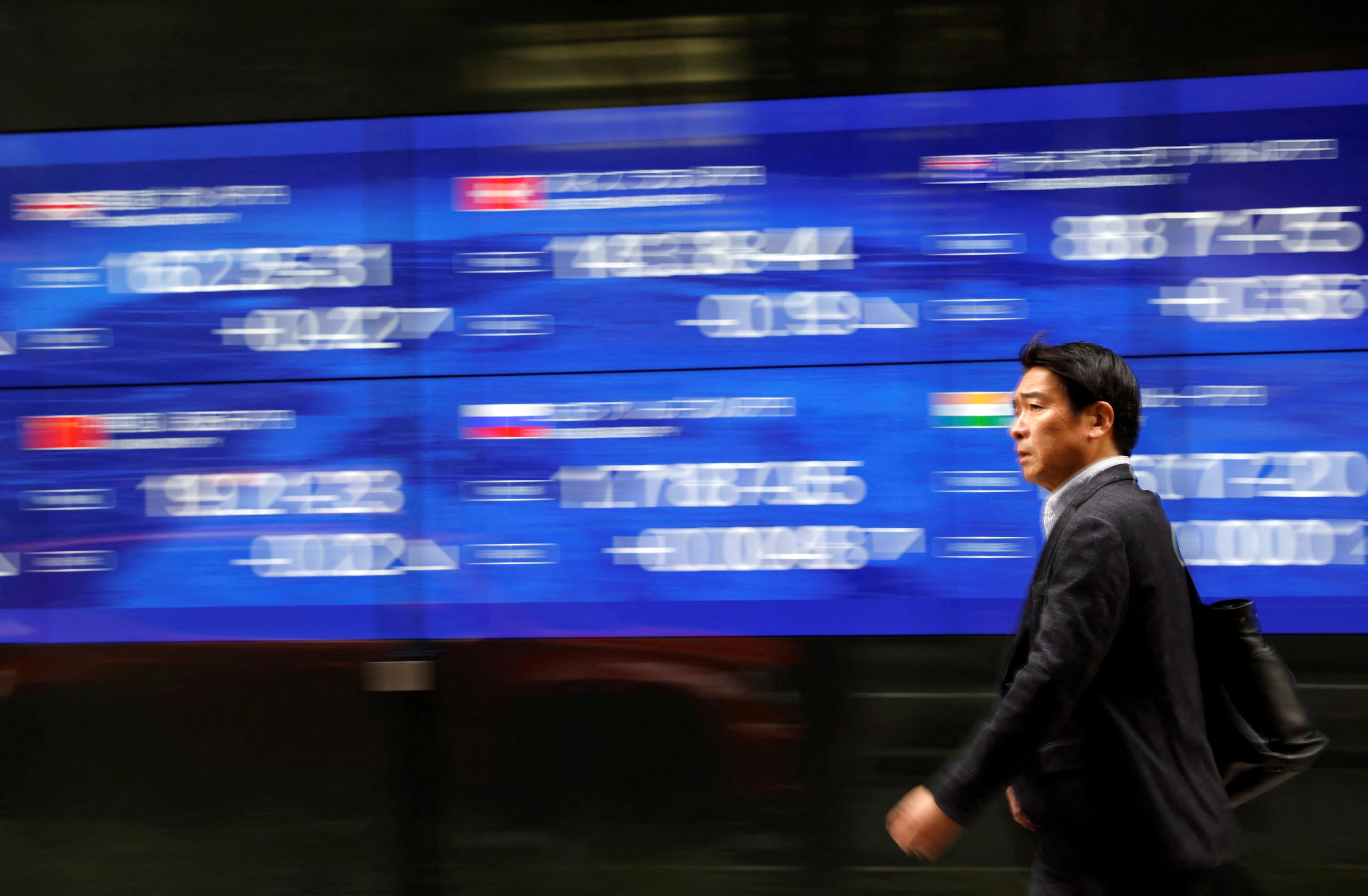
Jan 8 (Reuters) - A look at the day ahead in Asian markets. Tokyo markets will reopen on Tuesday after a long weekend with consumer price and spending data to take in early Tuesday and must decide what to make of the strong tech-led rally on Wall Street after Friday's directionless trading. Later in the week the U.S. December CPI report could provide important signals for global investors. For a day at least Nikkei and JGB players will have to get cues from Japan's December household spending and Tokyo Consumer Price Index. The Nikkei 225 index (.N225) closed up 0.27% on Friday and is less than 1% below the 33-year high close from December. On Monday, South Korea's benchmark KOSPI (.KS11) fell 0.40% and China's blue-chip index fell to its lowest level in nearly five years, while Hong Kong stocks shed roughly 2%, amid rising geopolitical tensions before Taiwan's elections on Saturday and weak confidence in Beijing's economy. Things were looking up on Wall Street, where the Nasdaq (.IXIC) and S&P 500 surged on the back of megacaps and chip stocks. The main negative was a slide in Boeing (BA.N) which put pressure on the Dow (.DJI). The U.S. ordered the temporary grounding of some 737 MAX 9 jets fitted with a panel that blew off an Alaska Air Group (ALK.N) jet in midair on Friday. In potential share-moving news, Japan's Sony 6758.T is planning to scrap the merger of its Indian unit with Zee Entertainment (ZEE.NS), more than two years after the deal was announced, over a disagreement on who will lead the $10 billion entity, Bloomberg News reported on Monday. Dollar/yen fell in U.S. trade and was off 0.35%, with the dollar little changed against most currencies. Investors continued to digest mixed signals from Friday's U.S. jobs and Service sector data, but focused more on Thursday's important inflation reading as Federal Reserve policy makers ponder how soon they can pivot to cutting rates. The Bank of Japan is expected to be an outlier this year by lifting rates out of negative territory, though interest rates in the country are likely to remain below other major economies. Last week's 7.6 magnitude earthquake could also hinder Japan's economic recovery and goal to let inflation rise. “The earthquake aftermath can push back speculation of a BoJ policy tweak later this month,” John Briggs, Global Head of Economics & Markets Strategy at NatWest Markets noted in a report on Monday. Here are key developments that could provide more direction to markets this week: - Tokyo CPI Tuesday (December) - Japan household spending Tuesday (December) Monday's Morning Bid Asia incorrectly stated that Japan's December household spending and Tokyo Consumer Price Index was due on Monday. The reports are scheduled for Tuesday. https://www.reuters.com/markets/asia/global-markets-view-asia-graphic-2024-01-08/
2024-01-08 21:40
HOUSTON, Jan 8 (Reuters) - Exxon Mobil's write-down of about $2.5 billion of troubled California properties aims to end five decades of offshore oil production in the state, but a full exit from those assets could take some time. Sable Offshore, a company created in 2020, agreed more than a year ago to pay $643 million for Exxon's Santa Ynez oil and gas operation off the coast of Santa Barbara. The pending sale triggered the writedown of the properties' book value in Exxon's fourth-quarter earnings. Exxon will loan Sable most of the money for the purchase of three offshore oil production platforms, a pipeline and onshore processing facility, under the 2022 agreement. All were idled in 2015 after a pipeline oil spill killed birds, marine life and fouled the shoreline. But the deal has been twice delayed to give Sable's parent time to complete a merger, and the size of the writedown has grown. To resume oil flow to refineries, Sable would need to repair the corroded pipeline that caused the 2015 oil spill and received operating approvals. A group of local landowners whose properties are crossed by an onshore portion of the pipeline have said they will not agree to allow repairs to the line without new easements that could cost up to $250 million, according to a lawsuit. The landowners are in negotiations with Sable for a potential resolution that would end the litigation, a person familiar with the matter said. Sable's agreement with Exxon requires the production to be up and running by early 2026 - or the assets and their liabilities revert to Exxon. The top U.S. oil producer has shouldered about $80 million a year in costs to maintain the non-producing assets. It blamed "continuing challenges in the state regulatory environment (that) have impeded progress in restoring operations" for the decision, in a securities filing last week. CLEANUP DUTIES An Exxon spokesperson declined to further comment on the withdrawal, pointing to the filing that said the $2.4 billion to $2.6 billion impairment charge was due primarily to the California exit. The statement did not specify whether the amount is before of after taxes. A failed sale could significantly raise Exxon's costs. The U.S. last December approved a requirement that California's offshore platforms be removed upon retirement, and owners not allowed to leave the infrastructure in the ocean. Last week, Chevron said it would take non-cash writedowns for securing abandoned wells and pipelines in the U.S. Gulf of Mexico that had been previously sold. It also blamed regulators for reduced investment in the state. Sable anticipates receiving a California Office of State Fire Marshall approval of its repair and restart plan this quarter, according to a December investor presentation. It could then restart production in July with about 28,000 barrels of oil and gas per day, the presentation said. https://www.reuters.com/markets/deals/exxons-faces-hurdles-25-billion-exit-california-offshore-2024-01-08/

2024-01-08 21:20
Jan 8 (Reuters) - Bitcoin rose 6.8% to $46,943 at 21:11 GMT on Monday, adding $2,999 to its previous close. Bitcoin, the world's biggest and best-known cryptocurrency, is up 13.2% from the year's low of $41,454 on Jan. 3. Ether , the coin linked to the ethereum blockchain network, rose 5% to $2,338.6 on Monday, adding $115.8 to its previous close. https://www.reuters.com/technology/bitcoin-rises-68-46943-2024-01-08/