2024-01-08 17:47
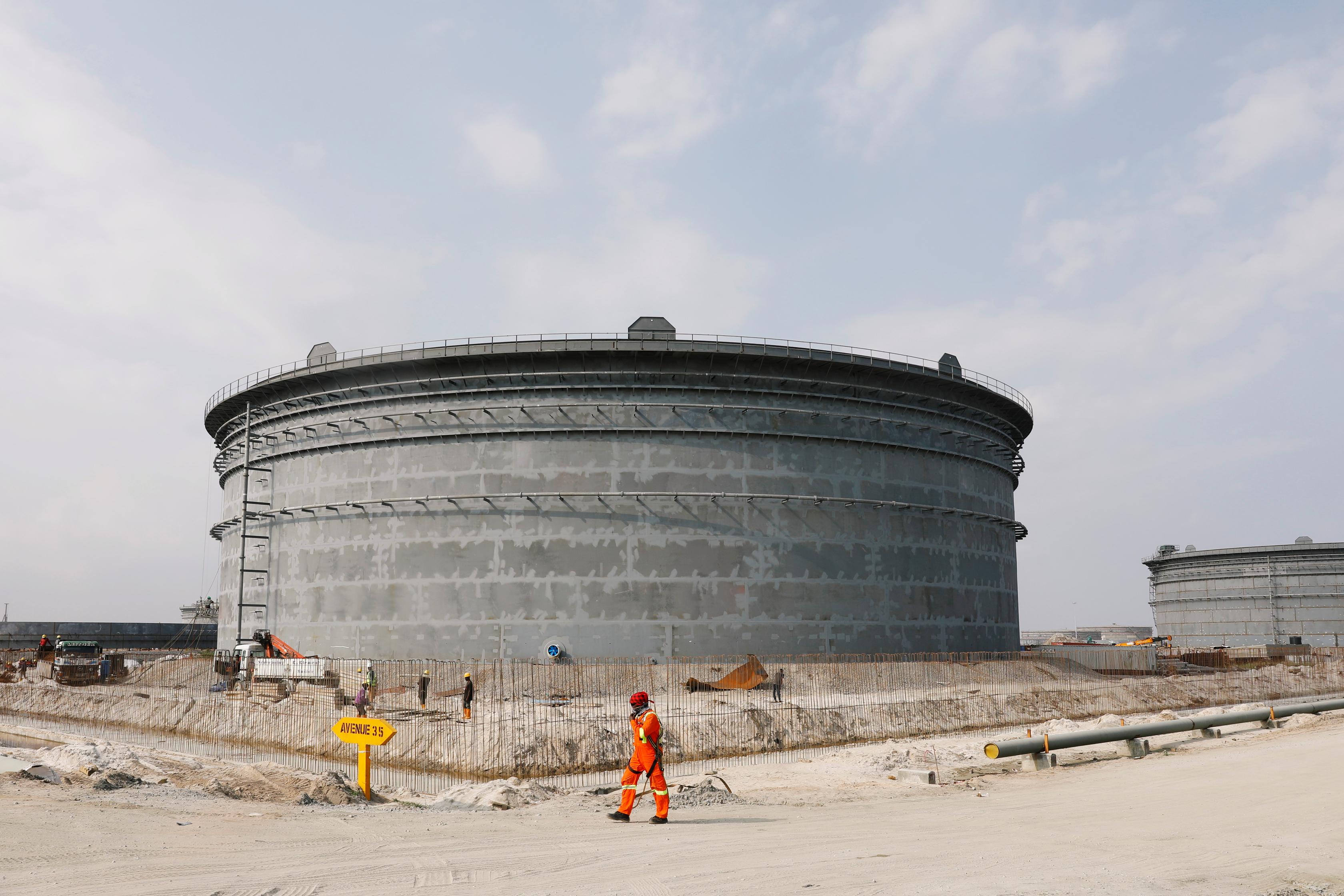
LAGOS, Jan 8 (Reuters) - Nigeria's Dangote oil refinery could begin test runs as early as this week after receiving a sixth crude cargo on Monday, company officials said, finally bringing the 650,000 barrels per day (bpd) plant to life after years of construction delays. The refinery, funded at a cost of $20 billion by Africa's richest man, Aliko Dangote, is being built at Lekki, on the outskirts of the commercial capital Lagos. Nigeria currently imports most of its fuel but the Dangote refinery will make it self sufficient and able to export fuel to neighbours in West Africa, potentially transforming oil trading in the Atlantic Basin as Nigeria challenges U.S. and European energy companies that for years have powered the cars, trucks and generators in Africa. The plant received 1 million barrels of oil from the Agbami field in the Niger Delta, bringing to 6 million barrels the amount of crude that has been delivered since the first cargo arrived in December, Dangote's spokesperson said in a statement. The next step is to start up the crude distillation unit, which is a major component of the refinery, a senior company executive, who spoke on condition of anonymity, said. That process would "most probably" begin this week, the executive added. "Subsequently, we will be continuously buying crude and start commissioning the other departments," said the executive. "Saleable products will start coming from the first week itself. But, of course, the volume will be limited and the variety of saleable products will also be limited and it will start building up, as each major department gets commissioned." Experts say test runs include the different units that make products from gasoline to diesel and making sure they respond to the control panels. It can take months for refineries to move from test runs to producing high-quality fuels at full capacity, according to the experts. Dangote has said it will start by refining 350,000 bpd and hopes to ramp up to full production later this year. https://www.reuters.com/business/energy/nigerias-dangote-refinery-set-test-runs-after-getting-more-crude-2024-01-08/
2024-01-08 17:47
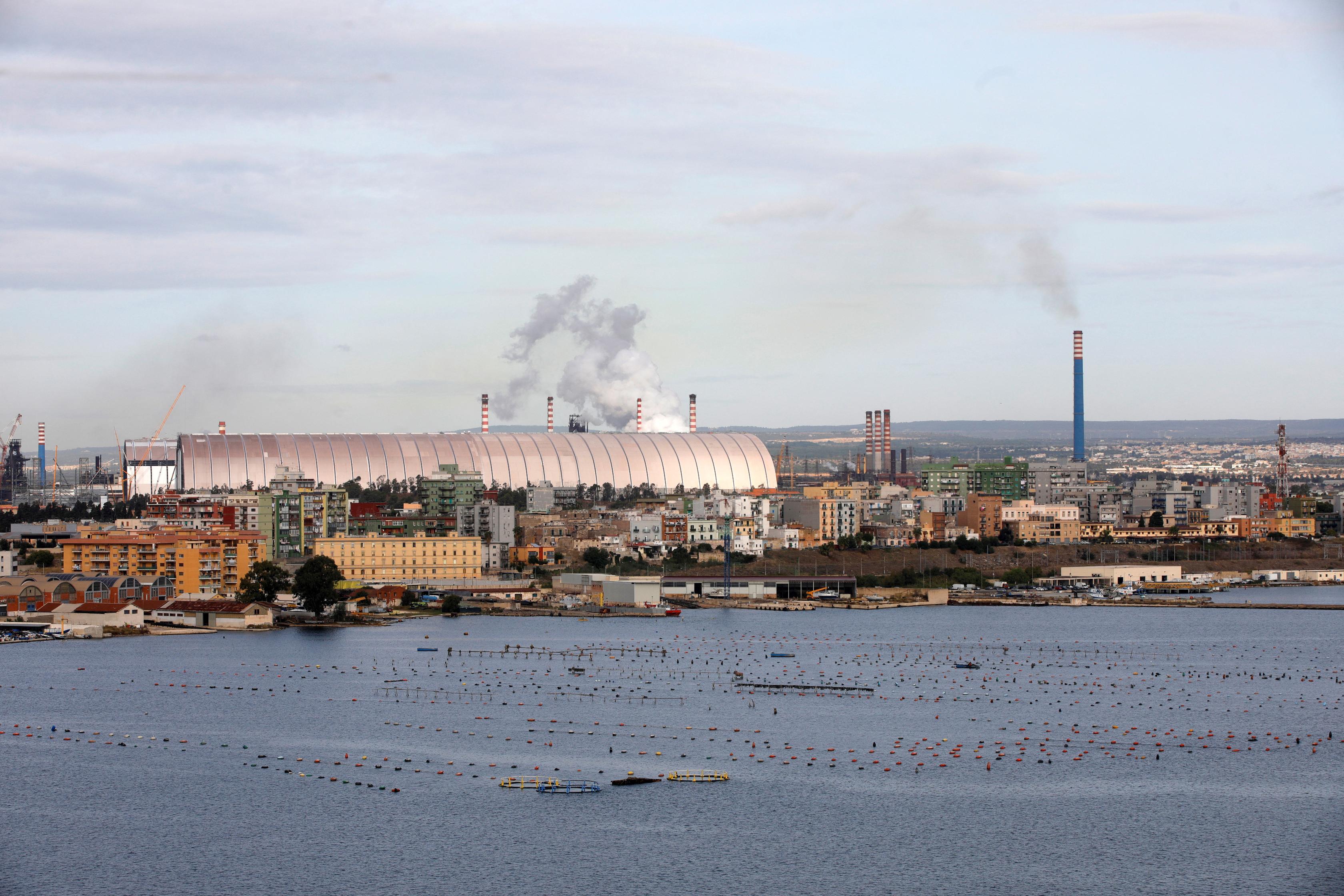
ROME, Jan 8 (Reuters) - ArcelorMittal (MT.LU) on Monday rejected an Italian government plan to take a controlling stake in Acciaierie d'Italia (ADI), one of the largest steel plants in Europe formerly known as Ilva, a cabinet statement said. A source briefed on the matter, who declined to be named, told Reuters that putting the cash-starved site under special administration could be the only option left to keep it afloat. ArcelorMittal, the world's second largest steelmaker, owns 62% of ADI, and state-owned investment agency Invitalia has the remaining 38%. The government statement said Invitalia was ready to inject some 320 million euros ($351.10 million) in ADI to raise its stake to 66%, but ArcelorMittal refused to offer guarantees on the additional investments ADI would need. "The government has taken note of ArcelorMittal's unwillingness to make financial and investment commitments, even as a minority shareholder," the statement said. It was released after Italian government figures, including Cabinet Undersecretary Alfredo Mantovano and Economy Minister Giancarlo Giorgetti, met in Rome with ArcelorMittal CEO Aditya Mittal. Bogged down by an increase in energy prices and a drop in rolled steel coil prices, the steel plant has long been short of cash and has accumulated a huge debt pile with suppliers, particularly energy giant Eni (ENI.MI). Some 10,000 people directly work at the ex-Ilva steel works, based in the southern city of Taranto, while a further 6,000 are employed in related industries. Production was reduced in recent months, with some parts shut down and many workers on furlough. The ex-Ilva plant has been a headache for successive Italian governments, as prosecutors have blamed it for producing highly toxic emissions, but is also an economic lifeline for a high-unemployment, depressed part of Italy. ($1 = 0.9114 euros) https://www.reuters.com/markets/commodities/arcelormittal-rejects-italys-plan-take-over-ex-ilva-steel-plant-2024-01-08/
2024-01-08 17:35
NEW YORK, Jan 8 (Reuters) - U.S. regional banks have a tougher road to growing profits in 2024 as they face pressure to pay more to depositors versus larger peers while demand from borrowers stays subdued. With the outlook for interest rates more uncertain, regional lenders' earnings will also be restrained because they are tied into securities holdings that are losing money on paper instead of making loans or investing in higher-yielding assets, said analysts. "It's going to be harder," said Richard Ramsden, a banking analyst at Goldman Sachs. "They are going to have to pay more for deposits," and loan growth will also be "challenged." For regional banks, especially those with $100 billion or less in assets, it will become increasingly difficult to make money as they compete with large and mid-sized institutions, which are perceived as safer and offer a broader range of services, analysts said. Goldman Sachs predicts net interest income at six of those lenders will drop by mid-single digit percentages this year. Traders of futures contracts that settle to the Fed's policy rate are pricing in a March start to rate cuts and an end-of-2024 policy rate about 1.4 percentage points below the current level. Still, Fitch Ratings says it expects rates to stay elevated and put pressure on smaller lenders to pay more to keep deposits relative to larger peers. "This will remain a challenge and a drag" on lenders' interest income and margins, said Christopher Wolfe, head of North American banks ratings at Fitch. "Banks can retain deposits, it's just that they will have to pay up to keep them." For instance, the second-largest U.S. lender, Bank of America (BAC.N), pays an average 0.34% to consumer depositors, while Utah-based Zions Bancorp (ZION.O) pays about 2.10% for deposits and interest-bearing liabilities. At 11 regional banks with assets between $50 billion and $100 billion - including New York Community Bancorp, Zions Bancorporation and Comerica - analysts expect lower earnings per share this year versus 2023, according to estimates from LSEG. Of those, four will have lower net interest income (NII), while others will see small gains, LSEG data shows. The collapse of three regional lenders including Silicon Valley Bank last year prompted an exodus of deposits from smaller institutions to larger banks. Customers opened about two million net new checking accounts at JPMorgan last year. Bank of America added 500,000 accounts and has 19 consecutive quarters of growth in new accounts, CEO Brian Moynihan told investors last month. Meanwhile, banking giants should benefit more from net interest income if the Fed cuts rates as pressure to pay higher deposit rates eases. Fourth-quarter U.S. bank earnings kick off on Jan 12. CREDIT DOWNGRADES After Silicon Valley Bank took losses on its securities portfolio in March, the company collapsed and sparked the biggest industry crisis since 2008. U.S. banks' unrealized losses on available–for–sale and held–to–maturity securities totalled nearly $684 billion in the third quarter, according to the Federal Deposit Insurance Corp. These losses will narrow as the Fed cuts rates this year. S&P and Moody's Investors Service cut credit ratings and revised outlooks for a slew of U.S. banks in recent months, warning that funding risks and weaker profits will likely test the sector's credit strength. S&P downgraded credit ratings of UMB Financial Corp (UMBF.O) and Comerica Bank (CMA.N) in August, citing deposit outflows and higher rates. It also cut KeyCorp's (KEY.N) rating, citing constrained profits, alongside Associated Banc-Corp (ASB.N) and Valley National Bancorp (VLY.O). "The pressure that regional banks presumably faced as presented by industry observers did not materialize," UMB said about the downgrade. "Liquidity, regulatory capital levels, loan portfolio asset quality, and funding sources remain strong across the sector, particularly at UMB." Associated Bank and Valley National Bank did not immediately respond to requests for comments. "Despite the headwinds posed by inflation, elevated interest rates and global events, regional banks remain well-positioned to continue supporting their customers and communities," said Warren Hrung, head of research at American Bankers Association. Comerica predicts its net interest income (NII) will weaken in the fourth quarter versus the third, but could trough in 2025 before improving, James Herzog, Comerica's finance chief, told investors in December. The company declined to comment on the S&P move. KeyCorp expects improving net interest margin (NIM) and NII, particularly in the back half of the year, CFO Clark Khayat said in December. Zions Bancorp (ZION.O) projects NII will stabilize as it re-prices loans to offset higher funding costs. Its NII dropped 12% in the third quarter from a year earlier, it said in its earnings presentation. "Smaller banks are having to increase their deposit pricing faster than larger banks," said Greg Demas, CEO of Nomis Solutions, which provides loan and deposit pricing software to banks. Deposit betas - which track how banks pass Fed interest rates moves to depositors - stood between 15% and 19% at the largest U.S. banks, versus a low-60% range at regional and community banks at the end of the third quarter 2023, Nomis estimated. Despite the uncertain outlook, Ohio-based lender Huntington Bank (HBAN.O) benefits from higher rates because about 60% of its loans are based on floating rates, allowing it to boost borrowing costs on auto loans or mortgages more quickly than peers. "When rates go up, the price of our assets goes up," Huntington CEO Stephen Steinour told Reuters. He expects income from interest payments to grow this year because of higher prices on floating-rate loans. "We are asset sensitive - not every bank is," he said. https://www.reuters.com/business/finance/us-regional-bank-profits-be-squeezed-by-pressure-pay-deposits-2024-01-08/
2024-01-08 17:25
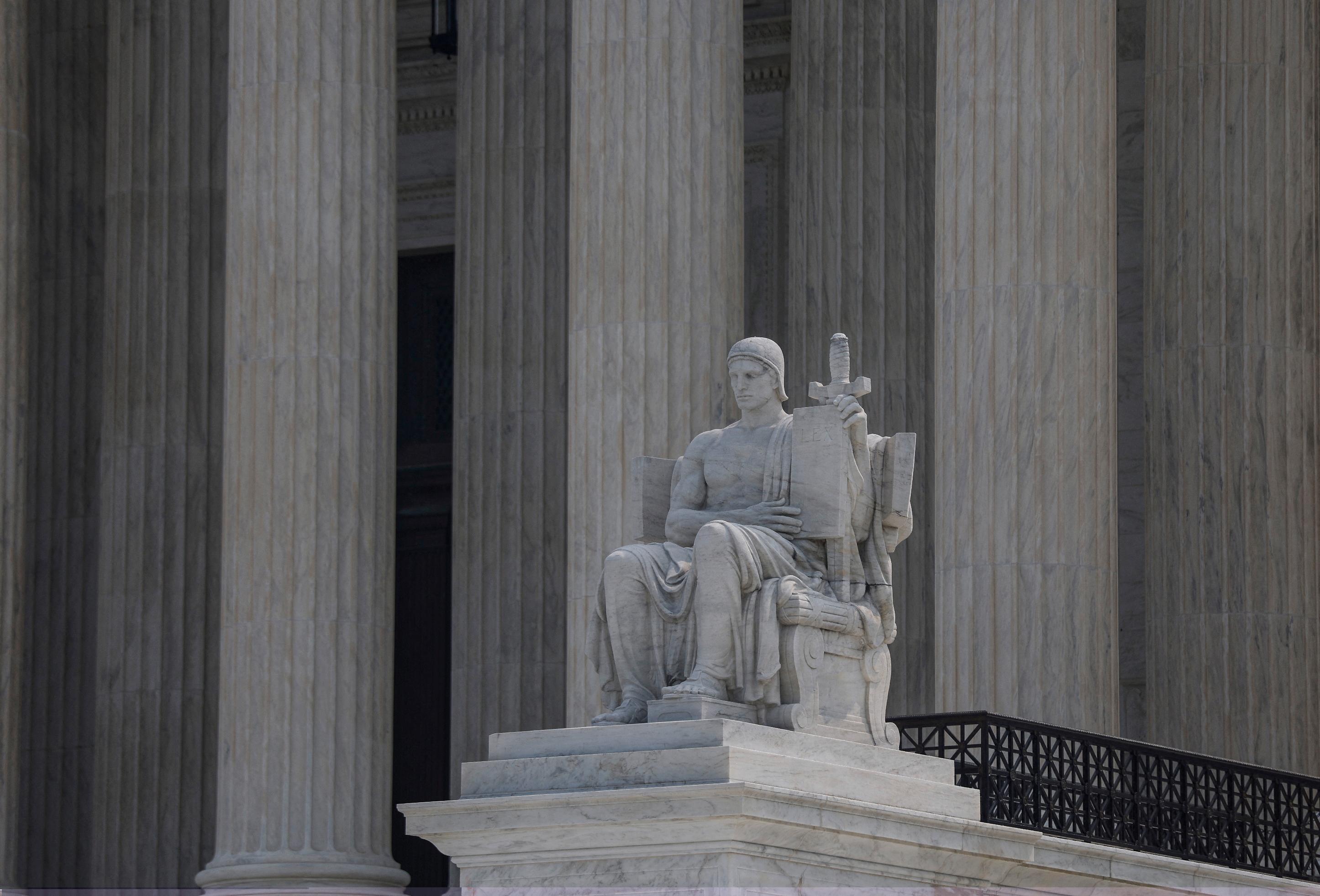
Jan 8 (Reuters) - The U.S. Supreme Court on Monday declined to hear a bid by major fossil fuel companies and an industry trade group to move a lawsuit filed by Minnesota accusing them of worsening climate change out of state court and into federal court, the energy industry's favored venue. Exxon Mobil Corp (XOM.N), Koch Industries and the American Petroleum Institute had asked the justices to review a March decision by the St. Louis-based 8th U.S. Circuit Court of Appeals. That court found that Minnesota's lawsuit accusing the energy industry of engaging in decades of deceptive marketing to undermine climate science and the public's understanding of the dangers of burning fossil fuels belonged in state court, where it was originally filed. Last year, the justices declined to consider several similar appeals, effectively sending cases filed in California, Colorado, Rhode Island, Hawaii, Maryland and elsewhere back to state court, a venue often seen as more favorable to plaintiffs than federal court. Minnesota Attorney General Keith Ellison said in a statement Monday that the decision will now allow the case to proceed toward trial in state court, and that the decision aligns with similar decisions in courts across the country. Representatives for the American Petroleum Institute, Koch and Exxon did not immediately respond to requests for comment. Eight U.S. appeals courts have affirmed lower court decisions remanding similar climate cases to state courts, finding generally that the lawsuits exclusively raise state law claims and thus federal courts do not have jurisdiction. The American Petroleum Institute, the oil and gas lobby group that has been accused of helping to coordinate the industry's alleged deception, and energy companies have said federal jurisdiction is appropriate because climate change is an issue of national and global importance. The fossil fuel industry has said the lawsuits effectively try to regulate federal energy policy through state law, and that the federal court system is the appropriate place to litigate harms allegedly caused by greenhouse gas emissions, which are produced across the globe and cannot be contained within state lines. Minnesota's 2020 lawsuit accused the energy companies and the American Petroleum Institute of knowing since the 1970s and 1980s that the fossil fuels they sold would cause climate change, but that the companies did not disclose that risk to the Minnesota public and instead actively sought to undermine climate change science. The state said the coordinated efforts to downplay the risks of fossil fuels violated state consumer protection and fraud laws, and has caused the state billions of dollars in economic damages tied to climate change. "Taken together, the defendants’ behavior has delayed the transition to alternative energy sources and a lower carbon economy, resulting in dire impacts on Minnesota’s environment and enormous costs to Minnesotans and the world," Ellison said Monday. The companies and the institute have denied those allegations, and told the Supreme Court in August that the case deserved to be in federal court given the state's apparent aim to seek a remedy for the impacts of a global phenomenon such as climate change. https://www.reuters.com/legal/us-supreme-court-declines-hear-exxon-koch-industries-appeal-climate-case-2024-01-08/
2024-01-08 16:05
Jan 8 (Reuters) - U.S. consumers' projection of inflation over the short run fell to the lowest level in nearly three years in December, the New York Federal Reserve said in a report on Monday. Inflation one year from now is expected to be at 3%, the lowest reading since January 2021, versus a projection of 3.4% in November, the regional Fed bank said in its latest Survey of Consumer Expectations. Poll respondents saw inflation three years from now at 2.6%, compared to 3% in November, while price pressures five years ahead were at 2.5% versus 2.7% in November. The survey also found that respondents projected bigger increases for college costs in December relative to November, while expectations for food and rent increases fell. The expected year-ahead rise in gasoline prices held steady at 4.5% in December, with expectations for home price rises unchanged at 3%. Ebbing inflation expectation readings bolster the broad consensus in financial markets and among U.S. central bank policymakers that inflation pressures will continue to retreat back toward the Fed's 2% target. Fed officials generally believe that inflation expectations strongly influence what actual price pressures do, so the pullback in the December poll buttresses the view that real-world inflation will continue to moderate. Cooling price pressures have allowed Fed officials to strongly suggest they are done with an aggressive campaign of interest rate hikes that began almost two years ago and accelerated after inflation peaked in the summer of 2022. At their Dec. 12-13 meeting, Fed policymakers even moved to pencil in rate cuts for 2024, with markets expecting a decent chance of an easing at the meeting March 19-20 meeting. Respondents in the New York Fed poll also forecast slower gains in household earnings and spending, with the latter measure moving to 5% in December, its weakest reading since September 2021. Despite the softer turn, the New York Fed said expected spending gains for the final month of the year remain above the February 2020 pre-pandemic level of 3.1%. The survey also found that consumers viewed access to credit as somewhat better, noting "expectations about credit access a year from now instead improved, with a larger share of respondents expecting looser credit conditions and a smaller share of respondents expecting tighter credit conditions a year from now." On balance, more households were upbeat about their financial situation in December and were more optimistic about conditions in the job market, the report said. https://www.reuters.com/markets/us/us-consumers-see-smaller-inflation-gains-ahead-new-york-fed-says-2024-01-08/

2024-01-08 15:29
Jan 8 (Reuters) - Medical device maker Boston Scientific (BSX.N) said on Monday it had agreed to buy Axonics Inc (AXNX.O) for $3.7 billion, gaining access to devices used to improve bladder function. The deal marks Boston Scientific's entry into sacral neuromodulation, a minimally invasive procedure used in the treatment of overactive bladder and fecal incontinence, and is the latest in efforts to scale up its urology business. Boston Scientific, which makes pacemakers, stents and catheters, will pay $71 in cash per share, representing a 23.3% premium to the Axonics' last close. Shares of Axonics jumped 22% in premarket trading. Axonics' products, such as Axonics R20 and Axonics F15, are used to deliver sacral neuromodulation therapy, which works by delivering mild electrical pulses to the sacral nerve to restore communication between the brain and the bladder. The California-based company's portfolio includes Bulkamid, a minimally invasive treatment for urinary incontinence in women. The deal is expected to close in the first half of 2024. Axonics expects to deliver net revenue of about $366 million in 2023, Boston Scientific said, adding it anticipates the deal to be add to its urology business in 2024. Massachusetts-based Boston Scientific has been on an acquisition spree. The company in September agreed to buy privately held Relievant Medsystems for an upfront cash payment of $850 million, gaining access to an FDA-cleared therapy for chronic pain. Prior to that, it bought Chinese medical technology company Acotec Scientific (6669.HK) for about $523 million. https://www.reuters.com/markets/deals/boston-scientific-buy-axonics-37-billion-2024-01-08/