
2024-01-08 04:03
U.S. seeks to avert wider war in Middle East OPEC output rises 70,000 bpd in Dec - Reuters survey Saudi Aramco slashes price for key crude grade to Asia NEW DELHI, Jan 8 (Reuters) - Oil prices fell by more than 1% on Monday on sharp price cuts by top exporter Saudi Arabia and a rise in OPEC output, offsetting worries about escalating geopolitical tension in the Middle East. Brent crude slipped 1.09%, or 86 cents, to $77.90 a barrel by 0344 GMT, while U.S. West Texas Intermediate crude futures shed 1.15%, or 85 cents, to $72.96 a barrel. "Saudi Aramco slashing its February OSPs bolsters the weak demand narrative," said Vandana Hari, founder of oil market analysis provider Vanda Insights. Rising supply and competition with rival producers prompted Saudi Arabia on Sunday to cut the February official selling price (OSP) of its flagship Arab Light crude to Asia to the lowest level in 27 months. "If we were just to focus on the fundamentals including, higher inventories, higher OPEC/non-OPEC production, and a lower-than-expected Saudi OSP, it would be impossible to be anything other than bearish crude oil," IG analyst Tony Sycamore said. "However, that doesn't take into account the fact that geopolitical tensions in the Middle East are undeniably rising again which will mean limited downside." Both contracts climbed more than 2% in the first week of 2024 after investors returned from holidays to focus on geopolitical risk in the Middle East following attacks by Yemeni Houthis on ships in the Red Sea. U.S. Secretary of State Antony Blinken, who is in the Middle East this week, said the Gaza conflict could spread across the region unless there is concerted peace effort. Israeli Prime Minister Benjamin Netanyahu vowed to continue the war until Hamas was eliminated. Offsetting upward pressure on prices from geopolitical concern, output from the Organization of the Petroleum Exporting Countries (OPEC) rose 70,000 barrels per day (bpd) in December to 27.88 million bpd, a Reuters survey showed. "The Red Sea tensions are the only counterweight, albeit a relatively weak and intermittent one, to crude prices succumbing to bearishness over expectations of softening global demand and rising inventories," said Vanda Insights' Hari. Separately, in the U.S., oil drilling rigs were up by one at 501 last week, Baker Hughes said in its weekly report. JPMorgan forecast 26 oil rigs to be added this year, most of them in the Permian during the first half of the year. https://www.reuters.com/markets/commodities/oil-slips-higher-opec-supply-saudi-price-cuts-offset-mideast-worries-2024-01-08/

2024-01-08 02:31
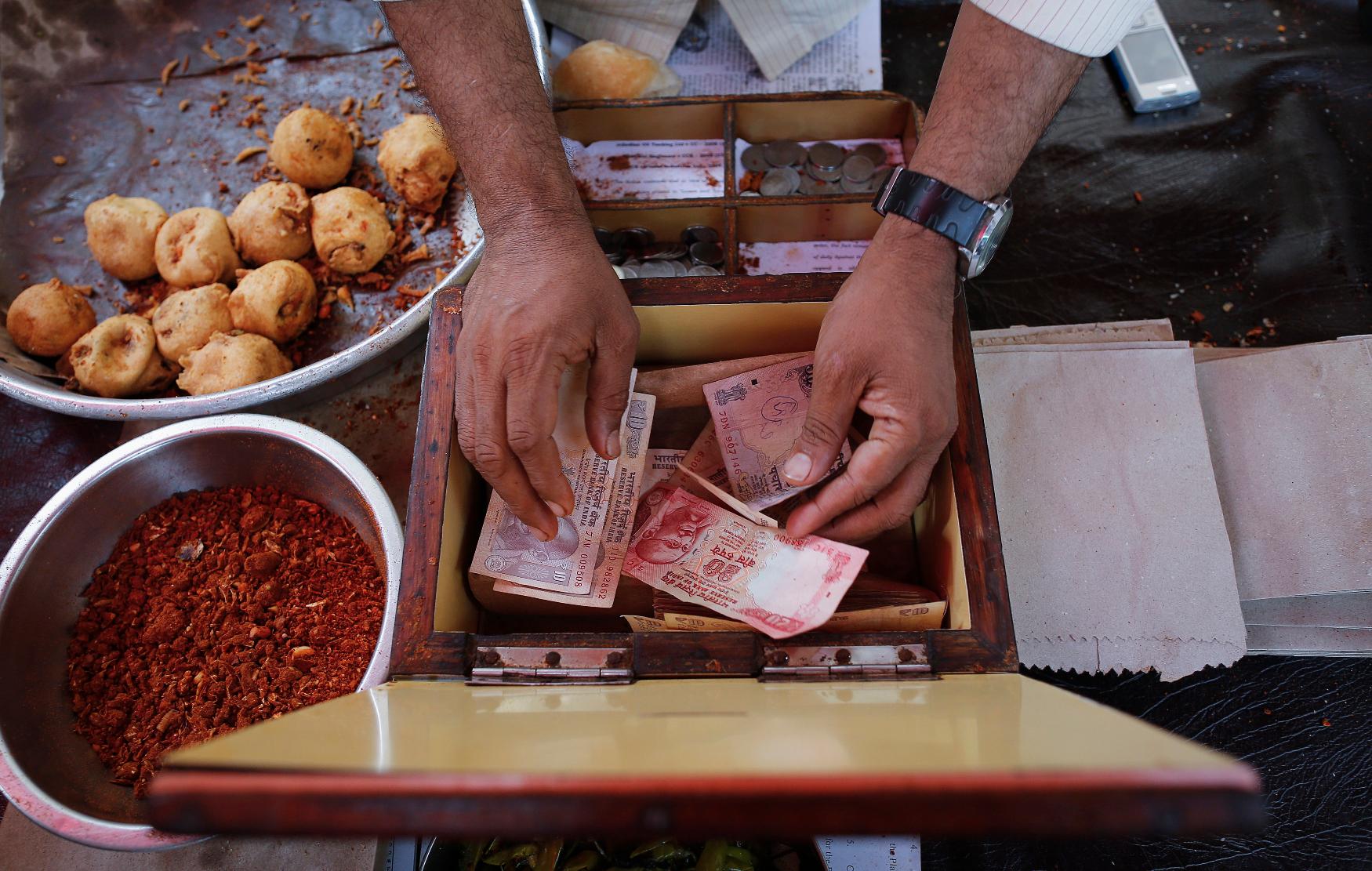
MUMBAI, Jan 8 (Reuters) - The Indian rupee is likely to open marginally higher on Monday on the back of an uptick in most Asian currencies following a U.S. jobs report that did not move expectations much around the Federal Reserve's interest rate outlook. Non-deliverable forwards indicate rupee will open at around 83.10-83.12 to the U.S. dollar compared with 83.15 in the previous session. The rupee is looking to extend its three-day winning run. The rupee has had "a bit of an unexpected" move higher and "Asia managing a recovery" will "help keep up the momentum", a fx spot trader at a bank said. Considering how range-bound the rupee has been, "it's completely acceptable to be optimistic" based on how it has done in the last few days. Asian currencies were mostly higher to begin the week, with investors digesting a mixed U.S. jobs report. U.S. employers hired more workers than expected in December and wages increased more than expected, but the number of jobs added in the previous two months was revised lower. The unemployment rate was unchanged at 3.7%. "Solid employment additions, low unemployment and sticky wages suggest no immediate need for Fed rate cuts," ING Bank said in a note. Nonetheless, the jobs market is cooling, ING added, pointing to the past two months of payrolls data being revised lower by 71,000 and the 3-month moving average continuing to moderate. ING reckoned the Fed will wait till May before cutting rates. U.S. inflation data is due on Thursday, providing investors direction on when the Fed will deliver its first rate cut. Asian currencies were up 0.1% to 0.3% and the dollar index dipped to 102.40. The weak U.S. services data released following the jobs report undermined demand for the dollar. KEY INDICATORS: ** One-month non-deliverable rupee forward at 83.20; onshore one-month forward premium at 8.50 paisa ** Dollar index down at 102.40 ** Brent crude futures down 0.8% at $78.2 per barrel ** Ten-year U.S. note yield at 4.05% ** As per NSDL data, foreign investors bought a net $166.8 mln worth of Indian shares on Jan. 4 ** NSDL data shows foreign investors bought a net $87.6 mln worth of Indian bonds on Jan. 4 https://www.reuters.com/markets/currencies/rupee-may-inch-up-tracking-asia-fx-following-mixed-us-jobs-report-2024-01-08/
2024-01-08 01:00
LONDON, Jan 5 (Reuters) - U.S. manufacturers are still struggling to emerge from the prolonged slump that began in the middle of 2022 as the pandemic-driven surge in merchandise buying subsided and consumers reverted to spending on services. Merchandise inventories have begun to normalise but companies making expensive business equipment and consumer durables are being hit by the high borrowing costs resulting from the biggest increases to interest rates for four decades. U.S. manufacturers reported a decline in business activity for a 14th month in a row in December, the longest business cycle slowdown since the recessions in 2001 and early Nineties. The Institute for Supply Management's (ISM) purchasing managers index increased marginally to 47.4 (17th percentile for all months since 1980) from 46.7 (14th percentile) in October. But the index has been below the 50-point threshold that divides expansion from contraction since November 2022. The number of months below the threshold has had more in common with a cycle-ending recession (generally 11 months or more) than a mid-cycle slowdown (typically 10 months or fewer). Chartbook: U.S. manufacturing activity The slowdown appears to be prolonged but unusually shallow. Manufacturing output has been essentially flat for about a year, according to separate data compiled by the Federal Reserve. Flat-lining manufacturing is confirmed by data on sales of diesel and other distillate fuel oils used by manufacturers and freight hauliers, which have also been flat or marginally lower for a year. Distillate fuel oil consumption was level or slightly lower throughout the first 10 months of 2023 whether biofuels are included or not. However, in a sign the trough has passed and renewed growth is imminent, the ISM production sub-index has been above 50 points in three of the most recent four months. The new orders sub-index remains in negative territory but has been edging up towards 50 as excess inventory liquidation is completed and customers start confirming new business. MANUFACTURERS LEAD DISINFLATION The industrial recession has been significantly longer and deeper in Europe and China. In the eurozone, the manufacturing purchasing managers index (PMI) has been below 50 points for 18 months running and finished the year at only 44.4 (8th percentile for all months since 2006) in December. In China, the official manufacturing purchasing index has been below 50 points for 16 of the past 22 months and finished the year at 49.0 (5th percentile for all months since 2011). The global industrial recession has depressed cross-border merchandise trade and taken much of the heat out of freight rates (until recent attacks on shipping in the Red Sea). But it has also stifled growth in oil, gas and electricity consumption, relieving some of the pressure on stretched energy systems. Downward pressure on prices for merchandise, freight and energy have driven most of the deceleration in inflation across major economies over the past year. Higher interest rates have had a differential effect, with a greater and more immediate impact on the merchandise side of the economy than with services. If the industrial slowdown persists, decelerating inflation should eventually create space for the U.S. central bank and its counterparts to start cutting interest rates over the course of 2024. The major sources of uncertainty are what happens if lower rates cause merchandise spending to recover and tighten supply chains again, and what happens if the much stickier service sector inflation persists. There is not much spare capacity in the energy system to facilitate faster growth (diesel inventories are low across all major consuming economies and the United States in particular). Increases to labour market turnover and pay have decelerated but unemployment remains unusually low, suggesting there is not much slack if hiring picks up. The challenge for major central banks is how far and how fast to cut interest rates without rekindling inflation. Interest rate traders expect the Fed to cut rates by a quarter of a point at its March 19-20 meeting and then reduce them by five more quarter-points by the end of the year. Such aggressive easing will only be possible if economic growth and goods sector growth are sluggish. The dour outlook for manufacturing explains why oil prices have continued to slide even as traders bet on earlier, more aggressive rate cuts and Saudi Arabia and its OPEC+ allies try to support them by trimming output. Related columns: - U.S. manufacturing slowdown long but shallow (December 5, 2023) - U.S. manufacturing has plateaued after post-pandemic rebound (November 13, 2023) - Prolonged U.S. manufacturing slowdown barely dents energy use (September 5, 2023) John Kemp is a Reuters market analyst. The views expressed are his own. Follow his analysis on X https://twitter.com/JKempEnergy https://www.reuters.com/markets/us/global-manufacturers-struggle-regain-momentum-kemp-2024-01-05/

2024-01-08 00:15
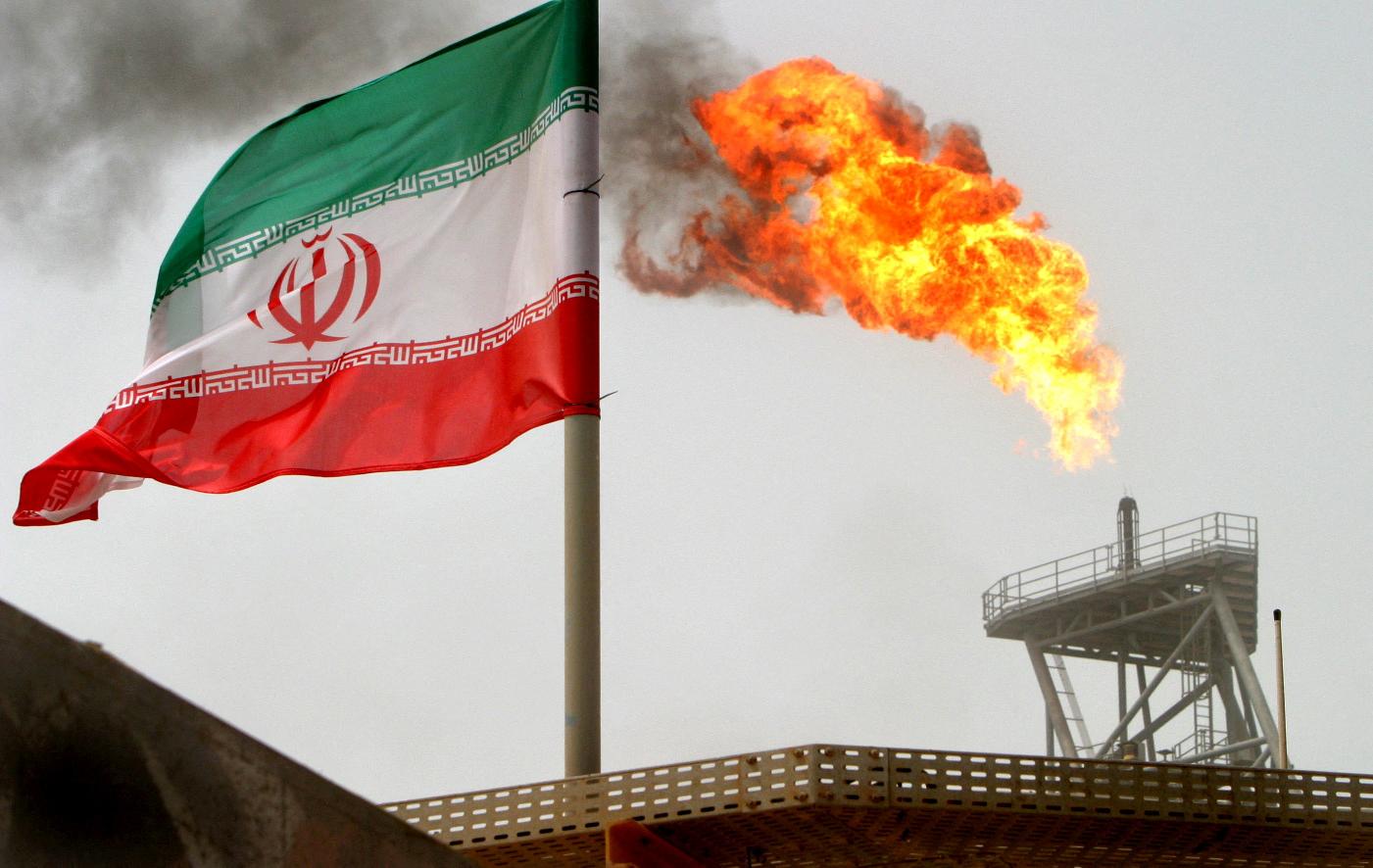
SINGAPORE, Jan 5 (Reuters) - China's oil trade with Iran has stalled as Tehran withholds shipments and demands higher prices from its top client, tightening cheap supply for the world's biggest crude importer, refinery and trade sources said. The cutback in Iranian oil, which makes up some 10% of China's crude imports and hit a record in October, could support global prices and squeeze profits at Chinese refiners. The abrupt move, which one industry executive called a "default", could also represent the backfiring of an October U.S. waiver on sanctions of Venezuelan oil, which diverted shipments from the South American producer to the U.S. and India, elevating prices for China as shipments dwindled. The National Iranian Oil Co, China's commerce ministry and the U.S. Treasury Department did not immediately respond to Reuters requests for comment. Early last month Iranian sellers told Chinese buyers they were narrowing discounts for December and January deliveries of Iranian Light crude to between $5 and $6 a barrel below dated Brent, five traders who handle the oil or are familiar with the transactions told Reuters. Those deals had been struck in November at discounts around $10 a barrel, the traders said. "This is considered as an extensive default and the order to hike prices apparently came from the headquarters in Tehran, as they're holding back supplies also to the intermediaries," a China-based trading executive said. An executive at a Chinese middleman that procures direct from Iran said the OPEC producer was "holding back some shipments", leading to a "stalemate" between Chinese buyers and Iranian suppliers. "It's not clear how things would end," this executive said. "Let's wait a bit and see if refineries are willing to accept the new price." China has saved billions of dollars buying often deeply discounted oil from sanctioned producers Iran, Venezuela and, more recently, Russia - countries that supply almost 30% of China's crude imports. 'TEAPOTS' SQUEEZED It is not clear how extensive Iran's cutbacks to China are. At least one buyer has accepted higher prices: a Shandong-based refiner bought a cargo late last month at discounts between $5.50 and $6.50 on a delivered ex-ship basis, two traders said. The discounts could narrow further, as the latest offer heard was $4.50, the traders said. Last year's average discount for Iranian Light, a key grade China buys with a high middle-distillates yield, was about $13, traders say. "The buyers are still struggling to find a solution as the new prices are too high," said a Shandong-based buyer. "But since they have limited choices and the Iranian side is very tough, the room for price negotiations is difficult and is not favouring Chinese buyers." China's smaller independent refiners, called "teapots", have become Tehran's top clients since first buying Iranian oil in late 2019. They replaced state-run refiners, which stopped dealing with Iran over concerns about falling afoul of U.S. sanctions. Teapots absorb about 90% of Iran's total oil exports, usually passed off as oil originating in Malaysia or the United Arab Emirates, trade sources say. Amid the tussle over prices, Iran's overall exports and China's imports from Iran have fallen. China imported about 1.18 million barrels per day (bpd) of Iranian oil last month, down from 1.22 million bpd in November and 23% off October's record 1.53 million bpd, tanker tracker Vortexa Analytics reckons. That represents the bulk of Iran's global seaborne crude exports, which another tracker, Kpler, estimates at 1.23 million bpd for December, down from 1.52 million bpd in November. Floating storage off Iran and nearby waters rose by about 2 million barrels to 15.5 million barrels over the past week, Kpler says. "The Iranians want to play catch-up in prices with (Russia's) ESPO. But they don't fully realise the extent of sanctions on Iranian oil is different from that on Russian," said a trading manager at an independent refiner. Washington has sanctioned more than 180 people and entities related to Iran's petroleum and petrochemical sectors since 2021, identifying 40 vessels as blocked property of the sanctioned entities. The main restrictions on Russian oil have been a $60-a-barrel price cap imposed in December 2022 by the U.S. and its allies, aiming to punish Moscow over its invasion of Ukraine. Major buyer India has mostly paid above $60 for Russian oil, hitting $85.42 in November, the highest since the Group of Seven industrial powers imposed the cap. https://www.reuters.com/business/energy/irans-oil-trade-with-china-stalls-tehran-demands-higher-prices-2024-01-05/
2024-01-07 22:37
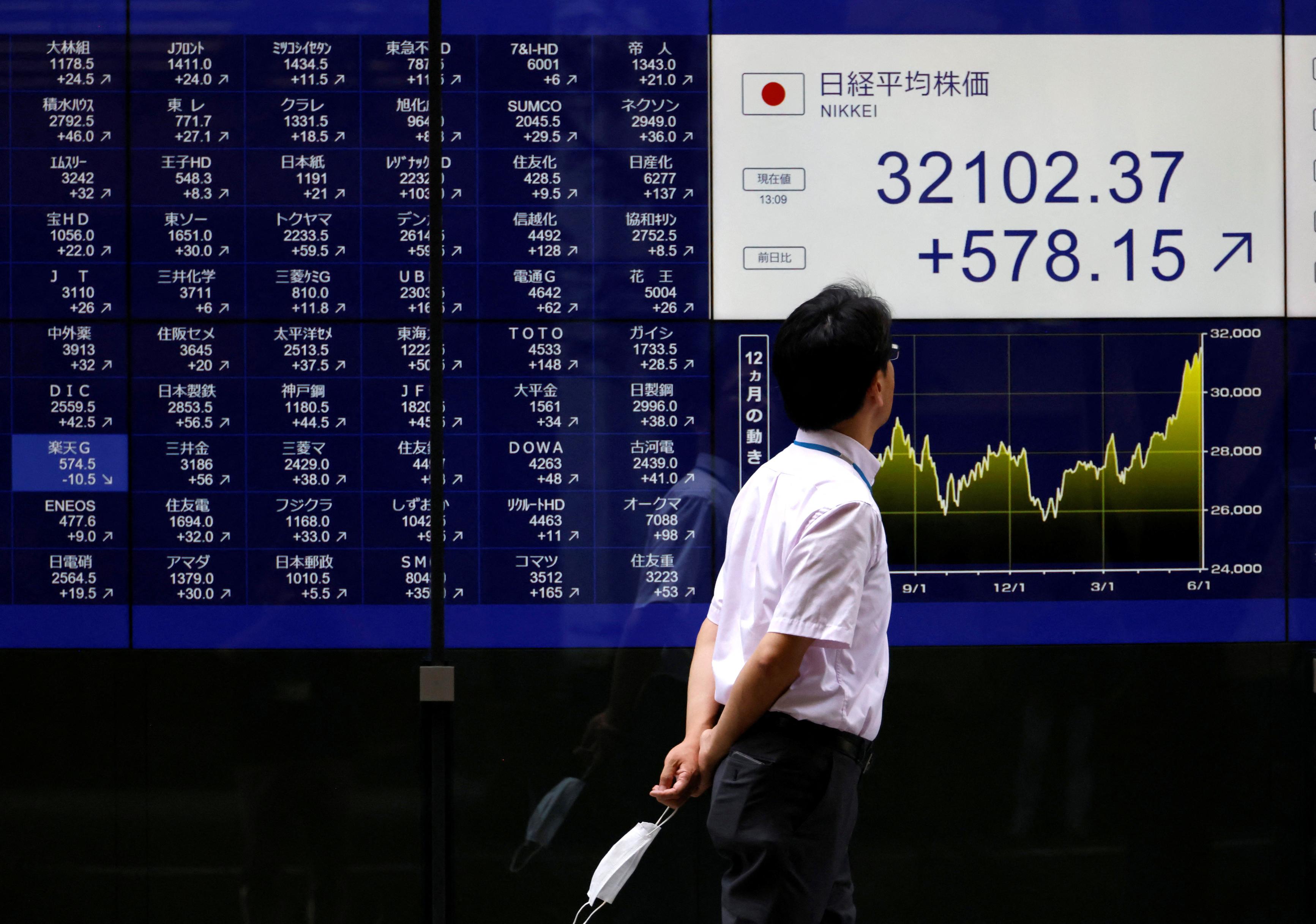
Jan 8 (Reuters) - A look at the day ahead in Asian markets. U.S. payrolls and service sector data won't offer much inspiration to Asian markets this week, thanks to the ambiguous economic and Fed policy picture that churned markets on Friday, though a handful of upcoming regional economic reports and the Taiwan election on Saturday with geopolitical ramifications will grab the spotlight. U.S. stock indexes seesawed to a small gain on Friday, even as the S&P 500 (.SPX) and Nasdaq (.IXIC) posted their worst weekly showing in months, after the Labor Department reported that U.S. employers hired more workers than expected last month while raising wages at a solid clip. Markets initially dialed back bets the Fed would start cutting interest rates in March, before the Institute for Supply Management (ISM) said that service sector employment plunged to 43.3 in December to the lowest level since July 2020 restored some of the speculation that policy makers would hike rates early in 2024. The U.S. 10-year Treasury yield swiveled around the 4% level on the clashing views of the strength of the economy, wrapping up the day around 4.05%, while its 13.1 bp weekly gain was the largest since mid-October. The dollar index ended little changed. The yuan ticked a bit higher against the dollar , which meshed with news that China's state owned banks were active in forex markets last week trying to contain the yuan's slide, according to four people with direct knowledge. On Sunday, a China foreign ministry spokesperson said China will sanction five U.S. military manufacturers in response to the latest round of U.S. arms sales to Taiwan. The sanctions come a week before Taiwan's Jan. 13 presidential and parliamentary elections, which China has cast as a choice between war and peace. Dollar/yen ended Friday up a fractional 0.02%, just enough to extend the 2024 winning streak to four days. Bank of Japan Governor Kazuo Ueda faces pressure to end Japan's negative interest rate policy. Last week's devastating earthquake could make it harder to rev up the economy and inflation. On Tuesday, when Japanese markets reopen from a holiday Monday, Japan's December household spending and Tokyo Consumer Price Index could feed into Nikkei and JGB trading. Several other CPI reports are due this week, including the Australia CPI on Tuesday, China CPI Thursday, India CPI on Friday and the widely anticipated U.S. release on Thursday. Here are key developments that could provide more direction to markets this week: - Tokyo CPI Tuesday (December) - Japan household spending Tuesday (December) - South Korea unemployment rate Tuesday (December) (This story has been corrected to fix the day of week for Japan's economic data releases to Tuesday, not Monday, and clarifies that Japanese markets were closed on Monday in paragraph 9) https://www.reuters.com/markets/asia/global-markets-view-asia-graphic-2024-01-07/
2024-01-07 21:57
SYDNEY, Jan 8 (Reuters) - First responders rescued more than 20 people from flooding in Australia's Victoria state on Monday, and officials warned of further flooding as storms lashed an already-drenched region in the latest bout of wild weather to hit the country's east coast. Showers and thunderstorms are forecast to bring up to 100mm (3.9 inches) of rain, more than a month's worth in places, to a wide belt stretching from southwest New South Wales state into northeast Victoria on Monday morning, according to the bureau of meteorology. The ground was already wet and rivers were swollen after storms on Sunday and overnight. A month's worth of rain fell on the town of Redesdale in three hours overnight. Victorian state first responders received roughly 700 calls for help and conducted 26 rescues in the early hours of Monday, in particular around the regional town of Bendigo, roughly 120 km (75 miles) north of Melbourne. "We've got a lot of crews across the state currently preparing for impending weather," Victoria state emergency service assistant chief officer Mark Cattell told ABC News. "We have a lot of crews resting after a very busy night in the Bendigo area." Seven flood warnings are in place across Victoria and dangerous flash flooding is possible through Monday afternoon as the rain rolls east towards the coast. Australia's east has been hit by rain, floods and even a tropical cyclone during a summer when many had expected the El Nino phenomenon to bring with it dry weather and bushfires. https://www.reuters.com/world/asia-pacific/flooding-hits-southeast-australia-heavy-storms-drench-region-2024-01-07/


