2024-01-05 19:47
BUENOS AIRES, Jan 5 (Reuters) - Argentina's Economy Minister Luis Caputo discussed with representatives of banks the country's economic program, including liability management, but no official debt swap proposals have been made, a ministry source told Reuters on Friday. A second banking source with knowledge of the Thursday evening meeting said the government spoke "of its intention" of swapping local debt maturing in 2024 for notes maturing in 2025 and through 2027, in a peso amount that could reach the equivalent of $71 billion. The source said no specific amounts were discussed for the debt management. "There wasn't and isn't a concrete proposal. The economic program was presented and there was an exchange of ideas regarding liability management," the ministry source said. Earlier on Friday, Bloomberg News reported on the debt swap, saying the government could issue new peso bonds in February to swap for the 2024 maturities. A third banking source said the recently appointed Argentine government has been exploring several options to clear their short-term external liabilities. "It is part of the economic adjustment along with negotiations with the IMF and passage of important reforms," the source said. Argentina and the International Monetary Fund were due to begin meetings on Friday to discuss a delayed review of their $44 billion program. https://www.reuters.com/world/americas/argentina-government-talks-peso-debt-risk-with-banks-repayments-loom-2024-01-05/

2024-01-05 19:43
WASHINGTON, Jan 5 (Reuters) - The U.S. Commerce Department said on Friday it found that imports of tin mill products from Canada, China, Germany, and South Korea are being dumped onto the U.S. market and imports of tin mill products from China are also being subsidized. The department also found that imports of tin mill products - a shiny silver metal widely used in cans for food, paint, aerosol products and other containers - from the Netherlands, Taiwan, Turkey, and the United Kingdom are not being dumped, it said in a statement. The final duties are largely in line with the Commerce Department's preliminary anti-dumping duties on the tin-plated steel imports from Canada, Germany and China imposed in August. With the exception of China, they are far lower than the double-digit and triple-digit duties initially sought by U.S. steelmaker Cleveland-Cliffs (CLF.N) and the United Steelworkers union in their petition for a Commerce investigation filed a year ago. The department said on Friday that the highest final anti-dumping duties of 122.5% will be imposed on tin mill steel imported from China. It also imposed countervailing anti-subsidy duties of 650% on tin mill products from top China producer Baoshan Iron and Steel Co Ltd and 331.9% on all other Chinese steelmakers. Germany's ThyssenKrupp Rasselstein (TKAG.DE) and other German producers were slapped with final anti-dumping duties of 6.88%, while Canada's ArcelorMittal Dofasco and other Canadian producers were hit with final anti-dumping duties of 5.27% Commerce imposed a final anti-dumping duty rate of 2.69% against South Korea's KG Dongbu Steel (016380.KS) after initially receiving no anti-dumping duties. Canada said it was disappointed with the finding. "These duties not only weaken supply chains between Canada and the United States, but also worsen the impacts of inflation on both sides of the border," Canada's trade minister, Mary Ng, said in a statement. "Canada will continue to defend the interests of the Canadian steel industry and its workers.” The Commerce Department upheld its earlier findings that tin-plate steel from the Netherlands, Taiwan, Turkey and Britain were not dumped. The U.S. produces less than half of the tin mill steel it consumes, making the packaging industry reliant on imported steel. "These findings demonstrate that Commerce took a careful and nuanced approach based on the particular circumstances presented by each company and the governing provisions of U.S. law," the department said in a statement. For the duties to remain in place, the U.S. International Trade Commission must determine that American producers have sustained material injury due to the dumping findings. That vote is expected in the coming weeks. https://www.reuters.com/markets/commodities/us-says-tin-mill-products-china-canada-germany-being-dumped-2024-01-05/
2024-01-05 19:16
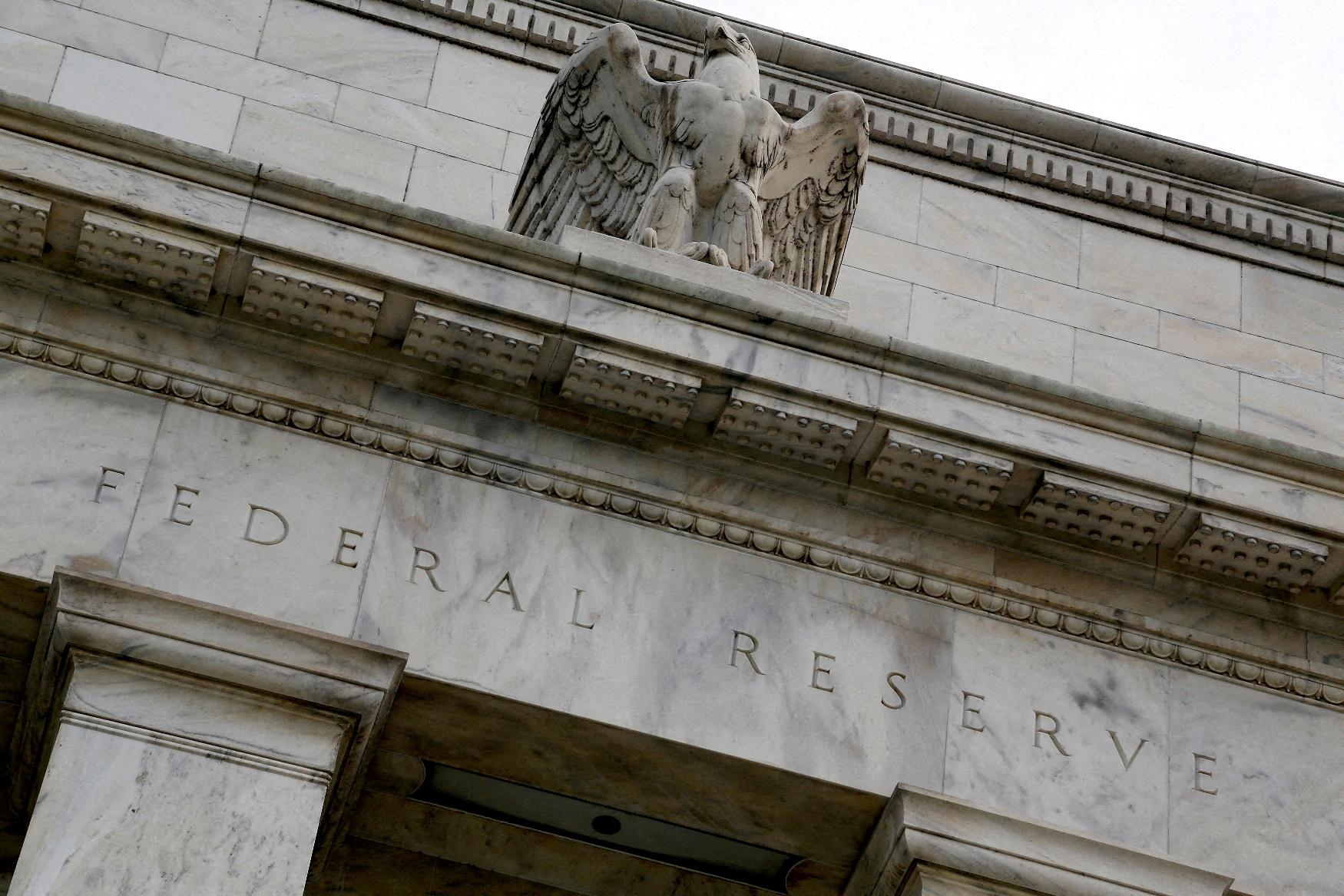
NEW YORK, Jan 5 (Reuters) - A potential ending to the Federal Reserve’s balance sheet reduction measures this year bolsters the case for Treasuries to extend their 2023 rally, investors said, though many believe factors such as fiscal concerns could counterbalance gains. Minutes from the Fed’s Dec. 12-13 policy meeting, released earlier this week, showed some officials are already discussing what it would take to end the shrinkage of the central bank’s cash and bond holdings. That process, known as quantitative tightening, has seen the Fed’s balance sheet contract by nearly $100 billion per month as it allows Treasury and mortgage bonds it owns to mature and not be replaced. In doing so, it has reduced its balance sheet by just over $1 trillion, to $7.764 trillion on Dec. 27, complementing the aggressive rate increases it started in early 2022. Some market participants said perceptions that an end to quantitative tightening was approaching could be another positive factor for bond markets in a year during which the Fed is expected to cut interest rates after a tightening cycle that saw them rise 525 basis points. Yields on the benchmark 10-year Treasury, which move inversely to prices, have plunged over 100 basis points from 16-year highs hit in October on anticipation of rate cuts. That reversal spared bond markets for what could have been an unprecedented third straight year of declines. Still, factors such as widening fiscal deficits - estimated to hit $20 trillion in the coming decade - and possibly lower demand for U.S. Treasuries from large foreign buyers are likely to keep bond prices from rising too far, market participants said. "The slowing down of quantitative tightening is a positive, but I think the deficit situation is worse," said Vishal Khanduja, co-head of broad markets fixed income at Morgan Stanley Investment Management. Meanwhile, timing the end of QT could be difficult, as it may not necessarily coincide with reductions in interest rates. Analysts at Deutsche Bank said on Thursday the Fed may end QT as early as June if it starts cutting interest rates in response to a possible recession - an economic scenario the bank’s strategists forecast for this year. On the other hand, the Fed could extend QT into next year if the economy experiences a so-called soft landing, where inflation cools and growth remains resilient, the bank said. A more conservative view came from so-called primary dealers. Wall Street’s biggest banks - surveyed before the Fed's Dec. 12-13 meeting - predicted policymakers would end balance sheet reduction in December 2024, later than they had previously forecast. The results of the survey were released on Thursday. Matthew Miskin, co-chief investment strategist at John Hancock Investment Management, said the Fed's balance sheet measures are likely to continue running in parallel with changes in interest rates. However, economic data such as Friday’s better-than-expected jobs report argue against balance sheet reduction in the near term, he added. While an unwind of quantitative tightening could provide a measure of support for bonds, "quantitative policy is a piece of the puzzle, but frankly not as big of a piece as is often considered," he said. https://www.reuters.com/markets/us/an-end-quantitative-tightening-could-support-bonds-though-timing-is-tricky-2024-01-05/
2024-01-05 18:52
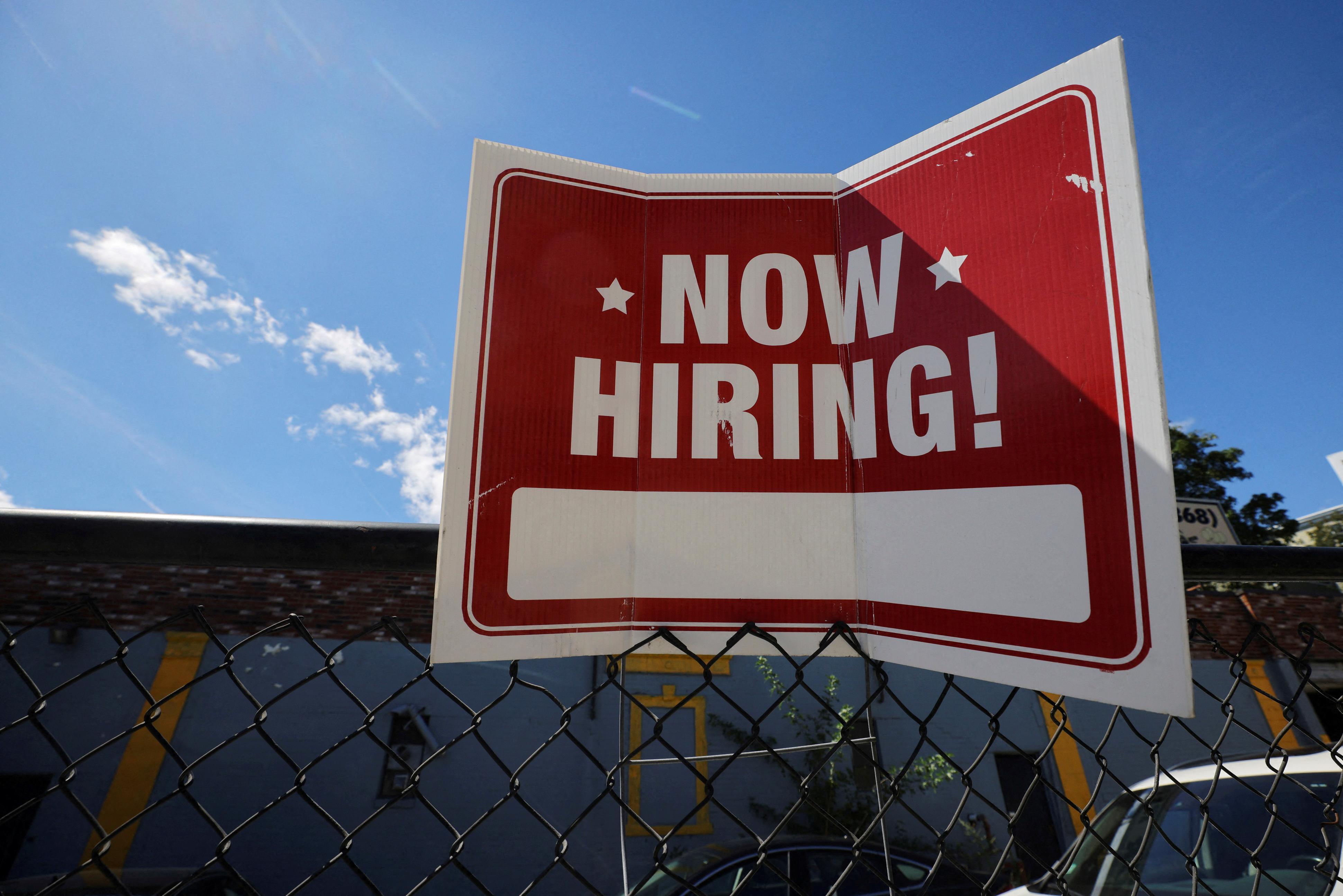
Jan 5 (Reuters) - The latest government data on Friday showed the U.S. added 216,000 jobs in December, as the labor market settles back towards more normal levels following almost four years of upheaval caused by the COVID-19 pandemic. Figures on worker absences that accompany the U.S. Labor Department's monthly employment report, derived from a separate monthly survey of households, show both the rebound from, and the lingering impact of, the health crisis. While the data are not seasonally adjusted, the trend lines are clear. DATA ON ABSENCES MIXED The number of workers who were absent due to illness, injury, a medical problem or appointment reached a peak of 7.8 million in January 2022 as a normalizing labor market collided with a spike in COVID-19 cases caused by the more transmissible Omicron variant. About one million infections were reported per day that month. There were still about 29,000 hospitalizations in the U.S. due to the virus in the week before Christmas last year, according to the Centers for Disease Control and Prevention, while there have been an average of 1,400 deaths per week since the Thanksgiving holiday. Still, that's fewer than half of the number of deaths for the same period last year. The absence level from work for illness or injury-related reasons was almost 25% lower last month than a year ago. Overall, there was a large decline in the number of people who missed work for those reasons in 2023, although the figure for those who usually work full-time but had to work part-time due to illness, while falling, remains elevated. CHILDCARE PROBLEMS REMAIN The pandemic played havoc with childcare, as schools moved to virtual learning or stopped lessons altogether for a prolonged period, and some daycare centers shuttered for healthcare reasons, a lack of income or staffing shortages. Since the crisis abated and schools resumed in-person learning, the number of people reporting missing work due to childcare problems has fallen. Childcare issues, however, remain as demand for early childhood centers outstrips supply and childcare often costs more than many parents can afford. The number of people who missed work entirely or had to work part-time due to childcare issues fell sharply in December despite concerns about a "childcare cliff" in the fourth quarter after pandemic-era government support for childcare expired. However, the latest figures show the number of people who missed work due to childcare problems remains higher than the pre-pandemic average of 312,000, even though it is well off the peak of 795,000 reached at the height of the pandemic. LABOR STRIKES SPIKE One of the biggest impacts of the global health crisis was the surge in inflation caused due by goods and labor shortages. U.S. inflation rose to a peak of 9.1% on an annual basis in June 2022, a far cry from the 2.3% reading in February 2020, and well above the Federal Reserve's 2% target rate. With companies competing heavily for workers and the rising cost of living and high inflation eating into wages, union members in the U.S., including automotive workers, airline pilots, and screenwriters and actors went on strike last year. More Americans missed some time at work due to labor disputes in 2023 than in any year since 1989, according to data from the Bureau of Labor Statistics. VACATIONS ARE BACK Millions of people initially lost their jobs as the pandemic cratered the economy. Even for those who remained employed, the impact of lockdowns, heavy restrictions on international air travel and widespread fears of contracting the virus caused a sharp drop in the vacation time workers reported taking. Vacation days have since rebounded, tracking the recovery in employment. With more people working, it stands to reason that more leisure time would be taken, and the latest figures show the annual total number of people not at work for the whole survey week due to vacation time or personal days is now the highest since 2017. For those working part-time, it was a record. https://www.reuters.com/markets/us/us-worker-absences-highlight-mixed-labor-market-pandemic-recedes-2024-01-05/
2024-01-05 18:35
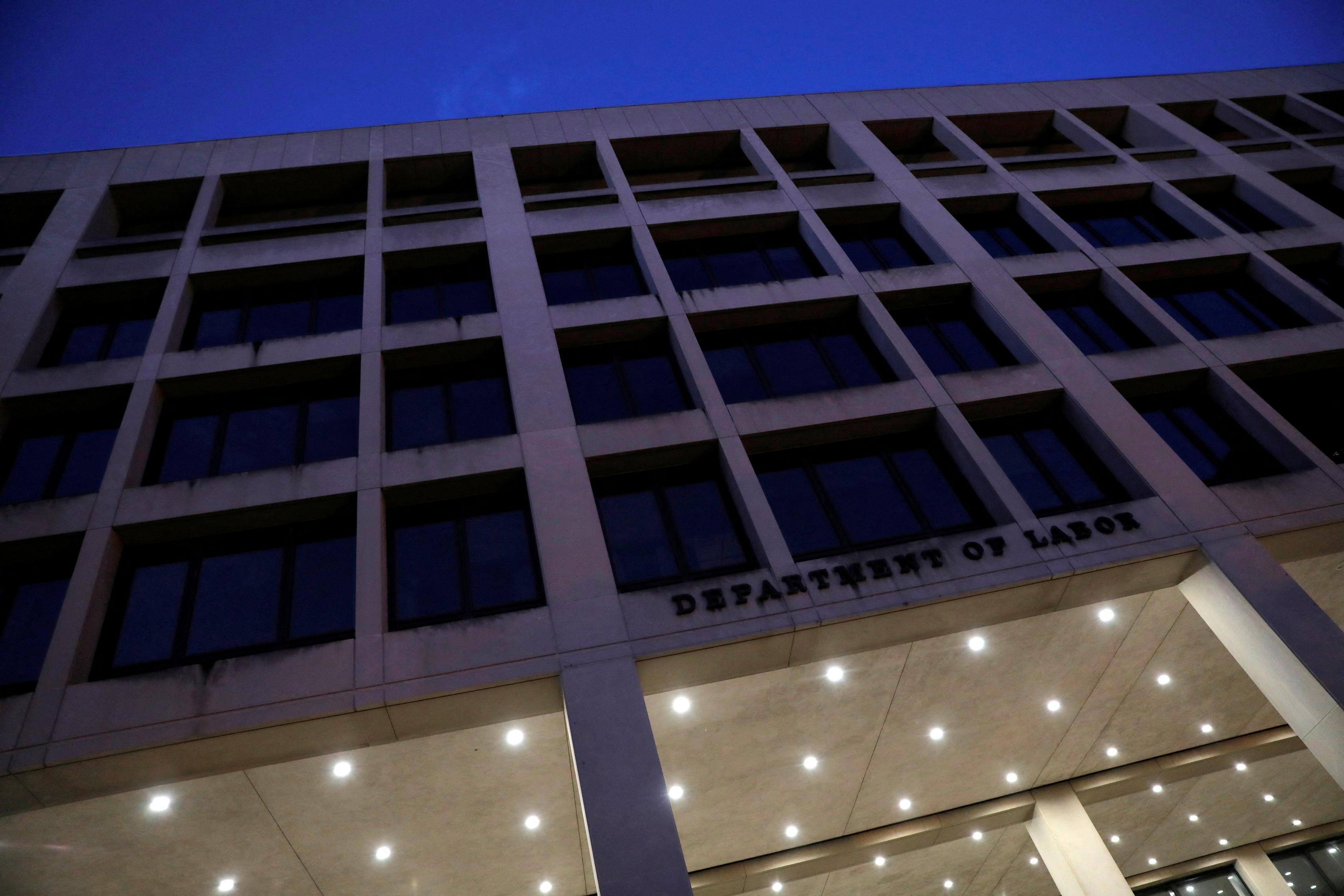
Nonfarm payrolls increase 216,000 in December Unemployment rate unchanged at 3.7% Average hourly wages gain 0.4%; rise 4.1% year-on-year WASHINGTON, Jan 5 (Reuters) - U.S. employers hired more workers than expected in December while raising wages at a solid clip, casting some doubt on financial market expectations that the Federal Reserve would start cutting interest rates in March. There were, however, some cracks in the closely watched employment report from the Labor Department on Friday. The economy added 71,000 fewer jobs in October and November than previously reported. While the unemployment rate held at 3.7% last month, that was because 676,000 people left the labor force, almost erasing all the gains in participation since February. Household employment fell sharply and the workweek was on average slightly shorter than in November. Nonetheless, the report indicated that the economy avoided a recession last year and would likely continue to grow through 2024 as labor market resilience supports consumer spending. "A gradual labor market cooldown remains in place," said Scott Anderson, chief U.S. economist at BMO Capital Markets in San Francisco. "However, the lingering labor market resilience and strength in wage growth could keep the Fed on the sidelines for longer than the markets currently expect." Nonfarm payrolls increased by 216,000 jobs last month, the Labor Department's Bureau of Labor Statistics said. Economists polled by Reuters had forecast payrolls rising by 170,000 jobs. The economy added 2.7 million jobs in 2023, a sharp step-down from the 4.8 million positions created in 2022. That reflected cooling demand in the economy following 525 basis points worth of rate hikes from the U.S. central bank since March 2022. Roughly 100,000 jobs per month are needed to keep up with growth in the working age population. Government hiring as state and local authorities try to bring education staffing back to pre-pandemic levels led the rise in employment last month, with 52,000 jobs added. Government payrolls growth averaged 56,000 jobs per month in 2023, more than double the average monthly gain of 23,000 in 2022. Employment in the healthcare sector increased 38,000, spread across ambulatory healthcare services and hospitals. Unseasonably mild weather boosted hiring at construction sites, with payrolls in the industry rising 17,000. Leisure and hospitality employment gained 40,000. Employment in the industry is below levels seen before the COVID-19 pandemic by 163,000. Retail employment rose 17,400. Professional and business services payrolls rose 13,000, but temporary help services shed another 33,300 positions. Employment in the sector, seen as a harbinger for future hiring, has declined for 11 straight months. Manufacturing jobs increased 6,000. But employment in the transportation and warehousing industry fell 22,600. The labor market generally remains tight, with 1.40 job openings per every unemployed person in November. That is feeding through to wages, which remain elevated. Average hourly earnings rose 0.4% in December, matching the prior month's gain. That raised the year-on-year increase in wages to 4.1% from 4.0% in November. Wage growth is well above its pre-pandemic average and the 3-3.5% range that most policymakers view as consistent with the Fed's 2% inflation target. Financial markets initially reduced the probabilities of a March rate cut to around 53% but later boosted them to about 65% as traders digested the mixed employment report. Attention now shifts to December's consumer inflation report, scheduled to be published next Thursday. Stocks on Wall Street were mixed. The dollar slipped against a basket of currencies. U.S. Treasury prices fell. SOFT HOUSEHOLD DETAILS The Fed held its policy rate steady in the current 5.25%-5.50% range last month and policymakers signaled in new economic projections that the historic monetary policy tightening engineered over the last two years is at an end and lower borrowing costs are coming in 2024. There was an increase in the share of industries reporting job growth last month, helping to assuage concerns that hiring was too concentrated in a few sectors. With December's employment report, the government incorporated annual revisions to the seasonally adjusted household survey data, from the which the unemployment rate is derived, for the past five years. The revisions had little impact on the jobless rate or the labor force participation rate. The unemployment rate has risen from a five-decade low of 3.4% in April amid an influx of people into the labor force, some of it tied to a rise in immigration. But the trend reversed in December, with 676,000 people leaving the workforce. As a result the labor force participation rate, or the proportion of working-age Americans who have a job or are looking for one, fell to 62.5%. That was the lowest level since February and was down from 62.8% in November. The prime working-age participation rate was the lowest since March. Both women and men saw a drop in participation, which also fell for foreign-born and American-born workers. Some economists speculated that year-end retirements accounted for the decline in both household employment and the workforce. "It looks like monthly volatility may have played a role, but we won't know for sure until next month's release," said Daniel Vernazza, chief international economist at UniCredit Bank in London. Household employment plunged 683,000. It is, however, very volatile. The employment-to-population ratio, viewed as a measure of an economy's ability to create employment, fell to a one-year low of 60.1% from 60.4% in November. More people worked part-time for economic reasons, with the number increasing 217,000. A broader measure of unemployment, which includes people who want to work but have given up searching and those working part-time because they cannot find full-time employment, rose to 7.1% from 7.0% in November. "The labor market is not as tight as you think," said Sung Won Sohn, finance and economics professor at Loyola Marymount University in Los Angeles. "I am still expecting the Fed to cut rates at least a couple of times in the first half of the year." https://www.reuters.com/markets/us/us-job-growth-beats-expectations-december-wages-rise-solidly-2024-01-05/
2024-01-05 18:18
Loonie trades in a range of 1.3288 to 1.3398 Canada's economy adds barely any jobs in December Wage growth accelerates Canada-U.S. 2-year spread narrows by 2.2 basis points TORONTO, Jan 5 (Reuters) - The Canadian dollar was little changed against its U.S. counterpart on Friday in seesaw trading as investors largely stuck with bets for central bank rate cuts over the coming months as they assessed mixed U.S. and Canadian jobs data. The loonie was trading nearly unchanged at 1.3345 to the greenback, or 74.93 U.S. cents. It touched its weakest level since Dec. 19 at 1.3398 shortly after the data was released before rebounding to its strongest of the day at 1.3288, as the U.S. dollar (.DXY) gyrated against a basket of major currencies. "If you dig deeper it's not such a crazy good (U.S. jobs)report as the initial headline suggests," said Erik Bregar, director, FX & precious metals risk management at Silver Gold Bull. "That's why I think the dollar bulls are backing off here. That's why I think CAD's bouncing." U.S. employers hired more workers than expected in December but there were potential red flags in the employment report, including difficulties adjusting the data for seasonal fluctuations. Canada's economy added a meager 100 jobs in December but permanent employees' wages increased at the fastest pace in three years. Money markets continued to expect the Federal Reserve to begin cutting interest rates as soon as March while they are leaning toward April for the Bank of Canada's first ease. The Canadian dollar is expected to trade at stronger levels than previously thought over the year if the Fed pivots to cutting rates before the BoC, a Reuters poll found. Canadian bond yields edged higher across the curve. The 2-year was up 1.4 basis points as 4.064%, while the gap between it and the U.S. equivalent narrowed by 2.2 basis points to about 31 basis points in favor of the U.S. note. https://www.reuters.com/markets/currencies/cad-seesaws-traders-dig-deeper-into-jobs-data-2024-01-05/