2024-01-05 11:02
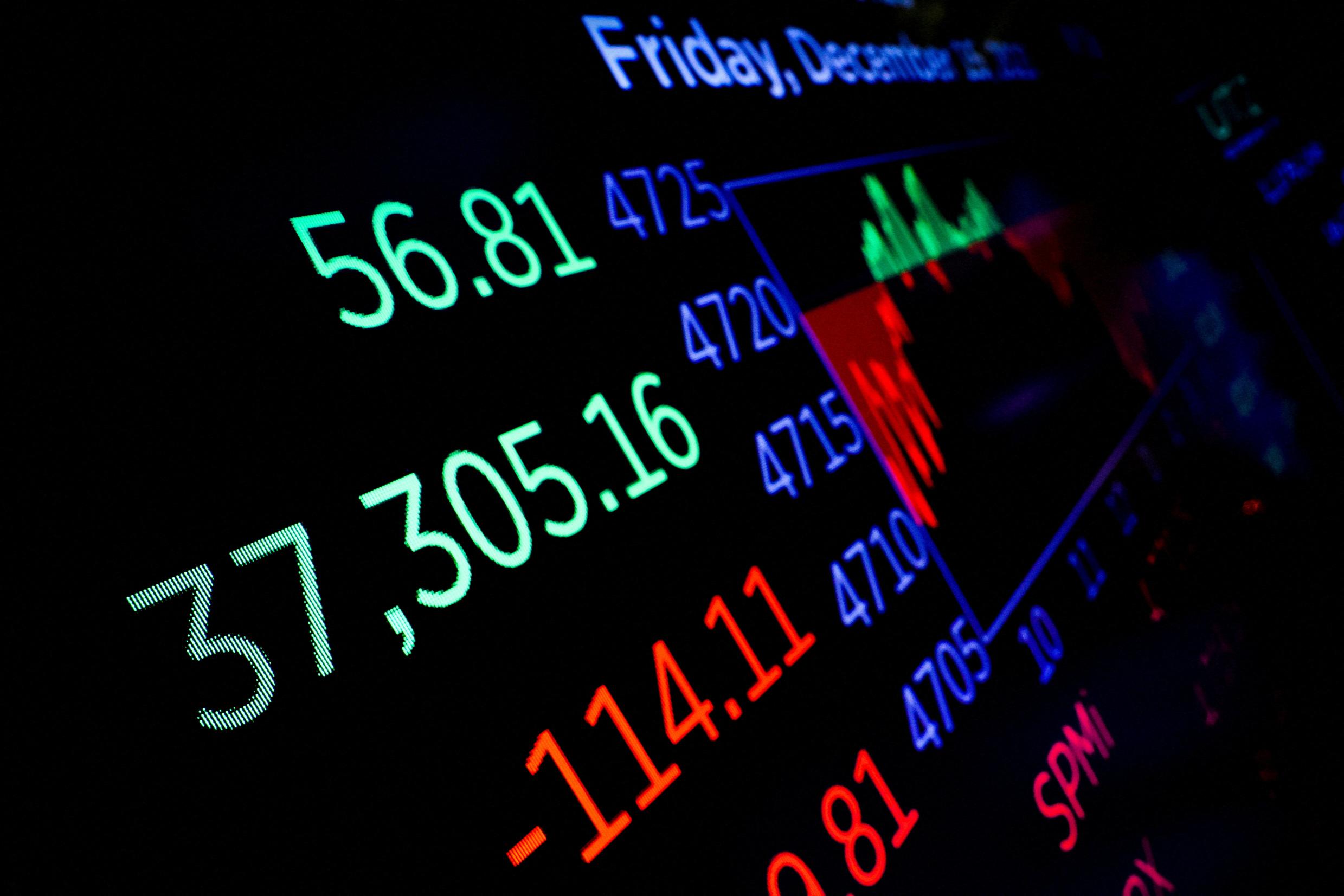
A look at the day ahead in U.S. and global markets from Mike Dolan If the Federal Reserve is now wary of a sudden fracture in the U.S. labor market, it won't be unduly alarmed by what it's seen of December employment so far. With Friday's payrolls report looming over New Year markets all week - pointing to the first weekly loss in global equities (.MIWD00000PUS) since October - most other readouts of U.S. hiring last month looked to still be in rude health. The number of Americans filing new claims for jobless benefits dropped to a two-month low last week, ADP's private sector payrolls increased by 164,000 - the biggest gain in four months - and job cuts announced by U.S.-based employers dropped 24% last month. While falling job openings did show some cooling of labor demand, the numbers were for November. All of which points to another robust national employment picture later today - with forecasts angling for a payrolls increase of 170,000 jobs, down from November's 199,000. The jobless rate is expected to tick back up to 3.8%. Even though minutes of the Fed's December policy meeting, which electrified rate cut hopes last month, pointed to fears of "overly restrictive" policy in the event of an "abrupt downshift" in employment, there's little sign of that yet. All of which has seen futures markets gradually pare back bets on the extent of 2024 Fed easing all week. Just ahead of Friday's jobs report, the chance of the first quarter-point Fed cut by March dipped below 70% compared to being fully priced late last month. And the amount of overall easing in 2024 was reduced to 133 basis points, compared to 150bps just before the holiday. While the staffing picture should underline "soft landing" hopes for the economy, the interest rate picture still dominates the overall market mood. Two-year Treasury yields jumped above 4.4% on Friday for the first time since Dec. 20, with 10-year yields back above 4% and at their highest since the Fed meeting on Dec. 13. The dollar (.DXY) is getting a shot in the arm from the Fed rethink and also hit its best level since the day after the Fed bombshell dropped last month. The rates recalibration has made for a miserable opening week for stocks, with Wall St benchmarks ending in the red in all three trading days of 2024 so far and futures down again ahead of Friday's bell. Including the last two days of December, the five-day slide in the S&P500 (.SPX) is the longest losing streak since September and, just like 10-year Treasury yields, the index has returned to Fed-day levels. The VIX (.VIX) index of Wall St equity volatility closed at its highest level since mid-November on Thursday. Elsewhere, oil and commodity markets were steadier. The United Nations food agency said its world food price index ended last year about 10% below its year-earlier level. European stocks were lower as they digested news of an expected jumpback in headline annual inflation in the euro zone for December. But the inflation rate came in below forecast and under 3% and, annual base effects aside, underlying disinflation momentum remained in train with producer prices plunging again. In China, stocks stuttered (.CSI300) yet again in the gloomy economic picture there. But hopes of more monetary easing from the People's Bank of China saw yields on the benchmark 10-year government bond fall to 2.525% - the lowest since April 2020. Key diary items that may provide direction to U.S. markets later on Friday: * U.S. Dec employment report, U.S. Dec ISM service sector survey, U.S. Nov Factory orders; Canada Dec employment report * Richmond Federal Reserve President Thomas Barkin speaks * U.S. corporate earnings: Constellation Brands https://www.reuters.com/markets/us/global-markets-view-usa-graphics-2024-01-05/
2024-01-05 11:00
LONDON, Jan 5 (Reuters) - For all the valuation and diversification arguments routinely touted, bitter and sweet experience tells U.S. investors to stay at home. A decade of underperformance of global equity portfolios against plain vanilla domestic U.S. megacap and blue chips stock indexes leaves a heavy burden of proof to convince already-wary U.S. long-term investors to venture again overseas. Over the past 10 years, MSCI's USA stock index (.dMIUS00000PUS) has outstripped its Europe, AustralAsia and Far East (EAFE) index (.dMIEA00000PUS) by some 55%, its emerging markets equivalent (.MSCIEF) by 60% and MSCI China (.dMICN00000PUS) by 66%. And even if the eye-popping relative performance over the past 10 years counted for nothing, savers are not exactly being tempted rosy scenarios abroad for foreseeable future. Fractured geopolitics since Russia invaded Ukraine and related regulatory risk; China redefining its political and economic centre of gravity closer to isolated Moscow than Washington; higher U.S. economic and earnings growth projections and interest rates than in Europe or Japan; and a resilient dollar exchange rate - none of this is luring already flush U.S. funds. In a world of zero interest rates, there may have been some compelling relative value options in moving overseas. But even if U.S. investors get tired of Wall Street stocks, they now have 5% dollar cash and near 4% 10-year Treasury coupons to fall back on. And why take the risk in foreign equity that has disappointed for so long despite being ostensibly "cheaper" for a decade? High frequency fund flow data from the U.S.-based Investment Company Institute shows there was a rolling net withdrawal of long-term U.S. funds from overseas stocks over the course of 2023 despite some easing of the negativity earlier in year. Perhaps unsurprisingly, that flow has not been positive since March 2022 - the month of the Ukraine invasion. And another potentially-escalating Middle East conflict bodes ill for a return of that appetite any time soon, as a polarized world hardens in blocs with a clear reduction of countries still favourable to liberal democracy, open markets or foreign money. A year of elections - not least the White House race in November - won't encourage much movement abroad either. The big reversal is clearly taking place in China - where an investor exodus accelerated through late last year amid concerns about a deepening property bust, Beijing's designs on Taiwan, support for Russia in Ukraine, strategic tit-for-tat investment curbs with the West and dire demographics. Global pension funds are now balking at investment in the country and Morgan Stanley's latest tracker shows global long-only funds offloaded China equities at the fastest pace of 2023 in December as they rushed to meet redemption requests and to diversify away from the world's second-largest economy. The bruised retreat of what was more adventurous U.S. money merely reinforces an already significant home bias that has built up in U.S. investment funds. ICI's last full-year estimate for 2022 showed the share of world equity in the nearly $29 trillion of net assets held in U.S. mutual and exchange traded funds was just 13%, or $3.8 trillion. Some 44% of those assets, by contrast, were in domestic equity and the rest in a mix of bonds, money markets and hybrid funds. In the $12.7 trillion U.S. mutual fund universe alone, the pullback over time is clear. Global equity funds accounted for less than 6% of the total net assets in equity funds - the lowest in almost 20 years and down almost 2.5 percentage points from the new century peak of 8.3% on the eve of the Lehman Brothers crash in 2008. HUNKERING DOWN AT HOME Perhaps, it's time for a turn. There is no shortage of investment analysts advocating a spreading of investment eggs beyond the home basket - mainly for reasons of valuations being cheaper than historically expensive Wall Street, or predictions for a falling dollar as the Federal Reserve eases credit. But all those have caveats for an investor audience seemingly comfortable at home in a highly unpredictable world. U.S. aggregate valuations have been above overseas markets for a decade and have proven the premium to be worth it. Leading U.S. companies on aggregate glean more than 50% of their revenues from overseas markets anyway, so exposure to the global economy is already there - but without the political or exchange rate risks. And while the dollar may fall, it may not be that much given the likely urge of other central banks to match the Fed in cutting rates. That's why Japan - where expected Bank of Japan tightening as the Fed eases may well lift the yen sharply from historic lows - is most tipped for any brave enough. For the academics, home bias is a puzzle in most markets as the diversification from relative small domestic markets makes more sense than overly concentrated risks often in a handful of stocks. Some may make that argument about the U.S. last year, with the Magnificent Seven megacaps of digital and tech giants leading the way. But the sheer size of U.S. market capitalization and the variety and depth of the exposure means U.S. home bias is harder to challenge. An outsize dollar plunge, an exceptionally deep U.S. recession relative to the rest of the world or a major shock around November's elections might jar local savers out of their comfort zones. But on the basis of the past 10 years, don't hold your breath. The opinions expressed here are those of the author, a columnist for Reuters https://www.reuters.com/markets/us/relentless-outperformance-inertia-feed-us-home-bias-mike-dolan-2024-01-05/

2024-01-05 10:19
Jan 5 (Reuters) - Investors moved hefty amounts into global money market funds in the seven days leading to Jan. 3 as caution set in ahead of key U.S. employment reports which may influence expectations of Federal Reserve rate cuts. According to LSEG data, investors poured a massive $111.44 billion into global money funds on a net basis during the week, the biggest weekly amount since March 22, 2023. U.S. unemployment data on Thursday indicated a still resilient U.S. labour market, tempering prospects of deep rate cuts by the Federal Reserve this year. The release of monthly U.S. payrolls figures later in the day would further influence expectations about the timing and pace of rate cuts. Both U.S. and European money market funds witnessed aggressive buying as they drew $56.92 billion and $56.05 billion, respectively, in inflows. Asian money market funds, however, witnessed $3.86 billion worth of outflows. Conversely, global equity funds recorded about $230 million worth of outflows after having received $15.95 billion in inflows in the previous week. The industrials sector funds led outflows, with a net $292 million leaving, followed by $247 million and $242 million worth of respective net selling in metals & mining, and healthcare. In the bond market, global bond funds received $9.72 billion, the most significant weekly inflow since Dec. 6. Corporate bond funds continued to attract interest with $1.49 billion in inflows, a second consecutive week of net buying. Notably, U.S. short-term government bond funds attracted $3.2 billion, marking their first weekly inflow in nine weeks. However, global high-yield bond funds experienced about $108 million in net selling, their first weekly outflow in three weeks. Among commodities, investors pulled a net $805 million out of precious metal fund, breaking their four-week-long buying string. Energy funds also had about $20 million worth of outflows. Data encompassing 29,076 funds in the emerging markets showed that equity and bond funds both attracted inflows for a second successive week, totalling $1.05 billion and $1.59 billion, respectively. https://www.reuters.com/markets/global-markets-flows-graphic-2024-01-05/
2024-01-05 10:11
MUMBAI, Jan 5 (Reuters) - The Indian rupee closed stronger on Friday, supported by dollar inflows even as its Asian peers slipped heading into the release of key U.S. labour market data due later in the day. The rupee closed at 83.15 against the U.S. dollar, higher by 0.1% compared with its close at 83.23 in the previous session. The local unit was little changed week-on-week. The rupee has made a sturdier start to 2024 compared to its Asian peers, most of which fell on Friday and were down week-on-week, as the dollar gained amid a paring of early rate cut expectations in the United States. Investors are now pricing in a 34% chance of the Fed keeping rates unchanged at its March meeting, up from 11.5% on Dec. 29, according to CME Group's FedWatch tool. "Price action over the last two days has indicated good flows," an FX trader at a foreign bank said, adding that dollar sales from both state-run and foreign banks helped the rupee on Friday. The rupee strengthened even as the dollar index rose to its highest level since mid-December and appeared on track to post its strongest weekly gain since May 2023. But the rupee's gains are unlikely to sustain and the local unit may retrace to the 83.25-83.35 range next week, Gaurang Somaiya, an foreign exchange research analyst at Motilal Oswal Financial Services said. Broadly, analysts expect the rupee to continue hovering in its tight range with only a modest strengthening to the 83-handle likely by end-March, according a Reuters poll of 42 analysts. Investors now await the closely watched U.S. non-farm payrolls and unemployment data set to be released post Indian market hours on Friday. The U.S. economy is expected to have added 170,000 jobs in December with the unemployment rate pegged at 3.8%, according to a Reuters poll. https://www.reuters.com/markets/currencies/rupee-ends-higher-aided-by-dollar-inflows-little-changed-week-2024-01-05/
2024-01-05 09:28
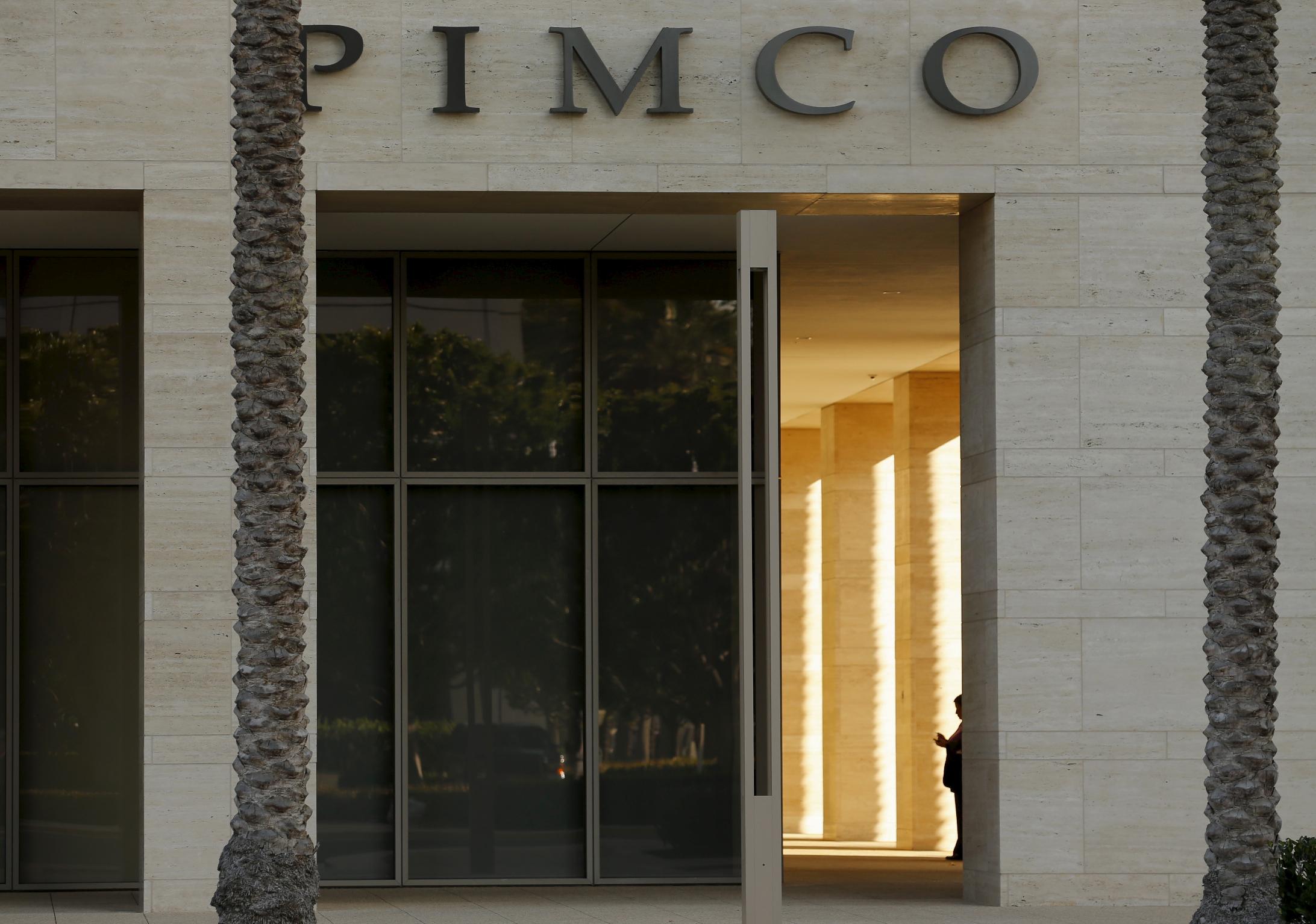
EM heavyweights bought local assets in recent months Pimco, Vanguard together manage nearly $10 trillion Sign of confidence after policy U-turn to orthodoxy March local elections a test of Erdogan's resolve ISTANBUL/LONDON, Jan 5 (Reuters) - U.S. investment giants Pimco and Vanguard have bought local Turkish assets in recent months, betting that the country will maintain high interest rates after years of erratic policymaking under President Tayyip Erdogan. Interviews with top money managers at the companies show that two of the world's biggest investors, which together oversee nearly $10 trillion in assets, have grown constructive on Turkey since its newfound economic orthodoxy following Erdogan's re-election in May. Pimco and Vanguard did not elaborate on the specific size of their purchases but the investments are a sign of confidence after a years-long exodus of foreigners that left Turkey on the sidelines of global emerging markets. "We are constructive on Turkish assets, in particular local currency assets, due to the tightening in financial conditions to rein in spending and control inflation and the gradual easing of regulations that distort the asset prices," said Pramol Dhawan, managing director and head of emerging markets at Pimco, which oversees nearly $2 trillion in assets. Vanguard, the world's second-largest money manager with nearly $7.5 trillion, bought Turkish local bonds without hedging late last year after Nick Eisinger, co-head of Emerging Markets Active Fixed Income, and a few other investors visited the country for meetings. "It was a bit of a watershed moment," Eisinger said in a separate interview, noting that benchmark yields later dropped by 500-600 basis points from November to mid-December, before partially rebounding this week. Buying interest from abroad hit a six-year high last month while credit default swaps (CDS), a key risk measure, have plunged to less than half of levels in May. That marks a dizzying departure from the days in which foreign investors largely abandoned Turkey as Erdogan oversaw a policy of slashing interest rates in the face of soaring inflation, and tightened authorities' grip on foreign exchange, debt and credit markets, leaving them largely state managed. In June, Erdogan named a new cabinet and central bank chief, Hafize Gaye Erkan, who has since hiked rates by 3,400 basis points to 42.5% to rein in inflation that neared 65% last month. The bank says it will halt the aggressive rate hikes as soon as possible but maintain tight monetary policy as long as needed. Authorities have also begun untangling dozens of regulations in order to free up banks and financial markets. Pimco's Dhawan said "a period of real FX appreciation coupled with tight fiscal policy is needed to bring down inflation towards target levels", given the high domestic demand and dollarisation levels, as well as extended lira depreciation. "We are already starting to see some benefits materialize from this coordinated policy framework," he said, adding the rising forex reserves have relieved a key investor concern. ERDOGAN RISK Though some investors are cautious, the foreign interest is primed to grow, drawn by potentially outsized bond returns. Amundi, Europe's largest asset manager, has also taken a more bullish position on Turkish assets, Reuters reported. The risk, investors say, is that Erdogan loses patience with the long and painful return to orthodoxy - including an economic slowdown - as his ruling AK Party seeks to wrest back control of big cities in nationwide local elections on March 31. Opposition victories five years ago in Erdogan's native Istanbul and Ankara were his biggest electoral defeats in more than two decades in power. To boost his campaign ahead of last year's election, Erdogan - a self-described "enemy" of interest rates in the past - leveraged the budget and central bank to deliver record social spending and used foreign reserves to steady the lira. He has also fired four central bank chiefs in the last five years, eroding its independence. In response, foreign holdings of government bonds crashed below 1% from 20% in 2018, before rebounding back above 1% late last year. "The real litmus test is what happens in the next few months" with the elections and the central bank's focus on tackling inflation, Vanguard's Eisinger said. Vanguard invested when Turkish bond yields were up near 35% and it could expand the position, he said. "Potentially we would look to do more of that trade if yields back up." Wall Street bank JPMorgan said Turkey's lira was a key emerging market bet for 2024 while UBS recommended clients take a "tactical long" position on the currency in November. Erkan, the new central bank chief and former Goldman banker, and Finance Minister Mehmet Simsek will present Turkey's policy vision to foreign investors in New York on Thursday next week. https://www.reuters.com/business/finance/us-giants-pimco-vanguard-invest-turkey-after-its-return-rate-hikes-2024-01-05/
2024-01-05 09:11
Jan 5 (Reuters) - A flurry of data should give markets a clearer sense of how fast inflation is falling globally, as turmoil in the Red Sea and oil price gains renews angst over price pressures. U.S. banking giants kick off the reporting season and crypto markets look set for more volatility. Here's a look at the week ahead in global markets from Rae Wee in Singapore, Ira Iosebashvili and Lananh Nguyen in New York, and Naomi Rovnick and Tom Wilson in London. 1/ INFLATION: CHEER VS FEAR U.S. stocks and bonds soared in late 2023 in anticipation of Federal Reserve rate cuts this year. Inflation data on Jan. 11 could show whether those expectations are warranted. Gradually cooling inflation has increased bets that the central bank could begin lowering borrowing costs as early as March. Signs that inflation remained subdued in December would likely support that view - though a sharper-than-expected decline could also stoke fears that recent Fed rate increases are starting to weaken the economy. Conversely, a report showing that consumer prices are rising again could spark concerns markets may have underestimated how long it could take for the Fed to defeat inflation. Economists polled by Reuters expect the report to show a monthly 0.2% gain in consumer prices versus a 0.1% rise in November. 2/ TROUBLED WATERS Markets have been looking to oil prices for signs the Israel-Hamas dispute will push global inflation higher, but with expectations of heavy supply, oil does not tell the whole story. As transport groups re-route vessels away from the Red Sea, retailers face the biggest shipping upheaval since COVID-19 stymied the freight industry in 2020. The result could be Western retailers waiting longer for goods to arrive from China, with shortages pushing up prices, trade analysts say. The British Retail Consortium has said rising costs could reverse a trend of moderating grocery price inflation. Markets, more focused on relatively moderate oil prices , have so far shown limited concern about Red Sea shipping. But investors would be wise to monitor freight costs for signs that the battle against inflation is not over. 3/ INFLATION INVASION Policymakers across Australia, China and Japan face critical inflation readings likely to provide a sense of whether they will have more, rather than less work in 2024. The Reserve Bank of Australia, which is expected to join a rate-cut bandwagon later this year could find some relief if there is a slowdown in November's inflation. In contrast, a pick up in consumer prices in Tokyo, a leading indicator of nationwide inflation trends, could cheer those betting on a Bank of Japan (BOJ) policy pivot. Such expectations sent a battered yen surging 5% versus the dollar in December. Achieving its 2% inflation target "sustainably" is the pre-condition for BOJ officials to ending negative interest rates. In China, figures on Friday will give further clarity on whether deflationary pressures continue to mount in the world's second largest economy. 4/ BANKING ON THE FED U.S. banking giants kick off earnings with JPMorgan Chase (JPM.N), Bank of America (BAC.N) and Citigroup (C.N) due to report fourth quarter and full-year results on Jan. 12. Top lenders brought in more income from interest payments in 2023 as the Fed raised rates, helping banks to offset a protracted slump in dealmaking revenue in Wall Street divisions. Consumers are also in focus with household finances having remained largely healthy since the pandemic, but some customers, particularly those on lower incomes, are starting to fall behind on payments in greater numbers. Commercial real estate will continue to be a drag meanwhile. Banks have set aside money to cover souring office loans last year. As many employees continue to work remotely or in hybrid arrangements, office owners who borrowed money to finance their buildings are likely to face further strains. 5/ CYRPTO'S ETF HOPES Bitcoin kicked off the new year as it finished 2023 - with sharp gains after investors bet on possible approval by U.S. regulators of exchange-traded spot bitcoin funds. The biggest crypto token topped $45,000 for the first time since April 2022 on bets that such applications will get the nod from the Securities and Exchange Commission soon. Market players say the SEC's decision may be imminent and could usher in a new wave of capital to crypto. Such hopes helped propel bitcoin in 2023 to yearly gains of more than 155%. Yet ever-volatile bitcoin has already trimmed its 2024 gains. Doubts linger, some analysts say, over how much demand will exist for any bitcoin ETF - and whether approval is already priced in. https://www.reuters.com/business/take-five/global-markets-themes-graphic-2024-01-05/