2024-01-05 01:07
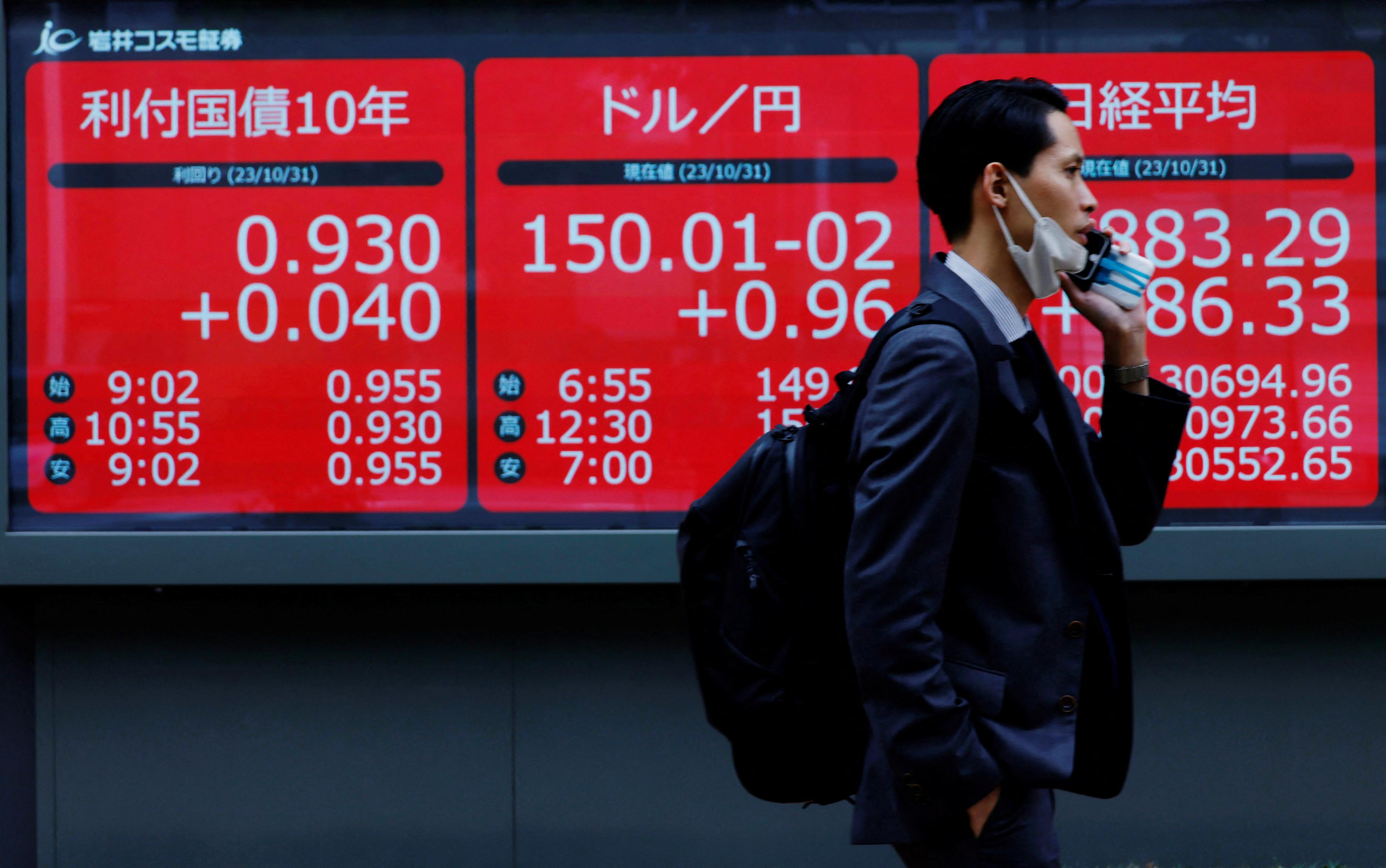
BENGALURU, Jan 5 (Reuters) - Most emerging-market currencies are set to regain their recent strength later this year after some near-term paralysis as expectations of interest-rate cuts by the U.S. Federal Reserve keep the dollar in check, a Reuters poll found. These currencies have popped higher in the past few weeks, driven by market bets for aggressive rate cuts by the Fed this year, dragging down U.S. bond yields. Those bets have eased somewhat in the first days of 2024, but only slightly. The recent U.S. dollar sell-off has helped a wider index of emerging-market currencies (.MIEM00000CUS) gain nearly 3.5% since early November 2023. However, with the greenback's recent slide predicted to be brief and the risks of mispricing future Fed rate cuts increasing, gains in EM currencies will be moderate at least in the first half of the year. According to the Jan. 2-4 Reuters poll of 55 strategists, 11 of 15 EM currencies in the poll were forecast to gain against the dollar in 12 months, of which eight were predicted to recoup all of their 2023 losses. Still, with the timing of the Fed's launch of its easing cycle still unclear, median three-month estimates for some EM currencies like the Turkish lira and Russian rouble were slightly weaker compared with last month's poll. Chris Turner, ING's head of FX strategy, said that while EM currencies should have a positive year overall, the start of 2024 may be difficult as "expectations for easier policy in the U.S. and Europe have probably come too far, too fast." "But when it becomes clear in Q2 the Fed will indeed ease ... that should be a pretty benign and positive environment for emerging-market FX." A majority of EM currencies including the Chinese yuan , Indonesian rupiah , Korean won , Thai baht , Malaysian ringgit , Vietnamese dong and Taiwan dollar were expected to gain between 2.1% and 5.0% in a year. The Indian rupee was forecast to gain only about 1% to 82.50 per dollar in a year, barely changed from last month's prediction. The Turkish lira, South African rand and Russian rouble were among the few currencies not predicted to recover all of their losses from 2023 this year. Another source of support for EM currencies comes from lower expectations of rate cuts not only by the Fed but by central banks in developing countries too, against a backdrop of reasonably stronger domestic economic growth. "We currently don't forecast the Fed to cut by as much as what the market is pricing in ... that would perhaps suggest some or more limited scope for this year for EM currencies to gain substantially," said Mitul Kotecha, head of FX and EM macro strategy Asia at Barclays. "But probably as we go through the year we would maybe see some further upside for EM." (For other stories from the January Reuters foreign exchange poll:) https://www.reuters.com/markets/currencies/emerging-market-currencies-hold-most-recent-gains-vs-dollar-2024-01-05/

2024-01-05 00:56
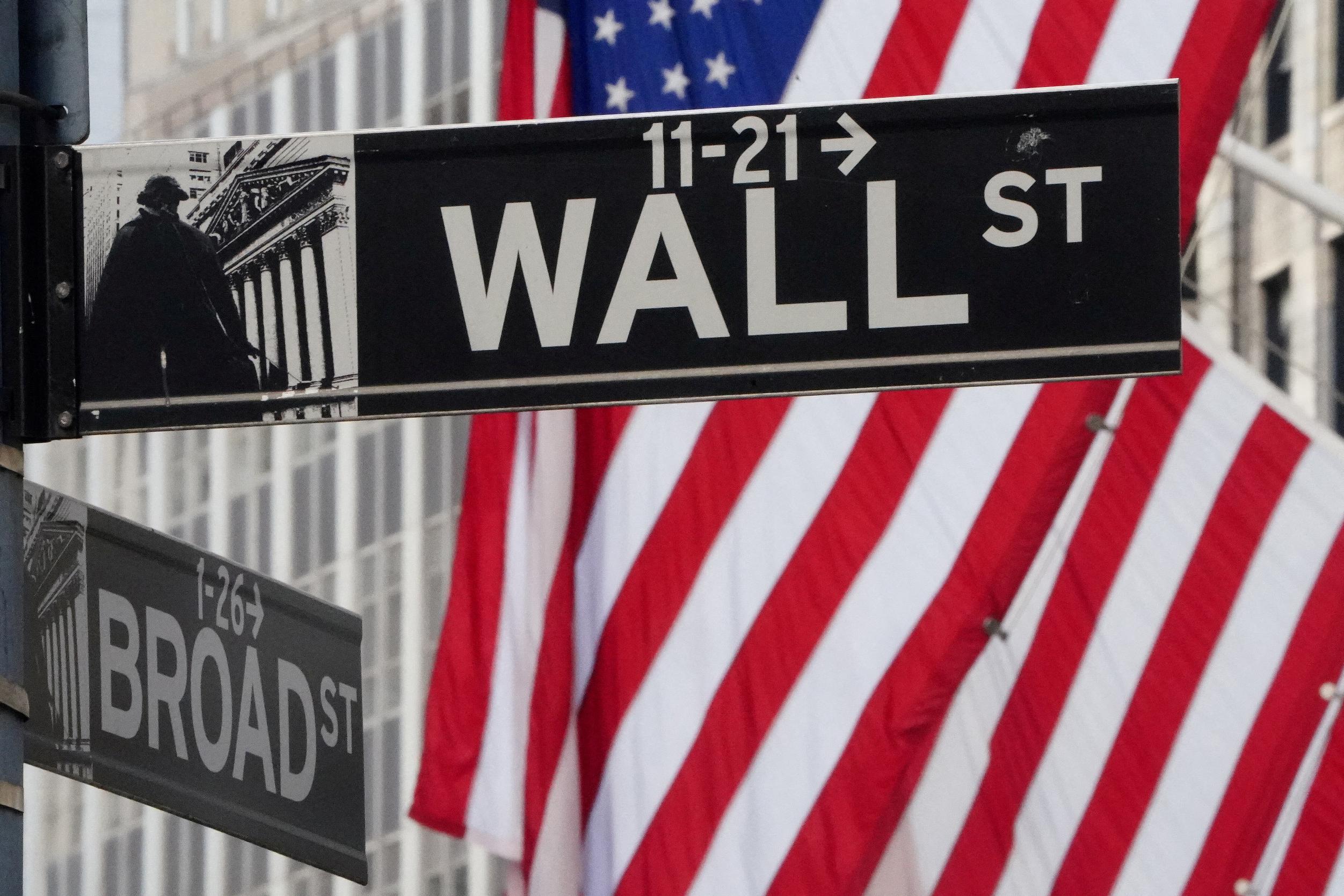
US private payrolls increase in December - ADP Allstate, JP Morgan hit record highs after broker reports Walgreens drops after slashing dividend Mobileye tumbles after weak annual revenue forecast Indexes: Dow up 0.03%, S&P down 0.34%, Nasdaq down 0.56% Jan 4 (Reuters) - The S&P 500 (.SPX) and Nasdaq Composite (.IXIC) closed lower on Thursday, extending their losing streak that kicked off 2024, although the Dow Jones Industrial (.DJI) eked out a win on the back of financial stocks and strong jobs data. For the S&P 500, this is the worst start to a year since it began 2015 with a three-session skid, as tech-focused investors continued to take profits after a blistering rally in the final weeks of last year. Bets that the Federal Reserve could start reducing rates this year had driven much of the gains toward the end of 2023, though the latest minutes from the central bank's December policy meeting did not offer many clues on when the easing might commence. A tick-up in yields on longer-dated U.S. Treasuries - the benchmark 10-year note ended at 4% - prompted traders to move away from growth stocks toward other sectors. Financials (.SPSY) was one of the few gainers among the S&P 500 sectors, underpinned by Allstate (ALL.N), which rose 2.4% to close at an all-time high after Morgan Stanley lifted its rating on the insurer to "overweight." Other insurers also rose, including Hartford Financial Services Group (HIG.N), which gained 0.7% to its highest finish since 2008. Banks were strong performers ahead of the start of earnings season next week. JPMorgan Chase & Co (JPM.N) and Truist Financial Corp (TFC.N) were among those which advanced, up 0.7% and 1.3% respectively, after both received positive analyst reports from BofA Global Research. Last year was one of substantial upheaval in the banking sector, as institutions managed the impact of rapid increases in central bank rates on their balance sheets. Banks should benefit in 2024 from lower-yielding investments rolling off and being reinvested in new securities with higher yields, said Ian Lapey, portfolio manager of The Gabelli Global Financial Services Fund. Coupled with rotation out of more speculative, growth names, banks with strong management teams will reward investors, he added. "We're setting up for significant relative outperformance of the strongly managed and financed banks and other financials, as compared to other, more expensive areas of the market." Among the latest economic data, the ADP National Employment report showed U.S. private employers hired more workers than expected in December, pointing to persistent labor market strength that should continue to sustain the economy. This came ahead of official U.S. employment data due on Friday. Meanwhile, the weekly Labor Department report showed more Americans filed for state unemployment claims than expected. The S&P 500 (.SPX) lost 16.13 points, or 0.34%, to end at 4,688.68 points, while the Nasdaq Composite (.IXIC) lost 81.91 points, or 0.56%, at 14,510.3. The Dow Jones Industrial Average (.DJI) rose 10.15 points, or 0.03%, to 37,440.34. Most S&P sectors were down, led by energy (.SPNY) which fell 1.6% after a massive U.S. fuel inventory build pushed crude prices lower. A number of big-tech names also ended lower, with Amazon.com Inc down 2.6% and Alphabet Inc declining 1.8%. Apple (AAPL.O) shares slid 1.3% after brokerage Piper Sandler downgraded the iPhone maker to "neutral," days after Barclays also cut its rating. Mobileye Global (MBLY.O) sank 24.5% after forecasting preliminary fiscal 2024 revenue below estimates, while Walgreens Boots Alliance (WBA.O) dropped 5.1% after the U.S. pharmacy chain nearly halved its dividend. The volume on U.S. exchanges was 11.13 billion shares, compared with the 12.30 billion average over the last 20 trading days. https://www.reuters.com/markets/us/futures-edge-up-ahead-jobs-data-apple-slips-2024-01-04/
2024-01-04 23:54
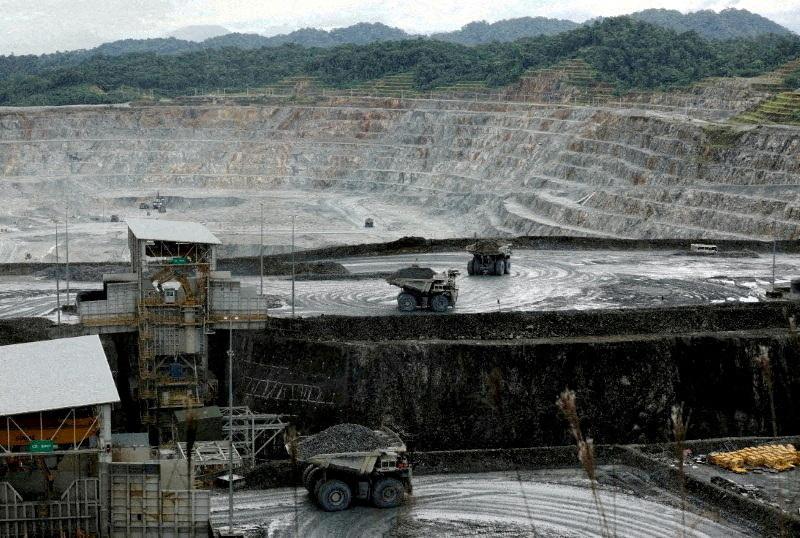
TORONTO, Jan 4 (Reuters) - Canadian miner First Quantum Minerals (FM.TO) is in talks to sell a stake in its Zambian copper mines to Chinese state-owned Jiangxi Copper Corp (600362.SS), aiming to bolster the company's finances, a person familiar with the matter told Reuters. Details are yet to be finalized and it was not clear whether the latest talks would lead to a transaction, the person said. The talks began last month after First Quantum suffered a major blow in Panama, where it was ordered to shut one of the world's biggest copper mines, which debt rating agency Fitch has warned could hurt the company's borrowing capacity. In Zambia, First Quantum wholly owns the Sentinel mine and 80% of the Kansanshi mine, with the rest owned by the Zambian government. Jiangxi, First Quantum's top shareholder, could end up buying one of the two mines or a stake in one of them, the person added. "The Chinese want the Zambian mines ... so the company (First Quantum) could sell one of the Zambian mines," the source said. The person declined to be named as they were not authorized to talk to media. A First Quantum spokesperson declined to comment on the talks and said the company will provide an update later this month on the company's plan to meet its debt obligations. Some $1.05 billion of First Quantum's debt comes up for maturity in early 2025. Jiangxi Copper did not respond to an email query by Reuters. The two Zambian mines together generated $943 million revenue in the quarter ending September 2023 and $210 million in operating profit, according to company filings. Based on the earnings, the Zambian assets could be valued around $6 billion, analysts estimate. First Quantum and Jiangxi held similar talks over the Zambian mines in 2019. Those discussions ended up with Jiangxi picking up a significant minority stake in the company instead of stakes in the mines. Jiangxi now owns an 18.2% stake in First Quantum. The two parties have a standstill agreement which prevents the Chinese company from raising its stake beyond 20%. First Quantum has lost more than half its market value, or about C$10.3 billion ($7.7 billion), since protests erupted in late October against its Cobre Panama mine. The mine accounted for about 40% of the company's revenues. In December, Fitch warned that if the Cobre Panama mine were permanently shut, First Quantum's net debt leverage ratio in 2024 would increase to more than 5 times earnings before interest, tax, depreciation and amortization, which could result in a covenant breach. Net debt leverage ratio is a measure used to assess a company's borrowing capacity. "If unresolved, the covenant breach may trigger an event of default across all its debt instruments," the rating firm said. ($1 = 1.3353 Canadian dollars) https://www.reuters.com/markets/commodities/first-quantum-talks-with-jiangxi-copper-sale-stake-zambian-mines-source-2024-01-04/
2024-01-04 23:50
HOUSTON, Jan 4 (Reuters) - Exxon Mobil Corp (XOM.N) warned on Thursday it would write down about $2.5 billion of California assets in the fourth quarter, and said lower energy prices reduced operating profits. The snapshot by the largest U.S. oil producer showed operating results could drop to about $8.9 billion, down 30% from the $12.7 billion net profit a year earlier, and 3% weaker than in the third quarter. Exxon estimated taking a $2.4 billion to $2.6 billion impairment to oil and gas properties along the Southern California coast. Sable Offshore, a company created in 2020, agreed more than a year ago to pay $643 million for the assets. "Continuing challenges in the state regulatory environment have impeded progress in restoring operations" at the company's Santa Ynez facilities near Santa Barbara, it said. It had previously disclosed the properties would be sold for about $643 million in a highly leveraged deal to a startup company. The writedown marks another exit by large oil companies from California over the relatively mature oilfields and the state's environmental and regulatory policies. Chevron in December blasted the state's energy policies as having "made it a difficult place to invest" and leading it "reduce spending by hundreds of millions of dollars since 2022." Earlier this month, the second largest U.S. oil producer also said it would write down up to $4 billion in assets, primarily in California. Exxon also indicated it will take an impairment of about $250 million in its chemicals business. Despite the charges, RBC analyst Biraj Borkhataria expects investors will view the update as neutral. The snapshot puts the quarter's net profit at about $9 billion, or $2.20 per share, he said. Lower oil prices and a contraction in fuel margins will slash Exxon's operating profits by about $2.2 billion compared to the third quarter, the filing showed. Higher natural gas prices should add about $600 million to operating profits. Full results are expected on Feb. 2. Brent prices in the fourth quarter averaged $82.85, down 7% from the year-ago period and a 4% decline from the third quarter. https://www.reuters.com/markets/commodities/exxon-mobil-expects-fourth-quarter-oil-earnings-fall-2024-01-04/

2024-01-04 23:27
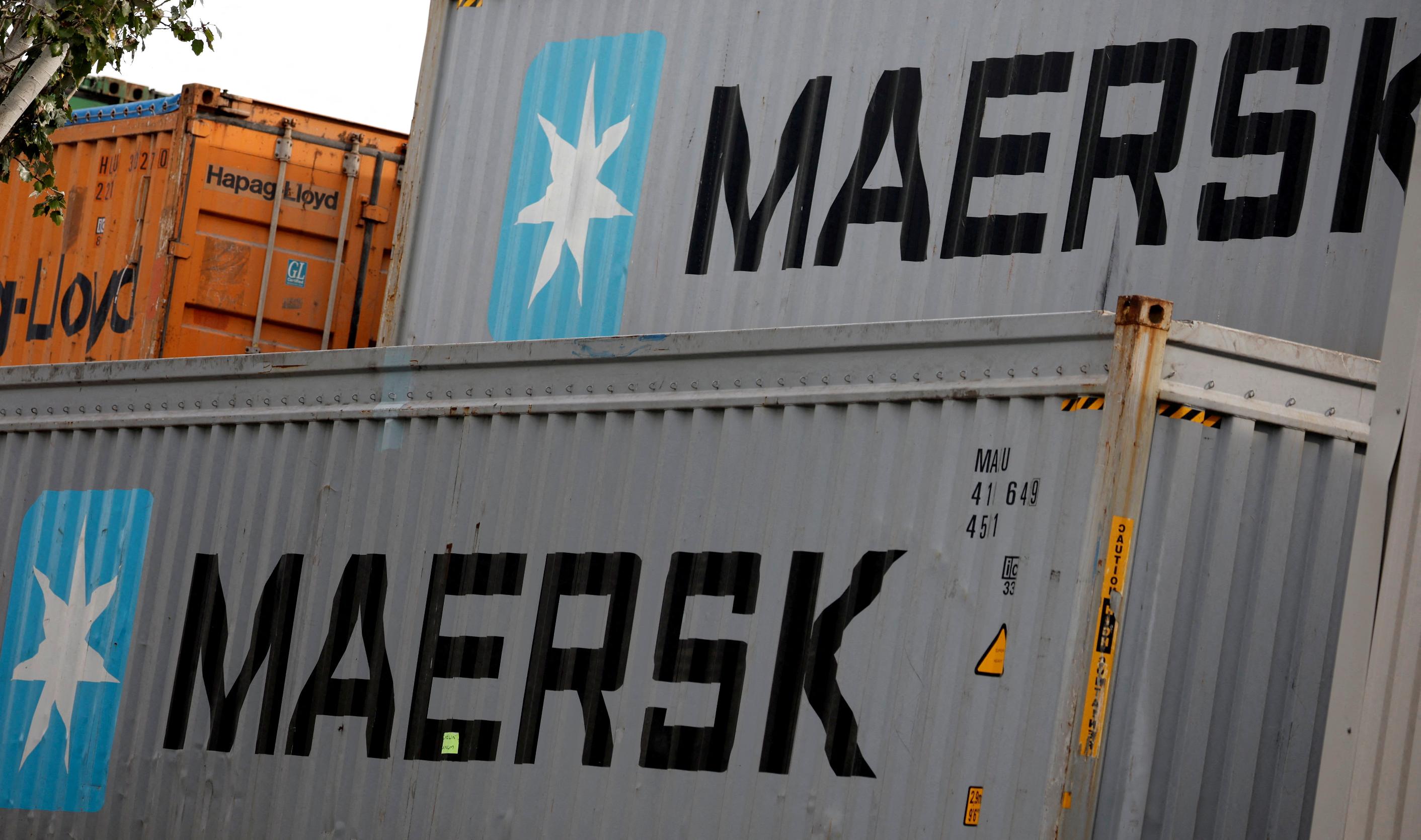
COPENHAGEN, Jan 4 (Reuters) - Denmark's Maersk (MAERSKb.CO) said on Thursday it has rerouted four out of five container vessels that were stuck in the Red Sea back towards the Suez Canal and the long journey around Africa to avoid the risk of attack. Yemen-based Houthi militants recently attacked a number of vessels in the southern Red Sea, including a Maersk ship on Saturday, disrupting global trade and raising fears of a fresh bout of global inflation as shipping rates soared. The United States on Dec. 19 launched a multinational operation to safeguard commerce in the Red Sea, but many shipping companies and cargo owners are still diverting vessels around Africa. Maersk, which had last week briefly sought to restart Red Sea voyages after a pause, said on Tuesday its container ships would again avoid the route that gives access to the Suez Canal, a shortcut between Asia and Europe. But five Maersk ships headed towards Asia had already traversed the canal from the north and were poised to travel south past Yemen when the pause was announced, leaving the crews and tens of thousands of containers in limbo. The Maersk Genoa, Maersk Londrina, Ebba Maersk and Gjertrud Maersk container vessels, which had been sitting in the Red Sea just south of Saudi Arabia's port of Jeddah in recent days, were on Thursday rerouted around the Cape of Good Hope, a Maersk schedule showed. A fifth vessel, Maersk Utah, that had also been stuck in the area, had not yet been rerouted, but a Maersk spokesperson said it would not sail past Yemen. Sending the ships back via the Suez Canal would incur fresh fees to pay for the passage through the canal and add significant delays and extra fuel costs for a journey around the Cape of Good Hope. Maersk said last month it had imposed a transit disruption surcharge (TDS) and a peak season surcharge (PSS), adding a total of $700 to the cost of a standard 20-foot container travelling from China to Northern Europe. The Suez Canal is used by roughly one-third of global container ship cargo, and re-directing ships around the southern tip of Africa is expected to cost up to $1 million extra in fuel for every round trip between Asia and Northern Europe. https://www.reuters.com/world/middle-east/maersk-reroutes-red-sea-container-ships-back-suez-canal-2024-01-04/
2024-01-04 21:55
Jan 4 (Reuters) - A look at the day ahead in Asian markets by Alden Bentley, Americas Breaking News Editor for Finance & Markets Asian markets must wait over the weekend to trade on U.S. December employment data, the first globally significant economic release of 2024 that comes out after they close on Friday. But if subdued U.S. trade on Thursday is any indication, investors will be content to keep their powder dry Friday. Wall Street tried to steady from its two-day selloff and the Dow eked out a gain for the second time this week. But there was no obvious inclination to resume the late 2023 buying spree, while Treasuries leaned toward risk-off, though not enough to hump benchmark yields decisively back over 4.0%. That underpinned the dollar, especially against the yen which also had a Nikkei selloff, an earthquake and a deadly aircraft collision to reckon with on its first day back from a holiday break. Against the yen JPY=, the greenback rose to two-week peaks, climbing for three straight days. The dollar was last up 0.9% at 144.52 yen. It rose against the Chinese yuan to 7.1776, reaching the highest price since December 13 in U.S. trade. The Australian dollar fell to its lowest price since December 18. Thursday's ADP National Employment report showed U.S. private employers hired more workers than expected in December. Other reports showed the labor market cooling. The question for financial markets is whether Friday's nonfarm payrolls release solidifies current futures betting on five or more rate cuts by the Fed, starting in March. The yield on 10-year Treasury notes US10YT=RR was up 8.8 basis points to 3.995%. Its yield, which moves in the opposite direction of prices, briefly traded above 4% Wednesday, but has not maintained that level since falling below 4% in mid-December. Yields of the benchmark 10-year are up about 15 basis points over the first three trading days of the new year. "The market is ahead of itself and is not listening to what the Fed is saying," said Judith Raneri, a portfolio manager at Gabelli Funds. The yield on 10-year Treasury note was up 8.8 basis points at 3.995%. It has taken a couple halfhearted runs at clearing 4% this week but has not maintained that level since falling below it in mid-December. What that means today for JGBs and other Asian government debt is not glaringly obvious but Japanese yields did tick higher on Thursday in a catch up with Treasuries after the extended market holiday. In related news, Citigroup said it aimed to launch its China investment banking unit as early as the end of this year, with about 30 staff. Here are key developments that could provide more direction to markets on Friday: - Japan consumer confidence (December) - US Nonfarm Payrolls and Unemployment(December) https://www.reuters.com/markets/asia/global-markets-view-asia-graphic-2024-01-04/