2024-01-04 21:14
NEW YORK, Jan 4 (Reuters) - Wall Street's biggest banks shifted ahead of last month's Federal Reserve meeting toward predicting the U.S. central bank would end its balance sheet reduction process later this year than previously thought, according to a survey released on Thursday by the New York Fed. Banks, referred to as primary dealers, now believe the process known as quantitative tightening, or QT, will end in the fourth quarter, according to a poll taken ahead of the Fed's Dec. 12-13 policy meeting. In the primary dealer survey done ahead of the policy meeting that ended on Nov. 1, the banks collectively viewed the third quarter as the stopping point for QT. If the dealers are right, the Fed's balance sheet will contract to $6.75 trillion from the current level of about $7.764 trillion. The dealers also predicted ahead of the December meeting that there would be $375 billion in the central bank's reverse repo facility when QT ended, versus the expected $625 billion in the October survey. In the December survey, respondents said they expected bank reserves to be at $3.125 trillion at the end of QT, versus $2.875 trillion in the prior poll. The QT process has complemented the rate hikes delivered by the Fed as part of its effort to lower inflation back to its 2% target. The central bank aggressively bought Treasury bonds and mortgage-based securities at the start of the coronavirus pandemic in the spring of 2020, causing its overall holdings of cash and bonds to more than double to around $9 trillion by the summer of 2022. The Fed has been shrinking its holdings since last year, but has not given much guidance about how long the process will play out. Minutes from the Fed's meeting last month, which were released on Wednesday, noted that some officials are now ready to talk about the how and when of ending QT. The question has been on the minds of investors and traders given the apparent end of the current rate hiking cycle and rising bets in financial markets that the central bank will be cutting rates as soon as next spring as inflation pressures wane. MONEY MARKET METRICS The challenge for the Fed in dialing back stimulus is that it is trying to achieve a level of liquidity in the financial system that will allow it to retain control over short-term rates, with a cushion to deal with the volatility that can often strike money markets. But there's no clear sense so far on how to measure the needed amount of liquidity. Michael Feroli, chief U.S. economist at J.P. Morgan, said in a note on Wednesday that more guidance on the QT endgame will be forthcoming soon. Given the nascent debate seen in the minutes of the December meeting, "we suspect this means that we could see a fuller discussion of potential balance sheet plans in the minutes" of the next Fed policy meeting, which takes place later this month, he said. Barclays economists said they expected money market rates like the federal funds rate and the Secured Overnight Financing Rate, will loom large in the Fed's thinking. They also believe the Fed may be more cautious about testing how far it can go with running down the balance sheet relative to the view of primary dealers ahead of the December policy meeting, saying in a note that "we look for the Fed to err on the side of caution" and end QT in June or July before any signs of stress emerge. Ian Lyngen, head of U.S. rates strategy at BMO Capital Markets, also thinks QT will end sooner than the survey suggests based on the meeting minutes. "There is now a compelling argument that the balance sheet rundown will be ended prior to the first cut of the cycle," he said in a note to clients. https://www.reuters.com/markets/us/wall-street-banks-push-back-expected-end-fed-balance-sheet-drawdown-2024-01-04/
2024-01-04 21:09
WASHINGTON, May 7 (Reuters) - A drop in crude oil prices has put the U.S. back in the market for replenishing the Strategic Petroleum Reserve after selling off a record amount of crude from the stockpile in 2022. A little more than a month ago the Department of Energy canceled the purchase of about 3 million barrels of oil for the SPR due to prices rising above what had been the government's $79 per barrel target for West Texas Intermediate at which it wanted to buy oil back. On Tuesday the DOE said it is seeking up to 3.3. million barrel for October delivery, a move that could be canceled if oil prices rise again. The DOE also slightly raised the price at which it wants to buy the oil back. Here are facts about the SPR and efforts to put oil back in. WHAT IS THE SPR? It is the world's largest emergency oil stash. Former President Gerald Ford created the SPR in 1975 after the Arab oil embargo spiked gasoline prices and damaged the economy. Presidents have tapped the stockpile to calm oil markets during war involving oil producing countries or when hurricanes hit oil infrastructure along the U.S. Gulf of Mexico. The oil is held in heavily-guarded underground caverns at four sites on the Texas and Louisiana coasts. HOW MUCH SPR OIL WAS SOLD IN 2022? In 2022, the administration of President Joe Biden announced a sale of 180 million barrels of oil over six months from the reserve, the largest ever SPR sale, in an attempt to lower gasoline prices after Russia invaded Ukraine. The DOE also conducted a sale of 38 million barrels in 2022 that had been mandated by Congress. WHAT PRICE DOES THE U.S. WANT TO BUY SPR OIL ? The DOE said on Tuesday it would buy oil back at up to $79.99 a barrel, nearly one dollar above the previous target price. Still, purchases could be limited by the administration's concern about doing anything to boost gasoline prices ahead of the Nov. 5 election. "Although the DOE appears to be returning to the market in response to recent oil price weakness, we would suggest that White House pump price sensitivity has not abated," ClearView Energy said in a note to clients. The West Texas Intermediate oil price was about $78.50 a barrel on Tuesday, as weak U.S. jobs data and economic uncertainty outweighed concerns about the Israel-Hamas war widening in the Middle East. But prices could rise quickly as peak U.S. summer driving season nears. The administration says it sold the 180 million barrels at an average of about $95 a barrel. HOW MUCH IS COMING BACK? The administration has so far bought back about 32.3 million barrels of domestically-produced crude oil since the 180 million barrel sale, it says. The DOE says it has also sped up the return of nearly 4 million barrels to the SPR from loans to oil companies. CURRENT SPR LEVEL The reserve currently holds New Tab, opens new tab367.2 million barrels, nearly 60% of which is sour crude, or relatively high sulfur oil which many U.S. refineries are engineered to process. The 2022 sales sank the SPR to the lowest level in about 40 years. That angered some Republicans who accused the Democratic administration of leaving the U.S. with a thin supply buffer to respond to a future crisis. The most oil it ever held was nearly 727 million barrels in 2009. The administration says it has a three-pronged strategy to return oil to the reserve. That includes buying back oil, the return of oil loaned from the SPR to companies, and the cancellation of congressionally mandated sales of 140 million barrels through 2027. Both Democratic and Republican lawmakers had voted for those sales to pay for government programs. The U.S., which is producing oil at record volumes with more increases expected this year, has more crude in the SPR than required as a member of the Paris-based International Energy Agency, the West's energy watchdog. Under the agreement, the U.S. is required to hold 90 days' worth of net petroleum imports. Sign up here. https://www.reuters.com/markets/commodities/biden-administration-slowly-puts-oil-back-into-spr-emergency-stash-2024-01-04/
2024-01-04 20:43
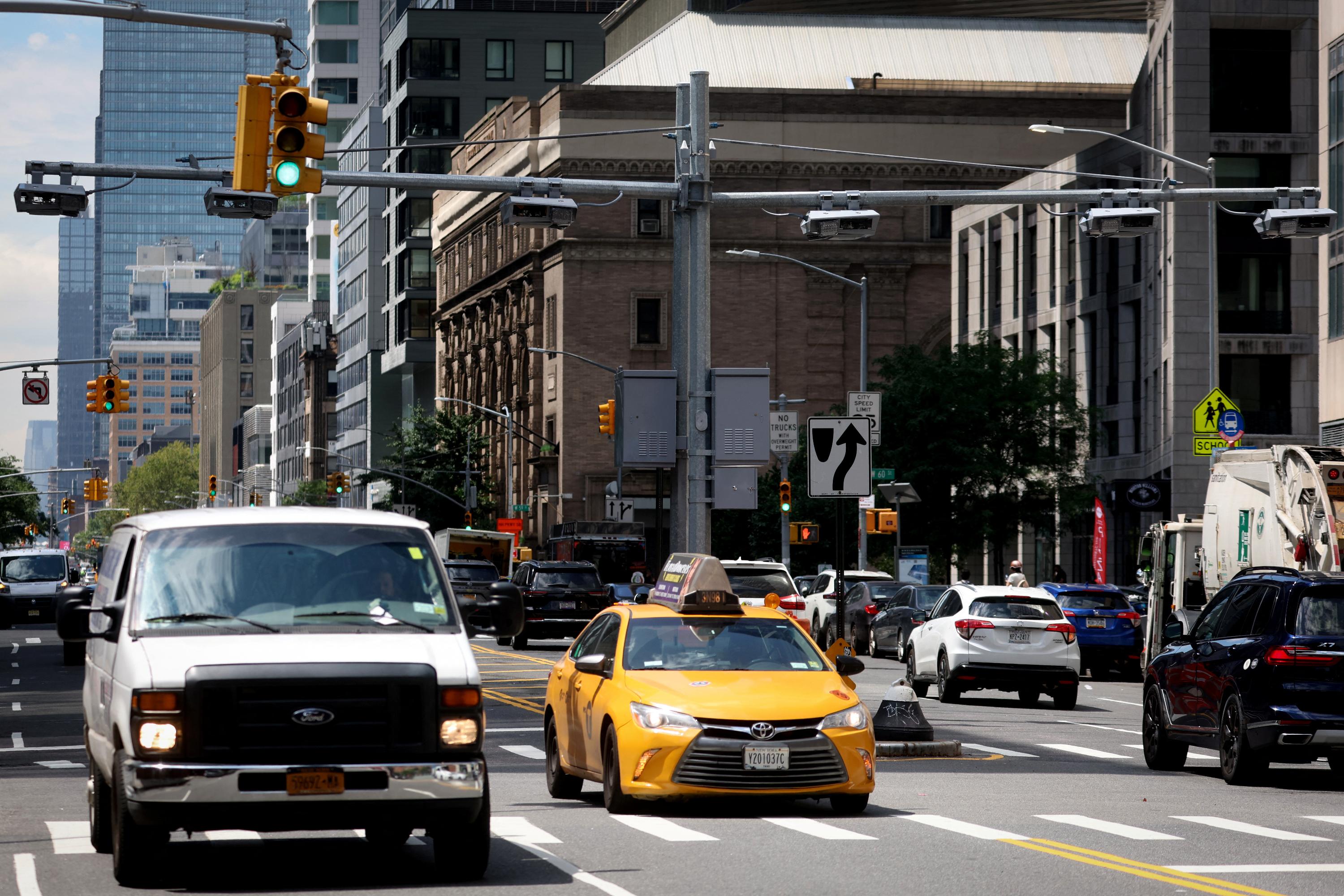
Jan 4 (Reuters) - A New York City teachers union filed a lawsuit against state and federal agencies on Thursday seeking to block a congestion pricing plan in the city from taking effect this year, arguing it will divert traffic and boost pollution in some areas. Among the defendants in the lawsuit are the Metropolitan Transportation Authority (MTA) and U.S. Federal Highway Administration (FHWA). New York's plan to impose tolls on vehicles entering certain parts of Manhattan to fight congestion and pay for mass transit already faces a lawsuit from the state of New Jersey. Under the plan, New York City will charge a daily toll of $15 for passenger vehicles driving in Manhattan south of 60th Street. It will charge up to $36 for larger trucks. New York says more than 900,000 vehicles enter the Manhattan Central Business District daily, reducing travel speeds to around 7 miles an hour (11 kph) on average. Joining the teachers union lawsuit in challenging the congestion pricing plan is Staten Island Borough President Vito Fossella. According to the lawsuit, the pricing plan "would inflict environmental and economic damage on already challenged neighborhoods" by diverting traffic and increasing pollution to areas like the South Bronx. It said the city's decision to adopt the plan came after "a rushed and hurried process that violated the comprehensive review requirements." FHWA declined to comment. The MTA said the environmental review process "involved four years of consultation with government agencies, public outreach meetings, and engagement with tens of thousands of public comments ... If we really want to combat ever-worsening clogged streets we must adequately fund a public transit system that will bring safer and less congested streets, cleaner air, and better transit." The MTA voted last month to give the plan preliminary approval and will accept public comments through March 11. New Jersey's lawsuit also argued the FHWA environmental review of the plan was inadequate and said it ignored the financial and environmental burdens on New Jersey residents. New York City, which has the most congested traffic of any U.S. city, would become the first major city in the U.S. to follow London, which implemented a similar charge in 2003. New York said the charge would cut traffic by 17%, improve air quality and increase transit use by 1% to 2%. The toll would generate $1 billion to $1.5 billion a year and support $15 billion in debt financing for mass transit improvement. https://www.reuters.com/world/us/new-york-city-union-sues-block-city-congestion-pricing-plan-2024-01-04/
2024-01-04 20:35
U.S. non-farm payrolls data due on Friday US jobless claims fall, December private payrolls rise Palladium sheds 3%, down for eighth straight session Jan 4 (Reuters) - Gold held steady on Thursday after four sessions of decline as investors braced for the U.S. non-farm payrolls data that could influence the Federal Reserve's interest-rate path, while palladium prices slipped on a dim long-term demand outlook. Spot gold edged up 0.2%, to $2,044.39 per ounce by 2:50 p.m. ET (1950 GMT), a day after hitting its lowest since Dec. 21. U.S. gold futures settled up 0.4%, at $2,050.00. "The gold market bulls need a fresh new spark to jump-start a price rally," said Jim Wyckoff, senior analyst at Kitco Metals. "(But) if the jobs data comes in stronger, that will put some pressure on prices and probably dial back (market) expectations for Fed interest rate cuts." The U.S. non-farm payrolls report is due on Friday. Data on Thursday showed that U.S. weekly jobless claims fell more than expected last week and U.S. private employers hired more workers than expected in December, pointing to persistent strength in the labor market. Traders are pricing in about a 65% chance of a rate cut from the Fed in its March policy meeting, according to the CME FedWatch tool. Lower interest rates decrease the opportunity cost of holding non-yielding bullion. The minutes of the Fed's last meeting, released on Wednesday, revealed a growing conviction among officials that inflation was under control and a concern that "overly restrictive" monetary policy posed threats to the economy. "With the Fed implementing several rate cuts this year, this should bring back financial investors via ETF and bar demand and lift the price of gold to $2,250 per ounce by the end of the year," said UBS analyst Giovanni Staunovo. Silver rose 0.2% to $23.00 per ounce, after hitting a three-week low earlier, while platinum was down 1.7%, at a two-week low of $954.28. Palladium fell about 3% to $1,035.49, extending its losing streak for the eighth session as concerns that the growing popularity of electric vehicles would destroy long-term demand unraveled some of the December gains that followed the UK's expansion of sanctions against Russian-origin metal. https://www.reuters.com/markets/commodities/gold-rebounds-dollar-retreat-spotlight-us-jobs-data-2024-01-04/

2024-01-04 19:40
Jan 5 (Reuters) - Endeavour Mining (EDV.L), said on Thursday it had removed CEO Sebastien de Montessus with immediate effect, citing "serious misconduct". The action followed an investigation by the board into an irregular payment instruction of $5.9 million issued by him in relation to an asset disposal by the company. De Montessus, who was also removed as president and from the board, said in an e-mailed statement that in 2021 he had instructed a creditor of Endeavour to offset an amount owed to the company to pay for essential security equipment to "protect our partners and employees in a conflict zone". "The decision had no additional cost to the company and did not benefit me personally in any way. I omitted to inform the board that I had arranged for this offset, which I have freely accepted was a lapse in judgement." He said this week he was given 48 hours' notice of the concerns and "no proper opportunity to answer them". Endeavour's Canadian-listed shares closed 10.07% lower on Thursday. Shares fell 7% on the London Stock Exchange on Friday. "The termination could create substantial near-term uncertainty for the company and serve as an overhang as EDV looks to complete two key growth projects over the coming months," RBC Capital Markets analyst Wayne Lam said in a note. Endeavour also disclosed that allegations were made against de Montessus last year relating to his personal conduct with colleagues on its confidential whistleblowing channel. "No misconduct of any kind was discovered because none occurred," he added. Meanwhile, the company has appointed Ian Cockerill, deputy chair of its board, as the new CEO. Cockerill has over four decades of experience in the natural resources industry and previously held CEO positions at Gold Fields (GFIJ.J) and Anglo Coal, a subsidiary of Anglo American (AAL.L). La Mancha Investments, Endeavour's largest shareholder, said on Friday it was "firmly in support" of the board's move to replace de Montessus and believes the company's "future is in very good hands" under Cockerill. https://www.reuters.com/markets/commodities/endeavour-mining-removes-ceo-citing-serious-misconduct-2024-01-04/
2024-01-04 19:32
NEW YORK, Jan 4 (Reuters) - The U.S. solar industry will experience modest growth in 2024, as electricity prices decline and support from the Inflation Reduction Act (IRA) rolls in, SolarEdge Chief Financial Officer Ronen Faier said on Thursday. "We've bottomed in the last two quarters," Faier told investors at a Goldman Sachs conference in Miami, Florida. Macroeconomic uncertainties in the back half of the year weighed on demand for solar products in the United States, he added. The solar product manufacturer sees demand improving with expectations for lower interest rates this year. Incentives from the IRA in top solar markets like California are also beginning to improve the economics and prices of solar products and components, said Faier. The U.S. Department of the Treasury in December unveiled proposed guidelines for manufacturers of clean-energy products seeking to claim a tax credit, created under the IRA, in a bid to power the energy transition with American-made products. Battery installation is also expected to continue to grow in both the U.S. and European markets, Faier said, as manufacturers clear out large inventories of battery panels and other equipment. https://www.reuters.com/business/energy/solaredge-sees-moderate-growth-us-solar-industry-this-year-2024-01-04/