2024-01-04 06:35
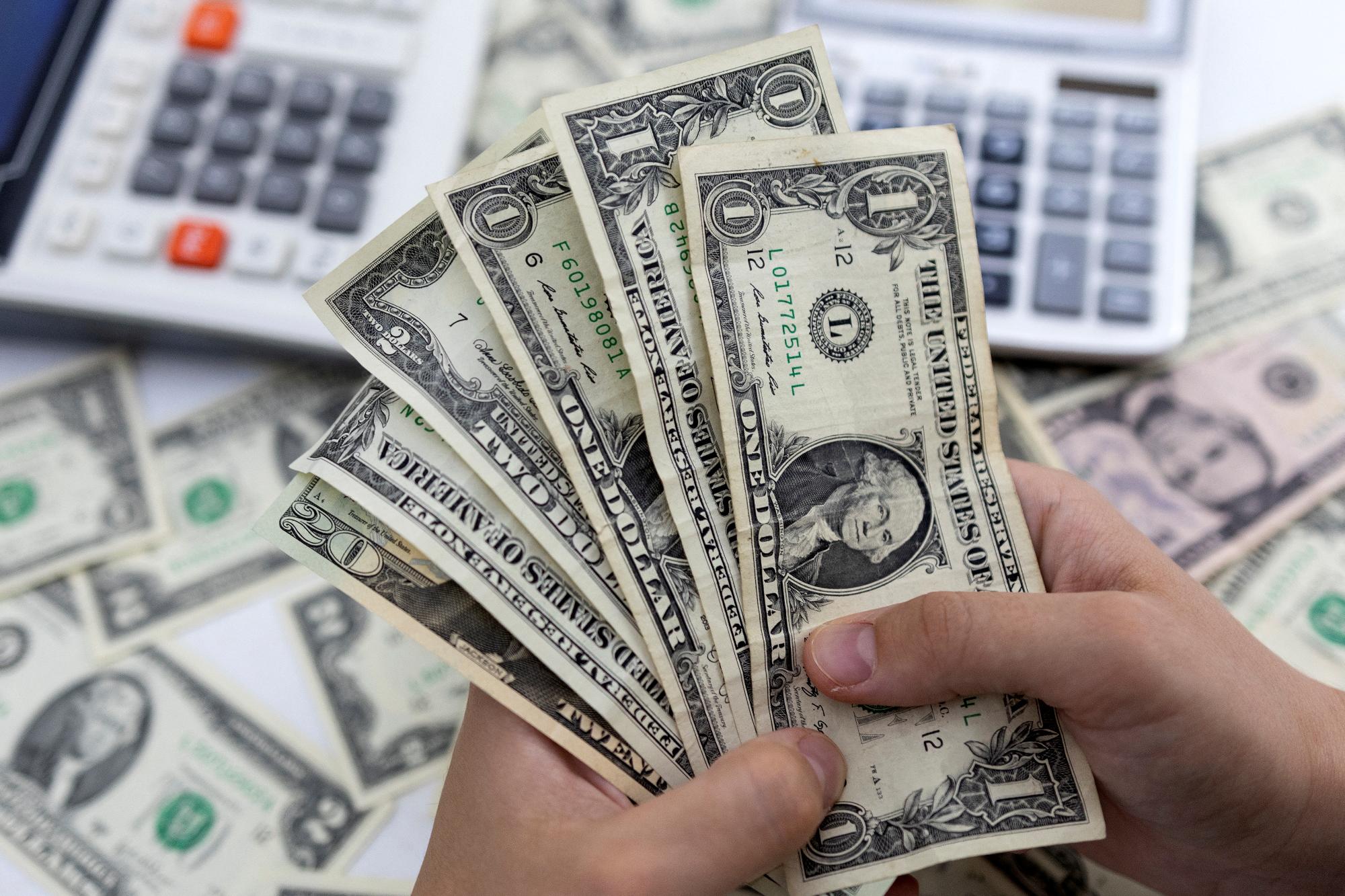
U.S. private employers increase hiring in December U.S. weekly jobless claims fall more than expected U.S. rate futures pare back rate cut expectations after data NEW YORK, Jan 4 (Reuters) - The dollar rose against most currencies on Thursday in choppy trading, bolstered by better-than-expected U.S. labor market data that dampened expectations of multiple interest rate cuts by the Federal Reserve this year. A crucial nonfarm payrolls report due on Friday could guide the outlook on Fed policy easing. Economists polled by Reuters forecast that 170,000 jobs were created in December, fewer than the 199,000 the month before. The U.S. currency gained on news that U.S. private employers hired more workers than expected in December. Private payrolls increased by 164,000 jobs last month, the ADP National Employment Report showed, the largest monthly increase since August. Economists polled by Reuters had forecast private payrolls rising by 115,000. Initial claims for state unemployment benefits dropped by 18,000 to a seasonally adjusted 202,000 for the week ended Dec. 30, also bolstering the dollar. Economists polled by Reuters had forecast 216,000 claims for the latest week. The data "showed that the U.S. economy is in a healthy position," said Amo Sahota, director at FX consulting firm Klarity FX in San Francisco. "That's where everything leads down this road of resetting market expectations early this year on what the Fed's action is going to be." Following Thursday's economic reports, U.S. interest rate futures reduced expectations on the number of rate cuts for 2024 to four decreases of 25 basis points each, from about six late on Wednesday, according to LSEG's interest rate probability app. Wednesday's release of the minutes of the Federal Reserve's Dec. 12-13 policy meeting was viewed as modestly hawkish by market participants. Fed officials "stressed ... that it would be appropriate for policy to remain at a restrictive stance for some time until inflation was clearly moving down sustainably toward the (Federal Open Market) Committee's objective." "If there was going to be a hard landing in the economy, then sure, let's ramp up expectations for a quick interest rate cut early this year," Sahota said. "But that is not what the Fed is thinking and (based on the data), we're not headed for a hard landing and the economy looks pretty good." In cryptocurrencies, bitcoin gained 3%, at $44,157 . Investors are anticipating U.S. Securities and Exchange Commission approval of the first spot bitcoin exchange traded fund over the next week or so. In afternoon trading, the dollar index rose slightly to 102.44 , after hitting two-week peaks on Wednesday. Against the yen , the greenback rose to two-week peaks, climbing for three straight days. The dollar was last up 0.9% at 144.52 yen. That said, Thierry Albert Wizman, global FX and rates strategist at Macquarie in New York, does not believe dollar gains since the beginning of the year could be sustained despite a pushback in rate cut expectations. "I do think the U.S. economy will slow, and it's going to be a consumer-led slowdown and we're going to see convergence between growth rates in the U.S. and the rest of the world this year," Wizman said. "Over the course of the first six months of the year, we can see some dollar weakness relative to the euro, sterling, and the yen." Among other currencies, the euro rose 0.2% against the dollar to $1.0948 , on data showing higher inflation in Europe. French consumer prices rose in December, in line with expectations, preliminary data from the national statistics body showed on Thursday, as energy and services prices rose over the year. In Germany, CPI inflation rose to 3.7% in December, as expected, from 3.2% a month earlier. Sterling also climbed against the dollar following data showing British borrowers increased demand for loans and business service were more resilient than feared in Britain. UK net borrowing in November was the highest in nearly seven years. A separate business survey, the UK Services Purchasing Managers' Index (PM), showed Britain's services firms grew more strongly in December than initially thought and optimism hit a seven-month high. Sterling was last up 0.2% at $1.2680. It rose as much as 0.5% to $1.2728 after the data release. https://www.reuters.com/markets/currencies/dollar-rebounds-traders-rethink-fed-rate-cut-expectations-2024-01-04/
2024-01-04 05:41
WAJIMA, Japan, Jan 4 (Reuters) - Thousands of rescuers pressed on in their search for survivors of a New Year's Day earthquake that killed at least 81 people in Japan, hoping to save as many as possible within a three day survival window that ends on Thursday afternoon. "There are many people left behind in the collapsed buildings, waiting to be rescued," Japanese Prime Minister Fumio Kishida said at a press conference. "We will use all of our efforts to rescue as many people as possible by this evening, when 72 hours will pass since the disaster," he said. Survival rates drop off 72 hours after the quake, according to emergency responders. Severed roads and the remote location of the worst-hit areas have complicated rescue efforts. Nearly 600 tremors have hit the Noto peninsula since the main quake, raising fears of further damage to infrastructure. Three days since the disaster struck, material aid has trickled in but evacuees remain largely cut off from food, water, warmth, and communications amid freezing temperatures and bad weather, authorities have said. The 3,000 meals and 5,000 bottles of water that were delivered as of Wednesday is not nearly enough for the 11,000 evacuees seeking aid in Wajima city, its mayor, Shigeru Sakaguchi, said at a regional disaster response meeting. "First and foremost, it's the road - severed roads are hampering not just aid supplies, but also the recovery of electricity, water, mobile signals and other lifeline infrastructures," he said. There were almost 100 chokepoints and blockages on prefectural roads, according to data released by Ishikawa prefecture on Thursday. Mayors acknowledged some supplies are beginning to arrive but said they needed more. Basics such as internet access, medical supplies, and clean toilets were also lacking. "Compared to other disasters the road situation into Wajima is very bad. I feel it's taking longer than usual for assistance to arrive," Shunsaku Kohriki, a medical worker who has assisted other disasters, told Reuters in Wajima city, where over half of the casualties were located. "I think realistically speaking the evacuees will have to live in really tough conditions for a while yet," he said. NO RUNNING WATER Kyoko Kinoshita, 62, worried about the possible spread of the flu and COVID as she queued in line with a couple of hundred other survivors for food in Wajima. "We have no running water. We cannot wash our hands after going to the bathroom," she said. "One of the babies at the evacuation centre is 3 weeks old and it looks like there is not enough water or milk for the baby either," she added. The government has pledged it will proactively provide supplies instead of waiting for official requests from local authorities, and has quintupled the number of Self-Defence Force members tasked with rescue operations since Monday. Some aid has been delivered via sea instead of land, with coast guard boats reaching ports in Wajima and Suzu on Wednesday. However, larger ships have been unable to dock in the bays of the Noto peninsual because the seabed had buckled from the earthquake, Ishikawa Governor Hiroshi Hase said on Thursday. BUSINESS IMPACT As Japanese businesses return from the New Year holidays, manufacturers are also gauging the impact of the quake on their production lines. Display makers Japan Display (6740.T) and EIZO (6737.T), as well as semiconductor firm Kokusai Electric, said they were repairing damaged factory facilities. Chip material maker Shin-Etsu Chemical (4063.T) said its plant in Niigata restarted part of its operations on Wednesday. Tokyo Stock Exchange on Thursday observed a minute of silence on Thursday instead of ringing a bell to mark the opening of trade, out of respect for those who died in the earthquake and a separate accident at Tokyo Haneda airport where five Coast Guard members were killed en route to deliver aid. Kishida pledged on Thursday to tap roughly 4 billion yen ($28 million) of the national budget for disaster relief. https://www.reuters.com/world/asia-pacific/japan-quake-death-toll-rises-73-search-survivors-enters-fourth-day-2024-01-04/

2024-01-04 05:34
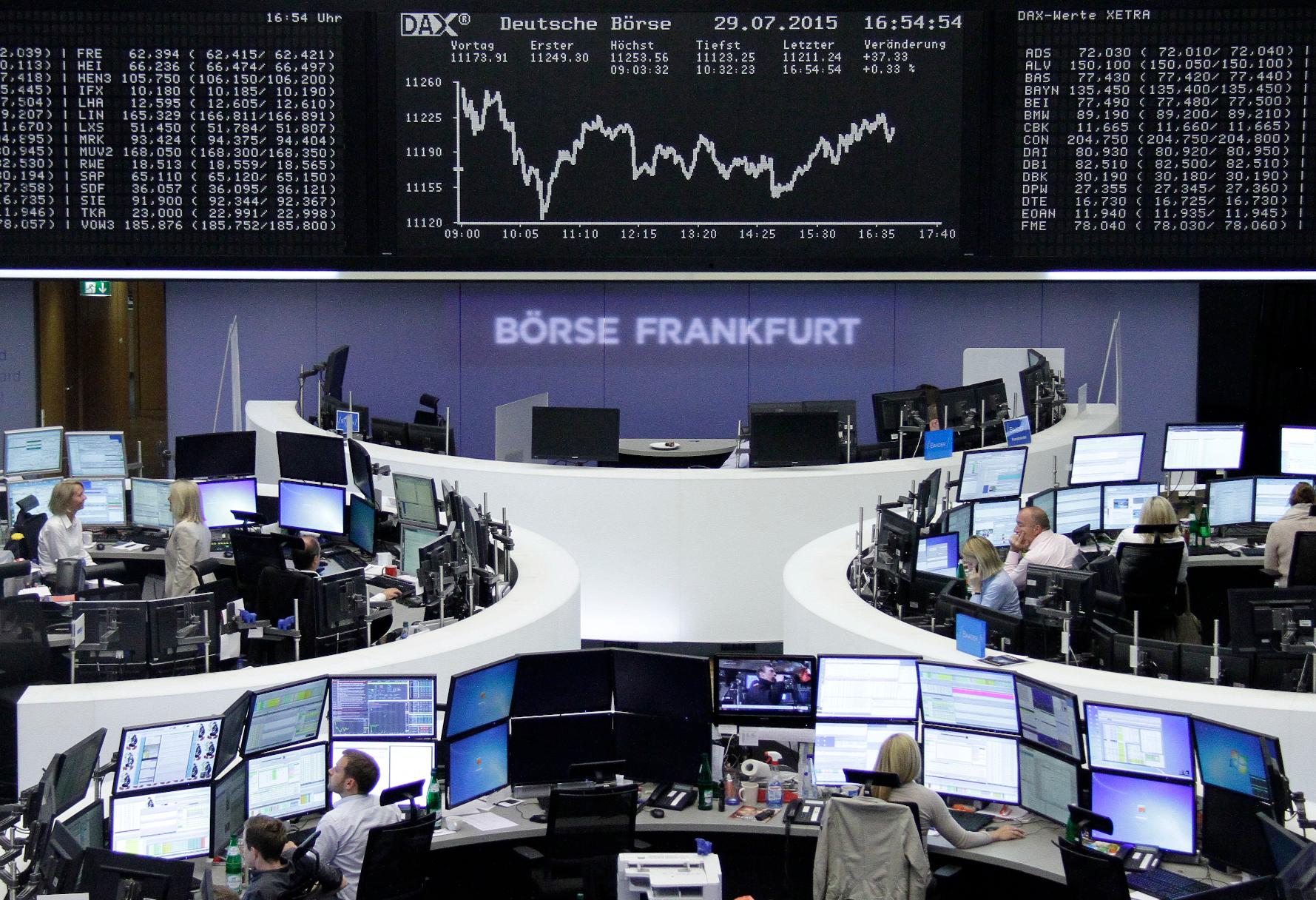
A look at the day ahead in European and global markets from Kevin Buckland Global stocks extended 2024's weak start into Thursday, exacerbated by Japan's return from an extended New Year holiday. Equity investors there not only got their first chance to react to the global selloff, but to the massive quake that ravaged Ishikawa prefecture, north-west of Tokyo, on New Year's Day. Japan's Nikkei (.N225) fell more than 1%, outpacing declines in the rest of the region, with the notable exception of China, where the blue-chip CSI 300 (.CSI300) dropped 1.4%. It all bodes poorly for Europe, with plenty of room left to fall from nearly two-year peaks, even after Wednesday's almost 0.9% slide for the STOXX 600 (.STOXX). Hanging over everything is the euphoric, late-2023 build-up in bets for a U.S. soft landing and rapid Fed rate cuts, which are now being dialled back. Minutes of the Fed December meeting didn't add any fuel to the Powell-pivot bonfire; if anything, they contained a dose of cold water, as policymakers continued to chant a high-rates-for-longer mantra. The dollar is taking a breather after its bounce from a six-month low, and Treasury yields have come off multi-week highs. Ultimately, it comes down to the economic data. Friday's U.S. payrolls report looms large, with the ADP employment report providing the opening act later today. Key developments that could influence markets on Thursday: -U.S. ADP (Dec), initial jobless claims -Germany CPI, HICP; France CPI (all Dec) -Germany, France, Italy, Spain, euro area, UK and US PMIs (all Dec) https://www.reuters.com/markets/europe/global-markets-view-europe-2024-01-04/
2024-01-04 05:05
TORONTO, Jan 4 (Reuters) - Canadian energy, power and mining companies are expected to lead a rebound in dealmaking this year helped by lower interest rates, following a slump in overall mergers and acquisitions in 2023 to the lowest since the outbreak of COVID-19, bankers said. Money markets are betting that the Bank of Canada (BoC), which raised interest rates to a 22-year high of 5% in 2023, could start cutting borrowing costs as early as April. "This general consensus about how 2024 is going to be a more normalized environment is making its way into the boardroom," said Sarfraz Visram, head of Canadian and international mergers and acquisitions (M&A) at the Bank of Montreal, adding that his team was having extensive conversations with clients. "If it pans out, we'll have a bumper year in M&A for sure." Canadian announced M&A in 2023 dropped 27% to $183.9 billion from the previous year, LSEG data showed. Citi, Goldman Sachs & Co and RBC Capital Markets were the top three financial advisors on announced M&A, the data showed. Energy and power M&A hit a five-year high of $70.4 billion, up 56% from the previous year, fueled by deals such as Couche-Tard's (ATD.TO) $3.3 billion purchase of some of TotalEnergies (TTEF.PA) gas stations and Canadian Baytex Energy's (BTE.TO) $2.5 billion bid for Ranger Oil. The biggest deal of the year was a Glencore-led (GLEN.L) consortium's $9 billion acquisition of Teck Resources' (TECKb.TO) steelmaking coal unit following a long battle, which drove mining M&A up 34.7% to $26.4 billion, a trend bankers expect to continue in 2024. "I think one of the things we did see in 2023 was continued consolidation in the resource sectors, particularly energy," said Mike Boyd, head of Global M&A at CIBC. "My sense is that will likely continue as well, driven by the benefits of scale and technology to lower costs and the largest companies targeting the most attractive regions." The drop in overall Canadian dealmaking was in line with the worldwide trend, with global M&A dropping to about $3 trillion, its lowest level in ten years. Visram said a tight funding market and a global trend of increasing regulatory scrutiny of deals still presented headwinds. Initial public offerings (IPOs) remained at a standstill, with just one deal announced on Canada's main stock exchange the Toronto Stock Exchange in 2023, the smallest number in at least 23 years, the data showed, but dealmakers were hopeful for a change in 2024. "There is a bit of a backlog in terms of not having been a market in the past year," said Alex Moore, partner at law firm Blake, Cassels & Graydon. Toronto Stock Exchange operator TMX Group (X.TO) had about 1,600 companies in its IPO pipeline, a spokesperson said on Wednesday. "We don't expect that we'd be returning to the highs of 2021, but with the backlog and a more optimistic outlook on the economy - if we could maintain that - then we could see companies start to come back to market for IPOs," said Moore. https://www.reuters.com/business/energy/canadian-dealmaking-seen-rebounding-2024-led-by-energy-mining-2024-01-04/

2024-01-04 05:03
U.S. crude inventories draw, fuel stocks build substantially- EIA Jan 4 (Reuters) - Oil settled lower on Thursday in a choppy see-saw session, as massive weekly gasoline and distillate stock builds overshadowed a larger-than-expected crude stock draw. Brent crude settled down 66 cents, or 0.8%, to $77.59. During the session it both rose and fell over $1. U.S. West Texas Intermediate crude futures settled down 51 cents, or 0.7%, to $72.19. Low fuel demand and large inventory increases in data from the U.S. Energy Information Administration weighed on prices. Gasoline stocks rose by 10.9 million barrels to 237 million barrels, their highest week-on-week rise in more than 30 years. Distillate stocks rose last week by 10.1 million barrels to 125.9 million barrels. Distillate product supplied, a proxy for demand, fell to its lowest level since 1999, EIA data showed. "The key Northeast region is still indicating relatively mild temperatures well into the 3rd week of this month in likely limiting diesel gains," said Jim Ritterbusch, president of Ritterbusch and Associates LLC in Galena, Illinois. While crude inventories drew by 5.5 million barrels in the week, EIA data showed, much of that reflects shipping disruptions in the Red Sea, said Bob Yawger, director of energy futures at Mizuho. "The situation in the Red Sea has forced a lot of refiners and buyers of crude oil to go to the United States rather than sail their boat around the Horn of Africa," Yawger said. Shipping concerns lingered after Yemen's Iran-backed Houthis on Wednesday said they had "targeted" a container ship bound for Israel. U.S. Central Command said the militant group had fired two anti-ship ballistic missiles in the southern Red Sea the previous day. Downbeat economic data sent prices lower earlier in the session. Euro zone business activity shrank in December. German inflation rose, possibly offering the European Central Bank an argument in favour of keeping interest rates steady for some time. Both oil benchmarks gained about 3% on Wednesday to settle higher for the first time in five days. Oil also found support from American Petroleum Institute data showing crude stocks fell by 7.4 million barrels, double the expected drawdown. On Wednesday two explosions killed nearly 100 people and wounded scores at a ceremony in Iran to commemorate commander Qassem Soleimani, who was killed by a U.S. drone in 2020. Iran has vowed revenge. https://www.reuters.com/markets/commodities/oil-prices-rise-middle-east-supply-worries-2024-01-04/

2024-01-04 04:07
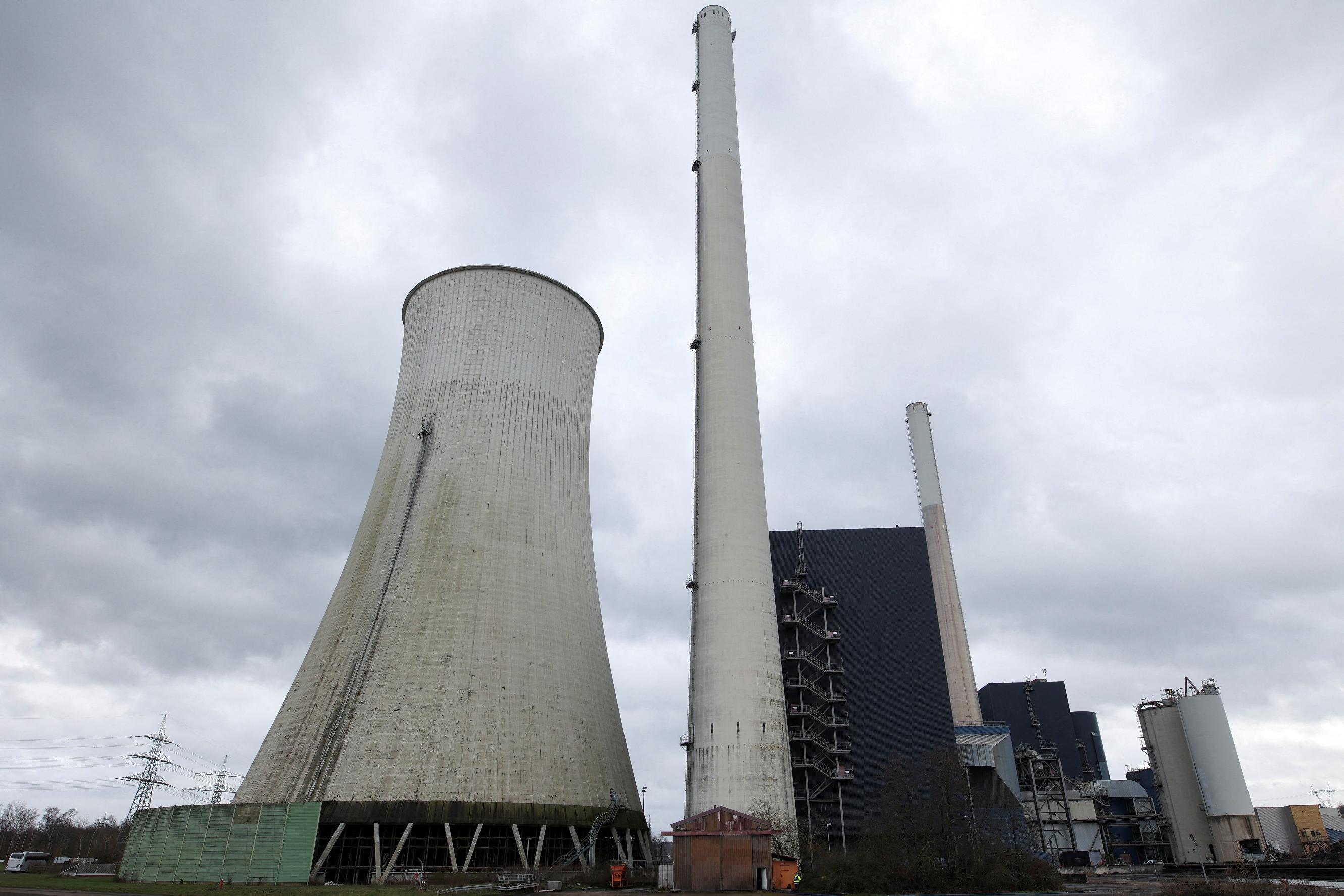
BERLIN, Jan 4 (Reuters) - Germany's carbon dioxide emissions in 2023 fell to their lowest since the 1950s due to less coal-fired power and reduced output by energy-intensive industries, but the decline is unsustainable without climate policy changes, a study said on Thursday. Germany aims to cut its greenhouse emissions by 65% by 2030 compared with 1990, a step to becoming carbon neutral by 2045. CO2 emissions in Europe's biggest economy fell last year to 673 million tonnes, the lowest level since the 1950s, 46% below 1990 and beating the government's 2023 climate goal of 722 million tonnes, a study by the Berlin-based Agora Energiewende think tank showed. Driven by an increase in domestic renewable energy production which now has a share of over 50%, and a rise in imported electricity, coal-fired electricity production fell to its lowest level since the 1960s and contributed to 44 million tonnes of CO2 savings, the study showed. While Germany aims to phase out coal by 2038, economy minister Robert Habeck has advocated an earlier exit by 2030, a date already agreed in western German states but resisted by the eastern brown coal belt. Industry emissions met government targets, falling 12% year-on-year, at 144 million tonnes, following an 11% drop in energy-intensive output, it added, warning that that fall could be lost this year with the sector's recovery. Energy-intensive manufacturers scaled down production last year due to rising gas prices in Europe following a shift from Russian piped gas supply to liquefied natural gas imports in the aftermath of Moscow's invasion of Ukraine. "The consequences of the fossil energy crisis and the slowdown in the economy are particularly evident in the CO2 emissions of energy-intensive industries," think tank Director Simon Mueller said in a statement. Despite the overall drop, the transport and buildings sectors that have fallen short of government emissions targets in recent years, missed their 2023 goal. With heating the main contributor, buildings emitted 109 million tonnes of CO2 last year, a 2.7% fall on the year, but above Germany's target of 101 million tonnes. A bill introduced last year to encourage green energy and communal heating must be quickly implemented to put the sector back on track for 2030, Mueller added. In the transport sector, CO2 emissions fell by 2% from 2022 to 145 million tonnes, missing the 133 million tonnes goal. Electric cars' market share stagnated at 20%, the study showed and it suggested tax subsidies reforms and an expansion of public transport to reach the target. The study said meeting 2030 CO2 targets needed government financing, which has become significantly tighter after last year's constitutional court ruling that cancelled some 60 billion euros of unused debt earmarked for climate projects. "A clever mix of instruments can ensure that we achieve more climate protection for every euro from the state treasury," Mueller added. https://www.reuters.com/business/environment/germanys-2023-co2-emissions-fall-lowest-70-years-drop-not-yet-sustainable-study-2024-01-04/