2024-01-02 20:36
Focus turns to Fed minutes due on Thursday Geopolitical risks in the Red Sea helping prices -analyst Rate cuts could lift gold to record highs Jan 2 (Reuters) - Gold entered 2024 under pressure from a jump in the U.S. dollar, but held its ground on expectations the Federal Reserve will cut interest rates this year and rising concerns over attacks on shipping in the Red Sea. Spot gold steadied at $2,061.59 per ounce on Tuesday by 2:30 p.m. ET (1930 GMT) after rising as much as 0.8% earlier in the session. U.S. gold futures slipped 0.1% to $2,070.30. The dollar index (.DXY) rose 0.8% on track for its biggest daily gain since July, supported by higher U.S. yields, making dollar-priced bullion more expensive for overseas buyers. But the possibility of escalation in the Red Sea kept gold prices supported, said Daniel Pavilonis, senior market strategist at RJO Futures. Gold prices surged 13% in 2023 in their first annual rise since 2020 and are forecast to reach record highs in 2024, as lower interest rates reduce the opportunity cost of holding non-yielding bullion. "As we saw how much of a lift the price of gold obtained from expectations of rate cuts in 2023, we could well see significant gains in 2024 when central banks actually start loosening their policies," said Fawad Razaqzada, market analyst at City Index, adding that the actual timing and extent of the rate cuts will depend on incoming data. This week, market attention is on the minutes, scheduled for Thursday, of the last Fed meeting. Data on U.S. job openings and December non-farm payrolls, both due on Friday, will also be closely followed. Silver fell 0.5% to $23.64 per ounce while platinum was down 0.5% to $982.18. Palladium slipped 2.2% to $1,074.62, its lowest since Dec. 14. "The outlook for palladium demand partly hinges on the pace of the energy transition, particularly growth in EV demand, as higher battery electric vehicle growth is negative for palladium demand," HSBC said in a note. https://www.reuters.com/markets/commodities/gold-starts-2024-brightly-fed-rate-cut-bets-red-sea-worries-2024-01-02/

2024-01-02 20:27
Canadian dollar weakens 0.7% against the greenback Touches its weakest since Dec. 21 at 1.3333 Canadian factory PMI falls to lowest since May 2020 Canadian bond yields rise across the curve TORONTO, Jan 2 (Reuters) - The Canadian dollar posted its biggest decline in nearly three months against the U.S. dollar on Tuesday as oil prices fell and domestic data showed a deepening downturn in the manufacturing sector. The loonie was trading 0.7% lower at 1.3325 to the greenback, or 75.05 U.S. cents, its biggest decline since Oct. 12. The currency touched its weakest intraday level since Dec. 21 at 1.3333. The U.S. dollar (.DXY) rallied against a basket of major currencies, boosted by a jump in U.S. bond yields. "The loonie fell back along with other major currencies versus the greenback as traders started the year in a reflective mood," said Amo Sahota, director at Klarity FX in San Francisco. Lower oil prices and gloomy manufacturing data weighed on the Canadian currency, Sahota added. The loonie had been on a tear since November, along with gains for other risk-sensitive assets such as stocks, as investors bet the Federal Reserve would soon pivot to cutting interest rates. It ended 2023 with a gain of 2.3%. Canada's factory sector contracted in December at its steepest pace since the early months of the COVID-19 pandemic. The S&P Global Canada Manufacturing Purchasing Managers' Index (PMI) dropped to a seasonally adjusted 45.4 from 47.7 in November, its lowest level since May 2020. The price of oil, one of Canada's major exports, fell on interest rate jitters and as concerns eased that tensions in the Red Sea could disrupt supplies. U.S. crude oil futures settled 1.8% lower at $70.38 a barrel. Canadian government bond yields rose across the curve, tracking moves in U.S. Treasuries. The 10-year was up 8.4 basis points at 3.191%. https://www.reuters.com/markets/currencies/c-falls-most-3-months-weighed-by-soft-factory-data-2024-01-02/

2024-01-02 18:40
CAIRO, Jan 2 (Reuters) - Egyptians entered the new year facing a series of price hikes as the government battles to keep up with rampant inflation. Telecom companies raised the prices of their internet services, with state-controlled operator Telecom Egypt (ETEL.CA) (TE) increasing the prices of its internet services by about 33%, effective Jan. 5, according to a TE company official who asked not to be named. Private providers Orange (ORAN.PA) and Vodafone (VODE.CA) also raised their internet fees, apparently after approval by the National Telecoms Regulatory Authority. Headline inflation in Egypt was 34.6% in the year to November. Electricity prices are also soon set to rise by around 15% on average, according to reports in local media. The electricity ministry has as of yet made no announcement. On Monday, Egypt's transport ministry raised the price of tickets on the Cairo metro by up to 20%, officials in metro stations said, with a ticket for rides of nine stations or less rising to 6 Egyptian pounds ($0.19) from 5 pounds and tickets for some longer trips rising by even more. https://www.reuters.com/world/africa/egyptians-greeted-by-hefty-price-rises-new-year-2024-01-02/

2024-01-02 18:03
IMF mission will arrive in Argentina on Jan 4 Agreement on 7th review could unlock $3.3 bln in IMF funds Country has to pay $2.8 bln to IMF in January and February LONDON, Jan 2 (Reuters) - Argentina and the International Monetary Fund are close to an agreement on a review of its $44 billion loan programme, three sources told Reuters, a key step that would put the country on track to unlock the next tranche of funding. Government officials and IMF staff representatives are in talks over the seventh review of the 2022 loan, the sources familiar with the matter said. The review was originally scheduled to be completed in November but was delayed amid a change of government, as President Javier Milei took office on Dec. 10. "An agreement is close, the country is working to get an approval this month," said one of the sources, who asked not to be named because the talks are private. A spokesperson for Milei declined to comment. An IMF spokesperson said that staff of the agency will travel to Buenos Aires on Thursday to continue negotiations on the seventh review, and added that Argentina will bundle capital payments due in January into one at the end of the month. Argentina is due to pay some $2 billion to the IMF this month. The seventh review, which revises the programme's performance criteria until September, is key to putting the deal back on course, as it had gone off track shortly after its latest formal assessment in August due to missed targets. If approved by both the IMF staff and the Fund's executive board, the review will also unlock disbursements for around $3.3 billion. FROM PRIOR ACTIONS TO WAIVER Argentina's Milei administration has already initiated a formal request for a waiver for the programme after the previous administration failed to meet the goals agreed in August. "The key is that the country's recent prior actions could allow a waiver on the programme," one of the three sources said. The IMF usually approves waivers to missed quantitative performance criteria if it believes that a programme "will still succeed," according to the Fund's guidelines. The IMF recently hardened its view on Argentina after the country missed fiscal and reserves accumulation targets. The prior actions are steps that a country takes before completing a review. Milei's administration has laid out a package of economic measures to tackle a deep fiscal deficit, triple-digit inflation and a dearth of foreign reserves. Argentina devalued its peso by 54%, weakening the official exchange rate from 366 to 800 pesos per dollar in December, narrowing the gap with the black-market peso to a level last seen in 2019, when capital controls were imposed. Milei's government also said it is working on reducing energy and social subsidies to restore fiscal balance in 2024. The IMF called the economic measures "bold," adding, "their decisive implementation will help stabilize the economy." Milei has also sent a reform bill to Congress proposing far-reaching changes to the country's tax system, electoral law and public debt management. Argentina has to pay $2.8 billion on IMF maturities in January and February. The latest loan payment to the IMF was secured via a $960 million short-term financing bridge from the Development Bank of Latin America and the Caribbean (CAF), as the country's net reserves are in the red. Wall Street bank Morgan Stanley said it expects a fully revamped IMF programme for the country for the second half of the year, according to a note to clients published on Tuesday. https://www.reuters.com/world/americas/argentina-imf-close-agree-delayed-programme-review-january-sources-2024-01-02/
2024-01-02 17:39
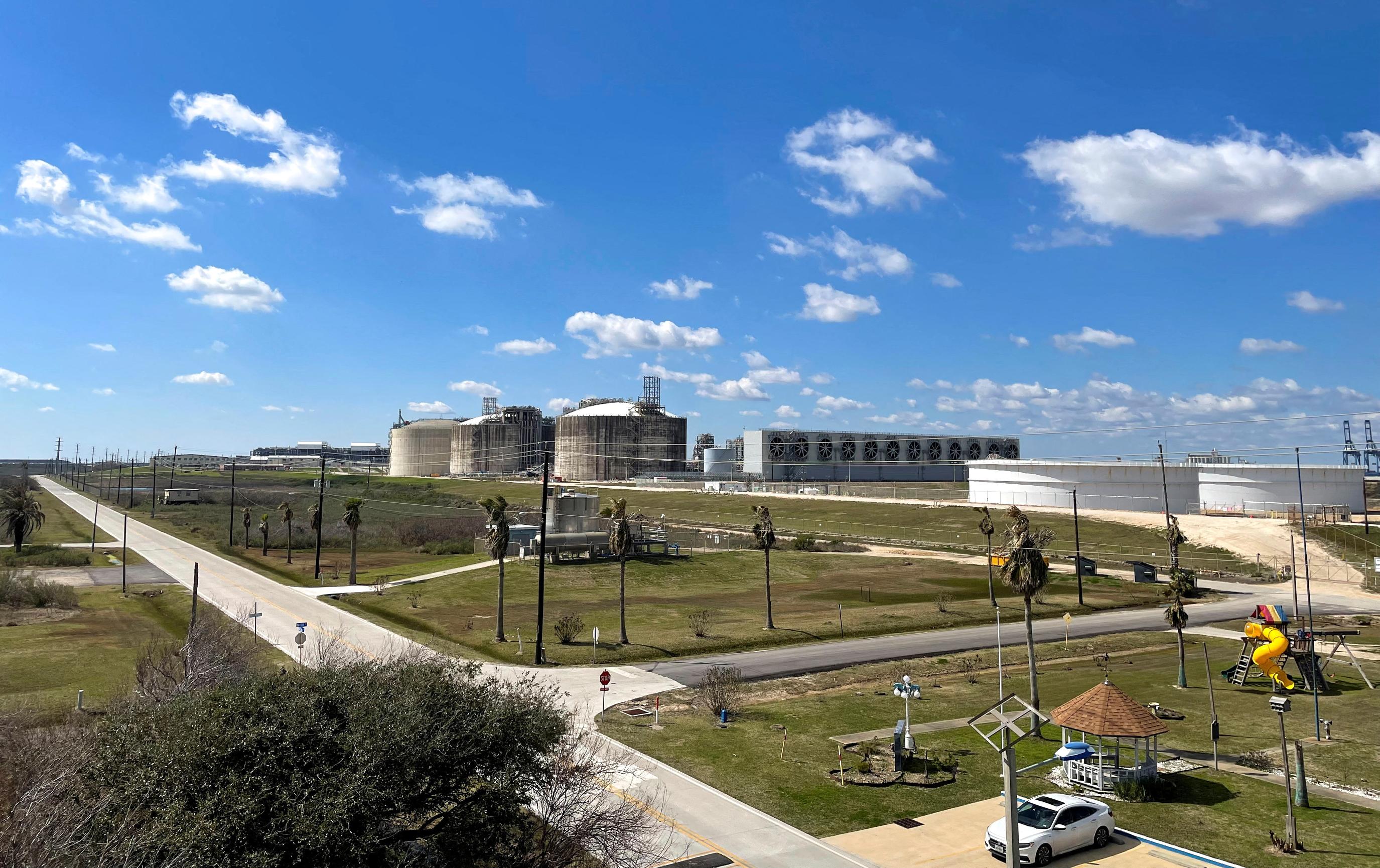
HOUSTON, Jan 2 (Reuters) - U.S. liquefied natural gas exports hit monthly and annual record highs in December, tanker tracking data showed, with analysts saying it positioned the United States to leapfrog Qatar and Australia to become the largest exporter of LNG in 2023. The U.S. was the stand out in global LNG supply growth in 2023, said Alex Munton, director of global gas and LNG research at consulting firm Rapidan Energy Group of the rise to 8.6 million metric tons leaving U.S. terminals in December. Qatar was the largest LNG exporter in 2022 and Australia the second-largest that year, U.S. government data showed. "U.S. record production was driven by two factors: the return of Freeport LNG to full service, which added 6 MT and the full-year output of Venture Global LNG's Calcasieu Pass facility that added 3 MT more than in 2022," Munton said. Full year exports from the U.S. rose 14.7% to 88.9 million metric tons (MT) driven largely by the return to full production of the Freeport LNG plant that had suffered a fire in 2022, and as others increased processing efficiency, LSEG data showed. Shipments compare to 77.5 million metric tons in 2022, the data from the financial information provider showed. Europe remained the main destination for U.S. LNG exports in December, with 5.43 MT, or just over 61%. In November, 68% of U.S. LNG exports were to Europe, LSEG data showed. The month-over-month drop reflected warmer than normal temperatures in Europe and elevated storage levels, analysts at consultants Rystad Energy said. European gas storage was about 97% full at the beginning of December, it reported. Asia was the second largest export market for U.S. LNG in December, taking 2.29 MT, or 26.6%, of exports, up from 18.5% in November. U.S. exports to Latin America were half a million metric tons, or just under 6% of total exports, LSEG ship tracking data showed. Natural gas flows to the seven big U.S. LNG export plants have climbed an average 14.9 billion cubic feet per day (bcfd) so far in January, up from a monthly record of 14.7 bcfd in December. That topped the prior all-time monthly high of 4.3 bcfd in November, LSEG data showed. U.S. gas was trading Tuesday morning at $2.55 per million British thermal units (mmBtu) at the Henry Hub benchmark in Louisiana , $9.81 per mmBtu at the Dutch Title Transfer Facility (TTF) benchmark in Europe and $11.52 per mmBtu at the Japan Korea Marker (JKM) in Asia . https://www.reuters.com/business/energy/us-was-top-lng-exporter-2023-hit-record-levels-2024-01-02/
2024-01-02 17:28
Construction spending rises 0.4% in November October construction spending increase revised up to 1.2% Manufacturing activity slump in December confirmed WASHINGTON, Jan 2 (Reuters) - U.S. construction spending rose less than expected in November amid a decline in outlays on public projects, but data for the prior month was revised sharply higher suggesting underlying strength in the sector. Despite coming below expectations, the report from the Commerce Department on Tuesday added to a recent raft of data on the labor market, consumer spending and confidence in suggesting that the economy regained its poise after appearing to stumble at the start of the fourth quarter. Construction activity is being underpinned by the new single-family housing segment, thanks to an acute shortage of previously owned homes on the market. A policy by President Joe Biden's administration to bring semiconductor manufacturing back to the United States is also boosting the construction of factories, helping the keep the economy afloat. "Construction activity is one reason the Federal Reserve rate hikes have not brought the economy to its knees like the economic models from other business cycles had forecasted," said Christopher Rupkey, chief economist at FWDBONDS in New York. "There's money for new industrial building projects with the only risk being there is a severe nationwide shortage of construction workers." Construction spending increased 0.4%. Data for October was revised up to show construction spending surging 1.2% instead of gaining 0.6% as previously reported. Economists polled by Reuters had forecast construction spending rising 0.6%. Construction spending shot up 11.3% on a year-on-year basis in November. Spending on private construction projects increased 0.7% in November after rising 1.2% in October. Investment in residential construction advanced 1.1% after rising 2.0% in the prior month. Outlays on new single-family construction projects jumped 2.9%. With the rate on the popular 30-year fixed mortgage falling further below 7%, single-family homebuilding could surge in 2024. Strong activity in this housing market segment helped to end nine straight quarters of decline in residential investment in the third quarter. Economists expect housing to have contributed to gross domestic product in the fourth quarter. The Atlanta Federal Reserve is currently estimating GDP growth rising at a 2.3% annualized rate in the last quarter of 2023. The economy grew at a 4.9% pace in the third quarter. ECONOMY EXPANDING The government is scheduled to publish its advance estimate of fourth-quarter GDP later this month. The economy has continued to expand despite 525 basis points worth of interest rate hikes from the Federal Reserve since March 2022. The U.S. central bank last month held its policy rate steady at the current 5.25-5.50% range and policymakers signaled in new economic projections that the historic monetary policy tightening engineered over the last two years is at an end and lower borrowing costs are coming in 2024. Stocks on Wall Street were mostly lower. The dollar rose against a basket of currencies. U.S. Treasury prices fell. "Investors should expect homebuilders to grow their business this year as the residential real estate market benefits from lower rates in the upcoming months," said Jeffrey Roach, chief economist at LPL Financial in Charlotte, North Carolina. "Given the construction activity, we expect residential investment contributed to economic growth in the fourth quarter." Outlays on multi-family housing projects edged up 0.1% in November. Momentum is fading amid a large stock of multi-family housing under construction. The rental vacancy rate also jumped to its highest level in 2-1/2 years in the third quarter. Outlays on private non-residential structures like factories rose 0.2% in November. Spending on manufacturing construction projects increased 0.5% after accelerating 2.7% in October. Bernard Yaros, lead U.S. economist at Oxford Economics, said while this segment of private fixed investment was cooling, he did not "anticipate an outright contraction in 2024, as federal tax credits aimed at expanding the nation's domestic productive capacity in semiconductor manufacturing and green energy production are set to ramp up." Spending on public construction projects fell 0.7% after increasing 1.3% in October. State and local government spending declined 0.5% while outlays on federal government projects tumbled 3.1%. While construction spending is holding its own despite the higher borrowing costs, manufacturing continues to struggle. S&P Global said on Tuesday that its manufacturing PMI fell to a reading of 47.9 in December amid a steep decline in new orders. That was revised down from the preliminary reading of 48.2 and lower than 49.4 in November. A reading below 50 indicates contraction in manufacturing, which accounts for 10.3% of the economy. The decline in factory activity was mirrored across the globe, with manufacturing in the euro area contracting for an 18th straight month and Asia's manufacturing powerhouses taking a hit due to China's patchy economic recovery. https://www.reuters.com/markets/us/us-construction-spending-rises-less-than-expected-november-2024-01-02/