2024-01-02 17:24
Jan 2 (Reuters) - Investor optimism that the Federal Reserve will start cutting interest rates is breathing new life into the market for junk debt, providing timely relief to the lowest-rated companies and likely capping the rate of defaults in 2024. As the U.S. central bank started to raise rates in 2022 and worries about defaults grew, companies rated below investment grade saw tepid demand from investors for their loans and bonds. Many such companies turned to roundabout ways to raise money to get ahead of a $300 billion wall of bond and loan maturities in the next two years. In the last few months, however, yields have fallen as investors bet the Fed, emboldened by its progress in slowing a surge in prices that pushed inflation to 40-year highs last year, will soon start cutting rates. Markets are now pricing the U.S. central bank's key policy rate to fall as much as 1.5 percentage points below the current 5.25%-5.50% range by the end of next year. Expectations of such a pivot have led to a resurgence in demand for high-yielding debt. Junk bond spreads, or the premium investors charge over U.S. Treasuries for taking on the risk, have on average tightened 38 basis points since September to 343 basis points, the lowest level since April 5, 2022, according to the ICE BAML index. In December, insurance brokerage USI Inc, a company rated deep in the junk territory, became the first borrower in its category to tap the primary markets since April, according to data provider Informa Global Markets. "While it is possible defaults may increase slightly toward historical averages, a lot of this appears to be priced into the market today," said Manuel Hayes, senior portfolio manager at Insight Investment. Estimates vary, but analysts expect junk bond default rates to top out at 4% to 5% this year, compared with 2% to 3% in 2023 and far lower than the double-digit readings touched during the 2008 financial crisis. Default rates on leveraged loans, whose interest rates are not fixed but change with the market, are expected to tick up to 5%-6%. One reason for the relatively low rates of default is that some companies have been deploying creative ways to tap financing markets, which has given them the breathing room to meet their debt obligations. These include distressed exchanges, where investors agree to get paid less than what they were entitled to in exchange for new or restructured debt secured by collateral. They also have been extending the maturity on old debt by agreeing to more restrictive terms on new debt, and putting up collateral or equity to raise money from direct lenders and other private credit providers. A more involved strategy is to raise debt through a local or foreign subsidiary from new and existing lenders, with the proceeds then sent back to the parent company to buy its maturing debt at a discount. The strategy, part of liability management exercises, raises the risk of legal disputes, as it increases some creditors' claims on assets during bankruptcy by diluting others. "Distressed exchanges are on the rise, as are the use of creative debt-raising solutions, as less creditworthy companies look to raise liquidity to live now to fight another day," said Glenn Reynolds, the founder of Macro4Micro, a research firm. MIX OF REACTIONS Some analysts said many risks remain. A default cycle may become unavoidable if the Fed surprises markets and doesn't cut rates as aggressively or as soon as people think. And the use of creative financing strategies may only go so far. "Even if investors participate in such creative trades, whether they would have a higher claim on the company's assets during bankruptcy is still untested in courts," said Ian Walker, head of legal innovation at Covenant Review, a research firm. Creditors are already becoming more wary. "A lot of our clients are starting to consider putting protections in credit documentation to make sure that they don't get short-changed by these liability management transactions," said Jason Ewart, a partner in the global financial markets team at Clifford Chance, a law firm. "It is a mix of investor reactions, with some supporting the need for such trades as a temporary liquidity measure while others are simply keen to close such loopholes," Ewart said. More than $190 billion of the debt maturing in 2024-2025 belongs to the lowest-rated high-yield companies, according to CreditSights. "We could push right up against it but may not entirely get a full-fledged default cycle," said Meghan Robson, the head of U.S. credit strategy at BNP Paribas. https://www.reuters.com/markets/us/fed-pivot-may-cap-junk-bond-defaults-risks-remain-2024-01-02/
2024-01-02 17:14
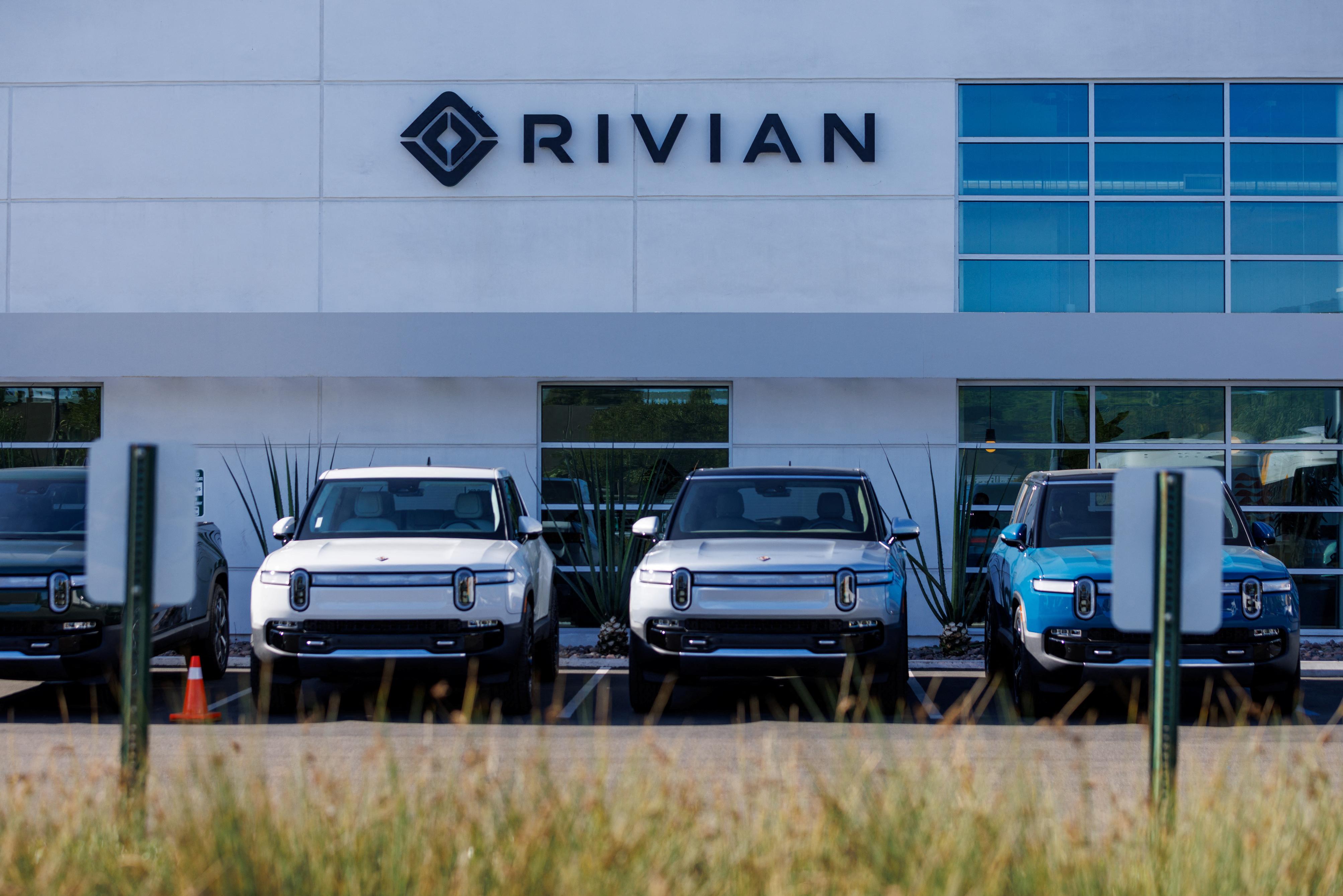
Jan 2 (Reuters) - Rivian Automotive (RIVN.O) missed market estimates for fourth-quarter deliveries as tough competition and high interest rates weighed on demand for its electric vehicles, sending the company's shares down nearly 10% on Tuesday. The company handed over 13,972 vehicles in the last three months of 2023, 10% lower than the previous quarter, and below estimates of 14,430, per 13 analysts polled by Visible Alpha. High interest rates in the United States have raised monthly payments for electric vehicles, making them less affordable and prompting a price war by market leader Tesla (TSLA.O). Amazon.com (AMZN.O), Rivian's biggest backer and a large customer, also does not take deliveries during the fourth quarter as it focuses on the holiday season in the period. "It's likely that holiday schedules slowed down deliveries vs production," said Vitaly Golomb, a Rivian investor and an electric and autonomous mobility expert. Rivian produced 17,541 vehicles in the last three months of 2023, up 7.5% from the prior quarter. That took the annual production to 57,232 units, beating its forecast of 54,000. Tesla also posted quarterly deliveries on Tuesday, with the company beating market estimates and meeting its annual goal. While an earlier-than-expected bond issuance in October had sent Rivian's stock plunging on fears over its financial health, the company is widely seen as better placed among the EV startups such as Lucid (LCID.O) and Fisker (FSR.N). Rivian has so far avoided cutting prices of its vehicles, betting instead on sustainable demand. The company last month signed a deal for its electric vehicles with U.S. wireless carrier AT&T (T.N), the first after its exclusivity pact with Amazon ended in November. Some analysts said on Tuesday the Rivian R1T pickup truck, which starts at $73,000, is unlikely to face major competition from Tesla's Cybertruck, unveiled in late November. https://www.reuters.com/business/autos-transportation/ev-maker-rivian-misses-quarterly-deliveries-expectations-2024-01-02/
2024-01-02 17:07
LONDON/DUBAI, Jan 2 (Reuters) - OPEC+ plans to hold a meeting of its Joint Ministerial Monitoring Committee (JMMC) in early February, though an exact date has not been decided, three sources from the alliance said. OPEC+, which comprises the Organization of the Petroleum Exporting Countries and allies led by Russia, usually holds such meetings every two months to monitor the implementation of its production agreements. The committee brings together leading countries within the alliance, including Saudi Arabia, Russia and the United Arab Emirates. At its last full ministerial meeting on Nov. 30, OPEC+ agreed to voluntary output cuts totalling about 2.2 million barrels per day (bpd) during the current quarter, led by Saudi Arabia rolling over its current voluntary cut. The JMMC meeting is expected to assess the deal's implementation in January, one of the sources said. Last month, OPEC member Angola quit the group because it was unhappy with the production quota it was given. (This story has been refiled to add a dropped word in paragraph 1) https://www.reuters.com/business/energy/opec-set-hold-monitoring-meeting-early-february-2024-01-02/
2024-01-02 16:57
Jan 2 (Reuters) - Moderna (MRNA.O) shares gained nearly 14% on Tuesday as brokerage Oppenheimer upgraded the stock to "outperform" and the vaccine maker's CEO reiterated the company's goal of achieving sales growth in 2025. Shares of the company slumped nearly 45% in 2023, marking their worst annual performance to date, weighed down by weak sales of its COVID-19 vaccine. "With the expected launch of our RSV (respiratory syncytial virus) vaccine candidate in 2024 and potential launch of our flu/COVID combination vaccine as early as 2025, we believe Moderna will experience sales growth in 2025," CEO Stéphane Bancel said in a letter to shareholders. According to Oppenheimer, Moderna could have five products on the market by 2026. Moderna shares fell 29% in 2022 after they more than doubled in 2021. The stock had tracked a fivefold increase in 2020. The stock was among the biggest gainers on the S&P 500 Healthcare index (.SPXHC) on Tuesday. Bancel reiterated the company's goal to break even in 2026 as revenue grows and research and development costs for late-stage candidates recede. Moderna had previously said it expects $4 billion in revenue in 2024 from the sale of its COVID and RSV vaccines. Bancel recently took over the responsibility to oversee sales and marketing of vaccine after Arpa Garay stepped down as the chief commercial officer. Moderna had said in November it would only hit the low end of its sales forecast of $6 billion to $8 billion for 2023, reflecting weaker demand for COVID vaccines. Moderna's price to tangible book value ratio, a common benchmark for valuing stocks, stood at 2.84 compared with 1.21 for rival BioNtech . https://www.reuters.com/business/healthcare-pharmaceuticals/moderna-surges-after-ceo-says-sales-growth-expected-2025-2024-01-02/
2024-01-02 16:50
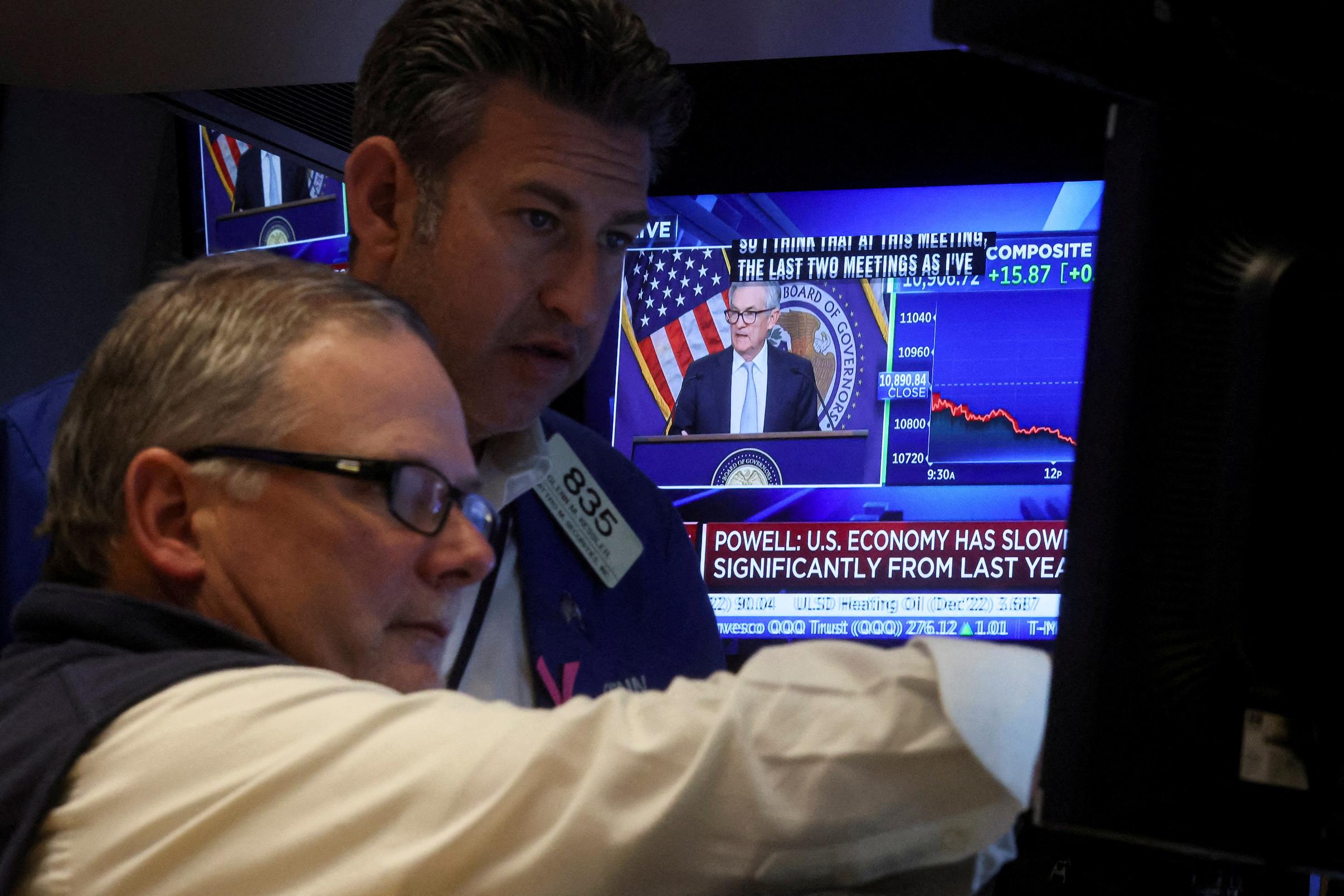
NEW YORK, Jan 2 (Reuters) - U.S. corporate earnings should improve at a stronger clip in 2024 as inflation and interest rates come down, analysts predict, but worries about slowing economic growth hang over the outlook. S&P 500 earnings are expected to increase 11.1% overall in 2024 after rising a modest 3.1% last year, according to estimates compiled by LSEG. But earnings growth needs to be enough to support lofty valuations in stocks. The S&P 500 (.SPX) index is trading at 19.8 times forward 12-month earnings estimates, well above its long-term average of 15.6 times, based on LSEG Datastream data. Falling rates helped drive a sharp year-end rally, especially after the Federal Reserve in December opened the door to interest rate cuts in 2024 after a rate hike campaign that started in 2022. The Dow Jones industrial average (.DJI) in December hit its first record high close since January 2022, while the S&P 500 is within striking distance of its all-time closing finish. The S&P 500 rose 24.2% for the year. "The market trading where it is at current levels demands earnings to show strong growth next year," said Sameer Samana, senior global market strategist at Wells Fargo Investment Institute. Among concerns for 2024 is the lingering effect of higher interest rates on the economy and corporate earnings, he said. The U.S. government confirmed in December that economic growth accelerated in the third quarter. Gross domestic product increased at a 4.9% annualized rate last quarter, the Commerce Department's Bureau of Economic Analysis (BEA) said in its final estimate. Profit estimates could weaken further as companies begin to open their books on the fourth quarter and give guidance for the first quarter and the rest of 2024. The release of fourth-quarter results will kick into high gear in mid-January. "We're definitely seeing those (first quarter) estimates weakening at a faster pace," said Nick Raich, chief executive of The Earnings Scout. "Look at a name like FedEx, and that's a good bellwether of the global economy." FedEx (FDX.N) shares tumbled 12.1% Dec. 20, a day after the package delivery company reported earnings for the quarter ended Nov. 30 that fell short of analysts' targets and cut its full-year revenue forecast. Estimated year-over-year earnings growth for S&P 500 companies for the first quarter of 2024 is now at 7.4%, down from 9.6% on Oct. 1, based on LSEG data. For the fourth quarter of 2023, S&P 500 earnings are forecast to rise 5.2%, down from 11% growth seen on Oct. 1. To be sure, investors point to cooling inflation as a strong positive for companies in 2024. "The consumer still seems to be healthy, inflation is getting better, employment is still strong, interest rates are going down and gas at the pump is going down," said Gary Bradshaw, portfolio manager at Hodges Capital Management in Dallas. Moreover, "these companies have streamlined their businesses and margins are decent," he said. U.S. prices fell in November for the first time in more than 3-1/2 years, pushing the annual increase in inflation further below 3%, a recent Commerce Department report showed. Optimism over growth in artificial intelligence is likely to continue to help companies with results and outlooks tied to AI technology. "While the rebound in TECH+ (earnings per share) began in 2Q23, earnings for the rest of the market are expected to follow in the year ahead," Jonathan Golub, chief U.S. equity strategist & head of portfolio analytics at UBS Investment Research, wrote in December. The "Magnificent 7" group of megacap stocks - Apple (AAPL.O), Microsoft (MSFT.O), Alphabet (GOOGL.O), Amazon.com (AMZN.O), Nvidia (NVDA.O), Meta Platforms (META.O), and Tesla (TSLA.O) - accounted for 62.18% of the S&P 500's total return in 2023, according to S&P Dow Jones Indices senior index analyst Howard Silverblatt. Also, the Fed's recent dovish pivot has boosted the case for the U.S. dollar to weaken, which would make U.S. exporters' products more competitive abroad. But whether 2024 earnings forecasts are assuming too many of these positives remains a concern. "The market is assuming a near-perfect landing with inflation cooling without a significant impact to demand and pricing power — not likely in our view," J.P. Morgan equity strategists wrote in their 2024 outlook. "Current consensus S&P 500 forward EPS growth at 30%ile (+11%)... is in harmony with a Goldilocks outlook for growth and inflation. https://www.reuters.com/markets/us/us-profit-growth-accelerate-2024-despite-economy-risks-2024-01-02/
2024-01-02 15:04
Jan 2 (Reuters) - Chevron (CVX.N) said on Tuesday it would take non-cash writedowns on U.S. oil and gas production, primarily in California, and for securing abandoned wells and pipelines in the U.S. Gulf of Mexico that had been previously sold. The U.S. oil major expects to take non-cash, after-tax charges of between $3.5 billion and $4 billion in its fourth quarter 2023 results, it said in a securities filing. The filing did not break out the allocations of writedowns between the two areas. The loss recognized against its former offshore Gulf of Mexico properties are related to abandonment and decommissioning obligations. The company and others have contested claims requiring they pay to secure wells, pipelines and platforms that were sold to Fieldwood Energy and others. Fieldwood filed for Chapter 11 bankruptcy in 2020 and its restructuring plan left costs for abandoning the offshore properties on their former owners. "We believe it is now probable and estimable that a portion of these obligations will revert to the company (Chevron)," the oil major added in the filing. It expects to undertake the decommissioning activities on these assets over the next decade. The impairment of California assets was due to what it called continuing regulatory challenges in the state that have resulted in lower anticipated future investment levels in its business plans. "California’s policies have made Chevron’s investments in its home state riskier than investing in other states," Andy Walz, Chevron's president of Americas products, wrote to state officials in November. "In the past year, we have cancelled several projects due to permitting challenges." The company, however, expects to continue operating the affected assets for many years to come, the filing said. Chevron produces about 75,000 barrels of oil and gas per day in fields in Central California, the company's website said. Wall Street analysts have trimmed their fourth-quarter earnings estimates for Chevron as a series of operational setbacks are poised to bleed into 2024. Before Tuesday's filing, Chevron was expected to report a lower fourth quarter profit of $6.68 billion, or $3.27 a share, according to financial firm LSEG. That compares to a profit of $7.85 billion, or $4.09 a share, in the same quarter a year ago. https://www.reuters.com/business/energy/chevron-take-up-4-bln-impairment-hit-q4-2024-01-02/