2024-01-02 14:56
LONDON, Jan 2 (Reuters) - U.S. property catastrophe reinsurance rates rose by as much as 50% on the key Jan. 1 renewal date, broker Gallagher Re (AJG.N) said in a report on Tuesday, as reinsurers look to recoup losses from natural disasters such as wildfires, storms and hurricanes. Reinsurers provide insurance for insurers and the prices they agree at the beginning of each year set the trend for the cost of insurance for the next 12 months. Earthquakes in Turkey and Syria, wildfires in Hawaii and other natural catastrophes caused an estimated $100 billion in insured losses in 2023, down from 2022 but still well above normal, reinsurer Swiss Re SRENH.S estimated last month. U.S. property catastrophe reinsurance rates rose by as much as 50% on Jan. 1, 2024 for policies previously hit by natural catastrophes, while such rates doubled in Turkey, Gallagher Re said. But reinsurance rates were unchanged for some clients who were not exposed to natural disasters last year, the report showed. "It's quite nuanced and much more differentiated by client than it was this time last year," Tom Wakefield, global CEO of Gallagher Re, told Reuters. Global property catastrophe reinsurance rates rose by as much as 30% on Jan. 1 for policies previously hit by losses, reinsurance broker Guy Carpenter, part of Marsh McLennan (MMC.N), said in a separate report last week. The conflicts in Gaza and Ukraine have focused reinsurers' attention on war, political violence and terrorism policies, the Gallagher Re report said. Political violence insurers are reconsidering the breadth of their cover in potential conflict hot spots, Reuters reported last month. Aviation reinsurance rates rose by as much as 25%, the Gallagher Re report said. In the marine market, war risk premiums for ships to enter the Red Sea have risen tenfold since the outbreak of the Israel-Hamas conflict, Wakefield said. https://www.reuters.com/markets/us/us-property-reinsurance-rates-rise-by-up-50-jan-1-broker-says-2024-01-02/

2024-01-02 14:39
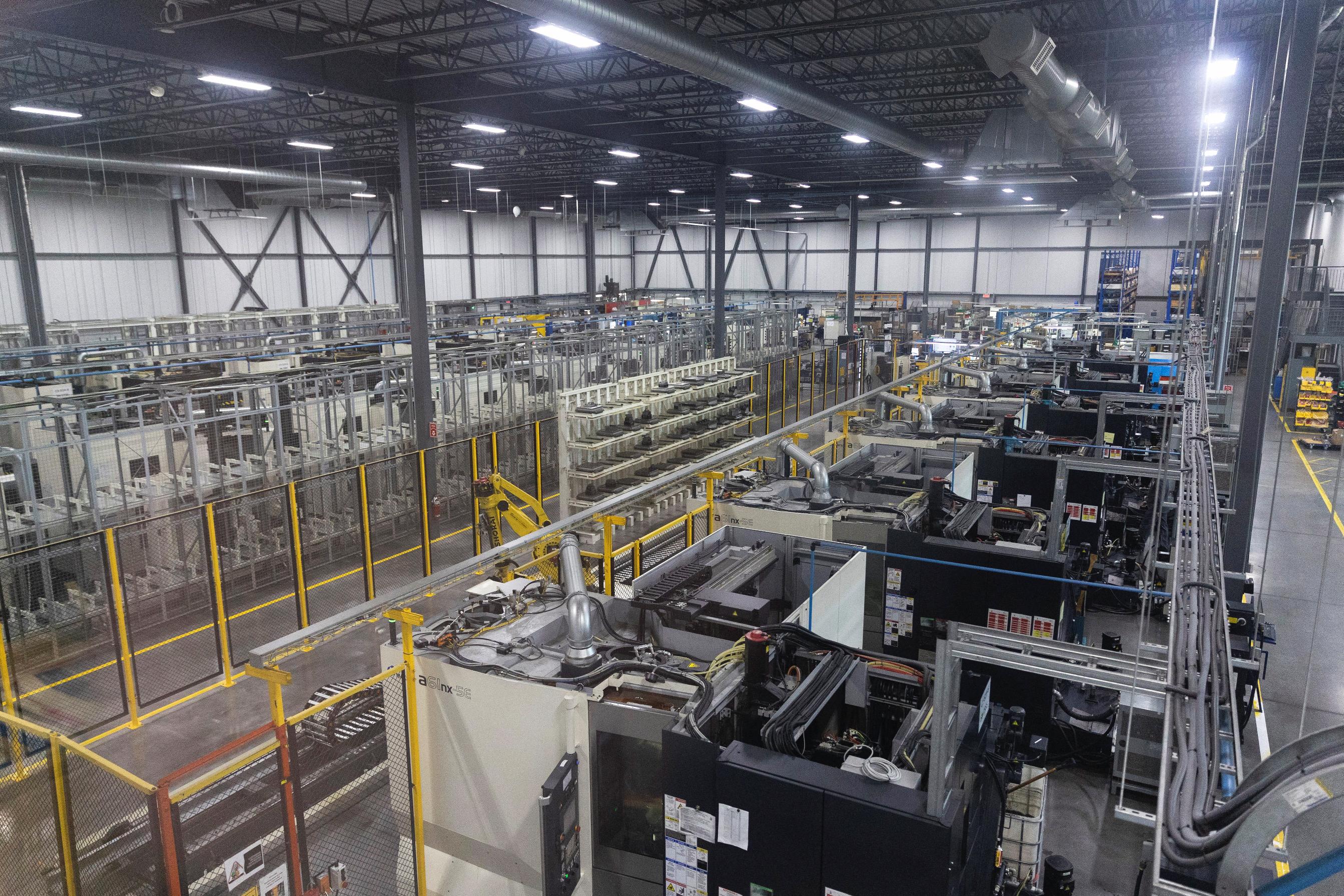
TORONTO, Jan 2 (Reuters) - Canada's factory sector contracted in December at its steepest pace since the early months of the COVID-19 pandemic as the rising cost of manufactured goods crimped demand, data showed on Tuesday. The S&P Global Canada Manufacturing Purchasing Managers' Index (PMI) fell to a seasonally adjusted 45.4 in December from 47.7 in November, its lowest level since May 2020. A reading below 50 indicates contraction in the sector. The PMI has been below that threshold since May, which is the longest such stretch in data going back to October 2010. "Canada's manufacturing economy endured a difficult end to 2023 and with that rounded off a challenging year for the sector overall," Paul Smith, economics director at S&P Global Market Intelligence, said in a statement. "Accelerated declines in both production and new orders were registered, amid reports that demand for manufactured goods remains subdued." The output index fell to 45.4 from 46.1 in November and the new orders index was at 42.5, down from 45.4. New export orders also declined more sharply, the data showed. The measure of employment moved back into contraction territory and prices rose, but the pace of price increases decelerated which could be one potential bright spot heading into 2024. "Firms noted that clients remain burdened by high prices, and these continued to rise throughout the supply chain over the month, Smith said. "However, at least rates of inflation eased according to the PMI data, and given the increasingly weak demand environment, are likely to continue to fall in the months ahead." The input price index was at 54.1, down from 55.6 in November and the output price measure fell to 52.7 from 54.8. https://www.reuters.com/markets/canadian-factory-pmi-hits-3-12-year-low-subdued-demand-2024-01-02/
2024-01-02 14:12
LONDON, Jan 2 (Reuters) - Sterling dropped against the dollar on Tuesday, suffering along with peers in the face of at least a temporarily resurgent greenback, while also being affected by the latest signs of slowing inflation in Britain. The pound was last down 0.7% at $1.2637, as a move up in U.S. yields sent the greenback higher. The dollar index which tracks the greenback against six peers was up 0.7%. That marked a reversal of recent trends and the pound reached a near five-month high of $1.2825 in late December as the dollar weakened. The pound gained nearly 6% in 2023, on the back of less bad than feared economic data, and expectations the Bank of England would keep rates higher for longer, though a weakening economy and election uncertainty make a repeat performance unlikely. The British currency was also softer, but less dramatically so, against the euro, which was up 0.13% at 86.75 pence. The pound has been weakening against the euro in recent weeks as inflation data causes markets to bring forward expectations of Bank of England rate cuts. The BoE had previously been expected to lag the Federal Reserve and the European Central Bank. "Data out this morning has seen little to upset this narrative either," said analysts at Monex Europe. Prices charged by British store chains rose at the joint slowest pace in a year and a half in December, the British Retail Consortium said on Tuesday. Food price inflation cooled to 6.7%. However, the Monex analysts sounded a note of caution for pound bears. "Whilst the data is clearly disinflationary at the margin, market pricing for rate cuts in the UK continues to look a little aggressive to us," they said. "Progress on cooling price growth is set to slow over the coming months, and whilst we don’t rule out a rate cut from the BoE in Q2, on balance we suspect that inflation persistence will keep the BoE on hold into the second half of the year." Markets are fully pricing a 25 basis BoE rate cut in May and nearly 140 bps of cuts this year. Investors were also digesting factory activity data from around the world on Tuesday. Britain's manufacturing sector suffered a setback in its attempts to return to growth as output and employment fell more sharply in December than the previous month, according to the final reading of the S&P Global/CIPS manufacturing Purchasing Managers' Index (PMI) Euro zone factory activity contracted in December for an 18th straight month. https://www.reuters.com/markets/currencies/sterling-drops-slowing-british-inflation-us-yields-help-dollar-2024-01-02/

2024-01-02 11:41
OSLO, Jan 2 (Reuters) - Tesla (TSLA.O) topped Norway's car sales statistic for a third consecutive year in 2023, extending its lead over rivals despite an ongoing conflict between the U.S. electric vehicle maker and the Nordic region's powerful labour unions. Almost five out of six new cars sold in Norway last year were powered by battery only, with Tesla's share of the overall market rising to 20.0% from 12.2% in 2022, registration data showed on Tuesday. Overall, the market share of new electric vehicles in Norway rose to 82.4% in 2023 from 79.3% in 2022, the Norwegian Road Federation (OFV) said. Seeking to become the first nation to end the sale of petrol and diesel cars by 2025, oil-producing Norway exempts fully electric vehicles from many taxes imposed on internal combustion engine rivals, although some levies were introduced in 2023. https://www.reuters.com/business/autos-transportation/tesla-extends-lead-norway-evs-take-record-82-market-share-2024-01-02/

2024-01-02 11:24
Jan 2 (Reuters) - U.S. financial technology companies that popularized amateur stock trading are pushing into fixed income in a bid to capitalize upon growing retail investor interest sparked by soaring yields in 2023. Online brokerage Public, wealth management platform Wealthfront and fintech software company Apex Fintech Solutions are among the firms launching new products that aim to make it easier and more affordable for individual investors to gain exposure to fixed-income products like Treasuries and corporate bonds. Market participants say there is little guarantee that bonds - long seen as a more staid part of the financial universe - will generate the same level of investor enthusiasm as stocks, whose wild swings in recent years minted a generation of online traders. Nevertheless, the development is another example of how two-decade-high Federal Reserve interest rates are changing the investment landscape and sparking more retail interest in fixed-income products, which have historically been more cumbersome and expensive for amateur investors to trade. Even as the Fed eyes rate cuts this year, fintechs believe they have an opportunity to transform retail bond investing with features the industry used to popularize stock trading, such as low-cost products, financial education tools, easy-to-use apps and fractionalized shares. Public and Apex are also offering fractionalized bond products, similar to the fractionalized stock shares offered by many online brokerages. "When you try and do anything in the bond or fixed-income world ... it looks and feels 25 years old. We just haven't, as an industry, invested in that, and I think we are starting to see the fintech world catch up," said Stephen Sikes, chief operating officer at Public. The New York-based broker-dealer in December announced it would begin offering customers the ability to invest in $100 slices of Treasury and corporate bonds. It plans to add municipal bonds this year and eventually lower that minimum to $10. Sikes said Public's Treasury account was its most successful product in 2023, as measured by investor flows. Although retail investors have long been able to purchase Treasury bills directly from the Treasury Department or a retail brokerage, the process is cumbersome and often requires a minimum investment of anywhere from $1,000 to $10,000. While bond-focused ETFs are readily available, experts note that some investors might prefer to purchase individual bonds in order to lock in yields and gain tax efficiencies. Apex, which provides software to fintech companies, is also rolling out a new product that allows retail investors to buy portions of corporate bonds and treasuries. Trading platform Webull is among the clients exploring using the new feature, Apex said. "Do I think it's going to take over the equity side in terms of the velocity of people interacting? No, I don't. But I do think this is just a natural next step," said Bill Capuzzi, CEO of Apex. 'THE CATALYST' The benchmark 10-year Treasury note yield breached 5% in October for the first time since July 2007, making bonds more competitive with stocks. Yields have retreated since then as investors bet the Fed will cut rates in 2024, but they are still elevated on a historical basis. For example, a six-month Treasury now yields around 5.25% - a far higher payout than the government-backed securities offered over much of the last decade-and-a-half. "This is probably the catalyst that the market needed to finally improve" bond products, said Kevin McPartland, head of market structure and technology research at Coalition Greenwich. Individuals buying Treasury bills through the Treasury Department's TreasuryDirect site purchased $319.75 billion of the notes auctioned by the U.S. government from June 1 through Nov. 30, 2023, up from $144.96 billion during the same period in 2022, Treasury data shows. "We're pretty excited about fixed income," said Wealthfront CEO David Fortunato. "It's a huge hurdle to overcome to be able to invest in bonds in the recommended way using the tools that exist today." Wealthfront last year introduced automated portfolios that personalize a mix of bond ETFs to a customer's individual tax situation. Of course, many have historically viewed bonds as less exciting than stocks - though the goals of equity and fixed-income investors can differ. The total return for the S&P 500 since 2000 is about 412%. By contrast, the total return for the Morningstar US Core Bond TR USD index, which tracks U.S. dollar-denominated securities with maturities greater than one year, has been around 160% in that period. "Even though bonds are more interesting now than they were in 2021, they still don't move like stocks do," said McPartland, of Coalition Greenwich. Retail investors' love for fixed income may also be tested if interest rates fall and yields become less attractive, said Robert Siegel, a venture investor and lecturer at the Stanford Graduate School of Business. The Fed has penciled in three rate cuts for 2024, while investors are pricing in substantially more. "As (fintech) platforms become more mainstream, they will need to adjust for various economic cycles to offer the product solutions that customers will want," Siegel added. https://www.reuters.com/technology/us-fintechs-push-into-fixed-income-trading-retail-investor-interest-grows-2024-01-02/
2024-01-02 11:13
NEW YORK, Jan 2 (Reuters) - A former employee of the world's largest oil trader, Vitol, is set to go on trial in the United States this week on charges of bribing officials in Ecuador to win a $300 million contract from state oil company Petroecuador. Javier Aguilar, 49, is the first individual to stand trial in the United States as part of a sprawling Justice Department probe into commodity trading firms paying bribes to win business from state-run companies across Latin America, a scandal that has roiled energy markets from Mexico to Brazil. The jury is set to be selected on Tuesday in federal court in Brooklyn, with opening statements slated for Wednesday. Commodities traders, which buy and sell raw materials, often operate in jurisdictions where corruption is common, putting them at risk of running afoul of the Foreign Corrupt Practices Act (FCPA), a U.S. law that prohibits paying bribes to foreign officials. Federal prosecutors say Aguilar, who worked in Houston as an energy trader, paid nearly $1 million in bribes to senior Petroecuador manager Nilsen Arias and an unnamed Energy Ministry official to help a state-owned Middle Eastern company win a 30-month contract to market the South American country's fuel oil in December 2016. Vitol had a deal to buy the fuel oil from the Middle Eastern company and then market it, prosecutors said. That company is not named in court papers, but Reuters has previously reported it is Oman Trading International, which has been rebranded as OQ Trading and fully integrated into Omani state oil company OQ. OQ did not respond to a request for comment. According to prosecutors, Aguilar had Vitol wire money to shell companies controlled by his associates, who then sent funds to accounts for Arias and the other official. Aguilar had Vitol enter into "sham" agreements with the shell companies so the transactions would appear legitimate, prosecutors said. Arias and the associates - Lionel Hanst, Antonio Pere and Enrique Pere - have entered guilty pleas and may testify against Aguilar. Aguilar has pleaded not guilty to three counts of conspiracy to violate the FCPA, violating the FCPA and conspiracy to commit money laundering. The money laundering count stems in part from charges of paying bribes to officials at Mexican state-run oil company Pemex. His lawyers have argued in court papers that he had no basis to believe that the transactions prosecutors described as sham contracts with shell companies were illegitimate, and that the Pere brothers held themselves out to be "knowledgeable consultants" in Ecuador's oil market. Vitol in December 2020 admitted to bribing officials in Brazil, Mexico and Ecuador and agreed to pay $164 million to resolve U.S. and Brazilian probes. Separately, rival global energy trader Gunvor is bracing for a fine of up to $650 million to resolve U.S. probes into its business dealings in Ecuador. Former Gunvor employee Raymond Kohut pleaded guilty to money laundering conspiracy in 2021 over his role in the scheme. Aguilar could face more than a decade in prison if convicted, though any sentence would be determined by U.S. District Judge Eric Vitaliano, based on a range of factors. Aguilar also faces charges in federal court in Houston over the alleged Pemex scheme. He has pleaded not guilty. https://www.reuters.com/legal/ex-vitol-oil-trader-heads-us-trial-ecuador-bribery-charges-2024-01-02/