2024-01-02 06:40
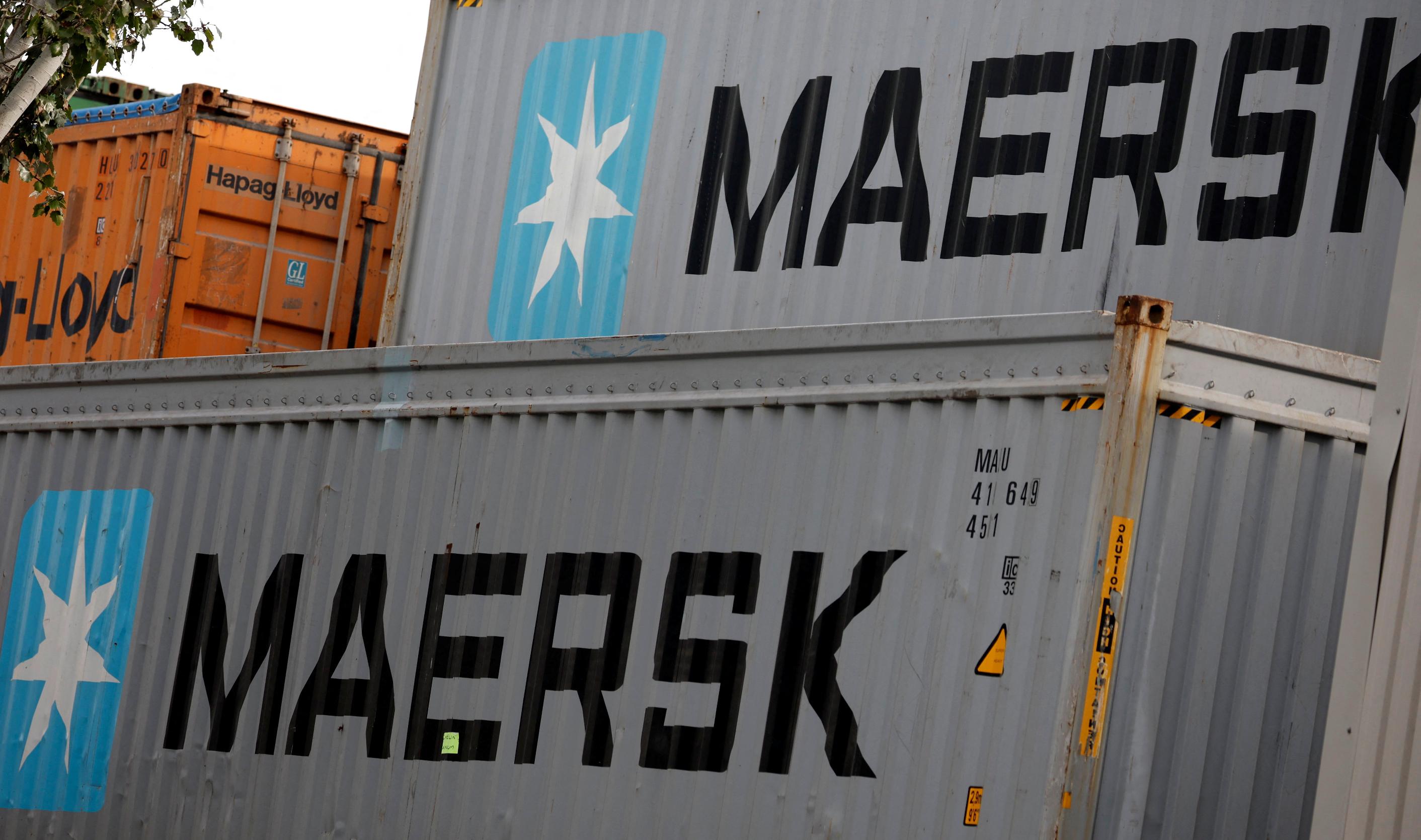
Maersk continues to pause Red Sea cargo shipments Hapag-Lloyd rules out return for another week Maersk ship was attacked in the Red Sea over the weekend CMA CGM increases shipping rates Shares in shipping companies rise OSLO, Jan 2 (Reuters) - Denmark's Maersk (MAERSKb.CO) and German rival Hapag-Lloyd (HLAG.DE) said on Tuesday their container ships would continue to avoid the Red Sea route that gives access to the Suez Canal following a weekend attack on one of Maersk's vessels. Both shipping giants have been re-routing some sailings via Africa's southern Cape of Good Hope as Yemen-based Houthi militants attack cargo vessels in the Red Sea. The disruption threatens to drive up delivery costs for goods, raising fears it could trigger a fresh bout of global inflation. Maersk had on Sunday paused all Red Sea sailings for 48 hours following attempts by Yemen-based Houthi militants to board the Maersk Hangzhou. U.S. military helicopters repelled the assault and killed 10 of the attackers. "An investigation into the incident is ongoing and we will continue to pause all cargo movement through the area while we further assess the constantly evolving situation," Maersk said in a statement. "In cases where it makes most sense for our customers, vessels will be rerouted and continue their journey around the Cape of Good Hope." Maersk had more than 30 container vessels set to sail through Suez via the Red Sea, an advisory on Monday showed, while 17 other voyages were put on hold. Hapag-Lloyd (HLAG.DE) said its vessels would continue to divert away from the Red Sea - sailing instead via Africa's southern tip - until at least Jan. 9, when it will decide whether to continue re-routing its ships. The Suez Canal is used by roughly one third of global container ship cargo. Redirecting ships around the southern tip of Africa is expected to cost up to $1 million in extra in fuel for every round trip between Asia and northern Europe. Worries about potential disruption to Middle Eastern supply after the latest Red Sea attack drove oil prices higher in the first trading session of 2024. Expectations that longer routes will result in higher freight rates have pushed up shipping companies' shares since the crisis began, and shares in Maersk were up 6.3% in late afternoon trading. Hapag-Lloyd shares were up 5%. Unlisted French shipping group CMA CGM will increase its container shipping rates from Asia to the Mediterranean region by up to 100% as of Jan. 15 compared to Jan. 1, according to a notice on its website on Tuesday. The Maersk Hangzhou, which was hit by an unknown object during the weekend attack, was able to continue on its way, with LSEG shipping data showing the vessel close to the Suez Canal on Tuesday. The Iranian-backed Houthis, who control parts of Yemen after years of war, started attacking international shipping in November in support of Palestinian Islamist group Hamas in its war with Israel in the Gaza Strip. That prompted major shipping groups, including Maersk and Hapag-Lloyd, to stop using Red Sea routes, instead taking the longer journey around the Cape of Good Hope. But after the deployment of a U.S.-led military operation to protect ships, Maersk had said on Dec. 24 that it would resume using the Red Sea. According to Maersk, its alliance partner Mediterranean Shipping Company (MSC) was continuing to divert its vessels via the Cape of Good Hope. MSC did not immediately respond to a request for comment. https://www.reuters.com/world/middle-east/maersk-continues-schedule-suez-journeys-despite-houthi-attack-2024-01-02/
2024-01-02 06:34
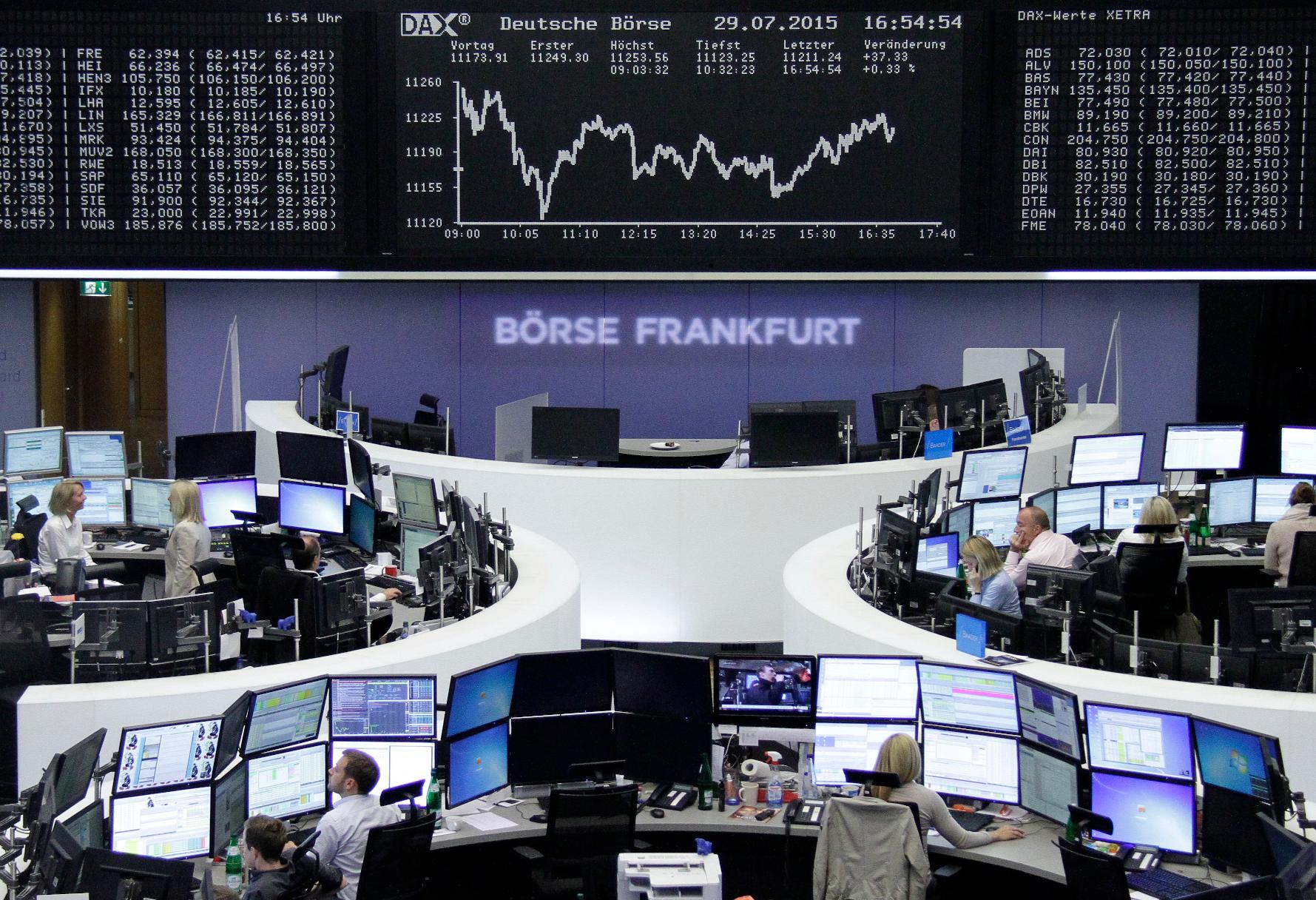
Global stocks kick off 2024 on low note Bond prices slip on tempered rate cut hopes Dollar set for biggest one-day gain since October Oil prices fall as supply concerns ease NEW YORK, Jan 2 (Reuters) - Stocks in Europe and on Wall Street fell on Tuesday, along with prices for U.S. government debt, on ebbing market optimism about timely interest rate cuts from the Federal Reserve. The dollar jumped against major currencies as the yield on the 10-year Treasury note, which moves inversely to price, rebounded to trade above 4% early in the day - sign of lowered expectations for rate cuts in 2024. The U.S. benchmark's yield last week traded as low as 3.783%, or more than the 150 basis points of rate cuts that futures have priced in by next December for the Fed's target interest rate as the economy slows. The biggest concern is whether the market misinterprets slowing growth as a warning sign for a looming recession, said Jack Janasiewicz, portfolio manager and lead portfolio strategist at Natixis Investment Managers Solutions in Boston. "The risk is that we get a couple of soft prints (but) the one that matters the most is going be the labor market," he said. "My gut says that the market will extrapolate weakness into that hard landing outcome. That's probably going to be somewhat of a misleading backdrop." Technology shares led stock market declines on both sides of the Atlantic. The Atlanta Fed lowered its GDPNow estimate for seasonally adjusted annualized growth in the fourth quarter of 2023 to 2.0% from its Dec. 22 estimate of 2.3%. U.S. construction spending in November rose less than expected but data for the prior month was revised sharply higher, suggesting underlying strength. The dollar strengthened because its recent sell-off was overdone, said Marc Chandler, chief market strategist at Bannockburn Global Forex in New York. The jobs report for December Friday will likely show a still robust U.S. labor market, he said. "When the Fed meets later this month they're going to see above-trend growth and a resilient labor market. A resilient labor market means income, which means demand, that's why the dollar is recovering," Chandler said. A Reuters poll shows economists expect 168,000 jobs were created last month, down from 199,000 in November, and the unemployment rate will tick up to 3.8% from 3.7%. The dollar index , a measure of the U.S. currency against six major trading partners, rose 0.83% and was on track for its biggest daily percentage gain since October. The euro fell 0.91% to $1.0943 and the Japanese yen weakened 0.77% at 141.95 per dollar. In Europe, the pan-regional STOXX 600 index (.STOXX) closed down 0.11%, while MSCI's U.S.-centric gauge of stocks across the globe (.MIWD00000PUS) shed 1.01%. On Wall Street, the Dow Jones Industrial Average (.DJI) rose 0.07%, the S&P 500 (.SPX) lost 0.57% and the Nasdaq Composite (.IXIC) dropped 1.63%. Last Friday, the three major U.S. stock indexes notched monthly, quarterly and annual gains as traders priced in a higher probability of Fed rate cuts this year. The benchmark S&P 500 closed the year within 1% of a record closing high set on Jan. 3, 2022. Futures show traders expect about a 79% chance of a 25 basis point cut or more in the Fed's overnight rate when policymakers meet in March, according to the CME Group's FedWatch Tool. Traders see the Fed's target rate at 3.831% in December . The yield on the 10-year Treasury note rose 7.3 basis points to 3.933%. Euro zone government bond yields rose, with the benchmark 10-year German yield up 0.4 basis points on the day at 2.068%. Traders are gauging whether major central banks will judge inflation has slowed enough to allow for deep rate cuts to bolster the economy. Oil prices fell as investors tempered the outlook for rate cuts and on easing concerns that tensions in the Red Sea will disrupt supplies. Prices had climbed around $2 a barrel earlier following attacks on vessels by Houthi rebels over the weekend and the reported arrival of an Iranian warship on Monday. U.S. crude settled down $1.27 to $70.38 a barrel, while Brent fell $1.15 to settle at $75.89 a barrel. Separately, the head of energy firm E.ON (EONGn.DE) said Mideast instability could send energy prices soaring, but that Germany's gas supply is in far better shape than it was after Russia cut off supplies last winter. Data pointing to subdued business confidence in China for 2024 weighed on Chinese assets during Asian trading. China's onshore blue chip index (.CSI300) was down 1.3% and Hong Kong's Hang Seng index (.HIS) fell 1.5. Spot gold dropped 0.2% to $2,058.59 an ounce. https://www.reuters.com/markets/global-markets-wrapup-1-2024-01-02/
2024-01-02 06:15
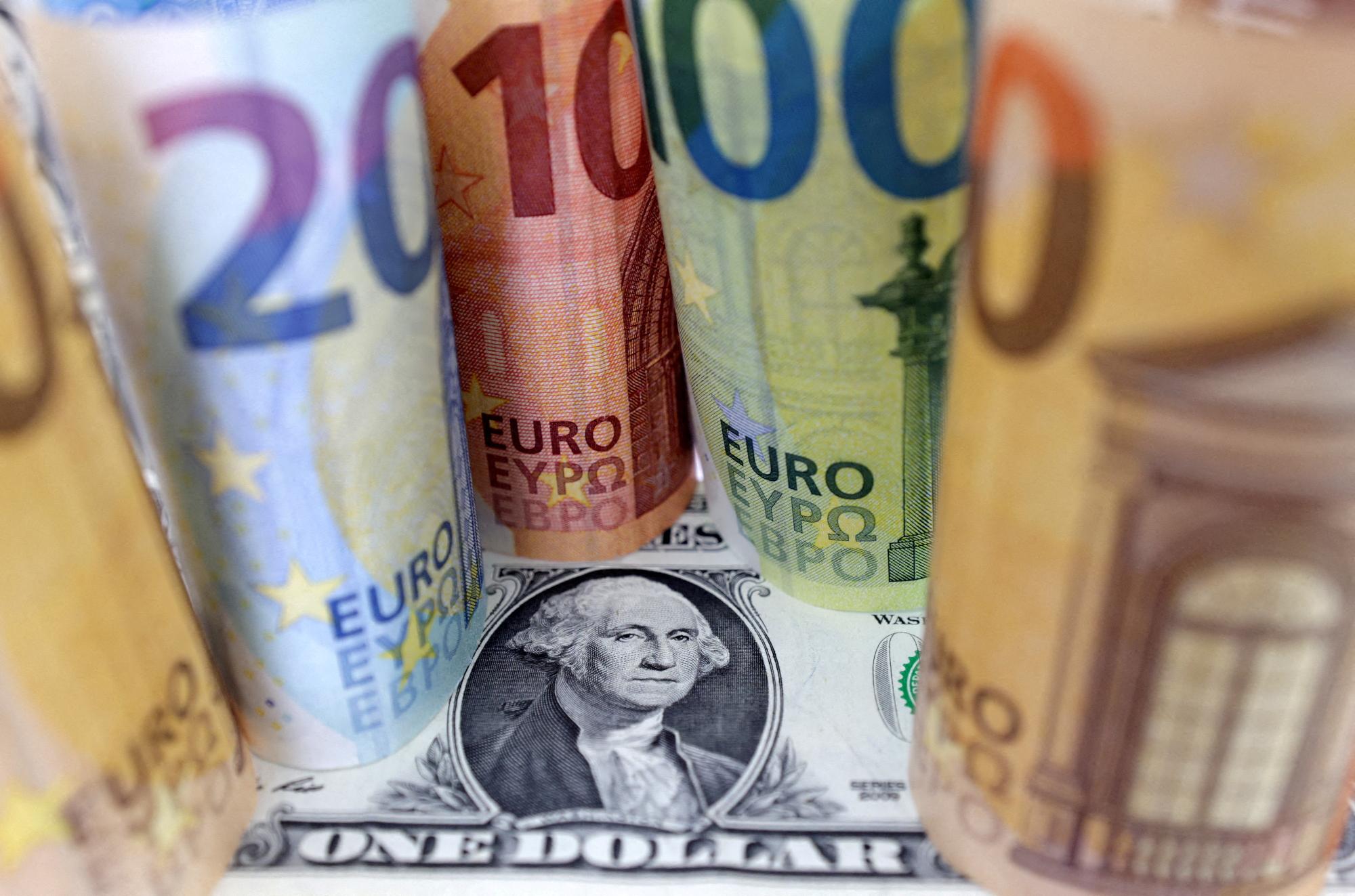
NEW YORK, Jan 2 (Reuters) - The dollar rose on the first trading day of the year, supported by higher U.S. yields while investors waited for U.S. jobs data and European inflation numbers for clues on central banks' policies. The dollar index , which measures the U.S. currency against six counterparts, rose 0.799%, on track for its biggest daily percentage gain since October. It fell 2% in 2023, snapping two years of gains due to investor expectations that the U.S. Federal Reserve will cut rates significantly this year while the economy remains resilient. In U.S. Treasuries, benchmark 10-year notes were up 7.7 basis points at 3.937%, eying their biggest daily increase in more than three weeks. While the dollar came under pressure last month after the Federal Reserve indicated that it would cut rates in 2024, Brown Brothers Harriman & Co global head of currency strategy Win Thin said "markets are coming to realize that the U.S. economy remains robust" and is likely to stay robust this year. But while Thin argues that "a soft landing would likely lead to 2-3 insurance cuts in 2024," the market is pricing in six rate cuts this year. So until these expectations shift, the dollar could stay "under pressure and vulnerable,” he said. On the other side of the dollar's ascent was the euro , which was down 0.91% to $1.0944 as traders digested data showing euro zone factory activity contracted in December for an 18th straight month, and sterling was last trading at $1.2619, down 0.82% on the day. The Japanese yen weakened 0.75% versus the greenback at 141.94 per dollar. Investors have a fairly busy week ahead with a slew of economic data including European inflation data and U.S. data on job openings and non-farm payrolls, which will help shape market expectations regarding monetary policy moves from the Fed and European Central Bank. Minutes from the most recent meeting of the Fed's rate setting Federal Open Market Committee in December are scheduled for release on Wednesday and will provide further insight into the central bankers' thinking on the potential for a move to interest rate cuts. Markets are now pricing in a roughly 79% chance of interest rate cuts from the Fed starting from March, according to CME FedWatch tool. Traders were also processing volatile oil prices with an earlier rally disappearing with interest rate jitters in focus as concerns eased that tensions in the Red Sea could disrupt supplies. That, however, did not help currencies of oil-exporting countries hold off the stronger greenback. The dollar climbed 1.7% on the Norwegian crown and rose 0.6% against the Canadian dollar while the Australian dollar dipped 0.8% against the greenback. The crypto world started the year with a bang, with bitcoin up 3.3% after earlier touching $45,912.48, its highest level since April 2022, on rising expectations that the U.S. Securities and Exchange Commission will soon approve exchange-traded spot bitcoin funds. https://www.reuters.com/markets/currencies/dollar-starts-2024-steady-focus-switches-data-2024-01-02/
2024-01-02 06:05
Sterling up nearly 6% in 2023, most since 2017 Markets no longer see BoE lagging much with rate cuts Weak economy, slowing inflation negative for pound Election likely in 2024, could add volatility LONDON, Jan 2 (Reuters) - Sterling just had its best year against the dollar since 2017, yet a weakening economy and election uncertainty make a repeat performance unlikely. It is not hard to see why investors flocked back to Britain's currency after it hit a record low only 16 months ago: the economy did better than feared, sticky inflation meant the Bank of England was set to wait longer than its peers with monetary easing and the dollar's appeal waned on expectations for an early U.S. rate cut. The pound, trading near $1.28 , rose almost 6% last year against the dollar - making it the second-best performing major currency after the Swiss franc. It is also quite far from an all-time low of $1.0327 it hit in 2022 when then Prime Minister Liz Truss rattled markets by proposing unfunded tax cuts. While this puts sterling on stronger ground heading into a likely election year, the rally's drivers are losing momentum. First is the fading impact of interest-rate differentials, a major influence in the $7.5 trillion-a-day global currency market. Jane Foley, head of currency strategy at Rabobank, said that while a perception that the BoE would lag European Central Bank and Federal Reserve policy easing had boosted sterling, this theme "had been thrown into disarray" by the latest economic data. UK consumer price inflation eased sharply to 3.9% in November and British gross domestic product was revised downward to show a 0.1% contraction in the third quarter. Britain might already be in recession, and it has seen the second weakest recovery from the COVID-19 pandemic in the Group of Seven after Germany. The data prompted traders to bring forward expectations of a first BoE rate cut, with markets now fully pricing in a 25 basis point cut as soon as May compared with August just a few weeks ago. "The upside for cable has started to look a little more complex," said Foley, referring to the pound/dollar exchange rate. "Without higher inflation or stronger growth we could see it top out below $1.30. Until the data, I was more confident we'd hit $1.30." Sterling is traditionally seen as a "risk currency", moving in line with other such assets, most typically equities, and its recent gains have come as MSCI's world stock index (.MIWO00000PUS) headed towards two-year highs. With valuations becoming somewhat stretched, a global stocks reversal would be a further risk for the pound. HSBC's head of European currency research Dominic Bunning, said sterling's rally from $1.20 in October to $1.27 in late November was "completely unjustified" from the perspective of interest rate differentials. "Obviously, if you compare it to equity markets then it looks a lot more sensible," he said. "That's the battle that's playing out. At the moment the equity driver is winning but we are sceptical as to whether that can persist." He expects sterling to weaken towards $1.20 this year due to British economic weakness, implying a fall of as much as 6% from current levels. TALKING POLITICS Another possible source of instability is the British election, which must take place by January 2025, but is anticipated this year, with polls favouring the opposition Labour Party. The vote's timing could impact sterling by affecting the timing of rate cuts as the BoE tries to avoid being seen as influencing the country's mood around election time, Rabobank's Foley said. There may also be some caution ahead of a March 6 budget, which could contain new tax cuts, according to local media. Michael Metcalfe, State Street Global Markets' head of macro strategy, reckons politicians may have learned their lessons from Truss' budget debacle. "Heading into an election year, that will mean promises of fiscal largesse will be moderate and funded," he said. To be sure, not all expect sterling weakness ahead, global economic uncertainty means there is much less consensus among forecasters compared to a year ago. Goldman Sachs for example, sees the pound at $1.35 in 12 months' time, boosted by calmer government bond markets and high equity prices. https://www.reuters.com/markets/currencies/sterling-runs-into-economic-election-hurdles-after-stellar-year-2024-01-02/
2024-01-02 06:01
After 156% gain in 2023, bitcoin starts new year on front foot Optimism around ETF approval gathering momentum Rising bets on rate cuts also boost risk appetite Jan 2 (Reuters) - Bitcoin galloped past $45,000 on Tuesday, for the first time since April 2022, as the world's biggest cryptocurrency started the new year with a bang, buoyed by optimism around the possible approval of exchange-traded spot bitcoin funds. Bitcoin touched a 21-month peak of $45,922, having gained 156% last year in its strongest yearly performance since 2020. It was last up 3.1% at $45,509 but remains far off the record high of $69,000 it hit in November 2021. The no. 2 cryptocurrency ether was 1.2% higher at $2,386.50 on Tuesday, having surged 91% in 2023. Crypto stocks, which mirror bitcoin price moves, surged, with Riot Platforms (RIOT.O), Marathon Digital (MARA.O) and CleanSpark (CLSK.O) gaining between 7% and 10% after sharp falls in the last trading day of 2023. Software firm and bitcoin investor MicroStrategy (MSTR.O) added 13.4%, while ProShares Bitcoin Strategy ETF (BITO.P), which tracks bitcoin futures, added 7.8%. Investor focus has squarely been on whether the U.S. securities regulator will soon approve a spot bitcoin ETF, which would throw open the market to millions more investors and draw billions in investments. The U.S. Securities and Exchange Commission has rejected multiple applications to launch spot bitcoin ETFs in recent years, arguing that the cryptocurrency market is vulnerable to manipulation. In recent months, however, there have been increasing signs regulators are prepared to sign off on at least some of the 13 proposed spot bitcoin ETFs, with expectations the decision will likely come in early January. "We expect a positive approval and I won't be surprised if after the approval, we see a retracement of lower price levels before we go up again," said Matteo Greco, analyst at digital asset firm Fineqia International (FNQ.CD). A spot bitcoin ETF approval would "open the door to cohorts of investors that are out of this market at the moment and will definitely improve the liquidity of the market," Greco added. Rising bets that major central banks will cut interest rates this year has also been a boon for cryptocurrencies, helping shake off the gloom that had settled over crypto markets following the collapse of FTX and other crypto-business failures in 2022. Crypto markets could further their gains in 2024 as bitcoin tends to perform during U.S. election years, coinciding with Bitcoin halving cycles in 2012, 2016 and 2020, said Markus Thielen, founder of digital asset research firm 10x Research. https://www.reuters.com/technology/bitcoin-climbs-above-45000-first-time-since-april-2022-2024-01-02/
2024-01-02 05:38
A look at the day ahead in European and global markets from Rae Wee The 2024 trading year kicked off in Asia with bitcoin surging, gold prices climbing and Chinese markets sliding yet again - all of which point to the fact that even in the New Year, the narrative for markets had not changed at all. Trading was thinned in Asian hours with Japan out on a holiday, though expectations that 2024 could mark the start of a global easing cycle remained the dominant market driver, and investors continued to find every reason to latch on to the optimism. Financial markets also didn't seem too rattled by a powerful earthquake which struck central Japan on New Year's Day. In a fresh boost to risk appetite, the world's largest cryptocurrency bitcoin rose above $45,000 on Tuesday for the first time since April 2022, extending its strong run from last year where it jumped more than 155% - its best year since 2020. With the data calendar relatively scant for the day, it seems there is little in the way to sway investors betting on a slew of rate cuts beginning early this year, at least until the end of the week when a reading on euro zone inflation and U.S. jobs figures come due. Futures pricing continues to point to a roughly 85% chance the Federal Reserve will start to ease rates in March, according to the CME FedWatch tool, while more than 150 basis points of rate cuts from the European Central Bank have similarly been priced in for all of 2024, and roughly 140 bps from the Bank of England . In China, calls for greater policy support and expectations of further rate cuts are also at the top of investors' minds, though for a slightly different reason. Tuesday's private-sector survey showing that China's factory activity expanded at a quicker pace last month was in stark contrast to Sunday's official data which revealed manufacturing activity shrank for a third straight month in December and weakened more than expected. The divergence paints a mixed picture of the bumpy post-pandemic recovery in the world's second-largest economy, and even President Xi Jinping's promise to shore up the country's economic recovery this year has done little to restore investor confidence. Key developments that could influence markets on Tuesday: - France S&P Global manufacturing PMI (December) - Germany HCOB manufacturing PMI (December) - Euro zone Money-M3 Annual Growth (November) https://www.reuters.com/markets/europe/global-markets-view-europe-2024-01-02/