2024-01-02 01:55
BEIJING, Jan 2 (Reuters) - Travel in China flourished over the three-day New Year's holiday, with 135 million domestic tourist trips, up 155% from last year, while domestic tourism revenue rose to 79.73 billion yuan ($11.23 billion), data released Monday showed. During the New Year holidays, more than 128 million passenger trips were made on China's transport network, up 78.4% from 2023 and 33.1% from 2022, according to Ministry of Transport figures reported by state media. The number of railway passenger trips surged 177.5% year-on-year, and air passenger trips jumped 140.3%, the Global Times reported. Cold weather across large parts of the country did not deter people from flocking to music festivals and concerts, while group outings of families increased, the government said, adding that the popularity of ice and snow leisure in East China, Central China, South China and other places had increased. Provinces in the north such as Heilongjiang took advantage of wintry cold, promoting ice and snow tourism and extending the operating hours of key scenic spots, subways and buses, the ministry of culture and tourism said. Beijing also gave out vouchers to help stimulate holiday demand and spur the economy, as urban ice and snow-themed projects and theme parks have become increasingly important drivers of economic revenue for many cities. From Saturday to Monday, passenger trips by air were likely to reach 5.19 million trips, 140.3% higher year on year, while journeys on highways and waterways are expected to jump by 46.1% and 72.9% respectively, according to the Ministry of Transport, as reported by state media outlet Xinhua. ($1 = 7.0978 Chinese yuan renminbi) https://www.reuters.com/world/china/china-sees-robust-travel-tourism-demand-during-new-years-day-holiday-2024-01-02/

2024-01-01 23:20
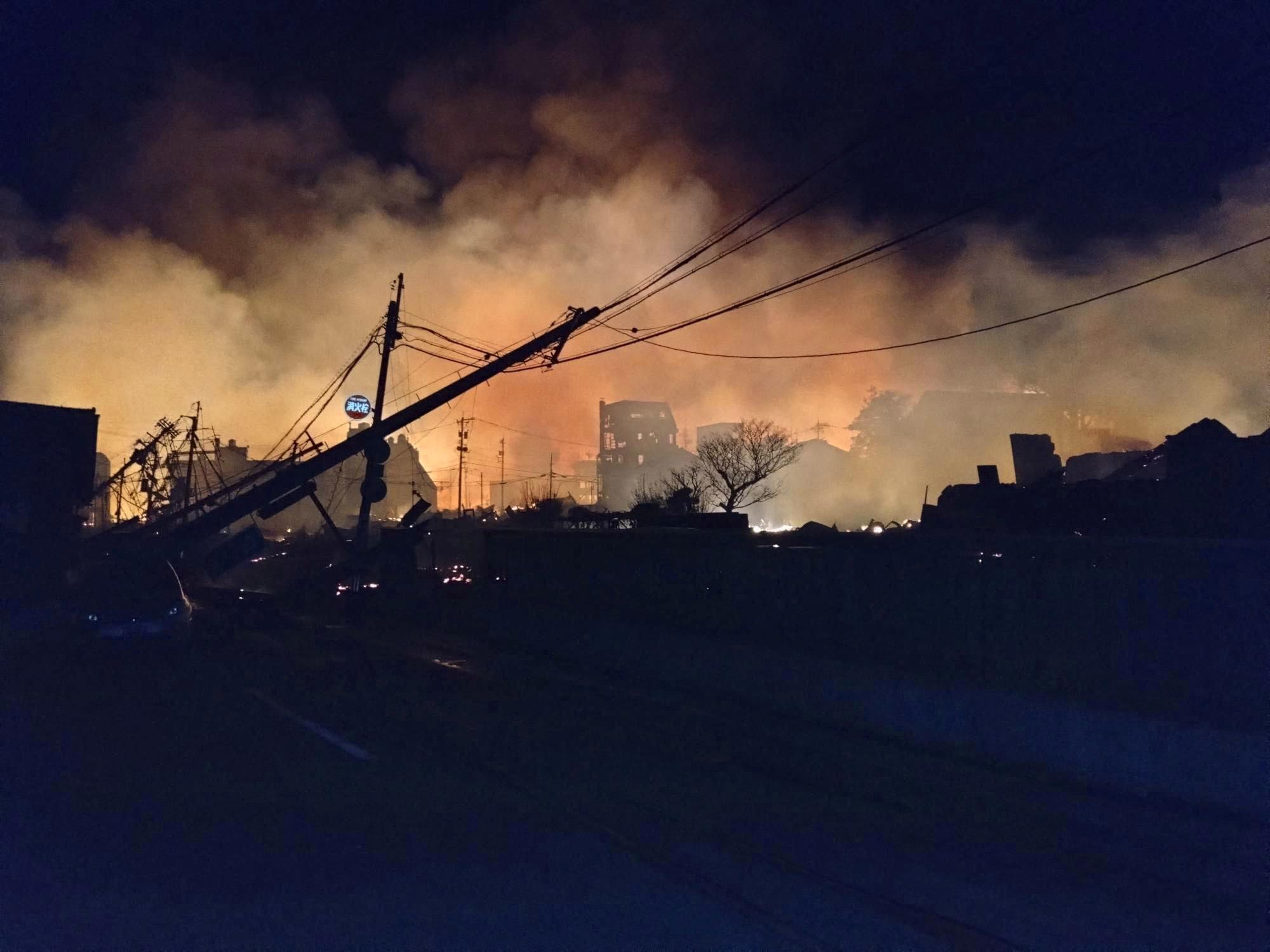
At least 55 killed in 7.6 magnitude quake on Jan 1 Major damage to roads, houses on west coast of main island Thousands of rescuers struggling to reach worst-hit areas Resident tells of miraculous escape from toppled home WAJIMA, Japan, Jan 2 (Reuters) - A powerful earthquake that hit Japan on New Year's Day killed at least 55 people, with rescue teams struggling in freezing temperatures on Tuesday to reach coastal areas where many are feared trapped under possibly thousands of destroyed homes. In Suzu, a town of just over 5,000 households near the quake's epicentre, 90% of houses may have been destroyed, according to its mayor Masuhiro Izumiya. "The situation is catastrophic," he said. The quake with a preliminary magnitude of 7.6 struck on Monday afternoon, prompting people in western coastal areas to flee to higher ground as tsunami waves swept cars and houses into the water. Around 200 tremors have been detected since the quake first hit on Monday, according to the Japan Meteorological Agency, which warned that more strong shocks could hit in coming days. A Coast Guard aircraft en route to deliver aid to the quake-hit region collided with a commercial airplane in Tokyo’s Haneda airport on Tuesday, killing five Coast Guard. All 379 on board the Japan Airlines flight escaped. Prime Minister Fumio Kishida said the extent of damage from the quake was becoming "increasingly clear" more than 24 hours after it struck on the Noto peninsula in Ishikawa prefecture. "The government has deployed emergency rescue teams from the Self-Defence Forces, police and fire departments to the area and is doing its utmost to save lives and rescue victims and survivors, but we have received reports that there are still many people waiting to be rescued under collapsed buildings." Kishida said some 3,000 rescuers were finding it difficult to reach the northern tip of the peninsula where helicopter surveys had discovered many fires and widespread damage to buildings and infrastructure. Japan sits on the "Ring of Fire" arc of volcanoes and oceanic trenches that partly encircles the Pacific Basin. It accounts for about 20% of the world's earthquakes of magnitude 6 or greater, and each year experiences up to 2,000 quakes that can be felt. Many rail services and flights into the quake area have been suspended. More than 500 people were stranded at Noto's airport which closed due to cracks in its runway and access road and damage to its terminal building. Authorities have confirmed 55 deaths, all in Ishikawa prefecture, making it Japan's deadliest earthquake since 2016. Many of those killed are in Suzu and Wajima, another city on the remote northern tip of the Noto peninsula. Scores more have been injured and authorities were battling blazes in several cities on Tuesday and hauling people from collapsed buildings. "I've never experienced a quake that powerful," said Wajima resident Shoichi Kobayashi, 71, who was at home having a celebratory New Year's meal with his wife and son when the quake struck, sending furniture flying across the dining room. WRECKED HOMES Fujiko Ueno, a 73-year-old resident of Nanao city in Ishikawa, said nearly 20 people were in her house for a New Year celebration when the quake struck, splintering the walls which came crashing down on a parked car. Miraculously, no one was hurt. "It all happened in the blink of an eye," she said, standing next to the crushed car on a road littered with debris and mud that oozed out from cracks in the surface. The pope and several world leaders sent condolence messages with President Joe Biden saying in a statement the United States was ready to provide any necessary help to Japan. The Japanese government ordered about 100,000 people to evacuate their homes on Monday night, sending them to sports halls and school gymnasiums, commonly used as evacuation centres in emergencies. Almost half of those evacuated had returned to their homes on Tuesday after authorities lifted tsunami warnings. But around 33,000 households remained without power in Ishikawa prefecture after a night when temperatures dropped below freezing. More than 100,000 homes have no water supply. NUCLEAR PLANTS The quake also comes at a sensitive time for Japan's nuclear industry, which has faced fierce opposition since a 2011 earthquake and tsunami triggered nuclear meltdowns in Fukushima on the eastern coast. Whole towns were devastated and nearly 20,000 people were killed. Japan last week lifted an operational ban imposed on the world's biggest nuclear plant, Kashiwazaki-Kariwa, which has been offline since the 2011 tsunami. The Nuclear Regulation Authority said no irregularities were found at nuclear plants along the Sea of Japan, including five active reactors at Kansai Electric Power’s (9503.T) Ohi and Takahama plants in Fukui Prefecture. Hokuriku Electric's Shika plant, the closest to the epicentre, has also been idle since 2011. The company said there had been power outages and oil leaks following Monday's jolt but no radiation leakage. The company had previously said it hoped to restart the reactor in 2026. Toshiba said its local subsidiary Kaga Toshiba Electronics has stopped semiconductor production at its plant in Ishikawa to gauge the quake's impact on its facilities. Chip equipment maker Kokusai Electric (6525.T) said it had found damage at its factory in Toyama and was investigating further ahead of the planned resumption of operations on Thursday. https://www.reuters.com/world/japan/least-six-dead-after-huge-earthquake-rocks-japan-new-years-day-2024-01-01/
2024-01-01 18:58
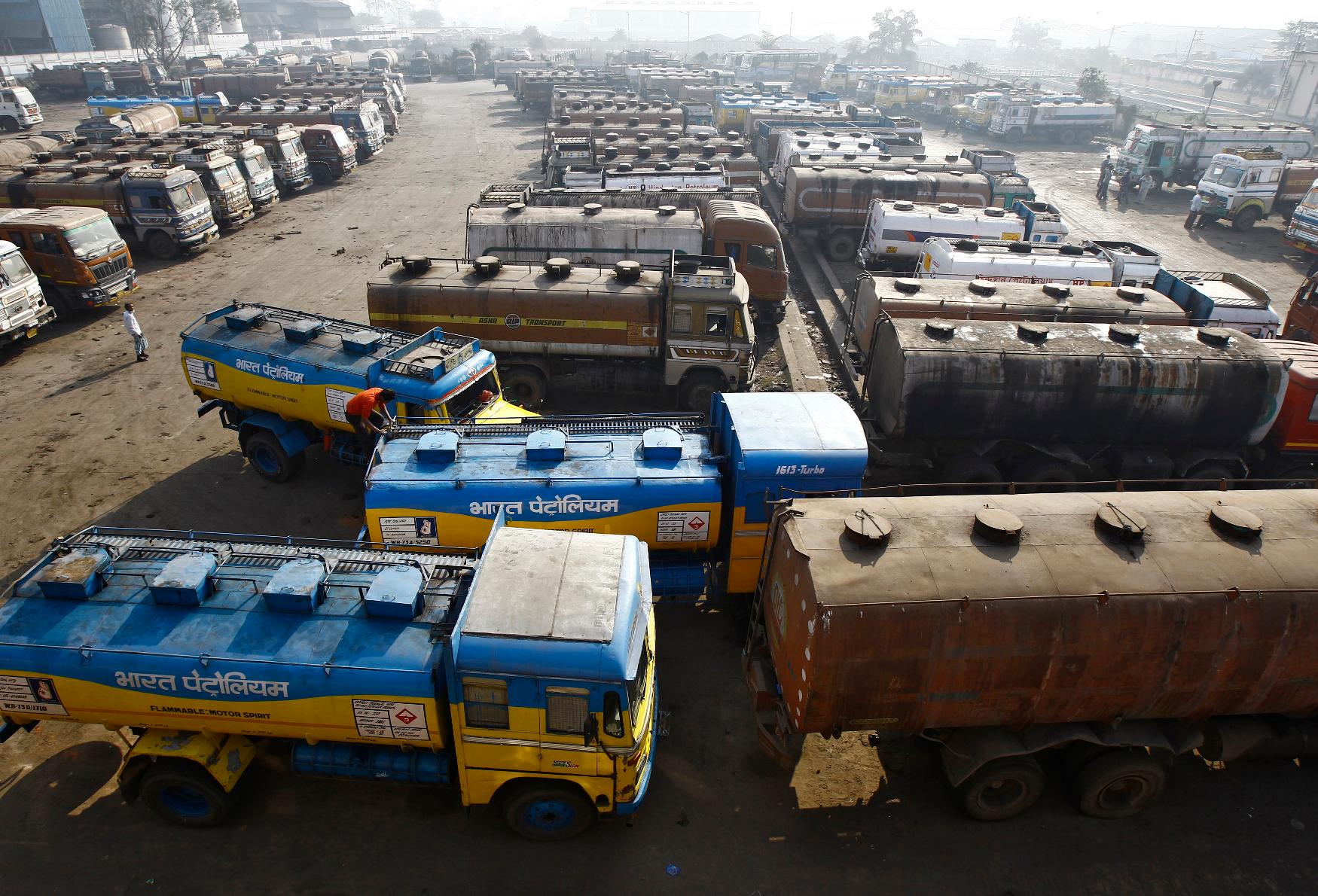
Jan 1 (Reuters) - India has hiked the windfall tax on crude oil while reducing the tax on diesel and aviation turbine fuel, according to a government notification. The government hiked the windfall tax on petroleum crude oil to 2,300 Indian rupees ($27.63) a ton from 1,300 rupees, it said. A tax on diesel of 0.5 rupee per litre was eliminated, it said as was a one rupee per litre windfall tax on aviation fuel. India imposed a windfall tax on crude oil producers in July 2022 and extended the levy on exports of gasoline, diesel and aviation fuel as private refiners wanted to sell fuel overseas to make gains from robust refining margins instead of selling locally. ($1 = 83.2375 Indian rupees) https://www.reuters.com/markets/commodities/india-hikes-windfall-tax-crude-oil-2024-01-01/
2024-01-01 18:33
Jan 1 (Reuters) - Nicaragua and China on Monday formally started trading under a new free trade agreement, allowing the Central American country to export some 71% of its products into the largest Asian market and free of tariffs. The exports will include meat and seafood, such as fish, shrimp, lobsters and sea cucumber, as well as sugar, peanuts and rum, state media reported. Among non-food items included in the agreement are leather, charcoal and wood, and automobile parts. The agreement excludes Chinese goods that could be problematic for the key Nicaraguan industries, such as meat and its offal, coffee, rice and sugar. President Daniel Ortega, who has governed Nicaragua for the past 17 years, defying protests and cracking down on dissent, called it "the best Christmas present" during his speech on Dec. 22. "Our brothers are here to shake hands, not to attack us," he said. "Let the imperialists of the land learn how to govern, how to work for peace." Nicaragua ended diplomatic relations with Taiwan at the end of 2021 and has since increasingly turned to China. The agreement was signed on Oct. 31 in a virtual meeting and few additional details have been made public since. Ortega's son, Laureano Ortega, an adviser to the president who oversees the country's relations with China and Russia, at the time said he was convinced the trade agreement would "generate economic and social benefits for Nicaraguan families, new investments and jobs, and transfer technology from China to Nicaragua." https://www.reuters.com/world/free-trade-agreement-between-nicaragua-china-begins-2024-01-01/

2024-01-01 17:37
JERUSALEM, Jan 1 (Reuters) - The Bank of Israel lowered short-term borrowing rates for the first time in nearly four years on Monday, becoming the first developed country to ease policy, while urging lawmakers to rein in spending that has soared during Israel's war with Hamas. In reducing interest rates for the first time since April 2020, the central bank cited a stabilisation of financial markets since the outbreak of the war on Oct. 7, declining inflation and weaker economic growth. But Bank of Israel Governor Amir Yaron said the pace of future cuts partly depended on fiscal policy and how Prime Minister Benjamin Netanyahu's government of far right wing and religious parties would keep to responsible fiscal policy. He told reporters that defence and civilian costs of the war were expected to reach 210 billion shekels ($58 billion) and would be a "budgetary burden" that needed to be dealt with through spending reductions in areas that were not crucial to the war and by raising revenue, usually meaning higher taxes. "If the markets perceive that Israel is moving toward a prolonged path of rising debt it is likely to lead to increased yields, depreciation and inflation, such that a higher central bank interest rate will be required," said Yaron, who was just approved for a second and final five-year term as governor. He pointed out the government's inaction so far on making needed budget adjustments - such as cutting back redundant ministries, without giving details of which ministries he meant. The Finance Ministry estimates a 2024 budget deficit of around 6% of GDP. "Not acting now ... is likely to cost the economy much more in the future," Yaron added. "What is needed now is a responsible budget that requires adjustments and decisions that are not easy regarding priorities." Deputy Governor Andrew Abir said that while falling inflation and a recovery in financial markets allowed for the start of rate cuts, the easing cycle would take time due to the war and what will happen with the budget. "Going forward it's a lot more difficult because there's certainly a lot of uncertainty," he told Reuters. "We're going to likely to be fairly cautious going ahead. We will wait to see how things progress ... There's always a balance between monetary policy and fiscal policy. If fiscal policy is more expansive then monetary policy probably needs to take that into account." FISCAL POLICY Finance Minister Bezalel Smotrich praised the rate cut, but seemed to brush aside Yaron's call for budget discipline. "The responsible fiscal policy that we have been leading for the past year has contributed to the decrease in inflation, and now the lowering of the interest rate serves the need to help the growth of businesses and the economy at the same time as the war," Smotrich said. Ahead of the rates decision that saw the central bank lower its benchmark rate (ILINR=ECI) by a quarter-point from 4.75% to 4.50%, analysts were split, with seven expecting no move and seven projecting a 25 basis point reduction. It had raised rates 10 straight times in an aggressive tightening cycle that has taken the rate from 0.1% last April before pausing in July and again in August, October and November. The inflation rate eased to 3.3% in November from 3.7% in October but remained above an annual target range of 1%-3%. The bank's staff maintained economic growth estimates of 2% for both 2023 and 2024 and set a growth projection of 5% for 2025. Inflation, the bank said, looks set to ease to 2.4% this year, while the interest rate is forecast to gradually fall to 3.75% from 4% by the end of the year. The shekel weakened 0.6% versus the dollar to a rate of 3.6225 after the rates decision. ($1 = 3.6216 shekels) https://www.reuters.com/world/middle-east/bank-israel-cuts-rate-by-25-bps-during-war-2024-01-01/

2024-01-01 14:13
WEST QURNA 1 OILFIELD, Iraq, Jan 1 (Reuters) - U.S. energy giant ExxonMobil Corp (XOM.N) has formally exited the West Qurna 1 oilfield in southern Iraq and handed over its operations to PetroChina as lead contractor, a deputy oil minister told Reuters on Monday. Senior Iraqi oil officials met with executives from ExxonMobil, PetroChina and Basra Oil Co on Monday at the West Qurna 1 field near Basra to mark Exxon's complete exit and the handover of its operations to PetroChina. "We are meeting today to bid farewell to ExxonMobil, and at the same time we congratulate PetroChina for becoming the lead contractor," Basim Mohammed, deputy oil minister for upstream affairs, told Reuters in an interview at the field. PetroChina holds the largest stake in the field after the departure of Exxon. Last year, Iraq signed a sale agreement to acquire 22.7% of ExxonMobil's stake in West Qurna 1 by Iraq's state-run Basra Oil Co.(BOC), while Indonesia's state-owned Pertamina bought the remaining 10% of Exxon’s stake, increasing its share to 20%. The final settlement recently reached between Iraq's oil ministry and Exxon has served the interests of both parties, Mohammed said. West Qurna 1 currently produces around 550,000 barrels per day (bpd), he added. It is one of the world's largest oilfields with recoverable reserves estimated at more than 20 billion barrels. Iraq and PetroChina plan to boost production to 600,000 bpd at the end of 2024, the head of BOC said. Following its exit from West Qurna 1, Exxon will have no presence in Iraq's energy sector, BOC officials said. The deputy oil minister said the government is keen to invite ExxonMobil to play a role in developing future energy projects. https://www.reuters.com/business/energy/exxonmobil-hands-over-operations-west-qurna-1-oilfield-petrochina-2024-01-01/