2023-12-28 08:45
NEW YORK, Dec 29 (Reuters) - As a strong year in U.S. stocks comes to a close, fund managers face a potentially consequential choice in 2024: stick with the few massive growth and technology names that have powered equity indexes higher, or take a shot on the rest of the market. Shares of the so-called Magnificent Seven – Apple (AAPL.O), Microsoft (MSFT.O), Alphabet (GOOGL.O), Amazon (AMZN.O), Nvidia (NVDA.O), Meta Platforms (META.O) and Tesla (TSLA.O) – individually soared between around 50% and 240% in 2023, making them among the market's most rewarding bets. Because of their heavy weightings in the S&P 500 (.SPX), the seven were responsible for nearly two-thirds of the benchmark index's 24% gain this year, data earlier this month showed. The S&P 500's gain was its biggest since 2021. The Nasdaq Composite (.IXIC), which has a heavier focus on tech, surged 43.4% this year, its biggest annual rise since 2020. Not surprisingly, fund managers in BofA Global Research's most recent survey said owning the seven stocks was the market's "most crowded" trade. But expectations that the Federal Reserve will cut interest rates next year while the economy avoids recession have awoken other parts of the market in recent weeks. Meanwhile, some investors say the huge rallies in the seven may have left them overvalued or vulnerable to profit-taking. "When you have seven companies that are huge in the index all going up, that is good for the market," said Jonathan Cofsky, portfolio manager for the Global Technology and Innovation team at Janus Henderson Investors. "But I think there are probably more opportunities in the rest of the market, depending on rates and the economy." Data earlier this week from the Apollo Group showed 72% of the S&P 500's stocks underperformed the index this year, a record. However, there are signs the rally is broadening. The equal-weight S&P 500 (.SPXEW) -- a proxy for the average stock -- climbed 6.7% in December against a 4.5% rise for the standard index, after lagging most of the year. Meanwhile, the previously sluggish small-cap Russell 2000 (.RUT) soared 12% in December, its biggest monthly gain in three years. With the weighting of the Magnificent Seven in the S&P 500 swelling, a bad year for the group could spell trouble for the broader market if other stocks don't take up the slack. Other important factors for the market next year include whether inflation continues to ebb, allowing the Fed to cut rates at the pace markets expect, as well as the continued resilience of the U.S. economy. The run-up to the U.S. presidential elections in November also could increase market volatility. Of course, other areas of the market might struggle to replicate features that attracted investors to the seven in the first place. Their size and competitive advantages made them a refuge for investors worried about economic fallout from aggressive monetary policy tightening the Fed embarked on to calm surging inflation. Excitement over the business potential from emerging artificial intelligence technology also helped propel some of the megacaps in 2023, including Nvidia and Microsoft, which jumped 239% and 57%, respectively. Another factor is profitability: the Magnificent Seven are expected to post a 39.5% aggregate earnings increase in 2023, against a 2.6% decline for the rest of the S&P 500, according to LSEG data. Their earnings growth is expected to outperform again in 2024, albeit by a lesser extent. But the Magnificent Seven stocks are trading at more expensive valuations overall after their gains. According to LSEG Datastream, they recently traded at an average forward price-to-earnings ratio of 33.6 times, while the S&P 500 was at 19.8 times. "They don't get the low-hanging fruit of coming into this year weak as ... a starting point," said Matt Benkendorf, chief investment officer of the Vontobel Quality Growth Boutique. Vontobel Quality Growth holds Microsoft, Amazon and Alphabet in its portfolios, but not the other four companies where Benkendorf sees more operating challenges. Cofsky, meanwhile, said his funds own at least some of the Magnificent Seven but he sees potential rotation into small or mid-cap tech stocks in 2024 if rates continue to moderate. BMO Capital Markets strategist Brian Belski recommended investors own "a little bit of everything" in the coming year, given his "expectation for individual stock participation to broaden significantly," following narrow breadth relative to history in 2023. Others believe the Magnificent Seven will continue drawing investors hoping for a repeat of their performance this year. The Magnificent Seven's dominance in key indexes means they are widely owned by mutual funds and ETFs and may benefit as money comes off the sidelines into stocks, said Francisco Bido, senior portfolio manager at F/m Investments. He counts all of the seven as long-term holdings in his portfolios, except for Tesla. "It's a little bit of a feedback loop," Bido said. "They get bigger, people want even more." https://www.reuters.com/markets/us/can-sizzling-magnificent-seven-trade-keep-powering-us-stocks-2024-2023-12-28/
2023-12-28 08:00
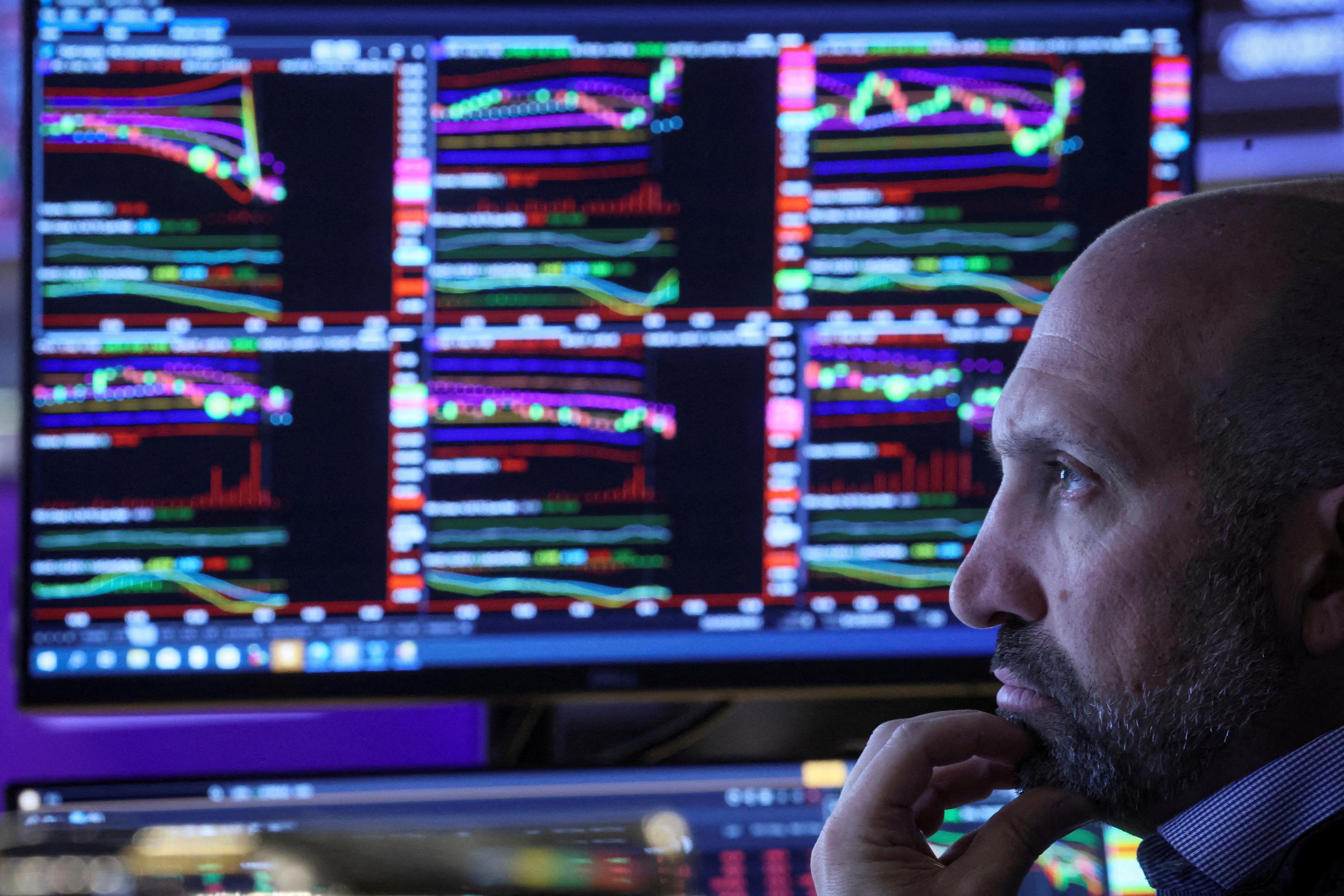
MOSCOW, Dec 28 (Reuters) - The Russian rouble firmed against the U.S. dollar and euro on Thursday, receiving support from month-end corporate taxes. At 0743 GMT, the rouble was 0.9% stronger against the dollar at 90.46 . It had gained 0.5% to trade at 100,70 versus the euro and also firmed 0.5% against the yuan to 12,67 . "The rouble continues to strengthen for the fourth day in a row. Thus, we can say that the measures taken by the authorities to curb the rouble's decline are clearly working," said Alor Broker's Alexei Antonov. Since October and the rouble's most recent slide to 100 against the dollar, a presidential decree forcing exporters to convert some foreign currency revenue has provided support, as have elevated interest rates. Brent crude oil , a global benchmark for Russia's main export, rose 0.05% to $79.69 a barrel. Russian stock indexes were mixed. The dollar-denominated RTS index (.IRTS) was up 0.59% at 1,075.02. The rouble-based MOEX Russian index (.IMOEX) was 0.34% lower at 3,086.94. For Russian equities guide see For Russian treasury bonds see https://www.reuters.com/markets/currencies/russian-rouble-firms-vs-dollar-euro-amid-tax-support-2023-12-28/
2023-12-28 06:22
Dec 28 (Reuters) - China Petrochemical Corp, or Sinopec, expects coal consumption to peak around 2025 at 4.37 billion metric tons, the state energy group said in an outlook released on Thursday. Non-fossil energy supply, led by solar and wind, will likely exceed the equivalence of 3 billion metric tons of standard coal by 2045 to become the dominant energy source for more than half of primary energy consumption, Sinopec said in the 2060 outlook, which was released in Beijing. Oil consumption is projected to peak around the middle of 2026-2030 at 800 million metric tons, or about 16 million barrels per day, partly due to faster-than-expected expansion in the new energy vehicle sector, Sinopec added. China, the world's second-largest oil consumer, is estimated to use 760 million tons, or 15.2 million bpd of oil this year. Sinopec also forecast China's demand for natural gas - a key bridge fuel before reaching carbon neutrality - to reach a plateau at around 2040 of 610 billion cubic meters (bcm) to account for 13% of primary energy use. This compares with 425 bcm and 9% of primary energy consumption projected for 2025. China's total carbon emissions from energy activities are expected to peak during the 15th Five-Year Plan period at 10.1 billion metric tons, up from 10.02 billion tons in 2023. https://www.reuters.com/markets/commodities/sinopec-forecasts-chinas-coal-consumption-peak-around-2025-2023-12-28/

2023-12-28 06:15
NEW YORK, Dec 28 (Reuters) - The dollar dipped against the Japanese yen on Thursday on expectations the Federal Reserve will cut interest rates next year, but rebounded from earlier losses against the euro in choppy trading. The greenback has declined as expectations of rate cuts have increased, notably after the Fed's unexpectedly dovish stance at its December meeting. Markets see the Fed's first rate cut coming in March and are pricing in 155 basis points of easing by next December. “The market has gotten even more aggressive on Fed easing,” said Marc Chandler, chief market strategist at Bannockburn Global Forex in New York. But trading this week is volatile with thin volumes and many investors having closed their books for the year. The dollar dropped as low as 140.27 yen , its lowest level since July 28, and was last down 0.28% on the day at 141.42. The move came as investors appeared to close short positions in popular funding currencies such as the yen, in which hedge funds and other investors use the proceeds from selling a currency to invest in other assets. Investors short the funding currencies "are evening up,” said Chandler. “This year it’s been a story of Fed tightening and BOJ teasing the market with the tweaking of the yield curve adjustment. Next year the position is going to be reversed, the market expects the BOJ to raise rates, and the Fed to ease rates. A fundamental driver’s going to change.” Net shorts in the yen against the U.S. dollar fell to 64,902 contracts in the latest week ending Dec. 19, compared with 81,131 the previous week, according to data from the Commodity Futures Trading Commission. With inflation exceeding its 2% target for well over a year, many market players expect the Bank of Japan to raise rates next year with some betting on the chance of action as early as in January. BOJ Governor Kazuo Ueda, however, said he was in no rush to unwind ultra-loose monetary policy as the risk of inflation running well above 2% and accelerating was small, public broadcaster NHK reported on Wednesday. The greenback remains on track for a 7.86% gain against the Japanese currency this year. The Swiss franc reached 0.8333 per dollar, its strongest level since January 2015 when the Swiss National Bank discontinued its policy of having a minimum exchange rate against the euro. The dollar was last up 0.06% at 0.8439 and is on pace for an 8.75% loss against the Swiss currency this year. The dollar index , which measures the U.S. currency against six rivals, fell to a fresh five-month low of 100.61, before changing direction to last be up 0.34% on the day at 101.21. The index is on course for a 2.20% decline this year, snapping two straight years of strong gains. U.S. data on Thursday showed that the number of Americans filing initial claims for unemployment benefits rose last week, indicating the labor market continues to cool in the year's fourth quarter. The euro was last down 0.37% at $1.1064, having touched a five-month peak of $1.11395 earlier in the session. The single currency is heading for a yearly gain of 3.26%. Sterling rose to $1.2825, its highest level since Aug. 1, and was last down 0.57% at $1.2728. The pound is on track for a 5.23% return this year. Bitcoin fell 2.34% to $42,455. ======================================================== Currency bid prices at 3:15PM (2015 GMT) https://www.reuters.com/markets/currencies/bruised-dollar-wobbles-traders-eye-us-rate-cuts-next-year-2023-12-28/
2023-12-28 06:12
LONDON, Dec 28 (Reuters) - A huge two-month rally in bond prices, powered by expectations that central banks will soon be cutting interest rates, has rescued fixed income markets from an almost unheard-of third straight year of declines. The U.S. 10-year Treasury yield , the benchmark for borrowing costs globally, has dropped 46 basis points (bps) in December after falling 53 bps in November. Its two-month fall is the biggest since 2008, when the Federal Reserve was slashing rates during the global financial crisis. ICE BofA's global broad bond market index (.MERGBMI), which includes government and corporate debt, has rallied roughly 7% over the last two months - its strongest eight-week period on record, according to LSEG data which goes back to 1997. The sharp drop in yields, which move inversely to prices, has eased pressure on companies and households as well as housing markets and governments that in October faced the steepest borrowing costs in more than a decade. It has also been a balm for highly indebted countries such as Italy, where bond yields are poised for their biggest monthly fall since 2013. HAWKS TURN DOVISH Central bankers abruptly changed their tone on inflation in December, fuelling investors' rate-cut bets. That followed a blockbuster November, when data showed U.S. and European inflation falling much faster than expected. "We were surprised by the strength of this rally," said Oliver Eichmann, head of rates fixed income EMEA at asset manager DWS. The Fed's Christopher Waller and the European Central Bank's Isabel Schnabel, both previously renowned monetary policy hawks, softened their language in December and acknowledged - in Schnabel's words - a "remarkable" fall in inflation. The Fed triggered fresh market euphoria when it used its December meeting to say that rate hikes were over. Fed Chair Jerome Powell notably declined to push back against market bets on deep cuts next year, although the Fed's "dot plot" envisaged three 25 bp cuts in 2024, compared to the more than 150 bps priced in by markets. "That was a surprise," said Jamie Niven, bond portfolio manager at asset manager Candriam. "And it does leave you with the question, what are they seeing that maybe the market isn't?" The riskier parts of the bond market, increasingly attractive as investors bet on rate cuts next year, have rallied the most. Italy's benchmark 10-year bond yield is on track to fall almost 60 bps in December, its biggest monthly drop since the euro zone debt crisis in 2013. Meanwhile, the spread of junk bond yields over benchmark risk-free rates in the United States and Europe has fallen to its lowest level since the second quarter of 2022. The two-month jump in bond prices has saved the market from the ignominy of a third year in the red, something not seen in 40 years or more, after two down years driven by inflation and rate hikes. Bond indexes were in negative territory in October as U.S. growth and inflation kept surprising economists, bolstering the case for higher rates for longer. The ICE BofA broad bond market index is now heading for an annual gain of more than 5%. Not all investors are convinced their luck will hold. "It's gone too far," said DWS's Eichmann. He expects more "push-back" from central bankers in the new year and fewer rate cuts than priced in by markets. https://www.reuters.com/markets/rates-bonds/biggest-two-month-rally-decades-rescues-beaten-up-bond-markets-2023-12-28/
2023-12-28 06:01
Global stocks tick up, S&P 500 near all-time high Dollar, Treasury yields edge back up Oil prices decline Dec 28 (Reuters) - World shares edged up on Thursday as expectations of interest rate cuts stretched a rally in U.S. stocks, while benchmark Treasury yields and the dollar lifted slightly from five-month lows. On Wall Street, the Dow Jones Industrial Average (.DJI) rose 0.14%, while the Nasdaq Composite (.IXIC) and the S&P 500 (.SPX) were little changed. The S&P index has climbed 11.6% this quarter and closed within a whisker of its all-time closing peak, while its price-to-earnings ratio is up by a quarter on the year at 24.0. The MSCI world equity index (.MIWD00000PUS), which tracks shares in 47 countries, gained 0.08%. European shares (.STOXX) ticked down, but stood near a 23-month high hit two weeks ago and were on course for gains of about 12.5% this year. "Right now, we really do not want to step in front of Santa's gift-laden sleigh," Scott Wren, senior global market strategist at Wells Fargo Investment Institute, wrote in a note Thursday. "It appears the rally could very well put the S&P 500 Index at or very near an all-time record high as we close out the year." Still, Wren said the market "will struggle to post meaningful gains in the first part of the year while the economy continues to slow." The number of Americans filing initial claims for unemployment benefits rose last week, according to data released on Thursday, indicating the labor market continues to cool in the year's fourth quarter. "Claims data have told a consistent story in recent months of slowing hiring, but still limited layoffs," Citi analysts wrote in a note. Even so, investors have ramped up bets on rapid-fire rate cuts next year from the Federal Reserve. "The rapid decline in inflation is likely to lead the Fed to cut early and fast to reset the policy rate from a level that most participants will likely soon see as far offside," analysts at Goldman Sachs wrote in a note. "We expect three consecutive 25-bp cuts in March, May, and June, followed by one cut per quarter until the funds rate reaches 3.25-3.5% in 2025 Q3. Our forecast implies 5 cuts in 2024 and 3 more cuts in 2025," Goldman Sachs said. Earlier, MSCI's broadest index of Asia-Pacific shares outside Japan (.MIAPJ0000PUS) added 1.4%, boosted by gains in Chinese stocks; the index is up about 7.4% this quarter. BOND BULGE Yields on 10-year Treasury notes stood at 3.844%, slightly up on the day after hitting a five-month low overnight. The two-year yield ticked back up on the day to 4.275%, having been as high as 5.295% as recently as October. The lower levels, while consistent with the overall trend, were helped by robust demand at a five-year Treasury auction. The declines have lifted the euro to its highest level since July, at $1.10645 , and bringing it to a gain of about 1.6% so far this month, within sight of its 2023 top of $1.1276. The dollar index (.DXY), which measures the U.S. currency against a basket of rivals, gained 0.2%, still near a five-month low. The index is on course for a roughly 2.3% decline this year, snapping two straight years of strong gains. "Investors are placing more weight on Fed expectations driving currencies than the signaling from other central banks like the ECB," said Alan Ruskin, global head of G10 FX strategy at Deutsche Bank. "In part, that's because the Fed also has more impact on the overall global risk environment, which has become more risk friendly and thereby also less USD positive." The dollar also lost ground to the yen, at 141.415 yen , having shed about 4.6% for the month so far. The dollar, though, is up sharply for the year as the Bank of Japan takes a glacial approach to tightening its super-easy policies. In an interview published on Wednesday, BOJ Governor Kazuo Ueda said he was in no rush to unwind those loose policies as the risk of inflation running well above 2% and accelerating was small. Oil prices fell as more shipping companies said they were ready to transit the Red Sea route, easing concerns about supply disruptions as Middle Eastern tensions stay elevated. U.S. crude fell about 3% to $71.90 per barrel and Brent was at $78.38, down 1.59% on the day. Gold prices eased, pressured by an uptick in the U.S. dollar and Treasury yields after gold hit its highest in more than three weeks during the session. Spot gold dropped 0.5% to $2,066 an ounce. https://www.reuters.com/markets/global-markets-wrapup-1-2023-12-28/