2023-12-27 14:39
Dec 27 (Reuters) - U.S. banks whose net interest margins (NIM) have been compressed due to higher funding costs are unlikely to see relief before the end of 2024 even if the Federal Reserve cuts rates, research and data analytics firm S&P Global Market Intelligence said on Wednesday. The U.S. Federal Reserve's interest rate hikes have spurred customers into chasing high-yielding alternatives to bank deposits, such as money market funds. To stem the migration, banks have offered higher rates of interest on deposits, which has increased costs for an industry already grappling with a slowdown in loan demand as borrowing has become costlier. Analysts expect NIM compression for 16 of the 20 largest U.S. banks in 2024, with a median decline of 14 basis points for the group, according to S&P Global Market Intelligence data. NIM is a key measure of banking profitability which shows how much a bank is earning in interest on loans against the amount it pays depositors. https://www.reuters.com/markets/rates-bonds/us-banks-nim-remain-under-pressure-despite-expected-fed-rate-cuts-sp-2023-12-27/
2023-12-27 11:18
NEW YORK, Dec 27 (Reuters) - As bonds emerge from a historic selloff, some investors expect better times in the U.S. fixed income market next year - as long as the Federal Reserve’s rate cuts play out as anticipated. A fourth-quarter rally saved bonds from an unprecedented third straight annual loss in 2023, following the worst-ever decline a year earlier. The late year surge came after Treasuries hit their lowest level since 2007 in October. Fueling those gains were expectations that the Fed is likely finished with rate increases and will cut borrowing costs next year - a view that gained traction when policymakers unexpectedly penciled in 75 basis points of easing in their December economic projections amid signs that inflation continued to cool. Falling rates are expected to guide Treasury yields lower and push up bond prices - an outcome that a broad swathe of investors are anticipating. The latest fund manager survey from BofA Global Research showed investors are holding their biggest overweight position in bonds since 2009. Still, few believe the path to lower yields will be a smooth one. Some worry the over 100 basis point drop in Treasury yields since October already reflects expectations for rate cuts, leaving markets vulnerable to snap backs if the Fed doesn’t cut soon enough or fast enough. The market has priced some 150 basis points in cuts next year, twice what policymakers have penciled in, futures tied to the Fed’s main policy rate show. Benchmark 10-year Treasury yields stood at 3.88% last week, their lowest level since July. Many are also watchful for the return of the fiscal worries that helped drive yields to their 2023 peaks but ebbed in the later part of the year. “As long as the Fed doesn't totally have this wrong, we should expect to see some rate cuts next year,” said Brandon Swensen, a senior portfolio manager on the BlueBay Fixed Income team at RBC Global Asset Management. However, “it could be a bumpy path." ‘BONDS ARE BACK’ U.S. bond year-to-date returns, which include interest payments and price changes, totaled 4.8% as of last week, compared with negative 13% last year, according to the Bloomberg US Aggregate Bond Index. "Bonds are back," Vanguard said in an outlook report published earlier this month. The world's second largest asset manager expects U.S. bonds to return 4.8%-5.8% over the next decade, compared with the 1.5%–2.5% it expected before the rate-hiking cycle began last year. Year-to-date, the Vanguard Total Bond Market Index Fund, with over $300 billion in assets, posted a 5.28% return as of last week, up from negative 13.16% last year. PIMCO's flagship $132 billion bond fund, the Income Fund, had year-to-date returns of 8.92% as of last week, from minus 7.81% last year. Though not everyone sees a recession ahead, most bond bulls are counting on slowing U.S. economic growth and ebbing inflation to push the Fed to cut interest rates. Eoin Walsh, partner and portfolio manager at TwentyFour Asset Management, said 2023’s rise in yields means fixed income can offer the best of both worlds - income with the potential of capital appreciation. “From where we are right now, you are going to get your yield on Treasuries and you probably will get a capital gain as well,” he said. He expects 10-year yields to be between 3.5% and 3.75% by the end of next year. Others believe some parts of the Treasury yield curve may have already rallied too far. Rick Rieder, chief investment officer of global fixed income at BlackRock, said the recent rally has left both longer-dated and shorter-dated bonds “quite rich.” “Much of the 2024 return for the very front end and for the very back end … has already been achieved," he said. At the same time, concerns over wide fiscal deficits and expectations of increased bond supply could boost term premiums - or the compensation investors demand for the risk of holding long-term bonds. Meanwhile, demand could lag as the Fed and large foreign buyers such as China trim their Treasuries holdings. The recent bond rally has also eased financial conditions, a measure of the availability of funding in an economy. Some worry that could fuel a rebound in growth or even inflation, delaying the Fed's rate cuts. The Goldman Sachs Financial Conditions Index has fallen by 136 basis points since late October and on Dec. 19 stood at its lowest level since August 2022. "The more markets move to price in cuts, the less urgency the Fed should probably feel about delivering them, because the markets are doing the easing for them," said Jeremy Schwartz, U.S. economist at Nomura. https://www.reuters.com/markets/rates-bonds/us-bond-bulls-look-2024-fed-pivot-sustain-searing-rally-2023-12-27/
2023-12-27 11:02
NEW YORK, Dec 27 (Reuters) - The traditional turbulence of money markets at year's end could pose a first test for a new and so far largely unused central bank liquidity facility, but a shift to full scale activity likely still lies some time off into next year. Some market participants reckon that the Fed’s Standing Repo Facility, which it formally adopted in 2021, may see some noticeable usage over the turn of the year as traders and investors manage their money during a predictably volatile period. If that happens, it would not be a sign of distress, but of the financial plumbing system working as intended. The Standing Repo Facility, or SRF, takes in Treasury securities from eligible financial firms - they are mainly the mega banks that normally support the government securities market and serve as counterparties to Fed interventions - and converts them quickly into cash. Scarred by Treasury bond owners’ severe liquidity problems in the spring of 2020, the facility is designed to be a sort of automatic stabilizer for markets. The facility is also designed to lift from the Fed at least some of the burden of discretionary liquidity operations, of the sort it was forced to resort to in the fall of 2019 when market liquidity ran short. So far, markets, still awash in Fed-created money, haven’t needed to tap the SRF in a meaingful fashion. But what appears to be some recent small-scale testing has reminded markets that if not soon, the day is coming where the SRF will be in the mix. The end of 2023 “could mark the christening of the SRF,” said Scott Skyrm of money market trading firm Curvature Securities. He noted that a key borrowing level for short term markets called the general collateral repo rate has been trading above the 5.5% SRF rate which creates “a small incentive” for eligible firms to go to the Fed as the year draws to a close. THE MAIN EVENT But any SRF usage now would likely be quite small. The bigger test lies down the road as the Fed presses forward with its ongoing effort to shrink the size of its balance sheet. That effort is drawing liquidity from the financial system and Fed officials expect the process, which is allowing just shy of $100 billion per month in Fed-owned bonds to mature and not be replaced, to run for quite some time. “I don't know at what point, you know, how things will transpire over the next year,” Federal Reserve Bank of New York President John Williams said in a television interview on Dec. 15. The draw down is “going according to plan” and reserves are still quite abundant, he said, suggesting no imminent need for the Fed to slow or stop the contraction of its balance sheet. Markets, however, are less confident in that outlook, and they’ve been eyeing somewhere around a second to third quarter stopping point. Some of that projection rests on the idea that another Fed liquidity tool, the reverse repo facility, has been falling very rapidly over recent months. After hitting a record $2.6 trillion at the end of last year, it’s fallen markedly and stood at about $794 billion on Tuesday. It’s unclear if the reverse repo facility, which takes in cash largely from money market funds and is designed to provide a floor for short-term rates, will return to negligible usage or whether some cash will remain. A report from the New York Fed on Dec. 19 said conditions in the banking sector argue for continued contraction. It noted if reverse repos continue to fall, “such a steady decline would be consistent with that observed in early 2018, when investment at the [reverse repo facility] gradually disappeared as the Federal Reserve continued to normalize the size of its balance sheet and reserves in the banking system became less abundant.” Joseph Wang, chief investment officer at Monetary Macro, believes the fate of the reverse repo facility is the key barometer of when the SRF will spring into life. “I wouldn’t expect meaningful usage until the [reverse repo facility] is at 0” and the Secure Overnight Financial Rate matches the rate offered on the SRF. Reverse repo utilization “should be around 0 first half of next year, and thereafter rates could drift higher towards the SRF offering rate. So I don’t expect meaningful usage for some time.” https://www.reuters.com/markets/us/fed-liquidity-drains-moves-spotlight-usage-new-lending-facility-2023-12-27/
2023-12-27 10:34
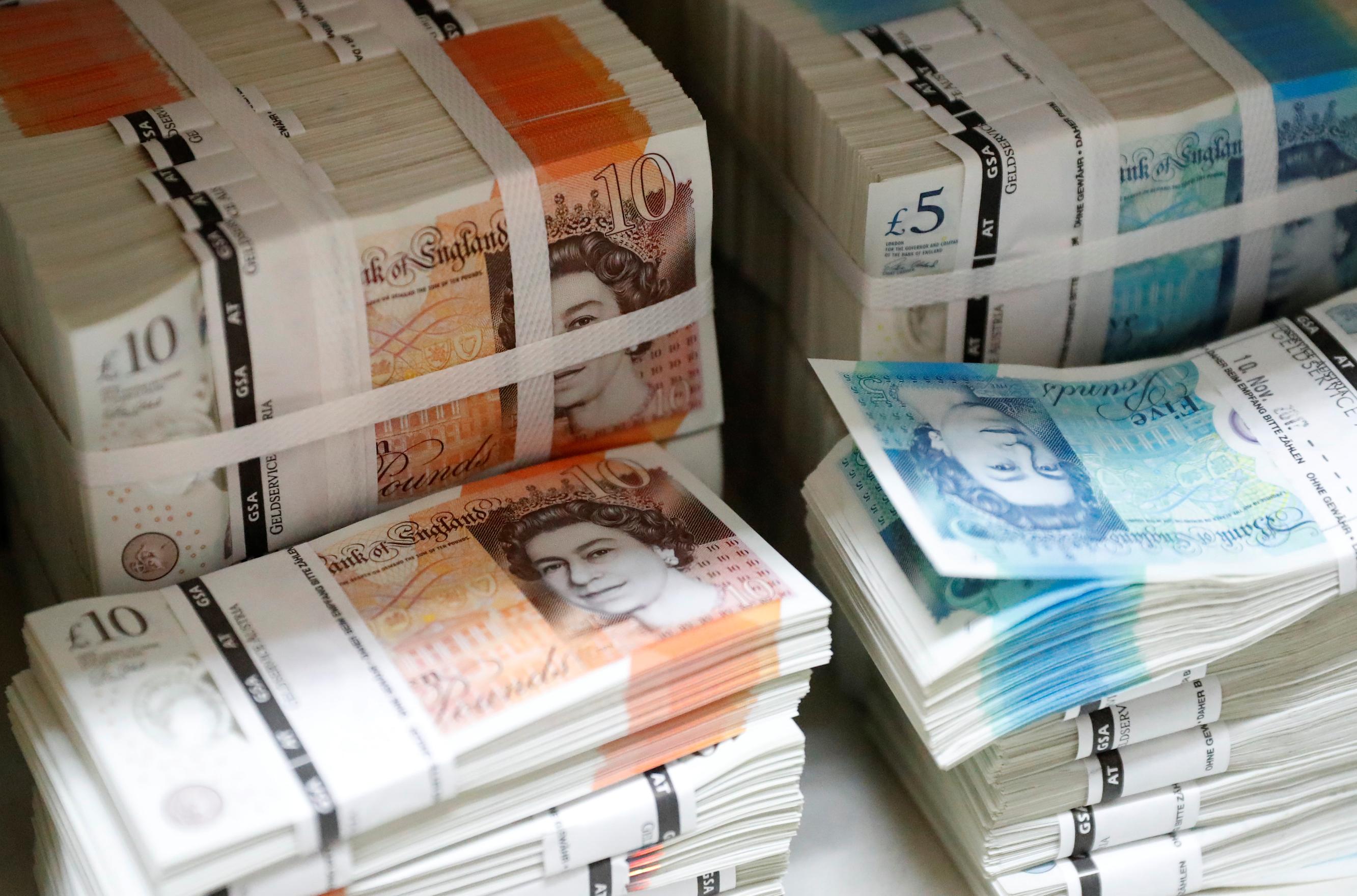
LONDON, Dec 27 (Reuters) - The pound was little changed in subdued trading on Wednesday but remained on track to be one of the best performing currencies in 2023. Sterling was last down 0.06% at $1.2716, off a four-month high of $1.279 touched earlier in December. It was also slightly lower against the euro , with the single currency up 0.22% at 86.95 pence. The pound has climbed more than 4% against the dollar over the last three months and is on track to finish the year around 5% higher. That compares to a 3% rise for the euro and an 8.5% fall for the Japanese yen. Investors expect that the Bank of England will not be able to cut interest rates as much as the Federal Reserve and European Central Bank, given that inflation is running higher in the UK. That has widened the gap between British bond yields and those in the U.S. and Europe, making them look more attractive and boosting the pound. However, a bigger than expected drop in UK inflation to 3.9% in November has complicated the idea that the BoE will be a laggard. Traders now expect more than 140 basis points of rate cuts from the BoE in 2024, compared to more than 160 and 150 from the ECB and Fed respectively. The dollar index , which tracks the greenback against six other major currencies, eased less than 0.1% on Wednesday to 101.42. Trading volumes were thin, with many market participants still off for the holidays and next to no economic data releases scheduled. https://www.reuters.com/markets/currencies/sterling-steady-set-5-rally-2023-2023-12-27/
2023-12-27 10:24
NEW DELHI, Dec 27 (Reuters) - India turned a net importer of finished steel in the first eight months of the fiscal year that began in April with shipments from China reaching their highest in five years, according to provisional government data seen by Reuters on Wednesday. China was the top exporter of finished steel to India between April and November, shipping 1.3 million metric tons of the alloy, up 48.2% from the same period a year earlier. The world's top steel producer exported mostly hot-rolled and cold-rolled coil or sheets to India, followed by plates, and pipes. The Indian steel industry has sought government intervention to safeguard against Chinese imports. During April-November, India imported a total of 4.3 million tons of finished steel, up 13.4% from a year earlier with shipments at a four-year high, data showed. South Korea was the second-biggest exporter of finished steel to India over the period, shipping 1.3 million metric tons. India is the world's second-biggest crude steel producer with output standing at 94.1 million tons in the eight months, up 14.7% from a year earlier. Domestic consumption of finished steel was 87.1 million tons, up 14.9% at a five-year high. https://www.reuters.com/markets/commodities/india-net-importer-steel-april-nov-chinese-shipments-reach-5-yr-high-2023-12-27/

2023-12-27 10:22
JOHANNESBURG, Dec 27 (Reuters) - South Africa's rand firmed in thin trade on Wednesday, ahead of the last economic data releases of the year later this week. At 1003 GMT, the rand traded at 18.5075 against the dollar , about 0.8% stronger than its previous close. "We expect the local currency to remain fairly range-bound until the new year," said Andre Cilliers, currency strategist at TreasuryONE. South African money supply, trade and budget balance data for the month of November are all due on Friday. On the stock market, the Top-40 (.JTOPI) index was last trading about 3% higher. South Africa's benchmark 2030 government bond was marginally stronger, with the yield down 1 basis point at 9.735%. https://www.reuters.com/markets/currencies/south-african-rand-firms-thin-trade-2023-12-27/