
2023-12-22 09:53
KAMPALA, Dec 22 (Reuters) - Uganda's shilling was unchanged on Friday and was expected to hover around its current levels in the coming days as interbank players and businesses wind down activity ahead of the end-of-year holidays, traders said. At 0833 GMT, commercial banks quoted the shilling at 3,755/3,765 to the U.S. dollar, the same as at Thursday's close. https://www.reuters.com/markets/currencies/ugandan-shilling-flat-activity-slows-before-holidays-2023-12-22/

2023-12-22 09:03
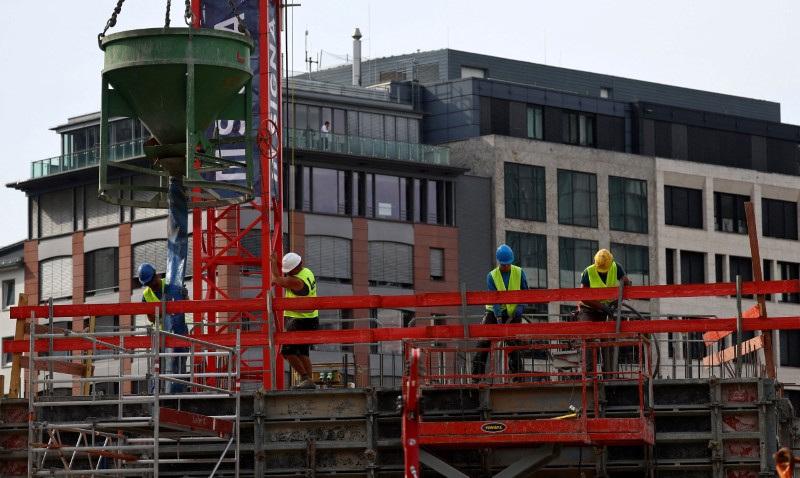
FRANKFURT, Dec 22 (Reuters) - Residential property prices in Germany continued their fall, dropping 10.2% in the third quarter from a year earlier in a further grim sign for the real-estate sector in Europe's largest economy, data on Friday showed. It was the fourth consecutive quarter of declines and the biggest since Germany's statistics office began keeping records in the year 2000, underscoring the nation's biggest property crisis in decades. "Until 2022, there was a speculative price bubble in Germany, one of the biggest in the last 50 years," said Konstantin Kholodilin from the macroeconomics department of the German Institute for Economic Research (DIW). "Prices have been falling ever since. The bubble has burst." For years, the property sector in Germany and elsewhere in Europe boomed as interest rates were low and demand strong. But a sharp rise in rates and costs has put an end to the run, tipping developers into insolvency as bank financing dries up and deals freeze. The decline for single- and two-family homes in major German cities was especially pronounced in the third quarter - 12.7%, while apartment prices fell 9.1%. Other data on Friday showed that orders for the construction industry dropped a seasonally adjusted 6.3% in October compared with the month before. The German Construction Industry Federation said the home construction sector was headed for a further reduction in jobs. Austrian property giant Signa, which has a major presence in Germany, last month filed for insolvency, the biggest casualty so far of the region's property crisis. https://www.reuters.com/markets/europe/german-home-prices-fall-record-102-third-quarter-2023-12-22/
2023-12-22 06:41
NEW YORK, Dec 22 (Reuters) - The dollar index edged down on Friday, hitting a near five-month low as data showed annual U.S. inflation slowed further below 3% in November, cementing market expectations for a U.S. interest rate cut next March. In the 12 months through November, inflation, as measured by the personal consumption expenditures (PCE) price index, stood at 2.6%, easing from 2.9% in October. Excluding the volatile food and energy components, the so-called core PCE price index advanced 3.2% year-on-year in November, the smallest rise since April 2021. The Federal Reserve tracks the PCE price measures for its 2% inflation target. "The market will view the data as very much adding weight to the Fed's recent tilt towards an easier monetary stance," said Stuart Cole, chief macro economist at Equiti Capital. "This is the Fed's preferred measure of inflationary pressures, so if you take into account the fact that some of the effect of the tightening delivered to date is still to be felt, then I think the FOMC may well be starting to privately feel that it's job done as regards getting inflation back under control," he said. The dollar has come under selling pressure after last week's Federal Reserve meeting prompted traders to pencil in several rate cuts in 2024, starting as early as March. U.S. Federal Reserve officials have since been pushing back on the idea of rapid rate cuts next year. The dollar index was last down 0.08 % at 101.7 , after dipping as low as 101.42, its lowest since late July. The index is on pace to finish the year down about 2%. The Federal Reserve's dovish December pivot has boosted the case for the dollar to keep falling into 2024, though strength in the U.S. economy could limit the greenback's decline. "The Fed has moved to the front of the pack of the major central banks in terms of when the first interest rate cut will be delivered and this is exposing the USD to an interest rate differential that is working against it," Equiti Capital's Cole said. On Friday, the dollar weakened to a near nine-year low against the Swiss franc and was last down 0.02%, back to January 2015 levels when the Swiss National Bank sparked significant volatility by discontinuing its policy of having a minimum exchange rate for the franc against the euro. The euro was up 0.02 %. The European Central Bank will need at least until spring before it can reassess its policy outlook and market expectations for an interest rate cut in March or April are premature, ECB policymaker Bostjan Vasle said on Monday. Sterling gained 0.09 % to $ 1.2703 as traders digested data that showed British retail sales in November jumped by much more than expected, but third-quarter GDP was revised lower. The dollar edged higher against the yen last up 0.25 % at 142.465 yen, after data showed Japan's core inflation slowed sharply in November to a pace unseen in over a year, highlighting easing cost-push pressures that may give the central bank more time before phasing out its massive monetary stimulus. The BOJ had, earlier this week, maintained its ultra-loose policy settings and offered few hints on when it could move away from negative interest rates. The risk-sensitive Australian and New Zealand dollars traded higher on the day. The Aussie was last up -0.04 % at $ 0.68 , earlier having touched $ 0.6825 , its highest since July. The kiwi traded up 0.07 % at $ 0.62985 , also a five-month high. In cryptocurrencies, bitcoin slipped 0.34 % to $ 43,726 , just shy of the 8-month high of $44,729 hit earlier this month. . A spate of filings for spot bitcoin and ether ETFs, including from traditional finance heavyweights, has helped revive the crypto market this year after a series of meltdowns in 2022. https://www.reuters.com/markets/currencies/dollar-sinks-ahead-us-inflation-test-2023-12-22/
2023-12-22 06:11
BEIJING, Dec 22 (Reuters) - After almost two weeks of below-freezing weather brought by a cold wave that swept through most of China, a round of warm air will begin to flow from the country's north to south lifting temperatures from the weekend. Northern and northeastern parts of the country have experienced blizzards and record-breaking cold since last week, with some areas in the northeast hitting minus 40 degrees Celsius (-40 degrees Fahrenheit) and below as bitingly cold air flowed from the Arctic. While China still forecasts new temperature lows this week, weather patterns will improve with the mercury rising to reach over 10 degrees Celsius (50 degrees Fahrenheit) in many places in the central and eastern regions on Monday, state television CCTV said. The warmer conditions are expected to last until the end of December, resulting in warmer-than-usual temperature in most parts of the country for this time of the year. In northern Tianjin, its meteorological department said temperatures will slowly rise from Saturday, with Sunday's high above 0 degrees Celsius (32 degress Fahrenheit) and a minimum not lower than minus 10 degrees Celsius (14 degrees Fahrenheit). Forecasts show Tianjin to hit a maximum of minus 2 degrees Celsius (35 degrees Fahrenheit) for Friday. However, the warmer weather may fluctuate due to interspersing cold air, CCTV said, advising the public need heed forecasts and dress accordingly. Eastern province Shandong's observatory warned on Friday of temperatures as low as minus 20 degrees Celsius (-4 degress Fahrenheit) in some mountainous areas in the province's northwest. This week, China's north including capital Beijing, its surrounding Hebei and Tianjin, Henan, Inner Mongolia, and northeastern provinces Liaoning and Heilongjiang have logged historically their coldest temperatures for the middle of December. Temperatures in some of these areas and also in parts of the south will be 5 degrees Celsius (41 degrees Fahrenheit) cooler than the usual from Friday to Monday, China's National Meteorological Center said. In China's financial hub Shanghai, temperatures in most parts of the city on Friday morning ranged from minus 6C to minus 4 degrees Celsius (21-24 degrees Fahrenheit), breaking seasonal records. In Beijing, city authorities rushed to fix a leak in a thermal pipe network that supplies heating to buildings in central Dongcheng district. Repair work for the section leaking, discovered before dawn, halted some traffic but did not affect residential users, the official Beijing Daily said. Across China, heating demand has risen as many northern provinces rewrote records after temperatures plunged below minus 30 degrees Celsius (minus 22 degrees Fahrenheit) in some cities. Peak electricity loads were up by 100 million kilowatts on last year's high, the official Xinhua news agency reported on Thursday. This equated to an increase of around 8.6%, Reuters calculations based on data from China's state planner showed. But ample heating fuel stocks from bumper production mean China has not needed to ramp up imports of coal and natural gas to meet the record power loads, according to traders. https://www.reuters.com/world/china/biting-cold-loosen-grip-temperatures-creep-higher-china-2023-12-22/

2023-12-22 06:04
SAN FRANCISCO, Dec 22 (Reuters) - The annual rotation on the U.S. Federal Reserve’s interest-rate-setting committee means its 2024 voting members lean slightly more hawkish than the outgoing group from 2023 – but that won’t budge the outlook for a pivot to interest-rate cuts next year. In fact, plenty of analysts make the opposite argument: if inflation continues to fall more quickly than expected, Fed policymakers will want to reduce rates even more than the three-quarters-of-a-percentage point implied in fresh projections published last week. Friday's release of the personal consumption expenditures price index, the Fed's preferred measure of inflation, only served to strengthen that view. Both headline and core measures cooled more than economists had anticipated, bringing the annualized rates over the past three and six months down to at or below the Fed's 2% target. Over the second half of the year, the center of gravity at the Fed policymaking table has become markedly more dovish, as evidence accumulates that price pressures are easing and the labor market is cooling in the face of the Fed's rates hikes from March 2022 to July 2023. In particular, those policymakers who had been most hawkish, including Fed Governor Christopher Waller, have backed away from their previous support for rate hikes. "Everybody is a hawk when you are fighting inflation," said Deutsche Bank's Brett Ryan. "As the upside risks to inflation have diminished, they have changed their view." After central bankers held rates steady at 5.25%-5.50% last week, Fed Chair Jerome Powell noted that the timing of rate cuts would be the Fed's "next question," sending bond yields plummeting and markets pricing in rapid-fire policy rate reductions starting in March. But even if cuts come later and more gradually than that, as policymakers have since tried to signal, the direction of those bets tracks the Fed leader's changed tone. "Powell is not stupid," said SGH Macro Advisors' Tim Duy. "If he set expectations for more than 75 basis points of rate cuts, he did it for a reason." One reason, Duy explains, is this: As lower inflation filters through the economy, firms that this year were able to raise prices will find it more difficult to do so next year, and may need to turn to trimming labor costs to protect their profits. Signaling easier policy ahead is a bid to head off those kinds of "nasty" disinflationary dynamics, he says. There is also another rationale for rate cuts next year: As inflation falls, holding the benchmark rate steady drives real borrowing costs up, so the Fed must dial back its policy rate to prevent overtightening. "If the Fed does decide to ease a little bit more aggressively," argues BMO economist Scott Anderson, "it would really be because of inflation, not because of growth or a spike in unemployment." The new year will bring plenty more data ahead of the Fed's next meeting, on Jan. 30-31, including a read on the U.S. unemployment rate, now 3.7% and just a tenth of a point above where it was when the Fed began raising rates. FED VOTER ROTATION The four Fed bank presidents who get their turn next year at voting on policy under the Fed's rules of rotation appear inclined to support fewer rate cuts than the four they are replacing, economists at Deutsche Bank, BMO and others believe. Among 2024 voters is Raphael Bostic, the chief of the Atlanta Fed. Though dovish in the sense that he has tended to express more concern about causing excessive job loss than some of his fellow policymakers, he has also said he believes the Fed policy rate should end next year in the 4.75%-5% range. Most of his colleagues feel a lower range will be appropriate, projections published last week show. Joining Bostic are Cleveland Fed President Loretta Mester and Richmond Fed President Thomas Barkin, both seen as hawkish; San Francisco Fed President Mary Daly, a centrist, is the fourth 2024 voter. In 2023 voters included the hawkish chiefs of the Minneapolis and Dallas Fed banks, and the leaders of the Philadelphia and Chicago Fed banks, who lean the other way. Fed policymaker views on rates do change with the data. Mester in particular has sounded in recent months less sure about the need for further tightening. And the voting lineup itself is subject to change: under the Fed's rules Chicago Fed chief Austan Goolsbee would take over Mester's voting right once she retires in June, if the Cleveland Fed has not by then selected a new president. Ultimately all 19 Fed policymakers, including non-voters, take part in the policy debates that shape the decisions. A number of evolving factors could halt or even reverse progress on inflation, rekindling the hawkish bias that dominated the thinking of most of those 19 throughout this year. An extended disruption of traffic through the Suez Canal resulting from Houthi militant attacks on ships in the Red Sea could push up prices of goods, after six months of inflation-dulling declines. A rise in consumer confidence could set up for stronger spending ahead. Easier financial conditions, with the 10-year yield now back down to where it was in July when the Fed last raised rates, could add fuel to borrowing and investment. And job growth could continue to surpass expectations, as it did for much of last year. "There are definitely risks" that inflation progress could stall, Oxford Economics' Nancy Vanden Houten said. But in all, she said, she believes the Fed won't adjust policy to counter a geopolitical shock unless it is seen as quite long-lasting, and with the policy rate as high as it is, the table looks set for weaker spending and job gains next year. The rotating cast of Fed voters will likely matter less than the data itself, she said, which in her view supports the three quarter-point rate cuts that most policymakers expect. https://www.reuters.com/markets/rates-bonds/fed-rate-cuts-remain-view-2024-even-rate-setters-shift-2023-12-22/
2023-12-22 05:44
US annual inflation slows further below 3% in November Precious metals eye second straight weekly rise High prices drain demand in India Dec 22 (Reuters) - Gold scaled a more than two-week high on Friday, rising for a second week as the dollar and U.S. Treasury yields slipped on rising expectations the Federal Reserve will cut interest rates early next year. Spot gold was up 0.4% at $2,052.69 per ounce as of 3:50 p.m. ET (20:50 GMT), its highest level since Dec. 4, putting it on course for a 1.7% weekly gain. U.S. gold futures settled 0.9% higher at $2,069.1. "Precious metals, including gold, are being driven higher by very aggressive rate cut expectations with the market pricing in a Fed cut in March and a total of 150 bps in 2024," said Tai Wong, a New York-based independent metals trader. "It's priced for perfection but the market usually discounts too zealously." Traders on Friday raised bets that the U.S. central bank will start cutting rates in March after government data showed price pressures continued to cool last month. Annual U.S. inflation slowed further below 3% in November and underlying price pressures continued to abate. The dollar index (.DXY) hit a near five-month low, making gold more appealing to foreign buyers. Benchmark 10-year bond yields were also close to their weakest levels since July. Gold will continue to be helped by weaker Treasury yields and the U.S. dollar index and concerns about a slowdown in the economy, said Phillip Streible, chief market strategist at Blue Line Futures in Chicago. "The current technical breakout could really push prices up to that $2,100 level. It could retest those recent contract highs." On the physical front, gold demand in India fell sharply due to high domestic prices. Silver fell 1.2% to $24.12 per ounce, after touching a two-week high earlier. Palladium was down 0.9% at $1,202.46 after hitting its highest since Oct. 2 earlier. Platinum rose 0.7% to $969.67, its highest since Sept. 1. All three metals were on track for their second consecutive week of gains. https://www.reuters.com/markets/commodities/gold-near-3-week-peak-rate-cut-bets-us-inflation-test-looms-2023-12-22/


