2023-12-22 05:37
S&P 500, Nasdaq end higher, Dow down slightly U.S. prices fall in November - Commerce Department report Dollar falls to near 5-month low NEW YORK, Dec 22 (Reuters) - Global stock indexes mostly rose while the U.S. dollar dipped to a near five-month low on Friday ahead of the long holiday weekend, with cooler-than-expected U.S. inflation data supporting the view that the Federal Reserve could cut borrowing costs in the new year. The Commerce Department report showed U.S. prices fell in November for the first in more than 3-1/2 years, pushing the annual increase in inflation further below 3%. The data is the last major release this year, and many investors are expected to be away between Monday's Christmas Day holiday and New Year's Day. Stock investors have cheered recent signs from the Fed on the outlook for rates. At the conclusion of its policy meeting on Dec. 13, the Fed signaled that it had reached the end of its tightening cycle and opened the door to interest rate cuts in the coming year. The U.S. benchmark S&P 500 is inching closer to its all-time closing high. Reaching a new closing high would have confirmed the benchmark index had been in a bull market since closing at the bear market floor in October 2022. "The data was very dovish, and, of course, this is the Fed's primary measure of inflation. But the core being below expectations and the top line also being below expectations is positive for the market, indicative that inflation is declining," said Tim Griskey, senior portfolio strategist at Ingalls & Snyder in New York. "It's more evidence that this is a good environment for investing." The Dow Jones Industrial Average (.DJI) fell 18.38 points, or 0.05%, to 37,385.97, the S&P 500 (.SPX) gained 7.88 points, or 0.17%, to 4,754.63 and the Nasdaq Composite (.IXIC) added 29.11 points, or 0.19%, to 14,992.97. All three indexes moved closer to flat as the session progressed after an initial rally, but the S&P 500 is now within 1% of its record close reached in January 2022. The three major U.S. stock indexes also registered an eighth straight week of gains. It was the S&P 500's longest weekly winning streak since late 2017, while the Nasdaq and Dow marked their longest streaks of weekly gains since early 2019. "The consensus is we're going to have rate cuts ... in March. I think that's maybe too optimistic. To me, you're borrowing against 2024 gains a little bit with this rally," said Alan Lancz, president of Alan B. Lancz & Associates Inc., an investment advisory firm, based in Toledo, Ohio. The U.S. market will be closed Monday for the Christmas holiday. The pan-European STOXX 600 index (.STOXX) rose 0.14% and MSCI's gauge of stocks across the globe (.MIWD00000PUS) gained 0.14%. The MSCI index also notched an eighth straight week of weeks. The dollar index was last down 0.08% at 101.7 , after dipping as low as 101.42, its lowest since late July. The index is on pace to finish the year down about 2%. On Friday, the dollar also weakened to a near nine-year low against the Swiss franc and was last down 0.02%. Benchmark 10-year Treasury yields ended slightly higher on the day, with traders closing positions ahead of the long weekend. Benchmark 10-year yields ended up less than a basis point at 3.897%. Two-year yields fell 2 basis points to 4.325%. In the energy market, oil prices eased amid expectations that Angola could increase output after leaving OPEC. U.S. crude oil fell 33 cents to settle at $73.56 per barrel, while Brent dipped 32 cents to $79.07. Spot gold added 0.4% to $2,052.98 an ounce. In cryptocurrencies, bitcoin slipped 0.34 % to $43,726, just shy of the eight-month high of $44,729 hit earlier this month. . https://www.reuters.com/markets/global-markets-global-markets-2023-12-22/
2023-12-22 05:32
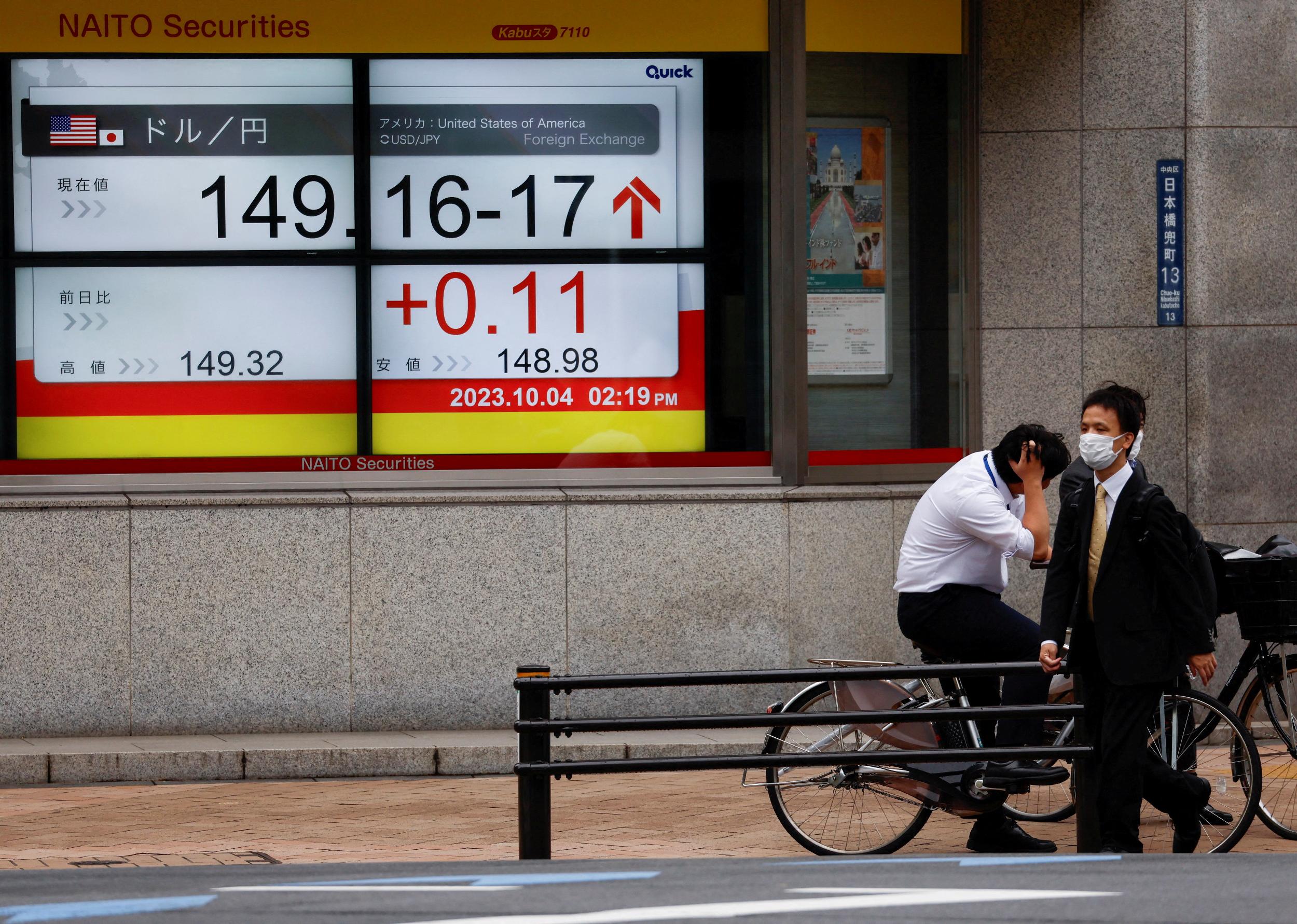
A look at the day ahead in European and global markets from Tom Westbrook Before they head off for the Christmas and year-end break, markets will get one last glimpse of the U.S. inflation picture with Friday's Personal Consumption Expenditure index data. A low number could validate what's been an astonishing bond market rally over the past two months. A high number could challenge the market's aggressive positioning. Euphoria in the wake of signals by the Federal Reserve that rate hikes are done - and that cuts will come in for consideration - has interest-rate futures markets pricing 150 basis points of cuts next year. Traders see an 83% chance of a rate cut in March and a 12% chance it is a super-sized 50 basis points. The 10-year Treasury yield, at 3.9%, is down more than 110 bps from just above 5% in late October. The wager is that retreating inflation will push the Fed to cut quickly, to prevent real rates from rising. Two-thirds of the 251 participants in the Bank of America's December fund manager survey see a "soft landing" for the U.S. economy and investors are their most bullish on bonds since March 2009. Thursday's downward revision to the PCE in third-quarter growth data bodes well for a downside surprise when the November number is released later today, although Wednesday's sudden sell-off in U.S. stocks is a reminder that holiday-thinned markets will be volatile when disturbed. British growth and retail sales data is also due on Friday, but that's already been overshadowed by this week's inflation surprise that sent sterling sliding and the FTSE flying, as sharply slowing inflation paves the way for rate cuts early in 2024. Trade in Asia was cautious and the dollar index , down 4.6% since the start of November, hovered at 101.86 as investors awaited the PCE number. With the Fed no longer seen as an outlier that would keep rates high through 2024, the dollar has been under pressure and the euro has found a foothold above $1.10. The yen - the year's worst performing G10 currency - has also found support. The Bank of Japan disappointed markets by giving no signal of a policy shift at this week's meeting. But there's a growing consensus that it will act in the spring and a record 73% of BofA survey respondents think the yen is undervalued. Key developments that could influence markets on Friday: - British GDP, retail sales - U.S. core PCE https://www.reuters.com/markets/europe/global-markets-view-europe-2023-12-22/

2023-12-22 05:27
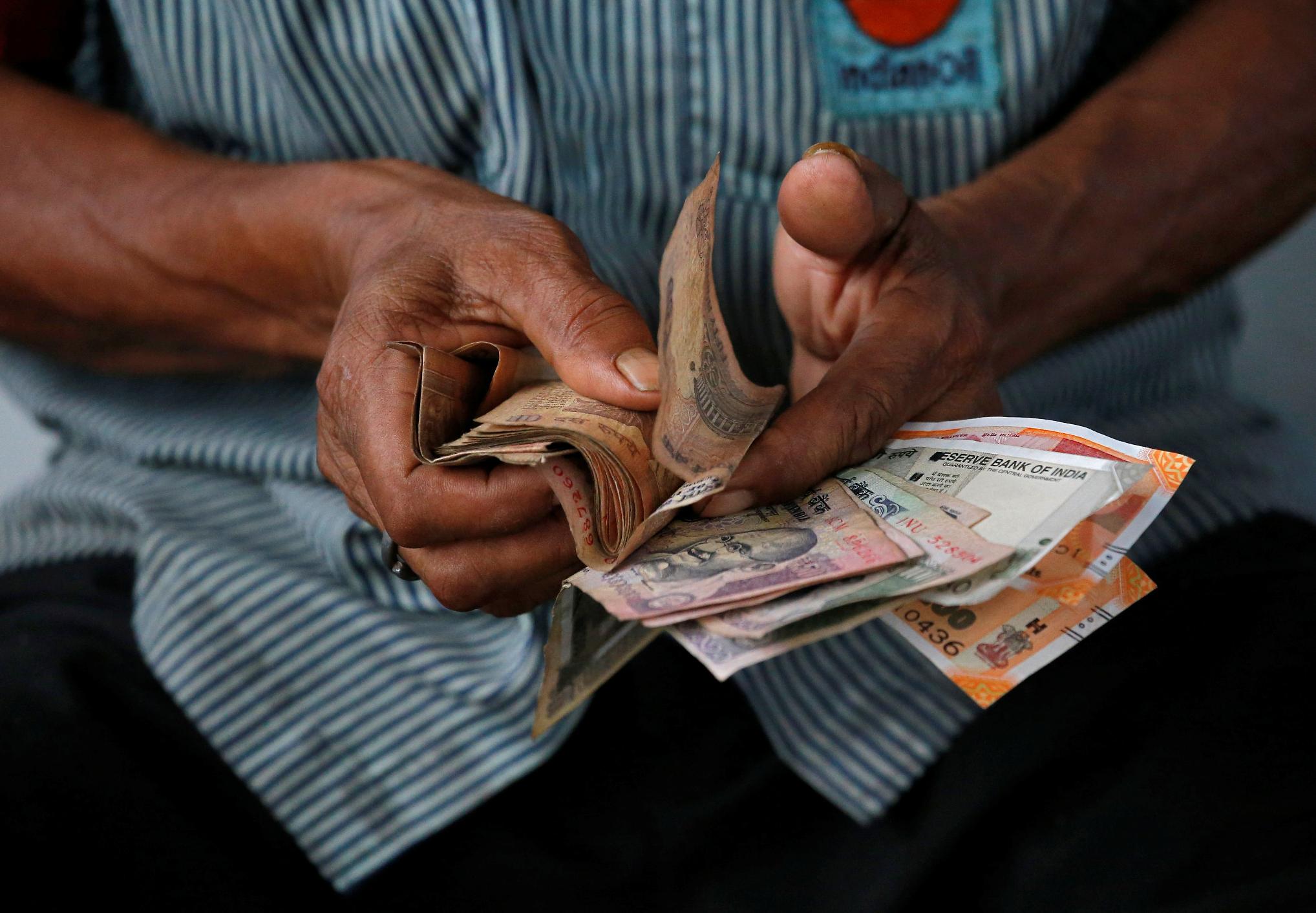
MUMBAI, Dec 22 (Reuters) - The Indian rupee ticked up slightly on Friday aided by a rise in most Asian currencies, as the dollar index lingered near its lowest level since August. The rupee was at 83.25 as of 10:50 a.m. IST, up slightly from its close at 83.2775 in the previous session. The local unit oscillated in a tight range between 83.2375 and 83.26 during early trading. Asian currencies were mostly higher between 0.1% to 0.4%. However, the rupee's gains were limited by the dollar demand from importers, including local oil companies, a foreign exchange trader at a state-run bank said. Price action on the rupee is likely to be limited in the 83.20-83.30 range, the trader added. The dollar index was last quoted steady at 101.8 after falling to 101.73 overnight, its lowest level since August, amid a revival in risk appetite that supported global equities. Indian equity indexes rose, tracking Asian and U.S. peers, with the S&P500 Index logging gains of about one percent on Thursday. A slightly weaker than expected U.S. GDP growth number for the third quarter also weighed on the dollar. The world's largest economy grew by 4.9% in the quarter, against expectations of 5.2%, according to economists polled by Reuters. Both technical and global factors support some appreciation of the rupee, said Dilip Parmar, a foreign exchange research analyst at HDFC Securities. The rupee may remain muted on Friday, but could see some gains over the last few trading sessions of the year, Parmar added. Investors now await U.S. personal consumption expenditure (PCE) inflation data, the Federal Reserve's preferred inflation gauge, due later on Friday. Data is expected to show that month-on-month core PCE inflation remained flat at 0.2% in November, according to a Reuters poll. https://www.reuters.com/markets/currencies/rupee-marginally-strengthens-aided-by-uptick-its-asian-peers-2023-12-22/
2023-12-22 05:22
LIMA, Dec 21 (Reuters) - At least seven workers at a small gold mine in southern Peru have died in what is believed to be an accident, local police reported on Thursday. The victims' bodies were discovered 1.5 km (0.93 mile) deep in the mine with injuries to their extremities, local police chief Enrique Felipe Monroy told radio station RPP. Monroy said that initial evidence pointed to a collapse in the mine, in the town of La Rinconada. In the region, hundreds of small mines operate, many of them without proper legal permissions. In Peru, the world's second-largest copper producer and seventh-largest gold producer, collapses or accidents are frequent at informal or illegal mines, where workers dig out ore without following safety or environmental regulations. Earlier this month, nine security employees of a major gold producer in northern Peru were killed in an armed attack on the mine, which the government and the miner blamed on "criminal gangs" acting on the behalf of illegal miners. https://www.reuters.com/world/americas/least-7-peru-gold-mine-workers-die-believed-accident-2023-12-22/

2023-12-22 05:00
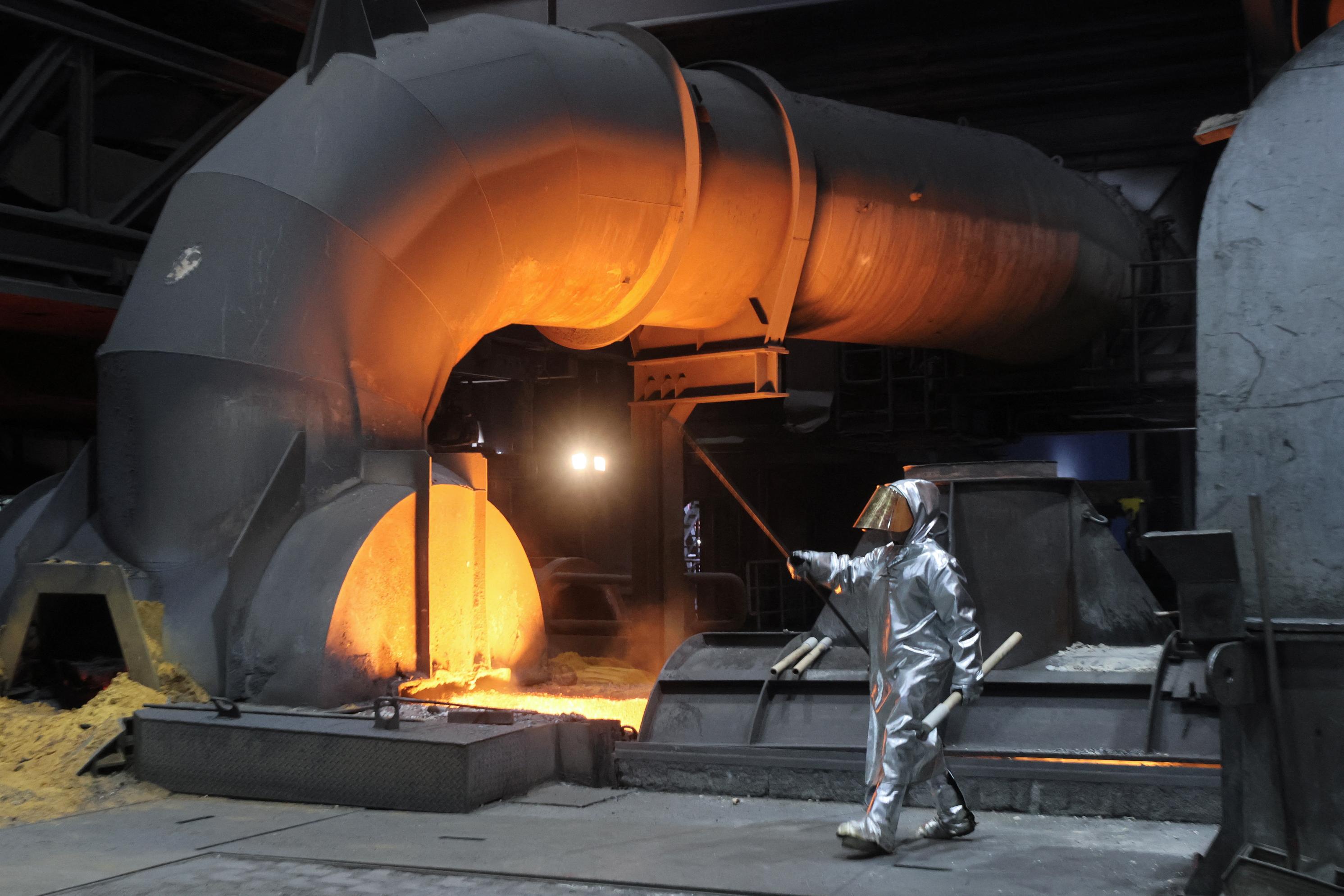
LONDON, Dec 22 (Reuters) - It's been a year to forget for industrial metal traders. Early optimism around China's return from lockdown dissipated over the first half of the year, leaving most metals chopping around in difficult range-trading conditions over the second half. The LME Index (.LMEX), which tracks the performance of the six major base metals traded on the London Metal Exchange (LME), is currently down by 7% on the start of January. Only copper is on track to end the year in price-positive territory thanks to a late rally which is still building momentum. China's recovery from the stringent restrictions of 2022 has been underwhelming and both U.S. and European manufacturing sectors have been steadily contracting. The old industrial cycle still rules when it comes to metals pricing but don't be too quick to write off the new green energy super-cycle. It may have been overhyped but green demand has provided an important counterweight to weakness in traditional metals demand drivers such as construction and electronics goods. And never underestimate the potential for metals supply chains to generate black swan surprises. OLD CYCLE It's surprising that metal prices haven't fallen harder this year given the scale of the downturn in the industrial cycle. China hasn't come roaring back from lock-down and the country's property sector, a big driver of metals demand in recent years, seems locked in slow-motion crisis. Europe's factories have reported contracting activity for 18 months and the latest purchasing managers indices (PMIs) suggest the euro zone bloc is now in recession. The U.S. manufacturing sector has been in contraction territory for 13 straight months as industry grapples with higher borrowing costs. Weak activity in all three major global economies combined with a stronger dollar is the sort of macro mix that has defined previous price troughs in the base metals complex. Yet even at its lowest point in October, the LME Index was only down by 10% on the start of the year and was still higher than last year's low point. NEW CYCLE It's become increasingly clear over the course of the year that energy transition investment has been picking up a lot of the demand slack. This is clearest to see in China. The country's giant manufacturing sector has contracted in seven out of the last eight months. Yet China can't seem to get enough metal right now. The country's aluminium, copper and zinc smelters have been churning out record volumes this year thanks to new capacity and easier raw material markets. At the same time imports have been booming. Aluminium imports through October totalled 1.2 million metric tons, almost three times higher than the equivalent period in 2022. China imported 79,000 tons of refined zinc in 2022 but volumes have already mushroomed to 305,000 tons in the first 10 months of this year. Refined copper imports are still running lower than last year but the gap has narrowed after inbound shipments jumped to a near two-year high in November. Visible inventory in China is low with little apparent impact from all these imports. Where's all the metal going? Even as the broader manufacturing sector appears to be treading water, green demand segments are flourishing. New energy car sales grew 39.8% in November from a year earlier, surpassing a 37.5% rise in October and accounting for 40% of the country's total car sales. China is rapidly building out solar and wind power generation capacity as it races to meet climate targets. The country will build as much new solar capacity this year as the total installed capacity in the U.S., according to the Centre for Research on Energy and Clean Air. Strong orders from China's State Grid and the renewable energy sector boosted operating rates among the country's copper cable and wire makers to a record high of 92% last month, according to information provider Shanghai Metals Market (SMM). Green energy demand for metals is only going to accelerate from here, particularly in the world outside of China, providing an increasingly important new cycle booster to the metals complex. SUPPLY SURPRISES While most of the metals churned sideways over the second half of the year, nickel kept on sinking. LME nickel has fallen by 45% since the start of the year, making it the standout underperformer in the base metals pack. Supply is the differentiator. Even though nickel usage is rising fast due to the metal's use in electric vehicle batteries, supply is growing even faster on the back of an Indonesian production surge. The country's mined production was up by 29% in the first 10 months of this year with output growth of battery-input intermediate products running stronger still at 71%, according to the International Nickel Study Group. The Indonesian supply surge has been well flagged. Completely unexpected was the Panama government's decision earlier this month to close the Cobre Panama mine operated by First Quantum (FM.TO) after a supreme court ruling that the company's license was unconstitutional. The loss of such a large mine, which has only just finished ramping up, has led to a collective rethink about copper's supply-demand dynamics and contributed to the recent price rally. Zinc has also been rallying at least in part due to a fire at the Ozerny mine in Russia. The mine was expected to be the single biggest addition to global supply next year before suffering the devastating fire in November. With start-up deferred until further notice, the expected supply wave which weighed on zinc prices in the first half of the year, looks much diminished. SUPER-CYCLE CUSHION There's been a lot less talk about a commodities super-cycle this year, which is unsurprising. After all, it's hard to call for ever higher metals prices when the LME complex has struggled even to hold year-start levels. However, any price cycle, super or otherwise, is defined as much by its lows as by its highs. This year's pullback from the 2022 price highs has been remarkably shallow given the accumulation of macro headwinds. The new green cycle hasn't been enough to offset the downturn in the old industrial cycle but it has certainly limited the price impact. The opinions expressed here are those of the author, a columnist for Reuters. https://www.reuters.com/markets/commodities/metals-spend-year-pinned-between-old-new-cycles-2023-12-21/
2023-12-22 04:12
SINGAPORE, Dec 22 (Reuters) - Oil prices rose as much as 1% on Friday as tensions persisted in the Middle East following Houthi attacks on ships in the Red Sea, although Angola's decision to leave OPEC raised questions over the group's effectiveness in supporting prices. Brent crude futures were up 86 cents, or 1.1%, to $80.25 a barrel by 0409 GMT, while U.S. West Texas Intermediate crude futures were up 81 cents, or 1.1%, at $74.70 a barrel. Both the contracts are also up over 4% for a second consecutive week, as concern over shipping in the Red Sea buoyed prices. Oil prices could see a rebound "due to the geopolitical conflicts and the imminent implementation of OPEC's production cuts," said Leon Li, an analyst at CMC Markets in Shanghai. "So a small supply gap is likely to occur in January next year, and WTI crude oil may rise to $75-$80 per barrel." More maritime carriers are avoiding the Red Sea due to vessel attacks carried out in support of Palestinians by Yemeni Houthi militant group, causing global trade disruptions through the Suez Canal, which handles about 12% of worldwide trade. Germany's Hapag-Lloyd and Hong Kong's OOCL were the latest companies to say they would avoid the Red Sea by rerouting ships or suspending sailing. The U.S. on Tuesday launched a multinational operation to safeguard commerce in the Red Sea, but the Houthis said they would continue to carry on attacks. Analysts say the impact on oil supply so far has been limited, as the bulk of Middle East crude is exported via the Strait of Hormuz. Capping further gains though, Angola's oil minister said on Thursday that the country's membership in the Organization of the Petroleum Exporting Countries was not serving its interests. Angola had previously protested a decision by the wider OPEC+ group to reduce the country's oil output quota for 2024. The Saudi-led producer group in recent months has been rallying support to deepen output cuts and boost oil prices. Saudi Arabia, Russia and other members of OPEC+, who pump more than 40% of the world's oil, agreed to voluntary output cuts totalling about 2.2 million barrels per day (bpd) for the first quarter of 2024. https://www.reuters.com/business/energy/oil-climbs-red-sea-tension-persists-angolas-opec-exit-caps-gains-2023-12-22/