2023-12-21 11:44
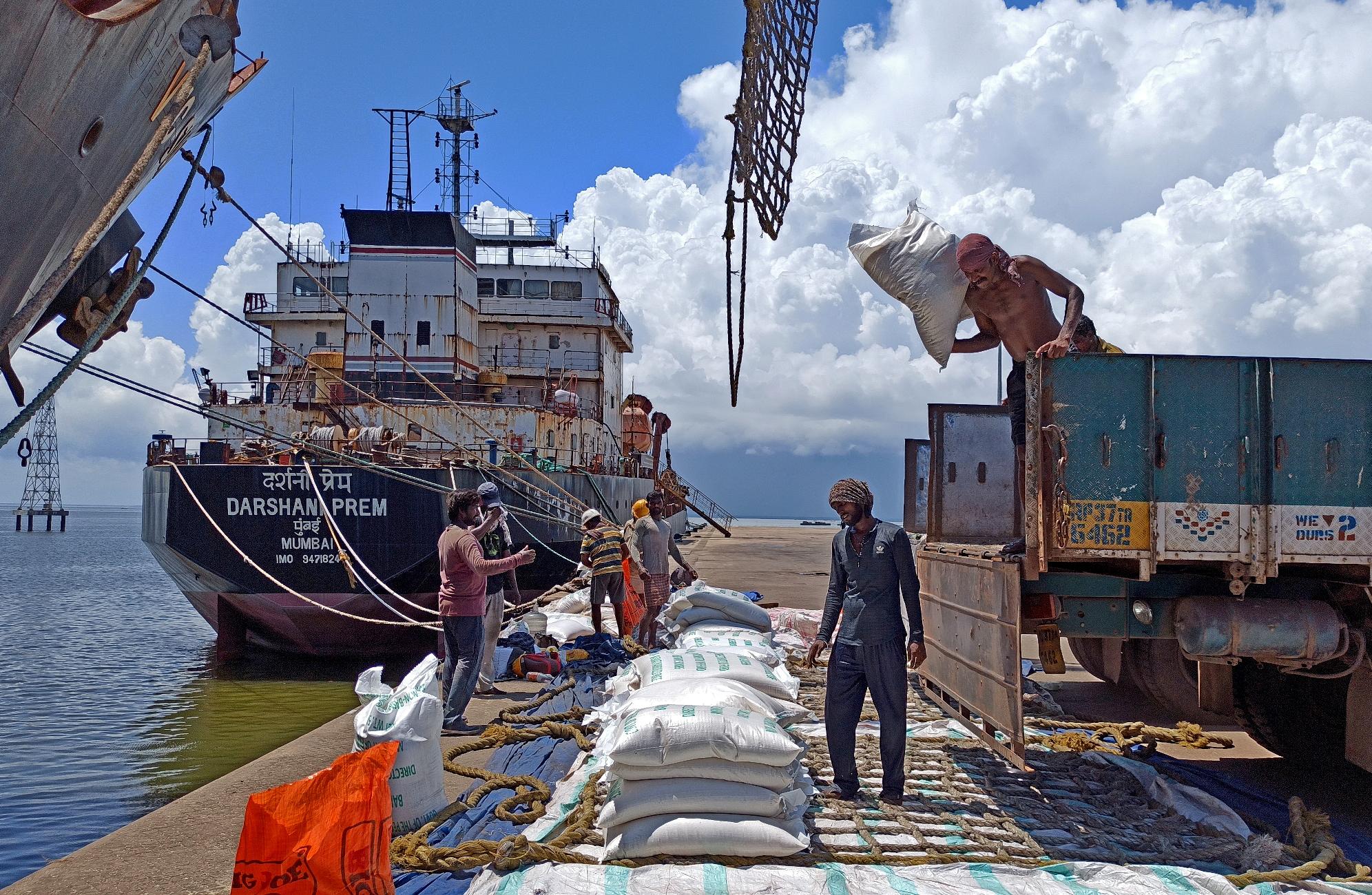
NEW DELHI, Dec 21 (Reuters) - India's exports face a shortfall of about $4 billion to $5 billion this year after it clamped curbs on trade in wheat, rice and sugar, a person familiar with the matter said on Thursday, adding that Red Sea attacks may also hit basmati rice shipments. The world's second-largest producer of wheat, rice and sugar, India has restricted exports of these commodities to rein in rising domestic prices. New Delhi may consider an alternate route along Africa for shipments of basmati rice if attacks by Yemen's Houthi group persist, which could lift prices by about 15% to 20%, the source added. The alternate route may also affect India's exports of the long-grain rice to Egypt and Europe, said the source, who spoke on condition of anonymity, as he was not authorised to speak on the matter. However, India expects growth in exports of other farm commodities to offset the export deficit this year, said Rajesh Agarwal, an additional secretary in the trade ministry. "If we remove agricultural commodities whose exports are controlled, like wheat and rice, exports are growing by over 4%," Agarwal told reporters. "So, despite the shortfall of about $4 billion to $5 billion that we face because of restrictions on sugar, wheat, rice, we should be able to meet last year's export levels," he said. Data from state-run trade body APEDA showed that exports of meat and dairy, cereal preparations, and fruits and vegetables rose between April and November this year. https://www.reuters.com/markets/commodities/indian-trade-curbs-cut-exports-by-4-bln-red-sea-attacks-risk-source-2023-12-21/
2023-12-21 11:28
LONDON, Dec 21 - Sterling was flat against the dollar on Thursday as traders digested the latest snapshot of the UK budget deficit, while Wednesday's cooler-than-expected November inflation print continued to sink in. At 1055 GMT, sterling was unchanged against the dollar at $1.26390. Figures on Thursday showed the budget picture for British Prime Minister Rishi Sunak deteriorating as November's deficit came out wider than expected, though a smaller debt interest bill thanks to slowing inflation could yet restore some of his limited room for pre-election tax cuts. The data follows a key inflation reading on Wednesday that came in well below expectations, prompting market players to bring forward bets on when the Bank of England (BoE) will start cutting interest rates. The CPI print saw the pound plunge 0.715% versus the dollar on Wednesday, clocking its biggest daily fall in almost two months. "The pound continues to suffer, with the UK inflation report helping to bring forward expectations over the Bank of England easing next year," wrote Joshua Mahony, chief market analyst at Scope Markets. "...yesterday’s November inflation report has finally seen markets believe in the ability to swiftly return to the 2%, which looks likely within the next six-months," said Mahony. Last week, the BoE kept rates steady at its final policy meeting for 2023. Market players are betting on around 140 basis points of interest rate cuts by the BoE during 2024 . Elsewhere, a survey on Thursday showed that British businesses became more downbeat about the economic outlook in December, with the biggest monthly decline in confidence in more than a year, adding to signs of a slowdown in the country's economy. https://www.reuters.com/markets/currencies/sterling-steady-traders-mull-deficit-cooling-inflation-2023-12-21/

2023-12-21 11:25
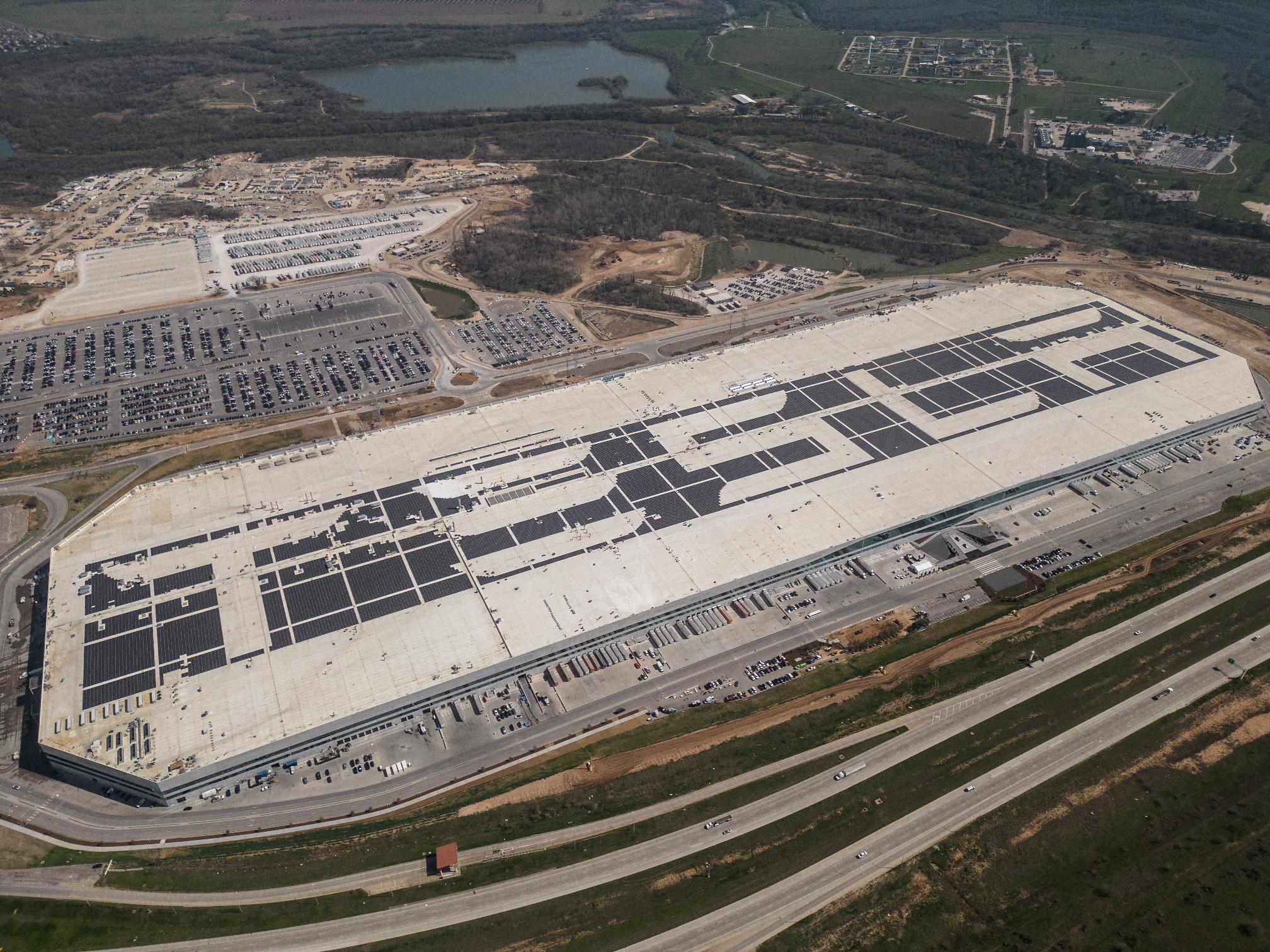
AUSTIN, Texas, Dec 21 (Reuters) - Elon Musk says prototypes are easy, production is hell. And when it comes to the long-awaited Cybertruck, Tesla's hell is its pioneering 4680 battery. Tesla delivered the first of its futuristic stainless steel-plated electric pickups last month and CEO Musk said in October that it would probably hit an annual production rate of a quarter of a million vehicles at some point during 2025. But Tesla is still a long way off that kind of production pace, and one of the main bottlenecks is the speed it can make the 4680 batteries used in the Cybertruck with its new dry-coating technology, nine people familiar with the matter said. Tesla's Giga Texas factory is currently churning out 4680 battery cells at rate only sufficient to power about 24,000 Cybertrucks a year, or about a 10th of the required output, according to Reuters calculations based on a combination of public data and unpublished figures provided by sources. Being able to ramp up battery output massively by dry-coating electrodes - rather than using the slower, more costly wet-coating - was a key factor behind Tesla's forecasts in 2020 that it would more than halve battery costs, cut investment significantly, and create smaller, greener factories. The nine people, who spoke to Reuters on condition of anonymity because of the sensitivity of the matter, said Tesla had yet to crack dry-coating at the industrial scale needed to make 4680 batteries fast enough to hit its production targets. The people said dry-coating the anode in the 4680 cells was not problematic but Tesla was struggling with the same technique for the cathode - the most expensive component in a battery. Dry-coating anodes and cathodes is proven in the laboratory, as well as for smaller energy storage devices such as super capacitors, and even some small batteries, according to Yuan Gao, a battery technology consultant. "But no one has done it so far for large EV batteries at a mass scale and at a high enough speed. Tesla is the first one to try to commercialize this," said Gao, who has worked in the industry for three decades. "The challenge is that not only does Tesla have to scale it up and speed up the process, it also must develop its own equipment and tools. It's daunting to say the least," he said. Tesla did not respond to detailed questions from Reuters for this story. CRACKING THE CODE According to three of the sources, the 4680 batteries in Cybertrucks include an estimated 1,360 individual cells. That means Tesla would need to make 340 million cells a year, or almost a million a day, to supply 250,000 of the electric pickups, which are entering a hot market with rivals such as Ford's (F.N) F-150 Lightning, Rivian's (RIVN.O) R1T and an electric Hummer from General Motors (GM.N). At the moment, Tesla's Austin factory takes about 16 weeks to make 10 million 4680 cells, according to Reuters calculations based on figures from Tesla, verified by the three sources. That translates to 32.5 million cells a year, or enough for just under 24,000 pickups - and that's only for the Cybertruck. Tesla also wants to use 4680 batteries to power other vehicles, most notably the $25,000 small car the company is scrambling to launch by the mid-2020s. Tesla has some limited production capacity for 4680 cells in Fremont, California but its plant there is mainly for pilot production. Panasonic (6752.T), one of Tesla's long-standing battery suppliers, is planning to build at least two plants in the United States but has only just broken ground on the first. Two of the nine people familiar with the matter believe Tesla's progress with scaling up 4680 production will likely gain steam, especially once it achieves stability with the production know-how on one production line. They said Tesla had been focusing on establishing robust know-how to produce batteries without flaws first time round. It's a time-consuming process but, "once you crack the code and establish stability, it is like exponential", one of them said. "Speed would pick up. There is already a lot of traction in dry coating," the person said. Tesla's battery tsar Drew Baglino said in October that the company was now producing 4680 cells on two production lines in Austin and plans to install a total of eight lines there in two phases, with the last four due to be running in late 2024. Still, one of the two people said replicating established know-how from one production line to the next is no cakewalk. The source said only about 5% of cells made on profitable production lines are ditched but scrap rates could shoot up to 30%-50% and hover there for several months as each new line gets going. One of the sources said Tesla's dry-coating method for cathodes was not proving to be any faster than the old wet process, though scrap rates had dropped to as low as 10% to 20%. Baglino did not respond to requests for comment for this story. 'GOOEY MESS' The sources said Tesla was struggling to mix the cathode materials, which include lithium, manganese and nickel, with a binder and stick them to a metallic foil to produce a cathode - without using moisture. Two of the people said the process worked for small amounts but when Tesla tried to scale it up, a lot of heat was generated and this melted the binder, which one of the sources believed was polytetrafluoroethylene, more commonly known as Teflon. "If you melt the glue, pretty soon everything will become one big chunk of gooey mess," another of the sources said. Equally problematic for Tesla are the machines used to coat the metallic foil to produce battery electrodes - equipment which is akin to huge magazine and newspaper printing machines with large rollers, the sources said. To accelerate cell production, Tesla is trying to coat multiple strips of magnetic foil with active battery materials at the same time, and at high speeds. That calls for large, wide rollers, as well as applying tremendous force to press the materials onto the foil. But because the rollers are large and wide, applying pressure evenly is proving to be a challenge, the sources said. And when pressure is not applied evenly, Tesla gets electrodes with uneven surfaces and thickness, which are no use for its battery cells and need to be scrapped, the sources said. Perhaps more problematic, Tesla's Baglino told a fireside chat at a battery conference in March that Tesla was still building a completely new quality verification system so they could weed out cells with flaws in coating. One of the sources with knowledge of the matter, said specifically it was about building data infrastructure around Tesla's battery development, manufacturing and in-field use because in some cases the flaws were hidden in the coating and did not show up for a few months down the road. In other words, Tesla doesn't quite know yet which dry cells are good, and which ones need to be junked, the source said. https://www.reuters.com/business/autos-transportation/austin-we-have-problem-tesla-descends-into-battery-hell-2023-12-21/
2023-12-21 11:08
Dec 20 (Reuters) - Several U.S. allies have said they support efforts to protect shipping in the Red Sea after attacks by Yemen's Iran-backed Houthi group, but some have said they would not join a naval coalition that Washington said it was building for the task. The response has added to confusion for shipping companies, some of which have been rerouting vessels away from the area after the attacks that the Houthi group says it has launched in response to Israel's assault on the Gaza Strip. WHAT HAS THE UNITED STATES ANNOUNCED? U.S. Secretary of Defense Lloyd Austin announced on Tuesday plans to set up a multinational coalition to safeguard Red Sea shipping called Operation Prosperity Guardian. During a trip to the Middle East, he said the operations would be joined by Britain, Bahrain, Canada, France, Italy, the Netherlands, Norway, Seychelles and Spain. WHAT ARE OTHER NATIONS SAYING? - FRANCE France's Defence Ministry said it supported efforts to secure freedom of navigation in the Red Sea and surrounding area and said it already operated in the region. But it said its ships would stay under French command and did not say if it would deploy more naval forces. France has a naval base in the United Arab Emirates and 1,500 troops in Djibouti. Its frigate Languedoc is now in the Red Sea. - ITALY Italy's Defence Ministry said it would send naval frigate Virginio Fasan to the Red Sea to protect its national interests in response to specific requests made by Italian shipowners. It said this was part of its existing operations and was not part of Operation Prosperity Guardian. - SPAIN Spain's Defence Ministry said it would only participate in NATO-led missions or EU-coordinated operations. "We will not participate unilaterally in the Red Sea operation," it said. - BRITAIN Britain said destroyer HMS Diamond would join Operation Prosperity Guardian. Britain's defence ministry said the coalition would operate as part of the U.S.-led CMF. - OTHER COUNTRIES The Netherlands said it would send two staff officers and Norway said it would send 10 naval officers to Bahrain, the headquarters of CMF. WHAT EXISTING NAVAL COALITIONS OPERATE IN THE AREA? Several navies are already part of international operations to protect shipping lanes in the region, including protecting vessels from pirates who for several years disrupted shipping off the coast of Somalia. The missions include: - Operation Atalanta, set up by European Union Naval Force Somalia (EUNAVFOR), operates off the Horn of Africa and in the Western Indian Ocean to support U.N. resolutions to protect the seas from piracy. Its headquarters is in Spain. - Operation Agenor is a European-led operation which aims to guarantee freedom of navigation in the Strait of Hormuz, a major shipping lane for oil exports from Gulf states. - Combined Maritime Forces (CMF) is a multinational maritime partnership led by the U.S. from Bahrain, the based for the U.S. Navy Fifth Fleet. CMF has 39 members, including NATO and European states, regional countries and other nations. One of its missions is the Combined Task Force 153 (CTF 153), which operates in the Red Sea. https://www.reuters.com/world/us-red-sea-taskforce-gets-limited-backing-some-allies-2023-12-20/

2023-12-21 11:07
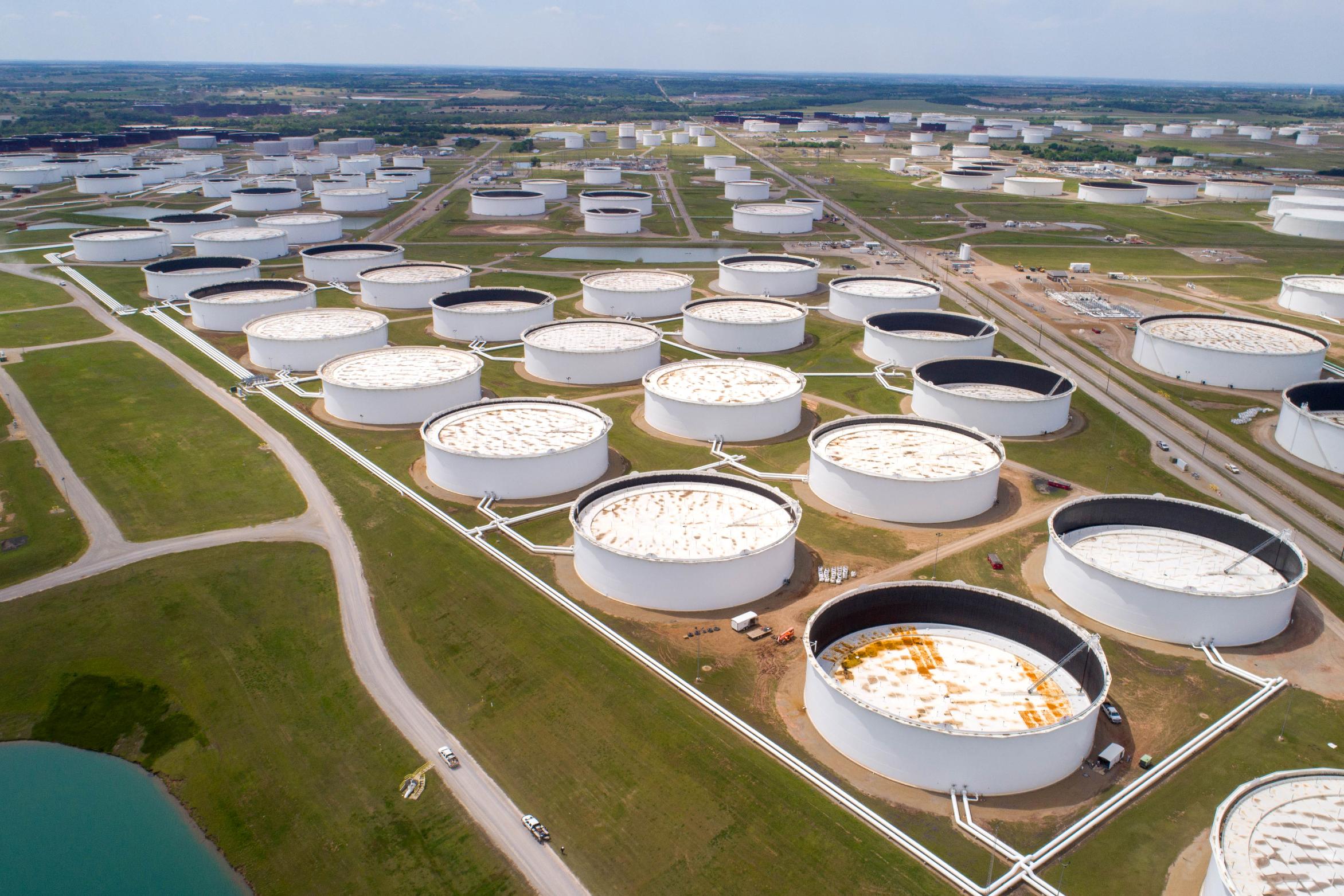
Angola to leave OPEC, says not in its interest to stay U.S. oil output hit 13.3 million bpd last week, EIA says Investors mull possible impact of Red Sea shipping delays NEW YORK, Dec 21 (Reuters) - Oil prices settled lower on Thursday after Angola said it would exit the Organization of the Petroleum Exporting Countries (OPEC), raising questions about the producer group's efforts to support prices by limiting global supplies. Brent crude futures settled down 31 cents at $79.39 a barrel. U.S. West Texas Intermediate crude futures fell 33 cents to $73.89 a barrel. Earlier in the session, both benchmarks were down by more than $1 after Angola said it was planning to leave the group. Angolan oil minister Diamantino Azevedo said the country's membership in OPEC was not serving its interests. The Saudi-led producer group in recent months has been rallying support to deepen output cuts and boost oil prices. "It seems like OPEC is losing the battle to keep prices higher," said Matt Smith of shipping tracking firm Kpler, noting that non-OPEC producers like the U.S. have stepped up to fill the supply gap. Angola produces around 1.1 million barrels per day (bpd), compared with 28 million bpd for the whole group. The country's exit raises questions about the cohesion and direction of OPEC, even though it is one of the smallest producers and its departure may have a limited impact on global supplies, Smith said. At a meeting in November, Angola had protested a decision by OPEC to cut its production quota for 2024 to help prop up oil prices. Separately, the U.S. Energy Information Administration (EIA) said U.S. crude output rose to a record 13.3 million barrels per day (bpd) last week, up from the previous all-time high of 13.2 million barrels per day. "The U.S. is poised to increase production in the Permian Basin and across the country," said Tim Snyder, economist at Matador Economics in Dallas. "We've mitigated price risk here in the U.S. and really put the Russians and the Saudis back on their heels," Snyder said. Recent attacks carried out in support of Palestinians by Yemeni Houthi militant group on vessels headed towards Israeli ports have forced major maritime carriers to steer clear of the Red Sea, causing global trade disruptions. "With such a heavy load of U.S. crude reported in increased measure, one can only assume that the market remains edgy in regard to supply diversion or even hiatus caused by the Houthi attacks on shipping," PVM analyst John Evans said. The conflict between Israel and Hamas intensified on Thursday amid truce talks. https://www.reuters.com/business/energy/brent-near-80-us-output-hits-record-2023-12-21/
2023-12-21 11:05
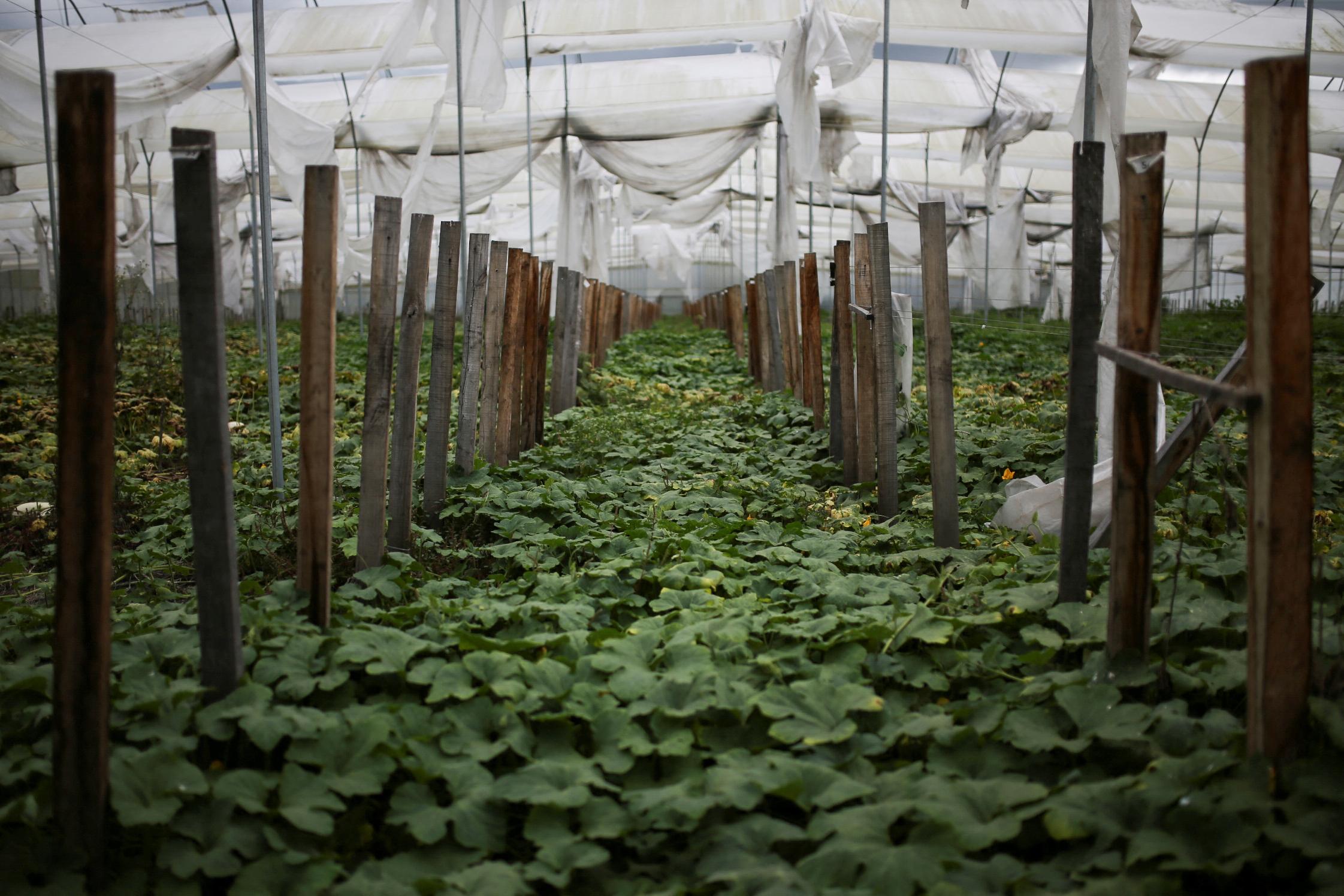
SUBACHOQUE, Colombia, Dec 21 (Reuters) - More than 17 acres of land owned by a Colombian-Canadian company near Bogota were once meant to grow 25 varieties of cannabis, but over the past year weeds have overtaken greenhouses and 200 of its 218 employees have been fired. The company is a victim of long-running problems for Colombia's legal marijuana industry, which attracted huge investment after cannabis was legalized for medicinal use in 2017. At the time, Colombia was one of the first countries in Latin America to pass such legislation and held out the promise of legalizing marijuana sales for recreational use next. Six years later, a number of local cannabis producers are facing closure because of regulatory demands for expensive and years-long studies on medicine composition before products can be sold domestically, say industry players, analysts and the sector's industry association. In addition, a law to legalize recreational use of cannabis failed for the fifth time in Congress last week, and a measure coming into force in February will oblige companies to destroy inventories which are over two years old. "We're going from bad to worse, it's slow agony and the clock is going against us with pressure from partners and without cash flow," said the owner of the Colombian-Canadian company, who asked for anonymity because he is seeking new investment to save his $20 million business set up in 2018. Since cannabis for medical use became legal, the sector has attracted an estimated $500 million in foreign investment, but much of that has not been recouped, according to industry group Asocolcanna. Many investors are from Canada, which was itself in the process of legalizing recreational use of marijuana and was considered a potential destination for Colombian exports. The industry overcame regulatory bottlenecks on exports in 2021, but its fortunes have slumped sharply this year. Some 200 companies shuttered this year, bringing the number of closures to 600 - or nearly 50% of the companies founded since the law legalizing medicinal use passed, according to Asocolcanna. All this comes despite leftist President Gustavo Petro's stated ambition to relax the policy on marijuana, whose domestic consumption is higher than that of Colombia's more infamous drug crop cocaine. Colombian law allows people to grow up to 20 plants and carry up to 20 grams for personal use, though selling marijuana is illegal. Unless the sale of cannabis for recreational use is made legal, the local market will remain in the hands of criminals rather than licensed companies, said Asocolcanna president Camilo de Guzman. INVESTMENTS IN TROUBLE Khiron Life Science (KHRN.V), a company with operations in Colombia that is listed in Toronto, has already shuttered a $15 million medical marijuana plantation and a cosmetics line made with cannabis. It still serves about 5,000 patients in four clinics in Colombia, where it is allowed to distribute personalized cannabis-based medications, but has closed similar clinics in the United Kingdom, Brazil and Peru. Marijuana is not covered by Colombian insurance providers, a huge brake on sales, said Khiron president Alvaro Torres. Several industry executives said they expected more industry-friendly rules - including those needed for insurers to cover marijuana for medicinal use - would follow the 2017 law, but progress has been slow. "If the regulation is achieved, the industry could grow again, the problem is how to hold on until then," Torres said. Khiron's stock was trading at $4.05 Canadian dollars in 2019, but slumped to $0.04 Canadian dollars in May, the last time it was traded. Without a legal domestic market for cannabis, companies operating out of Colombia are limited to pursuing exports, sales from which average $5 million a year, according to government trade organization Procolombia. "It was a mistake not developing a local market before," said Mauricio Krausz, director of Plena Global, which exports to the U.K., Germany, Israel and Australia. "We don't have a local market where we can support cash flow." In response to Reuters' questions, Colombia's food and medicine regulator INVIMA said in most cases, those seeking authorization for medical marijuana products present incomplete documentation. "It is necessary to comply with established legal and technical requirements," it said. The ministries of health, justice and agriculture, which also have a hand in marijuana regulation, did not respond to requests for comment. The Petro government has not detailed why regulation on the marijuana front has been slow, but the troubles echo those of two previous administrations who faced similar issues. ILLEGAL VERSUS LEGAL In the absence of legal cannabis sellers, some in Colombia are making their own cannabis medicines. "We started growing with my grandma to use the flowers for salves," said 28-year-old Camila Sierra, who grows 18 plants to treat her grandmother's chronic pain and sometimes to smoke. Lawmaker Juan Carlos Losada said a bill he sponsored to regulate recreational use was meant to resolve the contradiction between legal personal use and restricted legal sales, but it was rejected this month. Petro, who does not have a majority in Congress, bemoaned the bill's rejection, saying it would only benefit drug traffickers. But some in the industry say the government is not following through on its pledges. Cancelling the inventory destruction requirement would be a start, companies say. "The industry was in intensive care and this government has a very high probability of being its grave digger," said Miguel Samper, a former deputy minister of justice who headed Asocolcanna until recently. https://www.reuters.com/business/healthcare-pharmaceuticals/colombias-cannabis-industry-crisis-over-regulatory-political-hurdles-2023-12-21/