2023-12-20 06:18
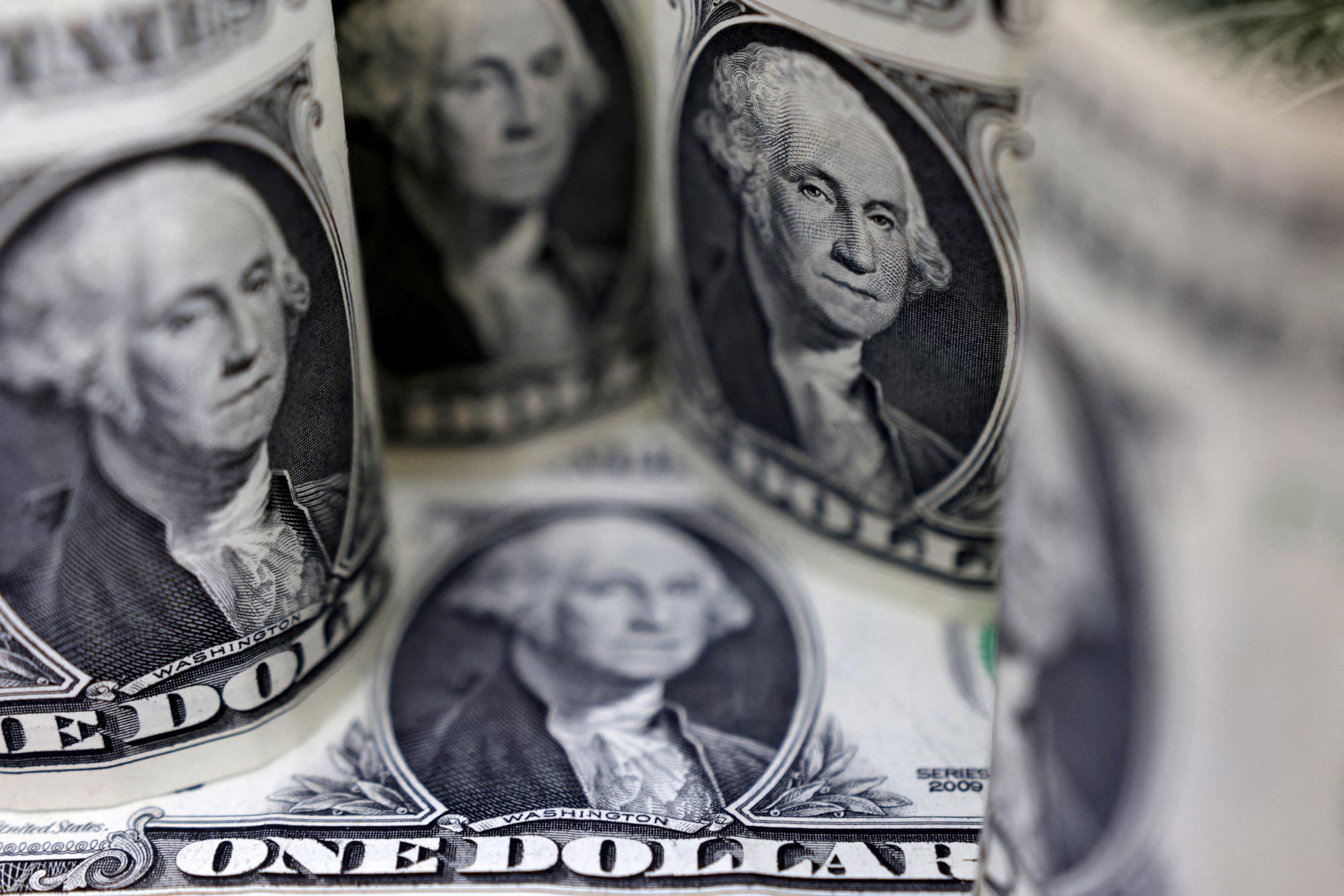
NEW YORK, Dec 29 (Reuters) - The Federal Reserve's dovish December pivot has boosted the case for the weakening dollar to keep falling into 2024, though strength in the U.S. economy could limit the greenback’s decline. After soaring to a two-decade high on the back of the Fed’s rate hikes in 2022, the U.S. currency has been largely range-bound this year on the back of resilient U.S. growth and the central bank's vow to keep borrowing costs elevated. The dollar was on track for a 2% loss this year against a basket of its peers , its first yearly decline since 2020. The December Fed meeting marked an unexpected shift, after Chairman Jerome Powell said the historic monetary policy tightening that brought rates to their highest level in decades was likely over, thanks to cooling inflation. Policymakers now project 75 basis points of cuts next year. Falling rates are generally seen as a headwind for the dollar, making assets in the U.S. currency less attractive to yield-seeking investors. Though strategists had expected the dollar to weaken next year, a faster pace of rate cuts could accelerate the currency's decline. Still, betting on a weaker dollar has been a perilous undertaking in recent years, and some investors are wary of jumping the gun. A U.S. economy that continues to outperform its peers could be one factor presenting an obstacle for bearish investors. The Fed’s aggressive monetary policy tightening, along with post-pandemic policies to boost U.S. growth, "fueled the notion of American exceptionalism and delivered the most powerful dollar rally since the 1980s," said Kit Juckes, chief FX strategist at Societe Generale. With the Fed set to ease policy, "some of those gains should be reversed," he said. FADING STRENGTH? Getting the dollar right is key for analysts and investors, given the U.S. currency's central role in global finance. For the U.S., a weak dollar would make exports more competitive abroad and boost the profits of multinationals by making it cheaper to convert their foreign profits into dollars. About a quarter of S&P 500 companies generate more than 50% of revenues outside the U.S., according to FactSet data. An early December Reuters poll of 71 FX strategists showed expectations for the dollar to fall against G10 currencies in 2024, with the greater part of its decline coming in the second half of the year. Whether they're right may come down to how the U.S. economy performs compared to its global peers next year and the pace at which central banks adjust monetary policy. So far, it's been an uneven picture. In the eurozone, a downturn in business activity deepened in December, according to closely watched surveys that show the bloc’s economy is almost certainly in recession. Still, the European Central Bank has pushed back against rate cut expectations as it remains focused on fighting inflation. The euro is up more than 3% against the dollar this year. The "growth slowdown is more entrenched in other economies," said Thanos Bardas, senior portfolio manager at Neuberger Berman, who is bullish on the dollar over the next 12 months. "For the U.S. it will take a while for growth to slow down." Others, however, see areas of strength, particularly in Asian economies. Paresh Upadhyaya, director of fixed income and currency strategy at Amundi US, says he believes the market is "way too pessimistic" on the outlook for growth in China and India. Accelerating growth could boost the countries' appetite for raw materials, benefiting commodity currencies such as the Australian, New Zealand and Canadian dollars. China will step up policy adjustments to support an economic recovery in 2024, according to state media reports. Jack McIntyre, portfolio manager at Brandywine Global in Philadelphia, is counting on U.S. growth slowing while Chinese growth picks up. He has been selling the dollar to fund the purchase of Asian currencies. "The dollar's bull run is very mature," he said. The International Monetary Fund in October forecast the U.S. economy would grow by 1.5% in 2024, compared to 1.2% for the eurozone and 4.2% for China. Of course, the dollar's trajectory could depend on how much Fed easing and falling inflation is already reflected in its price. Futures tied to the Fed's policy rate show investors factoring in more than 150 basis points in cuts next year, about twice as much as Fed policymakers have penciled in. "If inflation stalls and does not continue to decline that's where the case grows for the Fed to hold off," said Matt Weller, head of market research at StoneX. "That would certainly be a bullish development for the dollar." https://www.reuters.com/markets/currencies/king-dollar-seen-vulnerable-2024-if-fed-pivots-2023-12-20/

2023-12-20 06:03
LONDON, Dec 20 (Reuters) - The last 12 months have been some of the most challenging in the buyout industry's recent history, as private capital fundraising fell to five-year lows and investors became more selective with their money, sector executives and advisers told Reuters. Those pressures are expected to continue in the new year, forcing private capital groups to sell assets so that they can return cash to investors, known as limited partners (LPs), and in some cases make them takeover target for larger rivals. "That will drive some consolidation in the industry and we will also probably see some more exits from portfolio companies, more deal activity in 2024 to show good returns to the LPs," said Anthony Diamandakis, who runs Citi's global asset manager advisory business. Among asset classes, the fundraising slump hit infrastructure the hardest while private debt continues to be among the most popular strategies, accounting for 16% of all capital raised. In terms of deal volumes, this year is on track to be the leanest for the sector since 2013, with $299 billion worth of private equity exits globally so far, according to Dealogic data. Dealmakers expect 2024 to be busier, with interest rates beginning to ease, but the challenges are likely to stay, with borrowing costs still high and the gap between sellers' and buyers' price expectations, though narrowing, persisting. "You will probably see more deployments and exits, but I don't think 2024 will be dramatically different from 2023," said Silvia Oteri, partner at private equity firm Permira. Still, Oteri, who heads up Permira's healthcare team, is more bullish about dealmaking prospects in that sector. Last month, the company joined Blackstone in a $15 billion offer for online classifieds group Adevinta, Europe's largest leveraged buyout this year. NEW WAVE OF CONSOLIDATION During a long spell of rock-bottom borrowing rates, capital raised by private capital funds nearly tripled between 2013 and 2021, when it peaked at almost $1.7 trillion, according to data provider Preqin. Since then, it has slumped by a third to the $1.1 trillion raised by funds globally by early December 2023. Attracting new funds remains a challenge, which along with the need by some to diversify their investment strategies, could bring more consolidation, advisers said. The number of funds closed in the 12 months to early December was the lowest since 2014, although the capital raised was in line with the $1.1 trillion annual average of the last decade, according to Preqin, suggesting greater concentration. "I would say the alternative asset managers space will absolutely consolidate," said Henrik Johnsson, Co-Head of Capital Markets and European Investment Banking at Deutsche Bank. Alternative asset managers offer higher-yielding but less liquid investments, and with less money flowing into private equity, fewer are expected to survive. The reason for the fundraising slump is two-fold. First, as stocks and bonds fell in value due to rising interest rates, private equity and infrastructure became overrepresented in pension fund portfolios, forcing them to reduce their allocation. Secondly, the slowdown in private equity exits made limited partners more reluctant to invest more money. "This market stress has created the recent bifurcation between those consistently strong performers that can command capital, and the rest," said Matthew Keogh, Investment Funds Partner at Linklaters. Among those larger groups that faced challenges in their fundraising recently are Carlyle and Cinven, who were forced to prolong their fundraising or drop their targets this year because of tough market conditions. Last month, U.S investment giant Carlyle Group (CG.O) lowered the target for its latest pan-Asia private equity fund by at least 30% from its original $8.5 billion, people with knowledge of the matter have told Reuters. Cinven has exceeded its fundraising target for its eighth buyout fund only after asking investors for extra time earlier in the year, a person familiar with the plans said. Some have still fared better. CVC, for example, recently closed a record $26 billion buyout fund. Investors in private equity funds are choosing to concentrate their investments with fewer, larger managers, Keogh said. That is leading funds to expand into new areas, such as infrastructure and private credit, in order to draw investors. In September, CVC announced a deal to acquire infrastructure manager DIF Capital Partners. On Monday, French asset manager Tikehau Capital and Japanesse competitor Nikko Asset Management said they were in talks to form a strategic partnership in Asia that will include Nikko taking an equity stake in Tikehau (TKOO.PA). "This trend of consolidation may persist in the foreseeable future, providing opportunities for existing fund managers to strengthen their positions," said Sandra Krusch, Private Equity Lead, Europe West at EY. As the industry matures, alliances help boost efficiency, reach new customer segments or expand into new asset classes, Krusch said. Not all private equity firms feel the same pressure. "It's more for those that are publicly listed because (they) are valued based on their assets under management," said Nikos Stathopoulos, chairman, Europe at buyout group BC Partners, which oversees around 40 billion euros in investments. https://www.reuters.com/markets/deals/golden-age-private-capital-ends-2024-heralds-more-consolidation-2023-12-20/
2023-12-20 05:59
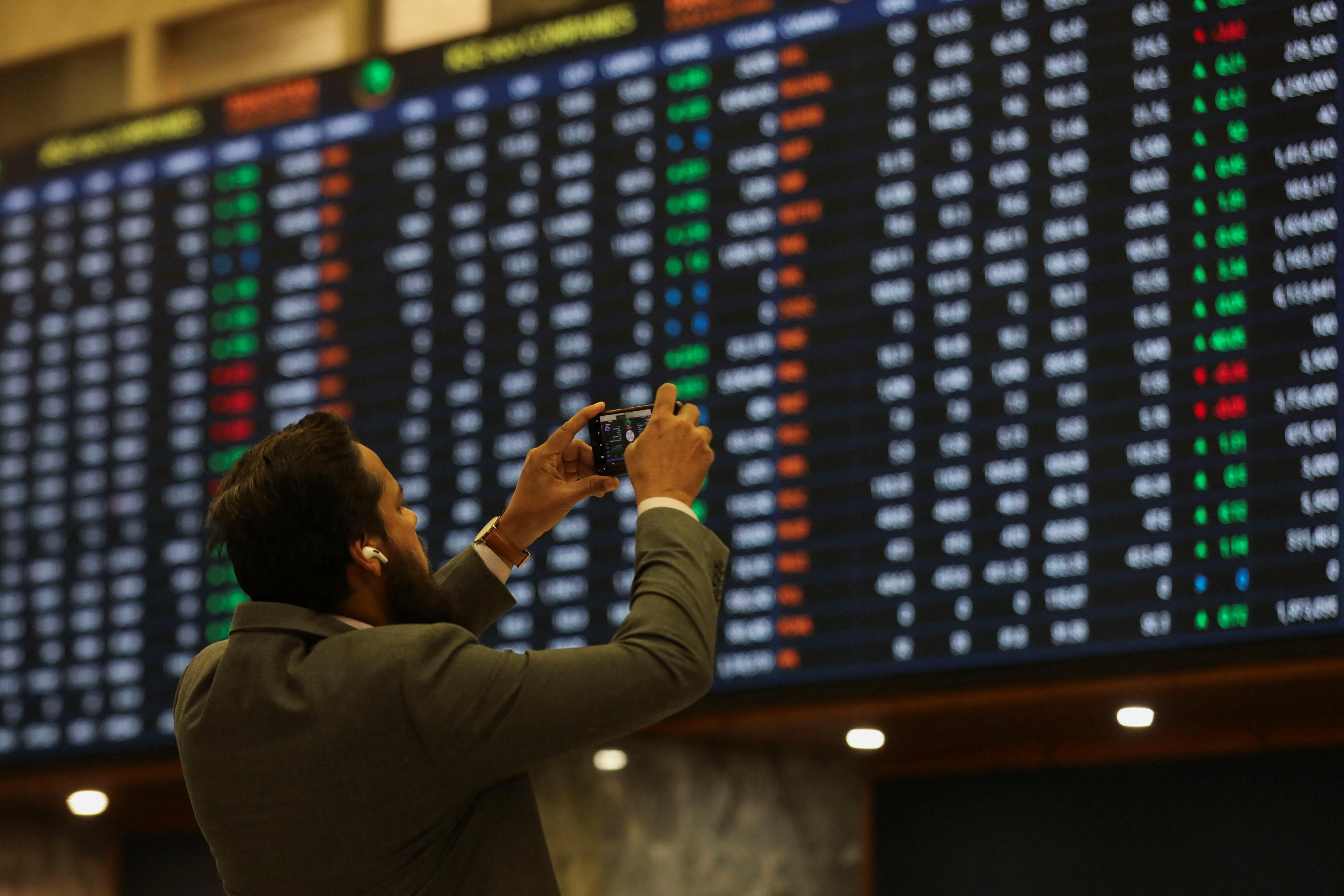
NEW YORK, Dec 20 (Reuters) - MSCI's global equities index fell more than 1% on Wednesday after nine straight days of gains while Treasury yields fell as U.S. economic data beat expectations and UK inflation slowed at a rate that took markets by surprise. Oil prices settled slightly higher after hitting their highest level in nearly three weeks, as traders dealt with worries about disruptions in the Red Sea after Yemen's Iran-aligned Houthi militants stepped up attacks on commercial ships. The dollar rose against other major currencies, while sterling fell sharply after UK inflation plunged in November to its lowest rate in more than two years at 3.9%. That was far lower than the 4.4% economists polled by Reuters had expected, making it less of an outlier globally. U.S. existing home sales rose unexpectedly in November. And, amid optimism about the labor market, the Conference Board said its consumer confidence index increased to 110.7 this month comparing well to economist expectations for 104.0 and November's downwardly revised 101.0. Investors at first reacted positively to the data but the S&P 500 (.SPX) lost steam in afternoon trading, ending the session down 1.5% after coming within 0.4% of its record high reached in January 2022. "There's been a significant amount of complacency. And once you weren't making meaningful inroads to higher highs through lunch today a little bit of selling got us to negative on the day," said Michael James, managing director of equity trading at Wedbush Securities in Los Angeles. "As soon as things went negative, you saw some programs come in and an absence of buyers created an air pocket to the downside," said James. Earlier, Sameer Samana, Senior Global Market Strategist at Wells Fargo Investment Institute in Charlotte had said the data was suggesting that the economy was "headed toward a softish landing," causting the dip in bond yields and investor buying of equities in economically sensitive sectors such as energy. MSCI's gauge of stocks across the globe (.MIWD00000PUS) shed 0.91% after rising earlier in the day. Wednesday's decline snapped a nine-session winning streak for the index. On Wall Street, the Dow Jones Industrial Average (.DJI) fell 475.92 points, or 1.27%, to 37,082, the S&P 500 (.SPX) lost 70.02 points, or 1.47%, to 4,698.35 and the Nasdaq Composite (.IXIC) dropped 225.28 points, or 1.5%, to 14,777.94. In U.S. Treasuries U.S. 10-year Treasury yields fell to an almost five-month month low as government bond yields fell globally after the British inflation data. Benchmark 10-year notes were down 6.7 basis points to 3.855%, from 3.922% late on Tuesday. The 30-year bond was last down 4.7 basis points to yield 3.9889%, from 4.036%. The 2-year note was last was down 9.5 basis points to yield 4.3418%, from 4.437%. In currencies, the dollar strengthened against sterling after the UK inflation data fueled speculation of rate cuts by the Bank of England. Sterling was last trading at $1.2637, down 0.73% on the day. The dollar index rose 0.284%, with the euro down 0.36% to $1.0941. The Japanese yen strengthened 0.19% versus the greenback at 143.56 per dollar, In commodities, global oil benchmark Brent hovered above $80 a barrel amid jitters over global trade disruption and geopolitical tensions in the Middle East following attacks on ships in the Red Sea by Yemen's Iran-aligned Houthi forces. U.S. crude settled up 0.38% at $74.22 per barrel and Brent settled at $79.70, up 0.59% on the day. In precious metals, spot gold dropped 0.4% to $2,031.61 an ounce. U.S. gold futures fell 0.27% to $2,034.50 an ounce. https://www.reuters.com/markets/global-markets-wrapup-1-2023-12-20/
2023-12-20 05:35
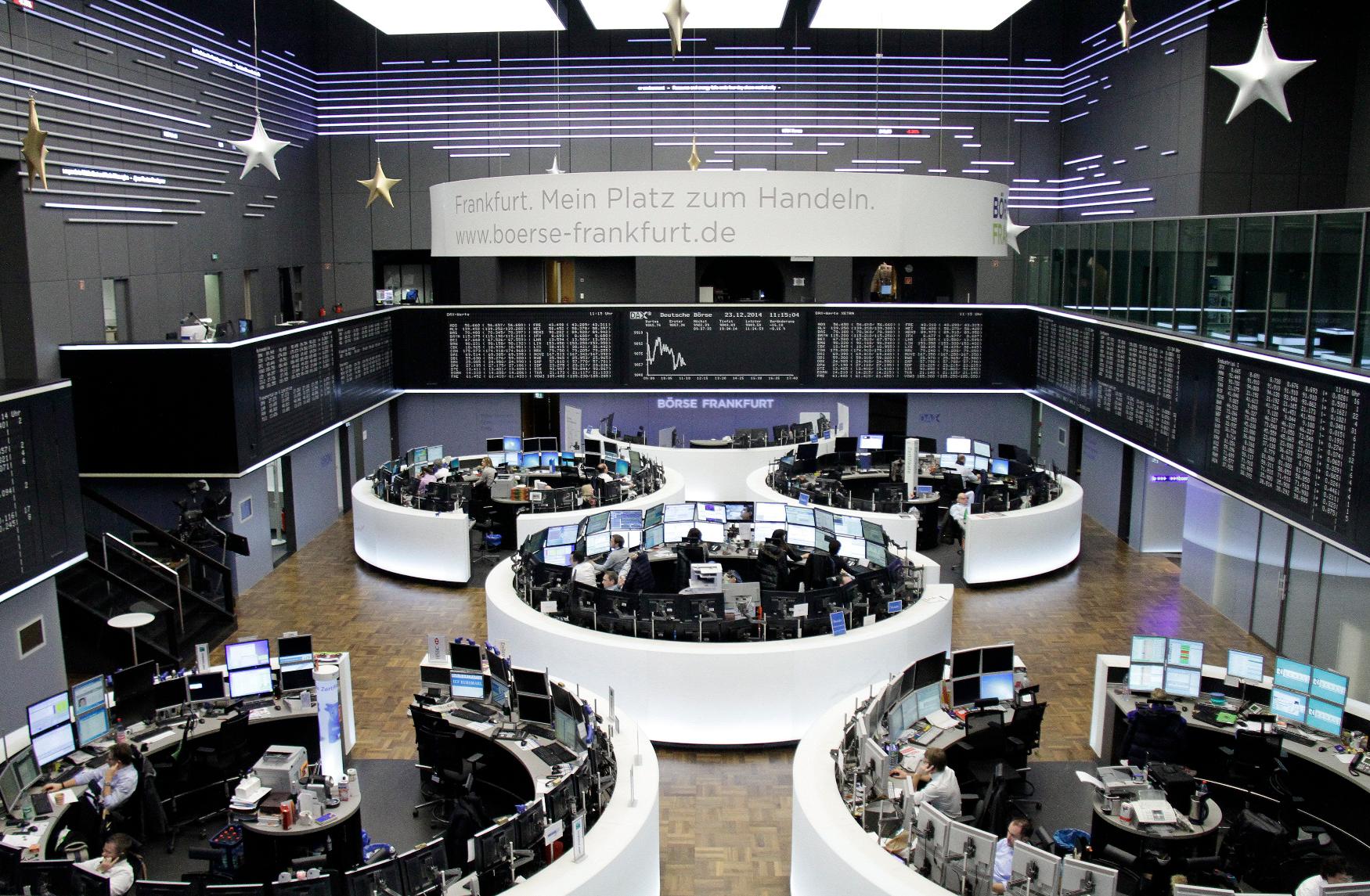
A look at the day ahead in European and global markets from Kevin Buckland Dovish policy signals from opposite sides of the globe kept stocks climbing into Asian trading on Wednesday, boding well for the European open. Bets for an early rate cut from the Federal Reserve continue to build, with Richmond Fed President Thomas Barkin's remark that "we're making good progress on inflation" taken as more fodder for the peak-rates and soft-landing narratives that have sent the Dow and Nasdaq to all-time highs, and the S&P 500 not far behind. Traders now see a better than 3-in-4 chance for a quarter-point rate reduction by March, according to the CME's FedWatch tool, although Chicago Fed boss Austan Goolsbee could again push back against market pricing when the Wall Street Journal airs a podcast interview later on Wednesday. The dollar was languishing near a four-month low - except against the yen, which has been undercut by the Bank of Japan's resolute dovishness in not only keeping uber-easy stimulus in place on Tuesday, but defying yen bulls by retaining its cautious policy guidance. Japanese government bond yields slid to multi-month troughs in Tokyo, while benchmark U.S. Treasury yields continued to bump along near their lowest levels since July. Japan's Nikkei climbed 1.6% as it rode the tailwinds from the U.S. and Japanese central banks to just shy of a 33-year peak. ECB President Christine Lagarde may have warned against complacency last week, but investors seem confident that rate cuts are coming, particularly with the latest data showing a marked easing of price pressures in the euro zone. Indicators to watch in European time include inflation figures from Germany and Britain, while Germany and the euro area will also release readings on consumer confidence. The U.S. follows with its own consumer confidence numbers later in the day, although the main data point will be the Fed's favoured inflation gauge, the PCE deflator, on Friday. Key developments that could influence markets on Wednesday: -Germany GfK consumer sentiment (Jan), producer prices (Nov) -UK CPI (Nov) -Euro zone consumer confidence (Dec) -US consumer confidence (Dec), existing home sales (Nov) (This story has been corrected to fix the date of the PCE deflator to Friday, not Thursday, in paragraph 10) https://www.reuters.com/markets/global-markets-view-europe-2023-12-20/
2023-12-20 05:33
Dec 20 (Reuters) - Ratings agency S&P on Wednesday placed its 'BBB+' long-term issuer credit rating on Nippon Steel Corp (5401.T) on negative credit watch after it clinched a deal to buy U.S. Steel (X.N) for $14.9 billion in cash. The acquisition is likely to result in a significant deterioration in Nippon Steel's financial position because of a sharp increase in debt for investments, the agency added. https://www.reuters.com/markets/commodities/sp-places-nippon-steel-negative-credit-watch-after-us-steel-deal-2023-12-20/

2023-12-20 05:17
Greece advises commercial vessels to avoid Red Sea Positive inflation signals emerge in Europe US domestic crude production reaches new record Dec 20 (Reuters) - Oil prices settled slightly higher after a choppy trading session on Wednesday as investors worried about global trade disruption and tensions in the Middle East following attacks on ships by Yemen's Iran-aligned Houthi forces in the Red Sea. Limiting price gains were a surprise U.S. crude inventory build, larger than expected fuel stocks gains and record domestic oil production. Brent crude futures settled up 47 cents, or 0.6%, at $79.70 a barrel, while U.S. West Texas Intermediate crude settled up 28 cents, or 0.4%, to $74.22 a barrel. Both benchmarks briefly turned negative following the EIA report and the possibility of a new ceasefire after the leader of Hamas paid his first visit to Egypt for more than a month. Early in the session, the benchmarks rose by more than $1 as major maritime carriers chose to steer clear of the Red Sea route, with longer voyages increasing transport and insurance costs. On Wednesday, Greece advised commercial vessels sailing in the Red Sea and the Gulf of Aden to avoid Yemeni waters. Greek ship owners control about 20% of the world's commercial vessels in terms of carrying capacity. "The possibility of a significant price downturn would appear likely on first suggestion of stabilization of cargo transits through the Red Sea corridor," said John Ritterbusch, president of Ritterbusch and Associates LLC in Galena, Illinois. On Tuesday, Washington launched a task force to safeguard commerce in the region. Sources including shipping and maritime security officials told Reuters that few practical details are known about the initiative or whether it will directly engage in the event of further armed attacks. The Houthis vowed to defy the U.S.-led naval mission and to keep targeting Red Sea shipping in support of Palestinian enclave Gaza's ruling Hamas movement. About 12% of world shipping traffic passes up the Red Sea and through the Suez Canal. Although oil supply has been realigned, no shortages have yet emerged, analysts said. "As long as production is not threatened, the market will eventually adjust to changing supply routes," said Ole Hansen, an analyst at Saxo Bank. ECONOMIC GREEN SHOOTS Recent data suggests central bank action to quell sticky inflation in Europe had made a meaningful difference. German producer prices fell more than expected in November, data showed on Wednesday, a day after it was confirmed that euro zone inflation slowed sharply to 2.4% last month on a year-on-year basis. A European Central Bank policymaker cautioned it was "rather unlikely" interest rates would be cut during the first six months of next year. In Britain, inflation plunged in November to its lowest rate in more than two years, strengthening the case for rate cuts. On Tuesday, the U.S. Energy Department said the government bought 2.1 million barrels of crude for delivery in February, as the U.S. continues to replenish reserves. https://www.reuters.com/markets/commodities/oil-prices-edge-up-traders-eye-red-sea-developments-2023-12-20/