2023-12-19 10:13
KAMPALA, Dec 19 (Reuters) - The Ugandan shilling was little-changed on Tuesday, but was forecast to strengthen, fuelled by muted importer dollar demand and healthy inflows from charities, traders said. At 0955 GMT, commercial banks quoted the shilling at 3,762/3,772, compared with Monday's closing rate of 3,765/3,775. https://www.reuters.com/markets/currencies/ugandan-shilling-little-changed-forecast-strengthen-2023-12-19/

2023-12-19 10:09
Dec 19 (Reuters) - BlackRock (BLK.N) has updated its proposed filing for a spot bitcoin exchange-traded fund (ETF) to allow cash redemptions, in a move which could help it secure an approval from the U.S. Securities and Exchange Commission. A spate of filings for spot bitcoin and ether ETFs, including from traditional finance heavyweights, have revived the crypto market this year after a series of meltdowns in 2022. "The Trust issues and redeems baskets on a continuous basis. These transactions will take place in exchange for cash. Subject to the in-kind regulatory approval, these transactions may also take place in exchange for bitcoin," BlackRock's iShares Bitcoin Trust ETF said in a regulatory filing late on Monday. The SEC has so far denied all spot bitcoin ETF applications, citing potential for fraud, but market participants have been hopeful of an approval early next year. BlackRock, the world's largest asset manager, had earlier sought to only redeem baskets to investors in bitcoin or 'in-kind.' A spot crypto ETF would track the market price of the underlying crypto asset, giving investors exposure to the token without buying the currency. https://www.reuters.com/business/finance/blackrock-updates-spot-bitcoin-etf-proposal-allow-cash-redemptions-2023-12-19/

2023-12-19 09:28
TOKYO, Dec 19 (Reuters) - Japan's government upgraded its view on business sentiment for the first time in two months in December as a central bank survey showed broad recovery in the corporate mood thanks to upbeat profits. But the Cabinet Office, in a report on Tuesday, left the overall economic assessment unchanged for the month, saying the economy, the world's third largest, was "recovering moderately although some areas stalled recently". "Business sentiment is improving," said the report, upgrading its previous assessment that it was improving moderately as a whole. The latest report reflected the Bank of Japan's survey last week which showed business confidence at big Japanese manufacturers hit a near two-year high in the three months to December. Big non-manufacturers' sentiment also improved to levels not seen since 1991. "Business mood is improving and corporate profits are also improving, but these have not spilled over to domestic demand such as consumption and investment to raise the overall economic view," said an official at the Cabinet Office. The government retained its view on consumer spending that it was "picking up" for December, sticking to wording it has used since May. Wage growth has not kept pace with inflation while spending on travel and dining out was recovering, the report said. The government reiterated that the recovery in capital investment appeared to have stalled, while industrial production showed signs of picking up. The pace of increase in consumer prices has been moderate recently, the report said, tweaking the wording from last month when it said consumer prices were rising. The latest report came after data showed Japan's economy shrank faster than initially estimated in the third quarter as the household sector faced growing headwinds. Global monetary tightening and concerns over the Chinese economy could be downside risks to Japan's economy, and the government will continue to closely monitor factors such as the Middle East crisis and market volatility, the report said. https://www.reuters.com/markets/asia/japan-ups-assessment-business-mood-holds-view-overall-economy-2023-12-19/

2023-12-19 07:01
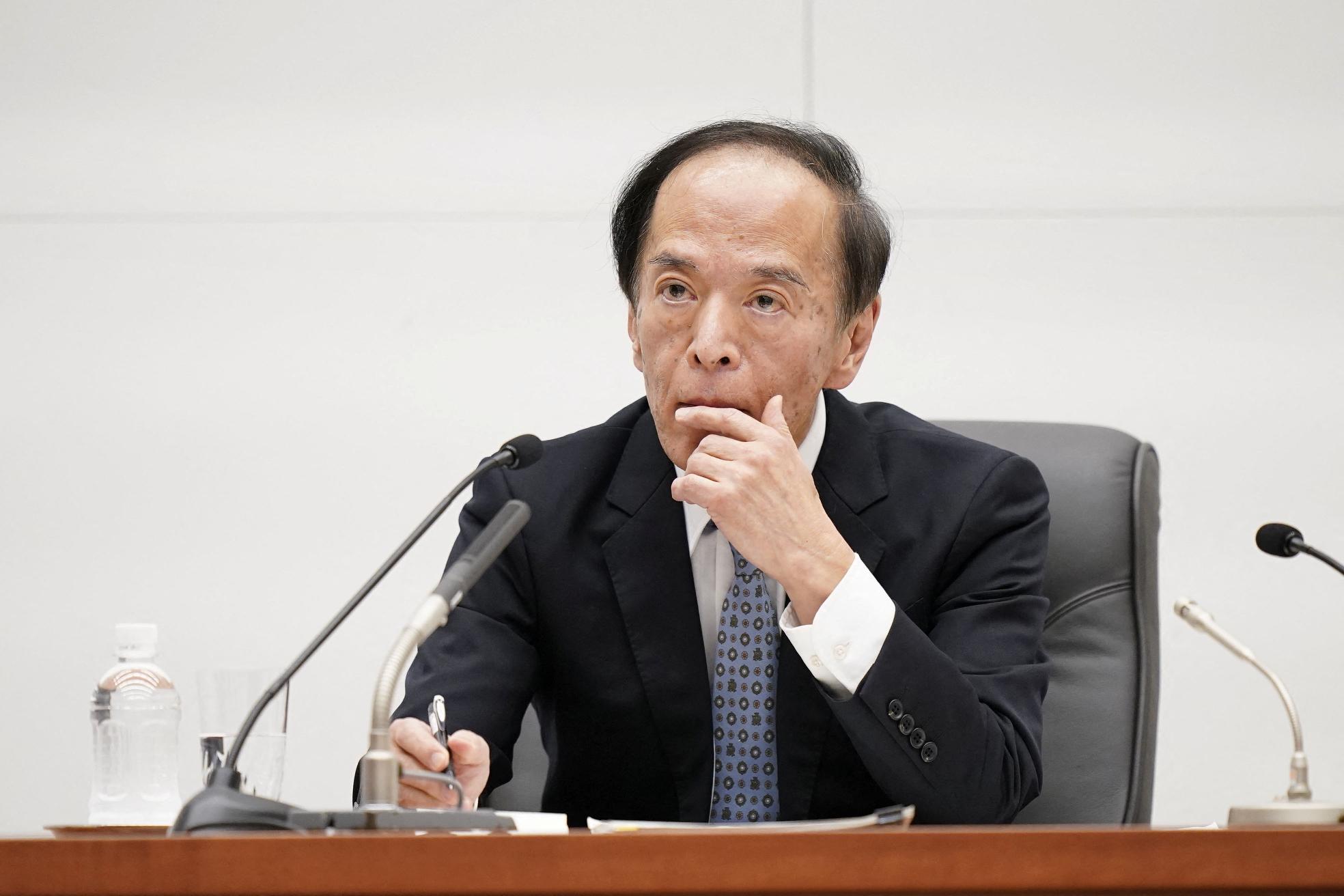
Sept 20 (Reuters) - The Bank of Japan kept interest rates steady on Friday and revised up its assessment on consumption, signalling its confidence a solid economic recovery will allow the central bank to raise interest rates again in coming months. As widely expected, the BOJ kept short-term interest rates steady at 0.25% at a two-day meeting that ended on Friday. Following are excerpts from BOJ Governor Kazuo Ueda's comments at his post-meeting news conference, which was conducted in Japanese, as translated by Reuters: INTEREST RATES "Our decision on monetary policy will depend on economic, price and financial developments at the time. Japan's real interest rates remain extremely low. If our economic and price forecasts are achieved, we will raise interest rates and adjust the degree of monetary support accordingly." ECONOMIC OUTLOOK "The outlook for overseas economic development is highly uncertain. Markets remain unstable. We need to scrutinise such developments carefully for the time being." PRICE TARGET "We will carefully examine how such risks affect our outlook and the likelihood of achieving our price target." EXCHANGE RATE "As for recent exchange-rate developments, the risk of an inflation overshoot from rising import prices has diminished significantly. As such, we have some time to decide on policy." NOMINAL WAGES "Wages must rise in a way that is consistent with sustainably achievement of our price target. Nominal wages are rising, reflecting strong wage negotiation outcome and pushing up income. Bonuses are rising. We expect wages to keep rising." ON WHETHER MARKETS HAVE STABILISED "It's hard to say how long it will take to determine (whether markets have stabilised). We don't have a specific deadline. But one factor we'd like to look at is whether the U.S. economy will achieve a soft landing, or whether the slowdown could be a bit more severe." WAGE NEGOTIATIONS "We are hopeful that next year's wage negotiations will be strong. But we must scrutinise how overseas economic developments could affect corporate activity and profits." BROAD WAGE HIKES "Wage hikes are broadening, but some smaller firms are struggling. We want to carefully scrutinise whether wage hikes will broaden." JAPAN'S ECONOMY ON TRACK "Looking at consumption and other data, Japan's economy is on track and moving in line with our forecasts. We could have even upgraded our view on inflation expectations, based on domestic data. But uncertainty on the U.S. economic outlook has heightened. That is offsetting some of our optimism on inflation expectations." NEUTRAL INTEREST RATE "So far, we have yet to narrow down the estimated level of Japan's neutral rate ... We need to deepen analyses including the impact of our two rate hikes this year." BOTTOM RANGE OF NEUTRAL RATES "We don't have a specific level in mind when we talk about the estimated bottom range of Japan's neutral rate. We won't necessarily go slow when we approach that level. But we will be particularly careful of the impact of our past rate hikes." ON AUGUST INFLATION "It came a bit stronger than expected. Some of it is due to the weak yen effect. Including other one-off factors, quite a bit of these factors will dissipate. On the other hand, service prices are rising in line with our forecast as wages rise. That is putting upward pressure on inflation. We need to take all of these into account comprehensively. We also need to take into account overseas uncertainties and market moves." KEY FACTORS BOJ WILL LOOK OUT FOR IN SETTING POLICY "One is whether wages will rise steadily, including the impact of expected rises in the minimum wage. Another factor is whether companies will keep passing on rising (labour) costs to services prices. The outcome of next year's wage negotiations is key, as well as whether consumption will remain firm." POTENTIAL RISK OF BOJ HIKING RATES "In general, each country sets monetary policy to achieve economic and price stability. As such, there could be cases where the monetary policy cycle could differ from one country to another. It's clear the U.S. has entered a rate-cut cycle. If that leads to the U.S. economy achieving a soft landing, the negative impact on Japan's economy won't be large. But if the U.S. economy faces a more severe adjustment, we might need to alter that view." ON WHETHER BOJ WOULD RULE OUT A RATE HIKE IN OCTOBER "I won't comment in advance whether we will change monetary policy or not in future policy meetings." U.S. SOFT LANDING AS MAIN SCENARIO "We still see U.S. soft landing as our main scenario. But U.S. data since early August has been somewhat weak, so risks have heightened somewhat." UNCERTAINTY OVER GLOBAL ECONOMIC OUTLOOK "As for Japan's economy, it's moving in line with our forecast. But the global economic outlook is uncertain, mainly that of the United States. We've also seen some market volatility. The outlook is uncertain. As such, it's not as if the likelihood (of achieving our price target) has heightened sharply, and warranted raising rates immediately." ON WHETHER BOJ COULD RAISE RATES BY YEAR-END "That decision continues to be data-dependent. We need to look not just at domestic data, but developments in the U.S. economy. We've been scrutinising these already, but need to pay even more attention and make a comprehensive decision." Sign up here. https://www.reuters.com/world/japan/boj-governor-uedas-comments-news-conference-2024-09-20/
2023-12-19 06:59
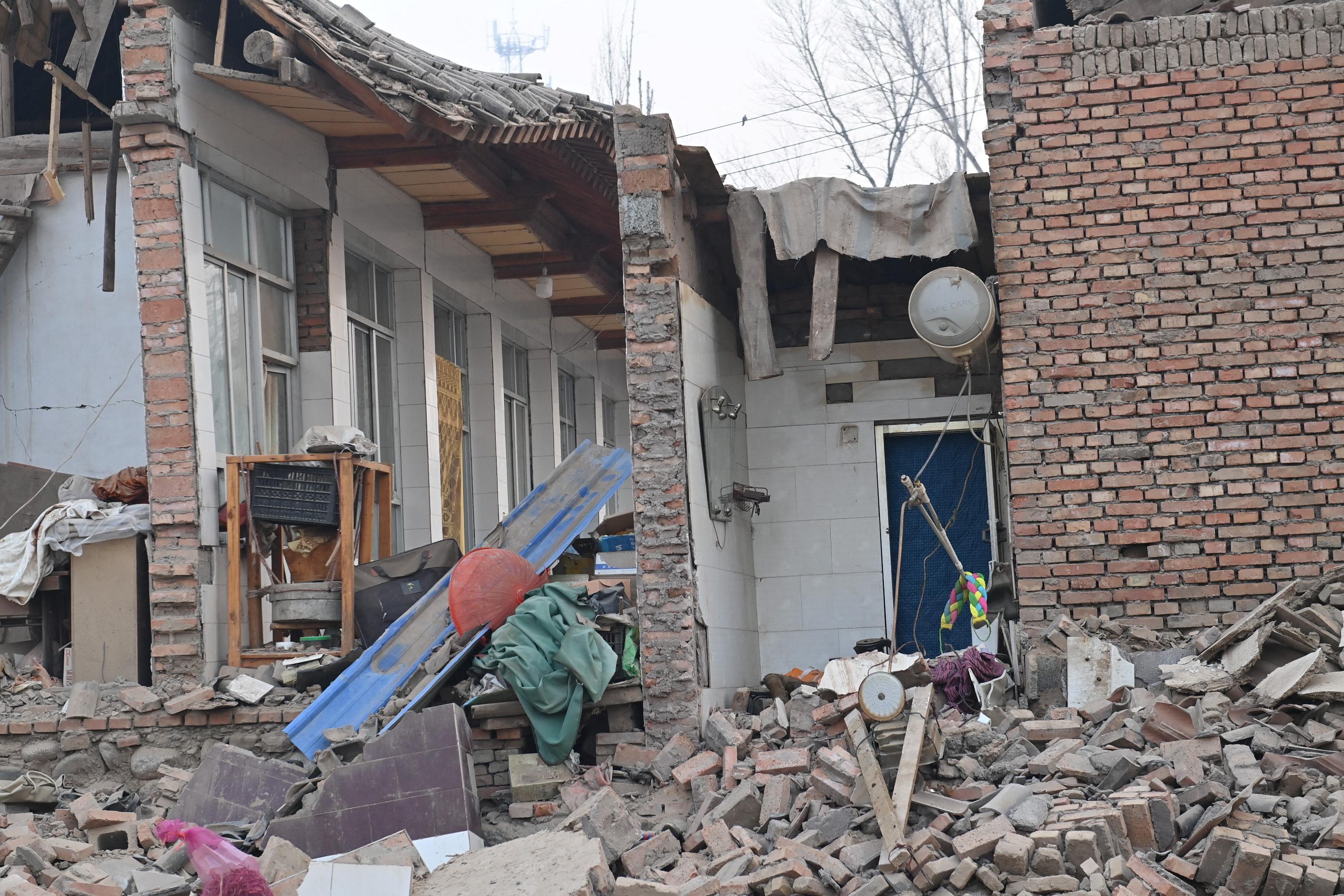
More than 700 injured in quake near midnight, officials say Epicentre was in sub-zero temperatures when quake occurred Cold wave makes rescue work tougher, more urgent More than 155,000 homes damaged or destroyed in Gansu Second quake in Xinjiang reported Tuesday morning BEIJING, Dec 19 (Reuters) - A magnitude-6.2 earthquake struck one of China's poorest regions just before midnight on Monday, killing at least 127 people, injuring hundreds and bringing down mud houses in remote villages that never stood a chance. Chinese state media arriving at the sixth commune of Dahe village, one of the worst-hit areas in China's northwestern Gansu province, found many houses were either at risk of collapse, or had already crumbled to the ground, especially homes built from earth and clay. "I've lived for more than 80 years and had never seen such a big earthquake," said an old man who was being carried out of his damaged home by rescuers. More than 155,000 homes in Gansu were either damaged or destroyed. At 11:59 p.m. (1559 GMT) on Monday, the quake rocked Gansu's Jishishan county, at a depth of 10 km (6.2 miles). The epicentre was 5 km from the provincial border straddling Gansu and Qinghai, where strong tremors were also felt. Authorities have mobilised an array of emergency responses after the quake wrecked roads and infrastructure, triggered landslides, and half buried a village in silt. But rescue work has proved challenging in sub-zero temperatures, after a powerful cold snap swept across the country. Earthquakes are common in provinces such as Gansu, lying on the northeastern boundary of the tectonically active Qinghai-Tibetan plateau. China's deadliest quake in recent decades was in 2008 when one of magnitude-8.0 struck Sichuan, killing nearly 70,000 people. In Gansu, 113 were killed as of 1:00 p.m. Tuesday (0500 GMT), and 536 injured, authorities said. The death tally in Qinghai stood at 14 with 198 injured, as of 4:50 p.m. (1250 GMT). Officially, 20 people remained missing. About 2,200 personnel from the Gansu provincial fire department and 900 from the forest brigade, as well as 260 professional emergency rescue workers, were dispatched to the disaster zone, the Xinhua news agency reported, adding that hundreds from the military and police were also deployed. The province, which has allocated 20 million yuan ($2.8 million) to the local government for the emergency response, also sent supplies that included 2,600 cotton tents, 10,400 folding beds, 10,400 quilts, 10,400 cotton mattresses, and 1,000 sets of stoves. County officials from Jishishan, with a population of about 260,000 people spread across numerous villages and townships, said the local government, lacking resources, had to rely on the provincial government. Gansu is among the poorest provinces in China. RACE AGAINST THE COLD As the disaster area is in a high-altitude region where the weather is cold, rescue efforts are working to prevent secondary disasters caused by factors beyond the quake, Xinhua said. The temperature in Linxia, Gansu, near where the quake occurred, was about minus 14 degrees Celsius (6.8 Fahrenheit) on Tuesday morning. Although the 72 hours after a quake are the most likely time to rescue survivors, that will be shortened by the harsh weather, with trapped victims facing higher risk, it said. Some water, electricity, transportation, communications and other infrastructure have been damaged. Dozens of highways and rural roads were damaged amid multiple landslides, although no casualties were reported. However, a major hydropower dam 50 km from the epicentre was unaffected by the quake. CCTV reported that the dam, on the upper Yellow River, was operating normally. In a village in Qinghai, the quake triggered a mudslide that left many houses half-covered in brown silt. Rescuers have deployed drones, excavators and bulldozers to find and rescue survivors, local media reported. Tremors were felt as far as 1,000 km away in central Henan province, where local media outlets shared videos of furniture swaying in people's homes. Woken up by the quake, residents left their buildings and drove to open areas for safety, local media outlet Jimu reported, showing a photo of people huddled in thick blankets outdoors. Preliminary analysis shows that the quake was a thrust-type rupture, one of three above magnitude 6 to have struck within 200 km of the epicentre since 1900. The state media reported at least 32 aftershocks in the hour after the quake hit. Gansu officials told reporters that the last strong quake of at least magnitude 5.0 to hit within 100 km of the epicentre was in 2019. A total of nine aftershocks at magnitude 3.0 and above were recorded by Tuesday morning, two of which were at least 4.0 in magnitude. About 3,000 km from Jishishan in Xinjiang region, another earthquake struck at 9:46 a.m. (0146 GMT) Tuesday, with a magnitude of about 5.5 and at a depth of 10 km. ($1 = 7.1424 Chinese yuan renminbi) https://www.reuters.com/world/china/magnitude-61-earthquake-strikes-qinghai-china-emsc-2023-12-18/
2023-12-19 06:53
JOHANNESBURG, Dec 19 (Reuters) - The South African rand strengthened on Tuesday against a weaker U.S. dollar, as global market sentiment was buoyed by expectations of interest rate cuts in 2024 and a local leading business cycle indicator came in line with expectations. At 1605 GMT, the rand traded at 18.3200 against the dollar , 1.4% firmer than its previous close. The dollar was last trading down 0.4% against a basket of global currencies, as traders sold the U.S. currency on expectations the Federal Reserve could start cutting rates as early as March. South Africa's composite leading business cycle indicator (ZALEAD=ECI) came in at 112.0 in October, showing a slight improvement from the previous month although it was still down over 3% year-on-year. The indicator collects data on vehicle sales, business confidence, money supply and other factors to gauge the outlook for Africa's most industrialised economy. Analysts at ETM Analytics had said the indicator would likely stabilise month-on-month but still reflect a year-on-year contraction, confirming South Africa remains in an economic downturn. The benchmark 2030 government bond was weaker, with the yield up 8 basis points at 9.730%. Shares on the Johannesburg Stock Exchange rose, as the blue-chip Top-40 index (.JTOPI) closed up 0.7%. https://www.reuters.com/markets/currencies/south-african-rand-weakens-ahead-economic-indicator-2023-12-19/