2023-12-19 06:44
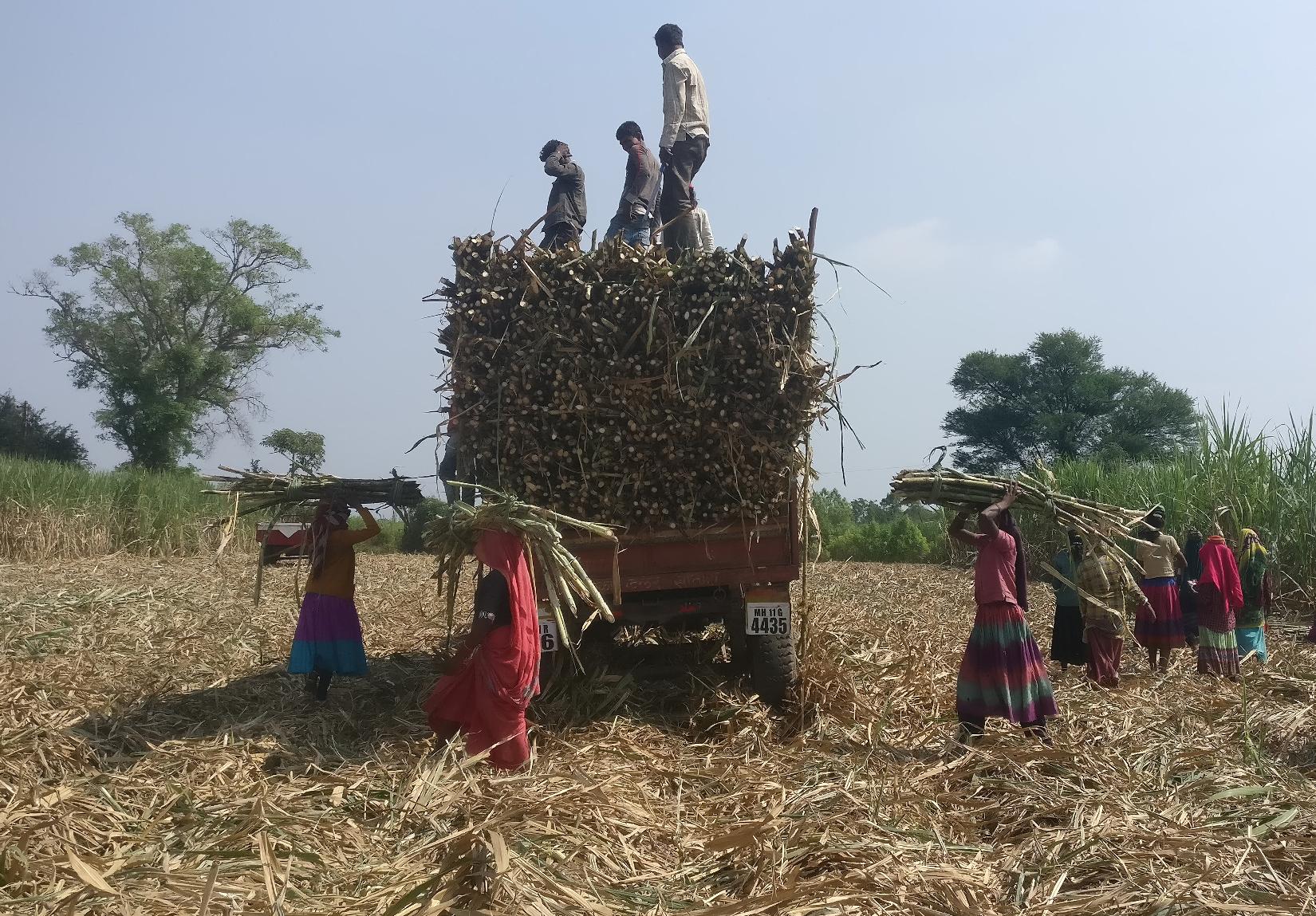
Low yields, lower plantings to hit sugar output Output could fall 12% this crop year - farmer survey Further 8.4% decline seen in 2024/25 crop year SOLAPUR, India, Dec 19 (Reuters) - India's sugar output this crop year, hit by weak rains, is set to lag consumption for the first time in seven years, according to traders and a survey of farmers, and lower plantings may even force the world's No.2 producer to import in the following year. Driven by falling yields in two key producing states, Maharashtra and Karnataka, the sluggish outlook for the crop year that began in October reinforces expectations India will ban sugar exports in 2024. Sugar output could be even lower in the next crop year, which runs to September 2025. Low reservoir levels in Maharashtra and Karnataka, which together produce nearly half of India's sugar, are prompting many farmers to plant crops that need less water and mature faster than cane, such as sorghum and chickpeas, Reuters found in a survey of over 200 farmers. Reuters' calculations based on the survey showed output could fall this crop year and next, in line with traders' internal forecasts. Consumption is expected to rise over the same period. While the survey covers a small sample of farmers in key areas, it shows growing pressures that could force India, which supplies 12% of globally traded sugar, to become a net importer from as early as the first half of 2025, industry insiders told Reuters, in what would be a major reversal. The prospect of this year's crop falling short of forecasts and India being forced to import sugar for the first time since 2017 threatens to drive up global prices , which already hit multi-year highs last month. Top exporter Brazil is likely to be the winner. India's Department of Food and Public Distribution did not respond to a request for comment on the forecasts. India produced 33.1 million metric tons of sugar in the crop year that ended in September, and the Indian Sugar Mills Association said in August net production could fall to 31.7 million tons in the crop year that began in October. Forecasts shared with Reuters from five trading houses are lower, ranging between 29 million and 30 million tons, taking into account India's recent direction to limit diversion of sugar for ethanol production as it tries to boost sugar supplies. "In the past few weeks, we've observed a significant decline in cane yields in Maharashtra and Karnataka," said a dealer at a global trading house, which as a result cut its forecast for the current crop year to 29 million tons. Traders said the following year's output will be even weaker, although precise estimates depend on planting and the summer's rains. Three houses predict a crop in the 25 million to 26.9 million ton range. At the same time, domestic sugar consumption this crop year is expected to rise 5% from a year earlier to around 29.2 million tons due to population growth and rising incomes, said Rahil Shaikh, managing director of MEIR Commodities India. "The cultivated area in Maharashtra and Karnataka is shrinking, potentially leading to India seeking purchases in the global market. However, a lot hinges on planting, as it will determine the amount India might need to import," the dealer said. The firms declined to be named, in line with house policy. 'NO WATER TO PLANT' Cane growing districts in Maharashtra and Karnataka received as little as 56% of normal rainfall as this year's monsoon was the weakest since 2018. El Nino weather made for India's driest August in over a century. "The mills are offering record prices for sugar cane, but I'm stuck because there's no water to plant cane on my four acres," said Ashok Shinde, a farmer from Maharashtra's Solapur district, as he showed the sorghum he planted instead of cane. Solapur farmers depend on the Ujjani dam, which is at just 22% of capacity, compared to its 10-year average of 80%. "The government said it will reserve the water for drinking and won't let it out for irrigation," Shinde said. Other key reservoirs in Maharashtra and Karnataka hold as little as 28% of the 10-year average. Like Shinde, 181 other farmers across 11 cane-producing districts of Maharashtra and another 49 farmers from Karnataka's sugar belt all said they are curtailing cane-growing or abandoning the crop because of water scarcity. Based on their reports of lower yields and smaller planting areas, Reuters calculations found India's net sugar production could fall to 29 million tons this year, dropping to 26.6 million tons next year, with less land under cane cultivation. The figures incorporate expectations that production would rise in Uttar Pradesh, which has better irrigation. REVERSAL India has exported an average of 6.8 million tons of sugar over the past five years, making it the No.2 shipper in that period. It was surpassed last year by Thailand to become No.3. Switching to imports would be painful, with local prices at a sharp discount to world benchmarks. In India, wholesale white sugar trades at around 39,000 rupees ($467.74) per ton, compared to London futures above $610 per ton. Reuters reported in August that India, which is highly sensitive to food inflation, especially with Prime Minister Narendra Modi facing election next year, was likely to ban sugar exports, the first restriction on shipments since 2016. New Delhi has said it will decide on exports once firm production estimates become available, but traders said the likely drop in sugar production below consumption makes it all-but-certain that India will not allow shipments. "Usually, the industry pursues the government to permit exports. However, this year, even industry bodies are not advocating for exports," said a Mumbai-based dealer with a global trading house. As for the prospect of imports, Shaikh of MEIR Commodities said India's preference would be to cut ethanol production and expand output. But a Mumbai-based industry official said that simply reducing ethanol production wouldn't suffice and imports would be necessary to overcome shortages. Farmer Vijayakumar Magdum in Maharashtra's Sangli district, where rainfall was 44% below normal during this year's monsoon, highlighted the pain the sector faces, saying wells dried up in August and wilted his cane crop. "Due to lower yields, we couldn't recover production costs this year," Magdum said. "We lack the necessary water to plant even short-duration sorghum, and planting long-duration cane is out of the question." ($1 = 83.3800 Indian rupees) https://www.reuters.com/markets/commodities/not-so-sweet-india-may-need-import-sugar-planting-wanes-2023-12-19/
2023-12-19 06:38
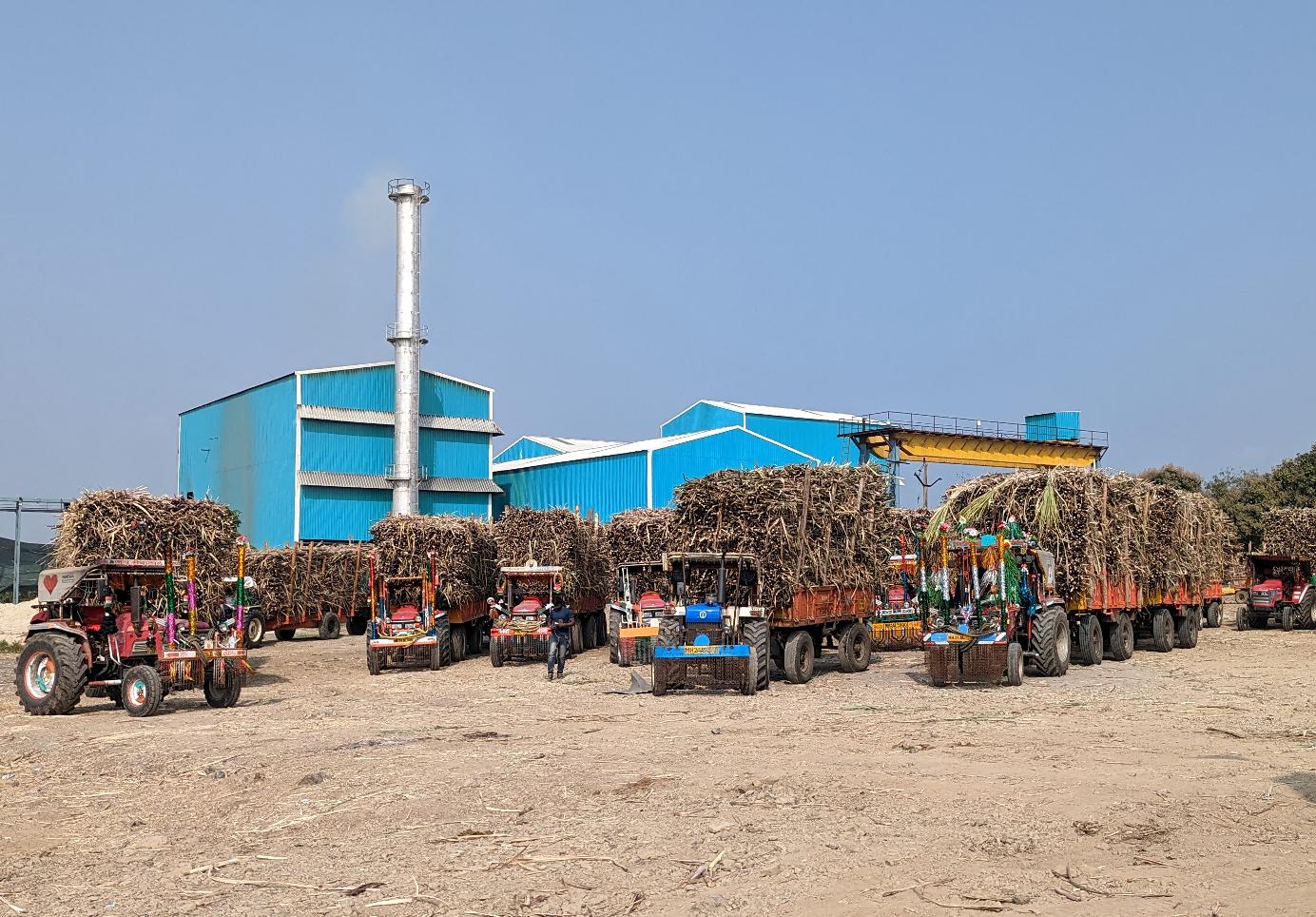
SOLAPUR, India, Dec 19 (Reuters) - India, the No.2 sugar producer, has been a net exporter of the sweetener for the past six years. However, it is set to ban exports in the crop year that started in October and may even be forced to import in the following year as farmers turn to other crops, according to traders, industry officials, and farmer interviews. The production decline is driven by unusually dry conditions, fuelled by El Nino, in the western state of Maharashtra and its neighbour to the south, Karnataka, which along with Uttar Pradesh in the north account for over 80% of Indian sugar output. Reuters spoke with more than 200 farmers during a recent visit to Maharashtra and Karnataka. Here are key details on India's sugar production, as well as Reuters' findings during its trip to key growing areas in the two states: * India produced 33.1 million metric tons of sugar in the year that ended in September, behind only Brazil's expected 46.9 million tons. * India supplies 12% of globally traded sugar. It has exported an average of 6.8 million tons of sugar over the past five years, making it the No.2 shipper in that period. It was surpassed last year by Thailand. * The Indian Sugar Mills Association said in August net production could fall to 31.7 million tons in the year that began in October. * More than 180 farmers from 11 cane-producing districts of Maharashtra and another 49 farmers from Karnataka all told Reuters lower monsoon rainfall during the crucial growth phase stunted crop development. Reuters spoke with at least 10 farmers in each of the districts that account for most production in the two states. India is home to some 50 million sugar farmers. * Reuters calculated the drop in per-acre cane yields and likely drop in the next year’s cane area using an average derived from responses received from farmers scattered across key growing districts, cultivating different kinds of cane varieties. Some varieties mature in 10 months, while others take up to 18 months. * Internal forecasts from five trading houses for this year's output range between 29 million and 30 million tons. Reuters calculations based on farmer interviews found output could drop 12.2% this year to 29.05 million tons. * Output could fall further the following year, with three houses predicting a crop in the 25 million to 26.9 million ton range, also in line with Reuters' calculations for production of 26.6 million tons. * India's sugar consumption is set to hit a record 29.2 million tons this year, rising to roughly 30 million tons the following year, according to traders' forecasts. * In Maharashtra, the lower rainfall led to a 16% average drop in cane yield, with some regions experiencing declines of up to 40%, according to farmers. * A 10% decline in cane area in Maharashtra, according to a government official, coupled with potential diversions for fodder and jaggery-making in 2% of the crop, would lead to a 28% reduction in net sugar production in the state to 7.55 million tons this year, based on Reuters calculations. * Karnataka faces a 13% reduction in cane cultivation area and anticipated yield drops of 25% for the current year, according to the survey of farmers. That indicates a potential decline in sugar production to 3.7 million tons. * However, Uttar Pradesh, with better irrigation, is expected to deliver a 9.7% increase in output to 11.5 million tons this year, rising to 12.4 million tons next year due to lower sucrose diversion for ethanol, according to trade houses. * Farmers across key growing areas of the two states, grappling with water scarcity, told Reuters they plan to either reduce cane cultivation or abandon it totally. * Calculations based on their feedback could result in a potential 32% reduction in Maharashtra's sugarcane area and a 29% decrease in Karnataka's for the marketing year starting October 2024. Several factors, including rainfall in next year's monsoon, will ultimately determine the crop size. * Shrinking planting could slash Maharashtra's production next year to 5.1 million tons and Karnataka's to 2.6 million tons, which would be their lowest since the 2016/17 crop year. * The availability of ratoon crop is also expected to drop as many farmers were forced to uproot the plants because of water scarcity. Ratoon is the cane root stub after the first harvest, which remains in the ground for a second harvest. * Maharashtra mills said that the sugar recovery rate - the amount extracted from cane during milling - is lower than normal due to higher temperatures. The above figures for 2022/23 are from official data and the forecasts for the following two years are calculations based on Reuters' survey of farmers in Maharashtra and Karnataka. The estimates for Uttar Pradesh are based on inputs provided by trade houses. * For the 2023/24 period, the government's recent decision to limit diversion of sugar up to 1.7 million tons for ethanol production has been factored in. ** For 2024/25, it is presumed the government will prohibit ethanol production from B-heavy molasses and cane juice/syrup. https://www.reuters.com/markets/commodities/worlds-no2-sugar-producer-india-may-need-imports-2025-2023-12-19/
2023-12-19 06:30
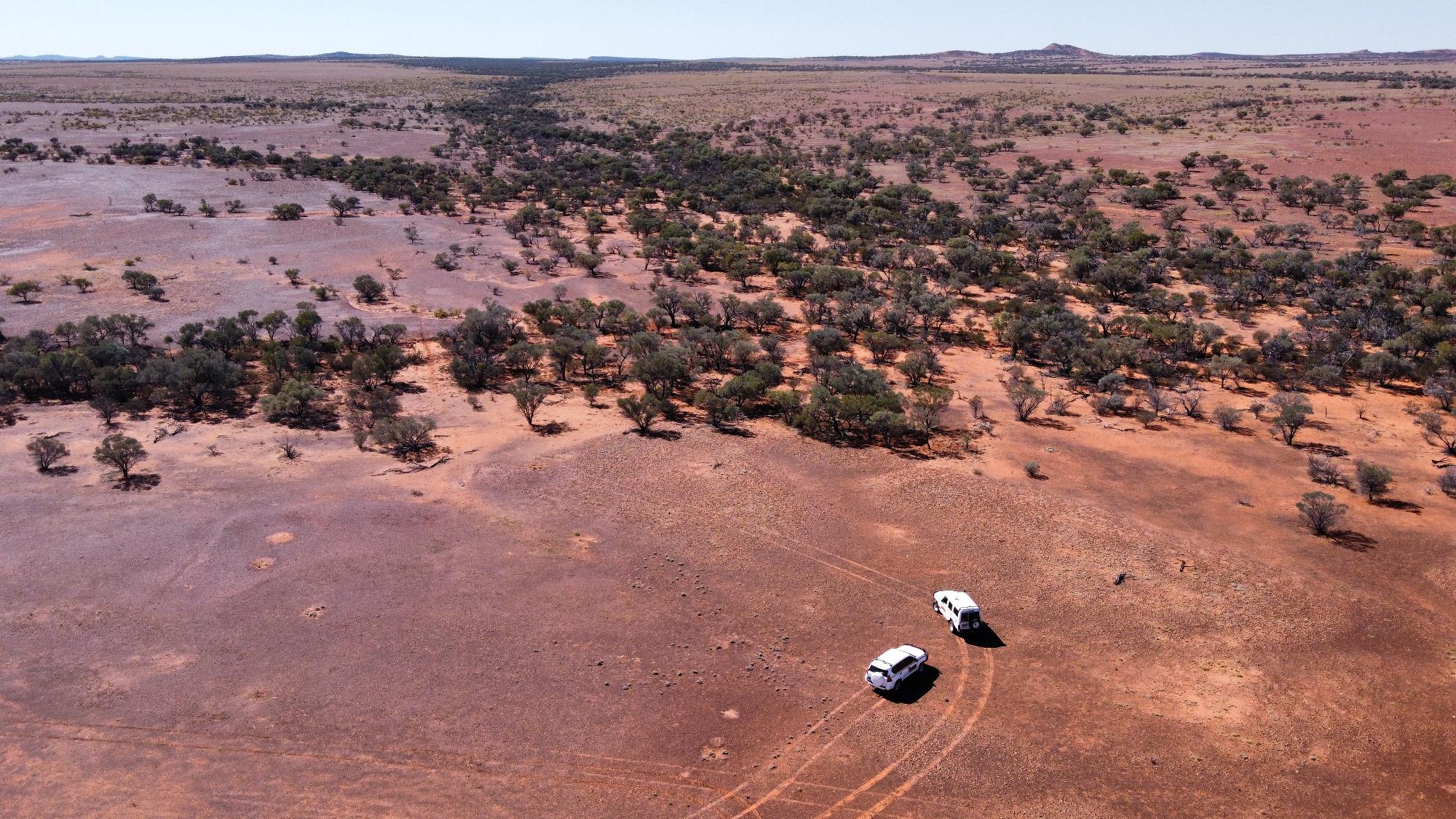
MELBOURNE, Dec 19 (Reuters) - Singapore-based start-up Atomionics has had the first commercial deployment of its technology that uses gravity and artificial intelligence to define ore bodies, potentially cutting costs and speeding up minerals projects key to the energy transition. Atomionics has signed contracts with three major mining companies that are expected to finish their deployments of the "virtual drill" technology called Gravio early next year, CEO Sahil Tapiawala told Reuters. He declined to identify the firms for reasons of commercial confidentiality. Privately held Atomionics is backed by a number of Singapore-based government agencies and strategic investors, including Open AI cofounder Pamela Vagata and climate tech executive Mikhail Zeldovich of Trafigura. Like many exploration technologies, Atomionics taps the gravity signatures of different minerals to pinpoint where they lie beneath the earth. It is able to do so more precisely than typical air-based survey techniques, and processes data in real time using artificial intelligence, speeding up the work of defining ore bodies, Tapiawala said. Drilling a single hole in the search for a mineral can cost from A$10,000 to A$50,000. A lithium miner might need as many as 400 holes to prove up a resource, so building a more accurate virtual picture before drilling can substantially cut costs. "The key challenge is that sometimes (drill holes) don't actually hit the reserve," Tapiawala said. The company aims to cut these "empty" samples by at least half, he added. The mining industry uses various techniques to find minerals, including ground-penetrating radar and aeromagnetic surveys, but no one method guarantees success. KoBold Metals, a California-based startup whose backers include billionaires Bill Gates and Jeff Bezos, is also using AI to search for critical metals such as lithium. Atomionics' first deployment was in Australia's Queensland state to help New Hope (NHC.AX) unit Bridgeport Energy find oil. "The energy industry would traditionally defer to seismic data before undertaking any drilling project," Cameron Fink, exploration manager at Bridgeport Energy, said in a statement. "With further development, Gravio can present as a low-cost alternative to traditional methods of exploration." (This story has been refiled to correct the dateline) https://www.reuters.com/technology/singapores-atomionics-taps-gravity-ai-hunt-critical-minerals-2023-12-19/
2023-12-19 06:17
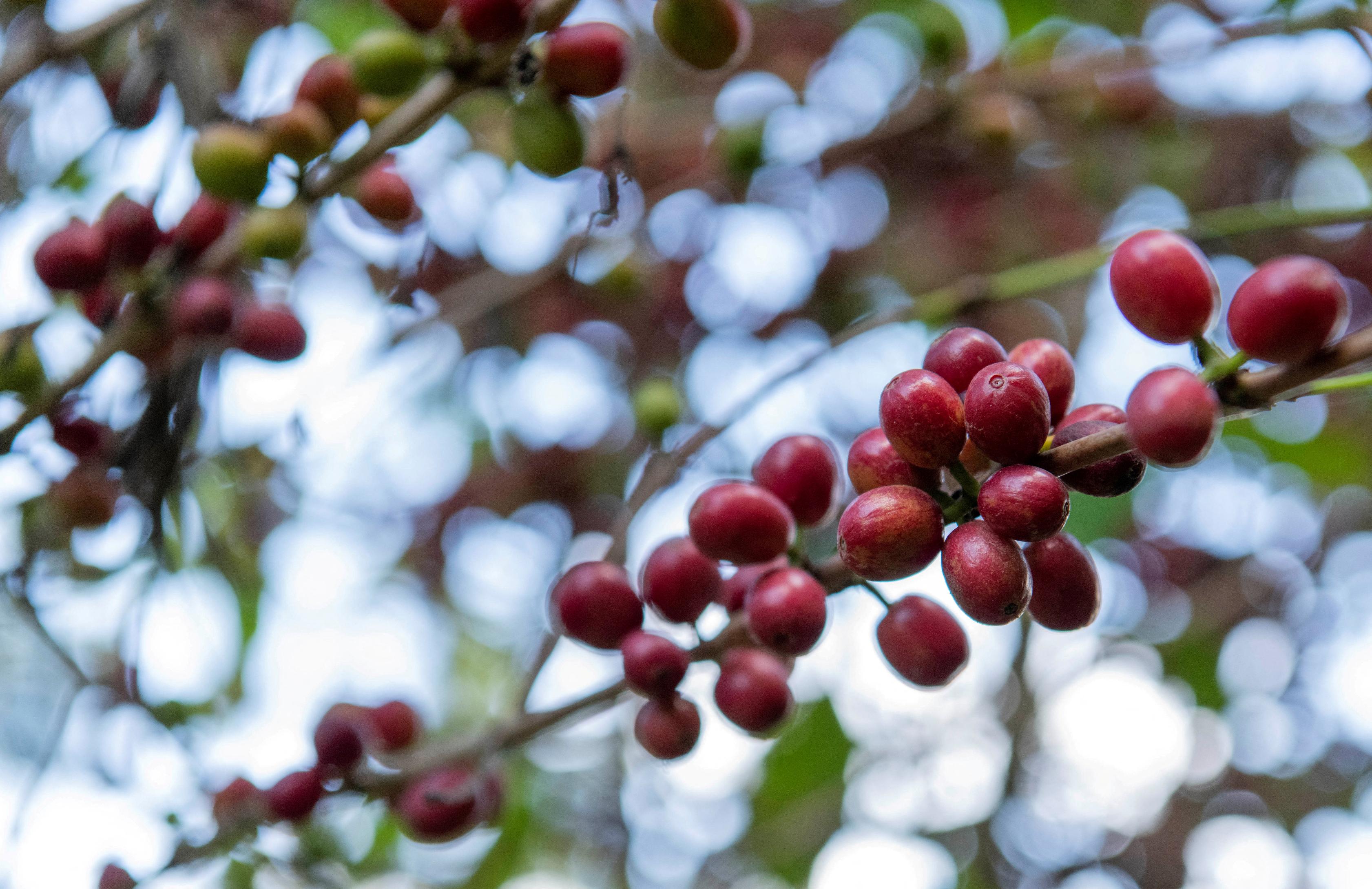
Ethiopian farmers' orders drying up ahead of new law -sources Such unintended impacts could in time reshape commodity markets Law forces firms to prove their imports don't harm forests LONDON/JAKARTA, Dec 19 (Reuters) - Importers of coffee to the European Union are starting to scale back purchases from small farmers in Africa and beyond as they prepare for a landmark EU law that will ban the sale of goods linked to the destruction of forests, a cause of climate change. Industry sources said the cost and difficulty of complying with the EU Deforestation Regulation (EUDR), which comes into force late in 2024, meant it was already having unintended impacts that could in time reshape global commodities markets. Four cited a drying-up of orders in recent months for coffee from Ethiopia, where some 5 million farming families rely on the crop. They warned that sourcing strategies being adopted by companies in advance of the law risk increasing small scale farmer poverty and raising prices for EU consumers, while also undermining the EUDR's impact on forest conservation. "I see no way of buying significant quantities of Ethiopian coffee going forward," said Johannes Dengler, an executive at German roaster Dallmayr, which buys about 1% of the world's exported coffee. Because beans he orders now could find their way into coffee products sold in the bloc in 2025, they must be EUDR-compliant, he said - even though implementing acts for the law have yet to be finalised. Under EUDR, importers of commodities like coffee, cocoa, soy, palm, cattle, timber and rubber - and products that use them - must be able to prove their goods did not originate from deforested land, or face hefty fines. Coffee major JDE Peets (JDEP.AS) said it might be forced to exclude some smaller producing countries from its supply chain as early as March if it hasn't "found and implemented a solution with them" by that date. Deforestation is the second leading cause of climate change after burning of fossil fuels. The European Commission said it has several initiatives to help producing countries and smallholders comply with the EUDR, including one launched at COP28 where the EU and member states pledged 70 million euros ($76 million) to that end. It added that some smallholders see the EUDR as an opportunity, especially if accompanied by EU support measures, as it will help them meet growing global demand for sustainably sourced products. TRACKING AND TRACING The EUDR requires companies to digitally map their supply chains down to the plot where the raw materials were grown, which could potentially involve tracing millions of small farms in remote regions. Moreover, because companies often don't deal directly with farmers, they could be relying in part on data provided by multiple local middlemen, some of whom they also might not deal with directly or trust. In some developing countries, patchy internet coverage makes mapping difficult, while traders and industry experts say land rights disputes, weak law enforcement and clan conflict can make it dangerous to even seek data on farm ownership, "Nowadays from Europe no one is interested in our coffee," a representative from Ethiopia's Oromia Coffee Farmers' Cooperatives Union, told a recent World Coffee Alliance webinar. He said most Ethiopian coffee farmers have never heard of the EUDR and that even educated villagers would struggle to collect the required data in time. Coffee generates 30-35% of Ethiopia's total export earnings, with almost a quarter sold to the EU. "Roasters are moving to big rich Brazilian farmers. It's really shocking," said a trader at one coffee trade major. "In risky countries, there's smallholders and middlemen who are illiterate - and we're coming to them with a law that even Europeans don't understand." SEGREGATED SUPPLY CHAINS But cutting out small-scale farmers or whole countries will not be feasible if they are major commodity producers. Ivory Coast and Ghana, for example, produce nearly 70% of the world's cocoa, while 60% of coffee comes from Brazil and Vietnam. Indonesia and Malaysia grow almost 90% of the world's palm oil, a commodity used in everything from pizza and lipstick to biofuels. As such, some major companies say they will redirect raw materials they cannot reliably trace in those countries to non-EU markets, while sending compliant goods to the EU. Golden Agri Resources , one of the world's largest palm oil companies, told Reuters "segregated supply chains will be required" to implement the EUDR. A source at palm oil major Musim Mas concurred. To the extent this strategy comes to dominate, it would lessen the EUDR's impact on forest conservation because raw materials would still be grown on deforested land, just not for EU consumption. Compliance costs throughout the supply chain are meanwhile expected to raise food prices in the 27-country EU. Two of the world's largest coffee traders, Sucafina and Louis Dreyfus Company (LDC) have already locked in future sales contracts that include an EUDR premium, according to a source at a commodities trade major. LDC and Sucafina declined to comment. The European Commission said the EUDR is not expected to drive food inflation. It noted, for example, that while traceability has a cost, this will likely be offset as the law should reduce the number of intermediaries in the market. SAVING FORESTS? EUDR is a particular challenge in major cocoa-producing countries. Half of Ivory Coast's crop, for example, is sold by local intermediaries and thus difficult to trace. Grown mostly for EU consumption, it cannot be completely redirected to Asia as chocolate is less popular there. But slashing purchases from intermediaries is also tricky, traders say, not least because Ivorian authorities force them to buy 20% of their beans from this local supply chain. "That's where the authorities come in. They have to guarantee that supply, but they're not," said the global head of cocoa at a top global agri-commodities trade house. The problem for Ivory Coast is that 20-30% of its cocoa is grown in protected forests by nearly one million people. Denying them their livelihood could cause social unrest, while relocating them is unfeasible without major funding and support. Abidjan is as a result considering reclassifying its protected forests, sources said, prompting the EU to publicly call on the country to desist. "Where do you relocate the community, with what resources?" said Renske Aarnoudse, senior programme manager for cocoa and forests at the non-profit IDH. She said the EU should accept an Ivorian plan to reclassify as agricultural land some areas where forests are already heavily degraded. "These areas are virtually zero forest by now, and would probably benefit most from conversion to smallholder-owned agroforestry holdings," Aarnoudse said. ($1 = 0.9163 euros) https://www.reuters.com/markets/commodities/coffee-firms-turning-away-africa-eu-deforestation-law-looms-2023-12-19/
2023-12-19 06:14
NEW YORK, Dec 19 (Reuters) - The U.S. dollar rose against the yen on Tuesday after the Bank of Japan gave no sign that its ultra-loose monetary policy was set to end, but expectations for interest rate cuts next year continued to weigh against the greenback more broadly. The Bank of Japan maintained its ultra-loose policy settings as expected, as it opted to await more evidence on whether wages and prices would rise enough to justify a shift away from massive monetary stimulus. The central bank also made no change to its dovish policy guidance, dashing hopes among some traders it would tweak the language to signal a near-term end to negative interest rates. "Traders are pulling back on a move into positive rate territory from the Bank of Japan into early new year," said Karl Schamotta, chief market strategist at Corpay in Toronto. "There was no hint in the press conference or in the statement that policymakers are ready to move rates up dramatically," Schamotta said. The dollar was 0.79% higher against the yen at 143.925 yen. Through Monday, the dollar had retreated about 3.7% against the yen this month, hurt by broad dollar weakness and also as traders stepped up yen-buying on speculation of a BOJ policy shift. Meanwhile the dollar continued to struggle against most majors as traders sold the U.S. currency on expectations that the Federal Reserve is about to start cutting rates as early as March. While Fed officials have pushed back against market expectations of how soon the Federal Open Market Committee (FOMC) could cut rates, those comments have done little to sway market pricing and stem the greenback's decline. "We're going to maybe see a little bit of a rocky start to the year where people are going to try to sell dollars just on Fed expectations and as the Bank of England and ECB remain somewhat in the higher-for-longer camp, and EM assets continue to rally," Brad Bechtel, global head of FX at Jefferies in New York. But the relative strength of the U.S. economy should insulate the dollar from further pronounced weakness, he said. "In the U.S., maybe we slow a bit, but we don't go into recession. That's actually still pretty dollar positive," Bechtel said. The dollar index , which measures the currency's strength against a basket of six rivals, was 0.30 % lower at 102.18 . The index has dipped 1.5% over the last week. Chicago Fed President Austan Goolsbee on Monday said the Fed was not pre-committing to cutting rates soon or swiftly, and the jump in market expectations that it will do so was at odds with how the U.S. central bank functions. A reading on the core Personal Consumption Expenditures (PCE) price index - the Fed's preferred measure of underlying inflation - is due this week, and may provide clarity on whether inflation has slowed enough for the Fed to begin easing policy next year. The risk-sensitive Australian and New Zealand dollars sat around their highest in nearly five months, further beneficiaries of the softening dollar. The Aussie was 0.78 % higher at $ 0.6757 , its highest since late July. Minutes from the Reserve Bank of Australia's December policy meeting showed on Tuesday that the bank considered hiking rates, but decided there were enough encouraging signs on inflation to pause for more data.The kiwi rose 0.85% to 0.62645. The Canadian dollar strengthened to a four-and-a-half-month high against its U.S. counterpart as investors reduced bets on an early start to Bank of Canada interest rate cuts after domestic data showed inflation holding steady in November. The pound rose 0.56%, helped by the dollar's broad weakness and as investors increasingly talked up sterling as a hot prospect for next year. In cryptocurrencies, Bitcoin was about flat on the day at $42,365. https://www.reuters.com/markets/currencies/yen-awaits-critical-boj-outcome-dollar-adrift-2023-12-19/

2023-12-19 06:08
New York, Dec 19 (Reuters) - The U.S. dollar rose against the yen on Tuesday after the Bank of Japan kept rates steady while MSCI's global stock index was gaining ground as investors focused on the prospect of U.S. interest rate cuts in 2024. The S&P 500 (.SPX) rose to within one percentage point of its all-time closing high reached in January of 2022. MSCI's gauge of stocks across the globe (.MIWD00000PUS) touched its highest level since late March 2022. Meanwhile oil futures extended the previous session's gains after attacks by Yemen's Iran-aligned Houthi militants on ships in the Red Sea disrupted maritime trade and forced companies to reroute their vessels. The yen lost ground after the Bank of Japan kept its ultra-low interest rates unchanged and maintained its dovish policy guidance, dashing some traders' hopes it would signal a near-term end to negative interest rates. U.S. Treasury yields edged lower but held above multi-month lows reached last week as investors continued to monitor comments from Federal Reserve officials for indications on when the U.S. central bank is likely to begin cutting interest rates. Treasury yields have fallen since Fed Chair Jerome Powell took an unexpectedly dovish tone on Wednesday. But the stock market has paid little attention even as several other speakers tried to dampen expectations of rate cuts. Atlanta Fed President Raphael Bostic said there was no "urgency" for rate cuts given the strength of the U.S. economy and the need to ensure inflation returns to the 2% target. "Ever since Powell did a pivot people have been in a buying mood. Prior to Wednesday Powell had been a little negative, saying we're not even thinking about thinking about rate cuts," said Chris Zaccarelli, Chief Investment Officer, Independent Advisor Alliance, Charlotte, North Carolina. "The market heard what they wanted to hear from Powell and they're not really listening to what to rest of the Fed speakers are saying," he added. On Wall Street, the Dow Jones Industrial Average (.DJI) rose 251.9 points, or 0.68%, to 37,557.92, the S&P 500 (.SPX) gained 27.81 points, or 0.59%, to 4,768.37 and the Nasdaq Composite (.IXIC) added 98.03 points, or 0.66%, to 15,003.22. MSCI's global index rose 0.63% on the day and has gained almost 15% since late October. Earlier on Tuesday the pan-European STOXX 600 index (.STOXX) closed up 0.36% after European Central Bank member Francois Villeroy de Galhau said interest rates should be lowered in 2024 and that inflation should return to the ECB's 2% target by 2025 at the latest. At the central bank's meeting last week, ECB President Christina Lagarde had pushed back against market bets on imminent rate cuts, but markets were not convinced. In U.S. Treasuries, benchmark 10-year notes were down 2.3 basis points to 3.933%, from 3.956% late on Monday. The 30-year bond was last down 2.6 basis points to yield 4.0428% while the 2-year note was last was down 1.8 basis points to yield 4.4394%. In currencies, while the U.S. dollar gained against the yen, it was broadly softer against other majors, weighed down by expectations for interest rate cuts next year. The Japanese yen weakened 0.79% to 143.90 per dollar, while the dollar index , which measures the greenback against a basket of major currencies, fell 0.33%. The euro rose 0.5% to $1.0977 while Sterling was last trading at $1.2721, up 0.62% on the day. Oil prices rose amid the Red Sea turmoil. The United States announced creation of a task force to safeguard Red Sea commerce while Houthis vowed to defy the U.S.-led naval mission and keep hitting Israeli targets in the region. U.S. crude settled up 1.34% at $73.44 per barrel and Brent finished the session at $79.23, up 1.64%. In precious metals, gold prices firmed as U.S. dollar and Treasury yields slipped, while investors strapped in for U.S. economic data due this week that could provide more clarity on the Fed's interest rate path. Spot gold added 0.6% to $2,039.67 an ounce. U.S. gold futures gained 0.81% to $2,038.40 an ounce. https://www.reuters.com/markets/global-markets-wrapup-1-2023-12-19/