2023-12-19 05:59
Brent, WTI futures rise over 1% to highest since Dec. 1 U.S. launches multinational push to safeguard Red Sea commerce Disruptions raise geopolitical risk premium in oil prices U.S. crude, fuel stocks rose last week - sources citing API data BENGALURU, Dec 19 (Reuters) - Oil prices rose more than a dollar a barrel on Tuesday, extending the previous session's gains after attacks by Yemen's Iran-aligned Houthi militants on ships in the Red Sea disrupted maritime trade and forced more companies to reroute vessels. Brent crude futures rose $1.28, or 1.6%, to settle at $79.23 a barrel, the highest since Dec. 1. U.S. West Texas Intermediate crude futures for January delivery , which expired after settlement on Tuesday, rose 97 cents, or 1.3%, to settle at $73.44 a barrel, also the highest in over two weeks. The U.S. on Tuesday announced the creation of a task force to safeguard Red Sea commerce from attacks by Iran-backed Yemeni militants. The Houthis have vowed to defy the U.S.-led naval mission and keep hitting Israeli targets in the region. "How long this will go on for is also an unknown, unnerving the market," said Fiona Cincotta, senior analyst at City Index. "Despite the launch of the operation to ensure safe passage through the Red Sea major shipping firms are still steering clear." On Monday, oil prices rose nearly 2% after a Norwegian-owned vessel was attacked and BP (BP.L) said it had paused all transit through the Red Sea. A number of other shippers have since made similar announcements. About 12% of world shipping traffic passes up the Red Sea and through the Suez Canal. "The events in the Red Sea are increasing geopolitical risk," said Rob Thummel, managing director at Kansas-based energy investment firm Tortoise Capital. "This is causing oil prices to move higher as traders assess the potential for a supply disruption tied to increasing geopolitical risk," Thummel added. Though the attacks on shipping have boosted the risk premium, other analysts said impacts to oil supply are currently limited. "For now the impact is limited as oil keeps flowing, just with longer journeys translating in higher transportation costs," UBS analyst Giovanni Staunovo said. Goldman Sachs analysts also said the disruption was unlikely to have a large effect on crude and liquefied natural gas (LNG) prices because opportunities to reroute vessels suggest production should not be directly affected. Also in focus this week is the latest snapshot of U.S. supplies. The first of the week's two supply reports from the American Petroleum Institute shows an increase in U.S. crude oil and fuel inventories, sources said. Analysts polled by Reuters expect to see a decline in U.S. crude oil inventories last week. The U.S. Energy Information Administration (EIA) will publish official U.S. stocks data at 10:30 a.m. ET on Wednesday. https://www.reuters.com/markets/commodities/oil-prices-extend-gains-red-sea-attacks-disrupt-supply-chains-2023-12-19/

2023-12-19 05:34
EZ govt bonds return 6.5%, Italy best performer Investors favour euro zone over U.S. bonds UK govt bonds may face more issuance pressure Dec 19 (Reuters) - For investors who braved their 'bonds are back' call in a turbulent year, euro zone debt was the big winner and a souring economy with tighter purse strings mean its allure will continue in 2024. The euro zone government bond market, worth roughly $10-trillion, is set to return 6.5% this year, leading a rebound from two years of negative global bond returns as inflation soared. The market has sharply outperformed U.S. Treasuries, up 3.5% this year, and UK gilts, up 2.4%, according to ICE BofA indexes. Italian bonds, at the epicentre of worries around the impact of record-paced interest rate hikes, returned nearly 9%. For some, that's just the beginning. "We are now taking most of our really big bullish bond views via Europe, because that's where the growth picture is really so weak," said Mike Riddell, senior portfolio manager at Allianz Global Investors, who has shifted out of the United States and Canada into Europe. Inflation in the euro zone is easing fast and a year-end recession looms. The bloc is tipped to grow just 0.6% next year, half the rate of the United States, according to Reuters polling, boosting the case for safe-haven German bonds. A 60-billion-euro blow to Germany's budget by its constitutional court could crimp next year's growth by up to 0.5%, as Berlin cuts spending to return to a 'debt brake' limiting new borrowing. TIGHTER FISCAL POLICY Chris Jeffery, head of rates and inflation strategy at Legal and General Investment Management, said the German court ruling supported his decision to favour European bonds over U.S. Treasuries. "It's going to be tighter fiscal policy that's big enough to be macro relevant," he said, noting German spending cuts come just as euro zone finance ministers try to reform their fiscal rules for member states that seek to limit deficits. Another advantage: unlike the United States, none of the bloc's big economies hold elections next year, removing a potential source of additional spending pressure in a year of high funding needs with central banks continuing to run down their balance sheets. Euro funding needs are also high, yet the new debt left for investors to take on after European Central Bank buying is more similar to this year, while investors will need to adjust to sharply higher U.S. debt issuance, BofA notes. Thursday's ECB decision to phase out reinvestments of bonds under its pandemic scheme by end-2024, rather than halting them earlier, has added to bullish sentiment. That plan "is more gradual than expected and should be manageable, also because the ECB will retain its option to use reinvestments in a flexible way throughout next year," said Frederik Ducrozet, Pictet Wealth Management's head of macroeconomic research. Those reinvestments support countries such as highly-indebted Italy as the ECB picks which country's bonds to buy. Italy's high deficit has raised questions around its eligibility for an ECB bond-buying scheme that will grow in importance when PEPP ends. HOLD ON But there are risks. First, high volatility. Year-end gains follow some wild price swings with bonds hit hard in February and September. The top three quarters for European daily bond trading volumes since 2014 all came this year, the Association for Financial Markets in Europe said on Monday. Debt agency chiefs say hedge funds are helping fill the void left by the ECB. In addition, a stellar year-end rally means German bond yields, which move inversely with prices, have dropped to levels where some banks forecast they would be at end-2024, so further falls could be limited. And Italy may lose its shine, especially if new EU rules renew scrutiny of its finances. Kal El-Wahab, head of EMEA linear rates trading at BofA, expects euro zone outperformance to focus on Germany, with high funding needs likely to weigh on Italy. Any signs of waning demand from retail investors, key to taking down Italy's funding this year, could also weigh on its debt, Barclays warns. GILT TRIP? Across the channel, Britain is expected to grow just 0.4%, so the likes of Allianz's Riddell are also betting big on British bonds. Yet inflation, anathema to bond investors, remains a bigger challenge, with a Reuters poll expecting it to be 3% next year, compared to 2.5% in the euro zone and 2.6% in the U.S. UK funding needs, the second highest on record for the next financial year, are also seen as more challenging. "We've seen a lack of demand from the LDI community all year, which is one of the reasons why (UK) bonds have underperformed," BofA's El-Wahab said, referring to the liability-driven investors investing for pension funds at the centre of last year's "mini budget" crisis. Craig Inches, head of rates and cash at Royal London Asset Management, said he was more worried about high issuance in the UK, where he holds a 'neutral' position, compared to the U.S., with dwindling pension fund appetite making him "nervous". https://www.reuters.com/markets/rates-bonds/after-wild-year-euro-zone-is-top-pick-world-bond-markets-2023-12-19/

2023-12-19 05:34
A look at the day ahead in European and global markets from Brigid Riley There were no surprises at the end of the Bank of Japan's December monetary policy meeting on Tuesday, which handed down the widely expected decision to leave ultra-easy policy settings and dovish forward guidance unchanged. There's still a crackle of anticipation left this Tuesday, however, over the BOJ governor's press conference at 3:30 p.m. (0630 GMT). The markets will be listening closely for any hints that Governor Kazuo Ueda may drop about when the central bank plans to make its much-awaited exit from negative short-term rates. More than 80% of economists polled by Reuters expect the Japanese central bank to say "sayonara" to its outlier policy by the end of 2024, with one-fifth saying the pivotal move could happen as early as January. It will be a communications challenge for the BOJ chief, who is expected to attempt a delicate balancing act: How to keep markets on their toes for the first rate hike in more than a decade by one of the world's most dovish central banks, without stirring up too much excitement. The yen gave up some ground against the greenback, briefly slipping as low as 143.78 per dollar in the wake of the decision, while Japan's Nikkei (.N225) rallied. The benchmark 10-year Japanese government bond yield edged down to 0.650%. In the meantime, MSCI's Asia ex-Japan index (.MIAPJ0000PUS) weakened slightly. As the BOJ battles to contain a market ready to boil over at the slightest hint of a policy reversal, the European Central Bank and the Federal Reserve are once again grappling with a wholly different sort of problem. Chicago Fed President Austan Goolsbee and outspoken ECB dove Yannis Stournaras on Monday joined a growing chorus of central bank officials pushing back against market expectations for a spring rate cut. , Goolsbee will have another chance to clarify his stance during a live interview later on Tuesday. Atlanta Fed President Raphael Bostic is also scheduled to speak about the U.S. economy at a separate event. U.S. housing starts and a final reading of euro zone inflation in November top a light calendar for economic releases on Tuesday. Key developments that could influence markets on Tuesday: Euro zone final Nov HICP U.S. Nov housing starts Appearances by ECB policymaker Peter Kazimir and ECB board members Andrea Enria and Frank Elderson Fed's Raphael Bostic and Austan Goolsbee speak BOE Deputy Governor, Financial Stability, Sarah Breeden gives speech https://www.reuters.com/markets/europe/global-markets-view-europe-2023-12-19/

2023-12-19 05:22
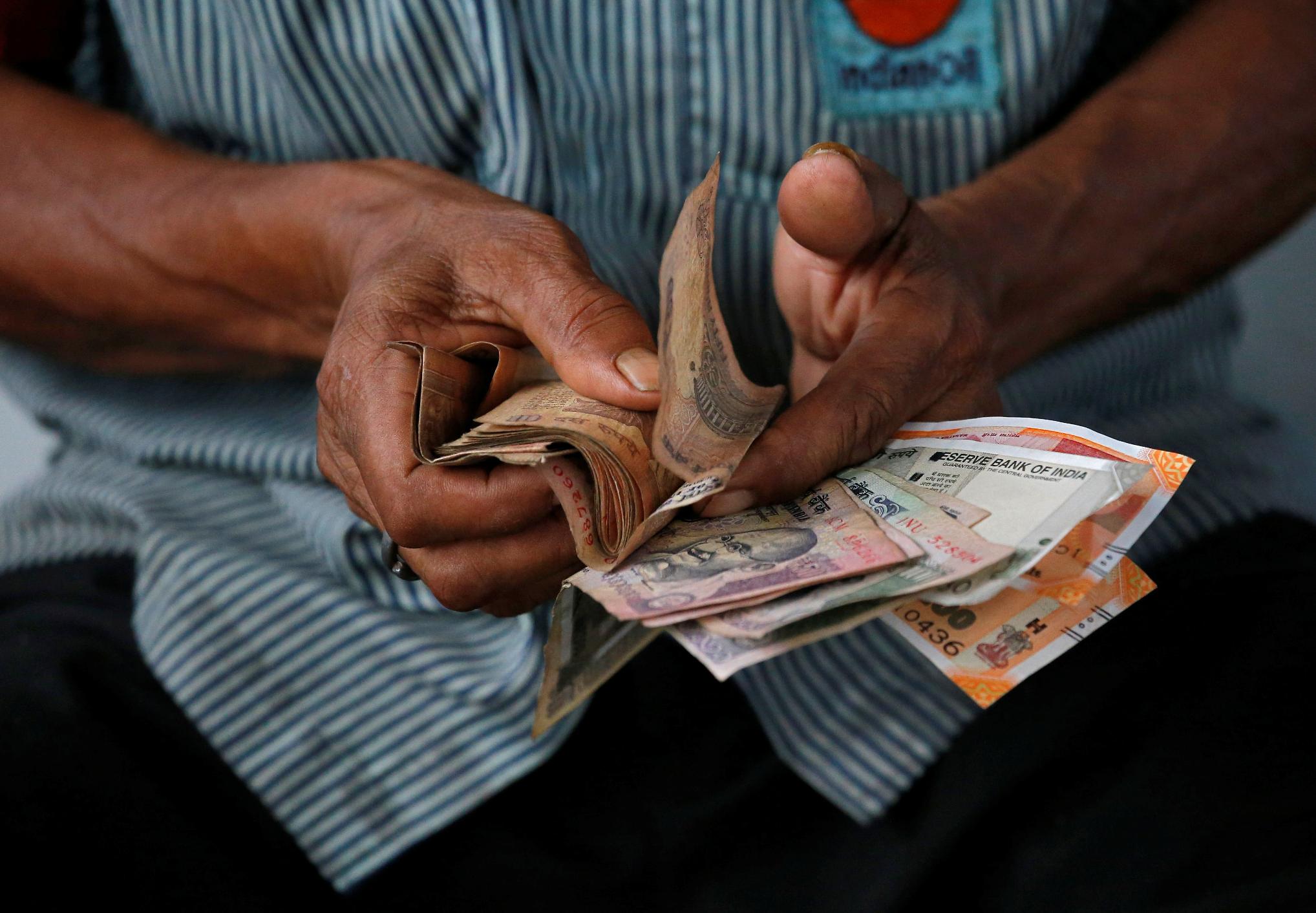
MUMBAI, Dec 19 (Reuters) - The Indian rupee declined on Tuesday as its failure to hold above a key level prompted renewed dollar buying interest, while forward premiums inched lower after more Federal Reserve officials pushed back on interest rate cut expectations. The rupee was at 83.1875 to the U.S. dollar at 10:44 a.m. IST, compared to its previous close of 83.06. The currency had on Monday managed to strengthen past 83, but failed to hold the level. Its looks like "the breakdown" below 83 on USD/INR "was a false one" and we are back to the "range of 83 to 83.40 that has held for what seems forever", an FX trader at a bank said. "We are seeing good (dollar) bids and it could be that RBI (Reserve Bank of India) is in action again." The rupee and most other Asian currencies struggled after more Fed officials indicating that the market is probably too optimistic in its rate cut expectations. Chicago Fed President Austan Goolsbee said the Fed is not precommiting to cutting interest rates soon, and Fed Cleveland President Loretta Mester said financial markets had got "a little bit ahead", the Financial Times reported on Monday. The comments followed a plunge in U.S. Treasury yields and rally in U.S. equities in wake of what was seen a dovish pivot by the Federal Reserve last week. Near-maturity U.S. yields have moved slightly up following the Fed push back. Tracking that, dollar/rupee forward premiums have dipped with the 1-year forward implied yield down to 1.71%. Meanwhile, the Bank of Japan left its key policy rate at -0.10% and forward guidance unchanged on Tuesday. "We expect policymakers to end negative rates in January and to phase out YCC (yield curve control) later in 2024," Capital Economics said in a note. The Japanese yen was down to 43.50 to the dollar. https://www.reuters.com/markets/currencies/rupee-drops-back-recent-range-premiums-dip-fed-push-back-2023-12-19/
2023-12-19 05:16
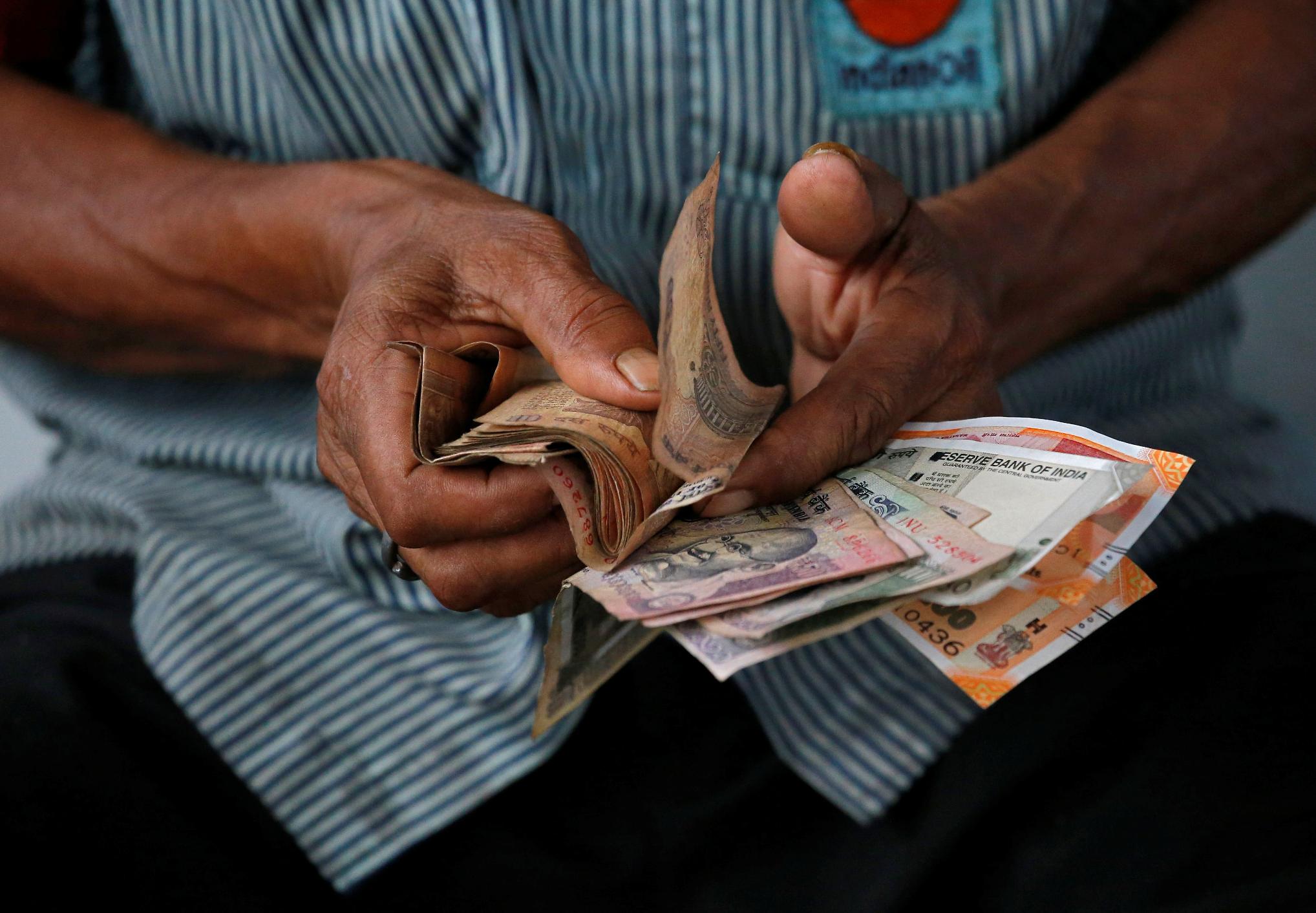
MUMBAI, Dec 19 (Reuters) - The Indian rupee is likely to open lower on Tuesday, tracking the fall in other Asian currencies and on stalling upside momentum. Non-deliverable forwards indicate rupee will open at around 83.12-83.14 to the U.S. dollar compared to its previous close of 83.06. The rupee climbed to a three-month high of 82.9050 on Monday, but was unable to sustain it and closed slightly lower. "The rupee intraday turnaround and finishing at the day's low suggest to me that the momentum created from the move on Friday has been nullified," an FX trader at a bank said. "I would think that a move back to the area of 83.30-83.35 is quite likely." Asian currencies were mostly weaker on Tuesday, following push back from more Federal Reserve officials on rate cuts. Chicago Fed President Austan Goolsbee said the Fed is not precommiting to cutting interest rates soon, and the jump in market expectations that it will do so is at odds with how the U.S. central bank functions. Fed Cleveland President Loretta Mester said financial markets had got "a little bit ahead" of the central bank on when to expect interest rate cuts, the Financial Times reported on Monday. Four policymakers have now sought to manage expectations around rate cuts, after the market priced in aggressive cuts next year following what was seen a dovish Fed policy outcome. "The last few days of market action, before volumes dry up for Christmas, should continue to revolve around the “tug of war” between Fed officials trying to temper speculation and investors who have instead seen a validation of dovish bets from last week’s dot plot projections," ING Bank said in a note. The Bank of Japan policy decision will be the key event for Asian currencies on Tuesday. KEY INDICATORS: ** One-month non-deliverable rupee forward at 83.20; onshore one-month forward premium at 8.50 paisa ** Dollar index slightly up at 102.50 ** Brent crude futures up 0.2% at $78.1 per barrel ** Ten-year U.S. note yield at 3.94% ** As per NSDL data, foreign investors bought a net $1,230.7 mln worth of Indian shares on Dec. 15 ** NSDL data shows foreign investors bought a net $311.6 mln worth of Indian bonds on Dec. 15 https://www.reuters.com/markets/currencies/rupees-upward-bias-seen-arrested-likely-track-weak-asia-fx-2023-12-19/
2023-12-19 04:47
Nippon Steel steps up overseas push US seen as growth market as steel demand in Japan declines President Hashimoto: economic rationale underpins premium TOKYO, Dec 19 (Reuters) - Nippon Steel (5401.T) said on Tuesday its $14.1 billion deal to buy U.S. Steel (X.N) would help it tap into a new growth market, as concerns over the huge premium the world's fourth largest steelmaker was paying sent its shares down as much as 6%. Nippon Steel has been looking to expand overseas in recent years, as a shrinking population in Japan, where it generates nearly three-fifths of its revenue, is dimming the demand outlook for high-end steel used for autos and electronic goods. The acquisition will add 20 million metric tons of crude steel capacity to its 66 million tons and make it a bigger supplier to the U.S. auto industry, which is ramping up output following major carmakers' recent deals with labour unions. "Nippon Steel aims to complete a global network ... by establishing a base in the United States... where steel demand is expected to grow," its president, Eiji Hashimoto, told a news conference. "U.S. Steel is not a competitor to us in the U.S. market or elsewhere, so we can objectively say that it is a best match," he said. North America contributed just 12% to Nippon Steel's total revenue in its latest fiscal year ended in March. The deal marks the firm's accelerating overseas push to reduce its reliance on Japan. U.S. Steel's net sales at home last year were $16.8 billion, well over double the revenue of about 957 billion yen ($6.7 billion) that Nippon Steel generated in North America last fiscal year. Last year, Nippon Steel bought majority stakes in two electric arc furnace steelmakers in Thailand, and in 2019, together with ArcelorMittal, the Japanese firm bought India's Essar Steel. The latest acquisition also comes just a month after Nippon Steel, which counts Toyota Motor (7203.T) as a major client, announced a $1.3 billion deal to take a 20% stake in Canadian miner Teck Resources' (TECKb.TO) steelmaking coal unit. HUGE PREMIUM "This deal will propel Nippon Steel into the top 3 global makers of steel," Japan analyst Mark Chadwick wrote on the Smartkarma research platform. "In many ways, Nippon Steel is paying a huge premium. In simple terms, the offer values U.S. Steel at an EV (enterprise value) of $750/ton, far higher than Nippon Steel’s own EV of $560/ton." Nippon Steel's shares fell 5.5% in early trade in Tokyo to the lowest level since July, but pared losses to trade down 2.6%. The Japanese steel giant clinched the deal with an offer of $55 a share in cash, which was a whopping 142% premium to U.S. Steel's share price on Aug. 11, the last trading day before Cleveland-Cliffs unveiled a $35-per-share, cash-and-stock bid. It is paying the equivalent of 7.3 times U.S. Steel's 12-month earnings before interest, taxes, depreciation and amortisation (EBITDA), according to LSEG data. When asked how Nippon Steel could justify paying such a high premium, Hashimoto said there was a "sufficient economic rationale", without elaborating. The company has not given any projection on the value of the synergies that will arise from the deal. "The two combined will have a sizeable chunk of the global auto market and look well placed to benefit from the shift to EV motors known as e-steel," Chadwick said. "Even so, it is hard ... to get excited given the looming costs to decarbonize the industry." The automotive and transportation sector represented almost a quarter of steel shipments out of U.S. Steel's North American facilities in 2022, according to the company's annual report. U.S. Steel also provides steel for renewable energy infrastructure such as wind turbines and so stands to benefit from the U.S. Inflation Reduction Act (IRA), which provides tax credits and other incentives for such projects. U.S. Steel shares ended trading up 26% at $49.59 on Monday following the deal announcement. https://www.reuters.com/markets/commodities/nippon-steel-confident-hefty-premium-us-steel-makes-sense-2023-12-19/