2023-12-18 11:48
BENGALURU, Dec 18 (Reuters) - India's Vedanta Ltd (VDAN.NS) on Monday declared a second interim dividend of 11 rupees per share for fiscal 2024, amounting to 40.89 billion rupees (about $492 million). The dividend comes at a time when UK-based parent Vedanta Resources grapples with multiple rating downgrades stemming from worries over outstanding dues, including a $4.5 billion payment due by fiscal 2025, and negotiations for extending the maturities of some of its bonds. Vedanta Resources holds a 63.7% stake in Vedanta Ltd and will be the major benefactor of the dividend payout. This is the second dividend for Vedanta Resources from Indian companies in December. Hindustan Zinc (HZNC.NS), in which Vedanta Ltd holds a 64.9% stake, also declared a second interim dividend on Dec. 6, amounting to 25.35 billion rupees. Group Chairman Anil Agarwal told CNBC-TV18 in October that Vedanta had lined up finances of about $1 billion in January and $500-$600 million in August to pay the dues. The group has made several bids to trim debt, including an unsuccessful attempt to take Vedanta Ltd private in 2020 and a deal for Hindustan Zinc (HZNC.NS) to buy some of Vedanta Ltd's zinc assets that the Indian government contested. In September, Vedanta Ltd launched a sweeping overhaul, carving up the metals-to-oil conglomerate into six separate businesses. Vedanta Ltd shares closed 1.4% higher on Monday. They have fallen more than 15% so far this year. ($1 = 83.0529 Indian rupees) https://www.reuters.com/markets/commodities/indias-vedanta-ltd-declares-second-interim-dividend-fy24-2023-12-18/

2023-12-18 11:45
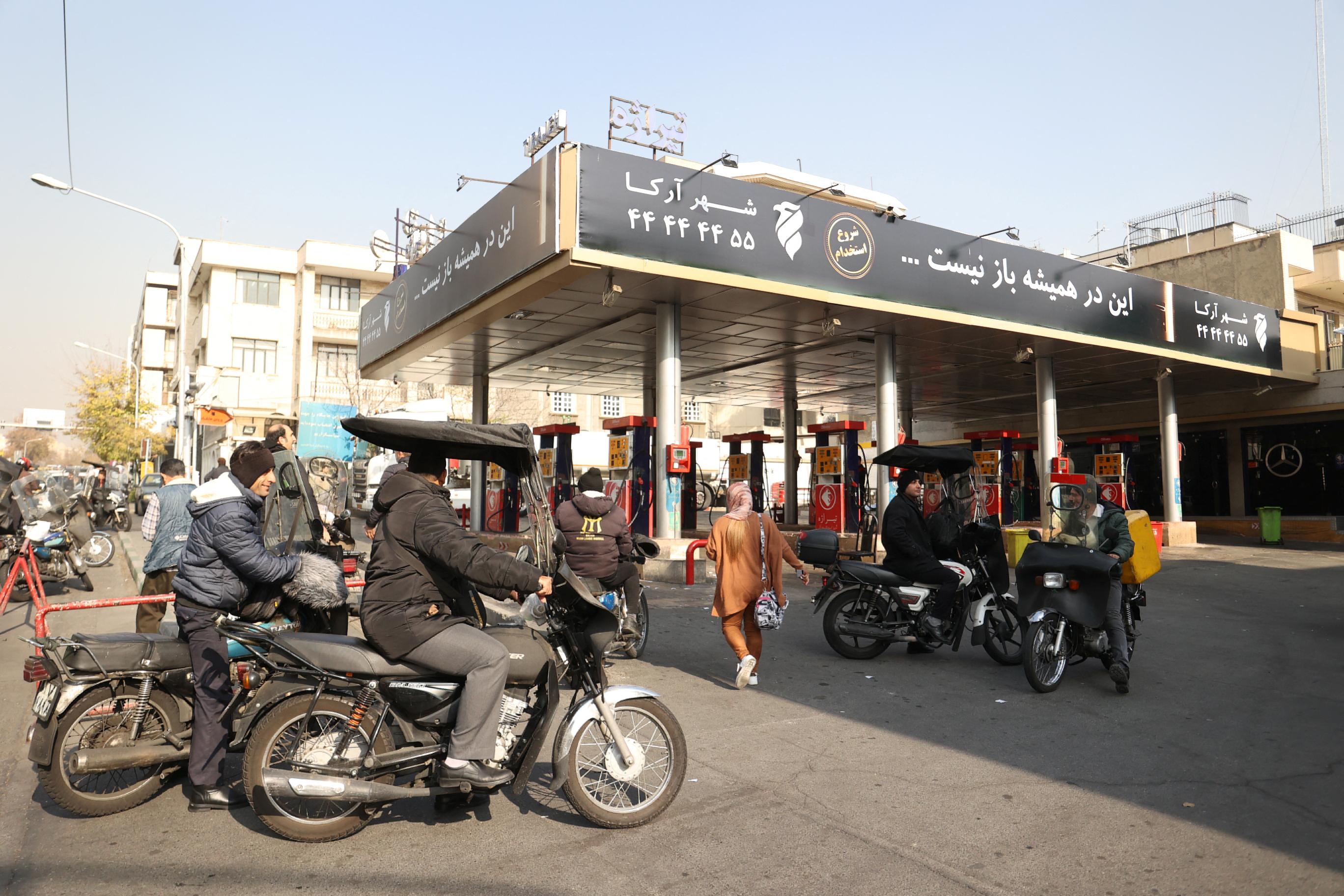
DUBAI, Dec 18 (Reuters) - Iran's Oil Minister Javad Owji on Monday confirmed that ongoing nationwide disruption to petrol stations was caused by a cyberattack. A hacking group that Iran accuses of having links to Israel claimed it carried out the attack that disrupted services at petrol stations across the country on Monday, Iranian state TV and Israeli local media reported. Owji had earlier told Iranian state TV that services had been disrupted at about 70% of Iran's petrol stations and that outside interference was a possible cause. He later said 1,650 petrol stations were operational. The ministry supervises 3,800 petrol stations. Iran's state TV news said the Predatory Sparrow group had claimed it was behind the disruption. Israeli local media outlets also reported the claim. "This cyberattack was carried out in a controlled manner to avoid potential damage to emergency services," Predatory Sparrow said in a statement according to Iranian media. Iran's civil defence agency, which is responsible for cybersecurity, said it was still considering all possible causes for the disruptions as it investigated. Israel did not immediately respond to a request for comment on the incident. Iranian state media added that the hacker group had in the past claimed cyberattacks against Iranian petrol stations, rail networks and steel factories. A major cyberattack in Iran in 2021 also disrupted the sale of fuel, causing long queues at stations across the country where pump prices are heavily subsidised. Iran had said Israel and the United States were the likely culprits behind those attacks. Monday's disruption began early and was especially acute in Tehran, forcing many petrol stations to operate manually, Iranian media reported. Reza Navar, a spokesperson for Iran's petrol stations association told the semi-official Fars news agency that there was no fuel supply shortage but called on drivers to not go to petrol stations. "A software problem with the fuel system has been confirmed in some stations across the country and experts are currently fixing the issue," Navar said. The oil ministry earlier told state TV that the disruption was not linked to plans to increase the price of fuel, a policy that caused widespread protests in 2019 and led to violent repression. State TV said petrol stations were seeking to provide fuel manually and that it will take at least 6 to 7 hours to resolve the problems. Israel's Cyber Unit on Monday said Iran and Hezbollah were behind an attempted cyberattack on a hospital in northern Israel about three weeks ago. It said the attack was thwarted but hackers were able to retrieve "some of the sensitive information stored in the hospital's information systems". https://www.reuters.com/world/middle-east/software-problem-disrupts-iranian-gas-stations-fars-2023-12-18/
2023-12-18 11:36
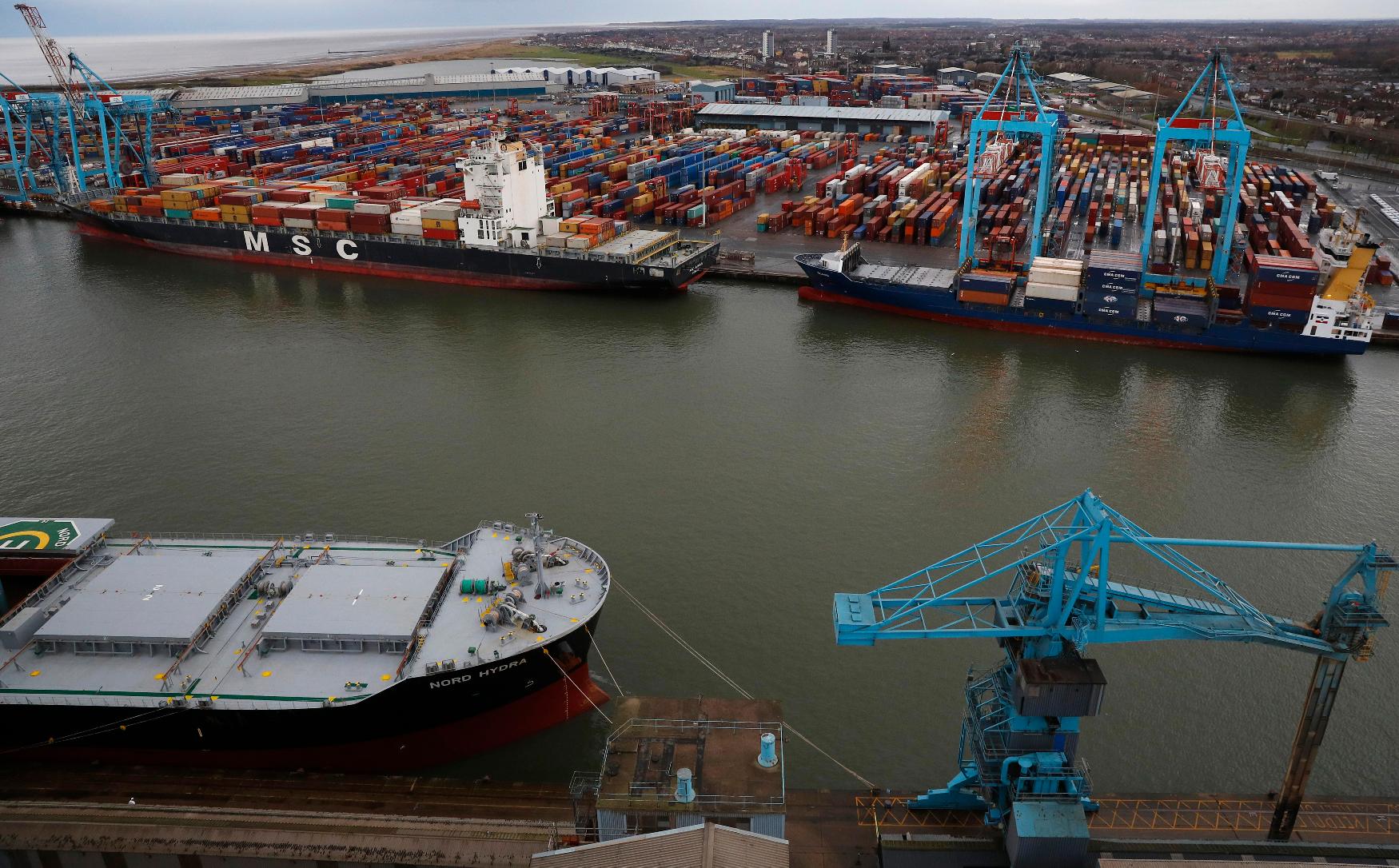
LONDON, Dec 18 (Reuters) - Britain will implement a new carbon import levy on some products from 2027 to help to protect businesses against cheaper imports from countries with less strict climate policies, the government said on Monday. The planned carbon border adjustment mechanism (CBAM) will apply to carbon-intensive products in the iron, steel, aluminium, fertiliser, hydrogen, ceramics, glass and cement sectors. The charge applied will depend on the amount of carbon emitted in the production of the imported good and any gap between the carbon price applied in the country of origin and the carbon price faced by UK producers. "This levy will make sure carbon intensive products from overseas – like steel and ceramics – face a comparable carbon price to those produced in the UK, so that our decarbonisation efforts translate into reductions in global emissions," finance minister Jeremy Hunt said. Britain, which has a target of reaching net zero emissions by 2050, launched an emissions trading system (ETS) in 2021 to charge power plants, factories and airlines for each tonne of carbon dioxide they emit as part of efforts to meet that goal. Many other regions such as the European Union and China operate such systems, but prices within the schemes vary and many regions have no carbon pricing at all. Britain's benchmark ETS carbon contract currently trades around 36.60 pounds ($46.34) per metric ton while contracts in China's ETS trade around 71.60 yuan ($10.04) a ton. Britain said the levy would help to reduce the risk of so-called carbon leakage, avoiding emissions being displaced to other countries because they have a lower or no carbon price. The European Union in September launched the first phase of a system to impose CO2 emissions tariffs on imported steel, cement and other goods. It will not begin collecting any CO2 emission charges at the border until 2026. Britain's steel industry believes the domestic measure is needed to prevent a flood of high-emission products coming to the UK once the EU's carbon measure is up and running. “With over 90% of global steel production facing no carbon cost, it is only right that a new carbon border policy is put in place," Gareth Stace, director general of industry group UK Steel, said in a statement. "However, implementing the UK scheme one year after the EU CBAM starts is hugely concerning." The planned EU tariff has caused disquiet among trading partners and at a recent forum, China's top climate envoy, Xie Zhenhua, urged countries not to resort to unilateral measures such as the EU levy. ($1 = 0.7898 pounds) ($1 = 7.1341 Chinese yuan renminbi) https://www.reuters.com/world/uk/uk-government-implement-carbon-levy-by-2027-2023-12-18/
2023-12-18 11:33
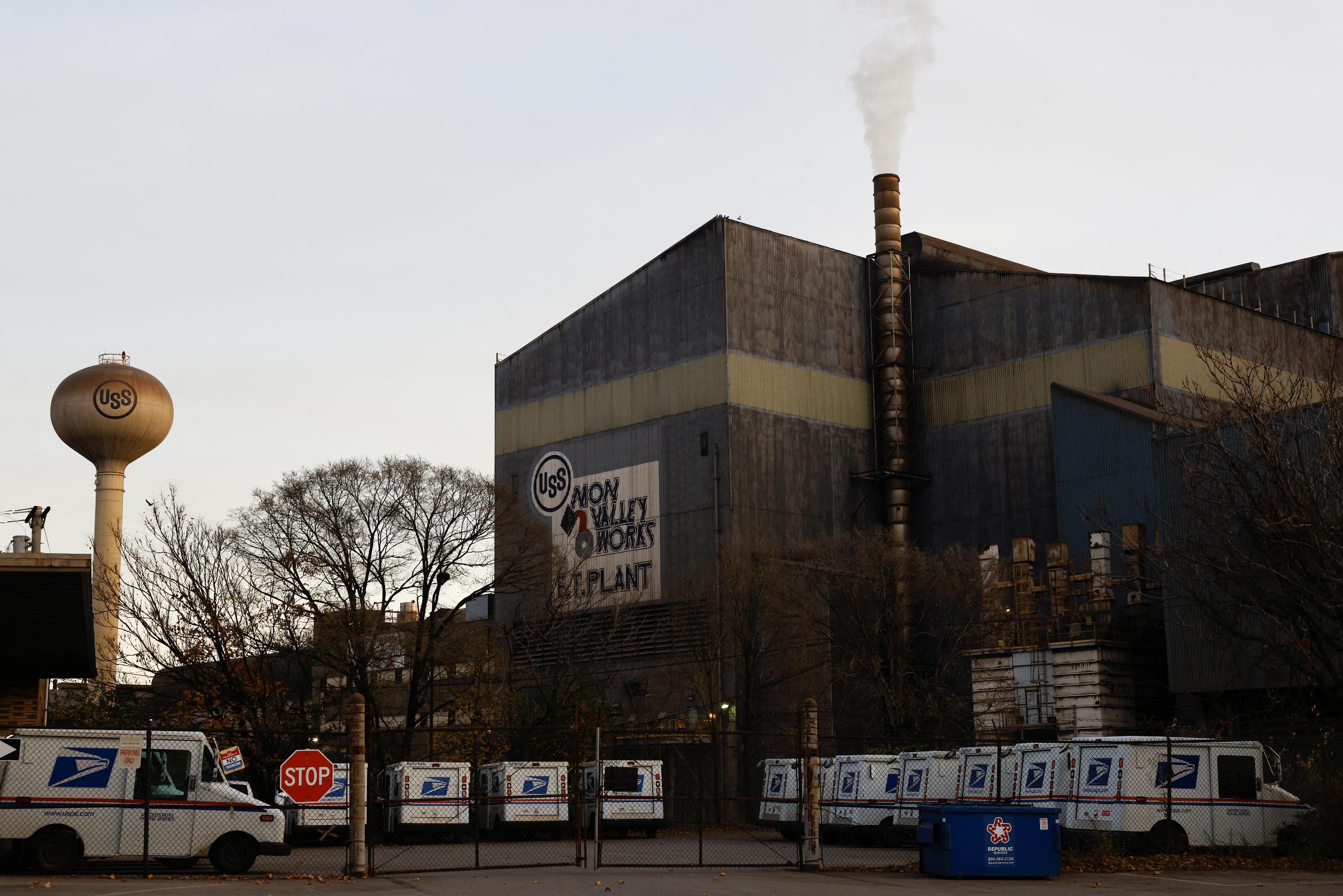
Dec 18 (Reuters) - Japan's Nippon Steel (5401.T) said on Monday it would buy U.S. Steel (X.N) in a deal valued at $14.9 billion including debt, months after the steelmaker put itself up for sale. The per-share offer of $55 represents a premium of about 40% to U.S. Steel's Friday's close and 142% compared to the stock's closing price before the company announced a strategic review process on Aug. 11. U.S. Steel's shares rose about 27% in premarket trading. Nippon, the world's No.4 steelmaker, sees the U.S. as a growth market that can help to offset declining demand in Japan, the Nikkei daily, which earlier reported the deal, said. Nippon has secured financing commitments for the deal and expects it will enable the company to move toward 100 million tonnes of global crude steel capacity. All of U. S. Steel's commitments with its employees, including all collective bargaining agreements in place with its unions, will be honored, Nippon said. In the middle of August, U.S. Steel launched a formal review process, after rebuffing a $7.3 billion offer from rival Cleveland-Cliffs Inc (CLF.N). While Cliffs continued to participate in the sale process, steelmaking giant ArcelorMittal SA (MT.LU) was also considering an offer, Reuters reported in August. Pittsburgh-based U.S. Steel's shares had suffered after several quarters of falling revenue and profit, making it an attractive takeover target for rivals looking to add a maker of steel used by the automobile industry. U.S. Steel also supplies to the renewable energy industry and stands to benefit from the Inflation Reduction Act (IRA), which provides tax credits and other incentives for such projects, something that attracted suitors. Companies including U.S. Steel are also set for a strong start to 2024 as steel prices spike following a resolution of the United Auto Workers (UAW) union strike against the Detroit Three automakers. Citi is the financial adviser to NSC while Barclays Capital, Goldman Sachs and Evercore are the financial advisers to U. S. Steel. https://www.reuters.com/markets/deals/japans-nippon-steel-buy-us-steel-149-billion-deal-2023-12-18/
2023-12-18 11:16
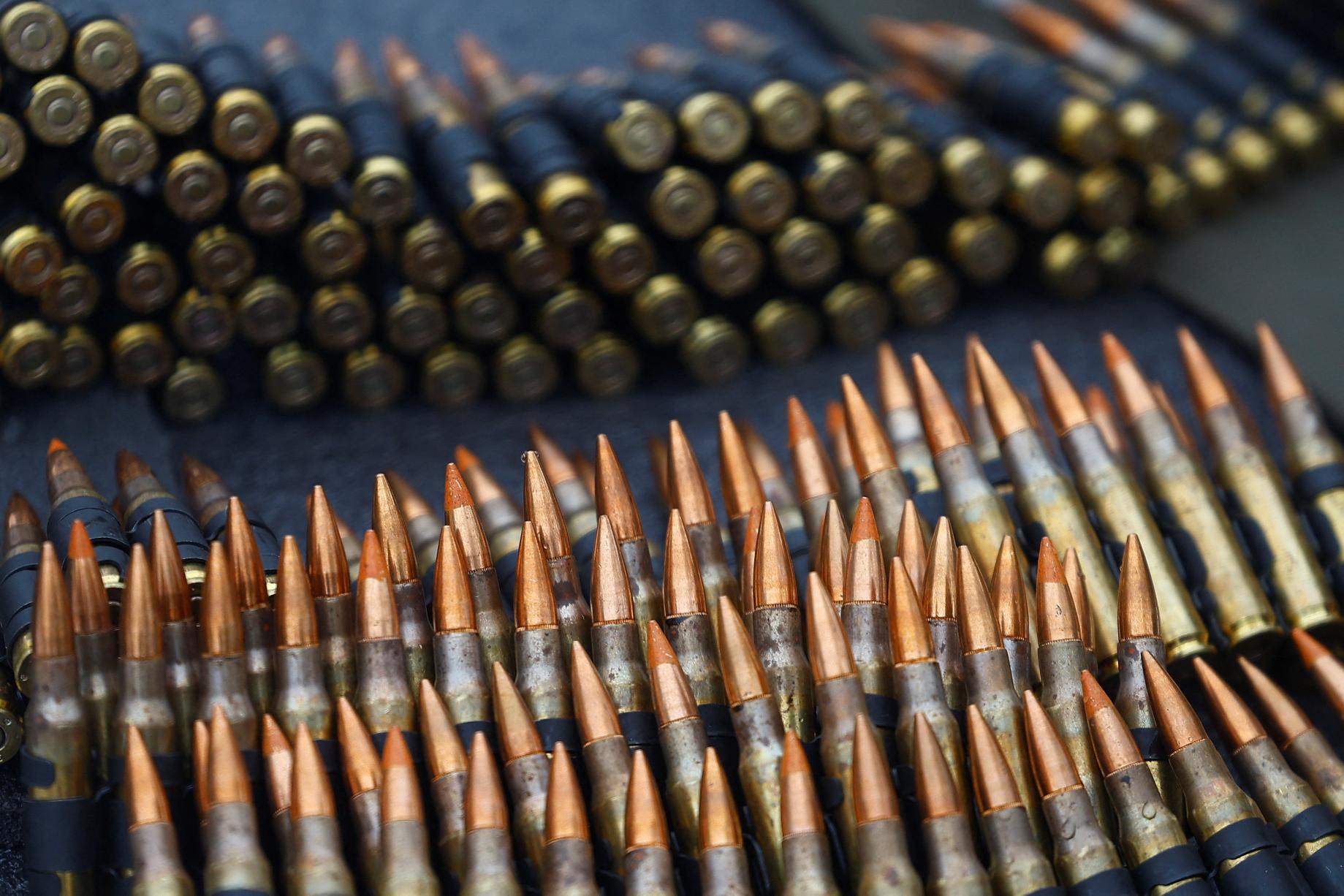
WASHINGTON, Dec 18 (Reuters) - When the Pentagon pulled the world's biggest defense contractors into a meeting to tell them to ramp up production shortly after Russia invaded Ukraine, one CEO hesitated, saying they did not want to be stuck with a warehouse full of rockets when the fighting stopped, according to three people familiar with the discussion. Nearly two years later, big defense firms are singing a different tune, with several expecting strong demand in 2024 as the U.S. and its allies load up on expensive weaponry and munitions with an eye on what they perceive as more aggressive actions from Russia and China. The math is simple. For example, to meet demand for missile defenses, production of Patriot interceptors for the U.S. Army - a projectile fired at an incoming missile with the aim of knocking it down - will rise from 550 to 650 rockets per year. At around $4 million each, that's a potential $400 million annual sales boost on one weapons system alone. Since increasing production volumes of older systems is always more profitable than the high investment costs associated with ramping up production of new systems, stronger demand will flow quickly to the corporate bottom line. Shares of the biggest defense companies, which have handily beat the benchmark S&P 500 stock index for the last two years, are expected to keep rising, according to Wall Street estimates. Lockheed Martin (LMT.N), General Dynamics (GD.N) and Northrop Grumman (NOC.N) shares are forecast to rise between 5% and 7% over the next 12 months, while the S&P is seen making limited gains. US weapons stockpiles were not "full" before Russia invaded Ukraine, said Eric Fanning, chief executive of the U.S. Aerospace Industries Association, and "adversaries are seeing our stockpiles starting thin and being depleted." As a result, demand is being driven by Chinese aggression, fear about Russian aggression and to support allies in the Middle East, he said. PATRIOTS AND ROCKET MOTORS Patriot systems production can be broken down to show how sales of basic items will impact a range of companies. To start, RTX (RTX.N) manufactures the radars and ground systems, and Lockheed Martin manufactures the latest generation interceptor missiles. RTX boosted launcher and control system production to 12 units a year. A launcher and radar together cost around $400 million each. Boeing (BA.N) has said over the next few years it will increase its Huntsville, Alabama, factory production capacity for sensors that are used to guide Patriot missiles by more than 30%. Another strong demand signal can be seen in the backlog of solid rocket motors which are used by the vast array of arms in high demand since Russia's full scale invasion of Ukraine in February 2022. The U.S. has two main rocket motor makers, Northrop Grumman, and L3Harris Technologies (LHX.N), which both said they have seen demand increase. Northrop said much of the increase is due to demand for its rocket motors and warheads in the Guided Multiple Launch Rocket Systems (GMLRS) which are heavily used in Ukraine. GMLRS are GPS-guided rockets with 200-pound (90kg) warheads. Lockheed Martin makes 10,000 of the missiles per year and is increasing production to 14,000. They have an average cost of $148,000 each according to Army documents and more than 6,100 have been sent to Ukraine so far, according to a Reuters analysis. "Each day the munitions are being fired reinforces the need for substantive stockpiles," Tim Cahill, who runs Lockheed's Missiles and Fire Control business - a prime contractor for Patriot interceptors and GMLRS - said in a Reuters interview. "And I don't see that going down." An executive at a rocket motor maker said the administration of President Joe Biden prioritized munitions in its 2024 Pentagon budget request. He expected a boost to order backlogs once contracts came through following the passage of the $886 billion defense policy bill known as the NDAA, or National Defense Authorization Act. It was approved by Congress last week and Biden is expected to sign it into law. https://www.reuters.com/business/aerospace-defense/wars-raise-profit-outlook-us-defense-industry-2024-2023-12-18/
2023-12-18 11:08
LONDON, Dec 18 (Reuters) - Yemen's Houthis have been targeting vessels in the southern Red Sea and the Bab al-Mandab Strait in attacks that the Iran-aligned group says aim to support the Palestinians as Israel and Hamas wage war. Several freight firms including MSC, the world's largest container shipping line, said they would avoid the Suez Canal as a result, which could mean having to circumnavigate Africa instead. War risk insurance premiums have risen as a result. WHAT ARE THE RECENT HOUTHI ATTACKS? * Dec. 18: The M/V Swan Atlantic was attacked on Monday in the southern Red Sea by multiple projectiles launched from Houthi-controlled territory, U.S officials told Reuters. * On Dec. 16, the U.S. Central Command said in a statement its guided missile destroyer USS Carney (DDG 64) shot down 14 drones launched by Yemen's Houthis in the Red Sea on Saturday. * Dec. 15: A projectile launched from Houthi-controlled Yemen strikes the Liberia-flagged, German-owned, Al Jasrah ship, causing a fire but no injuries, a U.S. defence official says. * Dec. 15: Maersk denies a claim by the Houthi movement that the militia carried out a drone strike on a Maersk vessel sailing towards Israel, but says the tanker was targeted by a missile. Shipping sources said that vessels operated by Maersk Tankers have the option to re-route via the Cape of Good Hope due to the worsening security situation in the Red Sea. * Dec. 12: Houthi spokesman says the group targeted the Norwegian commercial tanker STRINDA. The attack took place about 60 nautical miles (111 km) north of the Bab al-Mandab Strait at about 2100 GMT, a U.S. official tells Reuters. * On Dec. 10, a French warship operating in the Red Sea shot down two drones that were launched at it from the Yemen coast, the defence ministry said. * Dec. 9: Houthis warn they will target all ships heading to Israel, regardless of their nationality, and warn all international shipping companies against dealing with Israeli ports. * Dec. 3: The U.S. military says three commercial vessels came under attack in international waters in the southern Red Sea, as Houthis claimed drone and missile attacks on two Israeli vessels in the area. * Nov. 19: Israel says Houthis seized a British-owned and Japanese-operated cargo ship in the southern Red Sea. WHAT IS THE BAB AL-MANDAB? * Bab al-Mandab, or the Gate of Tears, named for its perilous navigation, is the southern outlet of the Red Sea, between Yemen on the Arabian Peninsula and Djibouti and Eritrea on the African coast. * It is one of the world's most important routes for global seaborne commodity shipments, particularly crude oil and fuel from the Gulf bound for the Mediterranean via the Suez Canal or SUMED pipeline, as well as commodities bound for Asia, including Russian oil. * The Bab al-Mandab was the site of a naval blockade of Israel by Egypt in the 1973 Yom Kippur War. * The Bab al-Mandab is 18 miles wide at its narrowest point, limiting traffic to two channels for inbound and outbound shipments, divided by the island of Perim. * Around 7.80 million barrels per day of crude and fuel shipments transited the strait in the first 11 months of 2023, up from 6.60 million bpd throughout 2022, according to oil analytics firm Vortexa. On average, Vortexa tracked 27 tankers carrying crude or fuel each day in 2023, up from 20 last year. * According to the Energy Information Administration, 12% of total seaborne-traded oil in the first half of 2023 as well as 8% of LNG trade passed through Bab al-Mandab, the SUMED pipeline and the Suez Canal. NAVAL PROTECTION? * The U.S. Special Envoy for Yemen, Tim Lenderking, told Reuters on Thursday that Washington wanted the "broadest possible" maritime coalition to protect ships in the Red Sea, and signalled to the Houthis that attacks would not be tolerated. * Sources told Reuters, however, that Saudi Arabia - seeking to contain spillover from the Hamas-Israel war - has asked the United States to show restraint in responding to attacks in the Red Sea. * The international community has had a history of using naval forces to protect navigation from piracy off the Horn of Africa, especially as Somali piracy surged in the 2005-2011 period. * In Dec. 2008, the European Union launched "Operation Atalanta" to tackle attacks by Somali pirates on cargo ships. NATO's Operation Ocean Shield as well as a multinational naval force known as Combined Task Force 151 have also been involved in anti-piracy protection. Sources: Reuters, Energy Information Administration, Vortexa, World Bank https://www.reuters.com/world/bab-al-mandab-shipping-lane-target-israel-fights-hamas-2023-12-12/