2023-12-15 23:28
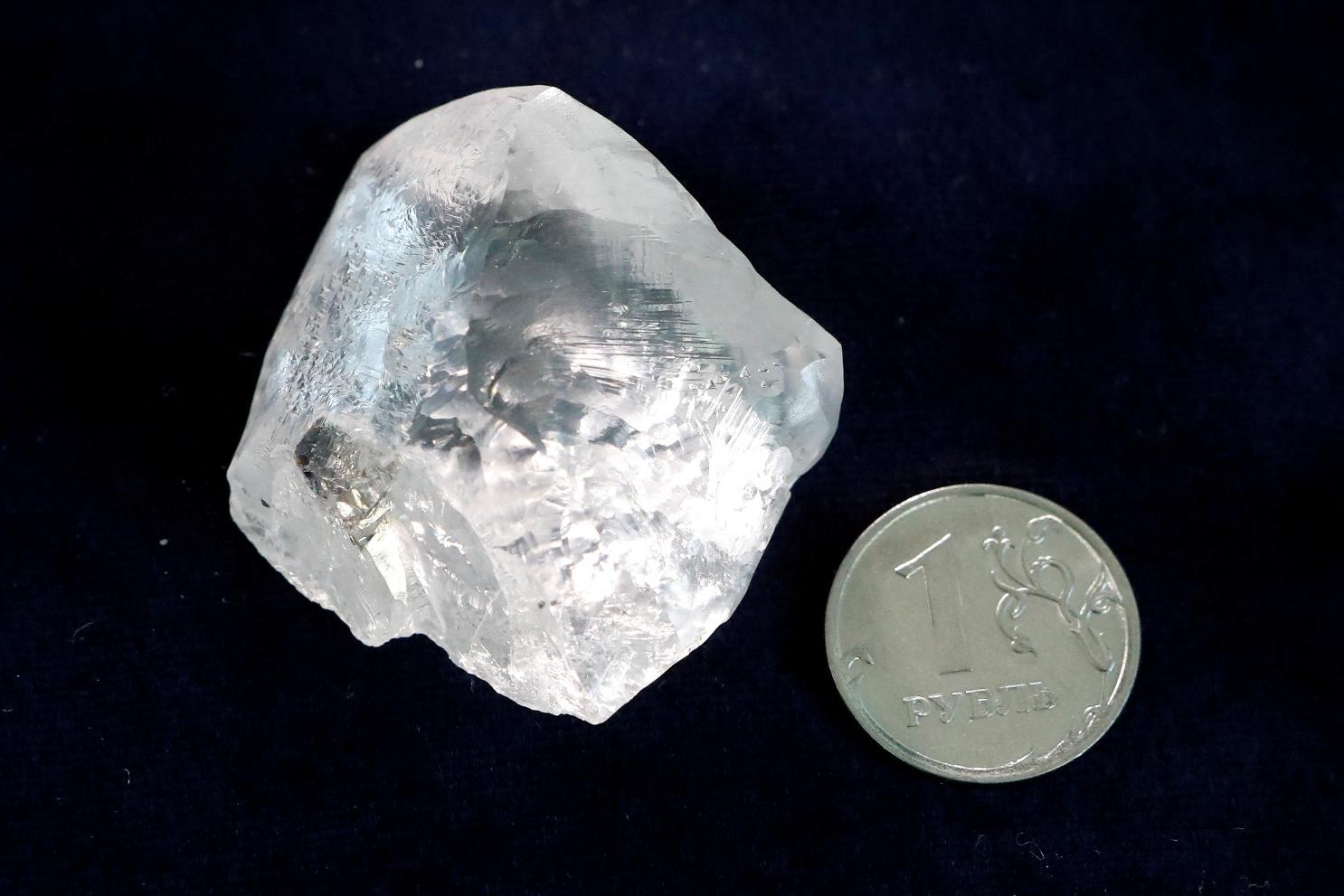
NEW DELHI, Dec 15 (Reuters) - India expects little disruption to its diamond industry from an incoming ban by G7 countries on Russian gems, a trade ministry official said on Friday, because the country mostly processes smaller Russian diamonds which will be less affected by the new restrictions. India is home to 90% of the world's diamond cutting and polishing industry, including for some Russian diamonds. Last week, G7 nations announced a direct ban on Russian diamonds starting Jan. 1 followed by phased-in restrictions on indirect imports of Russian gems from around March 1. Starting March 1, Russian diamonds sized a carat or above will face restrictions in G7 countries, while diamonds sized half a carat or more will be banned in September 2024, and a new system to trace origin will be introduced, Vipul Bansal, an official at India’s federal trade ministry, told reporters. "The key point here is that most of the Russian diamonds we cut and polish essentially are less than 0.5 carats," Bansal said, adding the impact of the ban will be "lesser than anticipated." Bansal said this rule of carat size will only apply to polished diamonds, and the size for rough diamonds under the new regulations could be larger. Russia is the world's biggest producer of rough diamonds by volume with a 30% share of the market. The G7 is introducing new trade restrictions to limit Moscow's revenues that help fund its invasion of Ukraine. Implementing a ban on Russian diamonds, however, depends heavily on India, which wants to minimise potential disruptions for small diamond firms employing millions of people. https://www.reuters.com/markets/commodities/india-sees-minimal-trade-disruption-after-g7-ban-russian-diamonds-2023-12-15/
2023-12-15 23:22
SANTIAGO, Dec 15 (Reuters) - Chile's state copper company Codelco (COBRE.UL) and lithium producer SQM (SQMA.SN) have agreed to establish a roundtable with indigenous communities amid talks over a possible partnership between the two companies in the Atacama salt flat, Codelco said on Friday. WHY IT'S IMPORTANT The announcement, which refers to an "eventual alliance" between the two companies, signals movement in Codelco's efforts to reach an agreement with Santiago-based SQM to form a new state-controlled public-private partnership. CONTEXT Chilean President Gabriel Boric in April tasked Codelco, the world's largest copper producer, to lead efforts to increase state control over strategic lithium projects as demand grows for the white metal, which is a key component in electric car batteries. The Council of Atacameno Peoples, made up of 18 Indigenous communities, has been pushing for greater participation in the government's lithium strategy. KEY QUOTE The roundtable seeks to ensure "the participation of Indigenous communities with a focus on the protection and sustainability of the Salar de Atacama, within the framework of the eventual alliance between Codelco and SQM," Codelco said in the statement. WHAT'S NEXT Codelco said representatives from the local communities, SQM and Codelco will chart out a framework over the next month for the communities' participation. Codelco Chairman Maximo Pacheco told Reuters on Thursday that he maintains his prediction that the state company will reach an agreement with miner SQM this year. https://www.reuters.com/markets/commodities/lithium-producer-sqm-chiles-codelco-agree-start-talks-with-indigenous-group-2023-12-15/

2023-12-15 22:59
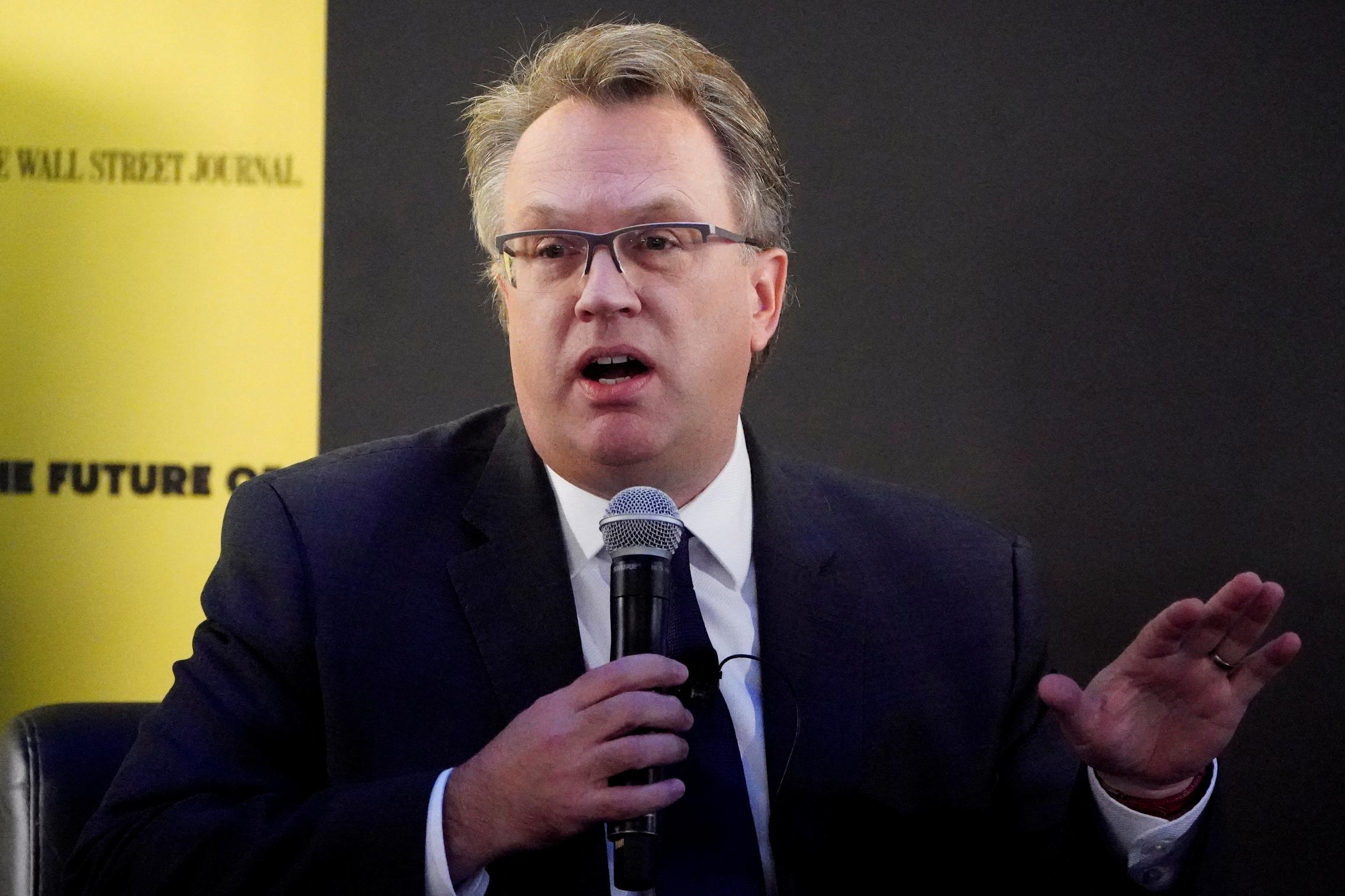
Dec 15 (Reuters) - Just days after a Federal Reserve meeting that penciled in an ample course of interest rate cuts next year, which in turn unleashed a broad rally in financial markets, one of the U.S. central bank's top policymakers pushed back on the ebullience on Friday. "We aren't really talking about rate cuts right now," New York Fed President John Williams said in an interview with CNBC. When it comes to the question of lowering rates, "I just think it's just premature to be even thinking about that" as the central bank continues to mull whether monetary policy is in the right place to help guide inflation back to its 2% target, he said. Williams was the first Fed official to speak in the wake of a policy meeting this week in which the central bank left its benchmark overnight interest rate unchanged in the 5.25%-5.50% range. With rates steady, the big shift in the Fed outlook was tied to projections of an easing of monetary policy next year. Fed officials' forecasts collectively priced in three-quarters of a percentage point in cuts in 2024, which would leave the policy rate in the 4.50%-4.75% range by the end of 2024. Those forecasts summarize the views of policymakers and are not an official Fed view, but they are nevertheless closely watched and the numbers helped spur sharp drops in bond yields while driving stock prices up. In a press conference following the two-day meeting, Fed Chair Jerome Powell on Wednesday acknowledged the shift in views, explained how the forecasts work, while acknowledging "the question of when will it become appropriate to begin dialing back the amount of policy restraint in place, that begins to come into view, and is clearly a topic of discussion out in the world and also a discussion for us at our meeting today." 'CLARIFY' THE MESSAGE Some market observers saw in Williams' appearance an attempt to reframe the message that markets took from both the policy meeting and Powell's comments to reporters. Williams' interview appears "intended to lean against speculation on a March cut without ruling it out, and slow the sense in markets of a Fed rush towards cutting following Powell's very dovish December press conference," Evercore ISI analysts said. "Deploying the N.Y. Fed president in this manner is standard practice when the Fed leadership wants to 'clarify' the message, but market pricing moved only modestly in response to his comments, reflecting investor conviction that the data is moving in support of earlier/deeper cuts." Futures markets briefly fluttered in the wake of Williams' comments but continued to settle on March as the point at which the central bank will start cutting rates. CME Group's FedWatch Tool maintained a strong probability of a March cut, with views fragmented on the path of cuts after that. In an interview with Reuters later on Friday, Atlanta Fed President Raphael Bostic also presented a monetary policy outlook partially at odds with the market's stance, projecting the possibility of a rate cut in the third quarter of next year. Bostic, who will be a voting member of the central bank's policy-setting Federal Open Market Committee in 2024, said he thought inflation, as measured by the personal consumption expenditures price index, would end next year at around 2.4%, which would be enough progress towards the Fed's 2% target to warrant two quarter-percentage-point rate cuts during the second half of 2024. When it comes to easing, "I'm not really feeling that this is an imminent thing," Bostic said, with policymakers still needing "several months" to accumulate enough data and confidence that inflation will continue to fall before moving away from the policy rate's current range. Meanwhile, in an interview with the Wall Street Journal, Chicago Fed President Austan Goolsbee said it is increasingly likely the central bank will need to shift its attention from inflation to employment, the other part of its dual mandate. He also told the newspaper he wouldn't rule out a rate cut in March. Against all the talk around the prospect of lowering rates, Williams reminded markets that the Fed could still go the other way. When it comes to the economy, "the base case is looking pretty good: Inflation is coming down, the economy remains strong and unemployment is low." That said, "one thing we've learned, even over the past year, is that the data can move in surprising ways," he said, adding "we need to be ready to move further if inflation, the progress of inflation were to stall or reverse." https://www.reuters.com/markets/rates-bonds/feds-williams-pushes-back-market-expectations-rate-cuts-2023-12-15/
2023-12-15 22:57
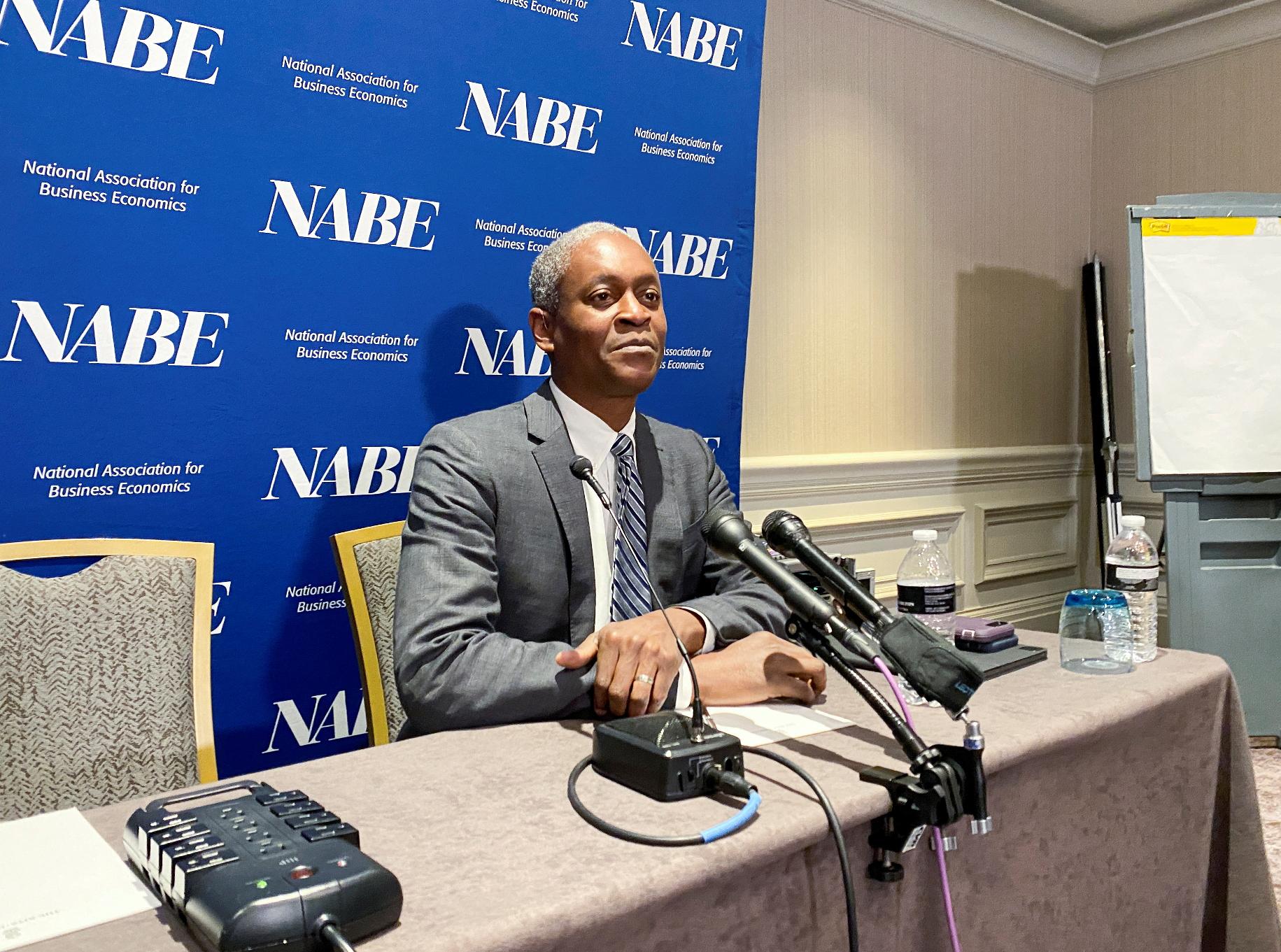
WASHINGTON, Dec 15 (Reuters) - The U.S. central bank can begin reducing interest rates "sometime in the third quarter" of 2024 if inflation falls as expected, Atlanta Federal Reserve President Raphael Bostic said on Friday, pushing back against expectations of an imminent move but outlining a deliberative process that will gather steam in coming weeks. Bostic said he expects inflation, as measured by the personal consumption expenditures (PCE) price index, to end 2024 at around 2.4%, enough progress towards the Fed's 2% target to warrant two quarter-percentage-point rate cuts over the second half of next year. "I'm not really feeling that this is an imminent thing," Bostic said in an interview with Reuters, with policymakers still needing "several months" to accumulate enough data and confidence that inflation will continue to fall before moving away from the policy rate's current 5.25%-5.50% range. But Bostic also said he has asked his staff to begin discussing principles and thresholds to help frame the debate. "We've got to figure out definitionally what the 'neighborhood' looks like" where the inflation outlook is such that rate cuts are warranted, Bostic said. "Over the next several weeks ... I think we are going to start talking about that." CAUTIOUS APPROACH Bostic's remarks put detail around a policy shift that the Fed began at its policy meeting this week, when officials agreed that, absent another inflation shock, the current policy rate is high enough to curb the price pressures they have been battling for two years. Investors have run with the comparatively dovish tone that Fed Chair Jerome Powell struck at a press conference after the end of the meeting on Wednesday, pushing down market-based interest rates and increasing bets the central bank will begin to reduce interest rates at its meeting in March. The comments from Bostic, a voting member of the central bank's policy-setting Federal Open Market Committee (FOMC) next year, are potentially telling in that regard. He was ready to stop raising rates earlier than his colleagues, saying as of this past June that he felt monetary policy was already restrictive enough - before the FOMC raised the policy rate by another quarter of a percentage point at its July meeting. Bostic also said that inflation has fallen faster than he anticipated since then, despite continued growth in an economy he feels will skirt any appreciable rise in the unemployment rate, delivering the "soft landing" hoped for by the Fed. But just as he was cautious about raising rates too far, Bostic said he will be cautious about cutting them too soon. He said he wants to be sure inflation is fully contained before lowering borrowing costs, and avoid being "surprised." Indeed, his outlook for two 25-basis-point rate cuts is less than the 75 basis points or more in cuts seen by many of his colleagues. "We've been getting close to the neighborhood," Bostic said, adding that he regarded the three- and six-month measures of inflation as "useful markers" for the discussion. Those measures currently stand at around 2.5% for the PCE price index excluding food and energy items, considered by many officials as an important guide to underlying inflation. But "I am going to try not to presuppose anything at this point," he said. "We've been surprised throughout the pandemic on a number of fronts, some to the good and some to the bad. And so I just don't want to get anchored too much." BALANCED RISKS But Bostic said he wanted to be prepared to move more quickly, if needed, in an environment where he felt risks to the economy had become "fairly balanced" between inflation proving stronger than expected - the main worry of policymakers since 2021 - and a deeper-than-anticipated blow to jobs or growth. "The risk that inflation is going to spike has really, I think, declined significantly. It is not zero, but it is lower," Bostic said, with the easing of price pressures allowing room to "think about the risks to both sides of the mandate." By statute the Fed is responsible for maintaining stable prices and maximum employment. Bostic said that in conversations with businesses "no one is talking to me as if large job losses are imminent," and he expects the unemployment rate to end 2024 at 4% - low by historic standards in the U.S. and only a modest rise from the current 3.7%. But "that is something I'm going to keep an ear out for in the next three to six months to see if that changes," he said. "We want to make sure we are not triggering something that leads to losses that wouldn't be necessary for us to get to the 2% target." Even so, an interview aired later in the day on Marketplace radio, Bostic doubled down on his cautious approach to easing back policy. "This is the time when we’ve got to be resolute, and make sure that we don’t jump to conclusions and declare victory," he said, noting that with inflation still above target, "Look, there’s still a ways to go." https://www.reuters.com/markets/us/feds-bostic-sees-two-rate-cuts-2024-likely-starting-third-quarter-2023-12-15/
2023-12-15 22:51
MEXICO CITY, Dec 15 (Reuters) - Mexico's government said Friday it temporarily closed a cantaloupe processing plant while investigating the source of a salmonella contamination that has killed at least nine people in the U.S. and Canada. Mexican health officials said they ordered the temporary suspension of activities at the plant in the northern state of Sonora after two visits, in which they took samples from surfaces and water which are pending results. The U.S. Centers for Disease Control and Prevention (CDC) and Canada's public health agency (PHAC) have reported at least nine deaths between both countries and hundreds of illnesses from salmonella since October. Four deaths were reported by the CDC. Five were reported by PHAC, according to Canadian media. Health authorities in both countries have implicated Malichita and Rudy brand cantaloupes as the sources of the outbreak and issued recalls of the fruit. Malichita did not immediately respond to a request for comment. A spokesperson for Rudy could not immediately be reached. Batches of cantaloupes had been returned to Mexico from the U.S., the Mexican government said in a statement, adding that it was working to prevent the contaminated products from being distributed to the market. Earlier this week, Mexico warned that some peaches, plums and nectarines from HMC Farms brand imported from the U.S. were possibly contaminated with Listeria. U.S. health officials had notified its trading partner of the risk, Mexico said. https://www.reuters.com/business/environment/mexico-closes-cantaloupe-plant-temporarily-amid-deadly-salmonella-outbreak-2023-12-15/

2023-12-15 22:43
Dec 15 (Reuters) - The Panama Canal on Friday said it will increase the number of booking slots available in its Panamax and Neopanamax locks, after a severe drought caused one of the world's main maritime trade routes to reduce ship crossings. From mid-January, the canal authority said in an advisory, it will have 24 transit slots per day, compared to the 18 it had planned in a prior announcement. The additional slots will cover the regulars, supers and neopanamax vessel categories. The authority said the changes were based on the current and expected levels of the artificial Gatun Lake, which provides the millions of liters (gallons) necessary to operate the waterway. Applications for the new slots will begin in coming weeks to begin transit on Jan. 16, it said. The authority warned, however, that due to the continuing water crisis it would for transit dates starting on Jan. 16, allow only one booking slot per customer per date, regardless of when the slot was booked - with some exceptions tied to auction and competition slots. Slots are prioritized according to highest bid in auction processes, full containers, market and customer rankings. The customer limit and prioritization of slots will continue until further notice, it added. Panama's drought, worsened by the El Nino weather phenomenon which warms the Pacific Ocean, has pushed up fees and traffic at the canal, forcing fuel tankers and grain shippers to take longer routes to avoid congestion. An alternative route takes ships down South America's entire Atlantic coast, crossing the Strait of Magellan at the continent's icy southern tip and heading back up the Pacific coast tracks. https://www.reuters.com/business/drought-hit-panama-canal-increase-shipping-slots-2023-12-15/