2023-12-14 15:32
WASHINGTON, Dec 14 (Reuters) - U.S. business inventories unexpectedly fell in October, suggesting that inventory investment could weigh on economic growth this quarter. Business inventories dipped 0.1%, the first decline since June, after increasing 0.2% in September, the Commerce Department's Census Bureau said on Thursday. Economists had expected that inventories, a key component of gross domestic product, would be unchanged. Inventories increased 0.6% on a year-on-year basis in October. Business inventories are expected to subtract from gross domestic product in the fourth quarter. Private inventory investment contributed 1.40 percentage points to the economy's 5.2% annualized growth pace in the third quarter. Growth estimates for the October-December quarter are below a 2% rate. A survey from the Institute for Supply Management this month found that customer inventories had increased "toward the upper end of 'about right' territory" in November, suggesting limited scope for businesses to restock at the third quarter's clip. Higher interest rates are tamping down demand. Retail inventories slipped 0.1% in October, instead of being unchanged as estimated in an advance report published last month. They rose 0.4% in September. Motor vehicle inventories increased 1.9%, rather than 2.0% as estimated last month. They rose 2.3% in September. Retail inventories excluding autos, which go into the calculation of GDP, fell by an unrevised 0.9%. They decreased 0.4% in September. Wholesale inventories dropped 0.4%, while stocks at manufacturers gained 0.1%. Business sales fell 1.0% in October after rising 0.9% in September. At October's sales pace, it would take 1.37 months for businesses to clear shelves, up from 1.36 months in September. https://www.reuters.com/markets/us/us-business-inventories-unexpectedly-fall-october-2023-12-14/

2023-12-14 14:17
WASHINGTON, Dec 14 (Reuters) - U.S. import prices fell for a second straight month in November amid decreases in the costs of energy products and motor vehicles, suggesting that import deflation could help to lower domestic inflation next year. Import prices dropped 0.4% last month, the Labor Department's Bureau of Labor Statistics said on Thursday. Data for October was revised to show prices declining 0.6% instead of 0.8% as previously reported. Economists polled by Reuters had forecast import prices, which exclude tariffs, falling 0.8%. In the 12 months through November, import prices decreased 1.4% after dropping 1.8% in October. Annual import prices have now dropped for 10 consecutive months. Data this week showed consumer prices rising moderately in November and producer prices unchanged. Though inflation remains above the Federal Reserve's 2% target, price increases are becoming less broad-based. The U.S. central bank held rates steady on Wednesday and signaled in new economic projections that the historic tightening of monetary policy engineered over the last two years is at an end and lower borrowing costs are coming in 2024. Since March 2022, the Fed has raised its policy rate by 525 basis points to the current 5.25%-5.50% range. Financial markets are leaning towards a rate cut as soon as May, according to CME Group's FedWatch Tool. Imported fuel prices decreased 5.6%, extending October's 3.7% decline. The cost of imported food rebounded 0.9% after falling 0.5% in the prior month. Excluding fuels and food, import prices edged up 0.1% after dipping 0.1% in October. These so-called core import prices decreased 0.6% year-on-year in October. Prices for imported capital goods were unchanged after slipping 0.1% in the prior month. The cost of motor vehicles, parts and engines fell 0.1% after rising 0.3% in October. Consumer goods, excluding automotives were unchanged following a 0.1% drop in the prior month. Higher borrowing costs are cooling domestic demand. Prices of goods imported from China fell 0.1% after being unchanged in October. They dropped 2.9% year-on-year in November. The report also showed export prices declined 0.9% in November, matching October's drop. Export prices for agricultural commodities rose 0.2%, lifted by fruit and soybeans. But prices for corn, meat and other foods and food preparations fell. Nonagricultural export prices decreased 1.0%. Export prices declined 5.2% year-on-year in November after sliding 4.7% in October. https://www.reuters.com/markets/us/us-import-prices-post-second-straight-monthly-decline-november-2023-12-14/

2023-12-14 14:02
Dec 14 (Reuters) - Ethiopia's credit rating was downgraded further into junk territory on Thursday by the Fitch Ratings agency, which cited an "increased likelihood" of default. The east African country failed to pay a coupon on its single outstanding $1 billion Eurobond which had been due on Dec. 11, saying last week it could not make the payment. Fitch cut Ethiopia's rating to "C" from the "CC" it downgraded Africa's second most populous country to last month. The agency does not assign outlooks to sovereigns rated "CCC+" or below but said it would downgrade Ethiopia to "RD", or restricted default, if it did not pay the coupon within a 14-day grace period. Ethiopia's economy is still reeling from high inflation, a hard currency shortage and growing external debt repayments more than a year after the federal government and rebel forces from the northern Tigray region signed a truce to end a two-year civil war. Ethiopia requested debt relief under the G20's Common Framework in early 2021, but progress was initially delayed by the war. Fitch noted that Ethiopia had agreed a debt service suspension with its official creditors. "Official-sector debt treatment would not be judged a distressed debt exchange under Fitch's sovereign rating criteria but official creditors may seek comparable treatment for private-creditor claims under the Common Framework," it said. The government on Thursday held a call for investors in the bond, which matures in December 2024, after talks with a group of bondholders broke down. Earlier this year, it asked the IMF for a new lending program worth $2 billion. The sides are yet to strike a deal but the IMF said discussions were ongoing and staff would likely visit Ethiopia in early 2024. https://www.reuters.com/world/africa/fitch-downgrades-ethiopia-further-into-junk-territory-default-looms-2023-12-14/
2023-12-14 12:29
NEW YORK, Dec 14 (Reuters) - A dovish shift from the Federal Reserve has put record highs in sight for U.S. stocks and sent Treasury yields tumbling, even as some investors worry the market may be moving too fast given an uncertain outlook for the economy and corporate earnings. The Fed held interest rates steady on Wednesday and signaled in new economic projections that the historic tightening of U.S. monetary policy engineered over the last two years is at an end and lower borrowing costs are coming in 2024. The message was more dovish than many investors were expecting. Plunging Treasury yields helped the S&P 500 (.SPX) rise nearly 1.4% on Wednesday, the biggest gain in the index on a day that the Fed issued its monetary policy statement since July 2022. The benchmark U.S. 10-year Treasury yield, which moves inversely to bond prices, stood at around 3.96% on Thursday morning, the lowest level since late July. . "The Fed is done raising rates, and the market could not be more thrilled to have higher conviction in that," said Matthew Miskin, co-chief investment strategist at John Hancock Investment Management. The Fed’s view is now more aligned with that of investors - though markets remain far more dovish in their outlook. Seventeen out of 19 Fed officials project that the policy rate will be lower by the end of 2024 than it is now - with the median projection showing a fall to 4.6% from the current 5.25%-5.50% range. That compares with a rate of 3.847% reflected in futures to the Fed’s policy rate, LSEG data showed. With few major macroeconomic events expected for the rest of December, the S&P 500 could have the momentum to end the year by matching or exceeding the closing high it set in January 2022. The index is now less than 2% below that record of 4,796.56. The Dow Jones Industrial Average (.DJI) marked a record high close on Wednesday, its first since January 2022, along with shares of Apple Inc (AAPL.O), the world's most valuable company. Seasonal factors could provide a tailwind: December has been the third-best month for the S&P 500 since 1950, with the second half of the month typically stronger than the first, according to data from LPL Financial. Support could also come from formerly bearish investors' abandoning their positions. Data from BofA Global Research showed that leveraged funds “are not bullish and continue to fight rallies” in stocks after increasing their net short in the face of the S&P 500’s fourth-quarter rebound, the bank said in a recent report. “It’s getting hard for bears to have something to point to,” said Jack Janasiewicz, a portfolio manager at Natixis Investment Managers Solutions, who recently increased his equity exposure to take advantage of seasonal trends. Still, many investors are wondering how much of the Fed’s dovishness has already been priced in during a rally that has seen the S&P 500 rise more than 22% this year. Next year, the economy must walk a fine line to satisfy the “Goldilocks” narrative of cooling inflation coupled with still-resilient growth. “Into this year, the market had gotten cheaper ... sentiment was bearish. Now you go into next year, the consensus is soft landing, the multiple is much higher, the earnings estimates are higher, and I think that is going to make it a tougher market environment,” said Miskin, whose firm is modestly underweight stocks versus bonds, reflecting somewhat defensive positioning. The S&P 500 was recently trading at 19.1 times forward earnings estimates, versus its long-term average of 15.6 times, according to LSEG Datastream. S&P 500 company earnings are expected to rise 11.4% in 2024, after a 2.6% increase in 2023, according to LSEG data. Mike Sanders, head of fixed income at Madison Investments, said the market is “far, far more aggressive in cuts than even what the Fed let on in a very dovish statement.” The key focus of the next six months will be whether inflation can continue to fall while the jobs market remains stable, said Sanders, who is bullish five-year Treasuries. “We need to be certain that the soft landing isn’t just a prelude for a hard landing,” he said. Carol Schleif, chief investment officer with the BMO Family Office, will be watching the health of the consumer as "we finish out the holiday season," including how consumers "are able to absorb higher credit card bills when they come in January after the holiday selling season." Jason Pride, chief of investment strategy and research at Glenmede, said the Fed’s latest economic projections appear to forecast a soft landing. "However, there has never been an instance where rates have remained this high for this long without causing collateral damage for the economy," Pride said. https://www.reuters.com/markets/us/investors-cheer-feds-dovish-pivot-focus-shifts-2024-risks-2023-12-14/

2023-12-14 11:53
Dec 14 (Reuters) - The International Energy Agency (IEA) said on Thursday the "explosive growth" in Indian oil product consumption may be coming to an end. In a monthly report, the IEA projected that India's oil product demand growth would slow to 2.5% next year from 4.1% in 2023. Indian oil product deliveries edged higher in November but were underwhelming compared to the usual seasonal rise, the agency noted. Deliveries in November increased by 40,000 barrels per day (bpd), compared with the typical seasonal upswing of 170,000 bpd. Data from the Indian oil ministry's Petroleum Planning and Analysis Cell (PPAC) showed that India's fuel consumption in November fell after hitting a four month peak in the previous month, hit by reduced travel in the world's third biggest oil consumer as a festive boost fizzled out. According to the IEA, the annual 2023 gains will be 220,000 bpd. It sees growth slowing down to 110,000 bpd in the fourth quarter of 2023. The IEA put the rate of increase in 2024 at 140,000 bpd. That would still be the second-highest growth globally, but far lower than China's 710,000 bpd. https://www.reuters.com/world/india/iea-sees-indian-oil-product-demand-growth-slowing-2024-2023-12-14/

2023-12-14 11:53
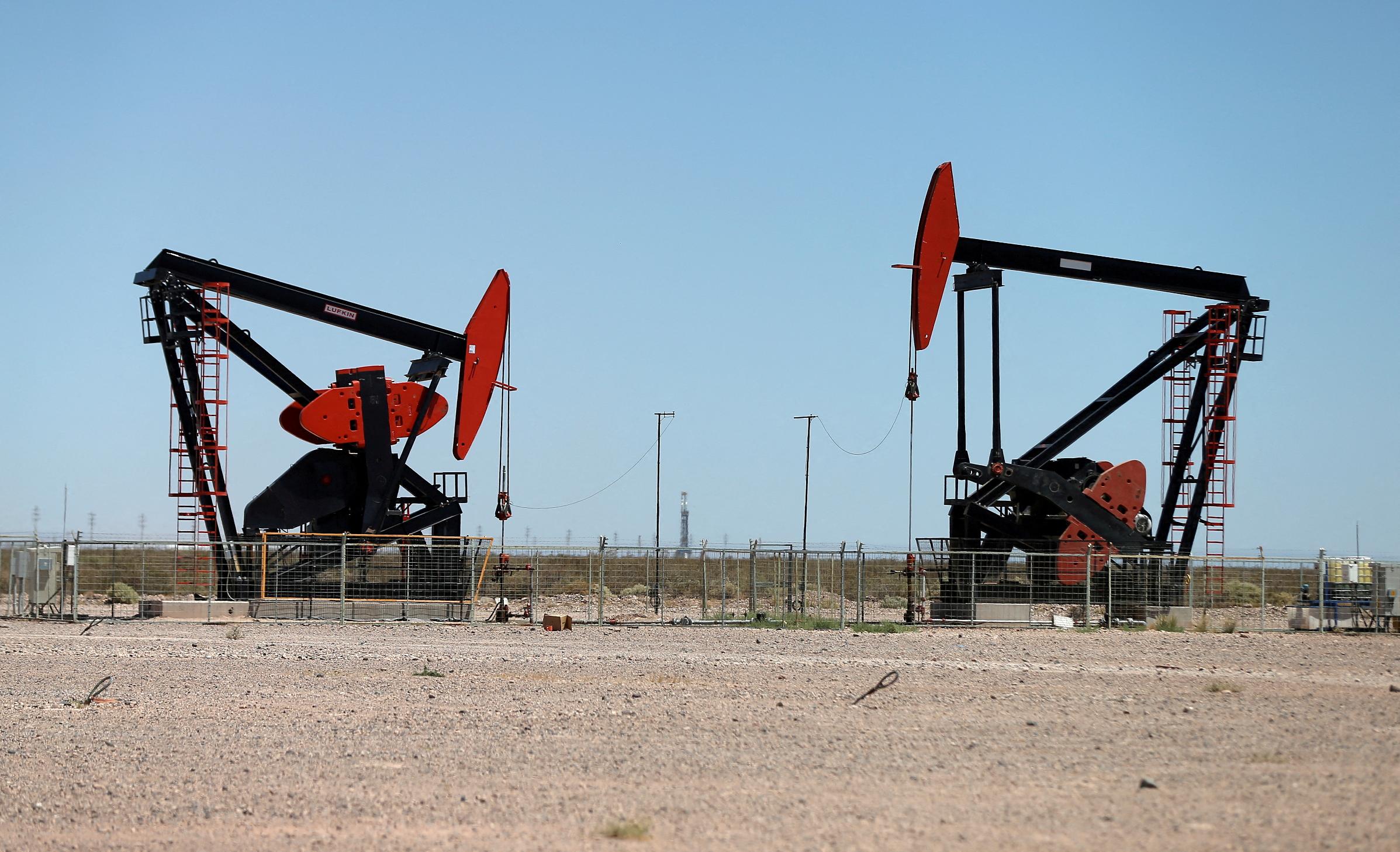
Oil prices reverse after hitting 6-month low on Wednesday IEA: World oil demand in 2024 to rise faster than expected Investors to usher in 2024 amid oversupply, demand worries NEW YORK, Dec 14 (Reuters) - Oil prices rose 3% on Thursday, extending the previous session's gains, boosted by a weaker dollar and as the International Energy Agency (IEA) lifted its oil demand forecast for next year. Brent futures settled $2.35 higher, or 3.2%, at $76.61 a barrel. U.S. West Texas Intermediate (WTI) crude climbed $2.11, or 3%, to $71.58. The market has turned around after dropping to hit its lowest in nearly six months during Wednesday's session. World oil consumption will rise by 1.1 million barrels per day (bpd) in 2024, the IEA said in a monthly report, up 130,000 bpd from its previous forecast, citing an improvement in the outlook for the U.S. and lower oil prices. The 2024 estimate is less than half the forecast of the Organization of the Petroleum Exporting Countries (OPEC). Prices also got a boost as the dollar weakened after the U.S. Federal Reserve on Wednesday signaled lower borrowing costs for 2024. The dollar fell to a four-month low on Thursday after the U.S. central bank indicated interest rate hikes have likely ended and lower borrowing costs are coming in 2024. "Obviously the mood for oil has changed dramatically. One of the major catalysts for shaking volatility out of market was the Federal Reserve," said Phil Flynn, an analyst at Price Futures Group. Lower interest rates reduce consumer borrowing costs, which can boost economic growth and demand for oil. A weaker dollar makes oil less expensive for foreign purchasers. The European Central Bank, meanwhile, pushed back against bets on imminent cuts to interest rates on Thursday by reaffirming that borrowing costs would remain at record highs despite lower inflation expectations. Oil investors will usher in 2024 with gnawing concerns about slowing economic growth and oversupply, while simmering tensions in the Middle East could spark price volatility. Benchmark Brent has averaged around $80 a barrel this year. A Reuters survey of 30 forecasts from economists and analysts sees Brent crude averaging $84.43 a barrel in 2024. https://www.reuters.com/business/energy/oil-rises-middle-east-worries-future-cuts-borrowing-costs-2023-12-14/