
2023-12-14 07:02
LITTLETON, Colorado, Dec 14 (Reuters) - Portugal sourced a record 72% of its electricity from clean power sources over the first 11 months of 2023, up from 56% over the same period in 2022, thanks to a more than doubling in electricity generation from hydro sources. The surge in hydro output, along with a 40% climb in solar power generation, in turn helped Portugal's power producers slash generation from fossil fuels to their lowest levels since at least 2015, data from think thank Ember shows. That mix of high volumes of clean power and low fossil-fuel use cemented Portugal's status as the third-cleanest major power system in Europe behind Spain and France. HYDRO HELP Of the roughly 36 terawatt hours (TWh) of electricity generated by Portugal's power system through November, 8.34 TWh (23.4%) came from hydropower sources, according to Ember. During the same period in 2022, hydro power generated only 3.78 TWh of electricity, as extensive droughts across much of Europe reduced reservoir and river levels. Hydro generation recovered in 2023 as rainfall levels rebounded, and was helped further by the deployment of part of a new dam and pumped storage system developed by Spanish energy giant Iberdrola (IBE.MC) along the Tamega river in northern Portugal. The total installed capacity of the new complex will be 1,158 megawatts (MW), and once completed in 2024 will be combined with two nearby wind farms to form one of the largest energy storage facilities in Europe, according to Iberdrola. CRITICAL MASS The completed Tamega giga battery, as it is known, will add almost 900 MW of pumping capacity to Portugal's electricity system, which will provide power producers with the means to balance intermittent renewable power from solar and wind farms with dispatchable clean hydro electricity as needed. Power firms will also be able to recharge the reservoirs by using cheap renewable-powered electricity to power the system's pumps. The combination of greater overall hydro capacity along with the heightened ability to balance renewable power flows will further elevate Portugal's clean power share in the years ahead. Portugal may even overtake Spain in Europe's clean power rankings within the coming years as the full heft of the Tamega complex is added to the country's electricity system. Portugal's power system already scored a key clean power milestone last month when it was powered entirely by renewables for a record six consecutive days, according to PV Magazine. That spate of high renewable generation allowed power producers to cut back on gas-powered generation entirely, and also export surplus power to neighbour Spain. Once the Tamega system is added to the country's power generation mix, additional clean power milestones will likely also be set, further elevating Portugal's standing within Europe as a key driver of regional energy transition efforts. The opinions expressed here are those of the author, a columnist for Reuters. https://www.reuters.com/business/energy/portugals-energy-transition-goals-pumped-up-by-hydro-maguire-2023-12-14/

2023-12-14 07:01
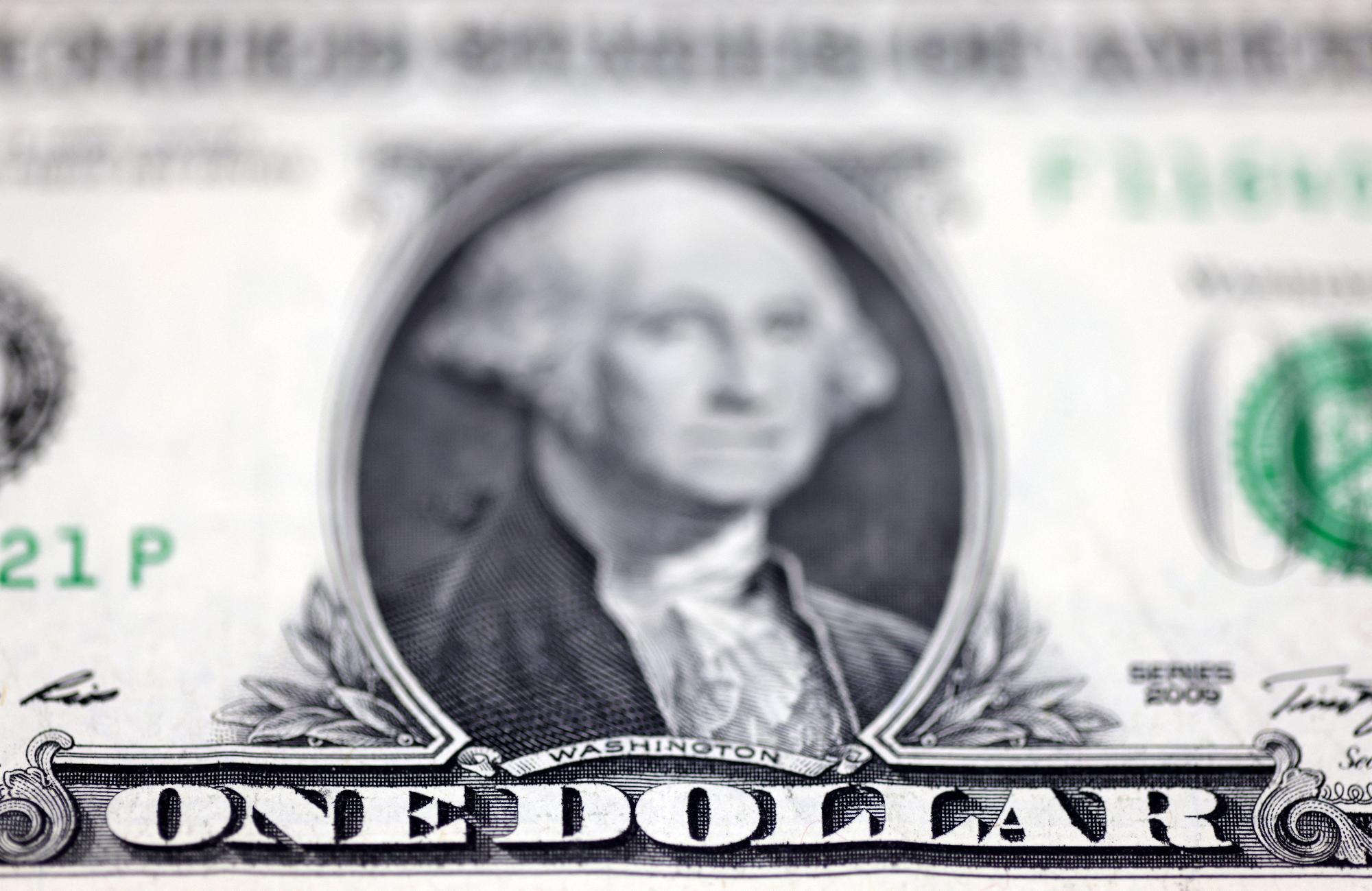
NEW YORK/LONDON, Dec 14 (Reuters) - The dollar fell to a two-week low against the euro and a more than four-month low against the Japanese yen in a broad based selloff on Thursday, after the Federal Reserve on Wednesday indicated that rate cuts are likely next year. The euro and pound, meanwhile, were supported by the European Central Bank and the Bank of England affirming the need to hold rates higher for longer. Fed Chair Jerome Powell said at Wednesday's Federal Open Market Committee (FOMC) meeting that the tightening of monetary policy is likely over, with a discussion of cuts in borrowing costs coming "into view". The Fed's projections implied 75 basis points of cuts next year, from the current level. "The Fed was very dovish yesterday," said Athanasios Vamvakidis, global head G10 FX strategy at BofA Global Research. “The strong consensus… was for a balanced tone by Powell. Instead, Powell doubled-down, with a very dovish tone." The dollar index was last at 101.95, down 0.89% on the day. It earlier reached 101.76, the lowest since Aug. 10. Fed funds futures traders are now almost completely pricing in a 25 basis points cut in March, and 150 basis points in rate reductions by Dec. 2024. “The market has been coming around to the idea that inflation won’t be sticky or problematic over the past six weeks and now central banks are confirming it,” said Adam Button, chief currency analyst at ForexLive in Toronto. “The market is running with the idea that rates will return to low levels in time - the bigger picture idea is that we’re headed back to a 2010s era of low growth and low inflation, rather than a 1970s era of volatile inflation,” he said. The greenback briefly pared losses after data showed that U.S. retail sales unexpectedly rose in November. The euro gained 1.08% to $1.0991, the highest since Nov. 29. It is on track for its biggest daily percentage gain since Nov. 14. The ECB kept rates steady and pushed back against bets on imminent cuts to interest rates on Thursday by reaffirming that borrowing costs would remain at record highs despite lower inflation expectations. “The ECB was unable to “out-dove” yesterday's pivot by the Fed. The ECB continues to signal that rate hikes are done but their updated economic projections show no reason to hurry towards less restrictive policy,” said Samuel Zief, head of global FX strategy at JPMorgan Private Bank in London. The pound rose 1.11% and earlier reached the highest since Aug. 22 after the Bank of England left interest rates unchanged and said that interest rates needed to stay high for "an extended period". It is also on pace for the best day since Nov. 14. "The main message remains that rates will remain high for as long as it takes, which effectively is a push-back to market pricing early cuts," said BofA's Vamvakidis. The greenback fell 0.63% against the Swiss franc and hit the lowest level since July 27 after the Swiss National Bank held rates steady at 1.75%, as expected and acknowledged that inflationary pressure has decreased slightly over the past quarter. It also tumbled 2.28% against the Norwegian crown to the lowest since August 15 after the Norges Bank unexpectedly raised rates by 25 basis points to 4.5%, adding that they would likely stay at that level for some time. It is looking at the largest drop since Jan. 6. The yen reached the highest since July 31, with the dollar last down 0.68% against the Japanese currency at 141.94. Expectations that the Bank of Japan (BOJ) could end negative interest rates at its monetary policy meeting on Dec. 18-19 have largely been dampened, but the BOJ could make tweaks to its statement, such as language that the bank will not hesitate to ease further if necessary, said Masafumi Yamamoto, chief currency strategist at Mizuho Securities. That kind of change could be regarded as "one step toward normalisation ... so that could be positive for the Japanese yen," he said. The Australian dollar , meanwhile, hit a more than four-month high at $0.6728 after domestic net employment jumped by 61,500 in November, compared to an increase of around 11,000 that markets had been forecasting. It was last up 0.54% at $0.6696. The kiwi reached $0.6249, the highest since July 27, despite data showing the New Zealand economy unexpectedly contracted in the third quarter. It was last up 0.52% at $0.6206. Bitcoin edged up 0.25% to $42,994. ======================================================== Currency bid prices at 3:00PM (2000 GMT) https://www.reuters.com/markets/currencies/dollar-takes-dive-after-fed-signals-rate-cuts-next-year-2023-12-14/
2023-12-14 06:52
Rapid fall in southern temperatures expected over next 24 hrs Northern temperatures to test record lows for Dec Strong gales to buffet far west, north BEIJING, Dec 14 (Reuters) - Cold weather gripped large swathes of China on Thursday, with sharp falls in temperature expected over the next two days, particularly in the south, forecasters said, as the weather proves unusually frigid for December. The cold snap is moving from several northern provinces hit by blizzards to central and southern areas such as the province of Guizhou, and pushing deep into the lower reaches of the Yangtze River delta. The weather in Nanjing, the populous capital of Jiangsu province on the Yangtze's southern banks near Shanghai, is expected to plunge to about 5 degrees Celsius (41 degrees Fahrenheit) from a mild 16 C (60.8 F) over the next 24 hours. "This cold wave is powerful, later this week it will be a big move south," said meteorological analyst Wang Weiyue, according to state broadcaster CCTV. By Sunday, temperatures south of the Yangtze could reach zero degrees Celsius (32 F), while provinces just north of the Yellow River, such as Shandong, could see minus 10 C (14 F). Further north, temperatures could approach historical lows for this time of the year or even surpass records, national weather forecasters warned. In Beijing, snow has been building since Monday in the capital of nearly 22 million. Temperatures are expected to further slide to minus 12 C (10.4 F) on Friday from about minus 3 C (26.6 F) on Thursday. Major northeastern cities, such as Shenyang and Harbin, could register as low as minus 27 C (minus 16.6 F) in what could be their lowest this year, CCTV said. Weather charts and maps on social media also revealed the rapidly deteriorating weather in the south, with temperatures across some provinces set to fall by more than 14 C or even 20 C by the end of the week. "Finally know what it means to freeze purple," wrote one user on social media app Weibo, referring to the colour codes of China's coldest areas. FROST BITE Temperatures were at a record low for a second straight day in several areas. Parts of the Inner Mongolia region and the province of Shaanxi, Jilin, and Liaoning saw falls of more than 20 C, along with gusty winds, weather authorities said. Snow and ice forced the closure of 126 highways across several provinces. Sleet and hail lashed central Henan. The cold forced closure of schools, with the provincial capital of Zhengzhou ordering home-schooling for younger children. It also suspended several train services. Parents in Shaanxi to the north complained that lack of heating in a junior high school left children with frostbite on hands and feet, with one child's bruises shown in a picture posted on social media. Further east, in Shanxi, authorities raised the alert for cold waves to its highest, with temperatures expected to fall as low as minus 20 C (minus 4 F) by Saturday and even to minus 29 C (minus 20.2 F) in more mountainous areas. Temperatures in the provincial capital of Taiyuan averaged minus 4 C (24 F) on Thursday. Gale warnings also went out for far western Xinjiang, the west of Tibet, the Ningxia region, Qinghai province and parts of Inner Mongolia. https://www.reuters.com/world/china/cold-wave-grips-northern-china-temperatures-south-plummet-2023-12-14/

2023-12-14 06:44
Vows to triple financing of renewable energy projects by 2030 Will publish exposure to fossil extraction projects in Q1 2024 Pledges to speed up reduction of financed carbon emissions PARIS, Dec 14 (Reuters) - Credit Agricole (CAGR.PA), France's second-largest listed bank, said on Thursday it would stop financing new fossil fuel extraction projects and publish its exposure to that sector as part of its new climate targets. The announcement follows the deal struck at the COP28 climate summit among representatives of nearly 200 countries, who agreed to begin reducing global consumption of fossil fuels to avert the worst of climate change. Credit Agricole, which counts French oil major TotalEnergies (TTEF.PA) among its top clients, said it would cut financed carbon emissions tied to the oil and gas sectors by 75% by 2030, compared with a previously announced target of a 30% reduction. "Even if the signal is a good one and is welcome, the methodology remains very incomplete, one could even say bad, in terms of claiming to be aligned with a target of limiting higher temperatures by 1.5 degrees Celsius," said Lucie Pinson from Reclaim Finance, commenting on Credit Agricole's plans. More European banks are pledging to reduce their financing of fossil fuels, incentivised by new European rules that will shine a light on how green their businesses are and pressure from campaign groups and some shareholders. British banks NatWest and HSBC, and Dutch bank ING, are among those to have announced restrictions on such lending. U.S. and Asian lenders, however, remain the far bigger backers of fossil fuels. Barclays is the only European lender in the top ten financiers of fossil fuels between 2016 and 2022, with JPMorgan, Citi and Wells Fargo the three biggest, according to the NGO-authored Banking on Climate Chaos report. Credit Agricole also said it would triple its annual financing of renewable energy projects by 2030 to 3 billion euros ($3.3 billion) from 1 billion euros currently. It added it would hike by 80% its investment bank unit's exposure to low-carbon energies between 2020 and 2025, with the aim of reaching 13.3 billion euros. Credit Agricole's new goals are part of the so-called "net zero 2050 scenario", under which the world aims to achieve net-zero carbon emissions by the middle of the century. Environmental advocacy groups have criticised Credit Agricole for not doing enough to reduce its credit exposure to the oil and gas sectors, pressing the bank to increase transparency on these issues. Credit Agricole said it would report its total exposure to existing fossil extraction projects in which it is still committed in the first quarter of 2024. It added that, regarding its financing of energy companies, it would have no corporate financing of independent producers dedicated exclusively to the exploration or production of oil and gas. "In a context of climate emergency, we need to amplify our commitment towards measures supporting the transformation of society," Chief Executive Philippe Brassac said. ($1 = 0.9176 euros) https://www.reuters.com/sustainability/climate-energy/french-bank-credit-agricole-announces-plans-climate-change-2023-12-14/

2023-12-14 05:54
Only about 5% of progress needed made so far-sources Santos canvassing shareholders about their views-investor Woodside says there is no certainty a deal will eventuate SYDNEY, Dec 14 (Reuters) - Australia's Woodside Energy and rival Santos are unlikely to announce any agreement on a proposed A$80 billion ($52 billion) tie-up to create a global oil and gas giant until at least February, said a person with direct knowledge of the talks. Woodside (WDS.AX) and Santos (STO.AX) last week confirmed speculation they were in preliminary discussions to create a joint entity that would have assets stretching from Australia to Alaska, the Gulf of Mexico, Papua New Guinea, Senegal and Trinidad and Tobago. Bankers are currently getting data and details on both companies, and work on a potential deal has only just started, the person said on condition of anonymity because the talks are private. There is no fixed due diligence period or timetable at the moment, the person added. Many Australians take holidays in December and January, the peak of the southern hemisphere summer, making it harder to complete transactions during the period. Santos is being advised on the deal by Citigroup (C.N) and Goldman Sachs (GS.N), while Morgan Stanley (MS.N) is advising Woodside, sources confirmed. Santos, Woodside and Goldman Sachs declined to comment, while the other banks did not immediately respond to requests for comment. A second person with direct knowledge of the talks said only about 5% of the progress needed has been made so far, and Woodside has been driving the talks between both companies. Woodside's first approach to Santos was made shortly after Santos' investor day on Nov. 22, the first person said. Perth-based Woodside, the larger of the two companies, has said the talks with Adelaide-based Santos were confidential and there was no certainty an agreement would materialise. Its market capitalisation stands at A$56.91 billion, while Santos is valued at A$22.1 billion. In an end-of-year video message to staff on Wednesday, Santos CEO Kevin Gallagher said Woodside had approached his company "a number of times" over the past year or so about a deal, according to a company source who confirmed comments first reported by the Australian Financial Review. INVESTORS SEEK VALUE The proposed tie-up comes amid a wave of consolidation in the global energy sector, which has seen oil majors Exxon Mobil Corp (XOM.N) and Chevron (CVX.N) paying more than $50 billion each to acquire two U.S. producers. Santos and its advisers have started reaching out to shareholders to get their perspective on a potential deal. "We've been speaking to bucketloads of investment bankers," said Matthew Haupt, a portfolio manager at long-time Santos shareholder Wilson Asset Management. "They're all trying to work out a successful price for Santos, the least Woodside can pay that will still make Santos shareholders happy." Macquarie analysts said on Thursday that Woodside would need to offer between A$8.70 to A$9 per share for Santos based on synergies unlocked from the merger. The longer it took Woodside to convince its shareholders of the deal's merits, the greater the risk it would fail, as happened during its 2015 bid for Oil Search, they added. Santos shares closed 2.9% higher at A$7.51 on Thursday. Discussions with Santos come less than 18 months after Woodside acquired BHP Group's (BHP.AX) oil and gas business, and as it grapples to get final approvals for its A$16.5 billion Scarborough liquefied natural gas (LNG) venture in Western Australia, its biggest growth project. The proposed all-stock Santos deal would give Woodside the advantage of even more considerable scale, both people said, adding it was very hard for the company to find an appropriate acquisition target elsewhere in the world given the industry consolidation already underway. Santos, meanwhile, is fighting a legal challenge against its flagship Barossa gas project that has stalled the $4.3 billion investment for over a year and rattled investors. The company has also flagged soaring capital spending. A combined Woodside-Santos would be expected to have access to cheaper funding and more exposure to international investors. https://www.reuters.com/markets/deals/woodside-santos-proposed-52-bln-tie-up-unlikely-be-sealed-until-least-feb-source-2023-12-14/

2023-12-14 05:51
LAUNCESTON, Australia, Dec 14 (Reuters) - For the past two decades the mantra in commodities has largely been if you build it, China will buy it. That's still somewhat true, and the world's biggest importer of natural resources remains a colossus. But the nature of China's demand for commodities is starting to shift, and the trends that emerged in 2023 are likely to continue next year. The major change is that China is becoming an increasingly price-sensitive buyer, and appears more willing to use its purchasing power to try to influence prices. This can be seen in its imports of crude oil, which have shown two distinct phases in 2023. For the first part of the year the world's largest oil importer snapped up cargoes and added substantial volumes to storage, even as refinery processing rose rapidly to meet both increased domestic fuel consumption and higher exports of refined fuels. But after Saudi Arabia and Russia made voluntary output cuts of 1.3 million barrels per day (bpd) from July onwards, a move that sparked a strong rally in global oil prices, China started to ease back on imports. Crude imports peaked in August at 12.43 million bpd, but this represents cargoes arranged in May and June, when prices were at the lows for 2023. Since then, crude imports have tailed away, dropping to 10.33 million bpd in November. China doesn't disclose movements in its commercial or strategic oil inventories, but it's likely that refiners have been dipping into stockpiles while cutting back on imports. China's lower oil imports also mean that the forecasts for robust global demand growth, led by the Organization of the Petroleum Exporting Countries and the International Energy Agency, are likely to prove optimistic. However, it's also likely that China crude oil imports will accelerate in the first quarter of 2024, given the retreat in crude prices in recent weeks. Global benchmark Brent futures dropped to a seven-month low of $72.29 a barrel during Wednesday's trade, and are down 26% from the high in 2023 of $97.69 from Sept. 28. If past experience is any guide, the weaker prices will prompt China's refiners to secure more cargoes, even if some of the oil will be used to replenish inventories. METALS However, China's ability to influence commodity prices isn't always as successful as Beijing would hope, with iron ore being a case in point. Unlike crude oil, where China can source from multiple producers, iron ore supply is highly concentrated, and dominated by just two producers, Australia and Brazil. China also currently lacks a substantial stockpile, with port inventories dropping to a seven-year low last month. This means that when demand, or even sentiment, in the iron ore and steel markets improves, China has little choice but to put up with rising prices. For 2024, this may mean ongoing strength in iron ore prices, especially if Beijing's efforts to revive the key property sector start to bear fruit. What 2023 also showed is that China is an opportunistic buyer of commodities, with copper being a good example. Imports of unwrought copper are down 5.9% for the first 11 months of the year compared to the same period in 2022, but once again there has been fluctuation in the monthly patterns. The start of 2023 saw soft copper imports, which coincided with a period of rising global prices for the industrial metal. However, as prices eased in the second half, imports started to gain, rising to 550,565 metric tons in November, the highest so far this year. Thermal coal is another example of China buying from the seaborne market because the price was competitive relative to domestic supplies. While China needed additional coal for power generation given low hydropower production, it was able to turn to imports to meet the gap, and not drive prices too high because demand from other major buyers, such as India and Europe, was weakening. China's imports of all grades of coal rose 62.8% in the first 11 months of 2023 from the same period last year. But whether this strength continues next year will depend on whether hydropower availability improves, and also whether seaborne prices remain competitive with domestic benchmarks. Another factor to consider is China's rapid rollout of renewable energy in the form of wind and solar. While China is still adding thermal capacity, mainly coal-fired, 2024 may be the year in which enough renewable capacity is added to allow for an accelerated retirement of older coal plants. The overall theme is that China is still going to be the dominant buyer in many commodity markets, but is likely to be more cognisant of price than in the past two decades, when the need to support rapid growth outweighed any other concern. The opinions expressed here are those of the author, a columnist for Reuters. (This column has been refiled to correct the spelling of 'its' in the headline) https://www.reuters.com/markets/commodities/china-is-still-top-dog-commodities-its-bark-is-changing-russell-2023-12-14/


