2023-12-14 05:46
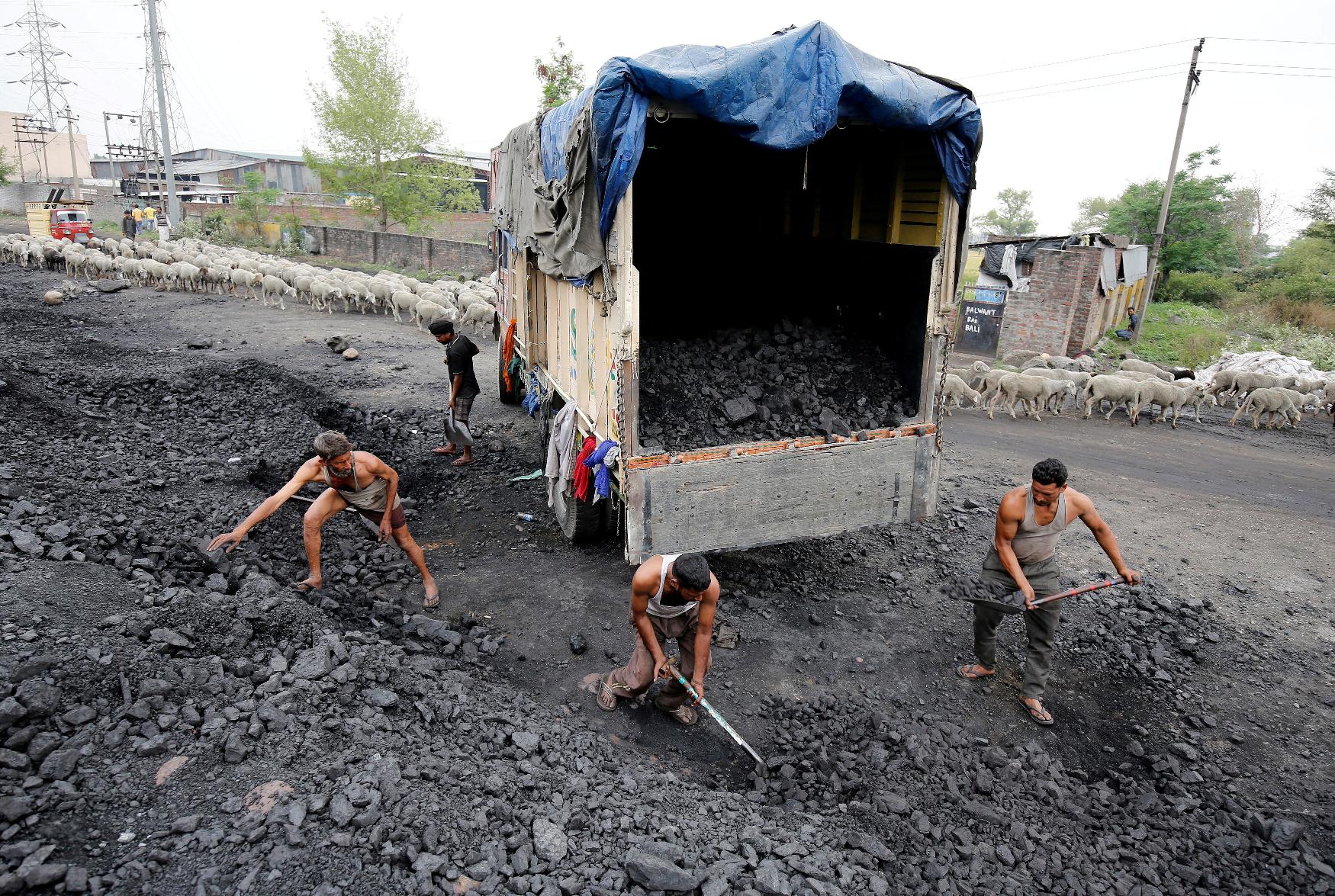
SINGAPORE, Dec 14 (Reuters) - Booming demand for Indian coal is driving up the shares of miner Coal India (COAL.NS) and power generator NTPC Ltd (NTPC.NS), state giants investors once dismissed as plodding dinosaurs, but which are now outperforming the wider market and global peers. NTPC, which produces mostly coal-fired power, has surged 78%, far ahead of a gain of 17% in the broader Nifty Index, while shares of Coal India are up 55% for their best year in 2023. Already the most coal-dependent major economy, India's reliance on the fuel for power generation is set to rise for a third straight year as the addition of renewables slows, giving the two giants a boost. Analysts expect their efforts to boost efficiency and access to cheap capital to extend the rally, with most recommending that shareholders buy more of the two stocks or retain their holdings, LSEG data shows. By comparison, shares of coal miners elsewhere, such as Indonesia's Adaro Energy (ADRO.JK), Australia's Whitehaven Coal (WHC.AX) and U.S.-based Peabody (BTU.N) plummeted this year. Shares of China Shenhua (601088.SS) and China Coal Energy (601898.SS) rose, but less than the Indian companies. Among coal-fired power generators, South Korea's KEPCO, U.S.-based Duke Energy (DUK.N) and American Electric Power (AEP.O) suffered sharp declines. Russia's Inter RAO shares rose 16.2%. Still, with a price to earnings ratio of 7.63, Coal India is cheaper than major Chinese peers, and NTPC is undervalued, compared with many Chinese and American counterparts. Foreign funds have been boosting their stakes, despite tougher global environmental, social and governance (ESG) norms for institutional investors. NTPC investors include the asset management units of Goldman Sachs and Nippon Life, Vanguard and Blackrock, while Fidelity, Mellon Investments and Charles Schwab figure among Coal India's top 20 shareholders, LSEG data showed. "Foreign shareholding in the company has steadily moved higher over the last two years, highlighting the dialing-down of the ESG discount," JPMorgan said in an August note on Coal India. Both companies were long seen as dividend stocks. Of the eight years of growth the Nifty saw in the last decade, Coal India and NTPC outperformed it just once each. Coal India lost 57% of its value in the decade through 2020, while NTPC lost more than a third. Since 2021, NTPC has tripled in value to $34 billion, while the world's largest coal miner has grown 2.5 times to $26 billion. In an October note titled, "This elephant can dance," Bobcaps said NTPC's lower cost of debt gave it an edge in the power industry and it stood to benefit from the government's view that thermal additions were key to stability. NTPC, the only major Indian company still adding coal-fired capacity, is also boosting coal output from its own mines, while Coal India is slashing thousands of jobs a year and outsourcing some operations to boost margins. While most of the miner's sales are on low-margin, long-term contracts to utilities, surplus output has allowed bigger spot sales in the lucrative auction market. By comparison, tightening funding has choked global coal miners. https://www.reuters.com/markets/commodities/booming-indian-coal-demand-powers-rise-state-run-giants-2023-12-14/
2023-12-14 05:45
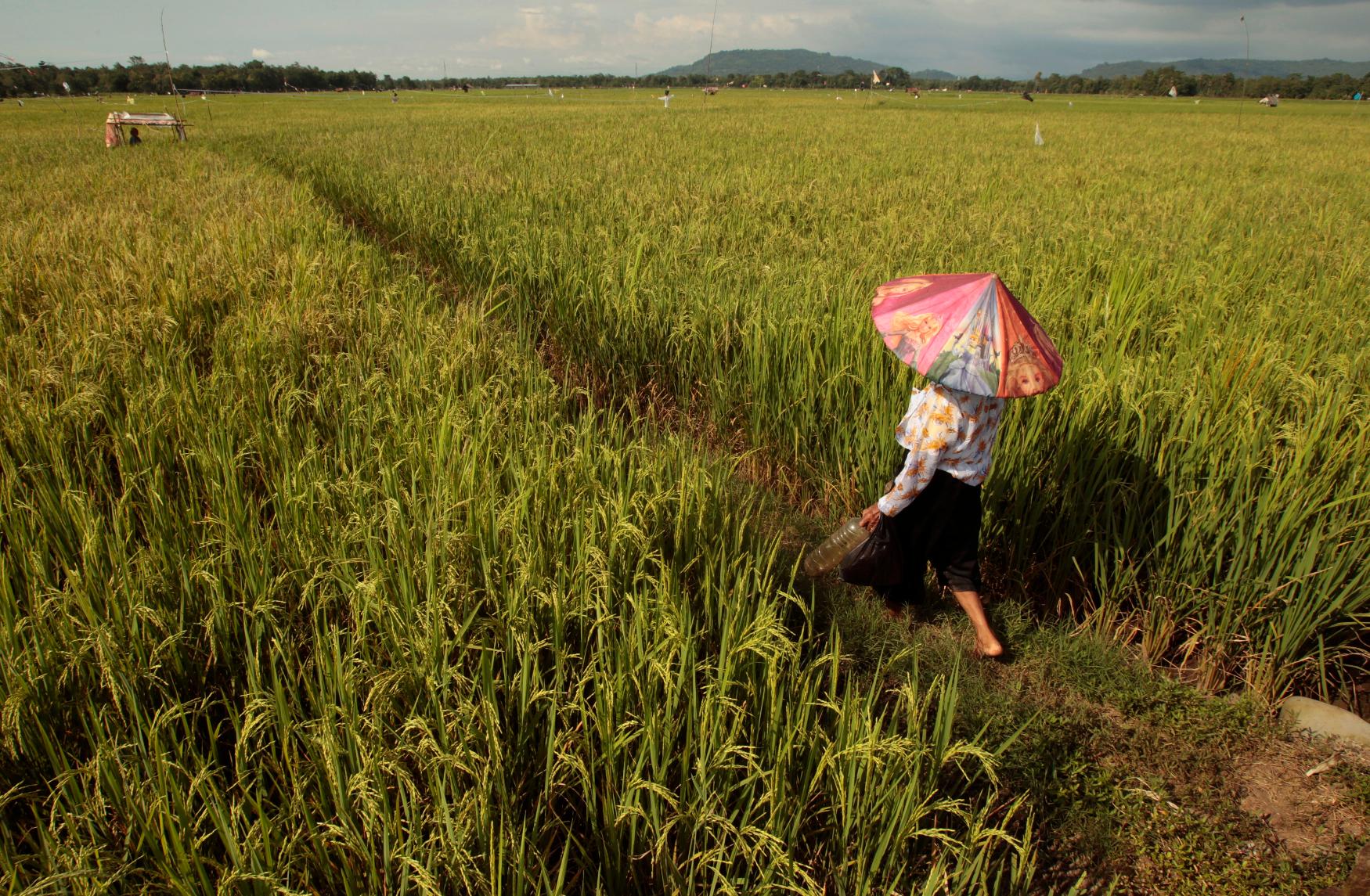
Indonesia to deploy village military officers to plant rice Rice planting for early 2024 harvest at half of last year's area Indonesia seeking more than 500,000 tons of rice in tender JAKARTA, Dec 14 (Reuters) - Indonesia has ordered the military to help farmers plant rice as severe drought has reduced output of the staple in Southeast Asia's most populous country, lifting prices, requiring increased imports and threatening food security. With planting behind schedule due to dryness fuelled by the El Nino weather phenomenon, President Joko Widodo asked military supervisory officers in villages known as Babinsa to help take advantage of recent rains. "Since rainfall has occurred on some provinces, we want to encourage farmers to start planting rice," Widodo, known as Jokowi, said on Wednesday during a visit to Pekalongan regency in central Java, according to video posted on the presidential YouTube channel. "It has been delayed due to El Nino, but we want to immediately plant, plant, plant," he said, standing next to newly-planted rice fields. Global rice supplies have tightened this year as the El Nino, which typically causes hotter and drier weather in Southeast Asia, reduced output in major producing and consuming countries. Prices in Asia's key export hubs have risen by as much as 45% to their highest in 15 years after India, the world's top supplier, restricted exports. Drought has delayed Indonesia's planting for the 2024 harvest, after the country's output this year dropped to 30.9 million metric tons from 31.53 million tons a year ago. Sugiono, a Babinsa officer attending the event, told Jokowi he had joined month-long training on rice planting in order to help the farmers, according to the video. Earlier this month, Indonesia's agriculture minister and its armed forces chief signed a cooperation agreement that includes military personnel helping in farming and utilising idle military land for planting, with seedlings and machinery provided by the farm ministry. "Some farmers have land but are short of manpower as the farmers are getting older while the younger generations prefer to work in factories, so the armed forces can help with tools and personnel," said military spokesperson Julius Widjojono. While typically only one Babinsa is assigned to a village, Widjojono said the officer can map out manpower needs for planting and they would be deployed from nearby military units. Agriculture Minister Amran Sulaiman said earlier this month that the involvement of armed forces in the past had helped Indonesia to achieve food self-sufficiency, and renewed cooperation could help the country reduce rice imports. Indonesia has emerged as one of the top rice importers after state procurement company Bulog was assigned to import 3.5 million tons this year. This week, Bulog began buying rice through an international tender of up to 534,000 tons, expected to arrive by end-January, European traders said. Indonesia's rice-planted area between September and November declined by 53.61% from a year ago, according to farm ministry data. The crops planted in the last quarter of the year usually produce the main harvests for the next year. Still, Indonesia said it expects rice output to increase to 32 million tons in 2024, while the main harvest in March and April will contribute 10.07 million tons, a 14% increase from this year. https://www.reuters.com/world/asia-pacific/indonesia-calls-army-help-farmers-plant-rice-drought-curbs-output-2023-12-14/
2023-12-14 05:37
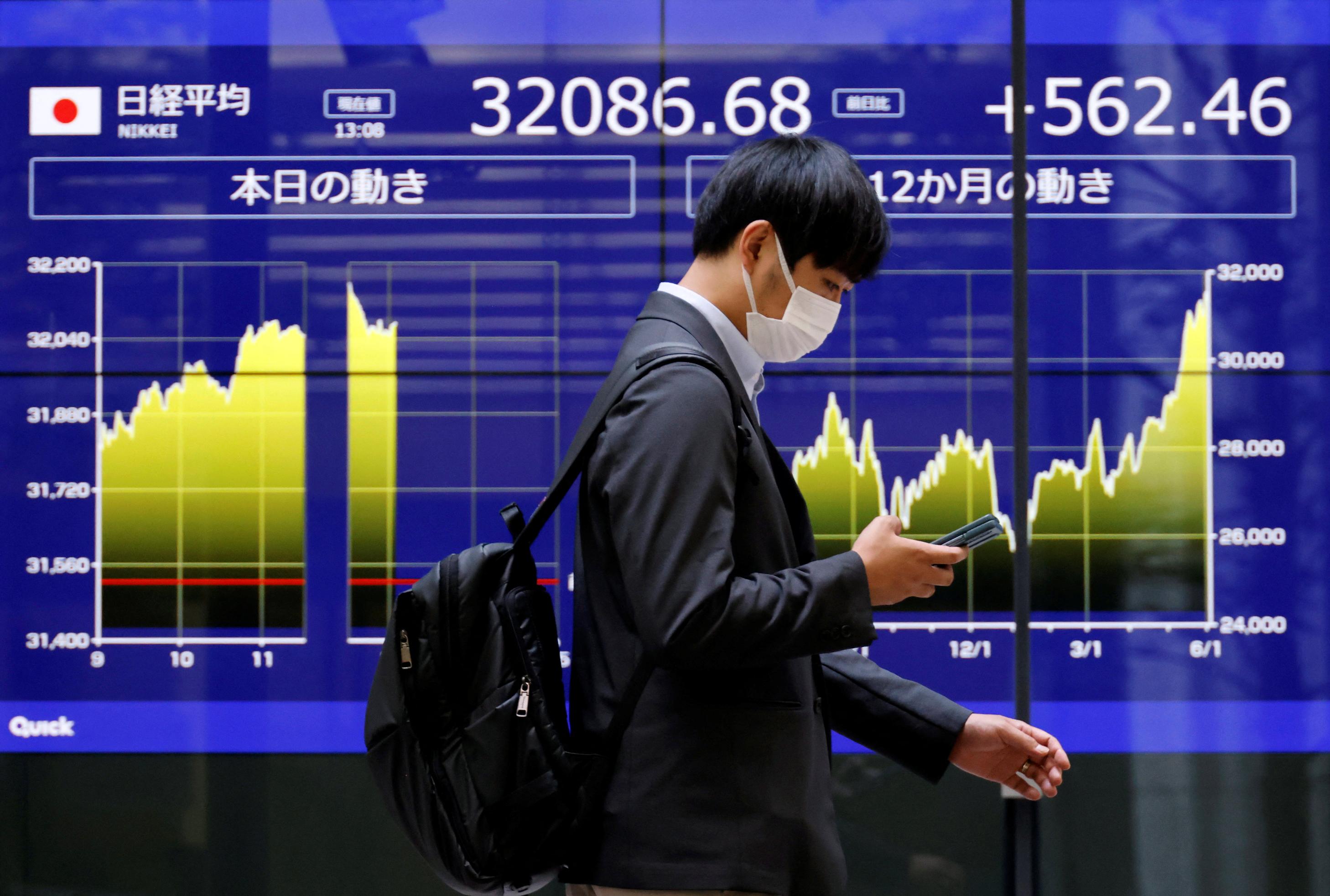
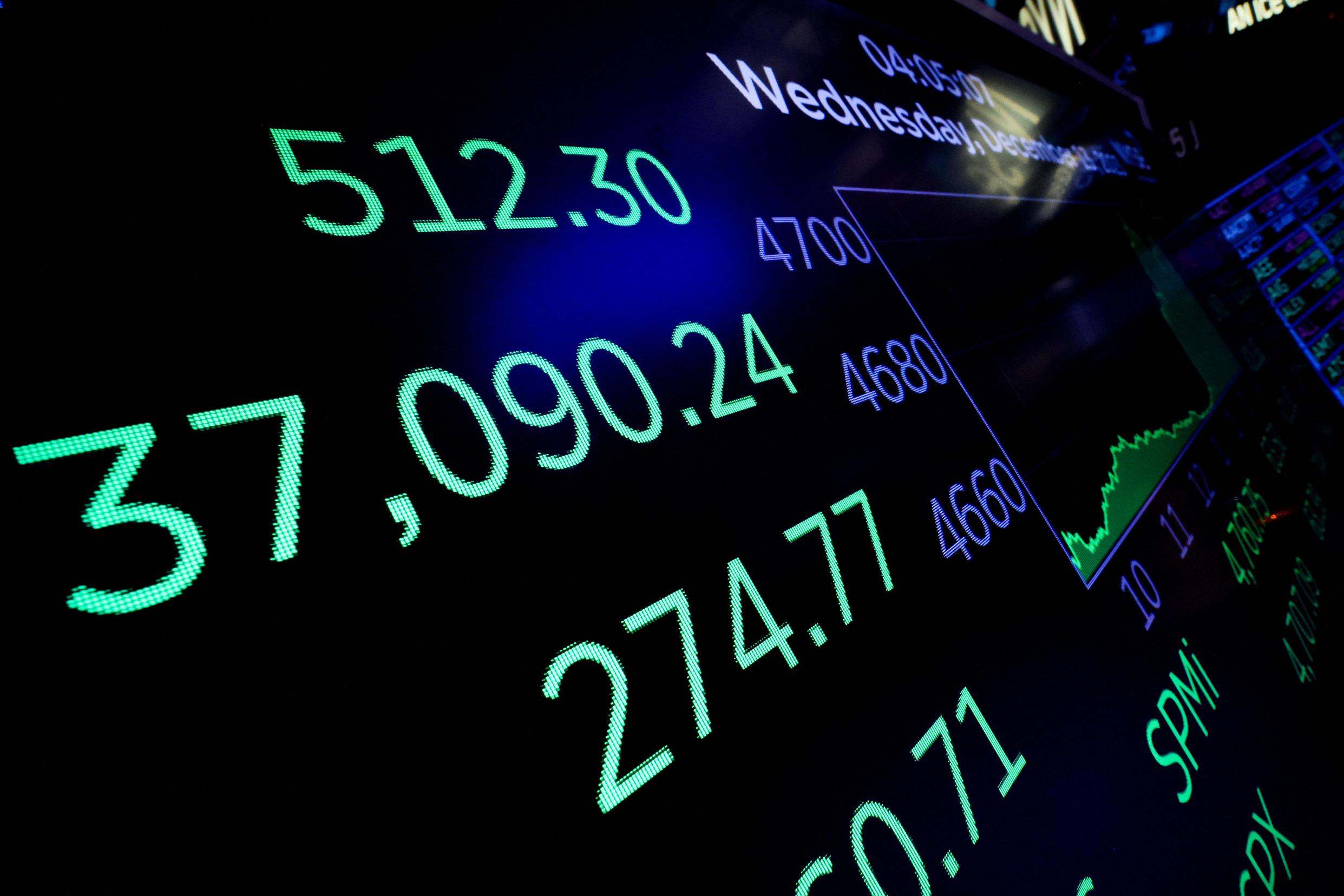
NEW YORK, Dec 14 (Reuters) - U.S. stocks pared earlier gains to close modestly higher on Thursday, while benchmark Treasury yields dropped to multi-month lows after investors rotated out of momentum growth stocks following the U.S. Federal Reserve's dovish pivot. The dollar hit a two-week low against the euro and more than a four-month low against the yen. The three major U.S. stock indexes gyrated, reclaiming positive territory by mid-afternoon the day after the Fed's much-anticipated policy decision to leave interest rates unchanged while saying that historic rate cuts are likely over. "We had the pleasant dovish surprise from the Fed yesterday, and after a huge start to the month of December we’re seeing a little consolidation," said Ryan Detrick, chief market strategist at Carson Group in Omaha, Nebraska. "But under the surface we're seeing extreme strength from small caps and mid caps while large caps catch their breath, potentially a sign this bull market is broadening out with more stocks participating." On Wednesday, the Fed indicated its tightening phase was at an end and signaled that rate cuts are in the cards for 2024, sending the Dow to an all-time closing high. All three major U.S. indexes remain on course for their seventh straight weekly gains. In a busy day for central banks, the European Central Bank (ECB) also held interest rates steady but pushed back against the notion of rate cuts. The Bank of England echoed the ECB, insisting interest rates would be elevated "for an extended time. Elsewhere, the Swiss National Bank held rates firm but lowered inflation forecasts, while Norway's central bank surprised with a rate hike. On the economic front, U.S. retail sales unexpectedly rebounded in November and jobless claims dipped, further evidence of consumer resilience, which has market participants increasingly betting on a soft landing for the U.S. economy. "The soft landing that many doubted was possible is becoming more realistic every day," Detrick said. "Inflation is no longer the problem it was and we still have a very healthy consumer, judging by today’s retail sales data." The Dow Jones Industrial Average (.DJI) rose 158.11 points, or 0.43%, to 37,248.35, the S&P 500 (.SPX) gained 12.46 points, or 0.26%, to 4,719.55, and the Nasdaq Composite (.IXIC) added 27.60 points, or 0.19%, to 14,761.56. European shares gave back some gains, but still closed at a more than 22-month high as the dovish Fed offset the ECB's dismissal of rate cut speculation. The pan-European STOXX 600 index (.STOXX) rose 0.87% and MSCI's gauge of stocks across the globe (.MIWD00000PUS) gained 1.00%. Emerging market stocks rose 2.01%. MSCI's broadest index of Asia-Pacific shares outside Japan (.MIAPJ0000PUS) closed 1.98% higher, while Japan's Nikkei (.N225) lost 0.73%. Treasury yields slid to multi-month lows as bond investors braced for rate cuts in 2024. Benchmark 10-year note yields dropped to 3.9152% from 4.033% late on Wednesday. The 30-year bond yield eased to 4.0364% from 4.184% late on Wednesday. The greenback tumbled against a basket of world currencies, while the euro gained ground after the ECB held rates steady but pushed back against imminent rate cuts. The dollar index (.DXY) fell 0.9%, with the euro up 1.05% to $1.0987. The Japanese yen strengthened 0.73% versus the greenback at 141.86 per dollar, while Sterling was last trading at $1.2765, up 1.17% on the day. Oil prices surged in opposition to the soft dollar after the International Energy Agency (IEA) lifted its oil demand forecast for next year. U.S. crude rose 3.04% to settle at $71.58 per barrel, while Brent settled at $76.61 per barrel, surging 3.16% on the day. Gold prices advanced in opposition to the weakening dollar, touching a 10-day high. Spot gold added 0.4% to $2,035.41 an ounce. https://www.reuters.com/markets/global-markets-wrapup-1-2023-12-14/
2023-12-14 05:33
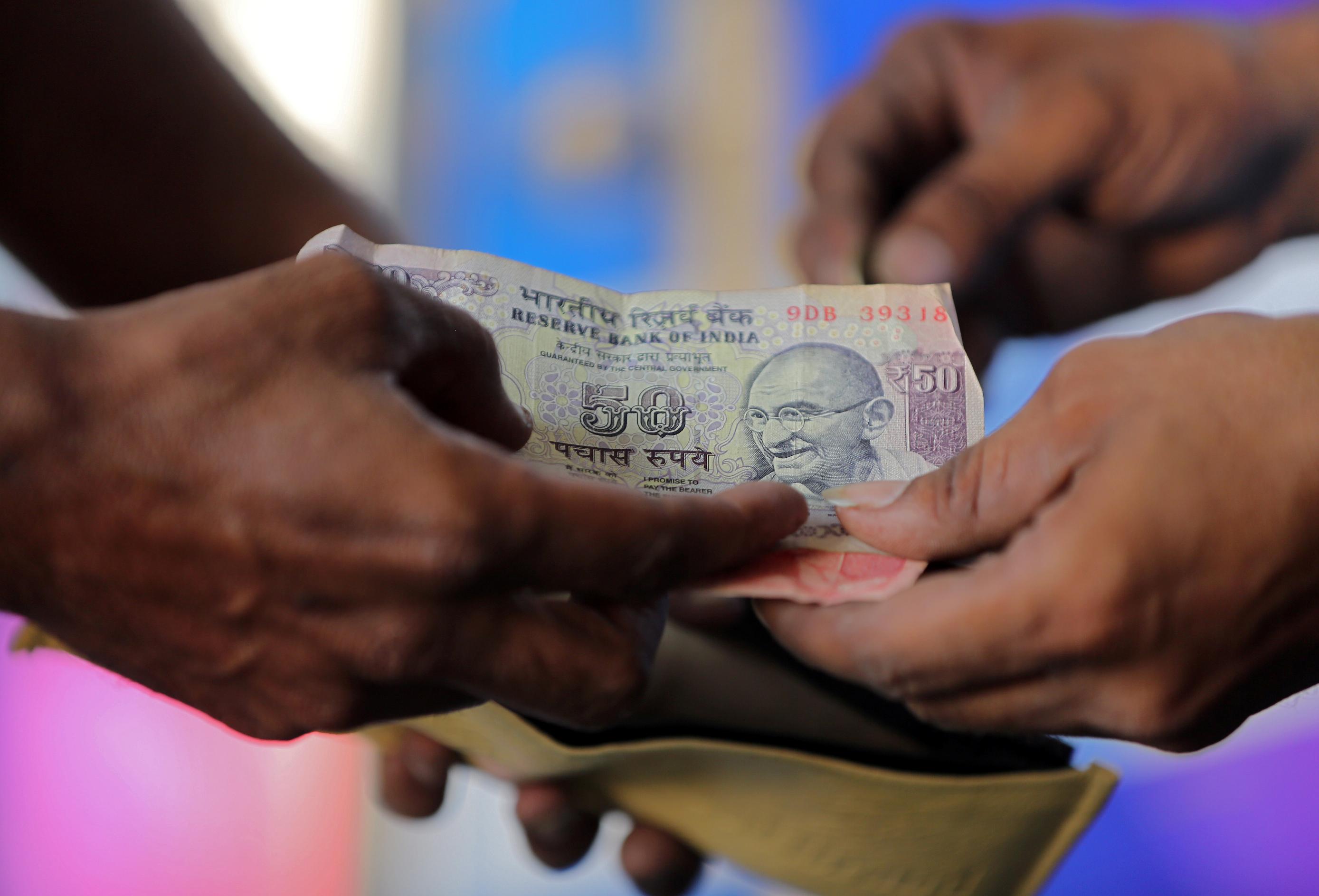
MUMBAI, Dec 14 (Reuters) - The Indian rupee is expected to open higher on Thursday after a dovish U.S. Federal Reserve outcome prompted investors to price in more rate cuts next year, fuelling a plunge in U.S. Treasury yields and the dollar. Non-deliverable forwards indicate the rupee will open at around 83.30 to the U.S. dollar compared with 83.40 in the previous session. The rupee's Asian peers were up between 1% to 2%. Rupee "obviously will not match up to Asia", but will see "definitive relief", a FX trader at a bank said. The Fed expectedly made no changes to the policy rate, while the accompanying statement pointed out that growth had slowed and recognised that inflation had eased over the past year. There is "a dovish pivot" in Fed acknowledging that growth had slowed and inflation has come down, ING Bank said in a note. Analysts at ING said the Fed guidance "of the extent of additional policy firming that may be appropriate", was adjusted "to the extent of any additional policy firming", adding that that offered "the clearest hint yet" of an acceptance by the Fed that interest rates have peaked. The Fed's dot plot pencilled in an extra rate cut in for 2024 and policymakers now expect 75 basis points of easing. Back in September, the U.S. central bank had projected two rate cuts. Investors are more dovish, betting the Fed will deliver 150 bps of rate cuts neat year . Prior to the Fed policy, 110 bps of rate cuts were expected. The probability that the Fed will cut rates at its March meeting jumped. U.S. equities rallied with the Dow Jones Industrial Average reaching a record high. The 10-year U.S. Treasury yield fell below 4% for the first time since August. The dollar index fell nearly 1% on Wednesday. KEY INDICATORS: ** One-month non-deliverable rupee forward at 83.38; onshore one-month forward premium at 7.5 paise ** Dollar index down at 102.6 ** Brent crude futures up 0.4% at $74.5 per barrel ** Ten-year U.S. note yield at 3.98% ** As per NSDL data, foreign investors bought a net $310.4mln worth of Indian shares on Dec. 12 ** NSDL data shows foreign investors bought a net $74.6mln worth of Indian bonds on Dec. 12 https://www.reuters.com/markets/currencies/rupee-rise-after-dovish-fed-emboldens-bets-big-rate-cuts-2023-12-14/
2023-12-14 05:32
A look at the day ahead in European and global markets from Vidya Ranganathan. Fed Chairman Jerome Powell has swerved in the figurative game of chicken the central bank has been playing with markets for months, and investors are jubilant. U.S. stocks have rallied hard and the 10-year Treasury yield is below 4% for the first time in four months. For, even though investors had anticipated Powell would hint at peak policy, his pivot was powerful, making clear the Fed is "not likely" to hike further and that the Fed is "very focused on not making the mistake of keeping rates too high for too long". Fed funds futures extended their rally in Asia and now imply an 85% chance of a first cut in March, with a staggering 156 basis points of easing priced in for all of 2024. The dovish mood is proving infectious as investors prep for rate cuts across much of the developed world. The European Central Bank, the Bank of England, the Swiss National Bank and Norges Bank all meet on Thursday and steady outcomes are expected except for Norway, where there might be a hike given the weakness of the crown. The ECB meeting was shaping up to be an eventful one even before the Fed spoke, given that inflation has slowed. After the overnight developments, markets expect any pushback by ECB hawks against market pricing for cuts starting in March will be muted. The Dec 2024 EURIBOR futures jumped to their highest since January and now imply more than 100 basis points of easing by September. The market has priced in rate cuts by the BOE, too, in 2024 . The SNB is the least likely to be dovish; on the contrary, it is likely to consider intervention to restrain the franc, which hit a nine-year high on the euro last week. . The S&P 500 (.SPX) and Nasdaq (.IXIC) hit fresh closing highs for the year, and Nasdaq is up 40.7% for the year. Asian stock markets are less euphoric, as a rising yen weighs on Japanese stocks (.N225) while Chinese markets remain somewhat disenchanted with the Central Economic Work Conference's focus on risks rather than stimulus. Key developments that could influence markets on Thursday: Central bank policy decisions: ECB, BOE, SNB, Norges Bank Debt auctions - Reopening of UK 30-year government debt https://www.reuters.com/markets/global-markets-view-europe-2023-12-14/
2023-12-14 05:02
HONG KONG, Dec 14 (Reuters) - The Hong Kong Monetary Authority (HKMA) on Thursday left its base rate charged through the overnight discount window unchanged at 5.75%, tracking a move by the U.S. Federal Reserve that kept rates steady. HSBC Holdings 0005.HK also said it kept its best lending rate in Hong Kong unchanged at 5.875%. The U.S. central bank left interest rates unchanged on Wednesday and Fed chief Jerome Powell said the historic tightening of monetary policy is likely over as inflation falls faster than expected and with a discussion of cuts in borrowing costs coming "into view." HKMA said the market generally interpreted the Fed's rate decision as interest rates nearing the peak, with a slightly larger extent of rate cuts next year than previously expected. "There remains uncertainty in the interest rate path and the high interest rate environment may last for some time," HKMA said in a statement, adding the city's financial and monetary markets continue to operate in a smooth and orderly manner. "The Hong Kong dollar exchange rate remains stable, and the Hong Kong dollar interbank rates might remain high for some time," HKMA said, urging the public to manage the relevant risks when making decisions on property purchases, mortgages or other borrowing. Hong Kong's monetary policy moves in lock-step with the United States as the city's currency is pegged to the greenback in a tight range of 7.75-7.85 per dollar. https://www.reuters.com/markets/asia/hong-kong-central-bank-leaves-interest-rate-unchanged-tracks-fed-2023-12-14/