2023-12-14 04:55
Dec 13 (Reuters) - Exchange operator Nasdaq (NDAQ.O) on Wednesday resolved a system issue that impacted stock orders and affected over 50 clients after rolling back the concerned application to a previous version, according to a notice on its website. The incident started around 14:31 ET (1931 GMT) on Dec. 13 after the Nasdaq's 'FIX/RASH order' handling system experienced an issue caused by a duplicate internal order ID, the notice said. FIX or Financial Information Exchange is a message protocol that defines an electronic message exchange for communicating securities transactions between two parties. While investigating the issue, Nasdaq decided to shut down the FIX/RASH order handling system, block all new orders, and cancel any open orders back to customers, as per the notice. "Nasdaq is confident that the corrective action fully addresses the issue and is ready for tomorrow's trading." Some customers saw inaccuracies and delays in the delivery of execution reports, the exchange operator said in an emailed statement earlier on Wednesday. "FIX/RASH was closed down for the rest of the day. The closing cross was completed and all other markets are operating normally," the firm said. It did not respond to a request for comment on the number of trades affected during the system error. https://www.reuters.com/markets/us/nasdaq-hit-by-system-error-affecting-thousands-stock-orders-bloomberg-news-2023-12-14/
2023-12-14 04:25
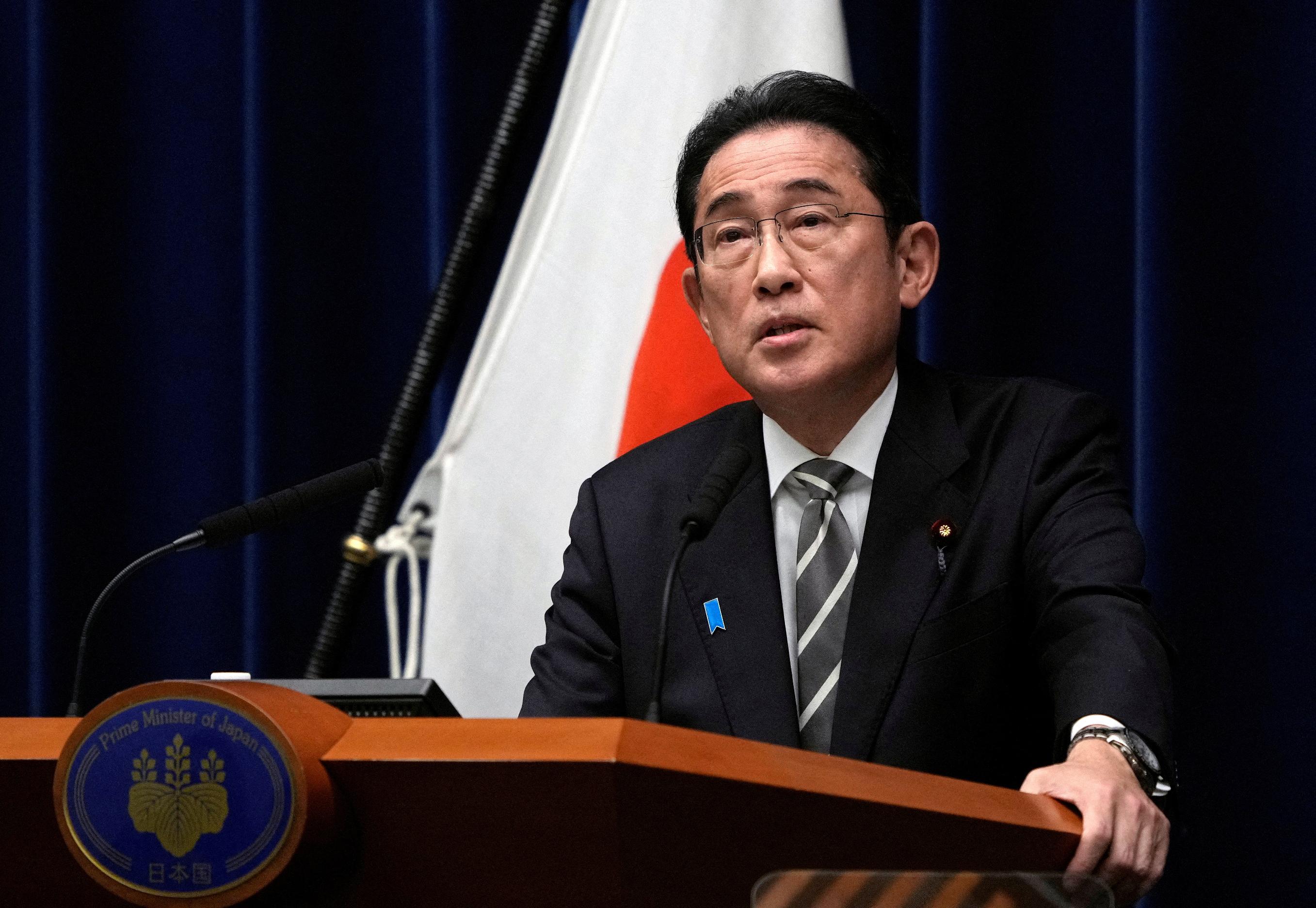
Demise of Abe faction may give BOJ freer hand in steering exit Saga comes at crucial time for BOJ as it eyes end to minus rates Scandal may deprive PM to make big changes to policy status quo BOJ next meets for a rate review on Dec. 18-19 TOKYO, Dec 14 (Reuters) - Japan's political scandal looks set to wipe out heavyweights of the ruling party's once-mighty faction favouring big monetary stimulus, easing the path for the Bank of Japan in pulling the economy out of decades of ultra-low interest rates. Prime Minister Fumio Kishida on Wednesday announced he would make changes to his cabinet as he seeks to stem the fallout from a fundraising scandal that has further dented public support for his embattled administration. The political upheaval comes at a critical moment for the BOJ, which is planning an exit from ultra-low interest rates on rising inflation and signs of broadening wage hikes. Most market players predict an end to Japan's negative rates sometime next year. While the BOJ is legally independent from government interference in deciding monetary policy, political pressure has historically had a significant influence on its decisions. Once led by former premier Shinzo Abe, who was shot and killed during an election campaign last year, the faction known as "Seiwa-kai," or so-called "Abe faction," has retained huge influence on policymaking including under Kishida's administration. The faction consists of many advocates of massive fiscal and monetary stimulus. Among them is ruling party heavyweight Hiroshige Seko, who has repeatedly called for big fiscal spending and made clear his strong preference for ultra-loose policy to continue. In 2013, Abe hand-picked former BOJ Governor Haruhiko Kuroda to deploy a massive asset-buying programme as part of his "Abenomics" stimulus policies. The BOJ continues to buy huge amounts of assets, and added a negative interest rate policy and a bond yield control in 2016 to keep borrowing costs low. "Monetary easing will eventually end. But Governor (Kazuo) Ueda has said an exit will come after achieving the bank's 2% inflation," Seko told reporters in September after the governor's hawkish comments pushed up the yen and bond yields. Seko and Koichi Hagiuda, another ruling party executive, are likely to resign, as well as Chief Cabinet Secretary Hirokazu Matsuno and three other ministers belonging to the faction, according to domestic media. "It's natural to believe that Ueda would now have a freer hand in guiding policy," said a government official with knowledge on economic policy-making. NO ONE TO NEGOTIATE However, the blow dealt to Kishida's administration could leave the BOJ without an effective counterpart to negotiate and collaborate such a major policy shift that would have a huge impact on the economy and global financial markets. People close to Kishida say his administration broadly endorses governor Ueda's efforts to phase out his predecessor's radical stimulus, which is blamed for boosting imported goods prices and households' cost of living via a weak yen. "With the diminishing influence of the Abe faction, calls for ultra-loose monetary policy to support expansionary fiscal policy will likely disappear," said former BOJ official Shigeto Nagai, who is now head of Japan economics at Oxford Economics. There is some uncertainty on how the political turmoil could affect the timing of an exit from negative rates. The ensuing policy paralysis, some observers warn, could delay negotiations between the BOJ and the government necessary to ensure that any exit from easy policy would not destabilise markets and the economy. "The focus now will be how long the Kishida administration can last," said political analyst Atsuo Ito. "Kishida has no strength to carry out anything that would drastically alter the status quo on policy." Yet, the BOJ would now have a clearer path to an exit from low rates, some analysts say. Hiroshi Namioka, chief strategist and fund manager at T&D Asset Management, said the waning influence of the Abe faction reinforces his bet the BOJ will end negative rates in January. "The views of politicians were something the BOJ took into consideration to some extent, when guiding policy." https://www.reuters.com/markets/asia/japans-political-scandal-may-clear-path-easy-policy-exit-2023-12-14/
2023-12-14 03:10
ORLANDO, Florida, Dec 13 (Reuters) - The Federal Reserve is about to embark on an interest rate-cutting journey next year, but what is striking about the 150 basis points of easing markets now expect is the relatively smooth path to get there rather than the destination itself. The history of policy cycles over the last 40 years shows that rates are often raised cautiously - the current inflation-busting campaign being the exception to the rule - but cut more quickly and aggressively. Policymakers are usually wary of "breaking something" - asset markets, the labor market, the economy - when raising rates, and are probably all too aware that something may already be broken by the time they are actually cutting rates. Of course, it is almost impossible to predict when a market, financial or economic shock might force the Fed to act boldly. But equally, it is hard to imagine the looming easing cycle will resemble the 25 basis points-per-meeting from March to December currently outlined by market pricing. That's more reminiscent of the Alan Greenspan Fed's "measured pace" rate hikes of 25 bps-per-meeting in the mid-2000s, or the 2016-18 tightening cycle of 25 bps every second meeting. The rate cuts that followed in 2007-08 and 2019-20, respectively, were anything but measured. That's not to suggest another Global Financial Crisis or pandemic-led shutdown of the global economy is on the horizon. And although inflation continues to fall and inch closer to the Fed's 2% goal, the last mile is proving to be the hardest. Indeed, Fed officials still don't see inflation hitting 2% until 2026, although it will get mighty close in 2025, according to their revised projections released on Wednesday. What markets seized on most, however, was the Fed's new 2024 median outlook for the fed funds rate of 4.6%, down 50 basis points from three months ago. Looked at another way, Fed officials have moved even further - their new end-2024 median forecast is a full 100 basis points lower than September's end-2023 projection of 5.6%. SOFT LANDING? Eric Winograd, director of developed market research at AllianceBernstein, notes that the Fed's new "dot plots" imply rates will be cut 75 basis points next year, then roughly by around 25 basis points per quarter through 2025 and 2026 until the long-run neutral level of 2.5% is reached. "That's a smooth, gradual glide path to equilibrium; the sort of path that central banks always aim at but rarely hit," Winograd reckons. "It is unlikely that the economy will decelerate as smoothly and painlessly as the Fed's forecasts imply." The fed funds target range is currently 5.35-5.50%, so it is worth noting that monetary policy would still be "restrictive" if rates are cut by 75 bps or even 150 bps, given that the Fed's long-run "neutral" rate that neither stimulates nor slows growth or inflation is 2.5%. In his press conference, Fed Chair Jerome Powell refused to be drawn on the timing of any rate cuts, and insisted November's presidential election will not influence the Fed in its actions. Analysts at TD Securities still expect the easing cycle to begin in June, although risks clearly point to the starting gun being fired earlier. Yet they predict 200 bps of cuts in 2024 as the economy tips into recession. Their total rate cut forecast for the year isn't materially different from the 150 bps that rates futures are currently indicating. But the timing and size of the anticipated moves are, and much more in line with previous easing cycles. Once rate cuts start, moves of 50 bps or more are pretty common. The most obvious exception was the mid-1990s, when the economy managed that elusive "soft landing" and the Fed's three rate cuts were only a quarter point each. What Powell and his colleagues wouldn't give for a repeat. (The opinions expressed here are those of the author, a columnist for Reuters.) https://www.reuters.com/markets/us/fed-rarely-cuts-rates-measured-pace-mcgeever-2023-12-14/

2023-12-14 02:58
SYDNEY, Dec 14 (Reuters) - Australia employment far outpaced expectations for a second month in November, yet the jobless rate rose to a 1-1/2 year high as more people went looking for work, adding to signs of loosening in the labour market. Figures from the Australian Bureau of Statistics on Thursday showed net employment jumped by 61,500 in November from October, when they rose by a revised 42,700. Market forecasts had been for an increase of around 11,000. The jobless rate still rose to 3.9%, the highest reading since May last year, from an upwardly revised 3.8% in October. The participation rate climbed to a record high of 67.2%. The strong employment gains pushed the local dollar higher to an almost five-month high of $0.6712, but three-year bond futures are still up 22 ticks to 96.26 thanks to easing expectations for global central banks next year. With the Federal Reserve signalling rate cuts in the year ahead, futures are still pricing in that the Reserve Bank of Australia is now done tightening and expecting a bit more than 50 basis points of easing for 2024. Record inflows of migrants and students have boosted the supply of labour to meet demand, so while employment was a rousing 3.2% for the year to November, the labour force grew by 3.6%, suggesting the labour market is not the main driver of inflation. "I think from the RBA's point of view, this is kind of where they expected it to be and I don't think that they'll be particularly surprised by these results," said Cherelle Murphy, chief economist at EY Oceania. "There is certainly enough momentum for the economy to result in employment growth, but it will slow and we will see the unemployment rate rise a little." The RBA last week kept interest rates unchanged at a 12-year high of 4.35% and left the door open to another move. It has jacked up interest rates by a whopping 425 basis points in the most aggressive tightening campaign in the bank's history to tame inflation. The breakdown showed full-time employment rose by 57,000 in November. Treasurer Jim Chalmers on Thursday welcomed the resilience in the labour market. "It is softening in expected ways... but it is really remarkable that we finish or we got to the end of November with an unemployment rate with a three in front of it," Chalmers told a press conference. Indeed, the data added to signs of loosening in the drum-tight market, with the ABS noting a slowdown in hours worked, which resulted in a narrowing gap with the overall growth rates in employment. Vacancies have also been ticking lower as positions get filled. Job ads on Australia's largest employment site SEEK, fell 4.3% in November, although they're still over 13% higher than a year ago. "We expect it to be harder to hold down the unemployment rate from here given the above dynamic in a slowing economy and when indicators of the labour market are loosening," said Belinda Allen, an economist at Commonwealth Bank of Australia. https://www.reuters.com/world/asia-pacific/australia-employment-surges-nov-jobless-rate-hit-1-12-year-high-2023-12-14/
2023-12-14 00:21
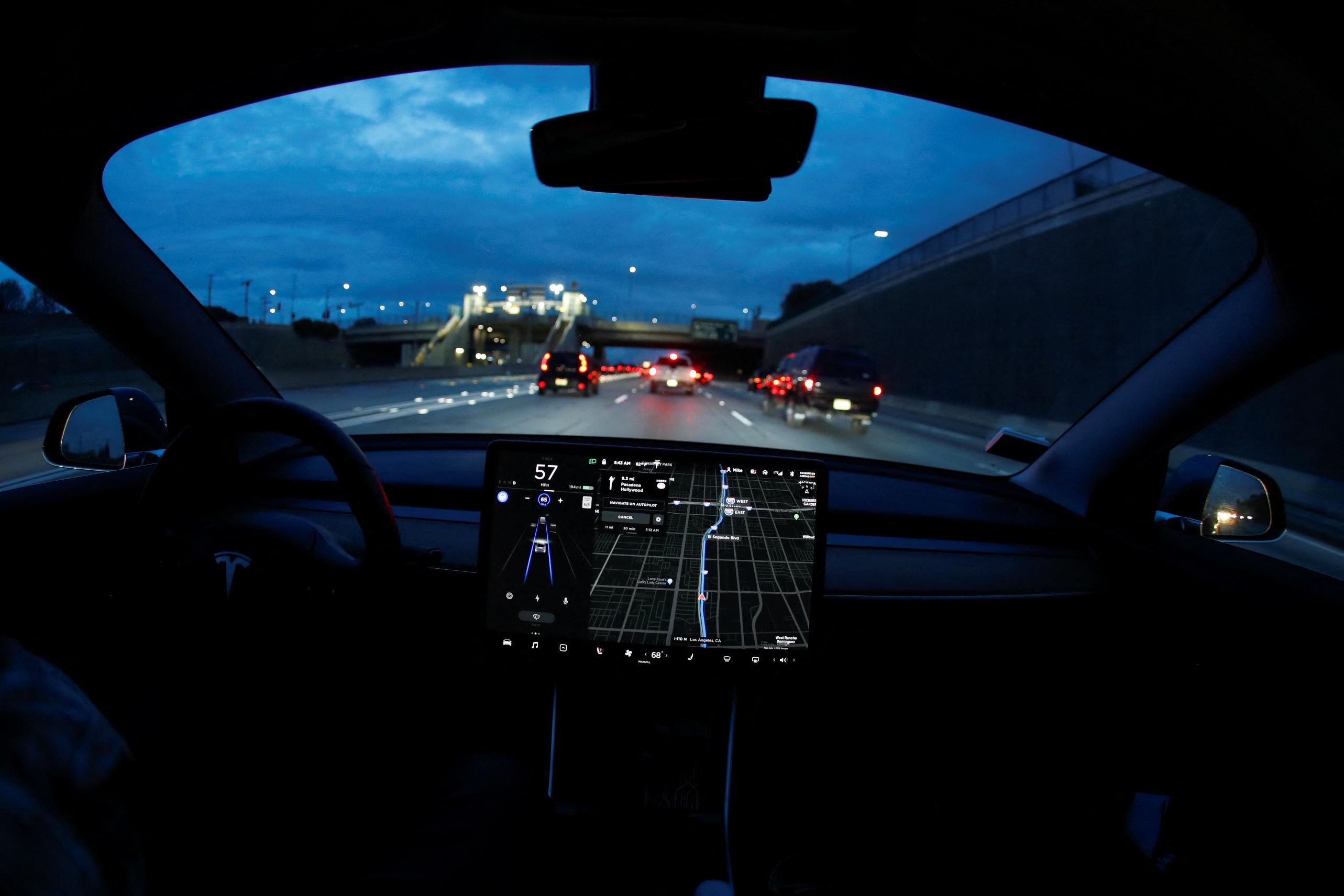
NHTSA says Tesla's Autopilot open to 'foreseeable misuse' Tesla says it will update software to boost safeguards NHTSA to keep Autopilot probe open as it monitors remedies WASHINGTON, Dec 13 (Reuters) - Tesla (TSLA.O) is recalling over 2 million vehicles in the U.S. to install new safeguards in its Autopilot advanced driver-assistance system, after a federal safety regulator cited safety concerns. The largest-ever Tesla recall appears to cover nearly all vehicles on U.S. roads to better ensure drivers pay attention when using the system. Tesla's recall filing said that Autopilot's software system controls "may not be sufficient to prevent driver misuse" and could increase the risk of a crash. The National Highway Traffic Safety Administration (NHTSA) has spent over two years investigating whether vehicles produced by the electric automaker led by billionaire Elon Musk adequately ensure drivers pay attention. Acting NHTSA Administrator Ann Carlson praised Tesla for agreeing to the recall. "One of the things we determined is that drivers are not always paying attention when that system is on," she said at a U.S. House hearing. Carlson said the agency opened a safety probe in August 2021 when she kept hearing about fatal crashes involving use of Autopilot. "My immediate response was, 'We have to do something about this,'" she said. Separately, Transport Canada said Tesla will recall 193,000 vehicles to address the Autopilot issue. It was not immediately clear if China will demand a recall. Tesla shares were flat Wednesday afternoon. Tesla's Autopilot is intended to enable cars to steer, accelerate and brake automatically within their lane, while enhanced Autopilot can assist in changing lanes on highways but does not make vehicles autonomous. One component of Autopilot is Autosteer, which maintains a set speed or following distance and works to keep a vehicle in its driving lane. Tesla said it did not agree with NHTSA's analysis but would deploy an over-the-air software update that will "incorporate additional controls and alerts to those already existing on affected vehicles to further encourage the driver to adhere to their continuous driving responsibility whenever Autosteer is engaged." U.S. Senators Ed Markey and Richard Blumenthal said the recall "is critically needed to make Tesla’s cars safer, but it is egregiously overdue... We urge NHTSA to continue its investigations to spur necessary recalls, and Tesla to stop misleading drivers and putting the public in great danger." NHTSA said its investigation into Autopilot will remain open as it monitors Tesla’s remedies. Tesla did not respond to a question on the extent of the recall worldwide or give more precise details of the new safeguards. 'FORESEEABLE MISUSE' NHTSA opened its August 2021 probe of Autopilot after identifying more than a dozen crashes in which Tesla vehicles hit stationary emergency vehicles. The probe was upgraded in June 2022. NHTSA said it found Autopilot "can provide inadequate driver engagement and usage controls that can lead to foreseeable misuse." NHTSA reviewed 956 crashes where Autopilot was initially alleged to have been in use and focused on 322 Autopilot-involved crashes. Bryant Walker Smith, a University of South Carolina law professor, said the software-only fix will be fairly limited. The recall "really seems to put so much responsibility on human drivers instead of a system that facilitates such misuse." Donald Slavik, an attorney representing multiple people suing Tesla alleging Autopilot defects, said some jurisdictions including California could allow plaintiffs to introduce the NHTSA recall into evidence, as well as other post-accident fixes made by Tesla. At the same time, plaintiffs still must prove the defect involved in the recall caused their particular accident. "This is one step ... but it’s not a determination in any case," Slavik said. Separately, since 2016, NHTSA has opened more than three dozen Tesla special crash investigations in cases where driver systems such as Autopilot were suspected of being used, with 23 crash deaths reported to date. NHTSA said there may be increased crash risks when Autopilot is engaged but drivers do not maintain responsibility and is unprepared to intervene. Tesla will roll out the update to 2.03 million Model S, X, 3 and Y vehicles in the U.S. dating back to 2012, the agency said. The update based on vehicle hardware will include increasing prominence of visual alerts, simplifying engagement and disengagement of Autosteer and additional checks upon engaging Autosteer. Tesla disclosed in October the U.S. Justice Department issued subpoenas related to its Full Self-Driving (FSD) and Autopilot. Reuters reported in October 2022 that Tesla was under criminal investigation. Tesla in February recalled 362,000 U.S. vehicles to update its FSD Beta software after NHTSA said the vehicles did not adequately adhere to traffic safety laws and could cause crashes. NHTSA closed an earlier investigation into Autopilot in 2017 without taking action. The National Transportation Safety Board (NTSB) has criticized Tesla for a lack of system safeguards for Autopilot, and NHTSA for a failure to ensure the safety of Autopilot. https://www.reuters.com/business/autos-transportation/tesla-update-software-autopilot-control-issue-2-mln-vehicles-nhtsa-2023-12-13/
2023-12-13 23:32
WASHINGTON, Dec 13 (Reuters) - A top U.S. official from the National Security Council met senior members of the administration of Argentine President Javier Milei on Wednesday and discussed plans for the South American nation's economy and U.S. investment in it, the White House said. "Deputy National Security Advisor Mike Pyle discussed President Milei's plans for Argentina's economy, underscoring the importance of laying the foundation for economic growth," the White House said in a statement. Pyle visited Buenos Aires and met Chief of Cabinet Nicolas Posse, Economy Minister Luis Caputo, and Central Bank President Santiago Bausili, according to the White House. "They also discussed areas where the United States and Argentina can strengthen their cooperation, including on advancing the clean energy transition and spurring private sector investment in the country," the White House said. Argentina is a major exporter of grains, the fourth largest producer of electric battery metal lithium, and has huge shale oil and gas reserves in its Vaca Muerta formation. It also has a wobbling $44 billion program with the Washington-based International Monetary Fund (IMF) and crippling annual inflation running at 160%. Pyle's trip was part of series of visits by U.S. officials to show support to the libertarian president who took office on Sunday and faces a huge challenge to defuse the country's worst economic crisis in decades. The U.S. Treasury Department's top international official, Jay Shambaugh, was also headed to Buenos Aires this week to meet with lithium firms, sources told Reuters on Tuesday, adding Treasury official Michael Kaplan was expected to travel to Argentina as well. Last month, Milei met with White House national security adviser Jake Sullivan in Washington. U.S. Energy Secretary Jennifer Granholm led a delegation to Buenos Aires for his inauguration last Sunday. https://www.reuters.com/world/americas/top-us-official-pyle-visits-argentina-discusses-economy-private-investment-2023-12-13/